Home Blog Page 138

Airmars picks Nairobi for African headquarters, Rolls out next-gen smart devices

0

Chinese electronics manufacturer Airmars has officially launched its operations in Kenya, marking a major milestone as the company chooses Nairobi as its regional headquarters and launchpad for the East African market.

During the event, the company unveiled a wide range of next-generation products, including power banks, fast chargers, earphones, smart watches, car accessories, smart glasses, audio devices and compatible flash-charging kits, all built with artificial intelligence enhancement at their core.

The move positions Airmars to tap into the region’s booming demand for digital and mobile accessories.

Airmars CEO and Founder Paul Wang said the company’s entry into Kenya is a strategic investment driven by the country’s strong digital ecosystem and central role in Africa’s tech growth.

“Kenya is our first market in Africa, and we are proud to set up our African headquarters in Nairobi. This country will be our gateway to the wider region,” Wang said.

He noted that the company’s expansion goes beyond product sales, highlighting Airmars’ plan to contribute to the local economy.

Wang explained that Airmars aims to create jobs through partnerships with distributors, retailers, service centers and potential local assembly units, reflecting the company’s commitment to long-term investment.

“We have heavily invested not only in technology but also in people. Our goal is to create meaningful job opportunities for the Kenyan community,” he added.

Young Kenyans turning to mobile devices to grow wealth

Airmars Sales Director Carter Yang described Kenya as one of Africa’s most promising electronics markets, pointing to its youthful, tech-savvy population and growing appetite for high-quality smart devices.

He emphasized that the products launched in Nairobi have undergone global safety and durability certifications, ensuring they meet the expectations of Kenyan consumers.

“These devices are long-lasting, reliable, and fully approved by relevant authorities. The Kenyan market is ready for quality, and we are here to deliver exactly that,” Yang said.

He also lauded the strong diplomatic and business relations between Kenya and China, saying they have created a smooth landing for international investors.

Yang noted that the company will also establish a customer support framework to build trust among consumers and enhance the after-sales experience.

KCB Bank Kenya, Visa launch tap-to-phone to boost Merchant payment acceptance

0

KCB Bank Kenya and Visa today announced a landmark collaboration to roll out Tap-to-Phone contactless payment acceptance solution, unlocking a new frontier of flexibility and convenience for merchants across the country.

Through this collaboration, business owners will be able to accept card payments directly on their Near-Field Communications (NFC) enabled Android smartphones without the need for a traditional point-of-sale (POS) machine. This innovation significantly lowers the cost of digital payments, especially for SMEs that often face barriers due to the expenses related to the purchase of POS infrastructure.

Speaking during the announcement, KCB Bank Kenya Director of Retail Banking, Jane Isiaho said: “This collaboration with Visa brings to life a powerful solution that gives every merchant the ability to accept digital payments using just a smartphone. We are simplifying access to payment acceptance, reducing operational costs, and empowering merchants to serve customers faster and more securely.”

Equity vs KCB: How Kenya’s two largest banks performed in Q3 2025

The Tap-to-Phone solution is backed by the Visa Acceptance Platform which enables secure payment acceptance and tokenization technology, ensuring every transaction is protected to global standards. The solution is also part of the bank’s digital and innovation strategy through which the bank is increasingly offering seamless payment solutions to cater for the ever-changing consumer needs.

On his part, John Njoroge Visa Country Manager and Senior Business Development Leader for Kenya, South Sudan, and Somalia, emphasized the importance of enabling merchant growth through digital innovation: “Visa is proud to collaborate with KCB to expand access to safe, fast, and affordable payment acceptance for businesses across Kenya. Tap-to-Phone eliminates traditional barriers by turning the devices merchants already own into secure acceptance tools. This is how we unlock scale, drive inclusion, and build a stronger digital economy.”

This joint effort builds on KCB’s ongoing investments to empower customers and merchants by strengthening digital platforms and ensuring a robust support system. It also reinforces the shared commitment between the two entities to accelerating Kenya’s digital transformation, expanding financial inclusion, and empowering businesses to thrive in a modern, technology-driven marketplace.

Oil Prices Explained: What Determines the Movement of USOIL?

0

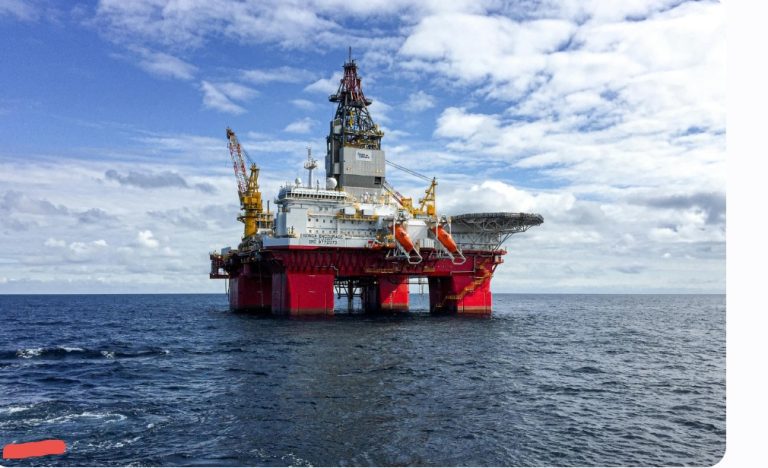
Oil is one of the most traded commodities on the planet. When people talk about oil prices rising or falling, they’re usually referring to the price of crude oil, which is a benchmark for energy markets and impacts everything from gasoline prices to heating costs. USOIL is a common ticker symbol that tracks the price of West Texas Intermediate crude oil, widely used in the United States. Understanding what drives its price can seem complicated, but it becomes clearer once you break down the factors at play.

Supply and demand

At a basic level, oil pricing works like any other market: supply and demand. When supply exceeds demand, prices tend to fall. When demand outpaces supply, prices rise. Supply comes from countries and companies producing crude, while demand is largely driven by industrial activity, transportation needs, and global energy consumption patterns.

Production levels fluctuate for several reasons. Oil-producing countries might decide to cut output to boost prices or increase production to gain market share. Natural events like hurricanes can temporarily shut down refineries or oil rigs. And regarding the other side – demand – economic growth in major countries increases energy use, pushing prices higher. Conversely, recessions or periods of slower growth can reduce demand.

3 Gulf oil firms pocket Sh1.5 trillion from G-to-G Kenya fuel deal in 18 months

Geopolitical events

Politics also affects oil prices. Conflicts in oil-rich regions can disrupt production or transport, creating uncertainty and often driving prices up. Diplomatic relations and trade agreements can change how oil moves around the globe; sanctions on major producers can limit supply and influence the market. Even domestic policies in major oil-consuming countries can impact demand through regulations or incentives for alternative energy sources.

Market sentiment and speculation

Crude oil prices are not only affected by physical supply and demand but also by traders’ expectations of the future. Futures contracts allow traders to buy or sell oil for delivery later on. If traders believe that supply will tighten or demand will increase, they might push prices higher even before the actual change occurs. Conversely, fears of oversupply or weakening demand can depress prices. Traders can use a crude oil trading platform, such as Exness, to react quickly to these market signals.

US dollars

Because oil is traded globally in US dollars, fluctuations in the dollar’s value impact oil prices. When the dollar strengthens, oil becomes more expensive for buyers using other currencies, which can reduce demand and push prices lower. When the dollar weakens, oil prices often rise as it becomes cheaper internationally. Traders often watch currency movements closely alongside oil markets.

Inventory levels

Oil inventories, which measure how much crude is stored in tanks and terminals, sometimes provide insight into the supply-demand balance. Rising inventories generally suggest that supply is outpacing demand, which tends to lower prices. Falling inventories indicate higher consumption relative to production, often pushing prices up. Weekly reports from organizations like the U.S. Energy Information Administration offer updates that traders use to anticipate price movements.

OPEC decisions

The Organization of Petroleum Exporting Countries, or OPEC, is a group of oil-producing nations that coordinate production levels to stabilize or influence prices. OPEC decisions are watched by the market because even small production changes from these countries can impact global supply. OPEC also works with non-member countries to manage output, affecting prices further.

Seasonal factors

Oil demand is not constant throughout the year. In colder months, heating oil consumption rises in some regions, while in the summer, gasoline use typically increases due to travel and vacations. These seasonal shifts can create predictable fluctuations in oil prices. Traders often factor in these patterns when analyzing markets and planning trades.

Weather and natural disasters

Severe weather events like the hurricanes – mentioned previously – floods, or earthquakes can disrupt oil production and transportation. For instance, storms in the Gulf of Mexico can shut down offshore rigs or refineries, temporarily reducing supply. Unexpected supply interruptions tend to push prices up, especially if investors believe the disruption could last for some time.

Technology

Advances in drilling technology and extraction techniques can influence the cost of producing oil, which in turn affects pricing. For example, innovations in hydraulic fracturing and horizontal drilling have made it economical to access previously untapped reserves. Lower production costs can increase supply, potentially lowering prices, while higher costs or technical setbacks can limit output and increase prices.

Global economy

Economic indicators – GDP growth, manufacturing activity, and employment data – can indicate that oil demand is likely to change. Strong economic data typically suggests higher energy consumption, which can support rising prices. Weak or slowing economic data may imply reduced energy needs.

Relationships with other commodities

Oil prices often move in relation to other commodities. For example, when natural gas prices rise, some energy consumers switch to oil, increasing demand. Similarly, inflation or changes in the cost of raw materials can influence production costs, which may ripple through oil prices.

Keeping track of prices and trends

Other charts like the Ethereum live chart – available on the same platforms that track oil, including Exness – allow traders and analysts to compare different assets, understand correlations, and spot trends. Ethereum isn’t directly linked to oil, but observing how markets interact can provide additional insight into investor sentiment and risk appetite. Combining this with data from crude oil trading platforms can create a more complete picture of market dynamics.

Government policies and regulation

Policies related to drilling, export restrictions, and environmental regulations can directly affect oil production costs and availability. Tax incentives or subsidies for alternative energy sources may reduce oil demand over time. Traders watch these policies because even small regulatory changes can affect the market.

Transportation

A large portion of oil consumption comes from transportation, including cars, trucks, planes, and ships. Shifts in transportation patterns (e.g. increased air travel, changes in shipping routes) influence oil demand. Rising global trade normally increases shipping demand, which can boost oil consumption and influence prices.

Macroeconomics

Oil prices are also sensitive to overall market sentiment and macroeconomic uncertainty. Fears of economic slowdowns, geopolitical tension, and financial instability can prompt traders to adjust positions in oil markets. Even if supply and demand remain relatively balanced, perception and expectation can create price swings.

In short, understanding USOIL price movements requires looking at a combination of these factors. Analyzing these elements alongside live charts can help make sense of the sometimes volatile nature of oil pricing.


My experience working from Wojo Nairobi: A space that redefines productivity

0

When the COVID-19 pandemic struck Kenya in 2020, so many people found themselves in the middle of a financial crisis primarily due to job losses.

Statistics indicate that over two million Kenyans lost their jobs as the government laid down stringent measures to curb the killer disease. So many companies shut down operations while others turned to remote working and social media sales.

The good sides of the pandemic is that it unearthed innovative ways for businesses and individuals to make money as people turned to social media platforms to market their crafts, as the government minimized physical interactions.

For Maureen Kinyanjui, the pandemic was a turning point as through it, she found the perfect career path. Maureen, a media personality, revealed that she lost her job during the pandemic after being declared redundant.

She would later embark on job search before a colleague introduced her to online jobs. Today, she works as a copywriter for international clients.

As a remote worker, Maureen had over the years struggled to find a perfect work station until a friend introduced her to Wojo in Nairobi Upper Hill.

“I used to work from the house before, but after getting a kid, the house became work-unfriendly. So I started working from Java, but the distractions were unbearable,” she said.

“A former colleague later introduced me to Wojo in Upper Hill.  I wasn’t entirely sure what to expect. I had used co-working spaces before but Wojo quickly established itself as more than just a desk and Wi-Fi,” she added.

According to her, Wojo stood out due to the calm atmosphere. It had that quiet hum with people focused and an overall sense of flow that made her want to settle down and get things done.

“For someone who thrives on an environment that isn’t too loud or too sterile, Wojo hit the sweet spot,” she added.

She adds that the space is reliable in terms of accessibility, Comfort, high-speed internet, and security.

“The general work areas are comfortable, well-lit, and properly air-conditioned—another underrated but crucial feature in Nairobi’s heat. I’ve found it easy to stay focused for long stretches without feeling drained or stuffy.”

With her work involving a mix of collaborative sessions and private calls, Wojo’s soundproof call booths have been helpful to Maureen. She uses the booths whenever she needs to make a call with a client or record a quick voice note without worrying about background noise.

ALSO READ: How Kenya’s workforce is redefining the future of work through community

Moreover, Maureen says Wojo’s most unexpected perk has been the partnership with Mercure Hotel right next door, as she is able to squeeze in a gym or swimming session without disrupting her work schedule.

“And then there are the discounts. Whether I’m grabbing lunch, or booking a quick stay for a weekend reset, the dining and accommodation discounts at Mercure have added a touch of affordability and comfort to my routine. It feels like Wojo extends beyond the workspace into a more holistic lifestyle ecosystem.”

The space has further provided a networking opportunity for Maureen, as she is able to meet and interact with professionals in various fields, including celebrities, entrepreneurs, and remote workers.

Among the known individuals she has interacted with is media personality Dr. King’ori, who records his shows from the establishment.

“What makes Wojo stand out for me is the sense of balance. It’s professional but warm, structured but flexible, quiet but alive. I’ve met interesting people, which I find as a plus for my career,” she added.

Wojo’s offerings include co-working spaces, private offices and meeting rooms with unique features and experience that suit each user’s specific needs. Pricing varies depending on the type of workspace, contract length, and level of access.

To book your space, contact the Wojo team via 0723 708714

Kizito Namulanda: Standard Group fired me while in bed battling cancer, refused to pay me

0

Media personality Kizito Namulanda has revealed how he lost his job at Standard Media Group while undergoing cancer treatment.

In a narration, Kizito revealed that he was diagnosed with stage 3 laryngeal cancer 4 years ago, which led to a permanent voice disability.

He added that the battle worsened when he was served with a termination letter from his employer while still fighting the killer disease.

“In 2022, I faced a life-changing challenge: a diagnosis of cancer of the voice box. The journey was grueling, especially after my employment was terminated in a manner that made the struggle even harder,” he said.

According to the broadcast journalist, it all started with hoarse voice  but he assumed it could have been as a result of a certain lifestyle.

However, an encounter with Engineer Peter Nduati’s wife Ruth Nduati was a wake-up call after she advised him to go for a medical checkup.

“I remember she asked me, “Kizito, what is happening to your voice? Have you had it checked out?” I hadn’t, assuming the hoarseness might be due to drinking too much dawa (ginger, lemon, and honey), or perhaps I had COVID-19 but managed to shrug it off. I had heard stories about hoarseness lasting a long time, but she insisted I needed to see an ENT specialist,” he narrated.

After a medical checkup, the doctors served him with bad news that he had voice box cancer that had progressed to stage 3.

“I had read that most often this type of cancer is caused by heavy smoking, yet I had never smoked even half a cigarette in my life. I wasn’t a heavy drinker either. I had always been health-conscious eating well and going to the gym.”

“From my Google searches, I learned that patients with this cancer who progress to stages 3 and 4 typically live, on average, for a maximum of six months. I had heard of cases where people deteriorated quickly and succumbed within six months of diagnosis. I could not imagine it. Later I learned that my disease had progressed to stage 3,” he added.

Completely shattered, Kizito began treatment and, with support from his family, flew to India for treatment at Max Super Specialty Hospital in Delhi.

As his condition deteriorated, he underwent a partial laryngectomy, a surgery that entails the removal of a part of a voice box.

“Dr. Hazarika later explained that the operation was extremely complex—one that many doctors usually avoided – but he took it on because he really wanted to save my voice so I could continue earning a living as a broadcast journalist.”

After the operation, he was discharged to recuperate in Nairobi while still continuing with his job at Standard Media Group.

“Recovery was a very rough journey, particularly the first month, when I could only feed through pipes. After returning to Nairobi, I required regular trips to New Delhi for follow-up treatment, which I still make to this day.”

Also Read: 8-year-old battling blood cancer appeals for help to seek treatment in India

Tragedy struck three months later when he was served with a termination letter after 19 years of working at the Mombasa Road-based media station.

According to Kizito, he was unaware of any retrenchment process in his department until a colleague called him to say he had received a termination notice.

He initially delayed collecting the letter hoping the company would reconsider, only to be emailed the official termination notice.

“I was completely shaken and confused, but an inner voice urged me to prioritise what mattered most, my health. After receiving favourable medical results, I returned to Nairobi to plead my case, but the company stood firm,” he added.

Kizito said Standard Group offered severance pay in 10 monthly installments rather than a lump sum.

He requested a faster payout due to his medical condition, but was told nothing would be discussed until he signed the termination letter. He was also warned that delaying the signature would result in him losing the first installment.

Desperate, he signed, but 14 months later, he says the company has still not settled the remaining severance.

“I have written several emails to explain how badly I need this money to get me out of my current financial strain that is threatening to take me back, but I still haven’t gotten any breakthrough,” he said.

The journalist says his journey has taught him two powerful lessons: that God never forsakes those who put their trust in Him, and that when life presents many battles, one must choose carefully which ones to fight.

Kizito took over as Head of Convergence at Standard Group in December 2020, where he was tasked with ensuring that the broadcasting, print, and digital divisions work in harmony and under the same editorial command.

He joined the organization as a News Editor in August 2005 from Mwananchi Communications Limited in Dar es Salaam Tanzania.

Ndindi Nyoro pockets millions from sale of Kenya Power shares

Kiharu MP Ndindi Nyoro has pocketed millions from the sale of his Kenya Power shares. The latest filings show that in the months between January 2025 and June 2025, he sold 3.08 million shares with an estimated market valuation of Sh37.8 million.

At today’s trading range of around Sh12 per share, the member of parliament may have pocketed up to Sh36.96 million from the sale.

This sale cut his stake in the power provider to 26.9 million shares as at the end of June 2025. According to regulatory filings, Ndindi held 30 million Kenya Power shares as at the end of December 2024. These shares were equivalent to a stake ownership of 1.54 per cent of the company.

This stake was an improvement from the 20.08 million shares that the investor held as at the end of June 2024. In 2023, Ndindi had become the largest individual shareholder at Kenya Power with 32.5 million shares.

By January 2025, gains by the Kenya Power shares at the Nairobi Securities Exchange (NSE) had seen him gain close to Sh. 200 million from his investment. This gain was the result of a massive rally that had seen these shares rise by an astonishing 322 per cent within six months to December 2024.

At the same time, the member of parliament who is known to hold various investments in listed counters pocketed close to Sh21 million from the payment of dividends by Kenya Power.

The dividends that were paid at a rate of Sh0.70 per share and the gains from the shares’ bullish run saw Nyoro cumulatively book a gain of Sh198 million within just six months. The dividends were paid out on January 31, 2025.

Kenya Power shares on the NSE were trading at an average of Sh12 per share as at December 5, 2025, with a 52-week high of Sh15.80 per share and a one-year low of Sh3.40 apiece.

This means that Nyoro’s current shareholding of 26.9 million shares is worth an estimated Sh322 million.

New York Times: How Ruto’s family, allies make profits from sending Kenyans to Saudi

Absa Bank Kenya named Bank of the Year – Kenya at the 2025 Banker Awards

0

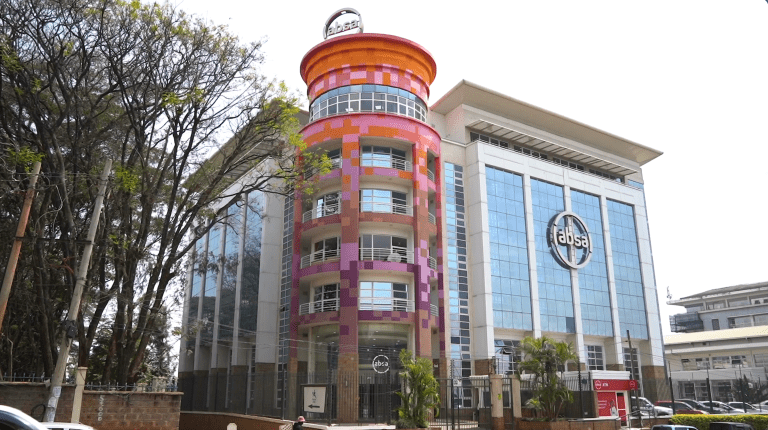
Absa Bank Kenya has been named Bank of the Year – Kenya at the 2025 Banker Awards, securing one of the most competitive honours on the continent.

The recognition highlights the bank’s disciplined execution of a segment-led, ecosystem-driven strategy, which has strengthened brand relevance across Private and Personal Banking, Business Banking, and Corporate & Investment Banking, enabling Absa to serve entire value chains with deeper insight and tailored solutions.

In the year under review, despite sector-wide pressure arising from the operating environment, Absa Bank Kenya delivered strong 2024 full-year results marked by improved profitability, disciplined cost management, and business diversification.

According to The Banker, Absa’s strategic repositioning during the review period; transformed Absa from a product-centric model to a segmentation approach, significantly enhancing customer value, strengthened advisory capability, and deepened relationships across key segments.

Absa Bank Kenya named Best Bank in Green Financing in Kenya

Commenting on the award, Absa Bank Kenya Managing Director & CEO, Abdi Mohamed, said:

“This award reinforces our transformation into a purpose-led, segment-driven financial institution. It recognises the depth of work we have done to organise around people, their needs, their financial realities, and the ecosystems that shape their decisions.

Being named Bank of the Year in Kenya affirms that our strategy is bearing fruits and continues to advance our purpose of Empowering Africa’s tomorrow, together… one story at a time. Every customer who walks with us should feel seen, supported and assured that Your Story Matters.”

Absa’s strategy continues to strengthen customer-centricity, deepen advisory excellence, expand distribution across growth corridors, accelerate digital journeys, and build diversified, sustainable business. This momentum positions Absa Kenya as one of the most future-fit and customer-responsive banks in the market.

The Banker’s Bank of the Year Awards recognise financial institutions that combine operational strength with strategic clarity, innovation, and a commitment to customers and communities. The 2025 winners demonstrated resilience, service quality, and the ability to respond to evolving economic and social needs.

Absa Bank Kenya named Bank of the Year – Kenya at the 2025 Banker Awards

Tim-Sky Media Services claims top honours at the 2024 PRSK Awards of Excellence

0

Tim-Sky Media Services, an award-winning regional public relations and communications agency, swept this year’s 2024 Public Relations Society of Kenya (PRSK) Awards of Excellence, securing top honours in the Partnership Engagement Initiative of the Year and Internal Communication Campaign of the Year categories.

The Agency won the Partnership Engagement Initiative of the Year for its work on the Absa Kip Keino Classic, a flagship international athletics event now ranked as a Gold-level meet in the World Athletics Continental Tour. Tim-Sky Media Services also received the Internal Communication Campaign of the Year award for the Absa Let’s Move Campaign, an internal communication campaign designed to strengthen employee engagement across the organisation.

Speaking during the gala dinner, Tim-Sky Media Services General Manager and Client Service Director, Bev Naliaka, attributed the Agency’s success to the dedication of the team and the trust placed in them by clients.

“These awards not only highlight the exemplary work delivered here at Tim-Sky Media Services but also reflect the trust our clients continue to place in us. At Tim-Sky Media Services, we believe in the power of communication to connect, build brands, shape culture, and create platforms for authentic storytelling,” said Ms Naliaka.

Co-op Bank named best in product innovation at Global SME Finance Awards

The awards further underscore Tim-Sky Media’s commitment to delivering innovative, strategic and dynamic communication solutions that position its clients at the forefront of their industries.

“I would like to thank PRSK for this honour and acknowledge our client Absa Bank Kenya for continually trusting us to tell their stories,” she added.

For Tim-Sky Media Services, this double win marks a significant chapter in the Agency’s expanding presence in the communications landscape. Driven by a youthful, strategic and forward-looking approach, the Agency looks to continue its growth in an increasingly dynamic media environment.

Other winners of the night included IMG Kenya, Ascent, Winnie Gor Africa, Calla PR and Engage Communications, who were also recognised for their outstanding work in various categories.

Latitude59 brings European–African tech dialogue to Kenya with a bold vision for cooperation

0

The third edition of the Latitude59 satellite event in Nairobi is bringing together 2500 participants, including almost 500 startup representatives. Nearly 200 investors are participating. In total, there are participants from 50 different countries worldwide.

This year’s event focuses on accelerating Africa’s next wave of innovation through Digital and Green Innovation. The program is designed to connect African founders with global capital, expertise, and networks while enabling policymakers, investors, and corporate leaders to co-create solutions for sustainable, inclusive, and human-centred digital transformation.

“We are not only in Kenya, we are building a global village. Coming from Estonia, a country of 1.3 million people, we understand the power of collaboration and how every connection matters. The idea of a global village reflects what we in Africa call ubuntu — the understanding that we are all interconnected. Every ecosystem has its own strengths, and our mission is to bring them together so that solutions built locally can grow globally,” said Liisi Org, CEO of Latitude59.

In the opening remarks, H.E. Daniel Schaer, Ambassador at Large for Africa, Ministry of Foreign Affairs of Estonia, said that “Estonia is in Kenya and is here to stay. We are coming to cooperate, co-create and learn from you.”

Tech: I built a Billion-Dollar organization—and chose not to monetize it

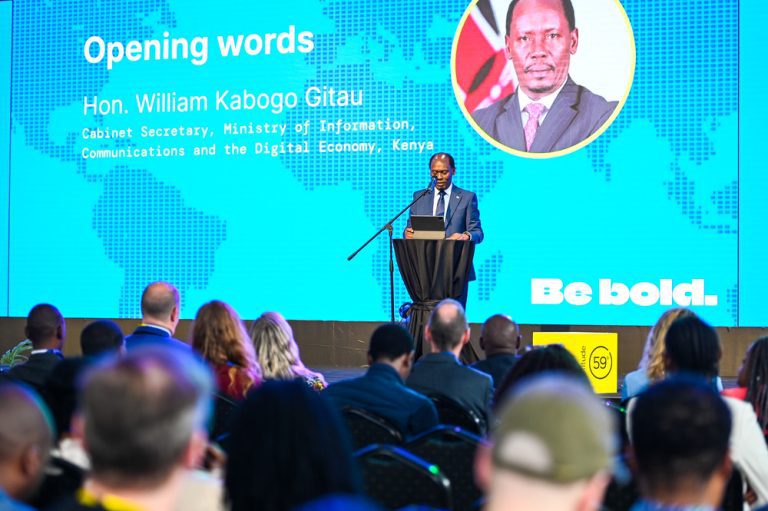
Hon. William Kabogo Gitau, Cabinet Secretary for the Ministry of Information, Communications and the Digital Economy in Kenya, described Latitude59 as a bridge between ecosystems, capital, and ideas. “Latitude59 represents an opportunity for Kenya and Estonia to work together through digital partnerships driven by shared values and practical cooperation. As we begin this year’s program, I encourage everyone to explore new connections, test ideas, and imagine possibilities that extend far beyond borders,” he added.

Over the course of two days, almost 100 speakers will be on stage at Latitude59 in Kenya. One of the standout sessions at this year’s event will be Taavi Kotka, one of the architects behind Estonia’s digital transformation, who will unpack how Estonia became an IT and startup superpower, and Dr Myriam Sidibé, a global leader in public health and social impact, will speak on unlocking inclusive and sustainable growth through innovation.

Latitude59 Kenya 2025 is delivered in cooperation with ESTDEV through its participation in the Digital and Green Innovation (DGI) Programme, part of the European Union’s D4D Hub Twin Transition Team Europe Initiative. In addition, this year’s programme is delivered in cooperation with several other strategic partners, including Civitta, Smart Africa, Belva, KOOD, the Estonian Business and Innovation Agency (EIS), and Fienta.

Latitude59 is the flagship startup and tech event of the world’s first digital nation, Estonia. The 13th edition, held in Tallinn, Estonia, in May, attracted over 3,500 participants, including more than 900 startup representatives and 20 national delegations. Nearly 700 investors participated this year. 170 speakers could be seen on Latitude59’s stages. In total, there were participants from more than 70 different countries worldwide.

Five more Kenyans become Millionaires in the ongoing Safaricom Shangwe @25 consumer promotion

0

Safaricom’s Shangwe @25 nationwide consumer promotion continues to reward customers across the country, with five more Kenyans becoming the latest millionaires.

Hannah Ngige from Komarock in Nairobi, Wellington Juma from Kisumu, Taala Chelanga from Elgeyo Marakwet, Elizabeth Wairimu from Thika, and Sheila Cheptoo from Bomet, each received Kes 1 million, bringing the total number of millionaires in the campaign to ten (10) since its launch last month.

In addition to the cash prize money, each winner also received an extra Kes 250,000 to support a community initiative of their choice.

Speaking during the award ceremony at Jacaranda Grounds in Nairobi, where Safaricom also gifted customers through the Green Box mechanic, 56-year-old Hannah Ngige, a mother of two and a resident of Komarock, expressed her gratitude to Safaricom, noting that the win came as a complete surprise, especially during these tough economic times.

“I sell second-hand items, so I make many transactions on M-PESA and Pochi, and I believe that really boosted my entries. I am extremely happy and grateful. I plan to invest part of this money back into my business, and I also want to start tomato farming in Kimana, Loitoktok, something I’ve always dreamed of but could never afford. For my community project, I would like to support Mama Lucy Kibaki Hospital, which is near where I live, by providing beddings for the maternity wing,” she said.

Another winner, 39-year-old Wellington Juma, a Clinical Officer at Chulaimbo Health Centre in Kisumu, said he was overwhelmed after receiving the congratulatory call and later confirming the win at the Safaricom Kisumu Shop.

“I had just returned from night shift when I received the call. At first, I thought it was fraud, but after confirmation text, I believed it. I plan to complete my house under construction and equip my small clinic. For the community project, I want to support a widows’ group in Ahero that hires tents and chairs to earn a living,” he said.

For 25-year-old poultry farmer and mother of one, Sheila Cheptoo from Bomet, the news came when she was unwell and resting.

“I had just finished feeding my chicken and gone back to bed when the call came. I didn’t believe it until the confirmation message arrived; my sickness even disappeared. I normally buy bundles and minutes through M-PESA, and I had accumulated some entries. I plan to expand my poultry business to large scale and also support my siblings’ school fees. For the community project, I will support Kitoben Primary Children’s Home with beddings and food,” she said.

Taala Chelanga, also 25 and a mother of two from Elgeyo Marakwet, was still in disbelief even when we spoke. “I don’t know how a million looks like, I have never held such an amount in my life. This is a miracle from Safaricom. I plan to buy land and build a home for my family,” she said.

Shangwe @25: Safaricom crowns four new millionaires

Similarly, shopkeeper and mother of four, Elizabeth Wairimu from Thika, said the win was a miracle during a difficult season for her family.

“My four children rely on my small kiosk, and sometimes I wash clothes for people to earn extra income. I mainly use M-PESA to buy airtime and data bundles. I plan to buy a plot, build rental units to boost my income, and expand my kiosk. For my community project, I will support Twiga Primary School in Juja with textbooks because many children from humble backgrounds are often sent home for lacking them,” she said.

Beyond the individual winners, eight (8) small-registered businesses using Lipa Na M-PESA payment options, including Buy Goods and Pochi la Biashara, also won big. Four (4) won Bajaj tricycles to aid in moving of their goods. They include Sakifarm Limited- Nairobi, Millys The Redbeet Fresh Mart- Voi, Tito Busienei Koiyet- Eldoret, and Carrix Media Group Limited- Kiambu.

The other four (4) won business stocks worth Kes 250,000 each. They include EBEE Mobility Kenya Limited- Homabay, Justus Kiprono Koros Hardware in Kericho Town, an Insurance Broker in Kisii town – Robert Nyakundi Ayuka and Taifa Sacco Limited- Nyeri.

Moringa School, the European Union, and the United Nations Federal Credit Union were the winners in the large and medium enterprises, receiving Kes 500,000 each to support their CSR kitties.

Since its launch, Shangwe @25 has rewarded thousands of customers daily and weekly with cash prizes, data bundles, devices, and business support tools. Every week, customers win Kes 10,000, Kes 50,000, or Kes 100,000, contributing to more than 50,000 winners weekly. Over the promotion period, more than 5 million customers are expected to win prizes worth Kes 250 million.

Customers can participate by transacting on M-PESA, sending money, paying with M-PESA, redeeming Bonga Points, or purchasing Safaricom products such as data bundles, voice bundles, digital services, or Home Fibre. Merchants and M-PESA agents also qualify through Buy Goods, Pochi la Biashara, and transactions from Kes 1,000 and above.

Dial *334# to access all M-PESA services.