Home Blog Page 139

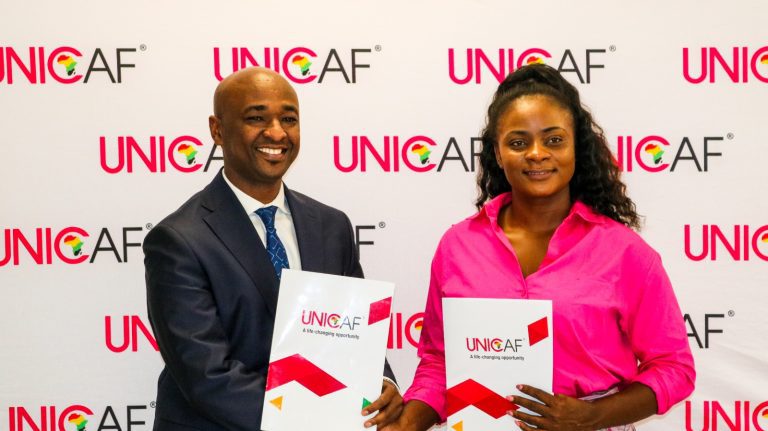
Teki and UNICAF partner to advance global digital skills development

0

Teki, a leading digital skills accelerator, and UNICAF, a global educational organization, today announced a landmark partnership. This collaboration is designed to provide advanced academic pathways and continuous professional development for Teki’s graduates, empowering them to thrive in the global digital economy.

As part of this strategic alliance, UNICAF will offer Teki graduates and members exclusive scholarships for postgraduate studies. Eligible individuals can access scholarships of up to 80% for selected Master’s programs and 70% for Doctoral programs. These programs are delivered through UNICAF’s prestigious network of partner universities, including the University of East London (UK), the University of Suffolk (UK), Liverpool John Moores University (UK), and other accredited institutions.

Beyond academic advancement, the partnership includes a commitment to co-develop and host professional development initiatives. Teki and UNICAF will jointly organize webinars, bootcamps, and networking events aimed at continuously enhancing the knowledge and practical skills of the Teki community.

The announcement precedes Teki’s upcoming graduation ceremony on December 17, 2025, which will celebrate students who have completed intensive training in Digital Marketing, Content Creation, Digital Entrepreneurship, and other high-demand fields.

“We believe this partnership with UNICAF is a transformative step for our graduates,” said Martin Muli, CEO of Teki. “By providing access to world-class higher education and specialized training, we are elevating their skill sets and significantly boosting their competitiveness in the global marketplace. This opportunity aligns perfectly with our mission to create market-ready digital professionals.”

International Creators Day 2025 to attract  participants from the region

Teki has established itself at the forefront of digital skills development, running programs that equip digital marketers and content creators with immediately applicable skills. Earlier this year, Teki launched a comprehensive Digital Innovation Challenge dedicated to helping women entrepreneurs refine their innovations into market-ready products through targeted training and mentorship.

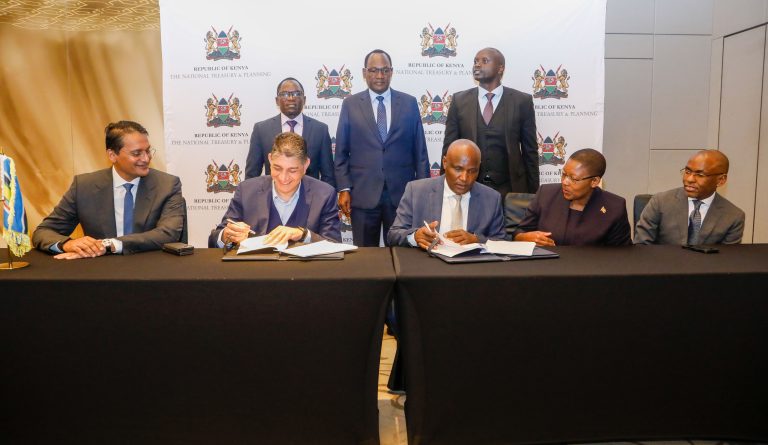
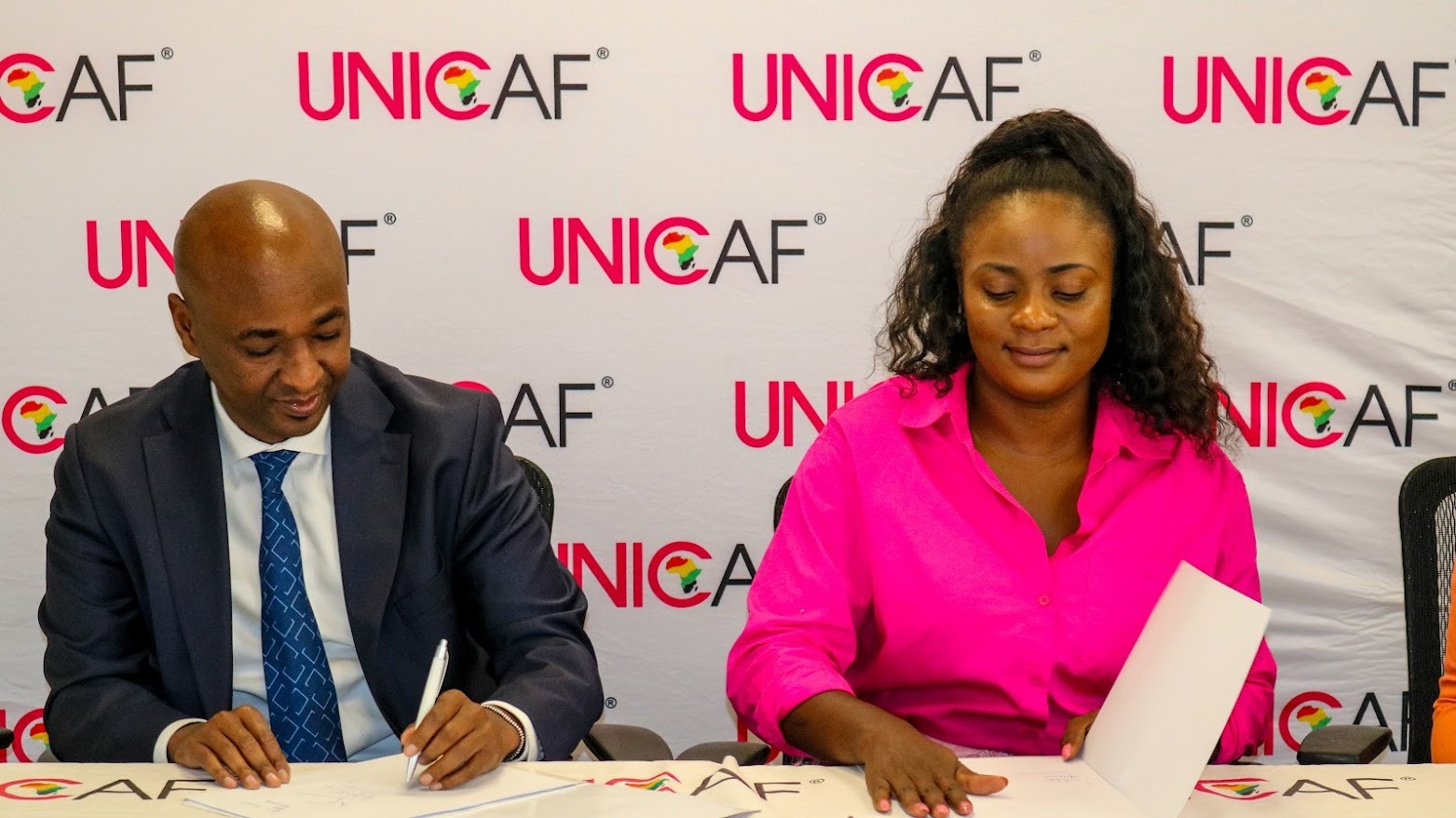
“We are excited to embark on this fruitful partnership with Teki,” said Mrs. Winnie Rachael, Country Manager UNICAF Kenya, during the MOU signing ceremony. “Our collaboration will connect Teki’s talented graduates with our international network, offering structured skills development in the creative and digital economies. This initiative is not just about education; it’s about fostering job creation and empowering learners with globally recognized digital competencies.”

This partnership marks a significant commitment by both organizations to bridge the digital skills gap and create sustainable career pathways for learners in Africa and beyond.
Teki and UNICAF partner to advance global digital skills development
Martin Muli, CEO of Teki, and Mrs. Winnie Rachael, Country Manager UNICAF Kenya during the official signing of the partnership

Safaricom and Vivo Energy Kenya unveil fuel discounts and enhanced benefits for Bundle Ya Dere Drivers

0

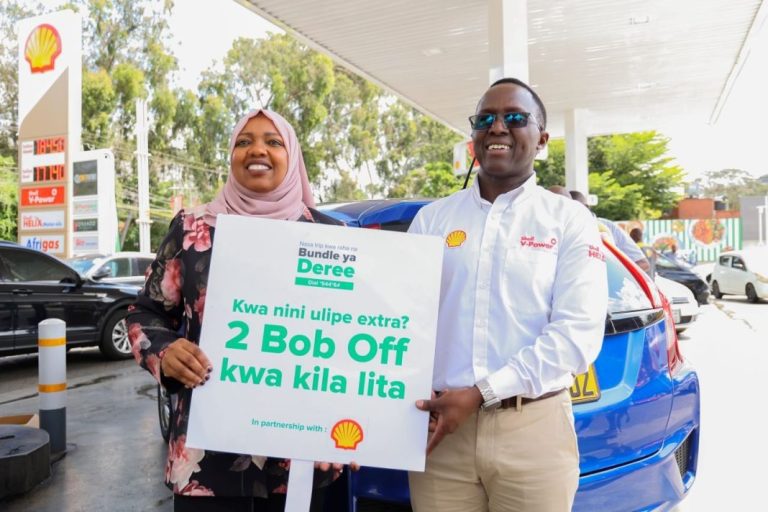
Vivo Energy Kenya, the company that distributes and markets Shell products and services in the country in partnership with Safaricom PLC have announced a boost to Bundle Ya Deree, a recently launched proposition by Safaricom that offers cab drivers unique access to connectivity and their work productivity tools.  Under Safaricom’s partnership with Vivo Energy Kenya, motorists will enjoy even more value every time they fuel at Shell service stations. The fuel discount offer will be available exclusively to drivers on Bundle Ya Dere every Saturday, across all Shell outlets countrywide.

Shell’s consumer offer brings taxi drivers a blend of premium fuel, convenience and cashback rewards each time they fuel at Shell, an add on to drivers obtaining free access to driver apps (Uber, Bolt, Little, Faras & Yego), Google Maps and insurance with generous data and minutes.

The discounted fuel deals at Shell service stations will help reduce operational costs, making driving more affordable, making this combination of connectivity, insurance and savings a comprehensive solution for drivers’ daily needs.

“As Safaricom, our commitment remains to listen, innovate and enhance our customer’s experiences, therefore co-creating solutions that make life better. The launch of this dual deal in partnership with Vivo energy Kenya, will enhance customer value through subsidized operational costs and enhance savings. In a mobile and on demand world, this milestone puts together connectivity, convenience and savings, enabling drivers to focus on what they do best. We encourage drivers to fill up their tanks at Shell every Saturday to get the best value from this deal.” said Fawzia Ali Kimathi, Chief Consumer Business Officer at Safaricom.

To further enhance safety and security, the proposition includes subsidized insurance covers for drivers and riders from accidents, illness, or loss of income, as well as training on financial literacy and road safety. On financial wellness, Safaricom has rolled out Safire Connect empowerment forums that seek to advance knowledge on entrepreneurship, financial wellness and digital & AI fluency, for communities including riders and drivers.

Top ten Safaricom shareholders and the number of shares they own

“Every day we serve millions of Kenyans across our retail network and today we are excited to join an initiative that offers real, everyday value to taxi drivers across the country. This collaboration further enhances our customer experience, making every stop at Shell more rewarding than ever.” said Mr. Peter Murungi, Managing Director, Vivo Energy Kenya.

As part of the Shangwe celebrations marking Safaricom’s 25 years of operations, drivers will benefit from upcoming forums that will cover financial wellness, health and safety, as well as practical ways to utilize digital tools to grow their income for secure livelihoods.

Vivo Energy is the leading Oil Marketing Company in Kenya with the widest retail network of over 340 Shell service stations countrywide. In this year’s consumer awards, Shell was awarded as the most accessible and preferred brand further cementing its market leadership in Kenya.

With Vivo Energy Kenya on board, drivers on the Bundle Ya Dere will now enjoy fuel discounts of KES 2 per litre on Shell fuels at all Shell service stations across Kenya.

Boda boda riders can enjoy Ofa Ya Boda by dialling *544*8#, while Bundle Ya Dere is available to online cab drivers on *544*6#.

Former Tahidi High actor Bilal Wanjau dies

0

Popular Tahidi High actor Bilal Wanjau is dead.

Wanjau reportedly died on Thursday, December 4, while receiving treatment at the Kenyatta National Hospital.

According to reports, the actor was battling type 2 diabetes and had spent the past week fighting pneumonia while also managing a wound on his leg.

“We brought him to the hospital on Monday, and they ran tests till Wednesday. The doctors were about to begin treatment before he passed on later in the night,” the family spokesperson said.

The actor’s death was also confirmed by industry friend Sandra Dacha in a heartfelt message on social media, hailing him as a talented thespian.

“It is with profound sorrow that I announce the untimely passing on of my colleague Bilal Wanjau this early morning due to diabetes complications,” Dacha said.

“Bilal was a great, talented actor. We’ve lost one of the best in the industry. The burial date is set for Friday (tomorrow), 5/12/2025, at his rural home in Machakos. Kindly keep the family in your prayers. May God rest his soul in eternal peace.”

Wanjau was an actor and director who has been featured on some of the popular local TV shows, including Citizen TV’s Tahidi High.

He has also performed roles in films like Sumu la Penzi, Jela 5 Star, Njoro wa Uba, and Hullabaloo Estate, among others.

In 2017, he won a Kalasha Award for Best Performance in a Comedy, thanks to his work on Jela 5 Star.

ALSO READ: DStv at risk of losing 12 major news and entertainment channels

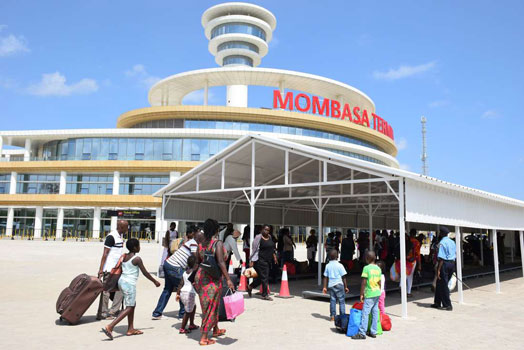
Madaraka Express train charges from Nairobi to Mombasa this festive season

0

When it comes to the festive season, everyone has their celebration tradition. While some choose to unite with their families, others go for fun and relaxation as they prepare for the coming year.

Mombasa and the entire coastal region is one of the top destinations for those seeking to unwind. The city’s renowned white-sand beaches such as Diani, Nyali, and Bamburi attract both local and international visitors.

Paired with world-class marine experiences like snorkeling, diving, and dhow cruises, Mombasa provides a unique blend of leisure and adventure.

SGR is the most preferred mode of transport to the coast owing to its efficiency.  It offers cheap tickets at Sh1,500 for the Economy class and Sh4,500 for first class.

The most luxurious option is the Premium class, priced significantly higher. A one-way ticket costs Sh12,000, while a return trip is offered at a discounted rate of Sh20,000.

The standard journey departs from Nairobi at 9:40 am and arrives in Mombasa at 3:35 pm.

Kenya Railways on Monday announced the addition of a new Madaraka Express Passenger train to accommodate the expected surge in holiday travel along the Nairobi–Mombasa route. The extra train will operate daily from December 8, 2025, to January 5, 2026.

“We have introduced an additional Madaraka Express Passenger train to support the increased travel demand this festive season The service will run from 8th December 2025 to 5th January 2026 to ensure more passengers are accommodated and travel disruptions are minimized,” the corporation said.

According to the schedule, the additional train will depart from Nairobi at 9:40am, arrive in Voi at 1:35pm, and proceed to Mombasa, where it is expected to arrive at 3:55pm.

For the return leg, the train will always leave Mombasa at 4:30pm, stop in Voi at 6:15pm and arrive in Nairobi at 10:55 pm.

SGR had earlier announced that all premium class passenger trains are fully booked until February 2026.

“The demand for this premium class is high, so we are now going to order more coaches and equipment to ensure that everyone is accommodated. And for your information, we are booked until February,” SGR Managing Director Philip Mainga said.

“We are fully booked for Christmas; we do not have any seats, but we are willing to run special trains and ensure that Kenyans go to Mombasa and enjoy themselves and come back,” he added.

ALSO READ: 9 small business ideas to make money during Christmas season

Safaricom and Vivo Energy announce fuel discount for cab drivers

0

Vivo Energy in partnership with Safaricom PLC has announced Sh2 fuel discount for online cab drivers in the country.

The offer is part of a product dubbed Bundle Ya Deere, a recently launched proposition by Safaricom that offers cab drivers unique access to connectivity and work productivity tools.

Under the new partnership, online taxi drivers subscribed to Bundle Ya Dere will enjoy a fuel discount of Sh2 per litre every time they fuel at Shell service stations across the country.

The fuel discount will be available only on Saturdays and will help reduce operational costs, making driving more affordable. This combination of connectivity, insurance and savings is a comprehensive solution for drivers’ daily needs.

The offer complements free access to apps such as Uber, Bolt, Little, Faras and Yego, Google Maps, and subsidised insurance.

“As Safaricom, our commitment remains to listen, innovate and enhance our customer’s experiences, therefore co-creating solutions that make life better. The launch of this dual deal in partnership with Vivo Energy Kenya, will enhance customer value through subsidized operational costs and enhance savings,” Fawzia Ali Kimathi, Chief Consumer Business Officer at Safaricom said.

ALSO READ: Top ten Safaricom shareholders and the number of shares they own

“In a mobile and on-demand world, this milestone puts together connectivity, convenience and savings, enabling drivers to focus on what they do best. We encourage drivers to fill up their tanks at Shell every Saturday to get the best value from this deal,” he added.

To further enhance safety and security, the proposition includes subsidized insurance coverage for drivers and riders from accidents, illness, or loss of income, as well as training on financial literacy and road safety.

On financial wellness, Safaricom has rolled out Safire Connect empowerment forums that seek to advance knowledge on entrepreneurship, financial wellness and digital & AI fluency, for communities including riders and drivers.

“Every day we serve millions of Kenyans across our retail network and today we are excited to join an initiative that offers real, everyday value to taxi drivers across the country. This collaboration further enhances our customer experience, making every stop at Shell more rewarding than ever,” said Mr. Peter Murungi, Managing Director, Vivo Energy Kenya.

As part of the Shangwe celebrations marking Safaricom’s 25 years of operations, drivers will benefit from upcoming forums that will cover financial wellness, health and safety, as well as practical ways to utilize digital tools to grow their income for secure livelihoods.

Top ten Safaricom shareholders and the number of shares they own

0

Is the government of Kenya the largest shareholder at Safaricom? Who are the top ten largest Safaricom shareholders? How many shares do they own? Well, according to the annual report and financial statements of Safaricom for the year ended March 31, 2025, the top ten Safaricom shareholders were:

1). Vodafone Kenya Limited with 16 billion shares. Vodafone’s stake is equivalent to 39.93 percent.

2). Cabinet Secretary to the National Treasury [Government of Kenya] with 14,022,572,580 shares. This stake is equivalent to 35 percent shareholding.

3). Standard Chartered Kenya Nominees Ltd A/C Ke004667 with 380,658,806 shares representing a 0.95 percent stake.

4). Kenya Commercial Bank Nominees Limited A/C 1019D with 365,227,900 representing 0.91 percent.

5). Kenya Commercial Bank Nominees Limited A/C 915B with 345,582,886 shares equivalent to a stake of 0.86 percent.

6). Stanbic Nominees Limited NR7522171 with 245,586,200 shares equivalent to a stake of 0.61 percent.

7). Stanbic Nominees Ltd A/C NR1030824 with 224,513,900 shares equivalent to 0.56 percent stake.

8). Standard Chartered Nominees Resd A/C KE11401 with 163,458,207 shares representing a stake of 0.50 percent.

9). Stanbic Nominees Limited R6631578 with 188,160,853 shares equivalent to a stake of 0.47 percent.

10). Standard Chartered Nominees Resd A/C KE11443 which has 163, 458,207 shares which are equivalent to a stake of 0.41 percent.

New York Times: How Ruto’s family, allies make profits from sending Kenyans to Saudi

The rest of shareholders at Safaricom hold a combined stake of 19.79 percent which comprises of 7,927,725,909 shares. In total, Safaricom has a total of 40,065,428,000 shares.

Safaricom shares were first sold to the public through an Initial Public Offer (IPO) which lasted for a period of three weeks from March 28, 2008. The shares went on sale at a rate of Sh5 per share. Foreign and local investors placed bids worth a combined Sh. 231 billion, which was a 360 per cent oversubscription.

The IPO came close to doubling the number of investors at the Nairobi Securities Exchange (NSE) from 800,000 to 1.5 million. The local retail pool saw an oversubscription of 669.7 percent. On June 9 2008, the Safaricom shares began to trade at the NSE, debuting at the bourse at Sh5 apiece.

The current composition of the top ten largest Safaricom shareholders is expected to change following the government’s decision to sell 15 percent of its shares to South Africa’s Vodacom Group.

In the sale, the government is expected to pocket Sh204.3 billion after handing over 15 percent of its stake to Vodacom Group at a rate of Sh34 per share.

In addition to the Sh204.3 billion that the government is expected to earn, the government will also take Sh40.2 billion in advance dividend to bring its total earnings to Sh244.5 billion.

Co-op Bank announces sale of used Subaru, other vehicles for as low as Sh400,000

0

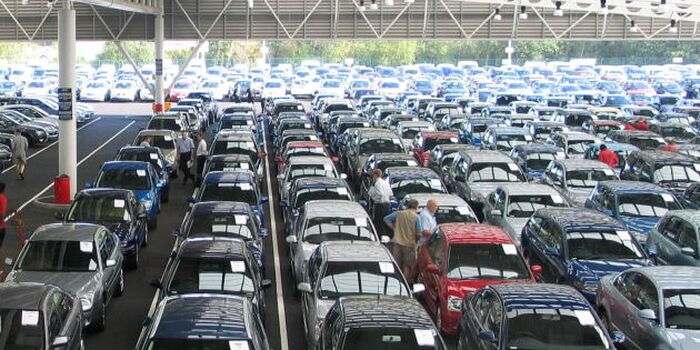
The Co-operative Bank of Kenya (Co-op Bank) has announced the sale of used motor vehicles through a public auction.

In a notice on the Daily Nation on Wednesday, December 3, 2025, the financial institution invited interested bidders to submit their bids for the purchase of 19 vehicles.

The listed cars feature different brands including Isuzu, Mitsubishi, Subaru, Mercedes, and Nissan among others.

The cheapest vehicles in the list are a Subaru Impreza and Nissan X-trail, all set to be sold for Sh400,000.

Others are Mitsubishi Fuso (Sh700,000), Nissan Note (Sh750,000), Nissan NP300 (Sh1.05 million), Mercedes-Benz B180 (Sh1.64 million), Isuzu NPR (Sh1.76 million), Mitsubishi Canter (Sh1.94 million), and Isuzu NPR (Sh2 million).

Also in the list is FAW tipper (Sh2.15 million), Mitsubishi Fuso (Sh2.32 million), Mitsubishi Fuso (Sh2.57 million), Isuzu D-max (Sh3.1 million), Isuzu D-max (Sh3.24 million), Mitsubishi Fuso (Sh3.2 million), Isuzu D-max (Sh3.6 million), and  Isuzu FTR90L (Sh4.96 million),

The most expensive vehicles in the list are Isuzu NQR81K (Sh6.1 million), and Isuzu FVZ (Sh6.2 million).

Co-op Bank directed interested buyers to submit bids online through its vehicle platform https://vehiclesales.co-opbank.co.ke/ by Wednesday, December 17, 2025.

An offer letter shall be issued to successful bidders subject to payment of a non-refundable bidding fee of Sh3,000.

“Successful bidder will be required to pay the bid amount in a lump sum within 24 hours after receipt of the letter of offer on a first-come, first-served basis. For more information, call us on 0711 049 069,” the notice in Daily Nation reads.

Offers received after the advertisement’s closing date for bids will not be taken into consideration. Additionally, multiple bidding on the same vehicle will not be allowed.

ALSO READ: Rules you must comply with when importing used cars in 2026

Vodacom Group acquires increased shareholding in Safaricom in Sh204bn buyout

0

The government is selling 15 percent of its Safaricom shares to South Africa’s Vodacom Group. The shares will be sold at Sh34 apiece and will see the government pocket Sh204.3 billion.

This sale will reduce the government’s shareholding in Safaricom from the current stake of 35 percent to a stake of 20 percent.

“The proposed transaction shall be comprised of the acquisition by Vodafone Kenya of the additional shares for a consideration of Sh204.3 billion at a price of Sh34 per share,” Safaricom said in a public notice.

In addition to the Sh204.3 billion that shall be collected from the sale, the government will take Sh40.2 billion in advance dividend to bring its total earnings to Sh244.5 billion.

“[The sale shall include] Vodafone Kenya buying the right to receive future Safaricom dividends for an upfront payment of Sh40.2 billion to the government of Kenya, in lieu of future dividends that will accrue to the government’s residual 20 percent shareholding in Safaricom,” a notice by Safaricom on the sale says.

This advanced dividend payout will amount to a dividend pay at a rate of about Sh6.69 per share. Besides this transaction, South Africa’s Vodacom Group will purchase a 12.5 percent stake that is currently held by Vodafone International Holdings in Vodafone Kenya for Sh68 billion.

This will push Vodacom’s interest in Safaricom to 55 percent while giving the company total ownership of Vodafone Kenya.

“The acquisition by Vodacom of the Vodafone Kenya Shares for a consideration of Sh68.1 billion, resulting in Vodacom owning 100 percent of Vodafone Kenya’s share capital directly and approximately 55 percent of Safaricom’s share capital indirectly.”

Prior to this acquisition, Vodacom has been holding a 40 percent stake in Safaricom while the government has been holding a 35 percent stake. The public has been holding shares equivalent to a stake of 20 percent.

At the same time, Vodafone Kenya which has been holding 16 billion shares equivalent to 39.93 percent in Safaricom has been jointly owned by Vodacom and Vodafone. Vodacom, which is headquartered in Midrand, South Africa, is listed on the Johannesburg Securities Exchange (JSE).

Vodafone on the other hand is a private limited liability company which is headquartered in Netherlands. Vodacom and Vodafone are both subsidiaries of the Vodafone Group Plc which is an international telecommunications company that is headquartered in Newbury, England. It operates in 15 countries and is listed on the London Stock Exchange (LSE).

New York Times: How Ruto’s family, allies make profits from sending Kenyans to Saudi

The sale at a rate of Sh34 per share will be a premium on the current share price of around Sh28 which the Safaricom has been trading around. As at the end of trading at the Nairobi Securities Exchange on December 3, 2025, the counter was trading at an average of Sh28.20 per share with a 52-week high of Sh31 per share and a one-year low of Sh15.10.

The sale of these shares by the government follows the recent Privatization Act of 2025 that was signed into law on October 21, 2025. In this new law, the government has been allowed by Section 74 to sell or dispose part or all of its shares in a government-linked corporation with the approval of the Cabinet following a recommendation from the National Treasury.

“Completion of the proposed transaction is [now] subject to approval from governmental and regulatory authorities including the Kenyan cabinet, Kenyan National Assembly, Capital Markets Authority, Communications Authority of Kenya, the Central Bank of Kenya, COMESA Competition Commission, and the East African Community Competition Authority,” Safaricom stated in its notice.

KenGen approves higher dividend as profit surges 54% on strong operational performance

0

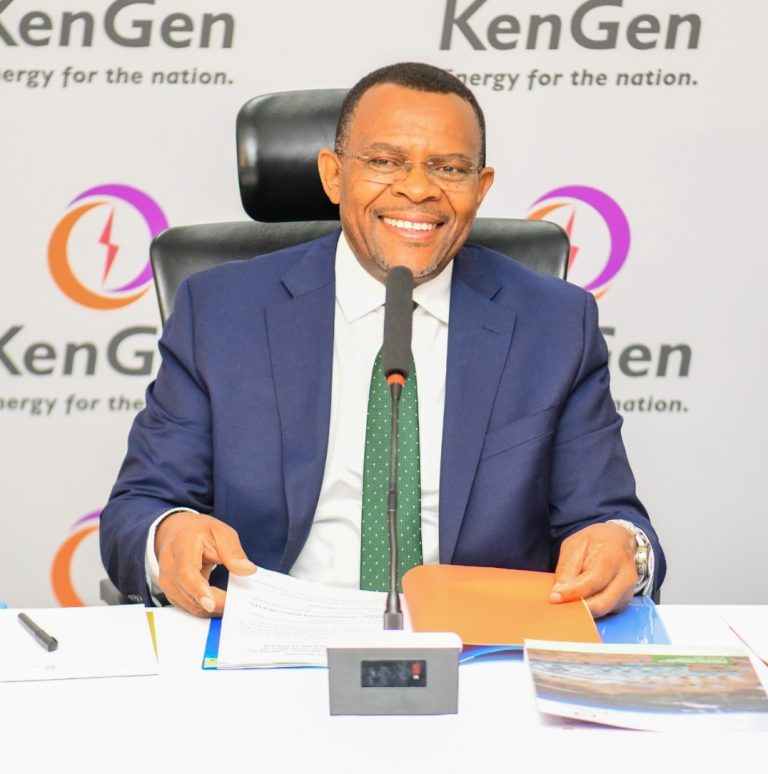
Kenya Electricity Generating Company PLC (KenGen), East Africa’s largest power producer, approved a higher dividend on Thursday after reporting a year of strong earnings and operational gains.

At the company’s 73rd Annual General Meeting in Nairobi, shareholders endorsed a first and final dividend of Ksh.0.90 per ordinary share for the financial year ended June 30, up from Ksh.0.65 last year. The increase follows a 54% rise in profit after tax, to Ksh.10.48 billion, driven by cost reductions, expanded revenue streams and an improved foreign exchange position.

KenGen’s chairman, Hon. Alfred Agoi, said the payout reflects confidence in the company’s financial fundamentals and long-term strategy.

“This dividend uplift is not only a reflection of strong financial results but a reaffirmation of

KenGen’s commitment to delivering value to shareholders,” Hon. Agoi said. “We are optimizing efficiency, diversifying revenue sources and unlocking new growth opportunities in the region. Our goal is to secure long-term returns while driving Kenya’s clean energy transition.”

Kenya’s broader economic environment remained resilient through 2024-25, with steady growth in agriculture and industry and rising electricity demand. National power consumption reached record highs in November, as peak demand climbed to 2,418.77MW and energy dispatch hit 44,555.80MWH (megawatt-hours), underscoring increased industrial activity.

KenGen continued to anchor the national grid, supplying roughly 60% of the country’s electricity. The company’s installed capacity stands at 1,786MW, which generated 8,482GWh over the past financial year.

KenGen profit surges 54% as clean energy strategy powers growth

Revenue held steady at Ksh.56.1 billion, while income from diversified activities surged 235%, buoyed by geothermal consultancy contracts in Eswatini and expanded regional work. Operating costs declined 11% to Ksh.35.1 billion as the company tightened cost controls and improved operational efficiency.

KenGen also recorded net foreign exchange and fair value gains of Ksh.1.45 billion, compared with a loss of Ksh.722 million the previous year, aided by a more favorable currency environment. Finance costs fell following loan repayments, reinforcing KenGen’s shift toward a lower-debt balance sheet.

Eng. Peter Njenga, the Managing Director and CEO, said the results reflect continued execution of the company’s strategic priorities.“Our financial performance reflects our positioning as a regional renewable energy leader,” Eng. Njenga said. “We have strengthened efficiency, widened our geothermal consultancy footprint and accelerated delivery of new generation capacity both locally and across the region.”

KenGen is advancing its long-term G2G 2034 Strategy, which targets 1,500 megawatts of new renewable capacity and 500MWh of energy storage to support Kenya’s energy security and low-carbon industrialization goals.

The company is in discussions to participate in the proposed 700MWh High Grand Falls hydropower project and is exploring storage solutions, including battery energy storage systems and pumped hydro. Regionally, KenGen is expanding its geothermal consultancy portfolio, with active or emerging projects in Ethiopia, Djibouti, Eswatini, Ngozi and Bhutan. A partnership with Toshiba ESS aims to scale geothermal operations and maintenance services in developing markets.

KenGen’s Geothermal Training Centre continues to train specialists from Africa and Asia, bolstering Kenya’s role as a global hub for geothermal expertise.

The company enters 2026 with a near-term project pipeline of 252MW, including the 63MW Olkaria I Rehabilitation, the 42.5MW Seven Forks Solar project and the expansion of the 8.6MW Gogo Power plant in Migori county. These developments are expected to strengthen grid reliability, support industrial expansion and accelerate Kenya’s transition to fully renewable power.

“Our investment priorities will continue to deliver sustainable energy, create value for shareholders and support Kenya’s industrial transformation,” Mr. Njenga said.

KDF speaks after claims crystal meth seized in coast has been stolen

0

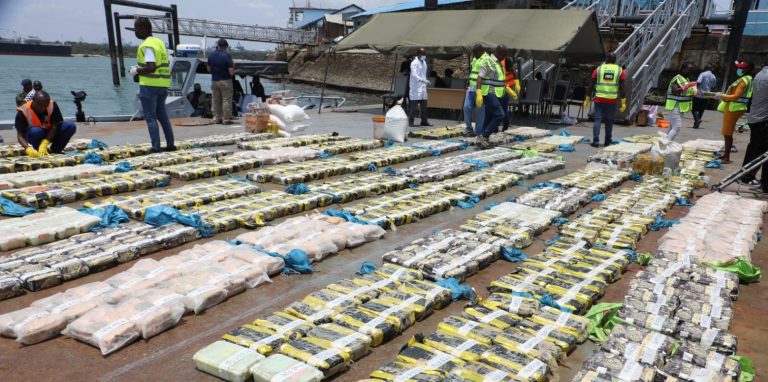
The Kenya Defense Forces (KDF) has come out to speak after reports went round that part of the 1,024 kilograms of methamphetamine that had been seized off the Kenyan coast has been stolen by its officials.

In a statement from KDF Strategic Communications, KDF refuted these claims, saying that the illegal drugs popularly known as Crystal Meth were in a secure location. “The entire consignment offloaded ashore remains secure,” KDF said.

Nonetheless, KDF confirmed that a number of its officials who are suspected of involvement in the alleged theft were under investigation. The army stated that if they are found to have committed any wrongdoing, ‘appropriate disciplinary and legal measures will be taken in accordance with the law.

The drugs seized by the military are worth an estimated Sh8.2 billion in street value. The crystal meth drugs were seized off the Kenyan coast, about 630 kilometres east of Mombasa.

READ MORE: Where was Sh8.2 billion meth seized by Kenya Navy at the coast headed?

The drugs were seized from a stateless dhow that was dubbed as ‘Igor’. The dhow had a crew of six who were all Iranian nationals. The meth seized by Kenya Navy was packaged in packets that were concealed in black polythene bags.

These packets were then wrapped with a yellow tape labelled that was labeled as ‘100 per cent roasted and grounded Arabica coffee’. This was meant to disguise them as coffee.

This was the third seizure of drugs worth over Sh1 billion, raising questions on whether the Kenyan waters are a transit for illegal habour and, or an entry point for illegal drugs.

For instance, in 2014, Sh1.4 billion heroin was found aboard a ship in the Indian Ocean by the Kenya Navy. These drugs were found on the deck of the vessel AMIN DARYA also known as MV Al Noor.

Six Pakistani nationals and 1 Iranian national were arrested and sentenced to life in prison by a Magistrate’s Court.  However, they filed an appeal at the High Court and were set free by Justice Wendy Micheni over what was termed as procedural shortcomings.

In 2006, 1.1 tonnes of cocaine valued at an estimated Sh6 billion was seized by the police in Nairobi and Malindi in 2006.