
Home Blog Page 140

EAYASE-25 rallying East Africa’s young agripreneurs to drive the future of food systems

0

The East African Community (EAC) Secretariat in partnership with AGRA has convened the East African Youth in Agri-Food Systems Expo 2025 (EAYASE-25) drawing agripreneurs, policymakers, investors and development partners to Nairobi as a part of a growing regional and continental momentum focused on placing young people at the centre of food systems transformation.

With more than 70% of East Africans relying on agriculture for their livelihoods and food systems facing intensifying climate and market pressures, regional stakeholders have launched a major push to elevate youth-led innovation across the agri-food sector.

The region’s powerful demographic advantage, 60% of the population under 25, positions youth to shape the future of agriculture, especially as new financing models, modern technologies, and stronger market links open the door to meaningful participation and leadership.

Stella Clara Massawe, Senior Specialist, Policy and State Capability Eastern and Southern Africa, AGRA said: “Across Africa, young people are already demonstrating that agriculture can be innovative, profitable and climate-resilient Through EAYASE-25, AGRA and its partners are strengthening youth-led agribusinesses, enabling access to finance and markets, supporting digital and climate-smart solutions, and shaping policies that allow young agri-preneurs not just to start, but to scale sustainable businesses.”

EAYASE-25 builds on wider continental efforts to advance youth empowerment across Africa’s agri-food systems. Working with governments, financial institutions, private sector players and development partners, AGRA supports youth entrepreneurship by strengthening access to finance, digital agriculture and fintech solutions, climate-smart practices, agro-processing and value addition.

Why every farmer needs to link up with agriprenuers to grow their profits

Together, these initiatives are helping reposition agriculture from subsistence activity into a competitive, high-value engine of economic growth across the continent. In parallel, AGRA advocates for inclusive policies that expand opportunities for young people and women.

Fahari Marwa, Head of Agriculture and Food Security at the EAC Secretariat, noted: “The East African Community is committed to ensuring that youth are fully integrated into regional development and food security strategies. Platforms such as EAYASE-25 enable young people to directly engage policymakers and investors, align national and regional priorities, and contribute to policy and market solutions that support inclusive and sustainable agri-food systems across the Community. “

He added, “Beyond the Nairobi convening, we aim to strengthen a sustainable regional network of youth agripreneurs that promotes ongoing collaboration, mentorship and knowledge exchange. The Expo aligns with the EAC Youth Strategy and the African Union’s Agenda 2063, both of which emphasize youth empowerment, economic inclusion and sustainable agriculture as cornerstones of long-term growth.”

Joyce Ng’ang’a, one of the young agripreneurs attending the forum, welcomed the initiative, noting that it comes at a pivotal moment for the region. She said, “this is the time for youth to step forward and lead the transformation of East Africa’s food systems – not only to secure the region’s future food supply, but also to build resilient, innovative and sustainable agri-food economies that can compete globally.”

She also urged the government and other organizations to consider inclusive agricultural practices and capacity building which encourages participation by people with disabilities.

Last week, Rwanda hosted the Youth Forward for Agrifood Systems Transformation Forum (Youth FAST Forum), organized by the Ministry of Agriculture and Animal Resources (MINAGRI) with support from development partners. The Kigali forum focused on accelerating the implementation of Rwanda’s National Strategy for Transformation (NST2) and the Strategic Plan for Agriculture Transformation (PSTA5), positioning youth as key actors in agrifood systems, job creation and investment mobilization.

Expert tips for anyone entering Guinea Fowl farming

0

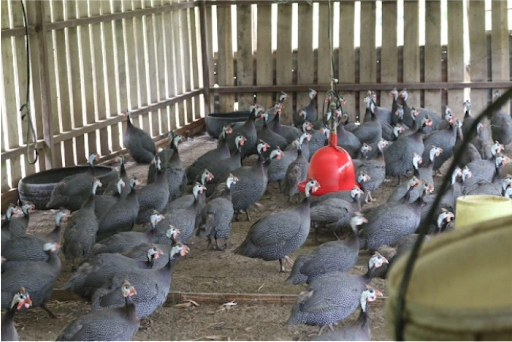
Guinea fowl often generate mixed emotions, but apart from die-hard enthusiasts, anyone who has lived in close proximity to a bunch of guineas may well go with the second opinion.

There’s no denying that guinea fowl are relatively easy to keep, providing you have plenty of space and no near neighbours. They are independent birds, self-sufficient foragers who will find much of their own food.

Throughout all seasons, they are productive layers. These birds lay anywhere and everywhere, particularly favoring large clumps of nettles. The eggs are deeply flavoured, with large golden yolks and surprisingly tough shells.

Guinea fowl are often kept for their meat eggs which are regarded as healthy supplements. Nicholas, a farmer in Eldoret says guinea fowls take less feed almost half of what chickens consume.

Additionally, guineas are said to have a low mortality rate compared to chickens. According to experts, guinea fowl farming can be profitable if done correctly. As such, farmers need to observe the following:

Shelter

Provide a safe, spacious shelter that protects your guinea fowl from predators, wind, rain, and cold. The shelter should have roosts, nesting boxes, and absorbent litter. Guinea fowl like to roost high up, so include high roosts in their coop.

Food

Guinea fowl need a higher protein feed than chickens. You can start them on a 28 percent game-bird/turkey ration, then switch to an 18 percent feed for weeks 5–8, and then a 16 percent layer mash after week 8.

You can also supplement their diet with mealworms, insects, and greens like leafy alfalfa.

Water

Provide clean water at all times, and make sure it’s lukewarm. Cold water can make them very sick.

Space

Guinea fowl need space to roam during the day, such as an enclosed run. They also need a sturdy fence to keep them safe from predators.

Dust bathing

Provide a dust bathing area with loose dirt where the guinea fowl can bathe together. Dust bathing is a natural way to control external parasites.

Eggs

If you want to collect guinea eggs, provide one nesting box for every four to five guinea hens. Keep the hens in their coop until noon each day to encourage them to lay eggs inside.

Health

Guinea fowl are generally hardy and disease-free, but they can get sick from poor hygiene or bacterial infections. Be on the lookout for common health issues like mites, lice, respiratory infections, and coccidiosis.

Climate

Guinea fowl adapt to most climates, but they don’t like wet or cold snow. They prefer warm temperatures.

ALSO READ: Shamir Odhiambo: Why ornamental birds are more profitable than chicken farming

Ndindi Nyoro sponsors best performed Kiharu headteachers for Dubai vacay

0

Kiharu Member of Parliament Ndindi Nyoro has flagged off a group of headteachers from Kiharu constituency for a fully paid five-night trip to Dubai for good performance.

The motivation trip is part of Nyoro’s Masomo Bora initiative launched in 2023 to motivate day school teachers. It is jointly facilitated by the MP and the NGCDF kitty.

Beneficiaries are head teachers of best-performing schools and teachers whose subjects are best improved in the constituency, in last year’s national exams.

They are from Ngaru Primary School, Githagara Primary School, Technology Primary School, Maragi Primary School, and Githuguya Primary School.

Beatrice Wachira, the headteacher of Technology Primary School in Murang’a town lauded the MP for the gesture while encouraging other teachers to give their best in their areas of operation.

“I feel so happy. I urge teachers to continue working hard because their commitment and self-drive will take them far and will not go unnoticed,” she said.

According to the MP, the itinerary includes a Half Day Dubai City Tour, a Marina Dhow Cruise Dinner, and Entertainment, a visit to Burj Khalifa tallest building and a Desert Safari with BBQ Dinner.

Last year, 11 teachers were taken to Dubai while one chose Malaysia, as he had already visited Dubai in a similar trip. Best best-performing teachers in this year’s KCSE will go next year.

The Masomo Bora initiative covers over 10,000 learners in day secondary schools within Kiharu.

Key components of the program include school fee waivers, infrastructural improvements, nutritional support, and bursaries, all aimed at ensuring that students in Kiharu receive quality education and support.

ALSO READ: TSC follows Ruto order, refuses to promote 20,000 junior school interns

Under the program, all day secondary school has been capped to Sh1,000 per term ensuring no student is left behind.

“Under this provision, students are only required to pay Sh1,000 per term, significantly reducing the financial burden on parents,” Nyoro said during the launch of the program.

The program also covers infrastructure development, primarily laboratories and computer labs and the provision of revision books, porridge, and lunch for six days a week including chapati lunch for the last Friday of the month in all day secondary schools.

The financing for this ambitious program is drawn primarily from the National Government Development Fund (NGCDFK).

So far, all 112 public primary schools have been tiled, while day secondary school students have benefitted from subsidized fees.

Nyoro’s commitment to the educational well-being of his constituents saw him named the best-performing lawmaker in 2023 by Infortrak Research company.

Truphena Muthoni: Kenya’s tree-hugging champion sets sights on 72-hour marathon

0

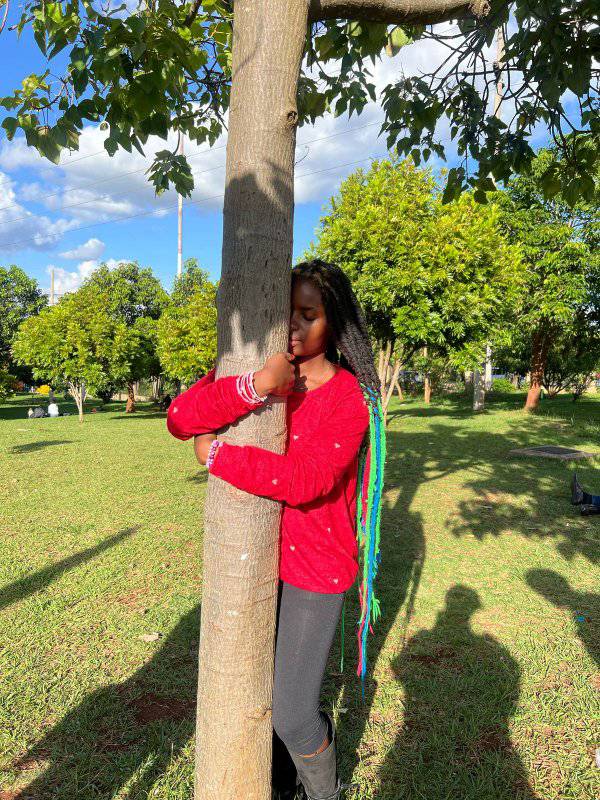
Truphena Muthoni, the world record holder for the longest marathon hugging a tree for 48 hours, has announced that she’ll be seeking to break her own record by hugging a tree for three days (72 hours nonstop). The event is set to kick off at midnight on Sunday, December 7.

She’s mobilized over 10,000 people in over 33 countries who’ll be hugging trees simultaneously in solidarity. She spoke to Bizna Kenya about how she plans to pull off the 72-hour hug and the lessons she drew from her previous huggathon.

Truphena Muthoni


How does Truphena Muthoni prepare for 72 hours without food or water?

For Muthoni, preparing for this challenge isn’t just about physical endurance; it’s a deeply personal journey that demands alignment of mind, body, and spirit.

“I train by walking for long hours, like 42 kilometers. I also do mini tree-hugs that involve communities, kids, and even cows. They come and do solidarity tree-hugs with me,” she started off.

The global response has been overwhelming. People in more than 33 countries have joined her movement, hugging trees, sharing photos, and tagging her in a display of worldwide environmental solidarity.

“It really motivates me. It shows what one person can do can actually inspire movement,” she says.

How Machine Learning Improves Game Balancing in iGaming

But the training goes beyond long walks and practice hugs. Muthoni has learned to fast, sometimes taking just one meal a day to prepare her body for the extended period without food. However, she made a critical mistake in her first attempt that taught her a valuable lesson.

“I didn’t take a lot of water because I wanted to practice staying without water, but that was wrong. I learned from that. You need to take a lot of water, actually, so that your kidneys, you’re medically safe,” she admits.

Truphena Muthoni hugs tree
Truphena Muthoni hugs tree. Photo: Truphena Muthoni/ Facebook.

During the actual hug, she won’t drink anything at all, no water, no glucose, nothing to support her except her mental stamina. She prepares her body beforehand by drinking plenty of water, but at the moment when she’s hugging the tree, she doesn’t take anything.

The challenge is as much mental as it is physical, perhaps even more so.

“People think that you shouldn’t come to talk to me because maybe you’re stressing me out, but I tell them you should come all the time. When I’m talking to them, my mind is active and I won’t shut down. Your mind can shut down if you stay for long hours without talking to people,” Muthoni explains.

She avoids negative energy, creates music, sings, and focuses on patience through meditation. Being Kenyan grounds her, she says, carrying the strength and the wisdom to show girls in Nyeri, in Kenya, and beyond that women can lead with courage.

There won’t be any breaks during the 72 hours, though Guinness World Records allows them for marathon attempts.

“I’m the first person to do a marathon in the world. There have been some attempts at tree hugging, but there’s never been a marathon. It’s allowed, but I decide not to take the breaks. There’s no showering, no bathroom breaks. I do it nonstop,” she clarifies.

https://www.tiktok.com/@treephena/video/7579520798386425100?is_from_webapp=1&sender_device=pc


Why are airplanes cold: Expert explains reason behind the chill in aircraft cabins

What are the biggest challenges during the tree hug?

The physical challenges are real, aches, cramps, and fatigue. She manages them by focusing on breathing, stretching carefully, and staying aware of her body. But it’s the emotional waves that can be the hardest to navigate.

“Emotionally, it changes in waves. Some hours feel heavy or lonely. Others bring calm, a sense of flow. Motivation can dip, but I focus on the purpose and the girls watching,” she admits.

Her previous attempt taught her crucial lessons about pacing, hydration, and mental preparation. At the 24-hour mark, when people were celebrating everywhere, she felt like giving up.

“I felt like I would leave it. I was so happy that there was media going live, mainstream media going live nonstop. That encouraged me,” she recalls.

Everyone involved offered their services for free, volunteers giving their time freely to support her mission. The weight of their sacrifice kept her going.

“I felt like even if I’m not doing it for me, I’m doing it for them. It’s like one for the team, one for yourself,” she says.

How does Muthini handle rain and wildlife?

She’s prepared for every scenario. Rain came for five minutes during her previous attempt at Michuki Park, so she trained for that too, once hugging a tree through a heavy rainfall at night in Garden Estate. As for wildlife concerns, she’s not worried.

“There’s no wildlife in Michuki Park, maybe monkeys. And there’s no wildlife at the office of the governor, where I’ll be hugging my tree in the next attempt,” she laughs.

Truphena Muthoni: Why tree-hugging matters beyond the record

For Muthoni, tree hugging goes beyond breaking records. It’s about fostering a deep connection with nature.

“When you’re hugging that tree, you fall in love with it. You feel the cost of losing one. It connects us to our ancestors, indigenous knowledge, and communities who’ve protected forests for generations,” she says.

The support from Brazil’s Quilombola communities, indigenous groups connected to the African diaspora who manage the Amazon rainforest, holds special meaning for her.

“They’re maternal, led by women. That feels so personal. It turns my personal challenge into a shared movement,” she explains.

After the 72 hours, Muthoni says her first priority will be a medical checkup.

“I don’t feel sick at all, not even as tired as what most might expect. But just for medical purposes and things that might happen inside you without you knowing, it’s important to do a medical checkup first,” Muthoni noted.

She plans to rest, reflect, and thank everyone who supported the mission. Celebration comes naturally afterward, but gratitude and reflection come first.

Through her tree-hugging marathons, Muthoni is teaching an important lesson: environmental care isn’t just something in textbooks, it’s personal and spiritual. “Before planting new trees, we must nurture a million hearts that care,” she says. And with over 10,000 people in 33 countries ready to hug trees in solidarity, it seems those hearts are already growing.

Yaya Centre tycoon becomes Kenya’s first dollar billionaire

0

Kenyan businessman Rasik Kantaria has become the first Kenyan businessman with a verified fortune above $1 billion.

According to Billionaires Africa, Kantaria’s new milestone is majorly driven by the sharp increase in the value of his stake in FMB Capital Holdings, a Mauritius-based financial services holding company.

The billionaire reportedly owns 525 million shares in FMB Capital Holdings, representing a 21.36 percent stake. That holding has surged in value as the group’s share price jumped more than 500 percent since January, from MWK555 ($0.32) to MWK3,383 ($1.95).

This saw the group’s market capitalization surge to MWK8.32 trillion ($4.8 billion), making it the largest company on the Malawi Stock Exchange and one of the standout performers across African markets in 2025.

The impact has been reflected on Kantaria’s fortune, growing his stake from MWK291.4 billion ($167.8 million) at the start of the year to the current MWK1.77 trillion ($1.02 billion), representing an increase of MWK1.48 trillion ($855.2 million).

This performance places him firmly in billionaire territory and makes him the first confirmed dollar billionaire in Kenya, long known for influential business families and regional investors but without a confirmed dollar billionaire from private-sector enterprise.

According to the wealth intelligence and market research firm New World Wealth, dollar billionaires are individuals with investible wealth of $1 billion/KSh129 billion or more.

New World Wealth’s recent data shows that there are only 22 dollar billionaires in Africa in only four countries: South Africa (8), Egypt (7), Morocco (4), and Nigeria (3).

Rasik Kantaria Wealth

Kantaria is the founder and chairman of Prime Bank Limited and Prime Capital Holdings and a co-founder of Mauritius-based FMB Capital Holdings PLC.

He is also the owner of Yaya Centre in Nairobi after acquiring it from the Biwott family in 2023 in a deal estimated to be worth billions.

The Kantaria family has a long-standing history of entrepreneurial success in Kenya, with their first enterprise established in the country in 1896 by the tycoon’s grandfather.

Following the footsteps, Kantaria entered the service industry, founding Prime Capital and Credit Finance Company, which eventually evolved into a successful commercial bank.

In 1995, he teamed up with Malawian billionaire Hitesh Anadkat to launch First Merchant Bank Limited in Blantyre. What started as a modest operation in Malawi’s commercial center gradually grew into First Capital Bank, now the flagship of FMB Capital Holdings.

Over the years, the group expanded into Malawi, Botswana, Zambia, and Mozambique. Kantaria’s investments span various sectors, including finance, real estate, hospitality, horticulture, and manufacturing.

The businessman chairs Tausi Assurance Company Limited and previously served on the board of the Deposit Protection Fund, an appointment made by the Central Bank of Kenya.

Over the years, the tycoon has maintained a low-profile, working quietly away from public attention.

In a past interview with Business Daily, he revealed that he does not know his net worth, arguing that he does not count money because he does not want it to get into his head.

“The moment you start counting money, it will go into your head and it will go into your children’s heads…I don’t work for wealth, I work to help society. To create employment, educate children, and help sick children get medical care,” Kantaria said.

He is heavily involved in charity through his family trust that provides prosthetic legs and wheelchairs to those who need them free of charge.

His philanthropic work earned him an Honorary Doctor of Humanities Degree from the United Graduate College and Seminary in the United States of America.

ALSO READ: Billionaire family that bought Yaya Centre from Biwott family

TSC follows Ruto order, refuses to promote 20,000 junior school interns

The Teachers Service Commission (TSC) has followed a directive that was issued by President William Ruto not to promote intern teachers after one year of service. This directive has impacted 20,000 junior school intern teachers who were hoping to be promoted to permanent and pensionable terms starting from January 2026.

Instead, the TSC has renewed the contracts of these junior school interns for an additional period of one year.

According to TSC Acting chief executive officer Eveleen Mitei, the teachers will now serve an additional period that will commence on January 1, 2026 and end on December 31, 2026.

“The Commission approved the extension of contracts for all serving junior school teacher interns for a further 12 months, with effect from 1st January 2026 to 31st December 2026… All interns shall remain in their current stations, subject to their formal confirmation of acceptance,” Ms Mitei said.

According to the directive by President Ruto, intern teachers will only be eligible for promotion to permanent and pensionable terms after serving for a period of two years. The president claimed in November that after the two-year period, these teachers will qualify for an automatic absorption into the TSC’s payroll for permanent and pensionable.

The president claimed that this directive is meant to assist the government in meeting its staffing targets while providing jobless interns with a structured career pathway.

Following these renewals, the TSC has gone on to ask interns to formally accept or reject their renewed contracts through their TSC county directors.

“Interns accepting the offer must sign the acceptance section of the contract and submit a valid Personal Accident Cover for the new engagement period,” said Ms Mitei.

The Commission has directed the county directors to send the interns their offer letters by latest December 20, 2025 and to have the acceptance and rejections signed by the impacted teachers submitted to the TSC by January 23, 2026.

READ MORE: No diploma, degree certificates for P1 teachers in TSC upgrading program

DStv at risk of losing 12 major news and entertainment channels

0

DStv customers are facing the risk of losing twelve main news and entertainment channels. This follows the upcoming expiration of a contract between MultiChoice and Warner Bros that allowed DStv and GOtv to broadcast the channels. This contract is set to expire this month and MultiChoice and Warner Bros are yet to reach an agreement on a fresh renewal.

Already MultiChoice, which is the company that owns DStv and GOtv has already sent a notice to its customers in South Africa.

“The distribution agreement between MultiChoice and Warner Bros. Discovery is scheduled to end on December 31, 2025. While discussions between the parties continue, no agreement has been reached at this stage,” the company said in a notice to its customers in South Africa.

The notice went on to state that if the situation remains unchanged, a number of Warner Bros. Discovery channels may n longer be available on DStv from January 1, 2026. These channels include CNN International, Cartoon Network, Discovery Channel, HGTV, Food Network, Travel Channel, TLC, and TNT Africa.

This is the latest storm to strike MultiChoice. Currently, the company is grappling with reduced customer numbers. In Kenya for instance, the company has recorded drastic reductions as customer walk away from pay television to online streaming.

The pay television service provider lost more than 84 percent of its DStv Kenya customers in the year to June 30, 2025. This is after the company  implemented price hikes that subscribers couldn’t keep up with.

According to the latest data from the Communications Authority of Kenya (CA), MultiChoice had 1.19 million active subscribers as at June 30, 2024. As at June 30, 2025, this number had fallen to 188,824, representing a drop of about 84.13 percent.

In August this year, MultiChoice slapped subscribers with price hikes of up to Sh700. This increase came barely months after the company hiked the prices by up to Sh500 in November last year. In April 2024, the company had also reviewed its prices upwards.

In the August review, the Premium package was hiked to Sh11,700 up from Sh11,000. The package had previously been hiked from Sh10,500 in 2024. This means that within nine months, the cost of subscribing to this package increased by Sh1,200.

Subscribers on the Compact Plus package were asked to pay Sh7,300 up from Sh6,800. In November 2024, this package had been hiked from Sh6,500 to Sh6,800.

On the Compact package, viewers were told to pay Sh4,200 which was Sh300 more than the previous price of Sh3,900. Last year, this package had been hiked from Sh3,700 to Sh3,900.

On the Family package, subscribers coughed up Sh2,250 from the current Sh2,100. In the latest review, the cost of this package had been hiked by Sh150. Last year, it had been increased by Sh100 from Sh2,000 to Sh2,100 per month.

“These changes are part of MultiChoice’s annual subscription review, which is conducted with great care to ensure customers receive the best of both local and international content,” MultiChoice had said in a statement. “The company aims to keep these adjustments sustainable while continuing to provide quality services to its customers.”

READ MORE: The problems with mega Rironi-Mau Summit A8 toll highway deal

Road maintenance hits 6-year low as funds collected from roads levy diverted

0

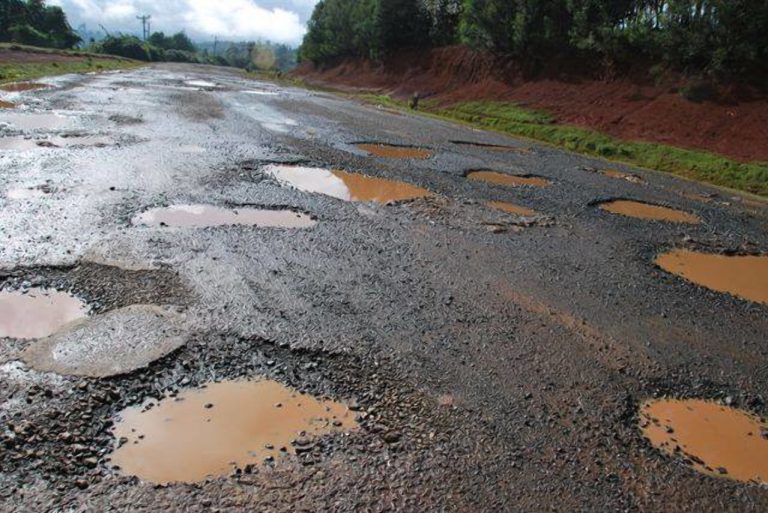
Road maintenance in Kenya hit a six-year low in the financial year ended June 2025. During the financial year 2024/25, the amount of kilometres that were repaired by the government decreased by 28 percent to 35,965 kilometres.

This came as the government slashed funds that are collected and allocated to road maintenance. At the same time, road construction and maintenance agencies in the country failed to meet their annual targets for the first time in nearly ten years. These agencies missed the maintenance targets by up to 5,148 kilometres.

According to the Department for Roads, the low number of roads that were maintained in the year was due to a reduction in allocations from the Road Maintenance Levy Fund (RMLF). These reductions were the result of the government diverting funds from the levy for administrative use and for securitization of new loans.

The cuts affected allocations that are sent to the Kenya National Highways Authority (KeNHA), the Kenya Urban Roads Authority (KURA), and the Kenya Rural Roads Authority (KeRRA).

KeNHA which manages and maintains highways and major roads across the country suffered an 18 percent reduction from Sh20.6 billion to Sh16.8 billion. Sh1 billion was cut from KeRRA’s allocation to Sh18.1 billion. KURA ‘s allocation was set at Sh6.6 billion which represented a cut of Sh2.4 billion.

In addition, the Kenya Wildlife Service which is tasked with maintenance of roads in national parks and game reserves suffered a cut of Sh60.8 million to Sh639 million.

In the same financial year, the government increased the roads maintenance levy by 39 percent from Sh18 per litre to Sh25 per litre. However, the Kenya Roads Board used the extra Sh7 per litre to securitize a Sh175 billion loan which was alleged to be for the purpose of settling pending bills that were owed to road contractors.

The Sh7 per litre of fuel increase in road maintenance levy was first hatched by former Cabinet Secretary for Transport Kipchumba Murkomen who is now in charge of Interior. CS Murkomen had claimed that the increase was necessary as the levy was last adjusted in the year 2016.

READ MORE: The problems with mega Rironi-Mau Summit A8 toll highway deal

How to Combine Markets for Better Odds

0

Betting has always been about patterns. Long ago, bettors followed handwritten lists from bookmakers, studying margins through rough calculation. Now, technology allows instant access to combined markets, offering dozens of choices per match. The ability to read those markets and link them logically turns guessing into analysis.

Modern betting platforms gave players the tools once reserved for traders. People compare live prices, track trends, and simulate different outcomes on their screens. Many begin their journey once they Afropari apk, gaining access to markets that link goals, corners, and match outcomes. The variety looks complex at first, but it reflects how professional betting has evolved over decades into an analytical craft.

:In the same way that seasoned bettors sometimes explore alternative platforms like Biggerz or even compare odds from 22Bet and 1XBet, understanding the underlying stats rather than just chasing the highest price can mean the difference between breaking even and consistent value betting over time. These comparisons are much like choosing between different calculators when solving the same problem; each might give you a number, but knowing why one is more accurate matters more than the number itself. Avoiding the trap of simply picking the “bigger number” helps bettors focus on meaningful insights rather than surface-level appeal.

Combining markets is less about chance and more about structure. It means connecting related outcomes where probability overlaps, creating a balance between potential reward and control.

Understanding market correlation

Not all bets are independent. Some outcomes naturally connect, such as a team winning and scoring over a certain number of goals. This principle of correlation defines how combined markets behave. Bettors who understand it reduce contradictions and strengthen overall logic.

For example, in football, a high-scoring team usually aligns with “win and over 2.5 goals.” In tennis, a strong server may create long sets but fewer breaks. Recognising these links helps avoid risky or redundant combinations.

Commonly combined markets include:

  • Match result and total goals
  • Both teams to score and over/under goals
  • Half-time result and final score

These combinations increase potential payouts but demand precise timing and awareness of team form.

How technology changed betting logic

Decades ago, players tracked odds through print media and radio updates. Today, algorithms compare hundreds of lines every second. Modern betting systems calculate expected value automatically. The human role has shifted from manual tracking to pattern interpretation.

How Machine Learning Improves Game Balancing in iGaming

With live statistics, bettors now identify small gaps in bookmaker pricing. By combining related markets, they adjust exposure and create controlled variance. This hybrid approach mirrors portfolio diversification in finance, where balanced risk offers steady returns rather than sudden windfalls.

Market shifts and emotional patterns

Odds movement is rarely random. When large numbers of users focus on similar events, bookmakers adjust their lines to reflect public sentiment. Sharp bettors notice when early odds move faster than expected, signalling insider confidence or unusual volume.

During this process, digital activity mirrors human emotion. Excitement around tournaments, derbies, or finals often pushes casual bettors toward simple wagers. Those analysing combined markets, however, focus on data continuity. They understand that emotions change faster than statistics.

In this environment, the iGaming mobile boom became a turning point. Mobile apps opened constant access to data, transforming idle moments into analytical sessions. Users no longer depend on office computers or betting shops – the market now travels in their pockets.

Approaching market combinations methodically

To apply this system effectively, bettors focus on preparation. Combining markets requires studying variables that interact rather than overlap. This includes team motivation, schedule density, and tactical matchups.

Strategic planning often follows simple but consistent routines:

  • Reviewing performance metrics from the last five matches
  • Comparing market odds against statistical expectations
  • Identifying when two markets support the same scenario

The key is alignment, not volume. Combining too many selections increases complexity and error probability. Professionals often say that three related markets per match strike the right balance.

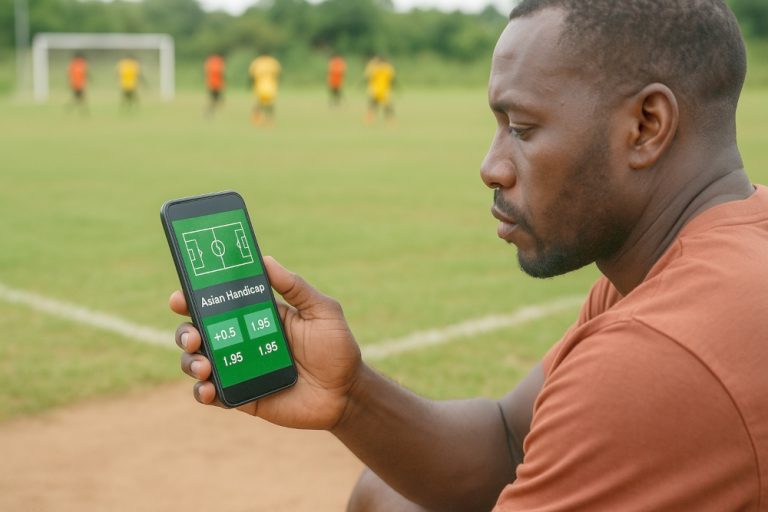
How Asian Handicap shapes betting trends, accuracy across African football competitions

Regional and sport-based adaptation

Different sports require distinct approaches. In basketball, totals and handicap lines move frequently, allowing dynamic combination models. In football, correlations depend heavily on style and formation. Historical data shows that combining defensive metrics with low-goal markets produces more stable returns over time.

Across Africa, football remains the main testing ground for such techniques. The diversity of local leagues and international tournaments provides constant data flow. Bettors adjust to differences in pace, weather, and competition structure. The result is a living laboratory where market combinations evolve weekly.

Sustaining discipline and perspective

Like any analytical process, combined-market betting needs patience. Tracking success over months, not days, creates understanding. Experienced bettors keep records of every combination, noting both success rate and average return.

This discipline resembles the work of statisticians in other fields. The numbers tell a story of balance, not risk. Over many decades, that mindset has separated informed bettors from those who rely on impulse.

In the end, combining markets reflects how betting itself has matured. It turns quick predictions into structured thought. Each connection between outcomes becomes a small study in probability – proof that betting, when understood deeply, remains less about luck and more about observation.

How Asian Handicap shapes betting trends, accuracy across African football competitions

0

Asian Handicap betting arrived in Africa later than in Europe, yet it changed how players read football odds. Before its spread, most wagers followed simple win-or-draw outcomes. Bookmakers offered limited options, and margins stayed wide. When handicaps entered the scene, balance replaced guessing.

Bettors began using advanced statistics and performance models. Local punters found comfort in digital platforms that supported clear systems and stable interfaces. Many prefer managing their wagers through 1xbet tanzania, where football markets display detailed handicap lines. That level of precision turned betting from random choice into a game of analysis.

The method fits perfectly with African football’s rhythm, where matches often show unpredictable results. From Nairobi to Dar es Salaam, the handicap format helps equalise gaps between stronger and weaker teams. It turns uneven fixtures into balanced contests on paper, creating fairer odds and steady engagement.

How the system works

The handicap removes the possibility of a draw by giving one team a virtual lead. This concept came from Asia several decades ago, designed to reflect realistic balance. Bettors no longer focus only on victory but on goal margins.

The structure divides into fractions and whole numbers. For example:

  • A -0.5 handicap means the stronger team must win by at least one goal.
  • A +1.0 handicap rewards the underdog if the team avoids a two-goal loss.
  • Split handicaps like -0.25 divide stakes between two outcomes.

These small details influence every ticket. They change not only potential payouts but also the way bettors follow live games.

Influence on African football betting

Handicaps suit African leagues where match intensity varies widely. Differences in playing surfaces and tactical styles often create uneven contests. Applying a handicap gives structure to these variations.

The rise of mobile betting platforms simplified access to such complex formats. Analysts noticed a growth of nearly 40% in Asian Handicap usage across East Africa during the past five years. This reflects not only curiosity but growing literacy in betting mathematics.

Within this evolution, iGambling changes the African market by combining regional habits with global systems. It makes advanced formats like handicaps more familiar to both casual and experienced bettors.

Cultural and technical adaptation

African punters adapt betting logic quickly. Decades ago, local prediction pools dominated, based on community networks and small stakes. Today, digital interfaces have replaced paper slips, but the social nature of betting remains. People still discuss outcomes in cafes, transport stations, and social media groups.

Platforms now provide real-time updates, language localisation, and visual trackers. The blend of statistics and tradition defines modern betting culture in the region. Every line in an Asian Handicap reflects deeper understanding – not blind risk.

Common approaches to analysing handicaps

To manage handicap betting effectively, users often rely on basic frameworks:

  • Reviewing team form, goal difference, and recent travel history
  • Studying past match data for similar handicap lines
  • Tracking weather and pitch quality, especially for outdoor matches

This approach converts observation into structure. Bettors learn patterns that repeat across seasons. When applied carefully, handicaps reveal how outcomes balance over time.

Economic impact and growth

The spread of handicap betting affects not only individuals but the economy around sport. Local analysts, odds compilers, and data providers now form part of a growing digital network. The model rewards information accuracy rather than luck.

In some countries, football betting supports small enterprises that create statistics and event commentary. These jobs did not exist a generation ago. The change represents a quiet transformation of entertainment into micro-economy.

How Education Enhances Responsible Betting Culture

A steady evolution

The arrival of Asian Handicap has given African bettors a modern structure for reading the game. It fits both tradition and innovation – two forces shaping today’s market. Local leagues continue to attract wagers from fans who understand more than they once did.

Betting, once based on instinct alone, now mirrors global analysis. For Africa’s diverse football scene, that balance between emotion and calculation marks a turning point. It shows that progress often begins not with technology itself, but with the understanding behind it.

How Asian Handicap shapes betting trends, accuracy across African football competitions