

Home Blog Page 141

How Machine Learning Improves Game Balancing in iGaming

0

For as long as games have existed, balance has been the secret to their survival. When chance and skill intertwine fairly, players stay loyal. In digital entertainment, that delicate balance depends on algorithms, not dice. Machine learning learns and adapts faster than any designer could.

Predictive models analyse vast streams of data, adjusting mechanics and probabilities in real time. This evolution changed how platforms respond to players. The official site 1xbet Guinea-Bissau illustrates how precision and technology merge, maintaining stability between challenge and reward. Fairness now depends on intelligent systems rather than static rules.

This shift did not appear overnight. Like the rise of industrial machinery two centuries ago, machine learning reshaped how creators handle balance, speed, and efficiency. It made gaming more dynamic, yet also more responsible.

The Logic Behind Machine Learning in Games

Developers once relied on static design principles. Each game followed a fixed pattern where randomness simulated unpredictability. Today, algorithms read behaviour instead of guessing it. Machine learning identifies repetition, frustration, or patterns that lead to imbalance. Adjustments then occur automatically.

Some of the primary functions include:

  • Analysing player performance and adapting difficulty.
  • Detecting potential bias in reward systems.
  • Balancing odds without reducing excitement.

Unlike manual tuning, these systems never rest. They constantly refine the environment so every player feels equally challenged. This fairness forms the foundation of trust in modern gaming platforms.

Data as the Core of Balance

For every click, bet, or move, data flows through complex networks. Machine learning converts that raw information into meaningful feedback. Developers read these insights and use it to improve products.

Predictive models detect patterns invisible to the human eye. For instance, when a particular pattern produces unusually high losses, the algorithm signals a review. This constant supervision keeps systems transparent. In return, user retention improves.

Even historical data plays a role. Much like bookmakers used paper logs in the nineteenth century, digital platforms now rely on databases that stretch across years.

Real-Time Adjustment

Games no longer follow fixed cycles. Instead, their logic adapts dynamically. Systems measure reaction times, success rates, and engagement levels to maintain balance.

Within this architecture, the integration of technologies and iGaming stands out. Developers now build feedback loops that allow direct communication between algorithm and gameplay. If one game mode underperforms, the system adjusts probabilities or modifies session length to retain fairness.

  • Algorithms predict when players lose focus and reduce session intensity.
  • Dynamic difficulty curves personalise experiences for every user.
  • Reward distribution follows consistent statistical fairness.

Such designs transform randomness into structured unpredictability. What feels spontaneous to the player often hides a layer of controlled mathematics.

Ethics and Transparency in Modern iGaming

Balancing goes beyond code. It enters the ethical domain of transparency. Fair play has always been the line separating entertainment from exploitation. Machine learning reinforces that border. By recording every adjustment, it provides traceability. That documentation helps developers prove fairness to regulators and users alike.

Regulatory frameworks now encourage algorithmic auditing. Each data model must show how it affects player outcomes. This approach mirrors industrial safety inspections from the early twentieth century. Progress and responsibility move together, not apart.

In practice, transparency also improves market stability. Players trust systems that behave consistently. A balanced game keeps engagement high without artificial incentives. This reliability sustains revenue and reputation alike.

iGaming in Kenya: How Did the Industry Evolve in the Past Years

Future Horizons for Intelligent Balancing

The next generation of iGaming will depend on prediction accuracy. Systems will refine themselves without direct human input. They will evaluate not only how users play but why. Sentiment analysis, adaptive rewards, and neural feedback models will appear as natural extensions of the current framework.

At the same time, balance will remain a human concern. Algorithms may handle numbers, but meaning still comes from design. Developers must guide technology toward entertainment, not automation.

Historical parallels remind us that every industrial leap carried both promise and responsibility. Machine learning offers the same duality. It can enrich digital entertainment if used to enhance fairness and creativity.

The evolution of iGaming shows one clear pattern – innovation only survives when players feel the system treats them equally. Behind every spin, roll, or click lies a network of logic that keeps the game alive, honest, and endlessly renewed.
 

Beyond Cricket: How India is Witnessing a New Sporting Revolution

0

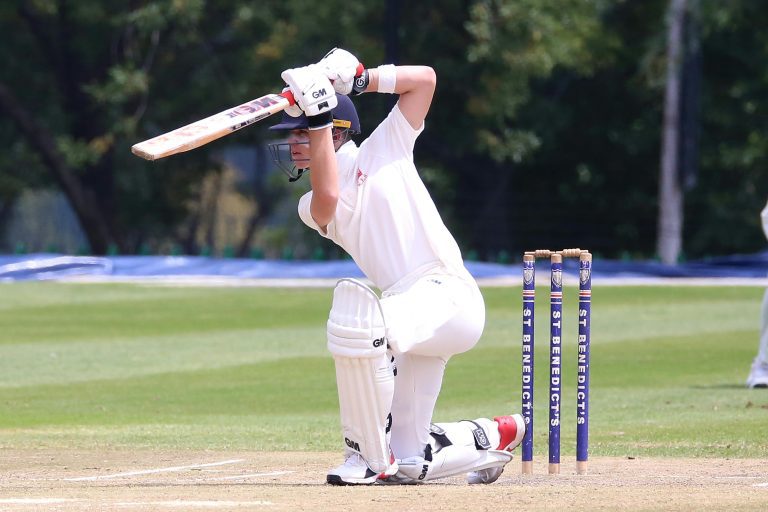
For decades, India has been synonymous with cricket. Stadiums packed with fans in blue jerseys, players revered as gods, and an economy revolving around bat and ball. But if you look closer, you’ll witness a quiet yet powerful revolution unfolding across the nation’s sporting arenas. Today, Indian sport tells a story that stretches far beyond the cricket pitch. It’s a narrative of breakthrough performances, diversification, and a growing belief that excellence on the world stage can be achieved in any discipline.

Cricket: Still the King, But the Throne is Getting Crowded

There’s no denying that cricket remains the dominant force. The Indian Premier League (IPL) is more than just a cricket tournament; it’s a cultural phenomenon and a multi-billion-dollar industry. However, the immense popularity of the IPL has ironically paved the way for other sports. It demonstrated the power of a franchise model, high-quality broadcasting, and star power—lessons that other sports federations have been quick to learn and emulate.

The Rise of Olympic Stars: New Icons are Born

This shift is no fluke. India’s success at the recent Olympic and Paralympic Games is the result of targeted initiatives like the Target Olympic Podium Scheme (TOPS), increased funding, and a fundamental shift in mindset. Athletes like Neeraj Chopra, P.V. Sindhu, Lovlina Borgohain, and para-archer Sumit Antal have become household names, inspiring millions of children across the country to pick up sports once considered non-traditional in India.

Revealed: The Most Popular Sports To Bet On Around The World

The Franchise Revolution: Sport as Entertainment

The IPL blueprint has been successfully adapted to create vibrant, fast-paced leagues that
have captured the imagination of the youth:

  • Pro Kabaddi League (PKL): It resurrected an ancient Indian sport, transforming it into a spectacular show filled with Bollywood glamour and high stakes. The PKL proved that indigenous games could be commercially viable and massively popular.

  • Indian Super League (ISL): It gave football the much-needed boost it required. By bringing in international stars and strengthening club structures, the ISL has elevated the standard of the game and fan engagement.

  • Ultimate Volleyball League (UVL): It made volleyball a prime-time television sport, showcasing the incredible athleticism and drama inherent in the game.

These leagues have not only provided athletes with viable career paths but have also created a year-round calendar of thrilling events for fans. For those interested in the analysis of these exciting leagues, platforms like Crore Bet offer detailed insights, reflecting the growing professional interest in Indian sports.

Women in Sport: Shattering the Glass Ceiling

One of the most significant transformations is the rise in participation and recognition of women in sports. From cricket (Harmanpreet Kaur, Smriti Mandhana) and badminton (P.V. Sindhu) to boxing (Mary Kom) and fencing (Bhavani Devi), Indian women are not just participating—they are dominating. Their stories of struggle and triumph are breaking gender stereotypes and inspiring a new generation of girls to dream big.

The Roadblocks on the Path to Greatness

Despite the progress, the journey is far from over. Key challenges remain:

  • Grassroots Infrastructure: A lack of quality training facilities at the district and school levels continues to be a major impediment.

  • Administrative Hurdles: Political interference and bureaucracy within sports federations often hinder the nurturing of raw talent.

  • Depth of Talent Pool: While India is producing world-class stars, building a strong bench strength across most sports is still a work in progress.

The Future: A Multi-Sport Nation?

The future of Indian sports is undoubtedly bright. With rising disposable incomes, increased
corporate sponsorship, and the proliferation of private sports academies, the country is steadily transforming into a multi-sport nation. The passion for cricket remains undimmed, but it now has vibrant, exciting company.

Today, the Indian fan cheers just as loudly for a Neeraj Chopra throw as for a Sachin Tendulkar straight drive. And in this diversification of sporting passion lies the real victory—a victory that marks the maturation of a nation’s athletic identity.

Why are airplanes cold? Expert explains reason behind the chill in aircraft cabins

0

While attending an aviation summit in Nairobi, one attendee, after being given a chance to share her thoughts on services provided by Kenya Airways (KQ), complained that the airplane cabins are kept uncomfortably cold. The panel didn’t tackle her concern, however.

At that moment, I hadn’t flown, and her revelation that planes were kept very cold inside was news to me. It wasn’t until recently, when I first boarded a KQ plane to and from Mauritius, that her sentiments made sense.

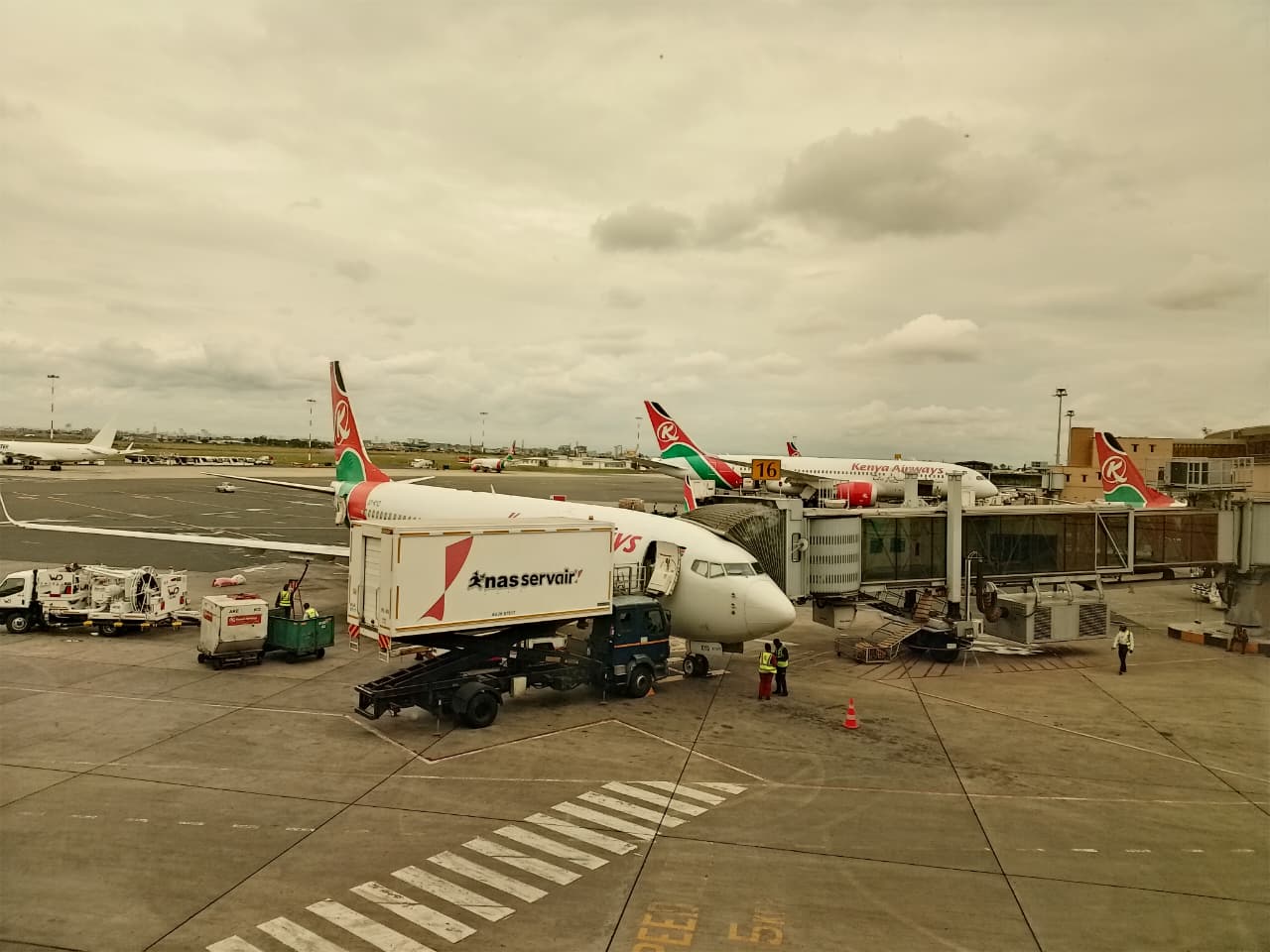
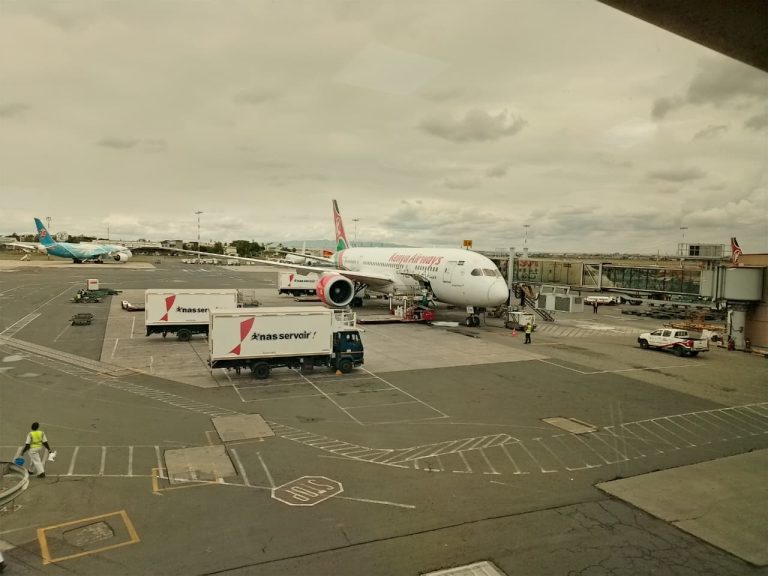
At JKIA, soon after boarding the Embraer E-190 assigned to the route, I realized the temperature had dropped compared to what it felt like inside the waiting gates. The sound of the AC and the auxiliary power unit was audible, blasting relaxing cold air inside the cabin.

Why are airplanes cold? Expert explains reason behind the chill in aircraft cabins

After my return flight, I sought to find out why temperatures inside passenger planes are kept low. Is there a mechanical advantage airlines gain by this, or is it that there’s no technology yet to help warm up the cabins and keep passengers from near-freezing temperatures, especially those flying from tropical countries like Kenya, where the weather is warmer?

For a moment, I even thought temperatures are colder as a way to acclimatize travelers to colder destinations like Europe. I reached out to a technical official at Kenya Airways who shed light on why the cabins are kept cold.

Why are airplanes cold? Expert explains reason behind the chill in aircraft cabins
On a flight to Mauritius from Nairobi’s JKIA.

The surprising reason behind the chill

Despite how counterintuitive it may sound, those chilly winds blowing through the passenger cabin are actually there to provide maximum comfort and, more importantly, safety.

“First, the temperature in the cabin isn’t as cold as it may seem. It’s normally kept between 22 and 24 degrees Celsius and rarely drops lower than 18 degrees. In fact, that’s the average temperature in most office buildings,” the Kenya Airways official explained.

 The official pointed out that while traveling by plane, you don’t get up from your seat and move around very often. As a result, your body doesn’t produce enough heat to warm itself, and you feel colder than you would under different circumstances.

On the other hand, if the cabin’s fully occupied, the passengers themselves give off enough heat to significantly warm the cabin, which is why airlines err on the cooler side.

To keep passengers warm, Kenya Airways provides blankets, not very thick, but they help keep you warm. I personally never used them; perhaps the excitement of flying for the first time kept me warm enough.

Preventing fainting

It turns out there’s a connection between the pressure and temperature in the passenger cabin and people fainting mid-flight. Passengers tend to lose consciousness in the air more easily than on the ground due to a condition called hypoxia, which occurs when body tissues, including the brain, don’t get enough oxygen and can’t work properly.

“If the temperature on board the plane is too warm, and the pressure is higher than normal, these factors can worsen and increase the probability of a negative reaction. In different people, body temperatures vary, and the temperature that’s comfortable for one person may seem too hot or too cold for another. But just to be on the safe side, airline carriers prefer to keep temperatures in the passenger cabin a bit lower than normal.”

The cooler environment also helps reduce motion sickness, slows the spread of airborne germs in crowded cabins, and promotes alertness, which can be beneficial in emergencies.

Why newer planes feel more comfortable

You’re not as likely to be shivering throughout the flight if the plane you’ve taken is new. Newer aircraft have more advanced thermostats that can regulate cabin temperature more precisely. And even though it’s impossible to adjust the temperature around individual seats, flight attendants have panels they can use to regulate it by zones. However, some planes with overhead air-conditioning vents that can direct a jet of air to the seats below.

“Cabin crew members will usually only raise the temperature after passengers ask them to because they don’t usually have an issue themselves with the chilly temps,” the official explained. “After all, flight attendants are constantly working and moving while the passengers stay in a relaxed state, and that’s why their perception of a comfortable temperature is very different.”

Why are airplanes cold? Expert explains reason behind the chill in aircraft cabins
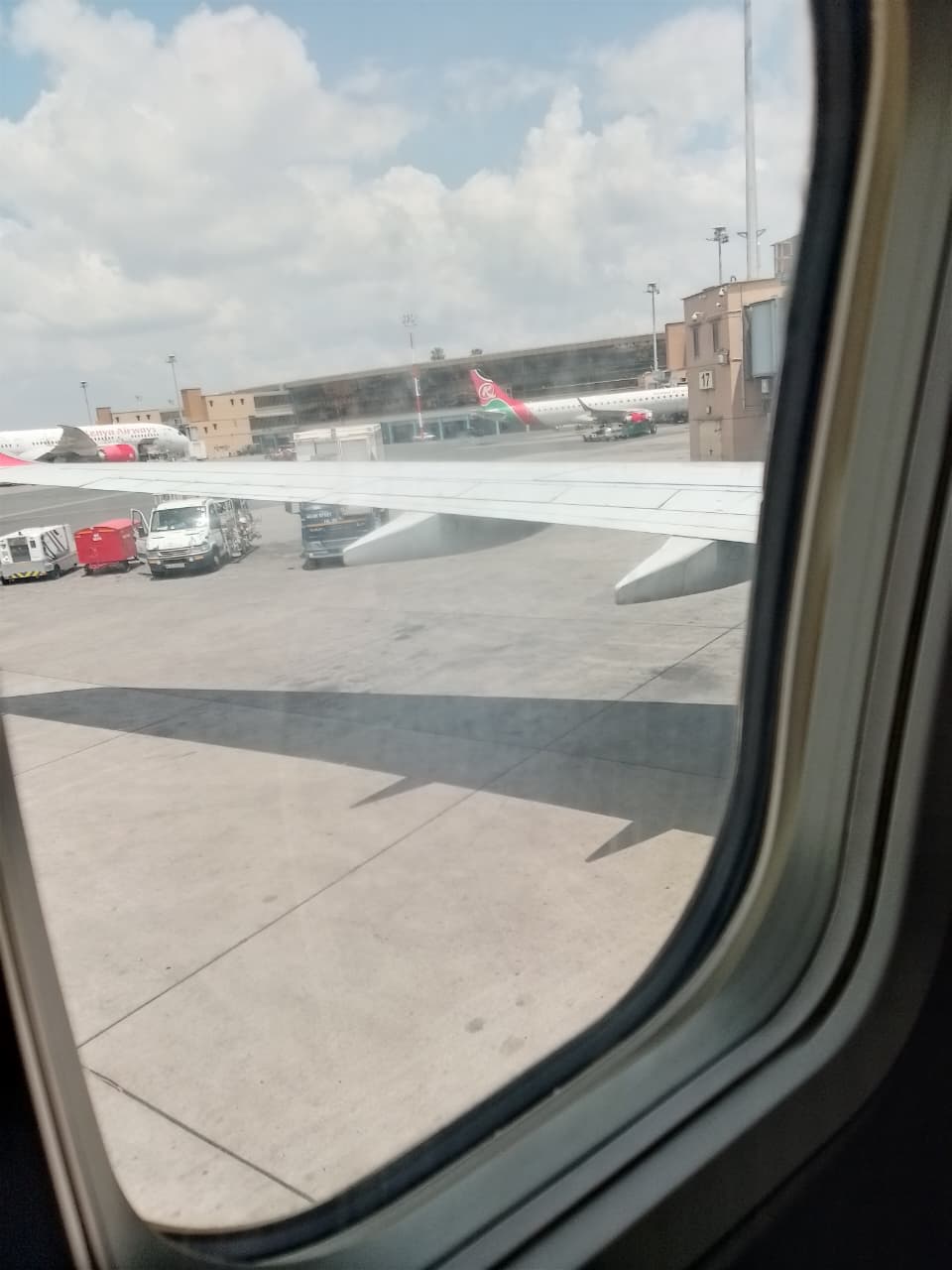
Wing view of KQ plane

The pre-flight heat wave

In some planes, minutes after boarding, you may notice it gets uncomfortably hot before takeoff. This happens when the air conditioning on the aircraft has been turned off to save fuel and will only run when the engines are fired up.

As a result, the combined body heat of all the people on board, plus the absence of air conditioning, can warm the cabin to an uncomfortable temperature. The combined body temperature of passengers is among the reasons why the temperature is kept cool once airborne, preventing sweltering conditions.

The KQ staff also explained the mechanical factors at play. Air drawn from outside a plane at cruising altitude is extremely cold, sometimes below -70°C (-94°F). The air conditioning system mixes this cold air with hot air to reach the desired cabin temperature.

Additionally, the cabin is pressurized to a lower altitude, about 8,000 feet, which can make passengers more susceptible to the effects of lower oxygen. Keeping the cabin cool counteracts this. The air conditioning system continuously circulates fresh air to provide a healthy environment, and depending on where you’re seated, you might feel a draft of this cool, fresh air.

What this means for passengers

So, next time you board a commercial airline, don’t lash out at the flight attendants for the temperature; it’s a small price to pay at 35,000 feet. The cooler air keeps everyone comfortable, prevents fainting, and helps stop the spread of germs. If you can’t handle the chill, bring a jacket, sweater, or heavier blanket than the one the airline provides.

On some routes, like flights to Mauritius, it’s a requirement for the plane to be sprayed with special insecticides before takeoff.

“The aircraft must be sprayed as a way of killing insects or bugs, for instance, mosquitoes that may be carried from Kenya or other countries, introducing a species of insect that may be unwanted there,” a KQ flight attendant explained.

Equity vs KCB: How Kenya’s two largest banks performed in Q3 2025

0

Kenya’s two largest banks, Equity Group and KCB Group, accounted for about Sh100 billion of the total net profit that Kenyan banks recorded in the third quarter of the 2025 financial year.

When paired in a head-to-head profitability race, in the third financial quarter, Equity Group emerged as the most profitable bank in Kenya. The bank returned a Sh54.1 billion net profit for the first nine months of the year while KCB returned a Sh47.6 billion net profit in the same period. Equity’s net profit from banking alone came in at Sh53.3 billion. This represented a year on year growth of 37 percent.

Among Equity’s subsidiaries, Equity Bank Kenya led in profitability after contributing 58.3 percent of the total group’s profit. On the other end, KCB Group subsidiaries contributed 35 percent of profit before tax and 31.3 percent of assets.

READ MORE: The problems with mega Rironi-Mau Summit A8 toll highway deal

Outside banking, Equity Group saw its health insurance arm Equity Health Insurance return a profit of Sh140 million. At KCB, non-banking subsidiaries were led by KCB Bancassurance unit which returned a 16 percent growth to Sh833 million, followed by KCB Investment Bank at Sh230 million and KCB Asset Management at Sh118 million.

KCB’s total assets ended the period under review at Sh2.04 trillion while Equity Bank’s total assets in the period increased by 6.7 percent to Sh1.8 trillion.

Customer deposits at Equity closed the nine-month period at Sh1.34 trillion while these were at Sh1.52 trillion at KCB Group. Net interest income increased by 16.1 percent to Sh93.3 billion at Equity and at KCB, it came in at Sh104.3 billion. On the other end, non-interest income at KCB was at Sh45.1 billion and Sh62.7 billion at Equity Bank.

Total revenue grew by 4.5 percent at KCB to Sh149.4 billion, buoyed by a 12.4 percent rise in net interest income. Equity on the other end returned Sh156.3 billion in total revenue.

Equity Bank had total operating income of Sh156.3 billion while KCB had Sh149.4 billion. On operating expenses, Equity’s came in at Sh90.7 billion while at KCB, this figure was Sh87.3 billion in the period.

Loans disbursed by Equity Group increased by 7.5 percent to Sh859 .8 billion. In the same period, KCB Group disbursed loans and advances amounting to Sh1.13 trillion.

At Equity, the non-performing loans stood at Sh129.2 billion while at KCB, they stood at Sh222.1 billion. Equity had a loan to deposit ratio of 64 percent while KCB recorded a 75 percent.

On the Nairobi Securities Exchange, Equity shares traded at an average price of Sh63 per piece as at the end of trading on December 1. On the same day, KCB shares closed at trading at an average price of Sh58 per share.

David Mutiso: Architect who designed KICC building dies

0

Kenya’s first African Chief Architect David Mutiso is dead. Mutiso’s death was announced on Tuesday December 2, through a notice.

However, the cause of his death has not been revealed at the time of publishing. Mutiso, a former Chairman of the Association of Professional Societies in East Africa was widely known for his contribution in designing the iconic Kenyatta International Convention Centre (KICC).

“We mourn the passing of Arch. David Mutiso, Kenya’s first indigenous architect, former Chairman of the Association of Professional Societies in East Africa (1975-1977), and a distinguished member of the Architectural Association of Kenya (AAK). He leaves behind a remarkable legacy,” read the announcement.

Born on 10th July 1932, Mutiso went to several primary schools in Manyatta and Mwala Machakos County, before joining Alliance High School between 1949 and 1952.

In a past interview, Mutiso said his interest in architecture developed by chance during one of his school holidays when he visited an uncle who worked as a cook for a white man.

His uncle was lighting up a fire using what he later learned was building plan blueprints. On close scrutiny, he noticed that these were signed by Architect Imray Rosa.

His uncle would later explain that his boss is an architect and told Mutiso what he actually did. Mutiso developed a keen interest in the profession and discussed it with his principal at Alliance, Carey Francis.

Carey tried to help him by introducing him to some white architects. This, however, did little to help as the same architects discouraged him by lamenting that he would have no clients to design for since all Africans lived in mud huts.

After his O Levels and with the hurdles along his route into architecture, Mutiso did not pursue his dream of becoming an architect.

He joined Makerere University in 1953 for a Bachelor of Science degree in Mathematics, Biology, Chemistry, and Physics.

His return coincided with openings at the City Council of Nairobi for positions of draftsmen. Mutiso thought he should give his dream another attempt. He applied and joined as a learned draftsman.

To hone his skills, he enrolled for evening classes at a technical college within town. It was while he was working at the City Council of Nairobi that the colonial government advertised bursaries for students interested in studying abroad.

This opportunity was only available to Makerere Alumni to which Mutiso belonged. On application, he was invited for an interview. Things looked positive for him since his former principal at Alliance was on the interviewing panel.

He was awarded a full scholarship which enabled him to Join the University of Sheffield in 1954. He graduated in 1959 and worked for some time before joining RIBA in 1960.

He served apprenticeships with J. Womersley, City Architect of the Sheffield Corporation (1959-1960), ProfessorQuaroni in Italy, and Richard Hughes in Kenya (1961-1962).

When Kenya was about to get independence, Mutiso was offered to join the government as a planner. He heeded the call and joined the Planning Department in 1964 after completing his post-graduate studies in the UK.

He rose through the ranks, becoming the Superintendent Architect, second in command after the chief architect in the Ministry of Public Works in 1965. When the Chief Architect retired in 1967, Mutiso took over.

ALSO READ: How airlines heat in-flight meals at 35,000 feet, and it’s not a microwave

It was in 1968 when he was contacted by then-Kanu Secretary General Tom Mboya to design the headquarter of the then-ruling party.

“It was some time in 1968 when Tom Mboya, KANU Secretary General, called my office and asked for a meeting. During our meeting, he revealed that the party wanted a building that would be its headquarters that would have facilities for the governing council to meet.” He said.

Mutiso further revealed that he worked closely with Norwegian architect Karl Henrik Nøstvik who was his junior in government and assisted him in the project.

While the project was ongoing, Karl’s contract with the government lapsed and he was appointed as a private consultant for the project.

Mutiso said he had developed the sketches, and before he shared them with Tom Mboya, he happened to meet Kenya’s first president, Jomo Kenyatta, at State House on other matters where he mentioned the project to him.

Kenyatta developed an interest in the project and instructed that they have weekly briefings on the project. The construction was done in three phases.

First, they started with the podium, then the tower, and later the plenary at a total cost of Sh80 million.

He recalled several incidents which earned a great number of enemies within government circles. In late 1973 that he quit his government role after being accused of corruption.

Mutiso was on an official trip to Canada and South America to learn from their experiences in social housing, accompanied by his wife.

On his return, government agents from the police and CID accused him of corruption for taking his wife along on official government trips.

He was upset by these moves and chose to quit the position after ten years of service to the government. He joined Braz Menezes and later formed MutisoMenezes International, a firm of Architects, Project Managers, and Interior Design Consultants.

How airlines heat in-flight meals at 35,000 feet, and it’s not a microwave

0

A few weeks ago, I boarded a Kenya Airways (KQ) flight to Mauritius. I’m not a frequent flier, and to be frank, this was my first time in an aircraft as an aviation journalist. Several things stood out.

First was the efficiency with which the flight attendants settled travelers in and made them comfortable. Then there was the variety of food and drinks available and the very cold in-flight temperature, which I’ll cover in a separate article.

About ten minutes after takeoff from JKIA, after the aircraft had climbed to its cruising altitude of 35,000 feet, the pilots turned off the seatbelt sign, allowing passengers and flight attendants to move freely.

How airlines heat in-flight meals at 35,000 feet, and it's not a microwave
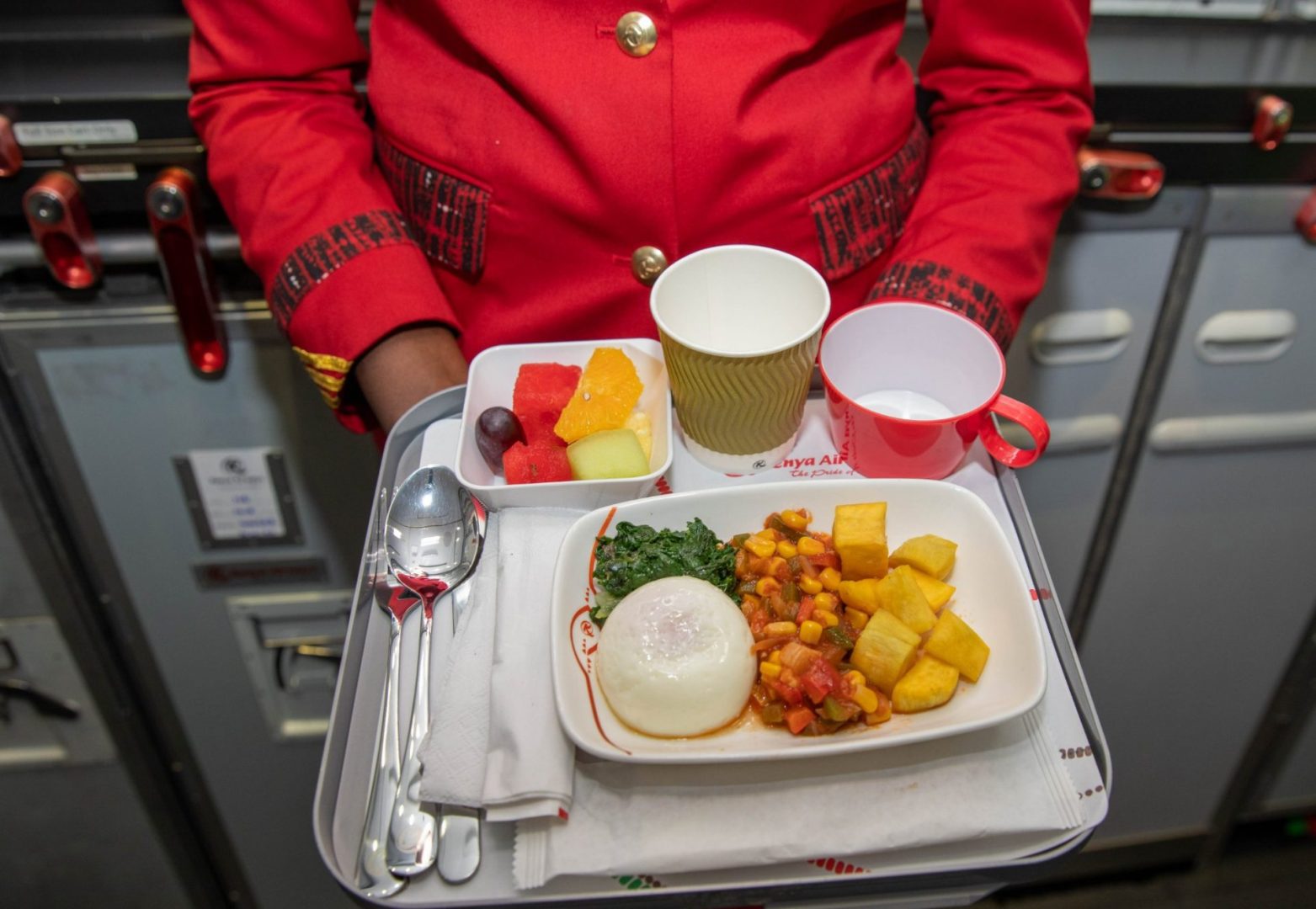
In-flight food served on KQ. Photo: KQ.

Moments later, an announcement beamed through the speakers: it was meal time. Excitement filled my heart, the moment I’d been waiting for. Due to the excitement of boarding for the first time, I’d skipped breakfast at home despite my spouse, whom I was travelling with, insisting that I needed to “bite something.”

All I could think about was being in the air. The wait to board would, however, turn out to be longer than expected, due to some technical issues with the aircraft.

Now the moment was here. Soon, the attendants started walking along the aisle, pushing trolleys that I knew contained sumptuous food. The aroma had already filled the cabin, and I knew it was going to be delightful.

Inside Kenya Airways newly leased Boeing 737-800 plane

Seated at the back of the plane, just adjacent to the galley where the food was prepared, I was sure I’d be among the first to eat. But shock on me, the trolleys zoomed past, and serving started from the first seats of the economy section toward the back. The business class section had one attendant, while two served economy.

How airlines heat in-flight meals at 35,000 feet, and it's not a microwave


After about 20 minutes, the trolley with the food arrived, and the flight attendant posed the question: “Beef or chicken?” I went for chicken, and he served me vegetable rice, chicken with thick stew, bread, and cheese. The second attendant serving drinks also passed by: “We have drinks. What would you like to have today? There’s Coke, fresh juice, coffee, soda, wine, and other alcoholic drinks, as you can see atop this trolley.”

I’ll let you guess what I went for, and your guess is right.

While dining, I realized that despite the food taking about 20 minutes to arrive, it landed on my plate very hot.

Who prepares meals served in KQ planes

Having visited NAS Servair, the facility where Kenya Airways sources its in-flight meals, I’d learned that the meals are cooked and frozen before being loaded into the galley of the plane. As such, I didn’t expect a very hot meal.

NAS Servair.

If the plane’s making a short stop and a return journey, it’s usually equipped with food that’ll serve both the outbound and return routes. The foods are well labeled to indicate which batch will be served on the immediate flight and which will be catered for the return.

The temperature of the food led me on a fact-finding mission, trying to establish how the meals are heated in-flight and what temperatures are maintained.

https://www.tiktok.com/@muyelaroberto/video/7574440648686898443?_r=1&_t=ZM-91seRFcX4iR


I’d assumed that the meals were heated in a microwave in the galley, but after seeing that metallic foil had been used to wrap the food, I knew a microwave wasn’t the option.

I spoke to one of the technicians at KQ, who explained they used ovens.

“We don’t use microwaves on the plane. The food comes in chilled, and to heat it, the engines play a pivotal role. The plane is equipped with specialized conventional ovens. The ovens receive a blast of hot air from the jet engines that reheats the precooked food. Different foods have different sets of reheating instructions, and the attendants are well-trained to know where to place each type of meal. For most food served in the economy class, reheating takes place in the trays. The trays are loaded into the ovens and heated; it takes about 20 minutes. The serving takes place in batches,” he explained.

Food preparation at NAS Servair

NAS Servair, which also prepares food for other airlines, is a heavily guarded facility with high standards of hygiene.

During my visit to the facility, I witnessed the delicate balance airlines have to establish. The safety of travelers being key, anyone entering the facility, whether visitor, staff, or inspector, is required to sanitize their hands and wear PPE covering their hair, nose, and even mouths. Even watches, bracelets, and rings aren’t allowed.

“We do this to ensure there’s no contamination. Contamination can be very costly for an airline. Imagine if there’s an incident of food poisoning during the flight. It means the plane has to be diverted to the closest airport for the affected person to receive treatment. What does this mean? Delays for other passengers, costs to the airline, which has to pay unplanned airport fees, and in other cases, book passengers in hotels if the delays take longer than expected. That’s why this facility upholds high standards of hygiene. And it doesn’t start at the facility, even where we source our fresh produce, we have inspectors who visit the farms to check the growing conditions,” an official at NAS Servair explained.

To ensure freshness, the fresh food transported to the facility must be in trucks with air conditioning. Their temperatures are recorded and catalogued at arrival. Other ingredients, for instance, flour, sugar, and spices, are all stored in batches, and their batch numbers are well catalogued.

“We do this so that in case of any issue, we can be able to trace the source of a problem. If it’s an onion or tomato that’s problematic, we’ll be able to know which farm it came from,” she continued.

https://youtu.be/-EVgt4JLBJQ

How KQ decides to buy new planes, process and cost

All the meals are weighed before being packed to ensure that they’re of the same size. For airlines, weight’s an essential aspect since the more weight you carry, the more fuel you’ll burn, increasing operational costs. According to KQ, at least one ton of vegetables is served on its flights every day.

So, every time you dine in a commercial aircraft, know that it takes intensive effort, a lot of care, and technology for that meal to land on your table. The jet engines provide the hot air that warms the food to the right temperatures (not microwaves), ensuring you relish each time you sink your teeth into the meals.

And before you start complaining about how hungry you are and that the meals have been delayed, give the attendants some grace. It takes about 20 minutes to heat the meals, and they’re served in batches.


MoE announces scholarships for needy students joining senior schools in 2026; how to apply

2

The Ministry of Education (MOE) has announced fully funded scholarships for needy students joining senior schools in 2026.

In a notice on Tuesday December 2, the Ministry said the scholarship program implemented through the Jomo Kenyatta Foundation (JKF) targets needy and vulnerable learners from all 47 counties, including refugee children in Kakuma, Kalobeyei and Dadaab camps.

“The Ministry of Education, through The Jomo Kenyatta Foundation (JKF), is awarding Elimu Scholarships in all the 47 counties to needy and vulnerable learners who will be joining senior school in the year 2026,” read the notice.

The scholarship will cater for school fees, transport to and from school, shopping and a pocket money for the beneficiaries for the three-year education period.

The learners will also be getting mentorship and psychosocial support throughout the period.

To qualify for the scholarship, applicants must have sat the 2025 Kenya Junior School Education Assessment (KJSEA) in a public junior school.

For refugee learners, boys must have achieved ‘meeting expectations’ to ‘exceeding expectations’ at Achievement Levels 5 to 8, while girls who scored ‘approaching expectations’ at Level 4 and above will also qualify.

Learners with special needs and disabilities will qualify regardless of their achievement level. Additionally, refugee learners residing in Kakuma, Kalobeyei and Dadaab refugee camps, who were learning in UNHCR-supported schools within the camps, or in nearby public junior schools, are also eligible to apply for the scholarships.

The program will also consider orphans, children from urban informal settlements, learners whose parents or guardians have disabilities, and those from families affected by HIV/AIDS or other chronic illnesses.

Others include children affected by extreme poverty, those who have suffered neglect or abuse, and learners living with disabilities.

ALSO READ: Safaricom announces over 10,000 scholarships for students in senior schools

How to apply

Interested applicants are required to collect scholarship application forms from the nearest Sub-County Education office.

“Application forms for refugee learners can be collected from the office of the Camp Manager, UNHCR offices in Kakuma and Dadaab,” the notice reads.

Application forms can also be downloaded from the Ministry of Education website; www.education.go.ke or the Jomo Kenyatta Foundation (JKF) website: www.jkf.co.ke. Applications can also be done online at https://scholarship.jkf.co.ke.

Duly completed application forms, including supporting documents, should be submitted either online or to the nearest Sub-County Education Office, on or before December 23, 2025, at 5.00 pm.

For refugee learners, submissions may be made through the Sub-County Director of Education or the Camp Manager’s office.

“Only candidates who meet the stipulated criteria will be considered for the scholarship,” the ministry emphasised.

The problems with mega Rironi-Mau Summit A8 toll highway deal

0

It is not in doubt that the construction of a dual highway along the Rironi-Mau Summit route has been long overdue. However, economic experts have come out with concerns about the Rironi-Mau Summit A8 toll highway financing model under which the highway will be constructed.

The Rironi-Mau Summit A8 toll highway, which is expected to consume Sh170 billion, will be constructed under a public-private partnership (PPP) model, in which two Chinese companies shall build and operate for a period of about 30 years. The two Chinese firms shall charge motorists tolls to use the highway.

This is the main bone of contention. A group of petitioners under the banner Motorists Association of Kenya have gone to court challenging the construction of the road through a toll plan. They argue that the highway toll amounts to double taxation, unlawful tolling, and the creeping transformation of Kenya’s public roads into lifetime revenue streams for private concessionaires.

According to respected economic and financial analyst Ephraim Njega, there are valid concerns about the use of the public-private partnership in the construction of the toll road.

Writing on his platform, Mr. Njega argues that there is a lack of a credible toll-free alternative for the highway that is on the exact route. He says that the options that the Kenya National Highways Authority (KeNHA) are issuing as alternatives are not viable or even realistic.

“During public participation, KeNHA lied that the current road would be left as a toll-free option. This has now been vacated, turning the public participation exercise into a deception campaign contrary to the constitution, which demands effective public participation,” he adds.

Two of these options include the Ngong-Suswa-Narok-Mau Summit-Nakuru route and the Nairobi-Thika-Magumu-Njabini-Ol Kalou-Narok-route.

Mr. Njega further points out that the viability of the highway will be hinged on the absence of the Standard Gauge Railway and a toll-free alternative along the route.

“If KeNHA leaves the existing road as a toll-free alternative, the project’s commercial viability as a PPP will just collapse,” Mr. Njega argues. “If a credible toll-free alternative is provided and the SGR is extended to the border, the commercial viability of the PPP will cease.”

This, says Mr. Njega, raises the question of how far the taxpayer has been exposed in the deal that the government is entering into with the Chinese contractors who will also operate the highway for a period of 30 years to recoup their investment turn a profit.

“There are no disclosures on the extent to which the public is exposed in case of the PPP failure. The PPP is exposed to risks such as resistance to tolls by citizens. Will they be compensated should such risks materialize? What guarantees and assurances has the government provided, and at what cost?” poses Mr. Njega.

He further cites the case of the Kenol-Marua road which heads to the Central region has been dualled by KeNHA. Mr. Njega argues that this road is toll free. As such, charging tolls on the highway that will head from Nairobi to Western Kenya is discriminatory.

READ MORE: Why we’re in court opposing construction of Rironi-Mau Summit highway – Motorists Association of Kenya

Education Ministry releases 2026 school activities calendar

0

The Ministry of Education has released the 2026 school activities calendar detailing how schools will carry out co-curricular activities.

In a circular dated November 28, the Ministry said the calendar covers all public learning institutions countrywide including primary, junior secondary, senior schools and teacher training colleges.

According to the calendar, Term one will cover National games and sports, Science Fairs and Drama Festival.

Learners in Primary Schools will participate in Athletics, Gymnastics and Cross Country while Junior schools activities are Athletics, Cross Country, Basketball 5×5, Rugby 7s, and Swimming.

Secondary school activities for Term one include Rugby 15s, Athletics, Basketball 5×5, Hockey, Handball, Cross Country, and Swimming.

The Calendar outlines that special needs learners in primary school will only participate in Athletics while those in secondary schools will carry out Athletics, Handball, Basketball, and Indoor Games.

The Term 1 Schools’ National Games and Sports will be hosted in Nyanza Region, Kisumu County, with a referees’ clinic scheduled for 5th–6th April 2026.

Teams are expected to arrive on 5th April, and the opening ceremony will take place on 7th April at Jomo Kenyatta Stadium.

Competitions for secondary and SNE secondary/primary schools will run from 7th–11th April, while primary and junior schools will compete from 7th–10th April.

The Kenya Teachers Training Colleges Sports will be held from March 27 to April 5, 2026, in Nyanza Region, Homa Bay County, at Asumbi TTC. A referees’ clinic is scheduled for March 28-29, with the action days running from March 31 to April 3.

National Drama Festival, Science Fair Dates

The National Drama and Film Festival will take place from April 6 to 18, 2026 in Nyeri County.

On the other hand, the Kenya Science and Engineering Fair will take place in the North-Eastern Region for Junior and Secondary Schools in Garissa County, at Garissa High School, from March 29 to April 5.

Term 2 Calendar

According to the calendar, Term Two will feature sports and the National Music Festival.

Primary schools will participate in Soccer, Volleyball, Netball, and Handball, while Junior Schools will participate in Soccer, Volleyball, Netball, Handball, and Basketball 3×3.

Secondary schools activities are Soccer, Volleyball, Netball, Rugby 7s, Badminton, Table Tennis, Chess, Scrabble. The Education Ministry indicated that primary and secondary special schools will participate in Special Needs Ball Games.

The second term National Games and Sports will be hosted in the Central Region, Kiambu County, at Thika Municipality from July 28 to August 1. A referees’ clinic is scheduled for July 25 to 26, with teams arriving on July 26.

Teachers Training Colleges Sports

The second Kenya Teachers Training Colleges Sports event will be held from May 22nd to 30th, 2026, in Nyanza Region, Homa Bay County, at Homa Bay Stadium and Asumbi TTC.

Kenya Music Festivals

The Kenya Music Festivals will take place from August 1st to 14th, 2026, in the Western Region, Bungoma County, at Kibabii University.

The opening ceremony is scheduled for August 2nd, with action days from August 2nd to 10th.

The gala concert will be held on August 11th and 12th, followed by the state concert on August 13th, and departure on August 14th.

ALSO READ: Education Ministry releases 2026 school calendar; see all opening, closing dates

The Hub Park turns one, Launches new fun experiences for families

0

The Hub Park is celebrating its first anniversary in style, unveiling exciting new attractions and exclusive deals designed to elevate family fun. To mark the milestone, the park has rolled out a lineup of standout promotions including a loyalty programme, Buy-One-Get-One-Free Thursdays, a 25% Toddler Tuesday discount, and a thrilling aerial-glider camera experience that lets guests capture every moment of their flight across the park.

Speaking during the anniversary event, Margaret Mbaka, JCG Chairperson, said,

“Celebrating the first anniversary of The Hub Park is a proud moment for us and a testament to the vision we set out to achieve—creating a vibrant, inclusive space where children, families, and the wider community can learn, play, and connect. What began as an investment in enriching the mall experience has grown into a dynamic hub of activity that serves families, schools, and even corporate groups in ways that have exceeded our expectations.”

Located within The Hub Karen Mall, The Hub Park is East Africa’s largest indoor family entertainment centre, offering 3,200 square metres of activity space that can host up to 410 people inside its attractions at once and more than 1,000 guests within the facility. It blends physical challenges, interactive games, and supervised play in a vibrant, climate-controlled environment suitable for all ages—from toddlers to adults.

Mr. Jacobus Visser, The Hub Karen Mall Manager, added

“Celebrating the first anniversary of Hub Park is a proud moment for our entire mall community. When we launched the park, our vision was to create a safe, fun, and inspiring space where families could play, relax, and connect. Over the past year, Hub Park has truly become the heartbeat of our mall—bringing joy to children, drawing more families through our doors, and creating a warm, welcoming atmosphere throughout The Hub Karen. We are deeply grateful to the parents, visitors, and partners who have supported us, and we look forward to many more years of shared memories and continued success together.”

The Hub Park turns one, Launches new fun experiences for families

The Hub Park features Kenya’s first air glider, along with climbing walls, a net maze, trampolines, a foam dome, interactive gaming areas, virtual reality zones, and dedicated toddler sections.

Designed for year-round use, the park provides flexible spaces for leisure visits, organised group outings, school excursions, birthday parties, and other celebrations. Additional conveniences—including themed party rooms, baby-changing areas, on-site dining options, ample parking, and up to three hours of complimentary parking—enhance the overall visitor experience.

Celebrate love at The Hub Karen with exciting valentine’s experiences

To cater to different interests and budgets, The Hub Park offers a curated selection of attraction passes. The Explorer Pass provides access to four attractions, making it ideal for families seeking a fun and manageable experience. For guests looking for a bit more excitement, the Thrill-Seeker Pass includes six attractions. Those who want an extended adventure can opt for the Adventure Delight Pass, which allows access to eight attractions. For visitors who prefer to enjoy everything the park has to offer at their own pace, the Ultimate Pass delivers all-day, unlimited access to every attraction within the facility.

Surrounded by family-friendly dining areas, The Hub Park has become one of Nairobi’s top indoor recreation destinations a place where play, relaxation, and community come together under one roof. Operating daily from 9:00 AM to 9:00 PM, The Hub Park welcomes children of all ages to enjoy Nairobi’s ultimate indoor park all year round.