Home Blog Page 142

Billionaire Paul Ndung’u loses Sh375 million in SportPesa share battle

0

Kenyan businessman and former SportPesa Chair Paul Wanderi Ndung’u has suffered a major blow after a London court dismissed his allegations linking SportPesa’s offshore holding company to fraud and conspiracy.

Ndung’u had accused SportPesa Global Holdings Ltd, now SPG Ltd of fraud, conspiracy, and illegal dilution of his stake.

He claimed that the firm’s directors and shareholders including Guerassim Nikolov, Gene Grand, Kalilina Lyubomirova, Dick Wathika’s widow Asenath Wachera, and others had orchestrated a scheme to improperly reduce his shares from 17 percent to 0.8 percent between 2019 and 2022.

He argued the moves breached U.K. company law and were part of a plan to kick him out of the betting business.

However, in a ruling delivered on Nov. 18, Justice Edwin Johnson of the High Court in London found no fraud, forgery or conspiracy in the dilution of Ndungu’s stake.

Johnson ruled the capital raises were commercially justified and properly approved, noting that SportPesa was under pressure after Kenyan regulators suspended the local licence of Pevans East Africa Ltd, the company behind the SportPesa brand.

The company, he said, needed cash to stabilise operations and fund expansion into markets such as Italy, South Africa, Tanzania and Russia.

Additionally, the court said it lacked substantial evidence that SPGHL directors conspired to dilute Ndung’u’s shares illegally.

Ndungu had also asked the court to grant relief for unfair prejudice under Section 994 of the Companies Act. The court however dismissed the plea on the ground that there was no oppressive or unfair management conduct that would justify compensation.

The judge concluded that Ndung’u had not demonstrated that the company’s affairs were conducted unfairly to him as a shareholder and ordered him to pay $2.9 million (About Sh375 million) in legal costs.

“We are delighted with this decision. The UK High Court found that the allegations made against us had no substance. We always knew that we acted legally and properly at all times, and this judgment confirms that,” SportPesa Directors state.

“In a 190-page judgment, the UK High Court found no evidence of the allegations made against SportPesa. We are looking forward to putting this behind us and focusing on our future growth and expansion,” they added.

The ruling brings to an end to Ndung’u’s long-running London battle as other disputes continue in Kenya over trademark.

ALSO READ: Sam Wanjohi loses Sh1.1 billion compensation in M-Pesa apps ownership fight

Faith Mwagandi: Meet Kenya’s first woman warship commander who scored straight As

0

Growing up, Faith Mwagandi’s dream was to become a medical practitioner, a dream she indeed worked hard for, evidenced by her remarkable academic performance.

She attended Moi Girls High School in Eldoret where she recorded straight As in the Kenya Certificate of Secondary Education(KCSE) exam.

While she was hoping for a career in medicine, Mwagandi ended up taking a general degree an academic journey that lasted for only three weeks.

She ditched her university education to take up a military career after seeing a newspaper advertisement for the Kenya Defence Forces (KDF) recruitment.

Her journey in the force began in 2007 when she joined the Kenya Military Academy in Lanet.  Over time, she attained a diploma in Military Science and would later after attain another degree from Egerton University.

As a Lieutenant, she pursued extensive practical application of naval training, leadership, command, and management abroad before returning to Kenya in 2010 and taking up the role of an instructor at the Kenya Navy Training School.

Her operational experience includes serving as a navigating officer aboard Kenya’s research vessel, RV Mtafiti, manned by the Kenya Navy and the Kenya Marine Fisheries Research Institute, between 2016 and 2017.

Mwagandi made history as the first female Warship Commander in East Africa, taking command of the Kenya Navy Ship (KNS) Shujaa from 2019 to 2022.

She also served as the Principal Warfare Officer during a critical voyage to the Netherlands for the midlife refit of KNS Shujaa.

During the 2024 Mashujaa Day celebration, Mwagandi made history again as the first female officer in Kenya to lead the Guard of Honour.

A Guard of Honour in the Kenya Defence Forces (KDF) is a formal, ceremonial parade of troops presented as a mark of respect and tribute to national leaders, visiting heads of state, or other high-ranking dignitaries.

It is a key element of military protocol during official state functions and comprises of personnel from the three branches of the KDF: the Kenya Army, the Kenya Air Force, and the Kenya Navy.

Soldiers are carefully selected, undergo rigorous training, and execute drills with precision. A commissioned officer serves as the parade commander.

Currently, Lt Col Mwagandi serves as Staff Officer 1 (SO1) in charge of Personnel and Administration at the Kenya Navy.

ALSO READ: Ndegwa Njiru: Profile of Kenya’s most sought-after ‘impeachment lawyer’

Wamuthende: Inside business empire and explosive scandals of Mbeere North MP

0

Mbeere North Member of Parliament Leonard Muriuki Njeru, popularly known as Leo Wa Muthende, is a Kenyan businessman turned politician with established businesses in the country.

Wamuthende is said to own several medical and pharmaceutical companies in Kenya, among them Biomax Africa Limited which is linked to a multi-million-shilling scam at the Kenyatta National Hospital (KNH).

The alleged scam involved a project to stabilize Kenya’s biggest referral hospital. According to the Ethics and Anti-Corruption Commission (EACC), the Sh643 million fraud involves a tender awarded to Wamuthende’s Biomax Africa Limited during the 2021/2022 financial year for the supply and installation of a medical oxygen generating plant at KNH.

EACC report submitted to the Director of Public Prosecutions (DPP) on June 12, 2025, alleged that Biomax Africa used falsified documents, including forged performance bonds, to secure the contract.

The plant was contracted to produce 8,000 litres of oxygen per minute (LPM) but has only managed to generate approximately 2,800 LPM. This failure has forced KNH to spend over Sh565 million since 2022 to procure liquid oxygen from private suppliers, a cost exceeding the original value of the defective plant.

Between July 2023 and February 2024 alone, KNH reportedly spent more than Sh168 million on these emergency supplies.

EACC called for the arrest of Wamuthende, former Health Principal Secretary Susan Mochache, and other officials with procurement irregularities and abuse of office.

Despite the scandal, the Independent Electoral and Boundaries Commission (IEBC) cleared him to contest for the Mbeere North Parliamentary Seat in the just-concluded by-elections.

He won the elections on a United Democratic Alliance (UDA) ticket, beating Democracy for Citizens Party (DCP) candidate Newton Karish in a hotly contested race.

According to provisional results, Wamuthende received 15,802 votes, beating Newton Kariuki, popularly known as Karish, who garnered 15,308.

The by-election followed the vacancy left by former Member of Parliament Geoffrey Ruku, who was appointed the Ministry of Public Service Cabinet Secretary in March 2025.

This is not the first time Wamuthende has contested for a political seat, and he has over the years been active in the Mbeere North politics.

In 2017, he contested for the Embu gubernatorial seat but was defeated by Martin Wambora. In 2022, he supported Geoffrey Ruku for Mbeere North MP and William Ruto for President.

Born in Kianthawa village in Nthawa ward, Mbeere North Sub-county, Wamuthende attended Siakago Primary School and later St. Paul’s Kevote High School.

His excellent academic performance earned him a spot at the University of Nairobi where he graduated with a degree in Biochemistry, First Class Honors.

He worked with several medical and pharmaceutical companies before establishing his first company in the pharmaceutical industry in 2006.

Additionally, in 2023, Wamuthende reportedly founded two additional firms focused on medical equipment and hospital systems.

ALSO READ: Mbadi: Government working to strengthen insurance sector regulatory framework to foster trust

It’s time women moved from planning family grocery bills to family wealth

0

Not too many women are involved in the process of planning family wealth. Oftentimes, most women, especially those in marriages, find themselves dependent on their husbands when it comes to planning family wealth.

This is replicated in other family financial matters outside the institution of marriage. Take family inheritance for example. Many women are either left out of this process or cheated out of their rightful shares as their brothers taken everything.

Traditionally, the roles left for women are constrained in the kitchen. These range from writing the household budget and family grocery bills, cooking and maintaining the home.

However, Rhina Namsia, the founder and chief executive officer of The Acemt Consulting, a training and consultation company that provides financial planning and investment advisory, reckons that it is time for women to move from these restrictions.

Ms. Namsia says that it is time for women to embrace bolder roles that involve planning family wealth and which will guarantee them financial freedom and independence in the long run. 

“Women need to move from writing family budgets to sitting at the table of succession planning; from managing household expenses to shaping generational wealth,” she says.

For too long, points out Namsia, women have been seen as the keepers of the family budget like managing daily expenses, stretching every shilling, and making ends meet.

“But true empowerment begins when we move beyond the monthly grocery list and take our place at the table where decisions about inheritance, legacy, and generational wealth are made. It’s time for women to be not just financial managers, but wealth architects,” she says.

“I say this having trained and worked with women for close to 4 years now. Often, when a woman is asked a question about money, it will mostly revolve around bills and expenses, very rare will you hear about investments and generational wealth that they too contribute into.”

The conversation around women and money must evolve. Budgeting is powerful yes, but it’s only the starting point.

Namsia says that for women, the real transformation happens when they are included and when they take initiative in succession planning, estate management, and long-term wealth preservation.

“We’ve seen women being harassed even by their own kin over property that they have been included in the Wills. But the facts are way far from just the family having the money, but how the wealth/perceived is perceived from the onset,” she points out.

“Writing a budget sustains a family for a month, but succession planning sustains a family for generations.”

Motorists: Why we’re in court opposing construction of Rironi-Mau Summit highway

Motorists: Why we’re in court opposing construction of Rironi-Mau Summit highway

0

The Motorists Association of Kenya has gone to court seeking orders stopping the construction of the Rironi-Mau Summit toll highway. The association has filed the case together with Peter Murima, Joyce Wamahiu, and Josphat Kamau.

The Motorists Association of Kenya has now come out to state their case on why they are in court over the mega road project. Here is what they say in their statement:

“We fully support the long-delayed expansion of the A8 highway (Rironi-Mau Summit Highway). This has never been in dispute. In fact, the Motorists Association of Kenya have pushed for its upgrade for more than twenty years. During that same period, the highway authority repeatedly attempted to introduce Public–Private Partnership (PPP) toll schemes that would convert public infrastructure into private profit centres at the expense of the slighted citizenry.

What motorists oppose is NOT development.

We oppose double taxation, unlawful tolling, and the creeping transformation of Kenya’s public roads into lifetime revenue streams for private concessionaires.

When toll fees were abolished in 1994, they were replaced with the Fuel Levy, paid upfront by all fuel users. This levy grew from a few cents to 3 shillings, then 6, then 18, and eventually to 25 shillings, an increase that lacked proper legal justification. Today, every Kenyan motorist pays this levy in advance. You cannot reintroduce toll fees while the Fuel Levy is still in place. You cannot fund roads twice – one system must go. Citizens cannot be charged at the pump and then again at a toll gate.

The law governing Build–Operate–Transfer (BOT) projects is also unequivocal. A toll road must be constructed on newly acquired private land and must leave the existing public highway as a free alternative route. A BOT cannot legally be erected on existing public land. This was the very reason American firms like Bechtel and Usahihi walked away: They refused to toll an existing public highway.

The Nairobi Expressway followed the law by being elevated, leaving the lower deck free. The SGR was constructed on new land while the meter-gauge railway remained open. These are examples of lawful tolling structures. Any user-pay toll road must meet all BOT requirements – not be forced onto the public through shortcuts or unlawful reinterpretations.

The responsibility for building and expanding national roads rests squarely with the exchequer, not individual motorists. Motorists have already met their obligations through taxes. It is the government’s duty to deliver value for money- not shift its responsibilities to private profit-seeking concessionaires.

A concession, as the name connotes, is, by definition, a surrender of public rights – something countries like Sri Lanka and Zambia were forced into after defaulting on international loans. Kenya, however, has never defaulted in over 30 years. Why, then, are we behaving as though we must surrender our highways to foreign companies?

Selective tolling is also discriminatory. Why should Western-bound Kenyans pay toll charges while other regions enjoy free dual carriageways? The Thika–Nyeri dual carriageway is toll-free. Why then should only one section of the A8 be singled out? National development cannot be selective or punitive.

We must also confront the truth: The highway authority’s 16-year failure to progressively upgrade the A8 – while other major national roads were modernised – cannot be dismissed as an oversight. It is a serious failure of duty. The deliberate neglect, resulting in head-on road crash deaths, gridlock and congestion, has conveniently created the crisis now being used to justify a PPP toll road. This is not office planning; it is engineered desperation.

Instead of burdening motorists, the proposed Sh200 billion toll fee could easily be securitised into a sovereign loan, just as was done under Securing 1, and funded transparently through the national budget.

With a budget of Sh3 trillion, are we genuinely claiming that Kenya cannot afford Sh200 billion, an already inflated figure, to upgrade its most important corridor? How many billions have already been wasted on cancelled, inflated, or poorly executed projects? Auditor General reports show a whole trillion public fund wastage, E citizen, Sh300 Billion, et al

If motorists are expected to fund road construction and then pay again to maintain those same roads, what is the purpose of the taxes we pay every day? We cannot continue sustaining a system where the public funds everything while government agencies evade accountability.

Let us be absolutely clear:

Motorists are NOT against the expansion of the A8 Highway (Rironi-Mau Summit Highway).

We have advocated for it for over 20 years.

What we oppose is double taxation, unfair tolling, selective regional punishment, and the privatisation of Kenya’s public roads.

Toll fees were abolished in 1994 and replaced by a Fuel Levy that all motorists pay upfront. You cannot charge citizens twice. The law requires a toll road to be built on new land with a free alternative route. That principle was respected by the Nairobi Expressway and by the SGR. It cannot be ignored here.

Instead of tolling one section of Kenyans, the proposed Sh200 billion can be turned into a sovereign loan funded within our Sh3 trillion national budget. Kenya can afford this road without selling its future.

This is not a fight against development. It is a fight for fairness, for legality, and for the protection of public assets. Public roads must remain public. Motorists deserve justice- not exploitation.”

READ MORE: Fresh twist in multi-billion Rironi-Mau Summit toll highway deal

Equity Bank roadshow showcases Kenya as engine of East Africa’s economic growth

0
A Trade and Investment Roadshow held in Nairobi has positioned Kenya as a key gateway to a whooping 350m consumers in East and Central Africa.
Over 300 policy makers, investors and businesspersons from 35 nationalities in Africa and beyond on Friday converged in Nairobi for a three-day summit that sought to explore business opportunities in Kenya.
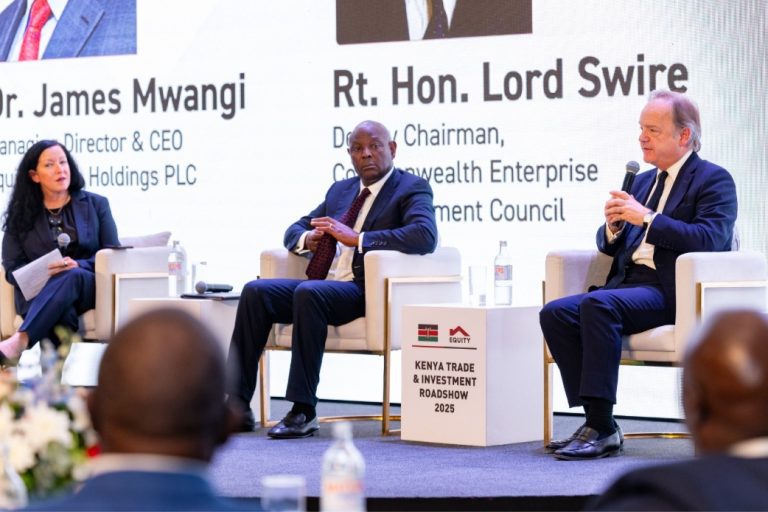
Addressing the summit, Equity Group CEO Dr. James Mwangi urged global investors to treat East Africa as a mature investment destination, arguing that Kenya and its regional neighbors now offer the scale, stability, and demographic advantage for long-term growth.
Mwangi said the region’s fundamentals were aligning in a way that made the current moment strategically important for capital flows.
“Africa is on a journey of very rapid growth for a prolonged period,” he said.
“More than 75% of our population is under 35. They are digital natives. They will be your customers and partners for the next two decades.”
The Kenya Trade and Investment Roadshow 2025 was organised by Equity Bank under the theme, “Unlocking East Africa: Kenya’s role as the Engine of Regional Prosperity.”
The summit followed the successful Trade Mission in Rwanda, where Kenyan traders joined over 300 investors from more than 20 countries in a continental dialogue on growth and opportunity.
Mwangi asked investors to resist conservative engagement and instead pursue decisive transactional partnerships.
“Please don’t go home with your idea,” he said. “It may not be the winning idea, but it may trigger the winning idea. And it might also be the winning idea that others will build on.”
He emphasized that the roadshow was designed not as a diplomatic exchange but as a deal-making platform.
“Spend more time in the one-on-one meetings, not just having a cup of tea, but signing agreements,” he said. “And those agreements should not end with a handshake; I invite you to shake hearts as you agree.”
Mwangi presented Kenya as not merely a domestic market, but as a springboard into a broader integrated region.
“See Kenya as the hub of the East African Community, and see a population of 350 million people,” he said. “That is a sizable and growing market whose GDP per capita is rising.”
Equity Group, he said, now possesses the regional footprint and financial partnerships to support corporate expansion into East and Central Africa.
“We are systemic in six markets, and our influence will open doors for you,” he said. “The World Bank, through IFC, is our second-largest shareholder, and the Norwegian sovereign wealth fund, the largest on earth, is our largest shareholder.”
He noted that Equity’s network of partnerships across banking and development finance institutions made it capable of mobilising capital where necessary.
“I cannot personally write the cheque to fund every investment proposal, but I have built formidable partnerships, from KCB, to Ecobank, to Standard Chartered, to Absa.
The opportunity is here with us. Together, we can make this work,” he said.
Africa’s natural-resource advantage, Mwangi argued, will underpin the continent’s strategic role as the world transitions to renewable energy and sustainable production.
“There will be no energy transition without strategic minerals,” he said. “Africa is over-endowed. God was very generous.”
Also addressing the forum, Rt. Hon. Lord Swire, Deputy Chairman of the Commonwealth Enterprise and Investment Council, said Kenya’s evolution into a regional economic hub reflected long-term institutional progress.
“Kenya and its growth never cease to amaze me,” he said.
“The opportunities are enormous, and I am astonished by what this country has become.”
He said Commonwealth nations presented a ready trading bloc with structural efficiencies.
“It is cheaper for one Commonwealth company to do business with another, an audited advantage of 19%,” he said.
 “Don’t forget the Commonwealth. Look closely at the opportunities within it.”
The trade roadshow continues as part of Equity’s wider international engagement programme linking Kenyan and regional companies to global capital sources.
On his part, Aliou Maiga, the Regional Industry Director for the Financial Institutions Group in Africa at the International Finance Corporation, said Africa must nurture a generation of visionaries who not only think boldly but also execute boldly.
He noted that this mindset is critical, especially at this point in the continent’s development, where unlocking economic opportunities for a rapidly growing population will shape the continent’s long-term trajectory.
“Africa needs people who think big and make things happen,” Maiga said.
“This is relevant today given where the continent is, and the urgent need to expand economic opportunities for our population. If we are able to create the right conditions and enable people to realize their potential, the future of this continent will be secured.”
He emphasized that the World Bank Group’s role is anchored in supporting countries to build resilient and competitive economies by offering resources and expertise that catalyze sustainable growth.
“As the World Bank, our mandate is to help develop economies by providing financial resources, technical expertise, and policy guidance to support sustainable development,” he said.
“We work with governments, private sector partners, and communities to fund infrastructure, education, health systems, and innovation initiatives that can transform people’s lives.”
Maiga also highlighted East Africa as a continental pacesetter in innovation, describing the region as a fertile ground for digital transformation and entrepreneurial leadership.
“East Africa is at the forefront of innovation, leading the way in technology, entrepreneurship, and creative solutions across Africa,” he said.
“This region has become a hub for startups, digital platforms, and tech-driven enterprises, fostering a culture of problem-solving and forward-thinking. That innovative spirit is driving economic growth, boosting job creation, and positioning East Africa as a key player in shaping Africa’s role in the global knowledge and technology economy.”


Mbadi: Government working to strengthen insurance sector regulatory framework to foster trust

0

The government has confirmed ongoing commitments to foster the growth of the local insurance services industry as part of an overall strategy to deepen the value of the financial sector in national development, National Treasury Cabinet Secretary John Mbadi has confirmed.

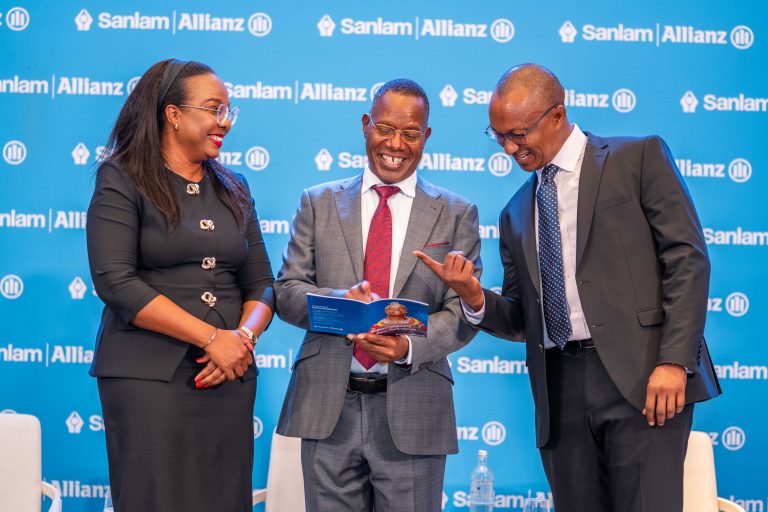
Speaking at the official rebrand of Sanlam Allianz Holdings Kenya, CS Mbadi, in a speech delivered on his behalf by the Kenya Revenue Authority (KRA) Commissioner General, Mr. Humphrey Wattanga, said the government is working hard to build a financial sector that is resilient, competitive, and inclusive, to fuel economic investments and support national transformation.

The listed non-banking financial services firm Sanlam Kenya Plc (NSE: SLAM) has officially rebranded to Sanlam Allianz Holdings (Kenya) PLC (“SanlamAllianz Kenya”). The name change follows the recent formation of a joint venture between Sanlam and Allianz, establishing  SanlamAllianz as Africa’s largest non-banking financial services entity, with more than 200 years’ combined experience on the continent and beyond.

As part of the rebrand, following shareholder and regulatory approvals, Dr Tumbo reiterated that the firm will enhance its client experience and distribution capabilities through the deployment of innovative technology-based solutions.

The insurance sector, Mbadi said, is the quiet engine of every modern economy. “It protects families, cushions businesses, and enables investment in the sectors that propel national progress,” he said. As part of the commitments, CS Mbadi said the government has scaled up efforts to strengthen the regulatory foundation of the insurance sector to foster trust in insurance services and products.

“Through the IRA, we are rolling out reforms that sharpen oversight, protect consumers, and unlock innovation — from digital asset insurance frameworks, to standardised claims processes and a strengthened risk-based capital regime,” Mbadi said. He added, “These reforms serve one goal – trust. Because without trust, insurance cannot thrive.”

Understanding new Co-op Bank unsecured loan of up to Sh100,000; how to activate

The government, he said, has already petitioned all insurance industry players to align with regulatory requirements by strengthening their corporate governance, responsibly embracing
technology, and expanding insurance into underserved communities. “Kenya’s future depends on widening the safety nets that protect households, farmers, MSMEs, and investors,” Mbadi said.

While celebrating the rebrand of the former Sanlam Kenya Plc to Sanlam Allianz Holdings Kenya, Mbadi said the rebrand gives Kenya’s insurance industry something powerful: global strength fused with local insight.

Said Mbadi, “The rebirth of Sanlam as Sanlam Allianz is a signal — a signal that Kenya is open, ready, and rising. It tells the world that our market is mature, our institutions are strong, and our
ambitions limitless.”

On his part, SanlamAllianz Kenya Group CEO Dr Nyamemba Patrick Tumbo said the name change reflects a continental commitment to raise the bar in the delivery of non-banking financial services with localised attention. He added that the firm’s subsidiaries, Sanlam Allianz Life Insurance (Kenya) Limited (“SanlamAllianz Life Insurance Kenya”) and Sanlam Allianz General Insurance (Kenya) Limited (“SanlamAllianz General Insurance Kenya”), will continue to be headed by Ms Jacqueline Karasha and Mr George Kuria, respectively.

Confirming the strategic direction of Sanlam Allianz, Dr Tumbo articulated the company’s guiding principle: “We remain guided by a single purpose to protect what matters most, and that is we
protect our clients while empowering our clients to realise their ambitions, achieve their dreams and prosper.”

He stressed the industry’s crucial role, asserting that insurance assumes the risks faced by banks, enterprises, manufacturers, miners, and investors. “Insurance is there to educate people. Is there to come when we are in trouble and when we are celebrated,” he added, promising that SanlamAllianz will continue to stand tall as a “symbol of strength, reliability, and confidence,” not just in Kenya but across 26 countries in Africa.

Kenyan Startups shine as USD15,000 in cash prizes awarded to High-Impact Ventures

0

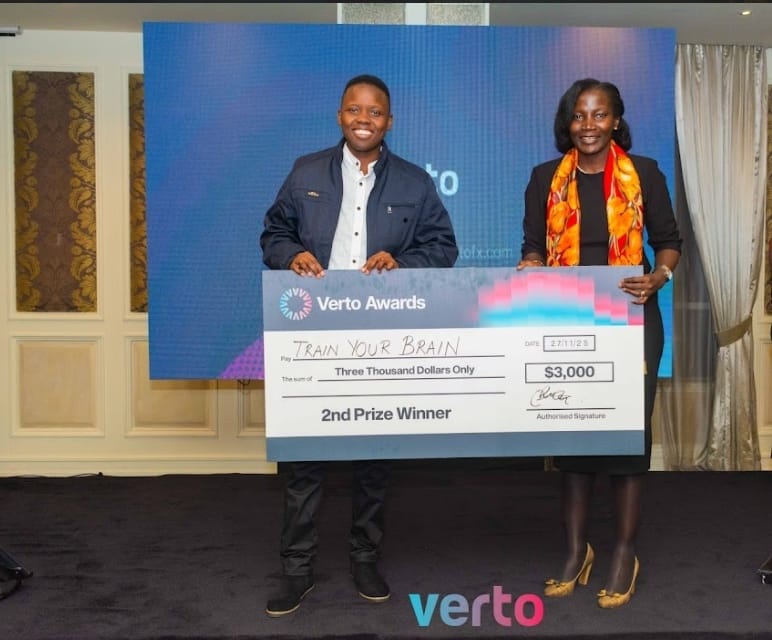
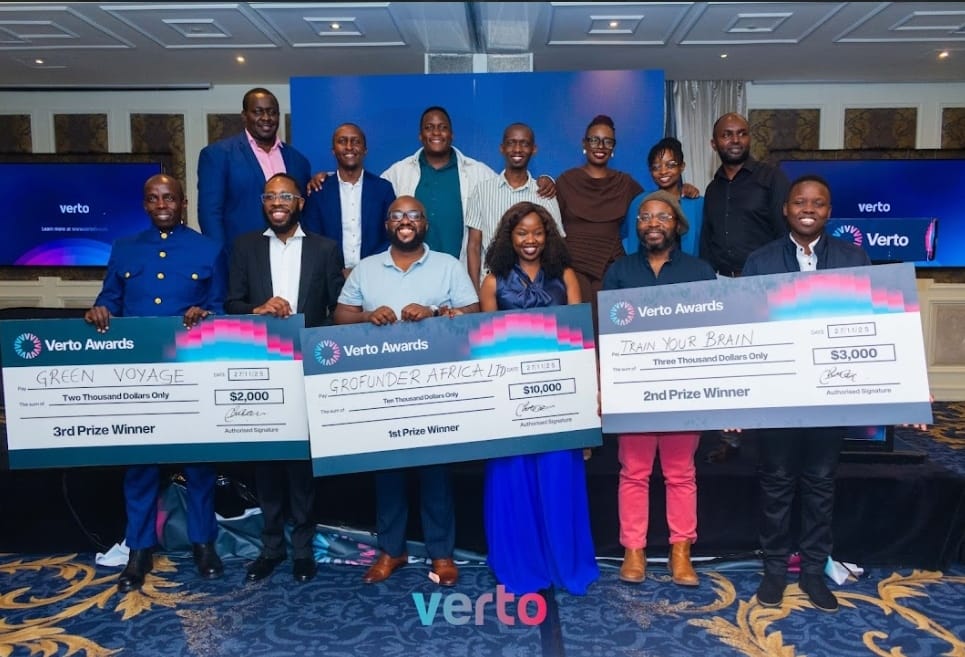
In a landmark celebration of innovation, resilience, and digital transformation, Verto has announced the winners of the inaugural Verto Awards 2025, recognising the most promising early-stage startups driving Africa’s fintech, agritech, healthtech, and climate-tech evolution. The awards culminated in a vibrant gala event in Nairobi, where USD15,000 in cash prizes was awarded to three ventures selected for their ingenuity, impact, and potential for global scalability.

Grofunder Africa Ltd, a peer-to-peer agri-financing platform enabling investment in smallholder commercial farmers, was crowned overall winner, taking home the grand prize of USD10,000.

Train Your Brain (TYB), a tech-enabled mental health platform offering accessible therapy services across Africa, secured the 1st Runner-Up position with USD3,000.

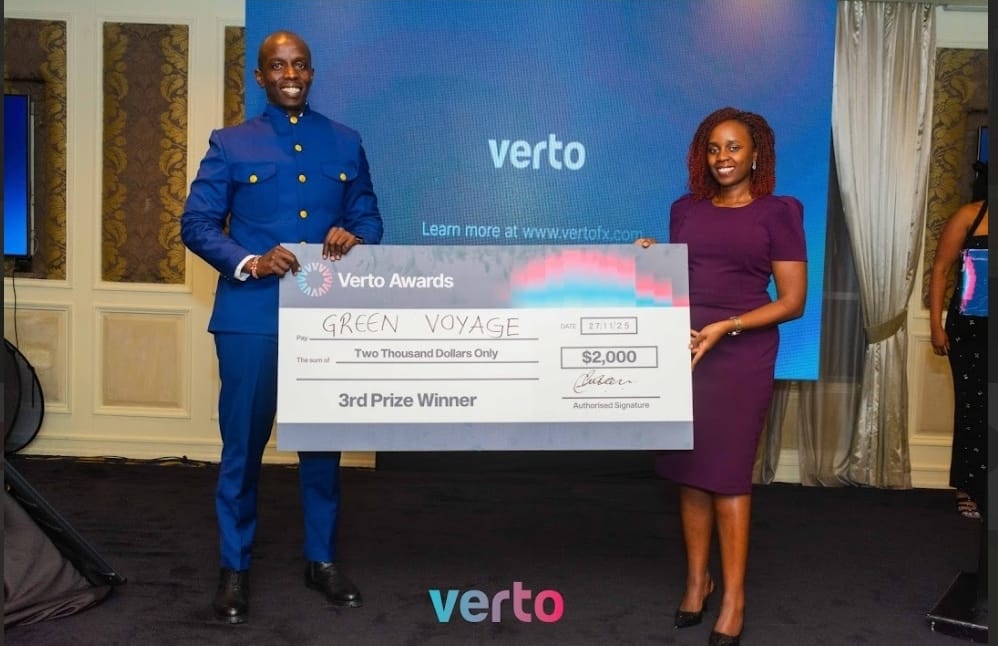
The 2nd Runner-Up award, accompanied by USD2,000, went to Green Voyage, a climate-tech startup enabling organisations to manage, verify, and monetise carbon offset projects.

Drawn from a highly competitive pool of applicants from Kenya, Nigeria, and South Africa, the finalists exemplified strong market traction, innovative business models, and high potential for scalable, sustainable impact. The awards, launched on February 6th, 2025, targeted startups operational for at least two years and addressing critical challenges across finance, agriculture, health, climate, and digital commerce.

Grofunder impressed judges with its pioneering role in unlocking financial access for farmers and strengthening agricultural value chains. Train Your Brain earned accolades for its technology-first approach to tackling Africa’s mental health gap, while Green Voyage stood out for offering measurable, technology-driven climate solutions.

Commenting on this win, Kelvin Dol, CEO of Grofunder Africa Ltd, expressed gratitude for the recognition. “This award is a powerful validation of our mission to bridge the financing gap for smallholder commercial farmers. At Grofunder, we believe agriculture can fuel Africa’s economic transformation when farmers are empowered with the right financial tools. The support from Verto helps accelerate that vision and brings us one step closer to creating a thriving, inclusive agricultural ecosystem.”

A panel of leading investors and digital economy experts judged the startups based on innovation, demonstrated need, sustainability, scalability, and social impact. “Every finalist demonstrated remarkable ambition and technical clarity, making the judging process both exciting and extremely competitive,” says Arthur Chupeau, Managing Partner, Baobab Network, and a member of the judging panel. “The impact-driven mindset we have seen is exactly what will drive the next wave of transformative African businesses.”

Co-op Bank named best in product innovation at Global SME Finance Awards

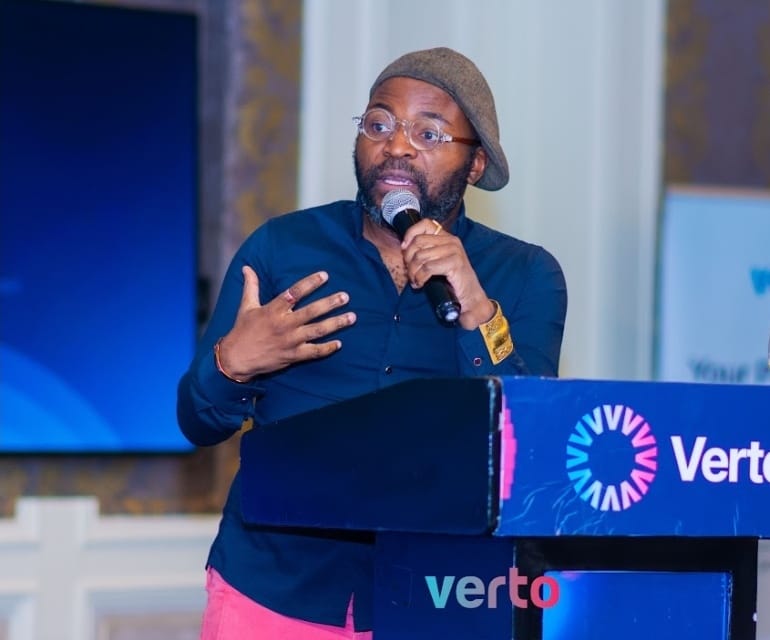
Ola Oyetayo, CEO and Co-founder of Verto, has praised the exceptional calibre of ventures showcased this year. “This inaugural edition of the Verto Awards has revealed just how much innovation, resilience, and global ambition exist within Africa’s early-stage startup ecosystem. The calibre of founders we have seen this year has been exceptional. As these businesses grow, expand, and strengthen international ties, we remain committed to providing the financial infrastructure that helps turn their global ambitions into reality.”

Ross Alwala, Founder of Train Your Brain (TYB), celebrated the recognition of mental health innovation. “We are honoured to be recognised in a space that is often overlooked yet deeply needed. Train Your Brain was built to make mental health support accessible, affordable, and stigma-free for all Africans. This award strengthens our resolve to scale our impact and bring quality care to millions who need it.”

On his part, Dennis Ngige, Founder of Green Voyage, highlighted the importance of climate-tech solutions. “Climate action requires reliable, technology-driven tools that help organisations measure and monetise their environmental commitments. Being recognised by Verto affirms the urgency of what we are building. This award motivates us to push further in enabling credible, transparent carbon offset ecosystems across Africa.”

Otieno: Why I abandoned my Sh4 million house and went back to renting

0

James Otieno, a Nairobi-based man has revealed why he abandoned his house in Kiserian to live in a rented apartment in Nairobi.

Otieno, a data analyst, revealed to Money254 that he completed building his 4-bedroom house in January 2025, an achievement he had long yearned for.

He added that he spent over Sh4 million to complete the project. However, two months later, the house lost meaning, forcing him to return to renting in March.

According to Otieno, owning a house outside Nairobi came with many inconveniences as he had to commute daily to Nairobi for work. From long commuting hours to loneliness and lack of amenities, life became unbearable for the 30-year-old who previously lived in Kilimani.

He explained that he would spend 1-2 hours driving from Kiserian to his workplace in Upper Hill daily. Otieno was often leaving home at 5:30 am to avoid traffic and returning as late as 8 pm.

His fuel cost shot up to Sh12,000-Sh15,000 per month, almost double his previous fuel cost of  Sh6,000–Sh8,000 per month while living in Kilimani Jamhuri. Additionally, the mileage and rougher roads on the stretch from the main road to his house also increased his car maintenance expenses.

Otieno says that the commuting costs and time lost made the ‘cheaper’ home more expensive in other ways.

He also realized that accessing amenities such as gym and grocery stores in Kiserian was a big hassle. Within the two months there were some incidents on insecurity in the area, making him feel unsafe especially when he had to return home late in the night.

Even though he is back to renting, Otieno says he does not regret building a house. He instead uses his experience as a lesson to other young professionals. According to him, people should look beyond rent when building a house away from the city.

“Calculate the full cost of living beyond just rent. Include commuting time, fuel, maintenance, lifestyle expenses, convenience, and emotional well-being. Cheaper living can become more expensive in hidden ways,” he says.

“Homeownership is not only a financial decision; it affects your daily life, routines, relationships, and happiness. A house can be beautiful but emotionally and socially draining if it disconnects you from your life,” Otieno adds.

ALSO READ: This is how you can build your house in Kenya cheaply

ImaraBet unleashes a casino tournament like no other — Kenya’s new arena for big winners

0

Kenya’s digital gaming world has just entered a new era. ImaraBet Kenya has launched the ImaraBet Casino Tournament, a high-stakes competitive gaming arena that is transforming how Kenyans play and win online. While other platforms recycle generic casino features, ImaraBet has built an electrifying battleground where skill, strategy, and courage define the champions. Every spin can shift the rankings. Every crash game can create a breakout star. And every week brings a new opportunity for players to rise.

The ImaraBet online casino experience has quickly become the talk of the nation. Every week, thousands of players rush into the tournament, ready to battle for supremacy on the real-time online casino tournament leaderboard. As rankings shift second by second, Kenya’s boldest gamers fight to secure the top spots. This dynamic gameplay has created a competitive spirit unmatched in Kenya’s digital gaming space. It’s not casual play — it’s a national casino sport.

Powered by the best casino games in Kenya

What makes this tournament irresistible is ImaraBet’s collection of high-energy games. Players enjoy crash titles, online table games, and fast-paced mobile favorites — all optimized for speed and clarity on the ImaraBet casino platform. These titles are among the best casino games in Kenya, ensuring every competitor gets a premium gaming experience. Whether you prefer high-risk crashes or strategic card plays, ImaraBet’s selection keeps players coming back for more.

Big prizes, big moments, big community

The ImaraBet online casino experience is not just about winning — it’s about belonging. Players celebrate victories publicly, share screenshots, compare strategies, and challenge their friends to outdo them. The weekly tournament format builds momentum that unites gamers from Nairobi to Eldoret to Mombasa. This tournament has created one of Kenya’s fastest-growing gaming communities, where competition becomes culture. Nothing strengthens a digital tribe like shared victories.

How ImaraBet Kenya’s Streak Bonus is redefining what it means to win

Player spotlight — Real stories, real champions

“This is the first tournament where everything feels alive — the leaderboard, the pressure, the prizes,” says Josphat from Nairobi.
“ImaraBet made casino gaming feel like a real sport,” adds Lynn from Mombasa. “I play every weekend, and the leaderboard makes it addictive!”

These voices reflect a growing truth: ImaraBet is not just hosting games — it’s building champions.

A tournament engineered for serious competitors

Every week, players enter the online casino tournament leaderboard for a chance to win big cash prizes. With high-stakes prize pools, mobile-first gameplay, and compatibility with Kenya’s top games of 2025, the experience is unmatched.
Here’s what makes the tournament stand out:

• high-stakes weekly prize pools
• rewards for bold, consistent gameplay
• fast, mobile-optimized casino matches
• compatibility with the hottest games in Kenya
• frictionless user experience
• high replay value

Whether you’re a casual gamer or a strategy master, ImaraBet gives you a real shot at rising to the top.

ImaraBet is leading Kenya’s casino tournament evolution

ImaraBet isn’t simply offering casino entertainment — it’s shaping Kenya’s competitive gaming culture. By bringing structure, community, and high-reward gameplay into one ecosystem, the platform has set a new benchmark for digital gaming innovation. The ImaraBet Casino Tournament has become the centerpiece of this transformation, turning everyday players into leaderboard contenders and national champions.

 Start your winning journey today

This is your moment to step into Kenya’s most electrifying casino arena. Every spin, every crash, and every strategic decision pushes you closer to the top of the online casino tournament leaderboard.
Do you have the courage to compete with Kenya’s best?
You’ll never know until you enter the arena.

Your moment to rise has arrived

The ImaraBet Casino Tournament isn’t just another feature — it’s Kenya’s boldest leap forward in online competitive entertainment. Winners are made here. Reputations are built here. Champions rise here.
Step inside, challenge yourself, and let every game push you closer to becoming one of Kenya’s next casino champions.

Your journey begins today — only on ImaraBet Kenya.