Home Blog Page 143

US to permanently stop migration from all Third World countries

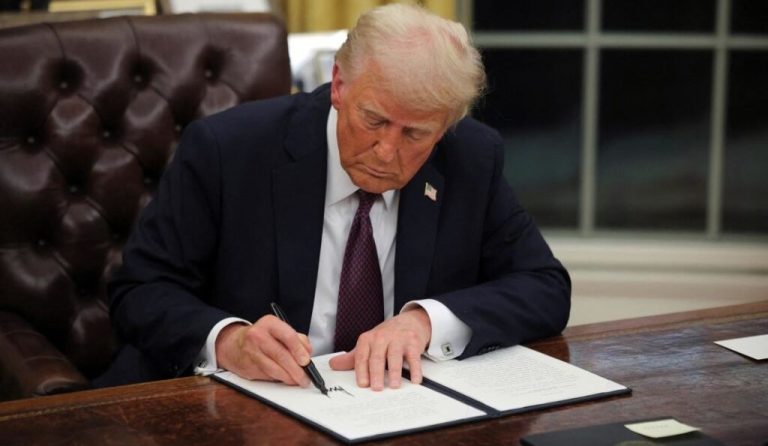
United States President Donald Trump has announced that the US will permanently pause migration from all Third World countries.

President Trump made the announcement on his Truth Social platform. In the announcement, he said that the move to ban migration from Third World countries is meant to allow the US immigration system to recover.

“Even as we have progressed technologically, Immigration Policy has eroded those gains and living conditions for many. I will permanently pause migration from all Third World Countries to allow the US system to fully recover,” he said.

President Trump further said that his administration will also terminate what he termed as ‘all of the millions of Biden illegal admissions’, including those signed by former president Joe Biden.

“We shall remove anyone who is not a net asset to the United States, or is incapable of loving our Country, end all Federal benefits and subsidies to non-citizens of our Country, denaturalize migrants who undermine domestic tranquility, and deport any Foreign National who is a public charge, security risk, or non-compatible with Western Civilization,” President Trump added.

In the message that he issued on the night of Thanksgiving, President Trump further said that these bans and removals will be implemented with the aim of achieving what he termed as a reduction of migration to the United States by illegal and disruptive populations.

“These goals will be pursued with the aim of achieving a major reduction in illegal and disruptive populations, including those admitted through an unauthorized and illegal Autopen approval process,” he said.

“Only REVERSE MIGRATION can fully cure this situation. Other than that, HAPPY THANKSGIVING TO ALL, except those that hate, steal, murder, and destroy everything that America stands for. You won’t be here for long!” said President Trump.

Ex US Visa Officer: What visa officers think about you as you approach them

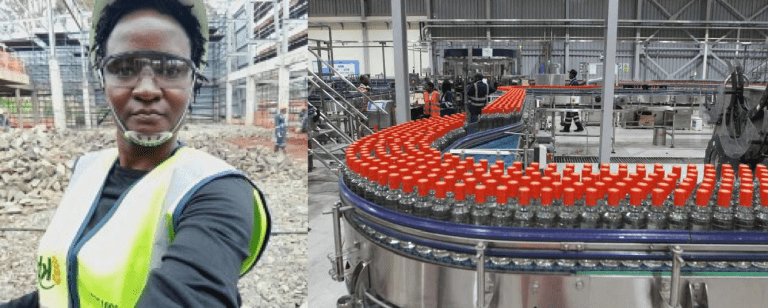
Mercy Chiambi: Meet Kenya’s most respected female brewer driving KBL’s operations

0

Driven by curiosity and a desire to understand how science, creativity, and culture come together to produce something as timeless as beer, Mercy Chiambi is now on the path to become a Master Brewer, a title only a few women hold globally.

“Becoming a Master Brewer is considered the highest achievement in the brewing world. It requires years of studying, practical experience at a commercial brewery, and the ability to lead a team,” Mercy begins.

The Consistency of Brewing

Mercy’s journey began with a foundation in Food Science at the University of Nairobi, where she developed a strong grasp of fermentation, microbiology, and process control. She then joined the business as a young brewer eager to understand how raw materials move through the brewhouse and eventually become the beers consumers recognise on shelves and at the bar.

Her development has been deliberate. She has rotated through brewhouse operations, quality management, packaging, and supply planning. The intention is to understand the full operational chain and build capability that will allow her to lead with both technical depth and commercial awareness.

“I learned very quickly that brewing is not just about making beer. It is about consistency. It is about managing inputs, efficiency, losses, and yield. You must know where every litre comes from and where it goes,” she adds.

Over the years she has earned her place as one of the country’s most respected female brewer, leading the team responsible of ensuring the beer brewed at the Kenya Breweries Limited plant meets the quality benchmark consumers expect.

“My day starts with reviewing performance from the previous shift. I want to see our brewhouse efficiencies, how fermentation behaved, the quality markers and if anything needs early intervention,” she says. “Consumers do not see the hours we spend analysing, testing and refining. They only see the final product, and it is my job to ensure that it is excellent in every single way.”

Once the brew has fully matured, it is ready to be packed into bottles and steel barrels formats that the consumer finds in bars and outlets. But like many brewers, she has a personal favourite.

“I always reach for draught,” she says with a hearty laugh. “Draught is the closest connection between what I create in the brewery and what the consumer experiences in their glass.”

Mercy explains in detail that draught represents the intersection of science, technique, and a pure consumer experience. The perfect pour, the creamy head, the fresh flavour, are all because of decisions made on the onset of the brewing process from when the raw materials are chosen.

Inspiring the Next Generation

As one of the few women in brewing, Mercy’s message to young people and especially women is clear. “Don’t be afraid to step into spaces where you’re underrepresented. Brewing is about passion, curiosity, and creativity. If you love science and creating something that brings people joy, this is the space for you. Be bold and keep going.” she concludes.

ALSO READ: Devki Group Narendra Raval’s rise from Temple assistant to Africa’s top richest

US to review all Green Cards issued to people from 19 countries

The administration of US President Donald Trump has announced that it will review all Green Cards that have been issued to people from nineteen countries.

The US Citizenship and Immigration Services boss Joseph Edlow announced that President Trump had directed him to conduct a full scale and rigorous re-examination of every Green Card for every foreigner from every country of concern.

According to a report that appeared on the BBC, the countries of concern include those that were in a list of countries whose nationals were restricted from entering the United States in a proclamation that was made by President Trump in June 2025.

They are Somalia, Cuba, Afghanistan, Haiti, Iran, Venezuela, Democratic Republic of Congo, Burma, Chad, and Libya. Laos, Sierra Leone, Togo, Turkmenistan, Burundi, Yemen, Eritrea, and Equatorial Guinea.

“At the direction of [President Trump], I have directed a full scale, rigorous re-examination of every Green Card for every alien from every country of concern,” said Edlow in a brief statement that he shared on social media platform X.

This latest crackdown follows the unfortunate incident in Washington DC in which two members of the National Guard were shot by an individual who has been identified as an Afghan national.

At the same time, the United States is planning to interview afresh all refugees who entered America between the fiscal year 2021 and fiscal year 2025. The number of refugees who are targeted in this exercise is estimated to be around 235,000.

“Given these concerns, USCIS has determined that a comprehensive review and a re-interview of all refugees admitted from January 20, 2021, to February 20, 2025, is warranted,” a memo that is dated November 21 states. “When appropriate, USCIS will also review and re-interview refugees admitted outside this timeframe.”

President Donald Trump announced in October that it would limit the number of refugees who are admitted to the United States annually to 7,500.

These 7,500 refugees will mostly comprise of white South Africans. Last year, the annual limit was at 125,000. This limit had been set by the previous administration.

Ex-US Visa Officer: Why visa officer won’t look at your documents during interview

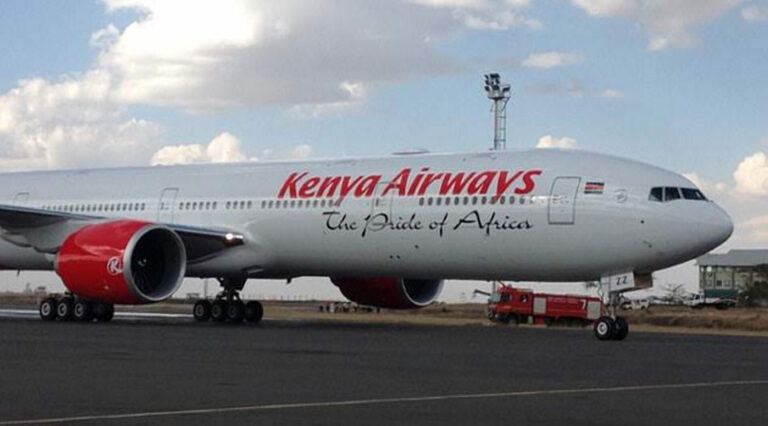
Kenya Airways issues profit warning for its full year 2025 earnings

0

National carrier Kenya Airways (KQ) has issued a profit warning for its full year earnings. The airline has blamed the anticipated dip in earnings on low passenger numbers following the grounding of two of its Boeing wide body planes.

“The [Kenya Airways Board of Directors] brings to the attention of the public that the earnings for the current financial year 2025 are expected to be lower by at least 25 percent than the earnings reported for the same period in full year 2024,” Kenya Airways said in a statement.

The profit warning follows a half year loss that the carrier posted for the period ended June 30, 2025. In that period, Kenya Airways made a net loss of Sh12.15 billion.

The national carrier’s loss in the six months was a sharp about turn from the record profit of Sh5.4 billion that the national carrier posted in the full year 2024, and the net profit of Sh513 million in the first six months of 2024.

In the first half of this year, the total income for the national carrier dropped by 18.6 percent to Sh74.5 billion. Operating loss came in at Sh6.2 billion from the Sh1.3 billion that was reported in the first half of 2024.

At the same time, cash and equivalents went red by 10.8 percent to Sh4.2 billion while net cash from operations were red by 2.6 percent to Sh7.7 billion. Assets increased 0.7 percent to Sh180.4 billion.

Kenya Airways blamed the loss on its grounded aircraft. According to Kenya Airways chief executive officer Allan Kilavuka, 33 percent of the carrier’s wide-body aircraft was grounded for the first six months of this year. The grounding of the aircraft resulted in a 14 percent drop in passenger numbers and a 19 percent drop in Revenue Passenger Kilometres (RPKs).

“The board and management remain committed to recovery efforts, including returning grounded aircraft to service, cost reduction and executing partnerships and capital raising initiatives aimed at stabilizing operations and improving the company’s financial performance,” the statement by the national carrier further added.

READ MORE: Grounded Boeing Dreamliners stall KQ’s plan for Nairobi-Beijing direct flights

US to interview afresh all refugees who entered America from 2021

The United States is planning to interview afresh all refugees who entered America between the fiscal year 2021 and fiscal year 2025. The number of refugees who are targeted in this exercise is estimated to be around 235,000.

According to a report that appeared on CNN, the US Citizenship and Immigration Services is expected to be charged with the task of reviewing and reinterviewing these refugees.

This is also according to a memo that is dated November 21 that was obtained by the US media.

“Given these concerns, USCIS has determined that a comprehensive review and a re-interview of all refugees admitted from January 20, 2021, to February 20, 2025, is warranted,” the memo stated. “When appropriate, USCIS will also review and re-interview refugees admitted outside this timeframe.”

The memo has cited what is being termed as an operational necessity to ensure refugees do not pose a national security or public threat.

“The [previous administration of former President Joe Biden had a] reckless approach that undermined the integrity of our immigration system and jeopardized the safety and security of the American people. Corrective action is now being taken to ensure those who are present in the United States deserve to be here,” the CNN quoted the Department of Homeland Security (DHS) spokesperson Tricia McLaughlin.

The decision to vet refugees afresh comes barely a month after the administration of President Donald Trump announced in October that it would limit the number of refugees who are admitted to the United States annually to 7,500.

These 7,500 refugees will mostly comprise of white South Africans. Last year, the annual limit was at 125,000. This limit had been set by the previous administration.

The leading countries of origin for refugees were the Democratic Republic of the Congo, Afghanistan, Venezuela and Syria. Unlike asylum seekers who apply for protections once they arrive at a US port of entry, refugees have been applying for legal status while they are still outside of the country.

READ MORE: I chose self-deportation from United States to avoid ICE – Sam Kang’ethe

Murang’a businessman Francis Maina wins final Ksh 1M in I&M bank’s Shinda Millioni Campaign

0

Murang’a-based businessman Francis Maina is the final winner of the just concluded “I&M Bank Shinda Millioni” “I&M Bank Shinda Millioni” competition.

Maina’s journey to this win has been marked by resilience. Last year, he lost his businesses in a devastating fire. At his lowest point, a close friend encouraged him to open an account with I&M Bank, a decision that not only helped him rebuild his financial footing but also paved the way for his participation in the I&M Shinda Millioni campaign.

I describe myself as a man of faith. When I received the call from the I&M Bank Kenya CEO informing me that I had won, I asked if this was real. It was only when I visited the I&M Bank branch at Kenol that staff confirmed I had indeed won Kshs. 1 million,” he said.

The campaign, which ran from August 12th to November 12th, 2025, rewarded customers who deposited funds into their personal and Solo Biz Accounts. For every Kshs. 2,000 deposited, customers earned one point — the more deposits, the more points accumulated. The competition saw three winners of Kshs. 1,000,000 each and 10 weekly winners of Kshs. 50,000.

Eunice Kinyanjui, Head of Small Business at I&M Bank, notes that the competition is part of the Bank’s commitment to supporting small businesses and sole proprietors, particularly those who utilize its Solo Biz Account, a product specifically designed for solo entrepreneurs.

“Our focus is transforming the businesses of our customers, and this is why we continue to make the banking journey seamless,” she said.

How I&M Shinda Millioni campaign is promoting financial inclusion

The I&M Solo Biz Account offers a range of benefits for small business owners and individuals. Key features include no minimum balance and no monthly maintenance fees. Users also enjoy free transfers within I&M Bank, free bank-to-M-PESA transfers, and free standing order setup. The account offers daily SMS/email transaction alerts and provides customers with access to relationship managers, networking forums, personalized rewards, and a service guarantee for RTGS and SWIFT transfers, subject to the terms and conditions.

Additionally, Solo Biz Account holders can borrow up to KES 5 million through unsecured facilities.

Evans Brown, the Group Head of Product at I&M Bank, noted that more competitions and products are planned to further support the Bank’s small and growing business customers.

For Maina, the win isn’t just financial. “This prize is a symbol of hope and renewal. I plan to use the Kshs. 1 million to boost my business, and a small portion will go towards celebrating with my family during this festive season,” he said.

Maina joins two other winners who also bagged KES 1 million each in the competition. Other winners include Dorcas Wanga, who walked away with KES 1 million just two weeks after opening her business account with an initial deposit of KES 50 at I&M Bank in Kakamega.


How to access interest-free loan with Co-op Bank credit card

0

Arguably, everyone has ever found themselves stuck financially, whether at home or in business. Sometimes bills pile up, while others come in unexpectedly, forcing people, especially those who depend on monthly salaries, to resort to loans to remain afloat.

To help people in times of emergencies, the Co-operative Bank of Kenya (Co-op Bank) has rolled out various products that meet the needs of diverse customers.

A good example is the Co-op Bank credit card designed to offer instant loans to customers without visiting the bank. The credit card is not linked to any bank account; the bank assigns loan limit to customers, accessible only via the card.

Customers can access the money by withdrawing cash at any Visa-branded ATM, paying for goods & services in a physical outlet where Visa cards are accepted, or paying for goods and services online.

The good news about the Co-op Bank credit card is that all payment transactions are free. The only amount that is deducted from the card is the cost of the item or service a customer is paying for.

However, charges are incurred when withdrawing cash using the card. The commission-based charges are deducted up-front from the available card limit.

Additionally, no interest is charged to customers who repay their loans on time. Co-op Bank gives the card users an interest-free period of up to 49-days, if they clear their outstanding balance on or before the statement date.

“If you’re not able to repay the full loan at once, you may repay the loan in installments. The bank will charge you a monthly interest rate on the outstanding amount until you clear the outstanding balance,” Co-op Bank says.

How To Apply For A Co-Op Credit Card:

You don’t need a Co-op Bank account to apply for a Credit Card. You can apply at any branch countrywide with your ID, 6 months bank statement, and the card processing fee.
Below are the options available depending on your income:

To avoid fraud and keep your card safe:

  • Only shop on secure websites.
  • Do NOT share with anyone your Card Number, PIN, CVV (the 3-digit number at the back of your card) or the OTP’s (one-time passwords) you receive when transacting online.

ALSO READ: Make free transactions with Co-op Bank prepaid card: how to get started

8-year-old battling blood cancer appeals for help to seek treatment in India

0

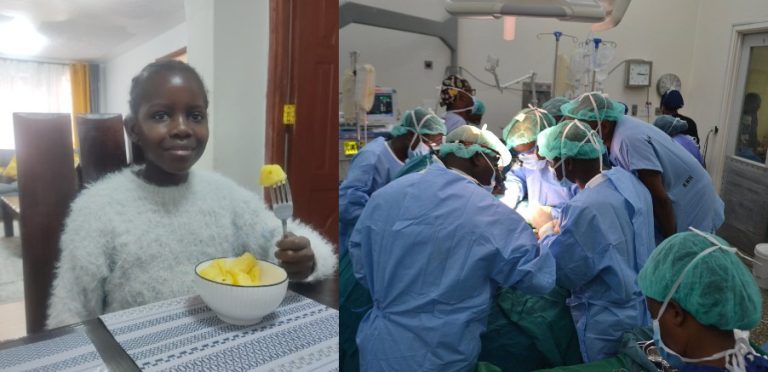
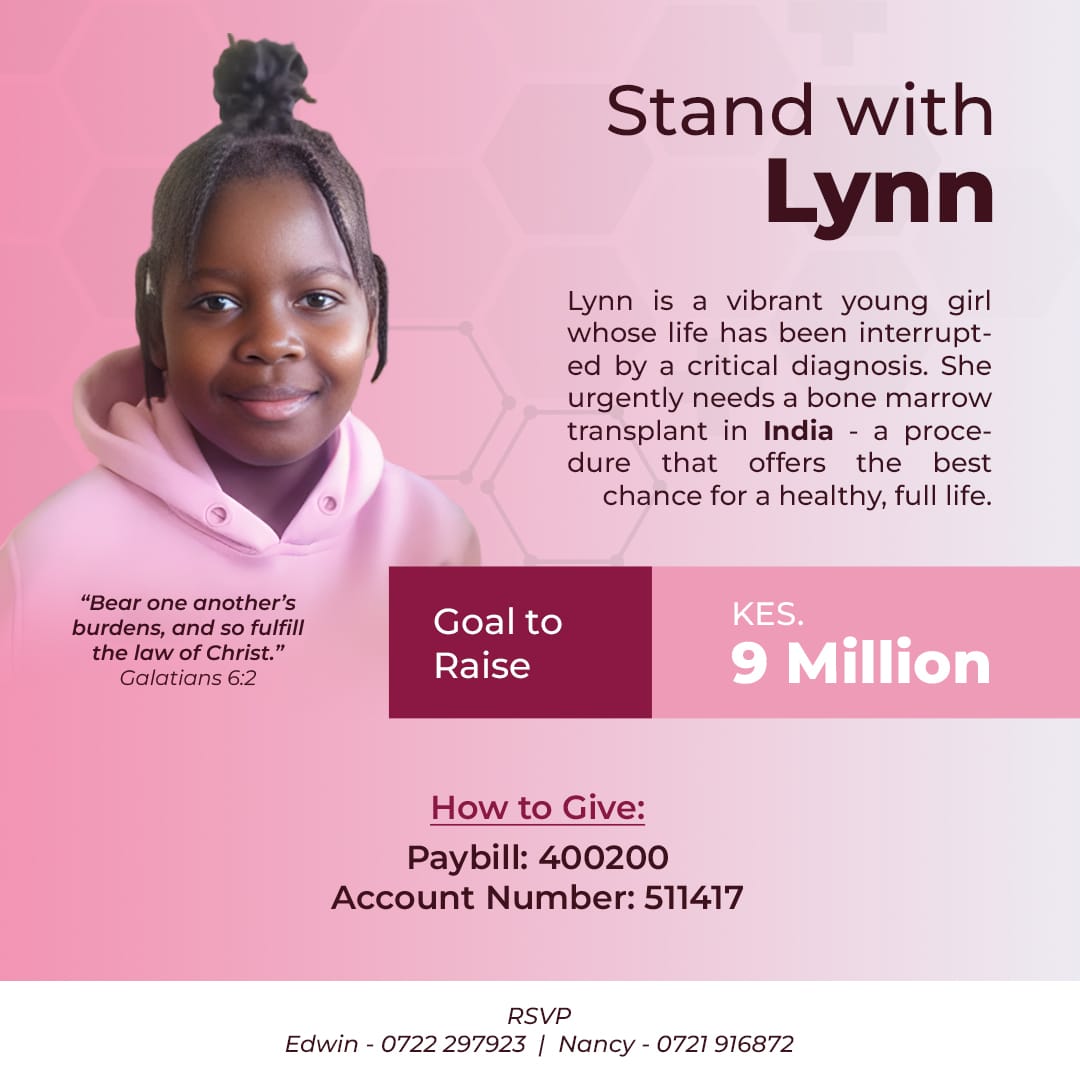
Lynn Wanjiku, an eight-year-old girl battling blood cancer has called on well-wishers to help her raise funds for treatment in India.

According to her mother Nancy Wanjiru, Wanjiku was diagnosed with Acute Myeloid Leukaemia, a fast-progressing cancer of the blood and bone marrow, early this year.

She added that her daughter has been unable to continue with her studies since March this year, as the condition continues to deteriorate.

In an interview with The Star newspaper, Wanjiku who has been in and out of Kenyatta National Hospital for chemotherapy and radiotherapy treatments, revealed that it all started in December last year when she started experiencing a slight pain in the leg.

“When the pain started, we gave her pain killers, hoping it would go away, but it persisted and at some point, she couldn’t walk,” Wanjiku’s mother Nancy Wanjiru says.

“This was around April, so we decided to do an X-ray, hoping it was just a fracture on the leg,” she added.

Unfortunately, the results did not show anything forcing the family to consult a pediatrician. At this point, Wanjiku had lost a lot of weight, turned very pale and her red blood cells were very low.

After some tests, the pediatrician referred the family to an oncologist for more tests. While Wanjiku’s father, a medical expert had a clue of what was happening, he remained silent and let the doctors make a conclusive diagnosis.

“He would exchange some jargon with the doctor, which I believe was to help them buy time before they could break the dreaded news,” Wanjiru says.

After a series of tests, the doctor confirmed that Wanjiku had Acute Myeloid Leukaemia. AML is a fast-progressing cancer of the blood and bone marrow, where immature myeloid cells or blasts multiply rapidly, crowding out the healthy blood cells.

On May 17, she was admitted to the children’s cancer ward where she had been undergoing rigorous treatment to ease the pain.

“Some chemo sessions lasted through the night, and this meant staying up to watch her. We had to sell our car just to cover some of the oncological medical costs after SHA failed us three times,” the mother of four says.

The family is now seeking for help to airlift Wanjiku to India for a bone marrow transplant.  According to them, the procedure is estimated to cost Sh9 million including pre- and post-recovery tests.

“Lynn will be required to undergo tests afresh in India, and she will also be required to finish all her chemotherapy cycles before the bone marrow treatment starts,” Wanjiru says.

The family has so far managed to raise Sh5 million through fundraising at the Nairobi East SDA church and is now calling on well wishers to help them raise the remaining Sh4 million via Paybill number 400200, account number 511417.

8-year-old battling blood cancer appeals for help to seek treatment in India

Understanding bone marrow transplant

Bone marrow transplant is a procedure that infuses healthy blood-forming stem cells into a patient’s body to replace bone marrow that’s not producing enough healthy blood cells.

The healthy cells can come from a donor or the patient’s own body, and they are infused after high-dose chemotherapy or radiation has been used to destroy the diseased marrow. This is done to treat certain cancers, blood disorders, or immune system diseases.

ALSO READ: Breast cancer is no longer a disease of older women

Businessman Muhoho Kenyatta appointed to new position at NCBA Group

0

Businessman and former President Uhuru Kenyatta’s brother Muhoho Kenyatta has been named as the new non-executive director at the board of the NCBA Group. Mr. Kenyatta will assume his new position starting from December 1, 2025.

“The Board of Directors of NCBA Group PLC is pleased to announce the appointment of Mr. Muhoho Kenyatta as a Non-Executive Director, effective 1st December, 2025,” a statement by NCBA Group Managing Director and Chief Executive Officer John Gachora said.

Mr. Gachora described Mr. Kenyatta as an accomplished business executive with over 35 years of experience in leading and developing businesses across East Africa, spanning diverse sectors including manufacturing, healthcare, insurance, and banking.

“Mr Kenyatta has previously served as Deputy Chairman of one of the predecessor institutions of NCBA between 2000 and 2019, and as a director of NCBA Bank Uganda. He continues to support the Group’s growth in its digital strategy as a member of the Board of LOOP DFS Limited, a wholly owned subsidiary of NCBA Group PLC,” said Mr. Gachora.

Mr. Kenyatta’s new role is anchored by the Kenyatta family’s significant shareholding in the NCBA Group. The Kenyatta family currently has a shareholding stake of 13.2 percent in NCBA through the family’s investment vehicle which is known as Enke Investments.

The former first family is, however, ranked second after the Ndegwa family. The Ndegwas have a 14.94 percent shareholding stake in the banking group through the family’s investment vehicle which is known as First Chartered Securities.

Mr. Kenyatta’s appointment has as the NCBA Group dominates business news following an interest from South Africa’s Standard Bank.

According to a report that was published by Bloomberg, the South African lender has instructed its Kenyan subsidiary Stanbic Bank to open talks that could lead to the acquisition of the NCBA Group.

The acquisition, if successful, could create the third largest bank in Kenya after KCB Group and Equity Group. The Standard Bank Group is currently the largest bank in Africa by assets and holds a 75 percent stake in Kenya’s Stanbic Holdings PLC.

NCBA Group and Stanbic Holdings have however not openly speak on the reported pitch, which Bloomberg attributed to internal sources with knowledge on the matter.

The acquisition pitch by Standard Bank Group, if it has indeed been made, comes six years after NIC Bank and CBA Bank merged to form NCBA Group.

READ MORE: Ndegwa and Kenyatta families earn Sh12.4 billion in five days

Namsia: How city women and rural women see and handle money differently

0

Money may be the same in value, but how it is handled differs greatly depending on one’s environment, access to opportunities, and exposure. This is more so for city women and rural women. The way a woman living in the city manages her finances is shaped by very different realities compared to a woman in a rural setup; from what she earns to what she knows, and even how society expects her to behave with money.

1). Access to Information

The Modern Woman: City women live in an age of digital access. They can easily learn about budgeting apps, investment options, and financial products through social media, podcasts, or online courses. With mobile banking, SACCOs, and fintech platforms, money is often managed digitally sometimes with automatic savings and goal trackers.

The Rural Woman: Information flow is slower in the village. Most rural women rely on word of mouth, group meetings, or radio programs for financial information. Mobile money (like M-Pesa) has opened a huge door yes, but beyond basic transactions, knowledge about investments, insurance, or business financing is still limited or dependent on NGOs, church groups, or cooperative movements.

2). Upbringing and Cultural Influence

The Modern Woman: Many urban women grow up in families where education and exposure play a big role. They are taught to dream big, pursue careers, and often manage their own income. Money conversations in urban households are more individualistic focusing on career growth, side hustles, and lifestyle choices.

The Rural Woman: In rural setups, the upbringing is more communal. Women often grow up seeing their mothers manage small amounts for food, farming, and household needs, not necessarily for long-term wealth creation. Cultural norms may dictate that men handle “big money” decisions such as buying land, livestock, or building projects, while women manage daily expenses. This has limited the rural woman to even believe she can handle big money by herself.

3). Environment and Economic Opportunities

The Modern Woman: She is surrounded by opportunities like formal employment, side hustles, digital entrepreneurship, and investment options. Her environment encourages ambition but also comes with pressure such as rent, bills, image, and social comparisons. The financial tools available are wide, but so are temptations to overspend or live beyond one’s means.

The Rural Woman: Her financial environment revolves around agriculture, small trading, and community-based systems like merry-go-rounds (chamas). Her income may be seasonal and unpredictable, depending on harvests or market prices. However, she often displays strong discipline and resilience through saving little by little and relying heavily on collective savings and support systems.

4). Knowledge and Financial Skills

The Modern Woman: She is more exposed to structured financial education through formal schooling, workplace training, or online content. Skills like budgeting, investing, and credit management are familiar concepts, though not always practiced consistently. She often knows what to do but struggles with consistency due to lifestyle pressures.

The Rural Woman: Her skills are more practical than theoretical. She may not use spreadsheets, but she can stretch Kes 500 to feed a family for a week. Her understanding of credit is often limited to SACCO loans or table-banking systems. Formal financial planning may be missing, but informal financial discipline is strong and community-based.

Challenges Faced

The Modern Woman:

  • Pressure to maintain a lifestyle image or social status.
  • Debt from digital lending apps, credit cards, or impulse online spending.
  • Balancing financial independence with family or partner expectations.

The Rural Woman:

  • Limited access to financial products or formal banking.
  • Dependence on unpredictable income sources like farming.
  • Cultural restrictions that limit ownership or decision-making over assets.

The Role of Men in Both Setups

In Urban Settings: Men and women often share financial responsibilities more equally. However, this can lead to tension especially when women earn more or desire autonomy in financial decisions. Some urban men support their partners’ financial independence, while others feel challenged by it.

In Rural Settings: Men are still widely seen as the primary providers and decision-makers. Women’s financial power is often indirect, they influence household spending but rarely control major assets. However, with the rise of women’s groups and mobile money, this is gradually changing as rural women begin to build their own economic voice.

Summary Insight

In essence, the modern woman is financially empowered but often pressured, while the rural woman is financially limited but often disciplined and grounded. Both have strengths the other can learn from:

  • The modern woman’s exposure can uplift rural women through mentorship and shared knowledge.
  • The rural woman’s discipline and community-based savings culture can remind the modern woman of the power of patience and accountability.

Rhina Namsia is the founder and chief executive officer of The Acemt Consulting, a training and consultation company that provides financial planning and investment advisory. 


READ MORE: Rhina Namsia on why Money Market Fund can disappoint you if used for investing