

Home Blog Page 144

Guinea-Bissau soldiers seize power and arrest president, other leaders

0

A group of military officers say they have seized control of Guinea-Bissau amid reports that the president, Umaro Sissoco Embaló, has been arrested.

Shortly after gunshots were heard in the capital, Bissau, government sources told the BBC that Embaló had been detained.

The officers then appeared on state TV, saying they had suspended the electoral process, as the West African nation awaited the outcome of Sunday’s presidential election.

They said they were acting to thwart a plot by unnamed politicians who had “the support of a well-known drug baron” to destabilise the country, and announced the closure of its borders and imposed a night-time curfew.

Sandwiched between Senegal and Guinea, the coup-prone country is known as a notorious drug-trafficking hub where the military has been influential since independence from Portugal in 1974.

The election results were expected on Thursday – both Embaló and his closest rival Fernando Dias had claimed victory.

Dias was supported by former Prime Minister Domingos Pereira, who had been disqualified from running.

Late on Wednesday afternoon, Embaló told France 24 in a phone call: “I have been deposed.”

Government sources have since told the BBC that Dias, Pereira and Interior Minister Botché Candé have also been detained.

The putschists have taken army chief Gen Biague Na Ntan and his deputy, Gen Mamadou Touré, into custody too, the sources say.

Witnesses in Bissau heard gunfire earlier on, at around 13:00 GMT, but it was not immediately clear who was involved in the shooting or if there were any casualties.

Hundreds of people on foot and in vehicles fled, seeking shelter as the shots rang out, the AFP news agency reported.

Later on, General Denis N’Canha, head of the military household at the presidential palace, read out a statement declaring a takeover.

He said officers had formed “the High Military Command for the Restoration of Order” and instructed the population to “remain calm”.

Checkpoints have been erected across Bissau and the streets were deserted ahead of the curfew, that was due to start at 19:00 GMT.

Portugal has called for a return to constitutional order, with its foreign ministry urging “all those involved to refrain from any act of institutional or civic violence”.

The former Portuguese colony has witnessed at least nine coups or attempted coups over the last five decades.

Embaló has said he has survived multiple coup attempts during his time in office. However, his critics allege he has fabricated crises in order to crack down on dissent.

The 53-year-old had wanted to make history as the country’s only president to secure a second consecutive mandate in the last 30 years.

He had initially said he would not seek a second term. Prior to the delayed polls, his legitimacy had been questioned, with the opposition saying his term should have officially ended in February 2025.

Guinea-Bissau is one of the poorest countries in the world with a population of more than two million people.

Its coastline has many uninhabited islands, making it ideal for drugs traffickers – with the UN dubbing it a “narco-state” as it has been a key transit point for cocaine coming from Latin America en route to Europe.

This article is republished from BBC news. Read the original article here.

ALSO READ: Ruto’s State House blows Sh4.32 billion in just 3 months!
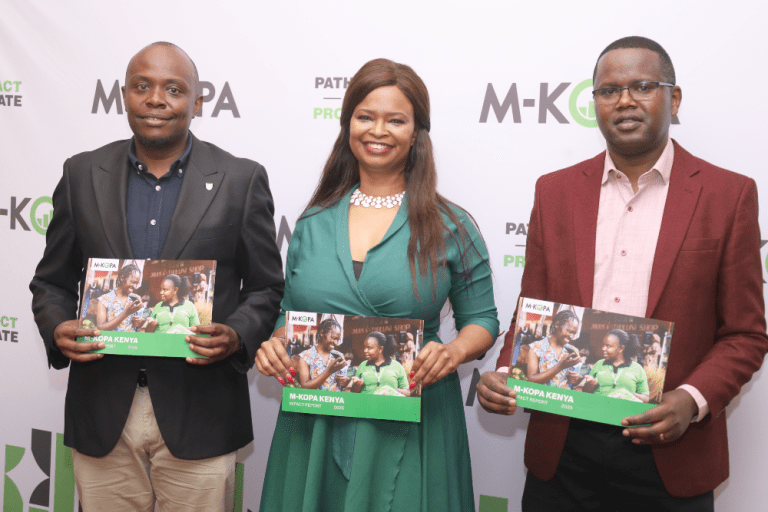
M-KOPA 2025 Kenya impact report: Driving digital inclusion, economic growth, and sustainable mobility for every day earners

0

M-KOPA, one of Kenya’s leading inclusive fintechs, has released its first Kenya-specific Impact Report, revealing the company’s decade-long contribution to advancing digital inclusion, financial access, and local economic growth for Every Day Earners.

Since 2010, M-KOPA Kenya has unlocked over KES 207 billion in credit, serving 4.8 million customers traditionally excluded from formal finance. Digital access remains a cornerstone of this impact, with 4.5 million smartphone users supported, including 2.1 million first-time smartphone owners.

Martin Kingori, General Manager, M-KOPA Kenya, said: “Kenya has always been the beating heart  of M-KOPA’s progress journey. Our 2025 Impact Report demonstrates how inclusive financing,  responsible lending, and digital innovation are transforming lives at scale. What matters most is the  lived progress of Every Day Earners—9 out of 10 report an improved quality of life, and more than  half are now earning more.”

Digital Access Powering Progress

The report shows the powerful link between smartphone access and opportunity. 67% of  customers use their M-KOPA device for income generation, 52% report earning more since joining  the platform, and 64% say they can now meet household goals more easily.

For nearly half of customers, M-KOPA represents a first step into formal finance: 47% are first-time  smartphone owners, 37% accessed their first formal loan, and 68% received their first health  insurance cover.

Through its “More than a Phone” platform, M-KOPA enables customers to access credit, insurance,  and essential digital services with flexible daily repayments.

Building Kenya’s Local Economy

M-KOPA’s contribution extends far beyond individual customer impact. As one of Kenya’s largest  private-sector taxpayers, M-KOPA contributed KES 3.79 billion in taxes in 2024 alone, supporting  essential public services and national development. The company’s KES 20.3 billion local

M-KOPA General

procurement spend drove economic activity across Kenyan suppliers, creating ripple effects  throughout the economy.

M-KOPA directly employs 1,320 staff and supports 14,000 sales agents, most of whom are young  people taking their first step into the labour market—addressing youth unemployment and  creating dignified work opportunities.

M-KOPA’s Nairobi smartphone assembly facility, now Africa’s largest, has produced 2 million  devices and is training a new generation in electronics assembly, quality control, and advanced  manufacturing skills. The facility represents significant investment in Kenya’s technological  capabilities, aligning with national priorities around local manufacturing and skills transfer.

E-Mobility: Expanding Clean, Affordable Transport

M-KOPA has now financed over 5,000 electric motorbikes for Boda Boda riders—Every Day Earners  who make their living trip by trip with no access to traditional vehicle financing. Through the same  flexible daily repayment model that has enabled millions to access smartphones, M-KOPA is making  electric mobility affordable for riders who will benefit most.

Riders save an average of KES 730 per day through reduced fuel costs and fewer repairs, with 66%  reporting higher earnings since switching to electric. 47% can now afford essential household expenses, and 41% are investing in their children’s education.

Brian Njao, General Manager – Mobility, said: “Reaching 5,000 electric motorbikes demonstrates how M-KOPA’s financing model works across asset classes. Whether it’s a smartphone or an e-motorbike, we’re solving the same challenge—making expensive, income-generating assets accessible to people earning day by day. For riders, the impact is immediate: lower costs, higher  earnings, and the dignity of building towards ownership. This is financial inclusion meeting climate  action.”

Electric motorbikes cut harmful pollutants by over 90% compared to petrol bikes, contributing to  cleaner air in Kenyan cities.

Consumer Protection: A Customer-First Financing Model

M-KOPA’s approach is built on a simple principle: when customers thrive, we grow. This shapes  everything from transparent terms to flexible repayments aligned to how Every Day Earners  actually earn.

M-KOPA General

95% of customers say loan terms are fair. Every customer receives a welcome call where the terms are clearly explained. There are no hidden fees, no penalties for delayed payments, and no  negative impact on credit histories.

M-KOPA’s device locking technology protects both customers and the business. Unlike traditional  loans where missed payments accumulate as debt, M-KOPA customers never owe money for a  device they cannot access. When payment is missed, the device locks and skipped days are added  to the payment term with no penalty. Crucially, customers can return their device anytime for a full  deposit refund with no further obligation—safeguarding against indebtedness.

Inside Kenya’s largest smartphone assembly plant in Nairobi

This stands in stark contrast to irresponsible financing common in Kenya’s consumer finance sector,  where customers face aggressive collection, mounting debt, and asset confiscation.

Sustainability & Climate-Responsible Growth

M-KOPA continues to embed climate responsibility across its operations. Initially through solar  products and now as a result of refurbished smartphones and circularity initiatives, the company  has avoided 2.03 million tonnes of CO₂e since 2010.

Looking Ahead

M-KOPA Kenya plans to expand local manufacturing, scale responsible digital financial services, and  deepen partnerships aligned with national development ambitions—from the Digital Economy  Blueprint to Kenya Vision 2030.

KEY HIGHLIGHTS FROM THE 2025 KENYA IMPACT REPORT

Economic Impact:

  • KES 207+ billion in credit unlocked
  • KES 3.79 billion in taxes contributed in 2024
  • KES 20.3 billion in local procurement spend in 2024
  • 2 million phones assembled at Africa’s largest smartphone assembly facility • Customer Impact:
  • 4.8 million total customers served
  • 9 out of 10 customers report improved quality of life
  • 67% use their M-KOPA product for income generation
  • 52% report increased earnings
  • 95% say loan terms are fair

E-Mobility Impact:

M-KOPA General

  • 5,000+ electric motorbikes financed
  • KES 730 average daily savings per rider
  • 66% of riders report earning more
  • 90%+ reduction in harmful pollutants vs petrol bikes

Employment:

  • 1,320 direct employees
  • 14,000 sales agents supported
  • Climate Impact:
  • 2.03 million tonnes CO₂e avoided since 2010

• 10% of smartphones sold in 2025 were refurbished

MSME leaders call for greater investment and collaboration at BES 2025

0

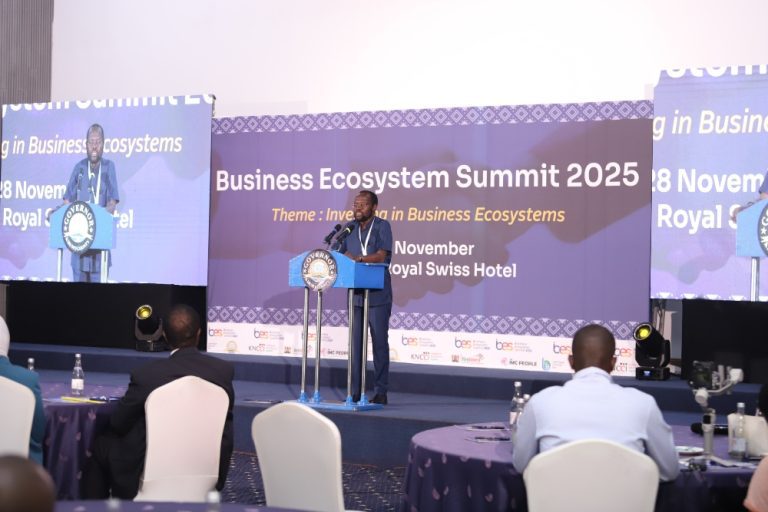
 MSME owners and industry stakeholders have issued a call for increased investment and collaboration to unlock the next phase of business growth in Kenya. Speaking during the highly successful Business Ecosystems Summit (BES) 2025 in Kisumu, MSME representatives, corporates, and sector associations urged investors and development partners to scale up support and deploy capital that matches the ambition and economic contribution of Kenya’s 7.4 million MSMEs.

During her address as the convener of the Summit, Jeanette Oromo, CEO of The IMC People, challenged the business community to translate the commitments made at the Summit into concrete action.

“The momentum we are witnessing at the 2025 Business Ecosystems Summit must translate into tangible investments and partnerships. It is time to move beyond rhetoric and actively deploy capital into MSMEs. The biggest challenges these enterprises face are related to access to financing and capital, yet they remain the backbone of our economy. The potential for improving our country’s socio-economic status is limitless, but only if we have innovative financing models, patient capital, and inclusive value chains that support MSMEs. This Summit proves that bringing the right players together in structured and meaningful ways makes magic happen,” said Jeanette Oromo, CEO of The IMC People and BES 2025 convener.

The Summit, organized by The IMC People in partnership with the Lake Region Economic Bloc (LREB) and the Kisumu County Government, showcased the region’s readiness to support enterprise development and attract investment across multiple sectors.

On his part, Kisumu County Governor, H.E Prof. Peter Anyang’ Nyong’o, Governor of Kisumu County and Chair of the LREB, emphasized the county’s business readiness citing the return of major business conferences as evidence.

SportPesa Mega Jackpot reaches to a record Kshs. 391 million: The weekend to win big!

“We hosted the inaugural Business Ecosystems Summit in 2023, then followed it up with major international business events and conferences including one by the Afreximbank in 2024. This demonstrates that Kisumu and the Lake region are open, competitive, and strategic for business,” said Prof. Nyong’o.

Her Excellency, Nasra Salim Mohamed Al Hashmi, Ambassador of the Sultanate of Oman to Kenya, highlighted the critical need for collaboration between government and stakeholders saying: “Oman and Kenya are no strangers to each other, and we see Kenya as a strategic gateway to East and Central Africa. Our governments are committed to building cross-regional networks that empower women-led enterprises, youth innovators and startups with global aspirations. Events like BES remind us that the future of trade and development is not built by government alone, but by people, ideas and relationships.”

Building on the success of the 2023 edition which attracted 9,000 attendees, BES2025 exceeded expectations with increased participation and deeper engagement across sectors. Closing on Friday, 28 November, it features high-level plenary sessions, sector-specific panels, investment matchmaking, and an expansive marketplace that attracted more than 10,000 visitors on its first day. The Summit is showcasing more than 300 exhibitors, most of them innovative MSMEs.

“Our commitment moving forward is to create more of these platforms throughout the year to grow the impact of the Summit. We must build permanent bridges between MSMEs and the resources they need to scale. No entrepreneur should struggle in isolation when solutions exist within reach,” added Ms. Oromo.

BES2025 was made possible by the support of key organisations including Arise IIP Kenya, , AAR Insurance, KenInvest, Kenya National Chamber of Commerce and Industry (KNCCI) Kisumu Chapter, Export Processing Zones Authority (EPZA), and Med Aditus. 

Sanlam Kenya rebrands to SanlamAllianz, eyes top-three local insurance ranking

0

Listed non-banking financial services firm Sanlam Kenya Plc (NSE: SLAM) has officially rebranded to Sanlam Allianz Holdings (Kenya) PLC (“SanlamAllianz Kenya”).

The name change follows the recent formation of a joint venture between Sanlam and Allianz, establishing SanlamAllianz as Africa’s largest non-banking financial services entity, with more than 200 years’ combined experience on the continent and beyond.

Speaking when he confirmed the official rebrand, SanlamAllianz Kenya Group CEO Dr Nyamemba Patrick Tumbo said the name change reflects a continental commitment to raise the bar on the delivery of non-banking financial services with localised attention. He added that the firm’s subsidiaries, Sanlam Allianz Life Insurance (Kenya) Limited (“SanlamAllianz Life Insurance Kenya”) and Sanlam Allianz General Insurance (Kenya) Limited (“SanlamAllianz General Insurance Kenya”), will continue to be headed by Ms Jacqueline Karasha and Mr George Kuria respectively.

As part of the rebrand, preceded by shareholder and regulatory approvals, Dr Tumbo reiterated that the firm will enhance its client experience and distribution capacities through the deployment of innovative technology-based solutions.

“The rebrand heralds a new dawn for us as SanlamAllianz, enhancing our corporate commitment to advance our market effectiveness in the provision of quality, client-focused life and general insurance products,” he said, adding that the firm will tap into the wider SanlamAllianz resources and technical know-how to deliver exceptional services and solutions. SanlamAllianz operates in 26 countries and holds a combined total group equity value of over 33 billion South African rand (approximately 2 billion euros).

Financial Inclusion: Sanlam Kenya launches Akiba Plus, a digital pension solution for the modern saver

On his part, SanlamAllianz Chief Executive Officer Mr Heinie Werth said, “Our ambition as SanlamAllianz is to be among the top-three players in all our markets, and we will provide our full support to SanlamAllianz Kenya as it strives towards this ambition.” To achieve this, he said that the local team will follow a shared value approach with its staff, clients, business partners and shareholders, as well as the markets, communities and countries in which it operates.

SanlamAllianz has four key pillars that underpin its ambition:

  1. Markets and clients – Being a leader in life and general insurance on the African continent, it is increasing its clients’ access to its products and services in innovative, client-centric ways.
  2. Economic and social impact – Through embracing environmental, social and governance (ESG) principles, it aims to demonstrate good corporate citizenship and has a positive impact on its local economies in a positive way.
  3. Financial – Consistent delivery on its key financial metrics ensures that it provides economic value to its shareholders.
  4. People – Empowering its people through a high-performance, engaging culture ensures that it attracts, builds and retains a skilled and confident talent pool that drives the success of its business.

Being part of an international, market-leading company will enable SanlamAllianz Kenya to collaborate, share knowledge and innovate on a large scale to develop best-in-class solutions that empowers future generations to be financially confident, secure and prosperous.

How SportPesa Aviator is becoming Kenya’s fastest-growing online casino game — and why the country can’t stop playing it

0

SportPesa Aviator Kenya has taken over the country’s online gaming scene with a force no one can ignore. What began as a simple crash-style game has now become Kenya’s most exciting digital entertainment experience — a fast, social, and electrifying contest that rewards timing, instinct, and pure courage. From Nairobi to Eldoret, Kenyans are cashing out, sharing wins, comparing strategies, and turning Aviator into a nationwide phenomenon.

In just a short time, SportPesa Aviator Kenya has cemented itself as one of the fastest-growing online casino games in the country — a mobile-first thrill that blends simplicity, speed, and strategy in a way few games ever have. It has become the go-to choice for players seeking high-energy rounds, real-time excitement, and a transparent gaming experience backed by SportPesa’s trusted platform. With big wins trending across social media and players celebrating multipliers every hour, Aviator has evolved beyond a game — it is now the heartbeat of Kenya’s online gaming culture.

The wins that Kenya can’t stop talking about

Every day, timelines fill with Aviator big wins Kenya — a KSh 20 stake turning into thousands, a bold cashout at 12x, or a well-timed exit before the plane flies away.
These moments spread fast, creating conversation and attracting new players who want to experience the same thrill.

Campaigns like SportPesa Aviator free bets have made the game even more popular, giving first-time players a chance to try their luck with zero risk. This has fueled massive engagement and contributed to the viral culture surrounding the Aviator Kenya online game.

A game that Kenya has embraced as a cultural moment

Aviator’s rise isn’t just about the wins — it’s about the community. Players celebrate every takeoff, every cashout, and every near-miss like a team event.

“The moment that plane lifts, the room changes. You feel the energy. You feel the tension. And when someone hits a big win, everyone celebrates.” — Brian, Nairobi

SportPesa Aviator: The smart way to win in Kenya’s fastest-growing casino game

“I love it because it fits into my day. Quick games, quick wins, and you’re actually involved. It feels alive.” — Joy, Nakuru

Thousands of Kenyans join the Aviator community every week, making it the most social and interactive crash game in the country.

Why Aviator fits Kenya’s lifestyle so perfectly

Aviator’s design makes it ideal for Kenya’s fast, mobile-first digital culture.

Why it stands out as the best crash game Kenya has seen-

• Low entry stakes that welcome anyone
• Lightning-fast rounds — perfect for breaks, commutes, or late-night gaming
• Instant withdrawals players trust
• Real-time chat that builds excitement
• Transparent mechanics that require no complicated rules

This simplicity and speed are the reasons Aviator casino Kenya continues to dominate conversations across the country.

The strategy behind the thrill

Learning how to play Aviator Kenya is easy:
Stake → Watch → Cash out before the plane disappears.

But the real thrill lies in the tension — the rising multiplier, the heartbeat moment, the “should I wait or cash out now?” decision that defines every round.

Players analyze patterns, test strategies, debate on social chats, and cheer each other on.
This real-time suspense is what makes the Aviator crash game Kenya one of the most addictive online experiences in the country.

A game bringing Kenyans together

Aviator has evolved into a shared Kenyan experience.
People play in matatus, offices, living rooms, and campuses — cheering, arguing, and celebrating together.

It’s one of the few games that blends digital excitement with real human energy.

In a world where entertainment often feels individual, Aviator brings people together — and that sense of connection is fueling its long-term success.

SportPesa Aviator Kenya continues to take flight

With transparent gameplay, secure payouts, and strong brand trust, SportPesa has positioned Aviator as Kenya’s flagship crash game. The growth is undeniable, the audience is expanding daily, and the excitement only continues to rise.

Aviator isn’t just soaring — it’s soaring with Kenya.

Whether it’s the strategic tension, the shared wins, or the fast-paced fun, millions of players are choosing Aviator every day as their go-to online entertainment experience.

A life changed in one call: Abdi Dahir’s journey from daily hustle to hope and impact

0

For 25-year-old Abdi Dahir, a humble turn boy from Garissa, life has always been about survival and responsibility. Each morning before sunrise, he makes his way to Eastleigh’s busy commercial streets, with thousands of traders, buyers and sellers, Matatus plying the streets and shouts of traders, ready to begin another day of loading trucks and preparing cargo for the long journey to Garissa.

But on this particular day, what began like any other would end in a moment that would be life changing for him and his family.

As he carried on his daily hustle, Abdi was deep in his work when his phone rang. He almost ignored it, after all, as the firstborn in a family of eight and their only breadwinner, he thought, this would probably be one of the family members probably asking for some money or one of his friends asking for a small loan to be repaid at the end of the day. What he did not know was that on the other end of the line was a call that would rewrite his family’s story forever.

When he had the words “You are one of the winners in the Safaricom Shangwe @25 promotion” something inside him cracked open, the years of struggle, the silent prayers, he stood frozen, his hands trembling, wondering whether he had heard the caller clearly.

“My whole family depends on me, I do not know how to thank Safaricom, I can’t believe that the little credit I always buy to call customers has made me a young millionaire.” he finally managed to say, his voice unsteady with emotions.

For a moment, the noise of Eastleigh faded, replaced by the overwhelming rush of years of struggle, days when he skipped meals so his siblings could eat, nights he stayed awake worrying about rent, school fees, and how to stretch a day’s wages to feed eight mouths. And then, in one call, everything would finally change.

For Abdi, this win is a lifeline a breath of hope after years of unrelenting hardship.

“I have always dreamt of building my mother a decent house,” he says quietly. “But with my earnings, it was impossible. Now, my dream to build her a home will come true, a place she can be proud of”.

He plans to use the money to secure his mother and siblings a safe roof over their heads and support his brothers and sisters through school, dreams that once felt distant now suddenly within reach.

But Abdi’s dreams do not end with his family, even with his daily struggles, he carries the burden of his community in his heart.

As part of his win, he received an additional Shs250,000 for a community project, and without hesitation, he chose Sangailu Primary School in Garissa, where children often sit on dusty floors, sharing dilapidated desks, and walk long distances under scorching heat just to find water.

“For the project, I want to donate desks and water tanks. Those children struggle just for a sip of water, if i can ease that burden for them even a little, then their dreams will be easier to chase and their paths might be better than mine”.

Safaricom receives CMA approval for Sh40 billion corporate bond

For the soft-spoken 25-year-old, this win is nothing short of a miracle, one he hopes other Kenyans will also experience.

“I want to tell my fellow youth to keep using Safaricom, you never know maybe one day, it will be your turn to become a young millionaire like me.” he says with a shy smile that slowly brightens.

Since its launch, Safaricom’s Shangwe @25 promotion has continued to reward and delight customers across the country with daily and weekly cash prizes, devices, business tools, and data bundles. Already, more than 50,000 Kenyans are winning every week, with over 5 million expected winners during the campaign period.

Customers can participate by using M-PESA services, sending money, making payments, redeeming Bonga Points or purchasing Safaricom products such as data bundles, voice bundles, digital services, or Home Fibre.

Merchants and M-PESA agents also stand a chance to win through Buy Goods, Pochi la Biashara, and transactions of KES 1,000 and above.


Gov’t announces final training for NYOTA fund beneficiaries in 17 counties

0

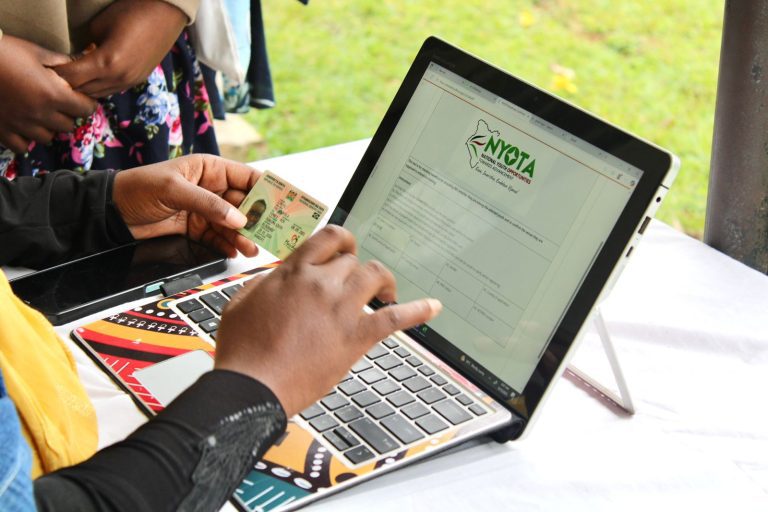
The Government has announced training dates for 42,735 youths selected for the NYOTA Program.

The four-day training sessions will be conducted in constituency headquarters within Central Kenya, Nairobi, North Eastern and the Coastal regions from Wednesday, November 26, to Saturday, November 29, 2025.

“The Nyota Project will launch the Business Support component, classroom training for the last cohort, covering 17 counties across Central Kenya, Nairobi City, North Eastern Kenya, and Coastal Kenya. This will begin today, Wednesday, November 26, 2025, and continue until Saturday, November 29, 2025, in the respective constituency headquarters,” the State Department for MSME Development stated.

The training which will be conducted in 17 counties marks the final cohort of the program. Participating counties Garissa, Kiambu, Kilifi, Kirinyaga, Kwale, Lamu, Mandera, Marsabit, Mombasa, Murang’a, Nairobi City, Nyandarua, Nyeri, Samburu, Taita Taveta, Tana River and Wajir.

The training brings the total number of counties that have undergone the NYOTA Project’s business support component to 46.

According to the MSME department, training for Elgeyo Marakwet County  which was disrupted due to recent landslides will be scheduled at a later date.

A total of 42,735 youth beneficiaries have been invited to attend the classroom sessions across 510 wards, aligning with the programme requirement of 70 participants per ward.

Selected trainees have already been notified and are required to attend at least 3 of the 4 training days to qualify for business grant disbursement.

All constituency training centres are reported to be fully prepared, with disbursement of start-up capital expected to follow after the training period.

ALSO READ: What is NYOTA program? Eligibility and how to apply for Sh50K gov’t grant

KCB announces shift to new loan pricing model from next month

0

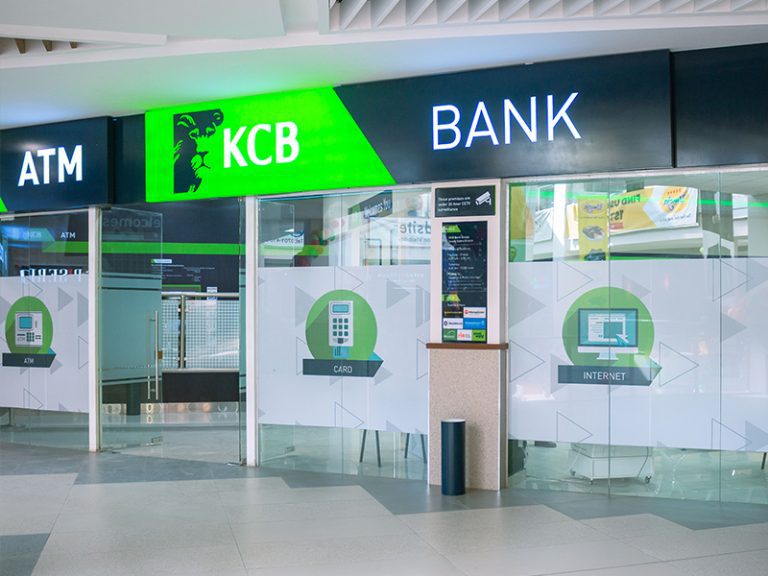
The Kenya Commercial Bank (KCB) has announced that it will adopt a new loan pricing system effective December 1, 2025.

In a notice on Wednesday, November 26, KCB said the move follows the Central Bank of Kenya’s (CBK) directive to commercial banks to implement the revised Risk-Based Credit Pricing Model (RBCPM), aimed at increasing loan pricing transparency.

“Subsequent to the issuance of revised Risk-Based Credit Pricing  Model (RBCPM) by the Central Bank of Kenya (CBK), KCB Bank Kenya wishes to inform customers and the general public that we will be transitioning to the new framework from December 1, 2025,” the notice reads in part.

The lender added that all new local currency variable-rate loans taken from December 1, 2025 will be subjected to the new pricing model.

According to the notice, under the new framework, lending rates for new variable-rate loans will be based on the Central Bank Rate (CBR) plus a customer-specific risk-based premium referred to as “K”.

Existing local currency variable-rate loans will continue under the current terms and will transition to the new framework by February 28, 2026.

“All applicable fees, charges and the total cost of credit will be fully disclosed to customers in line with the CBK requirements,” KCB stated.

KCB becomes the first lender to shift to this framework. CBK had in August given commercial banks 3 months to implement the new pricing model for new loans to strengthen the transmission of monetary policy and foster a more transparent, market-responsive pricing model.

Under the new framework, banks will use a new market-based benchmark known as Kenya Shilling Overnight Interbank Average Rate (KESONIA) as the reference point for pricing all variable-rate loans denominated in Kenya Shillings, marking a significant departure from the initial CBR.

The total lending rate will now be calculated as KESONIA + Premium (“K”). “Premium” will include costs related to lending, return to shareholders and the risk profile of the borrower.  The total cost of credit to the consumer will be this rate plus.

ALSO READ: KCB Group posts KSh 47.3 Billion Q3 profit as assets cross KSh 2 Trillion mark

Devki Group Narendra Raval’s rise from Temple assistant to Africa’s top richest

0

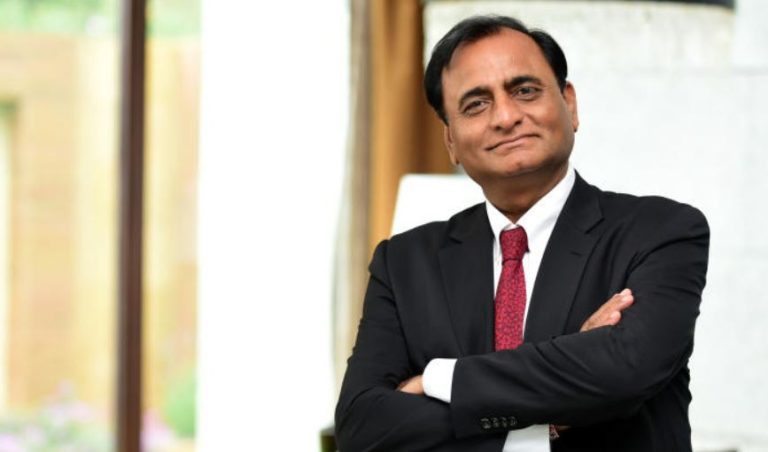
Billionaire industrialist Narendra Raval is one of the richest businessmen in Kenya and Africa, having invested heavily in the manufacturing sector.

Raval is the founder of Devki Group of Companies, one of East and Central Africa’s largest manufacturers of steel, cement, and roofing materials.

A 2015 Forbes report ranked him among Africa’s 50 richest people with an estimated net worth of $500 million (Sh54 billion).

Born in 1962 into a Brahmin family in Gujarat, India, Raval spent his early years serving as a temple assistant. The Kenyan of Indian descent later relocated to Kenya, continuing with his service at a temple in Kisumu in 1978.

Four years later, he quit the temple service to join a Nairobi-based steel mill, laying the foundation for who he is today.

The closure of the factory in 1990 was a blessing in disguise for Raval who launched his first business to offer affordable building materials. The businessman partnered with his wife and launched a small hardware shop in Gikomba market.

The business bloomed and two years later, the couple established a small rolling mill in Athi River, which grew to the present-day Devki Group.

Headquartered in Nairobi, Devki Group is a privately owned conglomerate with operations in Kenya, Uganda, and the Democratic Republic of Congo.


Its subsidiaries include Devki Steel Mills Limited, Maisha Mabati Mills Limited, National Cement Uganda Limited, National Cement Company Limited, Maisha Minerals and Fertilizers Limited, Northwood Aviation Agencies Limited, Cemtech Limited and Maisha Packaging Company Limited.

Devki Group is East Africa’s leading manufacturer of key construction materials, including steel, cement, and aluminum, and boasts as the single largest employer in the Kenya’s Private Sector, employing over 14,000 people in 19 factories.

The group recently launched a Ksh71.16 billion ($550 million) steel plant in Tororo, Uganda at a high-profile ceremony attended by President William Ruto, President Yoweri Museveni, and President Paul Kagame.

Billionaire Narendra Raval seeking to mine iron ore from 7,600 acre Taita land

Modest Living

Despite being worth billions of shillings, Raval has maintained a modest living. In 2021, he told Business Daily that he did not own a wallet, ATM card, or credit card.

“I always get on a bodaboda when traffic is a mess. I remove my tie, jump on one, and pay Sh200,” the billionaire revealed.

He further revealed that at the time he owned only four suits, one pair of shoes worth Sh6,000 and a simple mobile phone.

Raval credits his success to collaboration with his wife whom they shares ideas.

“The beauty of marriage for me is that whatever problems I have, I always know they will be shared and halved,” he said as quoted by Business Daily.

“You become close friends the longer you stay together, raising children, and working towards something important for both of you,” he added.

Fresh twist in multi-billion Rironi-Mau Summit toll highway deal

0

A fresh twist has rocked the Rironi-Mau Summit toll highway deal. This follows a decision by Kenya to make last-minute changes to the preferred contractors for the highway.

In the new changes, the Kenya National Highways Authority (KeNHA) has brought back the Chinese company that came second in the proposals that were submitted mid this year. KeNHA has then split the road into sections that will be allocated to the first preferred contractor and the contractor who was ranked second.

The first contractor who was initially selected by KeNHA is China Road and Bridge Corporation (CRBC), the company that is leading a consortium with the National Social Security Fund (NSSF). The contractor who came in second, and who has now been brought back into the project, is the Shandong Hi-Speed Road & Bridge International Engineering Co. Ltd.

According to a report that appeared in local business newspaper, the Business Daily, on Wednesday, November 26, 2025, these changes by the government have been made to prevent the project from being scrutinized by the Chinese government.

Apparently, projects worth over $1 billion (Sh129.6 billion at an exchange rate of Sh129.6 to the US Dollar) that are taken by state-owned Chinese companies must be reviewed by the Chinese government before they are implemented.

With the Rironi-Mau Summit toll highway construction cost estimated at over Sh170 billion, the China Road and Bridge Corporation would have been required to submit its proposal to the Chinese government for review and approval before hitting the ground. Kenya does not want this.

To circumvent this requirement, the report in the Business Daily says that Shandong Hi-Speed Road & Bridge International Engineering Co. Ltd has now been given a section of the highway to build.

The CRBC has been given the section of road from Nairobi to Gilgil via Naivasha with a total of 81 kilometres, and the section from Nairobi to Naivasha through Maai Mahiu with a total of 58 kilometres.

Shandong on the other hand has been given the section from Gilgil to Mau Summit which comprises of 94 kilometres.

“With neither of the proponent able to deliver the full corridor within the terms of the PPP Act, the contracting authority [KeNHA], guided by the National Treasury and Economic Planning, initiated the evaluation of the feasibility study reports of the alternative split-score proposals earlier submitted by the proponents,” said KeNHA in its new disclosures.

The report further noted from the Director-General of the Public Private Partnerships (PPP) Kefa Seda who said that the two companies will now have to harmonize their toll rates.

“Each [contractor] will individually manage and toll the section they have constructed, but the fees will be the same across the road network. There will be a framework that will go through Parliament to harmonize that tolling rate,” said Kefa.

Initially, proposals for the Rironi-Mau Summit toll highway were submitted by Shandong, CRBC and NSSF, and Multiplex Partners Company Limited which is a Burundi-registered infrastructure project development financing firm.

However, Multiplex failed to pay the mandatory non-refundable proposal review fee when submitting its proposal and the proposal was dismissed on August 1 by KeNHA due non-compliance.

New York Times: How Ruto’s family, allies make profits from sending Kenyans to Saudi