

Home Blog Page 151

Rural Kenya emerges as e-commerce growth engine, Jumia report

0

Rural Kenya has overtaken major cities as the country’s e-commerce growth engine, now accounting for 60% of all Jumia orders, according to a new report that highlights the sector’s expanding economic impact across the counties.

The report by Jumia Kenya dubbed “E-commerce in Rural Kenya: Expanding Access, Driving Inclusion, Connecting Border to Border” shows that digital retail has shifted from a largely urban convenience to a nationwide driver of jobs, SME expansion and consumer access. The platform now supports more than 50,000 livelihoods,including vendors, JForce agents, pickup-station operators and delivery riders.

Jumia’s Regional CEO for East Africa, Vinod Goel, said the numbers reflect a“historic behavioural shift” among rural and small-town consumers.“

This report is not just about online shopping—it’s about livelihoods, inclusion, and opportunity,” said Goel. “Rural Kenya has become the driving force of e-commerce.With affordable smartphones, mobile money, and faster delivery networks, millions of households can now access a broader range of goods at fairer prices.”

Jumia Kenya has grown its network to more than 300 pickup stations, serving over100 towns across all 47 counties. As a result, delivery for rural shoppers has dropped to 2–4 days on average, significantly improving access to essential andhigher-value products such as mobile phones, televisions, appliances and home essentials.

A key driver of this adoption is the JForce agent programme, which has expanded to over 26,000 agents nationwide. These agents act as a trusted, human bridge forfirst-time online shoppers, supporting digital literacy, assisted ordering and product awareness. Many agents now support whole communities by placing bulk orders,helping rural residents, and keeping local customers updated on deals.

The report also highlights rising participation by small businesses. SMEs now represent 60% of all sellers on Jumia, gaining national reach that would be other wise impossible through local brick-and-mortar channels. Sellers are tapping into new revenue streams by listing products that can now reach consumers across Kenya.

With expanding 4G and 5G connectivity and ongoing investments in localisendlogistics hubs, rural e-commerce penetration is projected to exceed 60% in the next few years, positioning the sector as one of Kenya’s fastest-growing digital economies.

Jumia Kenya launches its 10th black friday campaign

The report notes that continued growth will depend on supportive policies that encourage small-business digital adoption and protect consumers, especially as discussions around marketplace taxation continue.“

E-commerce is widening market access for small businesses and giving rural households affordable choices,” said Goel. “To protect that progress, policies should recognise the role of marketplaces, support SMEs, and create a level playing field for both local and global digital platforms.”

The report highlights concerns around the proposed Withholding Tax (WHT) on market place transactions, warning that it may unintentionally shift SMEs back into informal channels, reducing compliance and limiting their reach.

Goel added that supportive regulation — coupled with growing connectivity,improved logistics and mobile-money adoption — could position Kenya as one ofAfrica’s most inclusive digital economies within the next five years.

Applying for Co-op Bank personal loan: Everything you need to know

0

Capital access plays a key role in the growth and survival of small businesses. Small businesses need working capital to cover daily expenses and funding for growth and expansion.

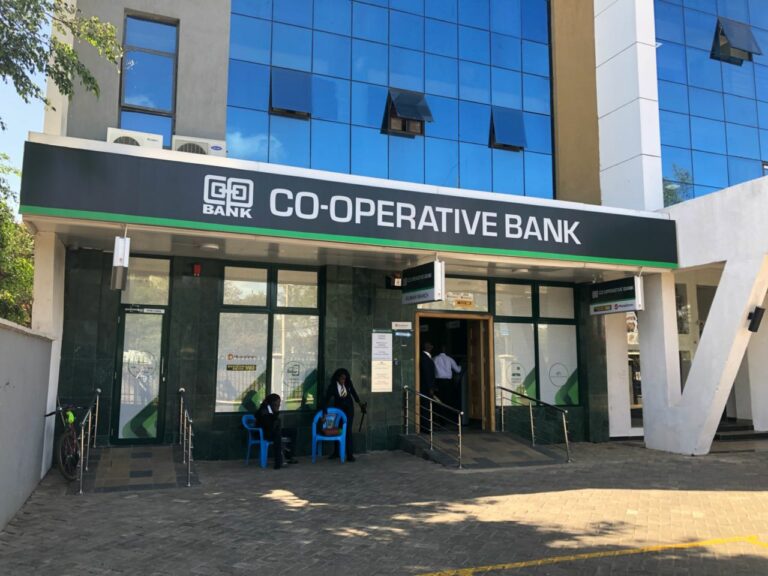
Understanding this need, the Co-operative Bank of Kenya (Co-op Bank) has rolled out various financing products to provide the much-needed capital to businesses in various sectors.

An example of such products is the Co-op Bank personal loan which offers lending of between Sh50,000 and Sh8 million.

Whether you want to make a major purchase, finance a wedding or pay school fees, a Co-op Bank Personal Loan is a simple and convenient borrowing solution to help customers reach these goals and many others that they dare to imagine.

Anyone applying for the loans will have their requests processed within 48 hours subject to employer confirmation. In addition, Co-op requires customers to transfer their salary to a Co-operative account to qualify for a loan.

Furthermore, to qualify for a Co-op Bank personal loan, customers need to maintain an active salary account for a minimum of six months for non-check-off customers.

How to link your Co-operative Bank accounts to PesaLink

Customers under schemes/check-offs can open accounts and fill change of pay-point to Co-op Bank and immediately access credit facilities.

In cases where a customer has loans with other banks and/Saccos, Co-op Bank can buy them off or help in refinancing other bank and Sacco loans for the customer to have one repayment.

Features of Co-op Bank Personal Loan

  • Minimum loan amount of Sh50,000
  • Maximum loan amount of Sh8,000,000
  • Maximum term of up to 96 months
  • Purposes to be covered include education, medical, furniture, consumer durables, motor vehicles, plot purchase, holidays and shares
  • Applications to be appraised using credit scoring
  • Applications appraised within 48 hours

Requirements

  • Employment or regular income
  • Original National Identity Card and a copy
  • Original PIN Certificate and a copy
  • No specific minimum net salary is required
  • Salary pay slips for the last 3 months
  • Filled in loan application form
  • Copy of KRA PIN

How much it will cost you to advertise your business on a billboard in Kenya

0

Billboard advertising is one of the popular advertising methods in Kenya. The method is popular in urban centers and is considered one of the cost-effective ways to reach a wide range of consumers.

In major cities like Nairobi, Mombasa, Kisumu and Nakuru, thousands of billboards are erected in strategic locations on the busy highways and streets showcasing various consumer products, businesses or agendas to build awareness.

Cost of billboard advertising

The cost of billboard advertising vary depending on the location, size, and type of billboard. Reportedly, in high-traffic urban centers like Nairobi, Mombasa, Nakuru, and Kisumu, they typically range from Sh150,000 to Sh600,000 per month.

Mid-range locations, such as smaller towns, cost on average Sh30,000 to Sh120,000 per month.

Digital LED billboards are more expensive, averaging Sh250,000 to over Sh1 million per month, depending on the display and screen size.

Types of Billboards in Kenya

There are three main types of billboard advertising in Kenya; Bulletin Billboard, Digital Billboard, and Mobile Billboard.

Bulletin Billboards:

These Bulletin billboards are the most widespread, towering at 48 feet wide and 14 feet high, captivating both drivers and pedestrians.  They are commonly found on highways and heavy traffic areas.

Advertising cost on these billboards ranges from Sh250,000 to Sh700,000 per month depending on location, production expenses, and the specific site you choose.

Stanley Kinyanjui: Meet businessman behind Kenya’s multi-billion billboard business

Digital Billboards

Digital billboards are large, computer-controlled LED displays, capable of displaying images, text and other content that can be digitally changed by remote or automatic means.

Usually found by major highways, freeways and in busy town and city centers to draw the attention of both foot and vehicular traffic, advertisements that display on electronic billboards rotate every 6-10 seconds, keeping the content fresh and engaging for viewers.

Digital billboard advertising costs in Kenya can range from Sh250,000 to over Sh1,000,000 per month, with premium locations in major cities like Nairobi and Mombasa often costing between Sh1,000,000 and Sh2,500,000 per month.

Mobile Billboards:

Mobile Billboards are advertisements displayed on vehicles that travel to high-traffic areas to reach a target audience.

They are of two types; “flex” (printed) and LED. As the name suggests, they deliver your message directly to your target audience, effortlessly navigating busy streets and major events.

Static (flex) mobile billboards offer cost-effective exposure, ranging from Sh50,000 to Sh100,000 per month. For the vibrant impact of LED mobile billboards, anticipate about Sh250,000 depending on duration and the number of vehicles involved.

Billboard advertising companies in Kenya

There are a number of licensed billboard advertising companies in Kenya, offering seamless services to businesses and individuals. They include Magnate Ventures, AdSite, LiveAd, PanAfrican Outdoor, and Alliance Media, among others.

How much Kenyans working in Saudi Arabia will henceforth earn

0

Kenyans working in Saudi Arabia are set for a major shift in their employment conditions starting February 2026 as part of the Kingdom’s ongoing labour reforms following changes to the Kafala system.

According to an update issued by the Kenyan Embassy, all workers will earn a minimum salary of SAR 1, 000 (Sh34, 455) per month beginning February 2026.

“The Embassy wishes to infSh34,455orm all Kenyan workers that, effective February 2026, the Government of Saudi Arabia will implement a minimum salary of SAR 1,000 per month for all workers,” read part of the statement from the Embassy in Riyadh.

The Embassy directed workers to confirm implementation of the new minimum salaries with their respective employers and raise any issues promptly to ensure compliance and safeguard their rights under the updated labour regulations.

Previously, Saudi Arabia’s minimum wage largely depended on the worker’s nationality, with Saudi nationals in the private sector enjoying a minimum wage of SAR 4,000 (around Sh137,822) and SAR 3,000 (Sh103,366) for those in the public sector.

However, for foreign workers, there was no official minimum wage previously. These latest reforms aim to improve working conditions, increase fairness, and give workers more protection.

New York Times: How Ruto’s family, allies make profits from sending Kenyans to Saudi

Saudi Arabia is one of the top destinations for Kenyan workers looking for jobs abroad.

According to Kenya’s Ambassador to the Kingdom of Saudi Arabia Mohammed Ramadhan Ruwange, the Kingdom is home to more than 200,000 Kenyans working across different sectors, including domestic work, healthcare, construction, hospitality, logistics and retail.

However, some of these workers have reported ill-treatment and abuse by employers, with some dying under mysterious circumstances.

Foreign Affairs CS Musalia Mudavadi recently revealed that more than 500 Kenyans have been rescued and safely repatriated since 2022 after facing inhumane treatment in their host countries.

“The government has to date rescued and repatriated more than 500 victims since 2022,” Mudavadi said.

“Relevant government agencies have investigated and delisted close to 600 rogue foreign job agencies. This is not enough, and discussions are ongoing for a proposal to publicly list agencies that exploit the vulnerability of our people.”

New York Times: How Ruto’s family, allies make profits from sending Kenyans to Saudi

0

An investigative report by the New York Times has exposed how President William Ruto’s family and close allies are making profits from sending Kenyans to work as cheap labourers in Saudi Arabia.

According to the report, President Ruto and his government have deliberately positioned Kenya as a source of cheap labour for Saudi Arabia, and turned a blind eye to the abuse that Kenyans working in Gulf countries are subjected to in order to keep sending more workers in those countries while pocketing millions.

For instance, the report says that recruiters sending workers to Saudi Arabia are required to carry “insurance” to cover the costs of bringing workers home in case of emergencies.

The government, the New York Times states, has then been pushing these recruiters to buy insurance policies from a company known as Africa Merchant Assurance whose major shareholders are President Ruto’s wife Rachel and daughter.

The report quoted a recruiter and industry lobbyist who was identified as Patrick Mburu saying that this company has never paid out a claim to rescue a distressed worker.

The New York Times went on to query Labour Cabinet Secretary Alfred Mutua who was then quoted as claiming that this lack of non-payment was due to a technicality that he was working to fix.

However, the company, the report went on to state, said it was not aware of any technicality and honours “every valid and documented claim”.

In addition to this, the report exposed how political allies of President Ruto have formed recruitment companies to send Kenyans as cheap labourers in Saudi Arabia. One of those mentioned in the report is Kangundo Member of Parliament Fabian Kyule Muli who co-owns Forbes Global Agencies.

The report showed that last October, this agency advertised 2,100 jobs in Saudi. “At the going rate, Forbes stood to receive more than $2 million [Sh258.58 million at an exchange rate of 129.29 to the US Dollar] for those jobs,” the New York Times reported.

The investigative report went on to expose how top officials in government own recruitment firms. It singled out a group of workers who have recently sued the government over the mistreatment they underwent.

Shockingly, the report stated, their case might be handled by the Solicitor General, who also owns a staffing company according to the report. In addition, the government’s top spokesman also owns a staffing company as well, the report stated.

In shocking findings, the report has further exposed how workers from other countries with the same jobs and qualifications as Kenyans are paid higher salaries and have better protection and labour rights. Kenyans in Saudi have been denied these rights because Kenya has refused to negotiate better terms in order to keep the supply tap running.

The New York Times sampled workers from the Philippines working as live-in maids. These workers earn $400 [Sh51,716] per month. In the event of an emergency, they are assured of a rescue team, a safe house, and a safe return to their home country.

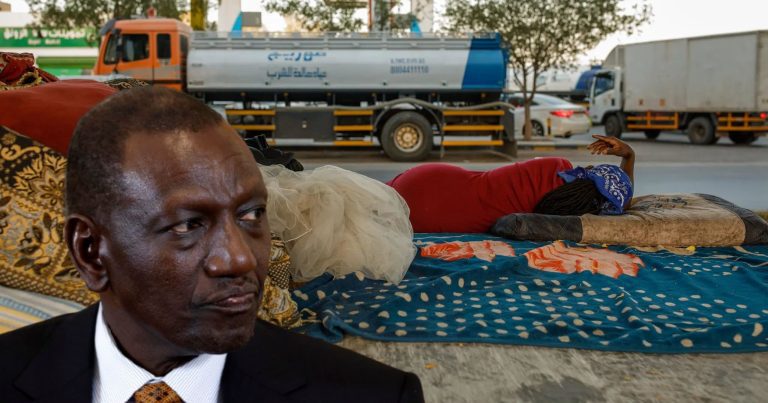
In contrast, Kenyans working the same jobs are paid $240 [Sh31,209]. In the event of an emergency, the Kenyans are guaranteed nothing. The report stated that they are shuffled between the police, and their recruiters and the Kenyan Embassy which is based in Riyadh. Some of these workers end up homeless in the streets in Saudi.

When queried about these disparities, the government claimed that if Kenya tried to negotiate better terms, Saudi employers would reject Kenyan workers and instead go for cheaper labourers elsewhere.

READ MORE: Pain, anger, shock over Kenyan girl enslaved in Saudi Arabia

Kidogo celebrates caregivers transforming early childhood care

0

Kidogo Early Years, Kenya’s leading social enterprise in affordable early childhood care and education, hosted its 11th Annual Gala Celebration honouring women who are transforming the lives of children in low-income communities through high-quality, community-led childcare. The annual gala this year introduced a special recognition, the “Papapreneur Award”, to celebrate men who have stepped up as caregivers and are redefining social norms around childcare.

Held at St. Andrews P.C.E.A., Nairobi, the celebration reflected on a decade of dignified childcare and brought together Kidogo caregivers, government leaders, development partners, and early childhood experts to recognize the caregivers at the heart of Kidogo’s mission.

Speaking during the event, Kidogo CEO and Co-founder Sabrina Habib, said: “For 11 years, we have celebrated the incredible caregivers who make dignified childcare a reality in our communities. The work our Mamapreneurs and Papapreneurs do reminds us that childcare is not just a family need but is infrastructure that strengthens our economy, empowers parents, and gives every child the opportunity to thrive.”

For over a decade, Kidogo has championed the belief that every child, no matter where they are born, deserves the opportunity to reach their full potential. Founded in 2014, the organization identifies, trains, and supports community caregivers, women and men, to run safe, affordable, and high-quality childcare centres in low-income settlements. They are now called Mamapreneurs and Papapreneurs.

Joyce Gatiria: Inside illustrious career of Kithure Kindiki’s wife

Through its social franchising model, Kidogo has built a nationwide network that delivers measurable impact. As of 2024, Kidogo reached 54,684 children under the age of five, supported 1,986 Mamapreneurs across 12 counties, and ensured that 94% of childcare centres met its highest quality standards. Children in Kidogo centres are thriving, with 94% meeting age-appropriate developmental milestones and malnutrition rates dropping by 35% (stunting) and 46% (underweight) within a year.

Kidogo’s work has also enabled thousands of women to build sustainable livelihoods. On average, the centers in Kidogo’s network earn KSh 43,000 per month, while providing safe, stimulating environments for children and allowing parents, especially mothers, to work or study with peace of mind.

“When childcare works, families work, and when families work, communities grow,” added Sabrina. “Our goal is to reach even more families by 2026.”

As Kidogo marks this milestone, the organization calls on the public, corporates, and policymakers to partner in building a future where all children can thrive, and caregiving is recognized as a vital pillar of Kenya’s social and economic progress.


Africa’s billion-dollar river: Kenya needs to up her game in Africa’s remittance economy

0

Across Africa, a quiet economic force is shaping families, stabilising currencies, and seeding the next generation of businesses. It doesn’t sit in boardrooms or appear on stock tickers. It flows through mobile money, digital wallets, and bank corridors. It lives in sacrifice, ambition, and the courage of Africans working thousands of miles from home.

It is the power of diaspora remittances — and Kenya stands right at the centre of this continental transformation.

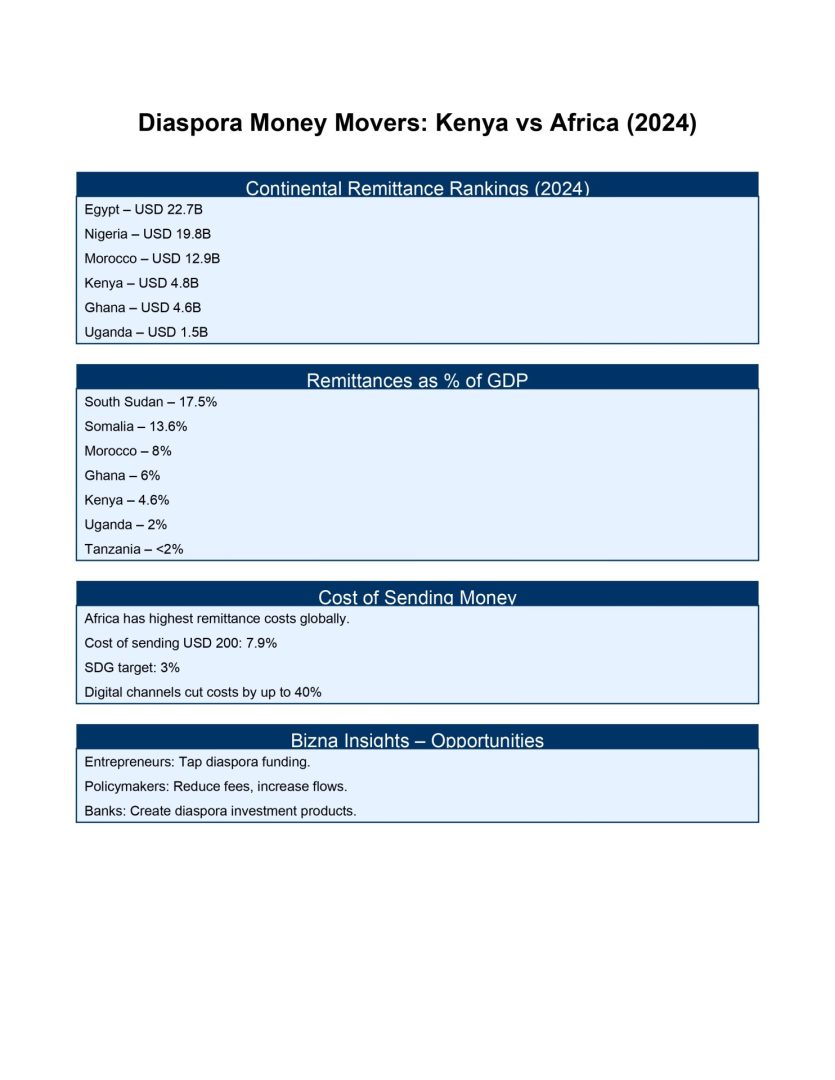
Kenya recorded USD 4.804 billion in remittances over the past 12 months, a figure that positions the country among Africa’s top players and cements the diaspora as one of the economy’s most dependable engines. While Egypt (USD 22.7B) and Nigeria (USD 19.8B) dwarf the field, Kenya’s real advantage is not the size of the cheque — it’s the quality of the ecosystem.

Where other countries rely on legacy banking corridors, Kenya runs on digital rails. M-Pesa. Wave. Pesapal. Chipper Cash. Fintechs that make borders feel irrelevant. That’s why more than 53.7% of Kenya’s remittances come from the United States — a wealthy diaspora with high disposable income and deep emotional ties. Technology has turned loyalty into liquidity.

But step back and you’ll see the broader African map — a continent where remittances mean different things to different nations. Somalia and South Sudan depend on remittances for survival, with inflows representing over 13%–17% of GDP. Morocco channels its USD 12.9B into infrastructure and long-term savings. Ghana receives around USD 4.6B, balancing both consumption and investment.

Kenya sits at a strategic crossroads: less dependent than the fragile sub-Saharan states, but not yet as industrialised as North Africa. This gives the country a rare advantage — the ability to convert remittances from household lifelines into engines of enterprise.

And the opportunity is massive.

Diaspora dollar remittances keep Kenya moving: CBK records a new high

A digitally empowered diaspora. A hungry SME sector. A young population with entrepreneurial fire in its belly. And financial rails that are API-ready for innovation.

Diaspora capital can — and should — fund the next century of Kenyan business growth. From micro-SMEs in Gikomba to real estate developments in Syokimau, from manufacturing clusters in Thika to digital startups in Westlands, the capital is there. What’s needed now is intentionality.

Kenya must create clearer tax incentives for diaspora investors. Banks must design diaspora-only savings and investment products with meaningful returns. Counties must open structured diaspora investment desks. And entrepreneurs must package their businesses not just for local consumers, but for global Kenyan investors looking for reliable opportunities.

This is how we shift from remittance consumption to remittance capitalization.

This is how we convert a diaspora of passion into a diaspora of prosperity.

And this is how Kenya can stand tall — not just as an East African remittance leader, but as a continental example of how a nation can transform emotional connection into economic transformation.

The billion-dollar river is flowing. The only question is: how much of it will Kenya channel into growth, innovation, and generational wealth?

Africa’s billion-dollar river: Kenya needs to up her game in Africa’s remittance economy
Africa’s billion-dollar river: Why Kenya must now lead the continent’s new remittance economy

SportPesa Kenya launches one wallet – the upgrade that will forever change how Kenyans bet

0

Every once in a while, a product upgrade arrives that completely reshapes an industry. SportPesa Kenya’s new one wallet feature is exactly that kind of moment for the country’s betting community. It simplifies how players manage their money, removes unnecessary steps, and delivers clarity at a level bettors have been demanding for years. With One Wallet, SportPesa has effectively rewritten the rules of convenience, transparency, and user control in Kenya’s digital gaming space.

Kenyans are fast, mobile-first, and quick to adopt technology that makes life easier. SportPesa understands this, and the introduction of one wallet proves it. Until now, players had two separate balances for sportsbook and casino, which created confusion and slowed down the gaming experience. One Wallet fixes that instantly by unifying everything into a single, simplified balance that works across every game and betting product. This is betting built for speed, built for clarity, and built for users who expect more.

A unified wallet that makes every Shilling work harder

One Wallet brings a sportsbook and casino together in a way that no Kenyan platform has ever offered before. Players can now deposit once and use their funds across football bets, jackpots, Aviator, virtuals, slots, and everything in between. There is no switching between screens, no manual transfers, and no hidden steps standing between your deposit and your next bet. This unified betting account system guarantees that your entire balance is always visible, always available, and always working in your favor.

How one wallet works — Simple, fast, and designed for real players

The brilliance of one wallet is in how effortlessly it works. When you deposit, your money instantly becomes available across every SportPesa product without the need for conversions or transfers. If you had separate balances before, they are now automatically merged into a single total. When you win — whether from a sports bet or a casino spin — the winnings reflect immediately in that same balance. And when it’s time to withdraw, everything happens at once, in a clean, single balance betting system.

Players are calling it SportPesa’s most important upgrade yet

The early reactions from SportPesa users show just how meaningful this change is. Many players have long asked for an easier way to manage their funds, and One Wallet finally answers that call. Collins, a loyal SportPesa user from Nairobi, said:

“Now everything is in one place. No more moving money around. I feel like the platform finally matches how I bet.”

Kenya’s young workforce and the shift toward self-directed investment tools

Maria from Nakuru added, “I love that my winnings appear instantly, and I don’t have to waste time transferring money. Betting feels simple again.”

These voices capture the excitement of a community that knows a genuine upgrade when they see one. And they confirm that One Wallet is more than a feature — it’s a real improvement to the SportPesa experience.

Why this innovation matters — Clarity builds trust

In betting, trust is everything. One wallet strengthens that trust by giving players a clear, transparent view of their entire financial activity on one dashboard. You can see your spending, track your winnings, and understand your balance without jumping through screens. It reduces friction and eliminates the confusion that often leads to mistakes or frustration. This is a shift toward responsible gaming features, where clarity empowers players to make better, more confident decisions.

The vision behind one wallet — Betting made effortless

SportPesa’s product team developed One Wallet with a simple mission: remove every unnecessary step between playing and winning. Their goal was to create a system that feels natural to players — fast, intuitive, and efficient. “We wanted to give customers a betting experience that feels effortless,” one representative explained. “With One Wallet, everything becomes smooth, fast, and accessible, no matter how you like to play.”

This vision reinforces SportPesa’s reputation as a pioneer in Kenya’s betting industry — one that launches innovations that genuinely elevate the gaming experience.

A platform built for Kenya’s digital future

Beyond betting convenience, One Wallet strengthens financial transparency and digital literacy for thousands of Kenyans who use SportPesa daily. The unified system provides a single view of deposits, wins, and withdrawals. It encourages better money management by showing real-time activity without clutter. And it aligns with SportPesa’s broader mission of building technology that empowers communities while delivering world-class entertainment.

This is not just an upgrade. It’s SportPesa’s blueprint for the future of Kenyan gaming.

One wallet, one system, one SportPesa — The feature built to lead the market

With the launch of One Wallet, SportPesa has taken a confident step ahead of every competitor in the market. No more separate balances. No more guesswork. No more friction. Just one clean system that lets players move from sports to casino to virtuals with zero delay.

One deposit.
One balance.
One withdrawal.
One SportPesa.

It’s not just innovation. It’s leadership — and it’s a clear reason why more Kenyans will choose SportPesa every day, as it offers the best betting experience in Kenya.

Diaspora dollar remittances keep Kenya moving: CBK records a new high

0

A strong October showing from Kenyans abroad

Kenyans abroad have delivered yet another powerful boost to the economy. The latest Central Bank of Kenya (CBK) Weekly Bulletin (November 15, 2024) shows that diaspora remittances surged to USD 437.2 million in October—up from USD 355.6 million in October 2023. That’s a remarkable 22.9% jump, reinforcing the diaspora’s position as one of the country’s most reliable economic engines.

This steady upward trend reflects the resilience of Kenyans abroad and their continued confidence in the local economy, even at a time when global uncertainty remains high.

Twelve months of consistent growth

Over the 12 months to October 2024, cumulative remittances climbed to USD 4.804 billion, compared to USD 4.165 billion recorded in the same period in 2023. This translates into a strong 15.3% annual increase—one of the most solid remittance performances Kenya has seen in recent years.

Remittances continue to outpace many traditional export earners, and are now firmly established as Kenya’s most important source of foreign exchange, outshining tourism, tea, coffee, and horticulture.

The U.S. still dominates remittance sources

The United States remains the powerhouse of Kenya’s remittance inflows, contributing 53.7% of all funds sent home in October. This dominance reflects the growing population of Kenyan professionals, entrepreneurs, students, and families who live and work in North America.

How Diaspora Remittances have shaped Kenya’s economy

But it also speaks to the rising efficiency of fintech solutions—mobile money, digital banks, and near-instant transfer platforms—that have drastically improved how quickly and affordably diaspora funds reach loved ones back home.

Strengthening Kenya’s forex position

Beyond strengthening households, remittances are playing a pivotal role in stabilising the national economy. CBK attributes the strong remittance performance to improved digital channels and renewed confidence in Kenya’s long-term outlook.

As of November 14, the country’s usable foreign exchange reserves stood at USD 9.276 billion, equivalent to 4.8 months of import cover, comfortably above the statutory requirement. Remittances are a key anchor in maintaining this buffer, especially in a year marked by fluctuations in global commodity prices and currency pressures.

Fueling households, SMEs, and new investments

The true magic of diaspora inflows is seen on the ground. These funds are not only paying school fees, hospital bills, and daily upkeep—they are increasingly being channeled into investments.

More diaspora Kenyans are:

  • Buying and developing property
  • Powering SME ventures
  • Joining diaspora SACCOs
  • Leveraging fintech to invest in local opportunities
  • Supporting family-owned businesses and start-ups

This shift toward more structured investment is strengthening Kenya’s entrepreneurial ecosystem while accelerating wealth creation at the household level.

Looking Ahead: A Rising Economic Powerhouse

Kenya is doubling down on policies and programs aimed at drawing more diaspora participation—from investment conferences to incentives for foreign income investment. As these efforts expand, remittance flows are expected to maintain their upward momentum.

For entrepreneurs and SMEs, this signals not just additional liquidity in the market, but new opportunities to partner with global Kenyans who are eager to invest back home.

Bottom Line

Kenya’s diaspora is proving—month after month—that they are more than a sentimental extension of home. They are a strategic economic powerhouse, driving stability, fueling consumption, and shaping long-term national growth.

With October’s strong numbers, the message is crystal clear: when the diaspora moves, Kenya moves.

Mystery Gaza plane with 153 Palestinians at JKIA stirs diplomatic row

0

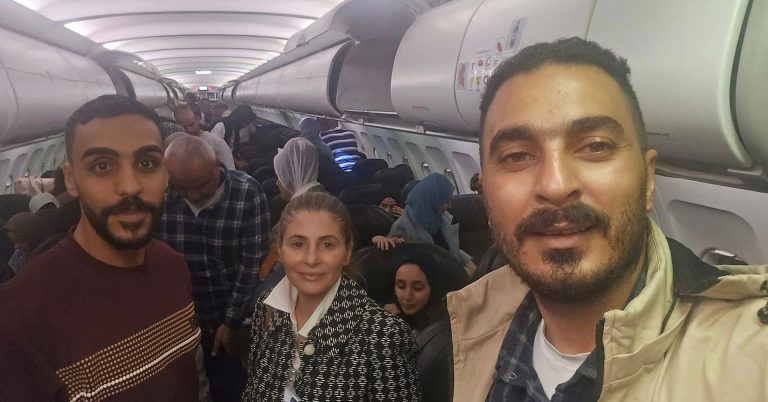
Kenya is facing a diplomatic storm after a chartered plane carrying 153 Palestinians was mysteriously cleared to use the Jomo Kenyatta International Airport (JKIA) as a stop-over before heading to South Africa.

The Palestinians who were aboard the plane had left the embattled Gaza and crossed into Israel. In Israel, they were put on the chartered plane at Ramon Airport on Wednesday by Israeli officials and members of what has been termed as a ‘shadowy organization’.

The chartered plane then took off and headed southwards. It landed at the JKIA, from where it later took off from, eventually landing at the Oliver Tambo International Airport on Thursday morning.

“These are people from Gaza who somehow mysteriously were put on a plane that passed by Nairobi and came here,” South African President Cyril Ramaphosa said.

The Kenyan government including agencies running the Jomo Kenyatta International Airport have remained mute over the incident.

The Palestinians on board the plane did not have proper travel documents and were held onboard on the tarmac for around 12 hours. Upon being interviewed by immigration officials, it was found that the Palestinians onboard could not say where or how long they were going to be staying in the country.

They also did not have any exit stamps or exit slips that are usually issued by Israeli authorities to persons leaving the Gaza area.

According to reports, the Palestinians were moved from Gaza by an organization known as Al-Majd. Apparently, they were escorted from Gaza by Israeli soldiers in buses that were facilitated by this organization.

The buses took them to the crossing point known as Karem Shalom where they switched buses and were then transported to the Ramon Airport in Israel. It is at this airport that they boarded the chartered the plane and headed south towards Kenya, and later to South Africa.

The chartered flight which was conducted with help from Israeli officials has raised concerns on whether Israel might be attempting to move Gaza residents from the troubled strip to other countries.

READ MORE: Dudula Operation: Gang chasing ‘black foreign Africans’ out of South Africa