Home Blog Page 152

Mystery Gaza plane with 153 Palestinians at JKIA stirs diplomatic row

0

Kenya is facing a diplomatic storm after a chartered plane carrying 153 Palestinians was mysteriously cleared to use the Jomo Kenyatta International Airport (JKIA) as a stop-over before heading to South Africa.

The Palestinians who were aboard the plane had left the embattled Gaza and crossed into Israel. In Israel, they were put on the chartered plane at Ramon Airport on Wednesday by Israeli officials and members of what has been termed as a ‘shadowy organization’.

The chartered plane then took off and headed southwards. It landed at the JKIA, from where it later took off from, eventually landing at the Oliver Tambo International Airport on Thursday morning.

“These are people from Gaza who somehow mysteriously were put on a plane that passed by Nairobi and came here,” South African President Cyril Ramaphosa said.

The Kenyan government including agencies running the Jomo Kenyatta International Airport have remained mute over the incident.

The Palestinians on board the plane did not have proper travel documents and were held onboard on the tarmac for around 12 hours. Upon being interviewed by immigration officials, it was found that the Palestinians onboard could not say where or how long they were going to be staying in the country.

They also did not have any exit stamps or exit slips that are usually issued by Israeli authorities to persons leaving the Gaza area.

According to reports, the Palestinians were moved from Gaza by an organization known as Al-Majd. Apparently, they were escorted from Gaza by Israeli soldiers in buses that were facilitated by this organization.

The buses took them to the crossing point known as Karem Shalom where they switched buses and were then transported to the Ramon Airport in Israel. It is at this airport that they boarded the chartered the plane and headed south towards Kenya, and later to South Africa.

The chartered flight which was conducted with help from Israeli officials has raised concerns on whether Israel might be attempting to move Gaza residents from the troubled strip to other countries.

READ MORE: Dudula Operation: Gang chasing ‘black foreign Africans’ out of South Africa

Username properties crowned best land & property in company

0

Username Properties, the top real estate firm in Kenya, has once again demonstrated its dominance in the real estate industry by being honoured with the prestigious Best Land & Property Investment Company in Kenya award at the Star Brands Awards 2025 held yesterday at the Sarit Centre & Expo. Gracing the event as the Chief Guest was the Principal Secretary, State Department of Investment and Promotion P.S Abubakar Hassan Abubakar.

The Star Brands awards honor companies that have excelled in innovation, brand integrity, and customer satisfaction. Username Properties was recognized for its unwavering commitment to integrity and its innovative real estate solutions that make land ownership easier and more accessible for Kenyans.

While receiving the award, Sarah Wahogo, the CEO of Username Properties, expressed her gratitude and reaffirmed the organization’s commitment to transforming Kenya’s real estate sector.

Username Investments bags top real estate international award

“This award reflects the deep trust our clients place in us and the dedication of our entire team to excellence and exceptional customer service,” said Ms. Wahogo. “At Username Properties, our mission extends beyond selling land; it is about making genuine home ownership a reality for thousands of hardworking Kenyans. Too many people are trapped in the endless cycle of paying rent. We are here to break that cycle and empower Kenyans to achieve true financial freedom and security through property ownership.”

The CEO, Sarah Wahogo also mentioned the role of Username Sacco in revolutionizing property investment in Kenya by offering affordable, flexible land financing options.

Sarah stated that “Username Sacco is already changing how Kenyans can invest in property by providing affordable financing and savings options. Through Sacco, we are giving more Kenyans, particularly the youth, the opportunity to invest confidently in a trusted brand that has been in existence for over 13 years now.”

The CEO of Username Properties closed by reaffirming the company’s steadfast dedication to preserving Kenyans’ trust by providing creative, reasonably priced and value-driven real estate investment solutions. She underlined that both Username Properties Ltd and Username Sacco remain committed to maintaining consistency, openness and measurable outcomes for future generations because these are the foundations of trust.

NYOTA Project rolls out nationwide training and start-up capital disbursement

0

The NYOTA Project entered a new phase of national impact last Friday, 7th November 2025, with its official launch at the Mumias Sports Complex in Kakamega County. The event marked not only the unveiling of the program but also the commencement of start-up capital disbursements for the Western Cluster—Kakamega, Vihiga, Bungoma, and Busia counties—whose beneficiaries have completed the mandatory business training.

In a milestone moment anchored in empowerment and forward momentum, 12,155 beneficiaries received a cumulative Ksh. 303,875,000 in start-up financing. Each participant accessed Ksh. 22,000 through their NYOTA Pochi la Biashara account. As part of the program’s resilience framework, Ksh. 3,000 was deducted as mandatory savings—30% accessible short-term and 70% locked in long-term for the duration of the project.

This savings component is a deliberate design choice to nurture a culture of financial discipline, strengthen the beneficiaries’ shock resilience, and provide a foundation for future access to formal financing by securitizing their emerging enterprises.

Structured Mentorship to Build Sustainable Businesses

With funding now disbursed, the Western Cluster beneficiaries transition into a two-month handholding and mentorship phase led by Business Development experts. This will be followed by a second three-day BDS classroom training focused on market linkages and ecosystem integration. Upon successful completion, beneficiaries will receive their final tranche of capital before embarking on the final two-month mentorship cycle.

NYOTA program issues mandatory directive to beneficiaries in 25 counties

This structured pathway ensures that young entrepreneurs not only start businesses but build ventures capable of surviving, growing, and scaling.

A Nationwide Vision: Empowering 100,000 Youth and Refugees

The NYOTA Project is engineered to reach over 100,000 vulnerable youth across all 1,450 wards in Kenya—targeting a minimum of 70 beneficiaries per ward. Additionally, the program will support 5,000 refugees in Kakuma and Dadaab, along with 5,000 members of the host communities. Intake for refugee beneficiaries is in its final stage, after which training will begin immediately.

Countrywide Training Rollout Begins

Today, 14th November 2025, NYOTA is launching simultaneous training across 25 counties, including:

Kitui, Machakos, Makueni, Uasin Gishu, Trans Nzoia, West Pokot, Turkana, Baringo, Laikipia, Meru, Tharaka Nithi, Embu, Isiolo, Nakuru, Narok, Kajiado, Nandi, Siaya, Kisumu, Homabay, Migori, Kisii, Nyamira, Kericho, and Bomet.

This phase covers 151 constituencies and 754 wards, with 63,231 youth beneficiaries expected to participate.

NYOTA Project rolls out nationwide training and start-up capital disbursement
NYOTA Project coordinator for Component 2, Patrick Kamenyi, Principal Secretary, State Department for MSMEs, Hon. Susan Mang’eni, and MSEA Director, Business Development, Marketing and Trade, Dr. Carol Kaua, at a press briefing giving an update on business support and training for the NYOTA Project.

Training will run for four days, and participants must attend at least three to qualify for their start-up capital. All successful applicants have already received SMS notifications with details on their venues.

A total of 222 training centres have been mapped, ensuring accessibility. Beneficiaries in constituencies with multiple centres are encouraged to select the closest option—provided it is within their constituency of registration.

Start-up capital disbursement will begin immediately after the completion of training.

Remaining Counties Up Next

The final rollout phase covering 18 counties—Nairobi, Kiambu, Elgeyo Marakwet, Nyeri, Murang’a, Kirinyaga, Nyandarua, Mombasa, Kwale, Kilifi, Tana River, Lamu, Taita Taveta, Marsabit, Samburu, Wajir, Mandera, and Garissa—will commence toward the end of next week.

From humiliation to empowerment: How Dr. James Mwangi redefined banking in Africa

0
The hum of a bustling bank branch, the crisp rustle of banknotes, the quiet dignity of a financial transaction, these are the hallmarks of modern banking. Yet, for millions across Africa, the experience has historically been anything but dignified.
For Dr. James Mwangi, the visionary CEO of Equity Group Holdings, this stark reality was seared into his memory during a pivotal childhood incident that would ultimately redefine the very essence of customer experience in African finance.
As a young teenager, Mwangi witnessed his mother endure a deeply humiliating encounter at a local bank. His mother, a hardworking woman who had never had the privilege of formal education, relied on her son to navigate the complexities of banking. On one particular day, she approached the counter, only to be publicly shamed by a bank officer who loudly declared, “Grace Wanjiru Mwangi, there’s no money!” before throwing her withdrawal slip back.
The issue was a simple delay in processing payments from the tea agency, leaving her account temporarily empty. But the manner of delivery, the public shaming, and the blatant disregard for her privacy and dignity left an indelible mark on young James. This painful memory, a microcosm of the systemic exclusion and disrespect faced by countless underserved communities, became the bedrock of Mwangi’s future mission.
Fast forward decades, and Dr. Mwangi found himself at the helm of a struggling building society, then known as Equity Building Society. It was here that the seeds of that childhood humiliation blossomed into a revolutionary business philosophy. “The humiliation my mother before me helped to develop the corporate philosophy of Equity when I took over; dignity came before financial services.”
Dr. Mwangi made the revelations during an interview with Transcending Boundaries Podcast, hosted by Reeta Roy, President and CEO of the Mastercard Foundation. According to Dr. Mwangi, the experience articulates the core principle that would transform Equity from a near-insolvent entity into one of Africa’s largest and most impactful financial institutions.
Dr. Mwangi understood that true financial inclusion wasn’t just about offering services; it was about restoring dignity. He recognized that traditional banking practices were inherently exclusionary, designed for a privileged few and often alienating to the majority. The incident with his mother highlighted several key barriers that needed dismantling.
In the 1990s, a prospective bank customer often needed to be introduced by an existing account holder. For rural communities where banking was a rarity, this was an insurmountable hurdle. Dr. Mwangi abolished this, asserting that a government-issued ID was sufficient proof of identity.
“If the Kenyan government has given you an ID, it knows you,” he reasoned, dismantling a significant psychological and practical barrier. Furthermore, the requirement to maintain a minimum balance (often equivalent to several months’ wages for many) and the imposition of monthly ledger fees, regardless of account activity, were punitive.
These charges often eroded the meager savings of the poor, making banking a net loss. Dr. Mwangi eliminated these, recognizing them as an affront to the dignity of those struggling to save. Adding to the absurdity were restrictive withdrawal limits, such as the ludicrous rule that customers could only withdraw money once a week, or had to give 14 days’ notice for larger sums.
This further highlighted the Bank’s disconnect from its customers’ realities. “It’s your money,” Dr. Mwangi declared, challenging the notion that a bank had more control over a person’s funds than they did. He understood that people needed immediate access to their money for daily needs, emergencies, or seizing small economic opportunities.
These changes were not merely operational adjustments; they were profound statements of intent. They signaled a shift from a bank that dictated terms to one that understood and respected the lived experiences of its customers.
Empathy, born from personal experience, became Equity’s most potent differentiator. Dr. Mwangi didn’t just observe the market; he listened to the “sound of the market,” sitting in villagers’ homes and local shopping centers to understand their needs firsthand. This deep understanding led to innovations that brought banking to the people, rather than expecting the people to conform to the Bank’s rigid structures.
The “mobile on four wheels” initiative, deploying Land Rovers as mobile bank branches, was a direct response to the prohibitive “cost of access” – the time and money spent by rural dwellers traveling long distances to a physical branch. This was followed by the groundbreaking agency banking model, where local shopkeepers became trusted banking agents.
This move was initially met with skepticism from the Central Bank, but Dr. Mwangi’s persistence prevailed. He recognized that the shopkeeper, already a trusted figure in the community, was effectively performing intermediation. Formalizing this relationship meant banking became accessible, convenient, and culturally relevant.
Later, Equity embraced technology with Equitel, a mobile virtual network operator (MVNO) that put banking services directly onto the SIM cards of even basic feature phones. This was a crucial step in reaching those without smartphones, further democratizing access and compressing “distance and time” for millions.
Beyond transactional banking, Equity’s empathy extended to addressing broader societal needs. The “Wings to Fly” scholarship program, providing comprehensive support for academically gifted but financially disadvantaged students, directly echoed Mwangi’s own journey and his mother’s sacrifices for his education.
This program, now expanded to include the “Elimu Scholarship Program” with partners like the World Bank, has enabled tens of thousands of students to pursue secondary and university education, boasting an astounding 97% completion rate. Similarly, the “Equity Afya” franchise, empowering doctors from their scholarship programs to establish affordable and accessible healthcare clinics, demonstrates a holistic approach to community development.
These initiatives are not mere corporate social responsibility; they are integral to Equity’s mission, creating a virtuous cycle where financial inclusion fosters education and health, which in turn drives economic growth and further financial engagement. Dr. James Mwangi’s journey from a young boy witnessing his mother’s humiliation to leading a financial revolution is a powerful testament to the transformative potential of empathy.
By placing dignity and respect at the heart of its operations, Equity Group has not only built a highly successful business but has also become a profound agent of change, proving that banking can indeed be a force for good, humanizing finance one member at a time.


How Kenya’s workforce is redefining the future of work through community

0

For decades, the vision of work was simple: you go into an office, you punch in, you punch out.

The pandemic fast-tracked that dream. Offices went dark, Zoom took center stage, and our homes became headquarters. For a while, it felt liberating but as the dust settles, many of us are reflecting on what we gave up in exchange; the sense of togetherness, the energy of being near someone doing the same thing you are, the spontaneous idea that leaps off casual conversation.

In Kenya, we are witnessing something quietly powerful: a move beyond simply “remote” or “office.” The future of work here is about connection. It is about community. It’s less about where you work and more about who you’re working with.

Consider this: Kenya has seen a 216 % growth in online freelancers over the last five years, making it one of Africa’s fastest-rising gig economies. And yet, between 2023 and mid-2025, job postings for remote roles on Brighter Monday Kenya fell dramatically, from 685 at the peak to just 95.

The contradiction is striking: there is burgeoning digital talent, but the structures supporting flexible, remote work are shifting.

Why does that matter? Because work is not just transactional. It is relational. Neuroscience tells us that collaboration and not isolation helps boosts creativity and motivation. And at a human level, being part of something bigger than yourself is what makes work feel meaningful.

In Kenya, community has always been part of our fabric. From the jua kali artisan who learns from his neighbour, to the startup huddled in Westlands trading ideas over nyama choma, we thrive when we’re sharing, learning, and building together. So perhaps it should not surprise that the sterile model of “home office solo” never quite fits our rhythm.

It is no coincidence, then, that coworking spaces are popping up across Nairobi at an annual growth rate of around 21%. These places aren’t just rented desks but are micro-communities, where the designer meets the accountant meets the coder, and the unplanned conversation becomes the next collaboration.

Kenya’s young workforce and the shift toward self-directed investment tools

That ripple of community is where the future of work is being quietly redefined in Kenya. It suggests a model where autonomy are partners.

Of course, the benefits of remote work remain real: less time commuting, lower overhead, flexible hours. A study in Kenya found that employees who telecommuted reported improved work-life balance and engagement. But the study also pointed out the flip-side: unreliable internet, frequent power cuts and isolation blindsided the optimism. What you gain in flexibility you risk losing in connection—and sometimes in well-being.

What does this mean for us as a nation with our young population, growing digital skills, and a pulse for innovation? It means the next wave of work needs to be designed for human beings. It means shaping environments either physical or virtual, that let people connect, share, mentor, challenge, laugh, and grow.

For employers, that might mean rethinking what an “office” is. It may no longer be rows of desks, but hubs of inspiration. It may mean a team meeting over coffee, a brainstorming session in a lounge, or a freelancer dropping in to exchange ideas with a full-time team. Location becomes fluid, but human presence becomes essential.

For urban planners and cities, the shift has spatial implications. Nairobi might evolve not just as a commercial hub of isolated towers but as a network of mixed-use neighbourhoods where living, learning and working happen side by side. Where the coworking hub is as natural as the café, the mentorship circle as common as the community gathering.

And for the countless Kenyans navigating early-career steps, entrepreneurship or freelance ventures, this perspective shines a spotlight on what matters most: relationships, networks, skills and community. A digital device doesn’t automatically make a remote worker; a community around you amplifies what you can do.

Ultimately, the question we should ask ourselves isn’t just “Where do I work?” but “With whom do I work?” Because when work feels like part of something greater than a task list, the real magic happens.

In Kenya, the future of work won’t simply be about technology (though that remains vital) but more of choices, networks and human connection. We are at a moment where our strength as a country can guide how work is reimagined on our terms.

As more young professionals, gig workers, entrepreneurs and organisations lean into this shift, what emerges is hopeful: work that honours our need to belong, to create, and to grow together.

Lina Wilhelmy is the Growth Lead at WOJO Nairobi, where she helps shape community-driven work experiences that empower professionals and businesses to thrive in flexible environments.

Rules you must comply with when importing used cars in 2026

0

The Kenya Bureau of Standards (KEBS) has issued new rules directing the importation of used motor vehicles into the country.

In a notice on Thursday, November 13, KEBS said the rules will take effect in January 2026. Under the new directive, only Right-Hand-Drive (RHD) motor vehicles first registered on or after January 1, 2019, will be allowed for importation into Kenya.

“We wish to notify all importers of used/second-hand motor vehicles, including returning residents, diplomatic staff and the general public, that in observance of clause 2.5 of KS 1515:2000 on the eight (8) year age limit requirement, only Right Hand Drive (RHD) motor vehicles whose year of first registration is from 1st January 2019 and later shall be allowed into the country effective 1st January 2026,” KEBS said in a statement.

Additionally, vehicles exported to Kenya shall be expected to comply with KS 1515.2000- Kenya Code of Practice for Inspection of Road Vehicles.

Vehicles from countries where KEBS has an inspection agency like Japan, United Arab Emirates, United Kingdom, Thailand, Singapore, and South Africa shall be accompanied with a Certificate of Roadworthiness (CoR.

My take on the Mazda Axela: A compact that delivers beyond expectations

The CoR is issued by Quality Inspection Services Inc. Japan (QISJ) which is an inspection company contracted by KEBS.

According to the bureau, Certificates of Roadworthiness for vehicles first registered in 2018 will no longer be valid after December 31, 2025. Any vehicle manufactured in 2018 or earlier that arrives in Kenya after this date will be considered non-compliant and rejected at the importer’s expense.

All importers, traders, or sellers bringing in vehicles without a CoR are directed to validate key documents, including logbooks, export certificates, and deregistration certificates.

“To ensure that all vehicles imported into Kenya without a Certificate of Roadworthiness (CoR) meet this requirement at destination, it is important for the importers, traders or sellers to validate the import document with a reliable and authorised database,” KEBS added.

The guidelines are part of the government’s efforts to enhance road safety standards and curb the growing importation of older vehicles, which tend to produce higher emissions, thus failing to meet environmental and mechanical safety thresholds.

Inaccurate public commentary a threaten to Kenya’s aviation industry

0

Regardless of how many times clarifications are sought and provided, conspiracy theories seem destined to remain a perennial feature of Kenya’s aviation industry. Once again, Kenya Airways (KQ) has found itself at the centre of controversy, this time, as a result of legislators who have, regrettably, misrepresented the facts most egregiously.

In a strongly worded statement, Eldas MP Adan Keynan recently described the “Pride of Africa” as having “sunk into a deplorable state of dysfunction.” He further asserted that “what was once a beacon of national excellence and global competitiveness has today become a loss-making entity, crippled by mismanagement, entrenched cartels and reckless administrative decisions that have eroded public trust and investor confidence alike.”

Nothing could be further from the truth. Mr. Keynan’s statement reveals not only a profound misunderstanding of what it takes to operate a national carrier but also a lack of appreciation for the aviation industry itself – an industry that functions in extremis even at the best of times and that, at its most challenging, relies on national financial support merely to survive.

To begin with, KQ has achieved remarkable progress over the past five years, culminating in a net profit of Ksh 5.4 billion last year – the first positive result after more than a decade of losses. This turnaround reflects the airline’s commitment to operational excellence, demonstrated through effective cost management, strategic fleet and route optimization, and enhanced On-Time performance. Claims of mismanagement are thus negated.

Second, there is a glaring display of ignorance regarding the ownership structure of KQ, most notably, in the unfounded assertions that the airline’s fleet is owned and leased to it by shadowy cartels. Such mendacious claims might be dismissed as absurd were it not for the fact that they unjustly impugn the integrity of KQ’s Board and management. This is not the first occasion on which the national carrier has been compelled to correct the record, having repeatedly appeared before various parliamentary select committees to elucidate the complexities of its finance and operating lease arrangements. Details of these are publicly available in the company’s annual reports released over the years.

Kenya Airways makes Sh5.4 billion full-year net profit; highest in its history

When Keynan accuses KQ of “chronic flight delays, abrupt cancellations, and unannounced rescheduling,” he overlooks the profound impact of the Covid-19 pandemic, not only on KQ but on the global aviation industry as a whole. The post-pandemic period has been marked by severe supply chain disruptions, which have significantly delayed the return of aircraft to service following scheduled maintenance. KQ has been particularly affected by these circumstances, which lie entirely beyond its control, with up to 20 percent of its fleet grounded this year.

Despite these formidable challenges, Kenya Airways has performed commendably compared to other carriers across the Middle East and Africa. According to data from a Cirium Aviation Analytics report released for October 2025, Royal Jordanian ranked first in On-Time Performance with a score of 95.51% and a Completion Factor of 99.89%. Flyadeal followed with 91.60% and 99.33% respectively. KQ secured third place, achieving an On-Time Performance of 91.22% and an exceptional Completion Factor of 99.96%. The data clearly speaks for itself, decisively contradicting Keynan’s assertions.

The Board and management of Kenya Airways are committed to doubling the size of the airline over the next five years. This strategy recognizes the significant economies of scale that only large carriers can achieve, including cost savings through bulk procurement, a stronger market position, and reduced per-unit expenses. In line with this vision, KQ has placed orders for two 737 Max 8 aircraft, two 737 NGs, and one 777-300, which are expected to be delivered early next year. Additionally, the airline is actively engaging with strategic investors to support a more ambitious expansion agenda in the years ahead.

It is therefore necessary to caution against uninformed commentary regarding the national carrier. Such discourse may not only constitute an abuse of parliamentary privilege – allowing unverified allegations without legal accountability – but also undermine the airline’s relationships with existing and prospective partners. KQ relies on the confidence of lessors, suppliers, and potential investors, all of whom require ongoing assurance of the competence and integrity of the Board and management.

We strongly urge restraint in public discourse that could compromise these relationships or erode confidence in the broader Kenyan aviation sector. At stake are nearly 500,00 jobs linked directly or indirectly to aviation and approximately six percent of Kenya’s GDP. Those entrusted with legislative authority must adopt a philosophy of “trust but verify,” seeking the airline’s perspective before making assertions that may affect its reputation. It is only through such due diligence that both the national carrier and the sector it serves can continue to thrive.

Jeremiah Mbaka: Why I quit my job at Sameer Africa to export avocados

0

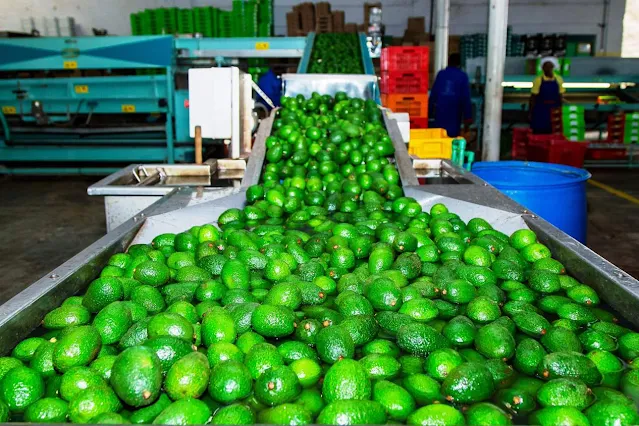
Avocado farming has recently gained popularity as more farmers have realized the lucrative opportunities in the venture.

Jeremiah Mbaka a Kisii County-based farmer, is among the farmers who have hugely benefitted from avocado farming.

Mbaka stepped into the venture in 2016 after resigning from his sales representative job at Sameer Africa Nairobi, where he had worked for five years.

While at Sameer, he would witness the high tonnage of avocados being exported out of the country through the Jomo Kenyatta International Airport.

This inspired him to try his hand at the venture, and full of zeal, he left Nairobi for avocado farming at his village home in Magenche area in Bomachoge Borabu, Kisii County.

Mbaka started off with 300 avocado trees, which matured in two years. From the avocado, he has been earning about Sh500,000 annually.

He grows the Hass variety, which has recently become the most popular avocados around the world. May buyers in the global market prefer the Hass variety owing to its higher fat content, which gives it a smoother, creamier texture.

Hass avocado trees are also said to have high yields compared to other varieties. In addition, they have the longest harvesting seasons, with the fruit able to withstand long-distance shipping much easier than other varieties.

Chege & Njeri: Meet Nakuru couple raking fortune from 10-acre Hass Avocado farm

Hass avocado farmers earn two times more than farmers growing other avocado varieties. The good returns are attracting more farmers in Kenya into the business.

The Kenya Plant Health Inspectorate Service (KEPHIS) says that avocado exports in 2019 were worth Sh10 billion, of which 70 percent were Hass avocados. Avocado exporters in Kenya buy Hass avocado at Sh10-Sh17 per fruit compared to Sh3 for Fuerte.

The fruit can be intercropped with other crops like vegetables. Mbaka has intercropped his avocado trees with vegetables, onions, and sweet potatoes.

“The vegetables I have planted in the farm serve as food to the chickens I am rearing, which in return will provide manure to be used in the farm since I was informed that most of our customers in Europe prefer crops planted with organic manure,” said Mbaka.

Moses Nyang’au, who also has 300 trees of avocado, says has been making over Sh400,000 annually from the venture.

He sells one avocado weighing between 200 grams and 300 grams at Sh15 to buyers in Nairobi who export them to European countries.

“I have been able to buy a lorry and a Toyota Probox, built an eight-room house, and bought four grade cattle courtesy of the Hass avocado farming. I have no regrets whatsoever for engaging in farming full-time,” said Nyang’au.

He uses organic manure made from ash and cow dung as manure and also to keep the avocado trees safe from infections.

Why dairy farmers are ditching traditional grass for Australian red Napier grass

0

The Australian Red Napier grass is steadily gaining popularity among Kenyan farmers due to its superior characteristics that make it a high-value fodder compared to the traditional Napier grass.

The crop is known for its high protein content of over 20 percent, making it a good feed for dairy cows, as proteins help in high milk production.

Stephen Kariuki, a 38-year-old farmer in Githunguri, Kiambu county, says the feed has significantly transformed his venture.

The farmer who manages a 10-acre farm replaced half of his traditional Napier crop with the Australian Variety in 2023 and has since experienced an improvement in his milk production.

The farmer says his cow initially produced 15 litres of milk daily, but after adopting the Australian red Napier, production increased to 25 litres daily.

“When I started dairy farming I never knew grass could be this valuable. Now people come from other counties to buy it from me. The grass is more nutritious and it grows back quickly after harvest,” he says.

The farmer also dries and bales the fodder for sale to other dairy farmers in Murang’a, Kajiado, Nyandarua, and also in the neighboring countries of Uganda and Tanzania.

Daniel Kanyoni: Why you should not feed your cows fresh Napier grass

Dairy experts say that Australian Red Napier has more biomass than most other fodders, noting that its biomass ranges between 180 and 200 metric tonnes per acre per year compared to the regular Napier grass, which produces between 50 to 70 tonnes per acre annually.

According to MOO Fodder Supermarket founder Githaiga Kihara, the fodder can also be used to feed Dorper sheep and can also be processed into pellets for chickens.

“Presently in Kenya and across the world, this is the only Napier which has the highest crude protein. Its protein content ranges from 20 to 25 percent depending on the time you harvest it,” he stated.

“This is a Napier that you harvest between 6 to 8 times per year which means you can support 10-15 cows on one acre of this,” he added.

Australian Red Napier can also be processed to silage to prevent loss of proteins after harvesting.

Ethiopian Airlines acquires two A350-900 wide body passenger planes

0

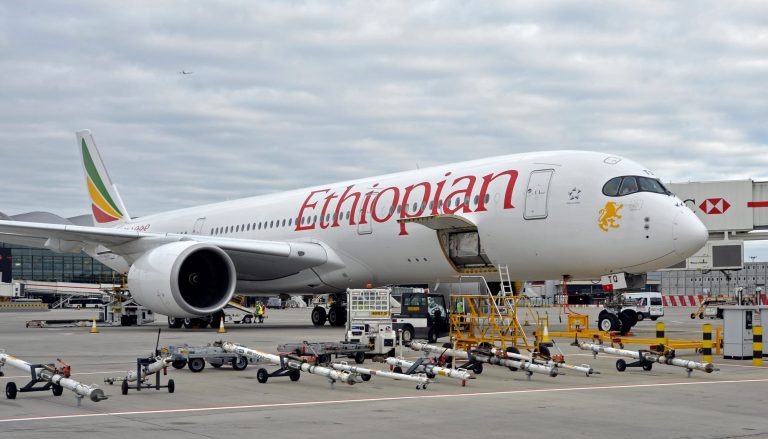
Ethiopian Airlines has added two Airbus A350-900 wide body passenger planes to its fleet. The two passenger planes were delivered to Ethiopian Airlines within a span of two weeks in the month of November 2025.

After receiving these two planes, the airline now boasts of 22 Airbus A350-900 planes. “We are excited to welcome our 22nd Airbus A350-900 to our fleet family in less than two weeks of welcoming our 21st [of this model of plane],” the airline stated.

“This is a significant step forward in delivering modern, efficient, and truly comfortable journeys for travellers around the world.” Ethiopian is currently the largest airline in Africa.

Over the past few years, Ethiopian has been expanding its fleet as it seeks to entrench its position as the undisputed king of the skies in Africa. In November 2024, in-service fleet at the carrier inched closer to surpassing the 150 milestone following the arrival of the coveted A350-1000 aircraft.

The carrier became the first airline in Africa to own the brand new aircraft when the new plane touched down at Bole International Airport in Addis Ababa in the first week of November 2024.

According to the chief executive officer of the Ethiopian Airlines Mesfin Tasew, Ethiopian Airlines in-service fleet is set for more growth with 124 new planes already on order and pending delivery from both Airbus and Boeing.

The growth of the fleet has also been tandem with growth in passenger numbers. According to data from aviation analytics firm Cirium, Ethiopian had 151,543 flights in the year ended December 2024. The airline canceled 1,622 flights in that period.

At the same time, the carrier moved 17.1 million passengers in the 2023-2024 financial year that ended June 2024.

The growing fleet and passenger numbers at the airline are expected to align with plans  for the construction of what is set to become Africa’s largest airport with a capacity for up to 100 million passengers per year.

READ MORE: KQ tops Africa, Middle East in flight delays and cancellations