
Home Blog Page 2235

Nikodemus Wambua: I am one of the most successful small-scale Farmers

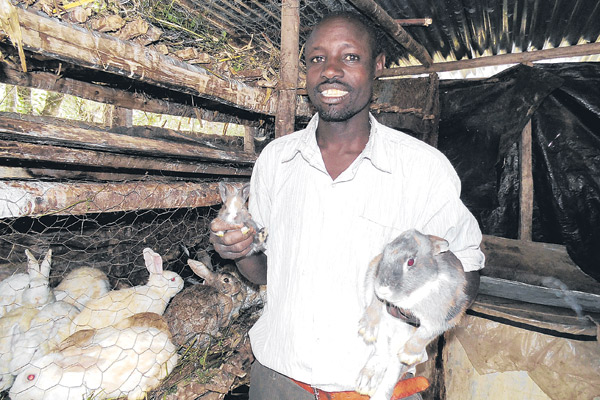
Nikodemus Wambua 38, married to Regina (25) has two children and is living in Kamuru, Makima, Kenya. He is one of 25 members of the Kamuru FFS (Farmers Field Schools) group. The 25 members are farming drought resistant crops and using new techniques that require less rainwater.

“There is no doubt, that the training has helped me raise the output of my farm. I am now one of the most successful small-scale farmers in the area.”

There are over 90 Farmers Field Schools in operation now since the drought in 2011. In essence they are farming cooperatives. Farmers and their neighbours are replicating what they learn in their households. So far the cooperatives have recieved 30 tones of drought resistant seeds, 40 hand irrigation pumps and 20 drip kits. These were distributed while 2 major water pans were being constructed.

The pupose of the cooperatives is to build resilience among smallholder farmers in arid and semi-arid rural areas to ensure food security and improve farm income at the family level. The farmers organize themselves into smallholder farmer’s cooperatives and Farmers Field Schools (FFS).The movements are important for lobby and advocacy groups at county and national levels. By supporting the new cooperative movement, 2,500 people’s lives are being improved directly and 10,000 people indirectly.

“I am one of 25 members in the Kamuru FFS group. Being a member has improved my life in many ways. My farm output has gone up and secured income and food for my family. My sense of belonging to this community has also improved – I have become proud and I interact with more people than ever before.”

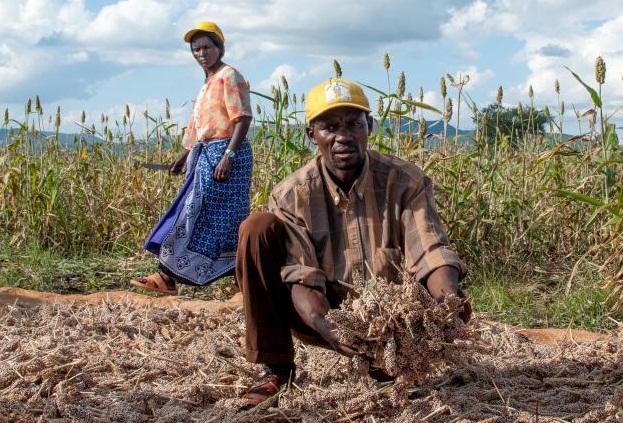
Nikodemus has just harvested Sorghum for 32,400 shillings. This is the first time he has made such a big profit. After sowing, he had his first harvest. Then he cut the Sorghum down in a special way that he had learned at the Farmers Field Schools (FFS), and now he has harvested again. This way, Nikodemus has improved his income a lot despite low rainfalls in the past months.

“After advice from ActionAid, we are now growing a bigger variety of crops and I am using drought resistant seeds. We have sorghum, pumpkins, cassava, beans, peas, and many other crops on our fields. The big variety is good for the soil and the crop output. A shift towards drought resistant crops has really given my farm a boost.

Nikodemus received training in farming drought resistant crops, in using water saving methods, in crop management, in farming with new tools, in changing crops to maintain a healthy soil, and in many other areas.

At the FFS, members farm together under the guidance of agricultural experts. They share the output. However, the main benefit has been the knowledge and experience members have taken home to their own farms. The weather has become much drier, and therefore it is very important, that they are able to adjust with drought resistant seeds.

“My neighbours are looking at my success and I help them duplicate the new methods I am using. When everybody prospers, we benefit from a stronger and better community. ActionAid has also trained us in women participation. In some ways, I guess I treated my wife as an employee. She will not accept this anymore. Now we make decisions together. I feel it has helped me a lot when someone tells me not to be too single minded.”

Drogba joins Montreal Impact in MLS transfer

0

Former Chelsea star Didier Drogba joined Major League Soccer’s Montreal Impact on Monday, the Ivory Coast striker signing with the Canadian club after a rights transfer from the Chicago Fire. The 37-year-old African star, who will join the Impact when his Canadian work permit and transfer certificate are obtained, signed an 18-month contract at just over $3 million a year, according to reports.

“It’s an honour to welcome Didier Drogba to the Impact,” team president Joey Saputo said. “From the first conversation I had with him, I felt that he really wanted to play in Montreal. This is one of the biggest days in club history and his arrival to the club will be beneficial in every aspect.” Drogba played 381 games with English Premier League giant Chelsea from 2004 through 2012 and last season, scoring 164 goals and setting up 88 others. He helped the Blues win four Premier League titles, one Champions League crown, four FA Cups and three League Cups.

“He has had an impact on millions of people since the start of his career and he will continue to do so wearing the Impact colours,” team vice president Nick De Santis said. “A player of his magnitude can only help grow our club. He has been a leader, a winner and a champion throughout his career.”

In 2012, Drogba scored the equalizer and the winning penalty that gave the Blues their first Champions League crown, defeating Bayern Munich. “He has demonstrated his qualities as a striker at the highest level in Europe,” Impact technical director Adam Braz said.

“His instinct in front of the goal, his experience and his leadership are all attributes that will help the team.” Drogba also scored eight goals in 11 games with Chinese side Shanghai Shenhua as well as 20 goals for Turkish club Galatasaray, winners of the league in 2013 and the Turkish Cup in 2014. Drogba played 105 games with the Ivory Coast between 2002 and 2014, finishing as the Elephants’ all-time top scorer with 65 goals and three World Cup appearances.

Billionaire Tony Elumelu: how entrepreneurs can change Africa

0

It is difficult to overstate the role that entrepreneurship plays in lifting people out of poverty and contributing to social wealth. It is difficult to overstate the impact on the individual which comes from feeling empowered economically through personal effort and hard work.

Entrepreneurs are connected to their communities. They have deep insights into local consumer demand and development gaps and often discover inventive ways to meet social and economic needs.

It is not unusual in the African context to hear stories of entrepreneurs whose business ideas were inspired by the struggles of those closest to them prompting them to develop, for example, new healthcare delivery units, adaptive models of agricultural processing and web-based trading platforms accessible on smartphones.

Given that 122 million young Africans will enter the labor force by 2020, and tens of millions are already unemployed or underemployed, we need to look at creative ways to generate the jobs for African youths. With luck, Africa’s critically needed investments in infrastructure will materialize and provide some measure of continent-wide employment. But the rest of the job gap will need to be filled from small and medium enterprises; just like it is in America and the rest of the developed world.

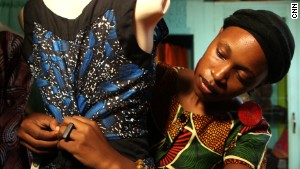
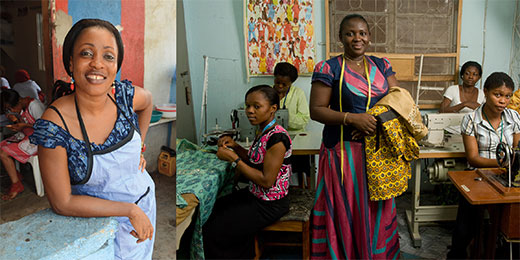
Botswanan fashion entrepreneur Kemi Kalikawe sells clothes and home furnishings from a store in Dar Es Salaam, Tanzania

EXPAND IMAGE

So our collective mission must be to create the conditions for the entrepreneur to succeed. But to do so, we must first understand the obstacles to individual success.

This week, the Africapitalism Institute, a pan-African policy and research organization supported by the Tony Elumelu Foundation, will release a survey of 2,000 aspiring entrepreneurs across the continent, supplemented by dozens of focus groups. The findings confirm what many of us who have dedicated ourselves to this field for years have always understood: that no one can do it alone.

According to the findings, 60% of respondents indicated that it was very difficult to start a business, and 65& said they required additional skills for themselves and their workers to be successful. Nearly 90% of respondents said that obtaining start-up capital was one of their most significant challenges.

This is due mainly to the lack of credit bureaus in Africa, as well as the reluctance of banks to lend to customers with no track record. An overwhelming majority of survey respondents also cited the high costs of core inputs such as power, transportation, telecommunications, and business property as among their chief concerns. These are the costs necessary to run any business in Africa, but they are particularly burdensome for a small business in its nascent stages.

We must make a commitment to put in place policies and programs that address the biggest hurdles facing African entrepreneurs.

When we look at capital requirements, we must figure out how lending institutions are enabled to make financial commitments at the earliest stages of business development, even without requisite collateral, and how to facilitate alternate sources of financing from the philanthropic sector.

Governments must commit to predictability and transparency in the process required to start up a business, employing user-friend technology solutions. Donors need to take a hard look at their own development strategies, particularly as they relate to supporting the vast need on the continent for infrastructure investment. Finally, we must invest in numerical and reading literacy, education, technical skills, we must train for the next generation of job creators.

Beyond dialogue, events like GES provide an opportunity for those promoting entrepreneurship around the world to coordinate their efforts. This coordination is already at work with the Spark Coalition, the private sector arm of the U.S. government’s global entrepreneurship initiative whose membership we hope will grow exponentially in the coming months. Spark provides a greatly needed platform for global collaboration.

On May 9th of this year, in announcing the GES, President Obama issued a global challenge to generate $1 billion in new investment for emerging entrepreneurs worldwide by 2017. Our continent must rise to this global challenge.

The Tony Elumelu Foundation is trying to lead the way by endowing its own $100 million dollar entrepreneurship support fund to assist the next generation of our continent’s innovators by addressing the biggest challenges they face including access to capital, training and mentoring. As I said at the onset, it is difficult to overstate the role that entrepreneurship plays in lifting people out of poverty and contributing to social wealth.

From the youngest entrepreneur to the oldest

0

I was once the youngest entrepreneur in the world. I blinked. And now I’m one of the oldest!

It’s my 65th birthday tomorrow, an occasion that is supposed to carry associations with that incomprehensible word, retirement. I can assure you I have no plans to retire. I can’t imagine not working, as I’ve never seen work as work and play as play – it’s all just living.

From the youngest entrepreneur to the oldest
Image from Virgin Hotels

As each year passes I’m glad to have a little more experience to share with others, and I’m thankful to be surrounded by my family and loved ones. This year has been extra special as I have become a grand-dude for the first time. Joan and I absolutely love watching Sam, Isabella, Holly and Freddie grow as parents, and helping them to look after their beautiful children Eva Deia, Etta and Artie.

From the youngest entrepreneur to the oldest
Image from Sam Branson

Spending time with my grandchildren certainly keeps me on my toes, just as taking on new challenges with Virgin keeps me energised and excited. There is no need whatsoever for older entrepreneurs not to try new things. In fact, those of us who have a fair few years behind us are often in an even better position, as we have made more mistakes to learn from!

From the youngest entrepreneur to the oldest
Image from Virgin.com

One thing is for sure, we don’t stop failing as we get older and we certainly don’t get everything right. There is nothing wrong with that.

Here’s a quote from George Bernard Shaw, which I printed on the back of the second issue of Student Magazine in 1968, on the nature of youth and age.

“Youth, which is forgiven everything , forgives itself nothing; age, which forgives itself everything, is forgiven nothing.”

From the youngest entrepreneur to the oldest
Image from Virgin.com

In the spirit of trying new things and taking on fresh adventures, I would like you to challenge me to do 65 challenges to celebrate my 65th birthday. Keep them fun, silly and surprising – Tag your suggestions with #challengerichard – I’ll pick my favourites and share the results as the year goes on.

A checklist on proper rabbit keeping and routine practices

Rabbit farming can be a tricky affair. However, there is no doubt that if done properly, it can turn out to be a successful venture. How? Well, here’s a guide on proper rabbit housing and keeping:


Rabbit Housing Requirements:

  • The house must protect the rabbits and keep them from escaping
  • The house must protect the rabbits from predators
  • The house must protect the rabbits from adverse weather
  • The house should allow easy, comfortable access for the manager
  • The house must be self cleaning or easy to clean
  • The house should be of reasonable cost, easy to maintain and be durable.
  • Ideally, rabbits should be kept in cages either outdoor with extended roofs or indoor where the cages are kept inside buildings on platforms.
  • A rabbit unit should be well ventilated, rain-proof and allows some sunlight

Rabbit Housing Dimensions

  • Standard cages for rabbits should measure: L=80cm, W=60cm, H=45cm.
  • For pregnant does or does with young kits, a provision for a nesting box of 30cm by 30cm.
  • Usually weld mesh wire is preferred because of ease in maintaining cleanliness. The quality of available weld mesh wire in Kenya is however poor and does not last long
  • Many farmers have thus resorted to using all-wooden cages or wooden plus weld mesh wire cages.
  • Multi-tier cages are becoming popular because they safe on space. More than two-tier cages are however not recommended because of difficulties in management.

An outdoor hutch plan for 6 doe and 1 buck breeding unit (economic unit):

rabbit-houseSome examples of Rabbit Houses:

a) Outdoor Cageoutdoor-cage

  • This structure is made of timber walls, wooden floor, iron sheet wall. The front of the structure is made of weld mesh wire. The structure is on a platform of about 1 meter from the ground
b) Floor planfloor-plan

  • This is a floor plan for a 4 breeding females with one buck in the middle. Notice that two female rabbits share the space between them as nesting area
c) Indoor housing with stacked cagesindoor-housing

  • The cages are stacked in order to save on space. The farmer in this case utilises both timber and weld wire mesh.
d) Nesting box:nesting-box

  • Some expectant does require a nesting box with the indicated dimensions attached to their main cages in preparation for kindling. This nesting box is where the doe will farrow and feed its young until they have grown fur

Handling Rabbits

The ears alone should never be used as the sole means of holding the rabbit.  The best method is to grasp the ears and the skin close to the head with one hand while the other hand takes the full weight of the rabbit at the hips.  For young rabbits up to about 3-4 months old, a suitable method is to grasp the animal across the loins.

Sexing

A part from the sex organs, physically the buck is usually smaller than the doe and often has a broader head.  In the buck, a protruding sex organ appears as a rounded tip, while in the doe the organ is slit-like or v-shaped, and will slope slightly downwards towards the anus.  When the bucks are mature the penis and testicles are easily observed.

Identification

It is important to properly identify your rabbits in order to help you keep records about them. The most common ways of identification for rabbits include tattooing and ear notching. Tattooing is the most relevant in rabbits due to their high turnover. For exhibition purposes rings with official marks are used.

Records

Keep proper records of all your rabbit unit activities:

  • Breeding records
  • Growth
  • Sales and expenses


Why AI fails in your cow

Artificial Insemination (AI) is one of the most important techniques ever devised for the genetic improvement of farm animals.

Its greatest advantage is that there is maximum use of superior bulls which does not happen with natural service.

The danger of spreading infectious genital diseases is also reduced since exposure of sires to such ailments is curbed. Through AI, one can also detect early infertile bulls, use old or disabled bulls and it eliminates the danger of handling unruly bulls.

The demerits of the procedure include the fact it requires special facilities and skills that are obtained through training. Only qualified AI service providers licensed by the Kenya Veterinary Board are allowed to practice.

Causes of AI failure in cows: They are both human and animal. The farmer and the inseminator unwittingly contribute to most of these failures through acts of omission and commission.

a) THE FARMER

Failing to detect heat is the most frequent cause of reproductive failure in herds bred artificially.

As a farmer, knowledge of the heat cycle dynamics and keeping of accurate breeding records are essential in minimising AI failure. To enhance chances of conception, the farmer needs to avoid inaccurate reporting of heat especially the time when the cow started showing signs of ‘standing heat’.

This is the period when a cow stands to be mounted by others or moves forward slightly as it is being mounted. This is the most accurate sign of oestrus, marking the most sexually intensive period of the oestrous cycle and lasts for 15 to 18 hours.

Cows that move away quickly when a mount is attempted are not in true oestrus.

For the standing behaviour to be expressed, the cow obviously must be allowed to interact.

Ovulation occurs 25 to 32 hours after the onset of standing heat but fertilisation will only take place at the uterine horns (fallopian tube or oviduct) before the egg reaches the uterus.

The egg travels very rapidly from the ovulation site to the fertilisation site in the oviduct but the sperms have to be in the female reproductive tract for approximately six hours before they are capable of fertilising the egg.

Apart from the real risk of fertilisation failure, breeding either too early or too late allows an aged sperm or an aged egg to interact at the site of fertilisation and will result in poor conception due to embryonic deaths.

The best time to inseminate is during the second half of the standing heat period and, therefore, most inseminators use the ‘AM-PM rule’ to ensure conception.

With this rule, if standing heat is first reported in the morning hours, then insemination is done in the afternoon but if heat is reported in the evening, then insemination is done the following morning. It is, therefore, imperative that the farmer accurately reports the time of the first signs of standing heat.

In addition, keeping breeding records such as the dates of last calving and last heat helps a farmer to forecast the probable dates of the next heat signs.
b) THE INSEMINATOR

An incompetent inseminator contributes to the failure through improper semen handling and incorrect insemination techniques or procedure. Spermatozoa contained in the semen can be destroyed through improper handling, exposure to sunlight or contact with either water or blood.

Use of dirty equipment, failure to dry semen straws in warm water after thawing and injury to reproductive tract during insemination will hamper spermatozoa survival. Frozen semen needs to be thawed well before insemination. Thawing practices such as rolling of straws between hands or placing under the armpit are wrong.

For the fertilisation and conception to occur, semen has to be deposited precisely within the uterus at the right time which needs a properly qualified AI technician.

c) ANIMAL FACTORS

Loss of weight before or after insemination may negatively affect the critical stages of early embryonic development and maternal recognition of pregnancy. Mounting activity and other sexual behaviour decrease in cows that have lost more weight since calving.

Poor nutrition, on the other hand, causes your cow to fail to show clear signs of heat. This makes it difficult to know the right time for insemination.

Feeding your cows with a balanced ration and maintaining the same plane of nutrition before and after breeding is crucial. Keep your cattle free of internal parasites and provide adequate amounts of feeds containing the necessary nutrients, especially energy, protein, Vitamin A, calcium, phosphorus and selenium.

This will improve herd fertility and longevity, ensuring that after insemination, the resulting embryo will fully attach to the uterus.

Another factor that hinders success of AI is an abnormal, injured or infected reproductive tract. Malformations of the cervix may make it hard for the inseminator to deposit semen. Culling the affected cow may be a better option in such a case since it difficult to provide a lasting remedy.

Infections of the reproductive tract can cause either silent heat or abortion. But the infections can be treated by consulting a vet or qualified animal health practitioner.

Hormonal imbalances, especially those involving the balance of follicle stimulating hormone and luteinising hormone due to reasons such as ovarian dysfunction also cause embryonic death.

Use of semen with less than optimum concentration and quantity reduces the chances of successful fertilisation. It is, therefore, crucial to insist on semen from reputable breeding stations.

Female entrepreneurs to watch: Esther Kagiri is the managing director of Globe Track International

0

When Esther Kagiri decided to start her own company six years ago, an automated media tracking system was a difficult idea to sell. It took her months to get someone to sit and listen to her, much less buy into her idea.

“I don’t like to fail. No one does. I however loved the challenge that came with the rejections. They fed my resilience,” she says.

She had been in public relations for 10 years. She’d continually had to wait to get reports from media trackers because of the slow system. Now, she had done her research and seen that the rest of the world had done away with the delays by using automated systems to track and record. Now, if only she could find someone to invest in her idea.

Armed with only the idea and a great deal of passion, she began knocking on doors. Finally, an acquaintance agreed to invest in her idea and she immediately went to work setting up the offices and importing the equipment. Barely two years in, in 2011, Esther received a state commendation in recognition of her role in ICT development.

“I now have a team of 26 and I think they have been my greatest gift on this journey. When you have people believe in you, you push yourself out of your comfort zone,” she says.

Her team ensures that their clients know what is being said about their brand out there and also that they have timely access to vital television clips which aid them in making informed decisions for their companies.

In retrospect, Esther says that her desire for entrepreneurship was fanned by the fact that throughout her public relations career, she had female bosses. Seeing firsthand what they were doing with their lives strengthened her belief in herself.

“Being a successful entrepreneur was like a dream but now is the best time for a woman to be in business in Kenya. We have support from the government and also from financial institutions.”

Chase Bank Allocates KES. 60B ($600M) to Informal Entrepreneurs.

0

Mid-tier lender Chase Bank Kenya has announced it will commit over KES.60 Billion ($600M) over the next three years to lend to entrepreneurs in the Small and Medium Enterprise sector or SME.

The funds are intended to ensure that formal credit lines can be extended to those entrepreneurs who would otherwise not have access to formal financing. This will see the bank reach a wider net of entrepreneurs.

The announcement was made at the 6th Global Entrepreneurship Summit 2015 which is being co-hosted in Nairobi by President Uhuru Kenyatta and U.S President Barrack Obama.

CHASE-BANK
CHASE-BANK

Speaking at the Summit, Chase Bank Kenya Chief Executive Paul Njaga said the move to earmark the funds was part of the brand promise to enable its SME clients achieve what matters most to them.

“The provision of these funds is proof of our commitment to the SME sector. The funds coupled with our unique customer proposition means our clients can access an unrivalled financial products and services from their relationship bank.” He added.

The bank will be providing the funds as part of it current strategy which focuses on the SME entrepreneur, with a special focus on the small business segment.

“Chase Bank Kenya with its strong digital focus is enabling its customer’s access financial products and services through technology. This allows the bank to disburse the funds faster and more efficiently to the benefit of its customer thereby, removing the proximity barrier.” remarked Mr Njaga.

As a lender, Chase Bank Kenya seeks to be the partner of choice for the entrepreneur in their journey and help them access the facilities. This goes beyond day to day transactions for the SME owner to grow their business.

Chase Bank has made a significant difference in partnering with SMEs in the Youth, Women, Trade and Agri Business segment. These partnerships and sector focus has attributed to the significant market share Chase Bank commands in the SME sector.

The fund is also expected to supplement government efforts to expand funding for SME’s through initiatives like the Uwezo Fund as well as the reserving of 30% of government procurement contracts for women, youth and persons with disabilities.

Chase Bank successfully concluded the issue of a Corporate Bond that had an impressive subscription rate of 161% and raised Kes.4.8 Billion shillings ($480M) subordinated debt.

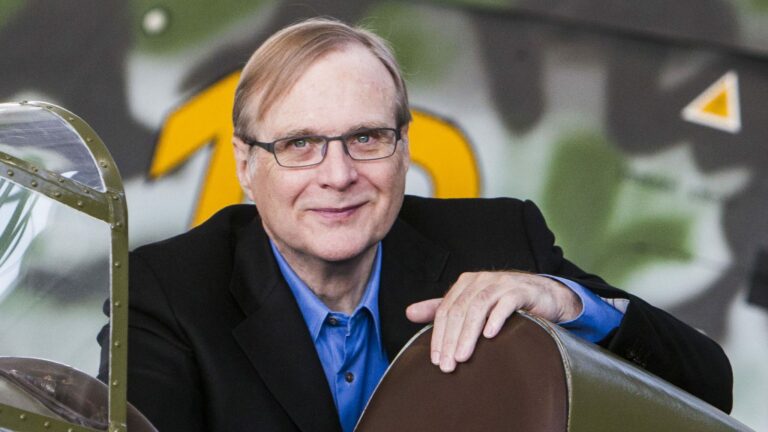
Microsoft Co-Founder: Paul G. Allen

0

With lifetime giving totaling over $2 billion, investor and philanthropist Paul G. Allen has spent his career tackling some of the world’s biggest challenges and pushing the boundaries of what’s possible. Through both for-profit and philanthropic investments, Allen has sparked important developments and innovations in the areas of science, technology, education, conservation, the arts and community improvement.

Allen, who co-founded Microsoft in 1975 with Bill Gates, is mapping new frontiers and fueling exploration across a broad range of industries as the founder and chairman of Vulcan Inc., the Seattle-based company that oversees his business and philanthropic efforts. Allen’s vision has forwarded projects such as leading the massive redevelopment of Seattle’s South Lake Union neighborhood, founding three museums including Seattle’s critically acclaimed EMP Museum, funding the first privately-backed effort to successfully put a civilian in suborbital space, and launching Stratolaunch Systems, which is developing a revolutionary airborne launch system. He also owns the Seattle Seahawks of the National Football League, the Portland Trail Blazers of the National Basketball Association, and is part of the primary ownership group for the Seattle Sounders FC, the city’s Major League Soccer team.

Paul G. Allen & Bill Gates

Allen is included among the world’s leading philanthropists who have pledged to give away the majority of their fortunes to charity. His giving is channeled through The Paul G. Allen Family Foundation, and through direct gifts, including $26 million to Washington State University for the Paul G. Allen School for Global Animal Health. In 2003, he founded the Allen Institute for Brain Science to accelerate understanding of the human brain in health and disease, supporting the Seattle non-profit with $500 million to date. A decade later, he launched the Allen Institute for the Artificial Intelligence to explore critical questions in AI.

superyacht-octopus
superyacht-octopus

Allen’s award-winning film company, Vulcan Productions, develops and supports media projects that help audiences understand the world around them and respond to challenges, including the Emmy Award-winning Rx for Survival–A Global Health Challenge; the Peabody Award-winning Judgment Day: Intelligent Design; the PBS series This Emotional Life; the PBS series The Blues; and documentary films like Girl Rising and Pandora’s Promise.  Allen is also founder of the EMP Museum, Seattle’s critically acclaimed interactive museum of music, popular culture and science fiction; the Flying Heritage Collection, an assemblage of rare World War II aircraft restored to flying condition and shared with the public; and the Living Computer Museum, a collection of restored vintage timesharing computer equipment.

Contacts :

Twitter

Facebook

Free internet for online content publishers

0

An Internet service provider has offered African entrepreneurs who publish local content online free connections, free website hosting and unlimited Internet usage for two years.

Liquid Telecom Kenya launched ‘Information Enabler’ programme targeting content start-ups in Africa with nine or fewer employees. To qualify, the start-up will need to be producing original content of demonstrable utility in promoting economic growth and development.

It will also need to be posting new information on the Internet at least three times a week.

Liquid Telkom Kenya CEO Mr Ben Roberts said: “The key to our selection will be the quality, frequency, and utility of the information that these entrepreneurs are producing and delivering.” Roberts noted that Africa’s rapid move online called for the growth of an information sphere built by local entrepreneurs or techpreneurs.

“These information providers are set to be the enablers of much of the economic growth that will flow from the continent’s greater connectivity.

Our program has also been designed to aid these businesses by keeping African data in Africa, thereby enabling more rapid and easier access for African Internet users,” said Mr Roberts.