
Home Blog Page 2234

Easy way to control intestinal worms in cows

Your livestock may look healthy but suffer from internal parasites infestation such as worms. Common parasites include roundworms, tapeworms and flukes.

If not treated, worms compete and drain the animal of crucial nutrients resulting to poor health, slow growth rate, low productivity, poor conception rates and unhealthy young ones being born. Animals reared for meat will have parts of their carcass condemned at slaughter because of worms.

SYMPTOMS OF WORMS
A regular deworming schedule alongside good overall herd management should be practised to control significant parasitic infections that affect livestock. Where regular deworming is not practised, recognising the symptoms of worm infestation helps.

Infected animals show drop in production because worms deny them the full benefits of nutrients. They display poor physical appearance such that the ribs become conspicuous and coats dull and rough. Under heavy infestation, affected animals may become anaemic and develop oedema. They further become restless, experience hair loss, mineral imbalances and diarrhoea leading to dehydration.

They also have difficulties consuming and digesting feeds thereby giving loose, foul-smelling stool. Such animals will also cough and have distended abdomens. If on the extreme, the animal may die.

Young animals are typically more susceptible to internal parasites than older ones. The older cattle have developed immunity having been frequently exposed previously to the parasites.

The older animals, however, experience the harmful side of internal parasites as they near giving birth because immunity is suppressed. Bulls are also more susceptible to internal parasites than cows because they start grazing early.

CONTROL OF WORMS
An animal must first be dewormed when it is two to four months, or at an average of three months. Deworming interval depends on the de-wormer used but most drugs in the market recommend after every three months.

Several methods can be used to defeat worms. As long as animals continue to graze on pasture, internal parasites will always raid them.

The amount of parasites will, however, vary with pasture season and management. Good pasture management practises will save the animals’ the burden of parasites.

The management include grazing younger animals on safe pastures that have not been grazed on for almost 12 months as well as feeding them on small grain feeds. Always deworm animals before placing them on safe pastures. The less susceptible mature animals can be left to graze on the other pastures.

In addition, do not overgraze pastures. Animals feeding on overgrazed pastures are forced to graze closer to the ground hence pick up more larvae.

De-wormers (anthelmintics) provide another excellent way of controlling internal parasites. They are in tablet forms or as drench and other oral liquids.

Tablets require use of a bolus gun while the liquid suspensions need that you have a drenching gun or syringe.

The use of de-wormers, though, should not aim at treating infected animals showing signs of parasitism. Instead, apply de-wormers on time to reduce infection before symptoms occur.

Treatment should also aim at interrupting the life cycle of the internal parasite in an effort to minimise pasture contamination. De-wormers for treatment are normally selected based on ease of application, whether broad spectrum, milk withdrawal periods and cost-effectiveness.

The de-wormers are grouped into either avermectins/ milbemycins like Ivermectin or benzimidazoles like Albendazole. Avermectins/ milbemycins curb both external and internal parasites, as well as offer persistent protection for days to weeks after treatment.

Before application, always read and follow the instructions and prescriptions. These prescriptions are mainly important because they describe the best and safest level of control.

Under-dosing can reduce the level of control and make the parasites become resistant to de-wormers.

Overdosing, on the other hand, can poison the animals and lengthen withdrawal periods for products. Again, it is costly since it means spending more on de-wormers though it provides the same rate of control as recommended levels.

In a herd of dairy cows, deworming at early lactation consistently increases milk yields more than any other time of treatment.

Another option is to deworm all the cows in the herd at once then again after about three months depending on the drug used. Use only anthelminths approved for use in lactating dairy cattle, and consider milk withdrawal times.

Some de-wormers are not recommended for treating pregnant animals, if used they can cause miscarriage; therefore be sure of the choice of de-wormer.

Generally, it is advisable to reduce the animals’ access to feeds, especially fresh pasture but not water 24 hours before administration.

This will slow down the exit flow of the rumen and increases the time that the anthelmintic remains there and get absorbed. For the same reason, do not feed the animals for about six hours after drenching.

For successful deworming, ensure the drenching gun is well calibrated. Shake the liquid suspension thoroughly before administration and draw into the gun the recommended dosage as per body weight. Drench and ensure that the animal swallows the whole dose.

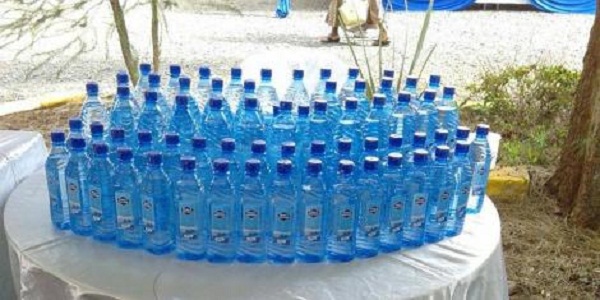
Female entrepreneurs – Meet Ruth Mawia 26, owner of Koola Waters

0

Ruth Mawia Mwanzia is an entrepreneur, communication officer and student, all rolled into one. Ms Mawia, 26, is the managing director and owner of Koola Waters, a water bottling company based in Nairobi, works as Corporate Communications Officer at Water Management Authority and studies for her Master’s at Nazarene University.

Her passion, she says, has seen the production of safe drinking water through Koola Waters. Ms Mawia was born and raised in Kitui County, a semi-arid region where fresh drinking water is a precious commodity.

It was, therefore, not surprising that she would want to produce the water in large quantities. Since Koola Waters started a year ago, it’s been growing steadily as the brand finds its space in a flooded market. “Advertising has played a key role in growing the business and marketing the brand,” she said in an interview.

While competition in the mineral and bottled water segment is cut-throat, Ms Mawia is growing her clientele, one bottle at a time. “You have to be unique and that is why we are using the best and special kind of machinery at Koola Water,” she says.

She says success comes from dedication and hard work. “I am disciplined but of course my parents and friends play a bigger role,” she says. “Starting up this business was never easy,” she adds. “I had to make decisions strong enough even to challenge myself. The wisdom of my father and the kind words from my mother were very inspirational.”

Never to keep silent on a nice idea, Ms Mawia never fails to try and pumped Ksh2 million in the water start-up. Her commitment and that of her employees are a strong driving force behind the Karen-based company.

Inspired by Ben Carson

She says she has had to acquire knowledge not just in her communications career but also on water industry trends while drawing inspiration from US neurosurgeon Ben Carson. “He came from a very humble background but lived to shock the world with success,” Ms Mawia says. Now he wants to be the president of the United States.

She says business is a learning process and the ability to apply the lessons as you adapt to market trends. “No matter how much money you make, seeing your copy-cut brand out there is obviously a thing to be concerned about,” she says, referring to a growing Kenyan culture of counterfeiting in Kenya.

Koola Waters
Koola Waters

She talks passionately about Richard Branson, the English businessman and founder of Virgin Group, which comprises more than 400 companies with networth is estimated at $4.9 billion. “He has really succeeded despite what people said about him. His humble background amazes me,” Ms Mawia says.

Unlike many people who quit their jobs to focus on business, Ms Mawia has found a perfect balance. She says her job complements her business in lean times. With a production capacity of 150 cartons in a day, the business rakes in about Ksh100,000 monthly. “Working has helped me keep the company afloat especially when business is low. These are usual challenges in any start-up business,” she says.

She has kept a good network of friends who inspire her and provide leads to markets. “If you try to save things to yourself, you are likely to fail. Always share and share,” she says.

She tells aspiring entrepreneurs to be brave. “Young people should not be afraid of the unknown because had I feared, I wouldn’t be here today. Take your ideas to exhibitions, share them with people and make the right decisions and they will turn into business. There are a lot of big ups and big downs in business and every other encounter. What stands out is how strong you believe in yourself and God.”

The MD says Koola Waters is set for expansion by pumping in more funds. “I am now headed to expanding it further to grow out and take it closer home,” she says.

It’s not all work as Ms Mawia is also engaged in humanitarian activities. Currently, she is running a rehabilitation and empowerment programme in Korogocho slums in Nairobi. “The essence of life is to make a difference and put smiles on the faces of the less fortunate,” she says.

How UoN students turned part-time pocket money project into a multi-million greenhouses business

The just concluded Global Entrepreneurship Summit featured many innovators and entrepreneurs. As the curtain fell on the GES on Sunday, some young entrepreneurs were smiling all the way to the bank.

The GES brought together many passionate and enthusiastic entrepreneurs, tenderpreneurs and techpreneurs from all over the world. However, on the final day, Africa was in the spotlight as it produced winners of the Global Innovation through Science and Technology (GIST), which attracted 792 contestants.

The overall winner of GIST was Esther Majisola Ojebode, a Nigeria techpreneur, followed by Kenya’s Taita Ngetich who runs greenhouses.

Mr Taita Ngetich (pictured above), a fifth-year mechanical engineering student at the University of Nairobi (UoN, won $15000 (Ksh1.5 million) for his Illiminum Greenhouse project. The greenhouses offer a controlled and regulated environment, manned by sensor technology.

“Wherever you are, you can know what is happening in your farm,” he says. A farmer can open and close the irrigation system, as well as query and get alerts on current greenhouse status on such things as temperature, humidity and soil moisture by simply sending an SMS. The system is powered by a 14-watt solar panel and can work in rural areas, where electricity is a challenge.

The farmer also gets warning text messages on irregular parameters, such as high temperatures inside the greenhouse and, in turn, the system opens the flaps to correct the situation and immediately sends an SMS to the farmer informing about the correction carried out.

Mr Ng’etich says he teamed with a colleague to create a project to raise pocket money as they studied in campus, which later turned into a winner.

Chemical analyst wins for killing pests

Majisola Ojebode is a Nigerian applied biochemistry graduate from the Federal university of technology, Akure. The chemical analyst runs Bioresource Company, which offers solutions to killing weevils to reduce post-harvest losses. Ms Ojebode took home $15,000 (Ksh1.5 million) for the overall prize plus another $5,000 (Ksh500,000) for emerging the best in agriculture.

She says was an inquisitive child and remembers wondering how food expiry dates were determined. “I have always loved anything to do with science, and I studied it in the hope that it would enable me to combat environmental issues in my community, such as the pest problem on farms,” she says.

Ms Ojebode’s area of research is metalobomics, the scientific study of chemical processes involving metabolites, which are extracted from plants. “Metabolomics entails using a robust approach to discover what pesticides are doing, and to ensure that they work on the pest and not on the humans applying them,” she explains. “In other words, they need to be bio-selective.”

The process involves taking a model plant that has already been sequenced through genetic coding. Next, they take compounds whose bioactivities are already known. “We apply these to the model plant, to get their metabolic ‘fingerprints’ via gas chromatography instrumentation,” says Ojebode. “This will show us the effect that the applied compounds have on the plant. We do that on several plants using several compounds so we have a large range to examine.”

Ojebode has conducted such tests on lemongrass and dongoyaro (Azadirachta indica), a medicinal plant that people sow around their houses to deter insects. She now has enough information to contribute to the databases of scientific bodies, such as the International Metabolomics Society. “My intention is to figure out the exact properties of these plants and extract them for direct use,” she said.

Never make investment decisions in haste

To do, or not to do – that is the question. Business leaders get paid big bucks to make smart, informed decisions about whether or not to take the plunge on a potential venture, yet there is no science or advice anyone can offer that will help new entrepreneurs to make similar choices.

Such decisions could never be programmed into a computer. It’s more like sitting on a jury: All reasonable doubt must be removed before you can pass a verdict one way or the other. (Thankfully, though, corporate decisions seldom involve matters of life and death!) That said, I have found that a few general rules often help me to arrive at a decision within the appropriate timeframe about whether to approve a project.

For me, first impressions always matter a great deal, but I don’t let that thought process influence my decision-making when it comes to business matters.

I’ve learned that even when an idea immediately strikes you as a really good one, you must push aside that first reaction and carefully and objectively weigh the potential new business’s pros and cons. If no significant cons come to mind when you first evaluate an idea, that doesn’t mean that they don’t exist.

UNFORSEEN PROBLEMS

Almost every startup encounters unforeseen problems, so be sure to devote a lot of time to figuring out what they are and assessing solutions before you move forward – if you learn of a major problem after the launch, you’ll be in a much worse position to deal with it.

This kind of caution becomes doubly important if everyone on your team is unanimously in favour of going ahead with a project. No idea is perfect, so be on your guard and work hard at exposing the hidden problem areas. Find and address them, and you’ll only build a better business.

Avoid making a decision in isolation about whether to launch a venture: You must also consider how the project will affect the overall functioning of your company. Every choice you make as an entrepreneur will impact, to some degree, your ability to explore future opportunities – this is what the experts call the “decision stream.”

You might feel that the venture you’re considering might be too good to pass up, but you have to keep in mind how it will affect your other projects down the road. If it appears that now is not be the best time to move forward, consider what risks, if any, there would be in putting the venture on hold for an agreed-upon length of time. In those situations where you cannot take on a project because another is waiting in the wings, think about why one should get the nod and the other not, and what that says about your priorities.

LIMIT EXPOSURE RISK

Finally, do everything you can to limit your exposure to risk – protect the downside. Wise investors go to great lengths to limit their potential losses when it comes to stock portfolios, and you should employ a similar strategy when setting up a new business.

For example, when I was starting up Virgin Atlantic, the only way I got my business partners at Virgin Records to begrudgingly accept the risks involved in running a new airline was by getting Boeing to agree to buy back our 747 airliner after a year if things didn’t work out as we’d hoped.

Ever since then, whenever we are looking into starting up a giant, capital-intensive venture like Virgin Galactic or our upcoming Virgin Cruises, our team always spends a lot of time finding inventive ways to protect the downside.

These are just a few tips that I have used to help me make smart business decisions, and I hope that they will help you too. A final hint: If you have the time to take an approach that involves orchestrated procrastination, then do so. Doing more homework on a project is seldom a bad thing – as long as you don’t let the opportunity pass you by!

Types of breed for profitable dairy farming in Kenya

In Kenya the main dairy breeds that have been selected include Ayshire, Friesian, Jersey, Guernsey and their crossbreeds.

Fresian Breed
The Friesian cows have a large body that weighs between 500-550kgs with black and white coat design. Their milk potential is 40-50 Litres of milk daily. They’re the preferred choice for dairy farming in Kenya highlands. They are heavy feeders eating 90-110 kg fresh forage per day or 3 gunny bags. They should have plenty of clean water about 60 Litres/day should be provided. They have a few shortcomings though; They are heavy feeders thus feed expense will be higher than other cows,Susceptible to diseases, milk fever and  high temperatures.

Ayshire Breed
Ayshire cow is a large bodied animal with average live-weight of 450 Kgs. Its milk potential is 30 Litres per day. The body of the ayshire cow is covered in brown with white patches in almost equal amounts. It requires around 90-110 kg feed consisting of fresh forage per day or 3 gunny bags. It also needs plenty of clean water about 60 Litres/day should be provided. Ayshire are hardy animals and is adaptable to most climates, thus making it suitable for dairy farming in Kenya.

Guernsey breed
Guernsey cow is yellow to reddish-brown with white patches around its body, adaptable to all climates and management systems with milk yield potential of 25 Ltrs per day. Amount of feed required is 65-85Kg fresh forage per day or 2 gunny bags and  40 Ltrs of water per day.

Jersey Breed
Jerseys usually have a body colour of light brown, though the colour can range from almost grey to dull black. Its average milk production is 20 litres per day. To spot a true its nose is black and bordered by almost white muzzle.

Equity Bank: we have Sh. 52 billion from GES deals to fund SMEs

Equity Bank Group has announced it has received commitments worth over Sh52 billion ($525 million) from different institutions as part of the just concluded Global Entrepreneurship Summit.
The billions will be loaned out to small and medium enterprises as well as youth and women as per the aspirations and objectives of Barack Obama-led GES initiative. Out of these commitments, Sh20 billion was from the independent US government agency, the Overseas Private Investment Corporation (Opic), Sh15 billion from the African Development Bank, Sh10 billion from International Finance Corporation and Sh7.5 billion from the European Investment Bank.

The bank has in addition announced that it is setting aside Ksh400 billion in the next three and five years to lend to the same group of entrepreneurs. This, according to Group Chief Executive Officer James Mwangi, translates into Sh13 billion of loans to SMEs every month. Speaking during an interview yesterday, Mr Mwangi (pictured) said the objective is to support the scaling up of the small businesses to become regionally and globally competitive.

As part of this commitment, he disclosed, Equity Bank has already trained over 1.3 million women and young people in financial literacy through the Equity Foundation. The bank has also trained 12,000 micro-businesses in entrepreneurship.
“We expect the impact to be job and wealth creation,” Mwangi said of the commitments, adding that the bank also made a killing processing payments for hotels as well as the fuelling of the ‘the Beast’, through American Express cards.

During the visit by first sitting US leader, commitments worth over Sh100 billion to youth and women businesses were made. Kenya banks have also joined in the fray and have started massive funding for the youth and women. For instance, Chase Bank has set aside Sh65 billion while Kenya Commercial Bank has committed Sh1 billion through the Enterprise Kenya Fund. During the summit, the energy sector also got a big boost after the Government signed a Sh220 billion deal with American firm, SkyPower.

Why you should never sell your stocks out of panic

The following feature by Rufus Mwanyasi was first published in the Business Daily.

The past six months have been extremely unkind to the equity market. As at the end of last week, the NSE 20 Share index had retreated 11.7 per cent from its opening high in January while the NSE All share index has slid back 6 per cent.

Growth jitters sparked by increasing interest rates and inflation have knocked the stock market well below key support levels. As a result, the market no longer looks as hot as it did heading into 2015 and investors are quickly losing their appetite for stocks.

Highly visible stocks such as Equity Bank, Kenya Airways, Uchumi, Britam and KenGen are having a particularly bad time.

The big question is, since the market is now in a correction mode, which occurs when an index falls by more than 10 per cent from its closing high, are we likely to enter a full blown bear market with losses exceeding 25 per cent?

Can shares tumble to 4,080 points in the next five months?

I believe answers to these questions really depend more on monetary policy than company fundamentals simply because the former has taken centre-stage in the past two months.

Sadly with this sole focus, investors are generally likely to make more emotionally driven decisions which often lead to a “manic mode” type of behaviour.

Take for instance, following the first rate adjustment in June: the market quickly snapped a 3.3 per cent rally despite rebounding from a firm support at 4,800 level (this level had inspired an 11 per cent rally beginning last year in July and road-blocked all sell-offs throughout the same year).

Again, shortly after the second rate adjustment was announced, the market quickly shed 5.8 per cent of its value inside only two months compared to 3.8 per cent loss suffered between January to June.

Note how quick and steep losses suffered after the rate increases happened compared to the preceding six months. I dare believe this goes to prove that what we are witnessing is a panic-driven correction.

On the other hand, if rates and inflation stabilise, then it is possible that investors may rethink their bearish stance as a re-focus toward company fundamentals brings back rational thinking.

Interest rates, while relevant to company and market performance, can generate a lot of noise that is distractive.

Markets are a lot calmer and rational in stable rate environments.

Nonetheless, the reality is that as the Central Bank of Kenya keeps fighting to rein in a fast weakening local currency and with more stocks hitting new lows than new highs (including Safaricom), it is unlikely that the prevailing sense of panic and despondence will go away.

My advice on what to do next is to be very cautious and forget about investing for a quick profit.

How to Build an Emergency Fund and Invest with Confidence

You earn more than you spend. Fantastic! The debt monster no longer threatens you. Excellent! But before you dial up that stock broker, there’s one more thing you absolutely must do.

Don’t invest without a safety net

When you look at the long-term performance of African stock markets, it’s clear that there are no guarantees that the value of any given share is going to rise. The Nairobi Securities Exchange has dropped 3.4% over the past month. The Nigerian Stock Exchange has fallen more than 27% since last April.

And the Botswana Stock Exchange’s main index was worth more five years ago than it is today. Now, that’s not to say that you shouldn’t invest in shares. Far from it. Over the long-term, very few investments come close to matching the performance of the stock market.

But there will most definitely be bumps in the road. And if one of these stock market bumps happens to coincide with a rough patch in your career or personal life, it could leave your finances in a shambles. If you invested all of your savings in shares, what would you do if the stock market took a nosedive at the same time you were retrenched from your job?

The shriveled value of your shares may not be enough to sustain you and your family until you find new employment, which could leave you little choice but to tangle with the debt monster once again. This is why you need an emergency fund. It’s a safety net in the event that the stock market and your disposable income drop simultaneously.

Make sure it’s big enough to support you

To figure out how large an emergency fund you need, take a look at your monthly income and expenses chart.

(You are keeping track of them, right?)

Look closely at your total expenses over the past six months. Add them all up. The resulting sum is the target amount for your emergency fund.Why is six months of expenses the magic number? Because this is a reasonable amount of time for you to find a new job or otherwise replace your lost income if you’re suddenly unemployed.

Does six months seem too short? Then, by all means, save more. Build an emergency fund equivalent to nine, 10, or even 12 months of expenses. But don’t go less than six. The job market can be tough, and it’s amazing the peace of mind that an ample emergency fund can bring.

Put it to work

Now, where should you stash all that emergency cash? — Not behind the wardrobe. Not in a coffee can. Not sewn into the hem of your bathrobe. Not even the cleverest of hiding places will protect it from inflation.

Bankelele is one of my favorite financial bloggers.

A wise ex-banker, Bankelele tracks the price of common Kenyan
household items over time. In December 2009, he noted that a two-kilogram pack of maize flour cost KES 83.00. Five years later the price had risen to KES 101.00. Over the same time period, the cost of sugar rose 25%.

Clearly, inflation will decimate any cash that you allow to become lazy.

Where to stash your cash

So, where should you put your rainy day money to work?

It should be invested in a vehicle that is

• guaranteed against loss of principal,
• readily accessible in the event of emergency,
• and pays a healthy interest rate.

Many banks offer savings accounts that meet all three of these criteria. Here are a few that I’ve come across recently:

Kenya: Barclays Bank’s Zidisha Bonus Account
Nigeria: Zenith Bank’s EazySave Premium Account
South Africa: Capitec Bank’s Flexible Savings Account

In summary, a healthy emergency fund lessens the likelihood that you’ll be forced to wrestle with debt if your share investments turn sour.

Do you already have a comfy emergency fund? Fantastic! It’s now time to explore investing in shares.

Vacancies: Ukulima Sacco Society is hiring, Apply before 3rd August 2015

Ukulima Sacco Society Limited, a leading national Sacco in Kenya with its headquarters in Nairobi and branch network in Kisumu, Mombasa, Eldoret and Embu has excellent career opportunities for individuals who posses a passion of excellence, strong work ethics, are results oriented and committed to continual improvement for the following positions:

1. Marketing Representatives
16 Positions
Job Summary: The job holder will be responsible for selling products and services of the Sacco to its members as well as recruiting new members.

Duties and Responsibilities

• To recruit new members into the Sacco.
• To sell Sacco products and services to existing members.
• To disseminate Sacco information to both existing and potential members.
• To provide feedback to the Sacco on members issues and expectations.
• To sell micro Credit
Any other duty as may be assigned from time to time.

Academic and Professional Qualifications:

KCSE C or its equivalent and ;
Certificate in Marketing/business related field and;
One year experience in sales and marketing;
Computer literacy.

2. Senior ICT Officer
UC 4
Ref UCSCS/HR/ICT/07/15

One Position

Duties and Responsibilities

• User administration (setup and maintaining user accounts: adding, removing or updating user account information, resetting passwords, etc)
• Maintaining the running system(s)
• Verify that peripherals are working properly
• Introducing and integrating new technologies into existing system environments.
• Applying operating system updates, patches, and configuration changes
• Performing routine audits of systems and software.
• Quickly arrange repair for hardware in occasion of hardware failure
• Monitor system performance, analyze system logs and identify potential issues with computer systems
• Create file systems
• Install and configure new hardware and software
• Perform backup and recovery procedures
• Monitor network communication
• Implement the policies for the use of the computer system and network
• Setup security policies for users. A system administrator must have a strong grasp of computer security (e.g. firewalls and intrusion detection systems).
• Troubleshooting any reported problems.
• Answering technical queries.
• Ensuring that the network infrastructure is up and running.
• User Training
• Maintain site licenses for department/organization.

Academic and Professional Qualification:

Bachelor Computer Science or equivalent from a recognized institution;
MCITP – Microsoft Certified IT Professional
Foxpro programming, Dbase III+ Programming
Five years’ working experience in senior position;
Good Working knowledge in Navison ERP on finance, Mobile banking.

How to Apply

Applications with detailed CV indicating current position, qualifications, work experience, copies of certificates, testimonials and National identity card, day telephone contacts and names and contacts of at least three (3) referees should reach the Society on or before 3rd August 2015 Noon and addressed to:

The Chief Executive Officer
Ukulima Sacco Society Limited
P. O. Box 44071-00100
Nairobi

Only shortlisted candidates shall be contacted Ukulima Sacco Society Limited is an equal opportunity employer.

NBK more than doubles half year profits, its share rises on NSE

National Bank of Kenya’s half year net profit has more than doubled on improved revenues and cost management. In reflection, its share price at the NSE shot upwards by as much as 12.86 per cent to trade at Sh. 21.50 per share from yesterday’s closing price of Sh. 19.05 per share.

NBK says its profit after tax for the six months to June increased to Sh1.72 billion from Sh776.3 million posted during a similar period last year.

NBK, which is majority owned by Treasury and NSSF, announced that its total operating income for the period increased 29 per cent to Sh6.2 billion compared to Sh4.8 billion last year. Total operating expenses decreased two per cent to Sh3.4 billion.

“It is remarkable that our costs are reducing year-on-year when the business volumes, branch network and investment in technology are all increasing,” said Munir Ahmed, NBK’s chief executive officer.

“The good results are a testimony that the bank’s five year transformation agenda that began in March 2013 is strongly on course. As we continue with this agenda, we are strategically leveraging on innovation and technology,” he added.

Customer deposits increased by six per cent to Sh97.2 billion while loans and advances to customers grew by 31 per cent from Sh57.7 billion last year to Sh71.4 billion.

Interest income from loans grew 39 per cent to Sh4.6 billion while interest expenses from deposits increased 53 per cent to Sh2.37 billion.

The bank’s total assets increased 14 per cent to Sh124.4 billion.

“These results are very impressive; I challenge you to look for any other bank in the market that will post such earnings,” Mr Ahmed said on Tuesday morning during the release of the results.

“I am confident that our strategy is on course to achieve top tier status by 2017.”