

Home Blog Page 2237

Joshua Oigara: Obama summit turns Kenya into epicenter of Africa’s future entrepreneurship

0

The following feature by KCB CEO Joshua Oigara was first published in The Standard.

This week and the coming days, Kenya will be at the epicenter of global attention as Nairobi hosts the Global Entrepreneurship Summit which will be graced by US President Barrack Obama. This Summit that brings thousands of entrepreneurs running some of the biggest businesses in the World marks the biggest swerve for economic growth and transformation in the country and across the East African region. This is clearly an African moment.

It is exciting that across all the countries in Africa, Kenya was selected to host such a summit that has brought into Nairobi global billionaires and some of the greatest business minds the World has to offer. And the bigger journey is coming. The event is demonstrating Kenya’s strength as a country, the innovation spirit for our people across the region and our ability to build a bigger potential for our transformation across telecommunications, innovation and businesses, agriculture, industries and other sector. Kenya as a country is going through an exciting stage.

The latest World Bank Report indicates that the Kenyan economy is expected to grow 6 per cent this year; up from an earlier projection of 4.7 per cent has made the country, an envy amongst her peers across the region and Africa. The attainment of the lower-middle-income status to become the fifth-largest economy in sub-Saharan Africa has put the country at a very strategic position as it emerges as the most promising economy in the emerging markets.
We are already seeing all the EA countries moving up the World Bank’s Doing Business benchmark index.

In the next two years, I believe that Kenya is going to make it to the top 20, top 30 best countries to do business. We have seen Rwanda already at that level. Kenya is a very exciting country –the optimism, the energy, the enthusiasm and also the innovation. If you look at the big innovations like mobile money in the last eight years, our innovations in businesses like enterprises into horticulture exporting into European markets, our transportation sector and logistics into the region, Kenya naturally plays a big frontier.

Whether it is in Nairobi, or in Lagos, or in South Africa, or in the Middle East, or in European markets, that ethic to go out and build a new business and look for solutions is depicts the Kenyan heritage. I am always very excited as an organization when I am in let’s say in New York, or Washington, or California or London and I find Kenyan entrepreneurs running logistic innovation businesses, airline businesses across the world. So Kenya is playing a global study of global businesses in its space in Africa. And this is going to be. If you look at our population in the region, we have roughly 200 million people within the 6 countries.

We have very strong neighbours, we have Egypt in the north, we have the DRC and Mozambique on the side, Zambia as well and Somalia. This is a natural market for us; the average age is around 25 and when you look at that, the opportunity, these are very connected people. That is the space, with the demographics right, the innovation right, if I look at the innovation hubs, the ICT hubs, the technology labs in Nairobi today, the silicon savannah we talk about in Kenya; Technology is going to be a big frontier. Nairobi is bubbling globally for the innovation and technology. The positive reviews for the economy can largely be attributed to the unwavering entrepreneurial spirit from the Kenyan population who have taken it upon themselves to steer the economy.

Today Kenya is extremely ripe for risk takers, fearless, innovative and creative individuals. For the start, the Vision 2030 the national long-term development blue-print aims to create a globally competitive and prosperous Kenya while at the same time transforming the country into a middle-income country that provides a high quality of life to all its citizens by the year 2030. Entrepreneurs are widely recognized as the prime movers of economic development; the people who translate ideas into action.

While formal employment is still highly prized, some encouraging trends are emerging. Recent times have seen opportunity-driven entrepreneurship gaining some traction in our societies as more people embrace it for self-development. President Obama is expected to lead the over 3000 entrepreneurs drawn from across the globe in discussing pertinent issues affecting Kenya that includes measures to accelerate economic growth, ways of strengthening democratic institutions, and how to improve security, one of the areas of concern that has put Kenya on the spotlight for the last two years.

For Kenya, the GES 2015 is the World Cup of investment opportunities. Entrepreneurship is essential to a nation’s ability to prosper in an ever-changing and increasingly competitive global marketplace, the GES 2015 is our launch, our takeoff strip to prosperity. Entrepreneurship is essential to a nation’s ability to prosper in an ever-changing and increasingly competitive global marketplace. When we think of an entrepreneur, we often envision someone in high technology.
There is no denying entrepreneurs have improved our lives by revolutionising how we communicate, manage money, and follow the world around us. Central to this conference is entrepreneurship; that “spark” characterized by innovation and risk-taking.

From world-leading commerce and banking technologies like M-Pesa to veterinary smart apps assisting small-scale dairy farmers like iCow, Kenya is a pioneer in businesses improving the lives of millions. The Summit offers a significant opportunity for big indigenous corporations like KCB to showcase entrepreneurship in Kenya and by extension Africa. For KCB, the biggest financial services firm in the region by assets, this is a platform for the bank to demonstrate its strong impact and heritage in Africa and its future commitment to the Continent. We have formulated and implemented a number of multi-million dollar strategic initiatives and projects while some are scheduled to deepen financial inclusion and grow entrepreneurship on the continent, thereby transforming the lives and experiences of households and businesses.

Over the past few years, the Bank has invested more than US$1Billion (KShs. 100Billion) in socio-economic developments across the region, effectively boosting entrepreneurship. We are committed to the African Agenda, we are optimistic about the continent’s future potential in the area of entrepreneurship, innovation and we continue supporting regional legacy projects to drive national development and economic prosperity.

Despite the fact that Kenya has made major strides in promoting entrepreneurship, efforts still need to be made to promote high impact entrepreneurship based on opportunity rather than necessity. Initiatives like the Youth Enterprise Fund, the Women Enterprise Fund and Enterprise Kenya that focus on the development of national incubation hubs and accelerators will go a long way in reaping the benefits of incremental and separate areas of research and progress; as well as implementing initiatives to support entrepreneurs in various sectors. In Africa, the bigger challenge for us is how we connect and plug in the various innovative minds that we have using the resources that the continent has. We are ready as an organization to partner, with various other like-minded organizations in Kenya and East Africa to use this moment to build up a new platform for growth in our businesses.


Here are the roads to be closed during historic Obama visit

0

Police have warned Kenyans that Mombasa Road, Uhuru Highway and Waiyaki Way will be closed from 2pm on Friday ahead of US President Barack Obama’s arrival later in the evening.

On Saturday, Thika Superhighway, Limuru Road and Waiyaki Way will be closed 10, 000 police officers are expected to cover Obama’s arrival.

The officers will collaborate with United States security personnel in providing security and patrols during the three days.

Kenyans have been asked to co-operate with the security officers and avoid functions that are to be attended only by those invited.


The 6 Secrets to Getting Mentored by the Best in the Business

0

Awesome entrepreneurs are backed by wise mentors. Every entrepreneur knows how important mentors are. Most entrepreneurs are willing to accept advice. The challenge is, how do you find a mentor?

Who are they? Where are they? And why aren’t they coming out to help you? Often, mentorship is one of those things that “just happens” without any clear direction. It’s difficult to define the path to discovering your mentor and learning from him or her.

Thankfully, there are things you can do to gain mentorship. Mentors don’t fall out of the sky. You must be proactive in seeking and finding a mentor. Here is how you enhance your entrepreneurial journey and gain mentorship.

Professional Business Mnetors Association (PBMA)

1. Learn to listen.

Mentorship is essentially learning from someone else. If you want to learn from someone else, you have to listen to them. Who should you listen to? Listen to anyone. Most importantly, listen to people who are wise and thoughtful.

Most of us are more likely to talk than listen. If you are prone to talking, then it may take some effort to quiet down long enough to listen.

The more you listen, the more you’ll learn. It’s crucial that you take the posture of a learner. To be a learner, you must be a listener.

2. Commit to act.

Listening isn’t enough. You must also act on what you know. The best way to truly learn something is to put it into practice right away.

A good mentor will encourage you to do things that don’t feel comfortable, pushing you out of your comfort zone. That’s where you grow.

A commitment to being mentored is a commitment to acting on what you know.

3. You probably already know your mentor.

This may come as a surprise, but you probably already know your mentors. You may not have sat down with them in a one-on-one meeting, but it’s likely that you’ve heard of them, been introduced to them, or know someone who’s connected to them.

That’s how mentorship works. Rarely does one person mentor another sight unseen. Mentors work like friendships. You have friends in common; you rub shoulders at the same location; you’re in the same circles.

Recently, I put out an announcement on my blog to mentor others. I knew that the people whom I would be best suited to mentor would be long time readers of my blog. In a sense, they knew me, and I understood them, because they were part of my readership.

Sheryl Sandberg, COO of Facebook, understands this principle. Her advice is to find mentors through networking. But targeting strangers for mentorship opportunities is not effective. “Chasing or forcing that connection rarely works,” she explains.

Use your existing network, leverage your relationships, and find who can help you in your current situation. These will be the most natural relationships, and most likely to flourish as mentorship opportunities.

4.  Learn from multiple mentors.

There’s a mistaken idea surrounding mentorship that you’ll somehow find one wise person to explain the secrets of life and the principles of business.

This is wrong.

You will discover that mentorship comes from multiple sources. You may have one mentor who gives you great marketing advice. Another mentor gives you insights into startup culture. Another mentor shares her wisdom on management principles.

The more mentors you have, the more you’ll learn and grow.

5. Seek mentorship among peers.

Mentors are not always older than you. Some of your best mentors may come from those who are in your peer group. You may even hire your mentors to work for you.

There is no hierarchy among mentorship. There is simply the give and take of information and advice. Such mentorship can take a variety of relationship forms, including among your friends and acquaintances.

6. Be willing to accept online mentoring.

Author Michael Hyatt makes a good point about mentoring when he writes, “When most people use the term mentor, they mean a one-on-one coaching relationship with someone older and more experienced.”

Instead, he explains, mentoring can take a variety of forms. Mentoring can be an informal relationship based on one-off encounters. It’s not a formal and systematic process.

Mentoring, like much of life and business, can happen online. Your best mentor may a blog writer. How do you learn from him? By reading his blog, by commenting, by following on social media, and by absorbing all you can.

If you can’t find a mentor who is willing to meet with you personally and individually, be content to accept mentorship from someone who is already teaching, coaching, sharing, and helping others, even if it’s on a blog or via webinars.

Personalities like Michael Hyatt, Tim Ferriss, and Ramit Sethi are, in effect, mentors for thousands of people. Although they don’t know their readers personally or coach them in private sessions, they nonetheless mentor them in very real and influential ways.

Be willing to accept mentorship in this way, even if it doesn’t completely fulfill your ideal of what a mentor is. Mentorship is broader than you thought, and more accessible than you expected.

Conclusion

It can seem challenging to find a mentor. But do you know what’s even more challenging? Trying to go it alone with absolutely no mentorship. Mentors serve to enhance your number one personal asset: your mind.

Mentors build you in all the ways that matter, pushing you further than you thought you could go, and opening up ideas that you never dreamed of.

Without the input of mentors, you may still grow, but you won’t grow as fast. Mentors are the growth-on-steroids route for entrepreneurial success.

Once you find your mentors, build an unbreakable relationship, and learn all you can.

Find a business mentor here

Below is a list if trained and qualified professional mentors:

Tonnie Mello

Mary Kamore

Kinyanjui Kombani

Paul Muhami

Edna Chepng’eno

Moses Munuve


Jennifer Murogocho: how I make over Sh. 500,000 from farming and avoiding middlemen

At the Kiriachene junction along the Meru-Nanyuki highway, a murram road runs for six kilometers.

The dust on the road and the sight of yellowing grass by the roadside is an indication that the area is dry.
Most crops on the farms are drying up prematurely and the ground is cracking.

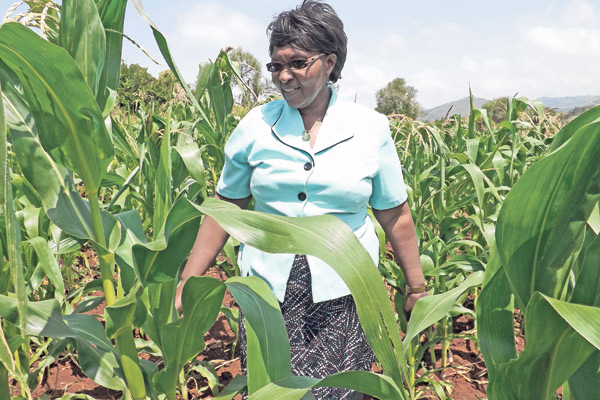
But at Jennifer Murogocho’s farm in Kiirua, about 15km outside Meru town, is green standing out in the midst of withering crops.
It is unbelievable that Murogocho’s four-acre maize plantation is lush green.

Her black beans are green too and flowering. Ordinary beans, on the other hand, have dried up, not because of the heat but because they are mature and awaiting harvest.

FARMS DIFFERENTLY
Murogocho is a nominated Member of the Meru County Assembly and chair of the pre-school education and vocational training committee.
She is also a Bachelor of Arts student in Public Policy and Administration at Kenyatta University. She is a renowned farmer here, because she farms differently.

She was brought up in a family of farmers but she has has a career in banking. She says agriculture has always been in her blood and that even when she sought formal employment, she never neglected farming.

“I started serious farming in 1991. At that time I had about Sh10,000 which I used to plant potatoes on one acre. The seeds were very good and yielded 80 bags. This whetted my appetite. I used the profits to expand my business,” says the farmer. She has 18 acres under cultivation.

After four years of growing potatoes, Murogocho shifted to wheat farming because potatoes are labour intensive.
“My first wheat crops did not yield much because I was not knowledgeable on the dos and don’ts,” she adds.

But how does she keep her farm green amidst the desolate dryness? The answer is in the art of playing hide-and-seek with seasons.

With her farming wholly dependent on rain, she has mastered the seasons and knows when to carry out weeding, planting, harvesting.
She plants wheat and maize during the long rainy season between October and February.

“I plough the land in July and leave it alone until October when I plant. This ensures the soil gets enough sunshine before the seeds are put in the ground,” Murogocho explains.

In October when it begins to rain, she plants the wheat on a single day. “I hire youths and women to do the planting in one day for uniformity of crop growth. I plant wheat on 14 acres and maize on four. The portion I grow the maize on is not flat enough for machine usage as wheat is highly mechanised.” She has subdivided her farm with trees after every three acres.

As soon as the wheat starts germinating, she sprays it to prevent growth of weeds. She says keeping the shamba ‘‘clean’’ is what makes her crops green even when it is dry.

“Most people ignore their farms after planting. This gives space for weeds which compete with the crop,” explains Murogocho.
The wheat is ready in February, and she harvests using a machine. She does not plant wheat again until the long rains are back.

EARLY MATURING MAIZE

For the short rains, she plants mainly beans and early maturing maize. “Beans take about three months to mature and can do well during the short rains.” She plants different maize seeds for the long and short rainy seasons.

“During the short rains, I buy maize seeds that can mature in about three months. Even if the rain is little, it stops when the crops are mature and, therefore, do not dry up like in the other farms.”

She notes that most local farmers just buy similar seeds despite the differing seasons. The little rains this season stopped before most of the crops in the area had matured.

She also sprays the crops using a foliar feed known as ‘‘green miracle’’ that she says assists the crops to resist dryness.
The spray makes the plants retain water and stay green until maturity.

Her maize will be ready this month after which she will prepare land to await wheat planting. That is her farming cycle.

And Murogocho does not sell her produce at just any price. “After harvesting, I do research to find out the market prices. Once I have established the price, I set my own,” she explains. A go-getter, she knows the business side of farming and not even brokers can con her out of her produce.

She confesses that she does not have to look for market as most of the local brokers and buyers know her and know that she does large-scale farming. “I get calls from interested buyers. I tell them my price and if they are willing to buy, they come for it from my farm.”

INCREASE PROFIT

Selling her produce at the farm also helps increase the profit margins because she does not incur transport costs.

In a good season, she gets about 200 bags of wheat. “Last season the rains failed us and I got only 104 bags. But that was better than what most people got,” she says. She sells a bag at Sh3,000. From wheat, she makes a profit of about Sh400,000 after deducting running costs averaging Sh200,000.

Currently, she harvests about 25 bags of maize, each weighing 90kg, from every acre, which she sells at Sh2,500.

“Bean production has been falling, I think due to depletion of some nutrients. I get five bags an acre which I sell at Sh5,000 each,” Murogocho says. She has eight acres under beans.

Good timing is a technique which has given her big rewards even when the weather is tough.

“You cannot afford to postpone any work on your farm. If you fail to spray to prevent weeds from growing just for one week, you will find your farm full of the unwanted plants which take away the nutrients,” says Murogocho.

Godfrey Musyoka, a Ministry of Agriculture officer, Kisima ward, Meru says using foliar fertiliser helps plants retain greenness for longer.

“Foliar feed helps a plant acquire food through leaves. The plant absorbs the essential nutrients through the leaves which promotes their growth and keep them green and healthy,” says Musyoka.

Photos: US military planes jet in ahead of Barack Obama visit

0

Military planes that will be on standby during US President Barack Obama’s visit have arrived.

The planes landed at Kenyatta University on Tuesday. The aircraft can transport 24 passengers unlike ordinary helicopter that carries hardly five people.

Obama

The green chopper and the four Osprey air-crafts later flew back to the Old JKIA airport where they were parked to wait for the arrival of president Obama.
Obama

Boeing V-22 Osprey is not an ordinary helicopter since it can fly at a very high speed, 78-times the speed of the ordinary chopper. This aircraft is basically designed to evacuate the US president in case of security emergency. According to Boeing website, the V-22 Osprey is a joint service multirole combat aircraft utilizing tilt rotor technology to combine the vertical performance of a helicopter with the speed and range of a fixed-wing aircraft. The Boeing V-22 Osprey is classified as a large helicopter, and can be used for military missions.

DSTV, GOtv launch channel dedicated to President Obama Kenya visit

0

This July, all eyes will be on Kenya when President Uhuru Kenyatta hosts his US counterpart, President Barack Obama in his father, Barack Obama Senior’s country of birth. To ensure that subscribers do not miss this much-anticipated historical visit, MultiChoice Africa will cover the event on a dedicated channel on DStv and GOtv.

Multichoice and its partner, public broadcaster Kenya Broadcasting Corporation (KBC), are the host broadcasters during the visit. Both companies will provide comprehensive coverage of the visit, including all public events featuring President Kenyatta and President Obama. From Wednesday, 22 July 2015 to Tuesday, 28 July 2015, DStv channel 199 and GOtv channel 99 will be at the centre of the Obama mania action in Kenya. KBC will broadcast all the events live on KBC Channel 1 and Heritage TV in Kenya.

“We are thrilled to open up this channel dedicated to providing the whole of Africa with first-hand information about this significant moment for Kenya, and indeed the rest of the world. As part of our commitment to providing our subscribers with relevant and up-to-date, world class news and current affairs, this dedicated channel promises to provide gripping coverage of the tour by US President Barack Obama and his host, Kenya President Uhuru Kenyatta,” said the CEO of MultiChoice Africa, Tim Jacobs.

“We are delighted to partner Multichoice on yet another momentous period in Kenya’s history,” said KBC Managing Director and MultiChoice Kenya Chairman, Waithaka Waihenya.

MultiChoice in Kenya is a joint venture between the State Broadcaster, KBC and MultiChoice Africa. The company will provide technical and production support during the summit through Local Productions (operating as SuperSport and M-Net) including raw feed to media houses as well a 24-hour dedicated channel on its platforms.

Things car owners should know about their cars

0

If you own a car or drive a car, there are things you must learn. These things are part of daily checks and emergency procedures. If you have to wait for a mechanic to do some checks, you will be wasting time and resources.

Car Checks

Every car owner or driver should be able to do some checks. These are

1. Engine oil level

2. Transmission oil level

3. Brake fluid level

Engine Oil

Engine Oil check is very simple, follow these simple step.

1. Make sure your engine is turned off

2. Make sure your car parked on levelled surface.

3. Look for the dipstick on your engine as shown the picture

checking-oil-1

4. Remove the dipstick, clean  it, then insert it back.

5. Remove the dipstick again and inspect

Oil Check

Add oil if the level falls below the marked line as shown in the picture.

Transmission(Gear) Oil Check

Look for the transmission dipstick.  Same principles applies as the Engine Oil.

Transmission-dip-stick

Brake Fluid Level

Checking brake fluid level is very simple. Look for the brake fluid reservoir as shown in the picture below. There are marking on the body of the reservoir that indicates low and full. Just observe oil level.

Brake fluid

Fixing Simple Emergency

Basic emergency every driver should know is changing tyre. I once have a flat tyre on a lonely(Okene -Lokoja) and dangerous road very late in the night. It would have been a disaster if i do not know how to do this.

Flat-Tyre

But first you need to have the right tool for this job. You will need hand gloves, wheel spanner, jack, mat, spare tyre, flash lights, tyre gauge, tyre blocks, C caution.

You need this tool on your car every time, not just for road safety officials and police, it is for your safety.

Britam beats Jubilee to become top life insurer in Kenya

0

Britam is the largest life insurer in the country after overtaking Jubilee Insurance in the first quarter of the year, according to the latest data by the Insurance Regulatory Authority (IRA).

Britam increased its market share to 18.7 per cent in March from 17.9 per cent in December last year, rising over Jubilee whose control shrunk to 15.1 per cent from 19.6 per cent at the close of the year.

“It is because of our distribution network in terms of branches. We have 46 and over 2,500 financial advisors,” said Britam’s director of marketing and corporate affairs Muthoga Ngera.

Britam collected life insurance premiums worth Sh2.98 billion in the three months to March compared to Jubilee’s Sh2.4 billion. Life insurance premiums increased by 20.4 per cent in the first quarter to Sh15.98 per cent compared to a similar period last year.

The growth has been attributed to a rising middle class hungry for social security.

Jubilee remained at the helm of the general insurance business after increasing its market share to 12.8 per cent from 10 per cent in December. This leaves Jubilee as the largest insurer when general and life businesses are combined. Britam’s market share in the general insurance business stands at 4.58 per cent.

Mr Ngera said the company had acquired satellite branches and was working with independent agencies to drive its general business.

The two companies have however posted contrasting performance on the Nairobi Securities Exchange with Britam on the losing side.

At 2.30pm Monday, Britam was trading at Sh16.10 per share down 26.8 per cent compared to the price a year ago while Jubilee has gained 42.9 per cent to Sh560 per unit over the same period.

ICEA Lion, associated with the family of a former Central Bank of Kenya governor Philip Ndegwa, was ranked third in the life business section with a market share of 13.2 per cent, a gain from last December’s 11.6 per cent.

Pan Africa Life has the fourth largest market share of 8.7 per cent above CIC Life, which controls 8.2 per cent of the life business in the country.

The Kenyan insurance sector has witnessed a flurry of corporate activities including mergers and acquisitions underlining investor appetite for the industry.

A growing middle class and the nascent oil, gas and mining sector are the main factors expected to drive the industry going into the future.

Insurance penetration, especially life cover, is low in Kenya. Total premiums for both general and life cover is estimated at below four per cent indicating high growth potential.

Some of the recent mergers and acquisitions involved underwriters UAP, Pan Africa, Gateway, Britam, Real, Resolution, AAR, Apollo, Kenya Re, ATI and Swiss Re, as well as institutional investors LeapFrog, African Development Corporation and Afrocentric.

The Secret to Winning Customers and Growing Your Business

0

Peter Drucker, the father of modern management, said, “Because the purpose of business is to create a customer, the business enterprise has two – and only two – basic functions: marketing and innovation. Marketing and innovation produce results; all the rest are costs.”

I seriously doubt if any accomplished executive or business leader would disagree with that statement. I sure wouldn’t. And yet, with so much written on the subject of sales and marketing, it’s surprising how little of it will actually help you with the most important aspect of business: winning and keeping customers.

The reason for that is simple. The vast majority of you are in highly competitive markets, meaning every transaction has one winner and lots of losers. For that reason alone, you have got to be consistently better and smarter at creating customers than your competitors are.

That may seem like a daunting challenge, and perhaps it is, but it can be accomplished with smart strategy and consistent execution. For example, everyone knows they need to differentiate, but few are smart and disciplined enough to actually pull it off. Instead they opt for shortcuts that never work. So let me tell you what does work. Seriously.

Step 1: Focus on solving one problem

Every successful business starts the same way: solving one problem. The key is to find the right one. Just keep in mind that you won’t know how you did until after the fact so just go with your gut and, if it doesn’t work out, try pivoting to something else.

It’s the same whether you’re marketing a product, a service, or both.

Take Apple iPod and iTunes, for example. MP3 players had been around for a while. So had music-download services. But nobody had combined the two so seamlessly. That pivotal combination is what took Apple into the consumer electronics business. The rest is history.

Step 2: Determine your unique value proposition

I guarantee that most of your businesses are defined far too broadly to have a truly unique customer value proposition. That’s why they’ll probably fail. Granted, you’ll most likely run out of cash, but the underlying cause will be that you didn’t segment the market narrowly enough to come up with a unique niche.

I recently engaged with a Web development company called Engage Marketing Group. They used to build websites for companies big and small but found that was too broad. Now they focus only on publishers, authors, and bloggers. Since that’s all they do, they’re very good at it. Ironically, that niche approach allowed them to scale and flourish.

It’s one of the great paradoxes of business. As famed venture capitalist and former Intel executive Bill Davidow said in his seminal book Marketing High Technology, “Segmentation lets Davids slay Goliaths.” As with so many things in business, when it comes to market focus, less is more.

Step 3: Engage your core target customers

It’s sad the way entrepreneurs and small business owners are overly focused on building their own personal brands and trying to make a name for themselves on Twitter and Facebook when, in reality, the only thing they should be communicating is their unique competitive advantage.

Look, it doesn’t matter if you generate popular content that goes viral if it doesn’t get across the one and only reason why customers should engage with you. Instead of doing the same thing everyone else is doing, come up with the most effective way to engage your core target customers, put all your wood behind that arrow, and hit the bulls-eye.

Step 4: Deliver the goods

It sort of goes without saying that you can’t build credibility and develop an outstanding reputation unless you exceed the expectations you set in customers’ minds, but consider this: Nobody is born great at anything. We all have to start somewhere, and nobody learns to walk without flopping facedown a few times.

Remember that becoming the best at something takes a while. It takes a lot of practice. But also remember the big picture goal is to win and keep customers. So if you stumble along the way, just keep telling your customers you’ll do whatever it takes to earn their trust and keep their business and then do it.

You know, most successful companies, from Marvel Entertainment and Harley Davidson to FedEx and Apple, nearly folded somewhere along the way. But, as Steve Jobs once said, “Half of what separates the successful entrepreneurs from the non-successful ones is pure perseverance.” Stick with it. And remember, when it comes to business, less is usually more.

Vacancies: Council of Governors Job Opportunities, Apply Before 30th July 2015

0

Background: The Council of Governors (CoG) is established under Section 19 of the Inter governmental Relations Act 2012 with the mandate to provide a mechanism for consultation amongst County Governments, share information on performance of the counties in execution of their functions, facilitate capacity building for governors, and consider reports from other intergovernmental forums on national and county interests amongst other functions (Section 20).

The Council operates under Sectoral committees which define engagement with The National Government agencies and other stakeholders.

1. Director, Finance and Administration

• Objective of the position: This position provides critical financial leadership and operational oversight to ensure effective management of all organizational systems and committees’ administration.
• This is the key focal point for finance at the Council of Governors and needs to operate closely aligned with the strategic goals and objectives of the CoG.
• This includes leadership participation in helping to establish and lead the CoG performance and growth strategies, establishing and maintaining key metrics, and supporting the Finance, Commerce and Economic Affairs Committee in all matters relating to the PFM Act at both County and National Level.
• The person will also be responsible for the direction, oversight and ensuring the installation of a favorable financial systems.

Duties & Responsibilities

The Director of Finance and Administration is a leadership position reporting directly to the Chief Executive Officer and will be responsible for;

• Overseeing the planning of the activities and operations of the Finance Department; coordinate assigned activities with other CoG departments and Government Agencies; and providing policy, technical and administrative support to the CoG.
• Providing oversight role and participate in the development of the department’s work plan; assign work activities, projects and programs; monitor work flow; implement policies and procedures.
• Providing technical support to the Finance, Commerce and Economic Affairs Committee of the Council of Governors.
• Assisting the Directors of Legal, Cooperate communication and Programs in specific thematic areas.
• Supporting the CEO in resource mobilization and follow up on budgets submitted to the National Treasury.
• Serving as a liaison officer between the National and Council of Governors on issues of Financial Management ( Budgeting and planning, cash flow analysis e.t.c)
• Providing periodic updates to the Council of Governors and the CEO on the financial position of the organization.
• Preparing policy documents for the organization. Responsible to all audits.
• Representing the CoG at stakeholders’ meetings and provide the Council position.
• Manage the Finance, administration and Human Resources departments of the organization.
• Providing leadership in implementing the payroll, finance, HR, billing, code enforcement, work orders, legislative systems, IFMIS Functionality e.t.c.
• Other duties will include: hiring & evaluating accounting and financial professional and para-professional staff; supervising other professional and/or management staff, interacting with elected and high-ranking appointed public officials; assuming overall responsibility for preparation of CoG budget and governmental financial reports in accordance with generally accepted accounting principles.
• Performing any other duties as assigned by supervisor.

Requirements

Academic and Professional Qualifications

• Must be a CPA (K) holder and registered with ICPAK.
• Master’s degree in finance and administration or any other related field from a recognized university.

Experience

• An understanding of the PFM Act in line with the devolved functions
• Minimum of eight years’ experience in government finance and accounting at a high management and supervisory level.
• Has an understanding of Principles, practices of public administration, including management, organization, planning, cost/benefit analysis, budgeting, and project management and evaluation.
• Excellent oral and written communication skills.
• Ability to Work with numerous customers and vendors; Build consensus to bring successful conclusion to various issues
• To simultaneously manage and/or work on a multitude of project; and Prepare, administer, and monitor project budget.
• Ability to make presentations and conducting meetings.
• The desired candidate must possess strong problem resolution skills, critical thinking and interpersonal skills to help identify and resolve issues.

2. Council Secretary / Chief Executive Officer

The Secretary / Chief Executive Officer is the Accounting officer of the Council of Governor’s and is responsible for the administrative, managerial and other activities of the council.

He/She will serve as a Secretary to the Council of Governors.

Specific duties and responsibilities will entail:-

• Implement the decisions of the Council;
• Facilitate, coordinate and ensure execution of the Council’s mandate;
• Responsible for administration and management of the secretariat resources.;
• Resources mobilization for the Council’s activities both from national budget and other sources;
• Strengthening strategic collaborations, linkages and partnerships and donor support;
• Formulating and implementing authorization mechanisms;
• Directing, organizing and administering programmes, projects and other affairs of the Council;
• Promoting and encouraging private sector involvement in the Council’s affairs;
• Overseeing the development of short, medium and long term implementation plans activities, infrastructure, staff and budget requirements of the Secretariat;
• Overseeing the Council’s technical and operational affairs including team leadership, research, capacity building, budget and financial management, human and technical resources;
• Liaising with government at County and National level on various issues on behalf of the Council;
• Liaison with members in accordance with Executive Committee directions on day to day administration and management of the affairs of the Council;
• Implementing and monitoring policies, strategies and decisions of the Committee;
• Developing policies, tools and guidelines designed to enhance the efficiency and effectiveness of Council operations; and
• Supporting the Council through leadership with education and training support.
• Attend all CoG meetings as secretary.

Minimum Qualifications and Experience

• Be a citizen of Kenya;
• Hold a Master’s Degree from a University recognized in Kenya.
• Should have 10 years’ experience and knowledge in any of the following: Public Administration and Management or Law or Human Resource Management or Economics and Financial Management
• Demonstrate appreciation of devolution
• Meets the requirement of leadership and integrity as set out in Chapter Six of the Constitution.

This is a high level position and the person is expected to possess the following competencies:-

 Leadership qualities
Strategic thinking
Problem solving and analysis skills
Decision making
Performance Management
Results driven management
Innovativeness
Strong Communications and Interpersonal Skills
Influencing and Adapting to Changing Environments
Integrity and Ethical Values

Terms and Conditions of Service: These will be in accordance with the Council of Governors Salary guidelines.

Interested candidates should send a cover letter, CV and a copy of ID to describe interest and relevance to the position to [email protected] by 30th July 2015.