An investment is a safeguarded portfolio with your money for future use.
Before investing you have to realize that you got options that you need to utilize in order to maximize your returns. The ultimate goal still being to build your wealth for various reasons best known to you.
These include: 1) Explore your investment choices
You can never run out of investment choices. They are various, to give investors diversity and ability to exercise choice. They include: Stocks, Forex, Real Estate (R.E.I.Ts included), Unit trusts, E.T.F’s and Businesses among others.
Which one is for you?
Your investment needs to describe you, your passion and love for Real estate translates to extra effort put in which in turn leads to success.
Check your Risk appetite, how far can you go? Can you risk your dream car for the stock market? Investments vary in volatility and the stock exchange just happens to be among the most volatile investments.
Liquidity should also be your concern as an investor. How fast do you want your money back? If your answer is “not that fast, its a long term thing” then real estate looks like your next stop-by.
2) Weigh your risks and returns.
Most of the time it is usually a “The Higher The Risk The More The Return” assumption… which normally works out even for me but never always.
However, life has taught me how reduce risk and these includes:
Do your homework; research about the investment.
Ask peers, storm that agency with questions. After all, its your money that’s going to be on the line if you mess up! Consult as much as you can and learn the task. If all these is done, then you got the job done.
Never forget the Tax figures! Most people don’t put this in mind, Profit is only profit if its the net profit! So are capital gains.
Diversify your Portfolio. Numerous investments exist for you, to be adopted by every investor.
Consult experts don’t rely on them! Brokers make many from you, so don’t be foolish.
3)Build Wealth
This involves standing The “Test of Time” , whereby you stand to prove that intellectual investing outdoes speculation. Wealth is a reward to investors for making right choices. When the road is bad you average. Literally Value cost averaging as commonly referred to as in the Stock market. Its a way to boost the final outcome with just a little creativity and definitely some extra cash and risk tagged along.
As you build your wealth, its important to also take advantage of Retirement accounts!Most people ignore tax reliefs offered to them. Also, don’t pile all your money into Investments that attract too much attention. Just like when shopping, the best time to buy a commodity is when its lowly priced.
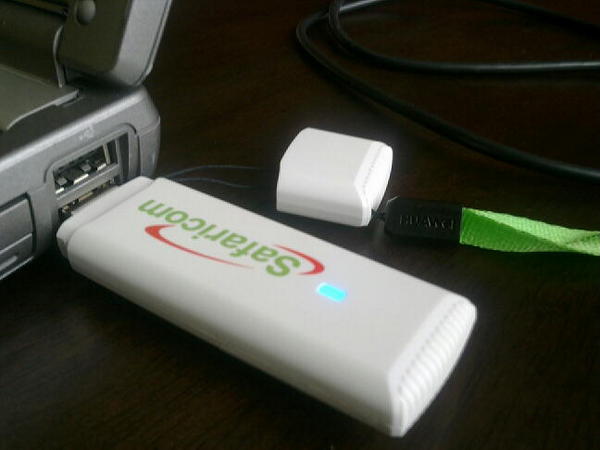
Safaricom has hit out at rival, Airtel, for allegedly courting politicians to back proposed rules seeking to have the former declared a dominant player in the market. The leading mobile operator has also alleged a ploy to remove provisions allowing telco regulator—Communications Authority of Kenya (CA)—to test levels of dominance in a player.
Safaricom said review of the Anti-competitive Behaviour Rules, due to be tabled in the National Assembly, could also do away with retail price controls and bar it from revising charges on data, mobile money and call rates down.
The provisions in Articles 23 and 24 of the Competition Act, if interfered with, Safaricom said, could expose its pricing mechanisms to rivals—Airtel and Orange Telkom. Safaricom chief executive officer Bob Collymore yesterday said Airtel has always wanted the regulator to ensure its retail prices are kept up to enable it to gain more business.
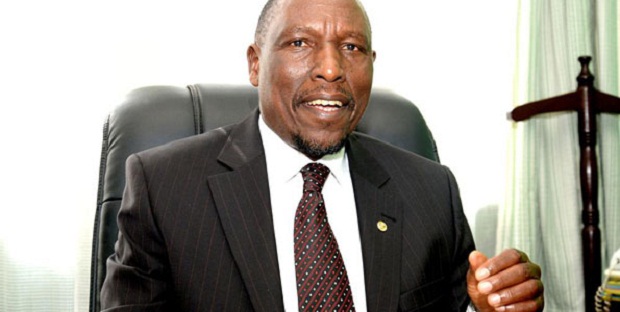
“The new regulations will criminalise us if dominance abuse test is removed. It will be against internationally accepted best practices,” said Collymore at a press briefing to announce the firm’s new data regime in Nairobi. If the new sets of rules are revised and passed by Parliament, Safaricom will automatically be declared a dominant player, hence attracting punitive penalties for abuse of dominance.
Any player in the telecommunications sector can be declared dominant if it exceeds 50 per cent market share, according to Fair Competition Equality in Treatment and Tariff Regulations.
Dominant players are also required to undergo a 45-day tariff change approval by the regulator while other operators are allowed to effect the changes immediately, meaning Safaricom would have to operate in a restricted business environment.
Safaricom warned the fact that Airtel has CA, Ministry of ICT and Senate backing on the debate, amounts to unfair play in the market. “The reviews are inconsistent with competition Act. CA is reading the wish list of our competitor and ignoring our views on the matter,” said Safaricom corporate communications manager Stephen Chege.
The mobile service provider said it has written to CA , expressing displeasure at the way the matter is being handled. On Friday last week, Airtel invited the Senate Committee on ICT to listen to their side of the story. Chairman Mutahi Kagwe said the committee would meet Safaricom and Orange Telkom before declaring its stance on the matter.
The committee would, however, later declare its backing for the rules due for debate in Parliament any time now. Following the development, Safaricom has declined any engagement with politicians over the matter, citing lack of objectivity on their part.
“We have been invited but we are not ready to engage with them (Senators) since they have already met our competitor. It raises a lot of questions,” said Collymore. The operator has, meanwhile, scrapped the night data bundles package and allowed it subscribers to roll over unused bundles until they expire.
A huge void occupies a space where a rooftop cooking competition was taking place at midday on the parking lot of Nairobi’s then glitzy Westgate Mall on September 21, 2013.
On that afternoon, those taking part in the competition—mostly schoolchildren — were among the first casualties of an Al-Shabaab terror attack that killed at least 67 people after a three-day siege.
This section of the upscale shopping mall eventually caved in during the rescue by security agencies.
Now it is a different scene all together. Rusty steel rods protruding from the walls of what used to be the parking lot act as the only reminders of the massacre that took place there.
Workers were mixing concrete in the basement to patch up the sections before the opening.
As this was happening, others were painting walls while inside more workers were rushing to bring in supplies to stores.
In a hall where Diamond Trust bank will have a branch, a supervisor was urging workers to make sure the fittings are right. In a Safaricom shop on the second floor, electricians were testing the lights.
Final test runs were also being carried out on the elevators as others watered the flower beds.
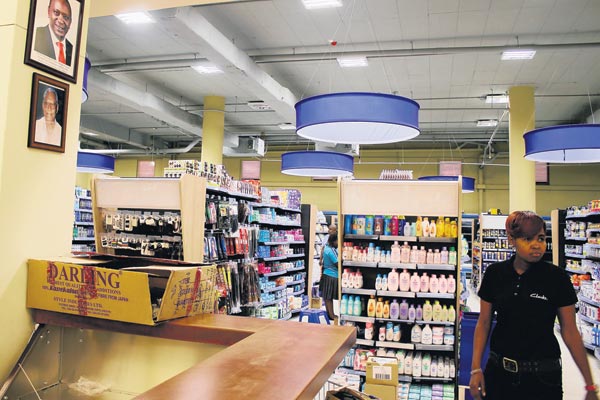
Airtel, Subway Restaurant, Artcaffe, Fed Ex, Barclays and Ashleys and others make up 50 per cent of previous clients and have all set up their shops according to a mall manager.
‘REMAIN EMPTY’
Signs have been put up every few feet warning shoppers not to leave luggage unattended. Motorists will be required to park their cars outside in the parking lot the mall shares with Nakumatt Ukay.
Giant retailer Nakumatt, the mall’s anchor client, has significantly increased its store occupancy space.
“Eventually when things have normalised the mall will be expanded to fill in this void by another four floors. For now it will remain empty. No vehicle will be allowed to access the mall,” said Nakumatt Westgate branch manager David Muturi.
He is one of those affected when the mall was attacked but has decided to go back when it reopens.
Mr Muturi, who helped in evacuating the building during the attack and was standing a few feet away when one of the shoppers was killed, said he is not afraid to return.
“I am not afraid. You can die anywhere, on your way home, on the streets. If you were to die from a terror attack it may find you anywhere even in social places,” he said.
He recalled that a diplomatic police officer who was among the first ones to respond was told to throw his pistol before being shot just a few feet away from the counter where Mr Muturi and other staff were standing.
He said that most of the people who died were those that thought the attackers were ordinary robbers and rushed to look for hiding places instead of searching for exits.
“When they came, a number of people who were outside the supermarket rushed in instead of looking for exit points. For over an hour we tried to get out as many as we could,” he recalled.
For the past two years he has worked in three different stores belonging to the company but decided to come back to his original work station.
“Eighty per cent of the staff that used to work here want to come back,” he adds.
(Q). What are the specifications for building a chicken house?
(A). Assuming you want to construct a structure for deep litter system, consider the floor spacing, which should be 1m2 per four birds.
This will allow free movement of birds and proper distribution of the feeders and drinkers in the unit. Also consider perching space of 16cm and nest space for the communal laying boxes of 2m2 per 100 birds.
For lighting, ensure the roof has translucent sheets evenly spread out above the house to allow you to maximise on natural light to stimulate egg production.
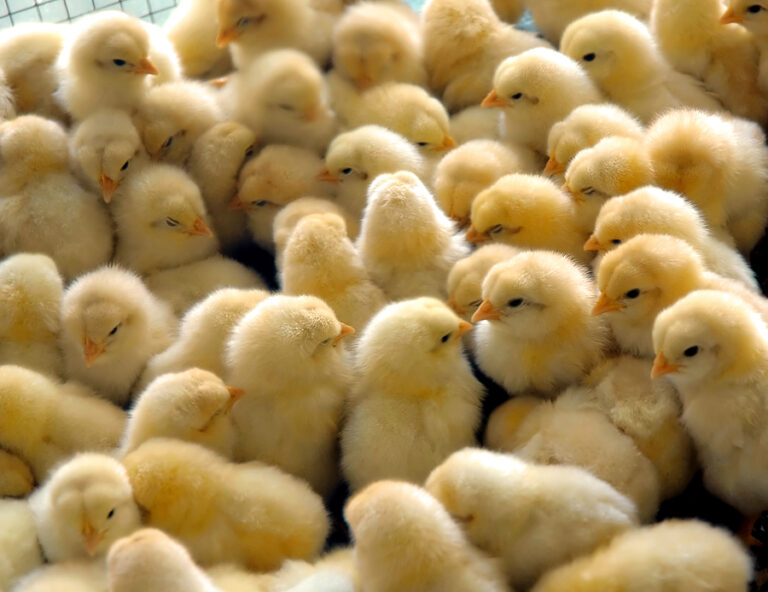
As for hatched chicks, the same room may be used, however, a temporary brooder must be built using cardboards to make a circular ring with floor spacing of 1m2 per 25 chicks.
(Q). How do I handle incubators and rear kienyeji chicks?
(A). Artificial incubators regulate the temperature and humidity automatically once they have been set. From day 1 to 18, the temperature should be set at 37.80c and humidity at 60 to 65 per cent, then three days prior to hatching, adjust the temperature to 37.50c and humidity to 70 to 75 per cent.
Upon hatching of chicks, transfer them to deep litter brooder (use wood shavings as litter material and cardboard to make a circular brooder) and provide supplemental heat using either infra-red bulbs or stove hover for four weeks.
During the first week, provide chick formula (to boost immunity), glucose (for energy) and liquid paraffin (to clear their digestive system).
Feed chick mash for eight weeks at the rate of 35 to 75g/chick/day increasing the amount gradually. Vaccinate the birds against New Castle and Gumburo on day seven and 21, respectively.
Lackluster performance from Africa’s largest stock exchanges hasn’t slowed the continent’s parade of IPOs.
A total of 24 companies debuted on African stock markets in 2014. This year we’ve already seen new listings in Rwanda (Crystal Ventures), Ghana (Samba Foods), and on the Johannesburg Stock Exchange (nine new listings).
Here are ten more to keep your eyes on as we enter the second half of the year.
Photo by Jonathan Ernst
Botswana
Afinitas Limited (IPO Date: launched June 26, 2015 and closes July 17, 2015)
This nascent holding company seeks to raise up to BWP120 million (roughly $12 million) as seed capital for investment in new Africa-focused ventures. The company’s portfolio is yet to be determined but the prospectus indicates particular focus will be on companies operating in the financial services and business process outsourcing sectors.
Botswana Telecommunications Corporation (Estimated IPO Date: before end of 2016)
The oft-delayed privatization of Botswana’s fixed-line telephone operator and leading internet provider will likely see the the government sell a 49% stake in the company on the Botswana Stock Exchange. Forecast to be Botswana’s biggest ever IPO, the deal is pending the formation of a new parastatal that will take over BTC’s fiber-optic network.
Cote d’Ivoire
NSIA Banque-CI (Estimated IPO Date: before end of 2015)
Formerly known as BIAO-Cote d’Ivoire, NSIA Banque-CI is fast-growing Cote d’Ivoire’s third-largest bank and is a subsidiary of the Abidjan-based NSIA Group, one of francophone Africa’s leading insurance companies. NSIA CEO Jean Kacou Diagou has not disclosed specifics of the planned offer but noted that proceeds will be used to finance growth. In 2013, the Ivorian government, which holds 20% of the company said that it intended to float a 10% stake on the Bourse Régionale des Valeurs Mobilières (BRVM).
Ghana
Agricultural Development Bank (IPO Date: launched July 3, 2015 and closes August 21, 2015)
Boasting a network of 78 branches, Agricultural Development Bank is one of Ghana’s largest financial institutions. Its IPO allows the Bank of Ghana to sell its stake in the company and raises an additional $53 million for expansion and IT upgrades. The offer price of GHS2.65 gives it a P/E ratio of 8.6 and a book multiple of 1.2.
Hords Limited (IPO Date: launched June 25, 2015 and closes July 10, 2015)
Established in 1999, Hords produces cocoa powder and a range of other food products, supplements, and detergents. Founder and CEO Harold Otabil is selling a 69.6% stake in the company for roughly $1 million to pay down debt and finance the purchase of a new factory. The company forecasts annualized sales growth of 49% over the next three years.
Intravenous Infusion Limited (Estimated IPO Date: before end of 2015)
Founded in 1969, IIL was Ghana’s first producer of intravenous fluids. The company hopes to raise roughly $4 million on the GAX, the alternative segment of the Ghana Stock Exchange, for the purpose of expanding and modernizing its production facility. In March, the offer was temporarily suspended when the sponsoring broker was found to be unable to fulfill its underwriting obligation. The company is now in process of engaging a new underwriter for the deal.
Kenya
UAP-Old Mutual Kenya (Estimated IPO Date: before end of 2017)
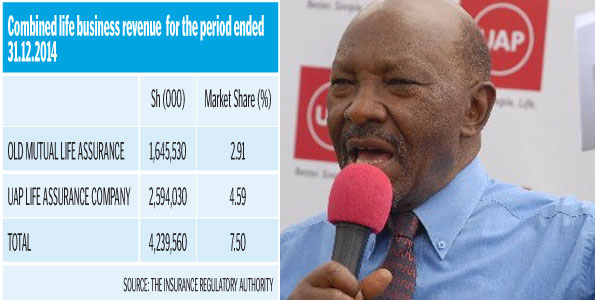
Following a merger that saw Old Mutual take a 60% stake in Kenyan insurer, UAP, the CEO of the new entity, Peter Mwangi, announced that it would seek a listing on the Nairobi Securities Exchange within the next 18-30 months pending a brand consolidation and harmonization of operations. UAP is Kenya’s third-largest property and casualty insurer.
Nigeria
Interswitch Limited (Estimated IPO Date: before end of 2016)
A payment processor and debit card provider, Lagos-based Interswitch is considering a dual IPO on both the London and Nigerian Stock Exchange. The company presently operates in five African countries but is looking for capital to expand elsewhere on the continent. Private equity group, Helios Investment Partners LLP, presently holds a 52% stake in the business.
Tanzania
Dar es Salaam Stock Exchange (Estimated IPO Date: first quarter of 2016)
Following in the footsteps of the Nairobi and Johannesburg stock exchanges, the DSE plans to self-list within the next six months to upgrade its trading infrastructure and raise funds for expansion. The market recorded roughly $250 million worth of trade volume in the first half of 2015.
Yetu Microfinance (IPO Date: launched June 18, 2015 and closes July 30, 2015)
This small micro-lender aims to raise roughly $5 million for expansion and to meet new minimum capitalization requirements. The offer price of TZS500 per stub values the stock at 8x trailing earnings and a price/book ratio of 1.5, and the issuers expect operating profits to double within the next three years.
Kenya Commercial Bank has a strong headroom to finance big projects across East Africa on the back of high capital and liquidity buffers, Global Credit Ratings has said.
The African-focused rating agency assigned an AA rating for KCB in the long term and A1+ in the short term with respect to its ability to bankroll capital-intensive projects, the highest rating for a Kenyan bank accorded by Global Credit Ratings (GCR).
“KCB’s strong market position within the regional banking space makes it well positioned to take advantage of positive growth in infrastructure and other developments within the local economy and within the East African bloc,” GCR said in a statement.
GCR said the ratings reflect KCB’s credit strength and its established regional franchise, dominant market size, profitable business model, prudent capital levels and support from its shareholders.
EXPANSION
KCB Group operates across six East African countries — Kenya, Uganda, Tanzania, Rwanda, Burundi and South Sudan — targeting both retail and wholesale market segments.
“The ratings are a confirmation that we are a true heritage of this region and pledge to continue transforming lives and deepening financial inclusion,” Joshua Oigara, the bank’s group chief executive, said in a statement.
The bank is eying expansion to six new markets in the next decade. These are Ethiopia, Zambia, Somalia, Djibouti, Mozambique and the Democratic Republic of Congo.
At the end of 2014, the bank had a capital adequacy ratio of 21 per cent. Gross non-performing loan ratio declined from 8.1 per cent in 2013 to 6.3 per cent in 2014.
It is possible for farmers to guarantee high economic returns by adding to their stock through artificial insemination. However, due care must be taken. First, the farmer requires to keep a record of when he expects the animal to come on heat. For most animals, this is a range of 18 to 24 days for cows and 19 to 20 days for heifers from the hour the standing heat started. It is advisable to start tracking the animal the day before this expected day to allow for any variation.
The farmer should track the animal’s behaviour to catch the time the animal first shows heat signs and noting this down. Then she should continue tracking the animal to note the time it starts allowing other animals to mount (it stands willingly to be mounted). This is called standing heat.
Any inseminations before this time and up to five hours immediately after this time has little chances of succeeding as the egg will be released about 30 hours later while the sperm will only last for up to 12 hours. Inseminations done between five to 20 hours after beginning of standing heat have the most excellent chances of succeeding. Maximum fertility is assured for only 15 hours during the heat period.
The inseminator when called by the farmer must respond within this time to avoid losing this advantage. As a general rule, animals observed to be on heat in the morning hours should be inseminated late afternoon. Animals observed in the afternoon and evening should be served in the morning hours. Excellent chances of conception will therefore be achieved only if farmers make the extra investment required to catch their animals in standing heat. If this is done the farmer will get to know each animal well and be able to reduce the observation workload with time.
Farmers should know that many animals exhibit heat signs more at night so be ready to check on the animals at least every two hours both day and night so as not to miss the moment For some cows, this checking may be necessary for up to eight days once a year but the income to be made by getting cows pregnant on time is great. Farmers with many animals may want to invest in technologies that assist in making standing heat detection easier such as chin-ball marker, tail chalking and ICT technologies like cameras.
Bleeding may be seen three to five days after the end of heat signs. For majority of cows it means the animal did not conceive (some do conceive despite bleeding). The farmer should use this sign to maintain keenness on the need to monitor the cow closely during the next expected heat. When fertilisation occurs, about 22 per cent of embryos will die.
However, when this happens the farmer will see his cow coming back on heat about 21 days later. These embryo deaths are caused by biological factors beyond the control of anyone such as incompatibility of the egg and semen, hormonal imbalances, if the cow is losing weight, and sub-clinical infections of the reproductive tract. Because of these embryo deaths, farmers can only hope for the best that their animal will not be a victim. If it happens, they should prepare for another insemination. This explains why despite when no problems exist at all, some animals still require more than one insemination.
So if farmers want to be in control of getting their cows pregnant, they should always plan for a minimum of at least two inseminations for their cow so as to be ready with the money, energy and time required to get their cow pregnant within the recommended time of a maximum of 85 days after the previous calving. Research has shown that if you have 100 animals you expect only about 65 to conceive on 1st insemination; the rest will require a 2nd insemination.
It is recommended that animals not conceiving after the 2nd or third insemination should be looked at by a vet to determine if they have a condition that can be treated. If the vet determines the cows are difficult breeders or are infertile, you need to get rid of it as soon as possible as it will be uneconomical to keep it.
Safaricom has announced new data bundle plan that removes the night data bundles and introduced data roll-over
“We have listened to our customers and we have made a relevant response. This is completely a new era in our data segment,” said Safaricom Chief Executive Bob Collimore.
Safaricom has been facing increased complaints by consumers over the validity period of their internet bundles at a time when the government is pushing for the breakup of the company through a dominance bill on its way to Parliament.
Mr Collimore however said the bill will kill innovation and stop expansion.
Customers will be able to extend the validities of their unused data bundles on renewing bundles.
A customer who has bought 7mb daily bundle and uses 5mbs can buy another say one week bundle and carry over the 2mb to join the new validity of seven days.
The new validity period will only apply for those who make renewals before the earlier one expires.
Only a day after grim predictions of financial and social collapse in Greece, a scramble appeared underway to work out the details of a new bailout package to bring the country back from the brink of falling out of the euro.
As details of the new offer emerged, it appeared that Prime Minister Alexis Tsipras was capitulating to demands on harsh austerity terms that he urged his countrymen to reject in the referendum last Sunday, like tax increases and various measures to cut the costs of pension.
But Mr. Tsipras sought a three-year bailout loan totaling 53.5 billion euros (about $59 billion) and asked creditors to commit to discussing restructuring the nation’s massive debt. The amount was more than it would have been without a nationwide banking shutdown that has pummeled the economy. If granted, it would come on top of 240 billion euros in bailout loans Greece has received since 2010. Mr. Tsipras seemed to have gained ground on debt relief, his one bedrock demand. Germany’s finance minister, Wolfgang Schäuble, finally gave a little on that Thursday, admitting that “debt sustainability is not feasible without a haircut,” or write-down of debt, even if he then appeared to backtrack.
Photo
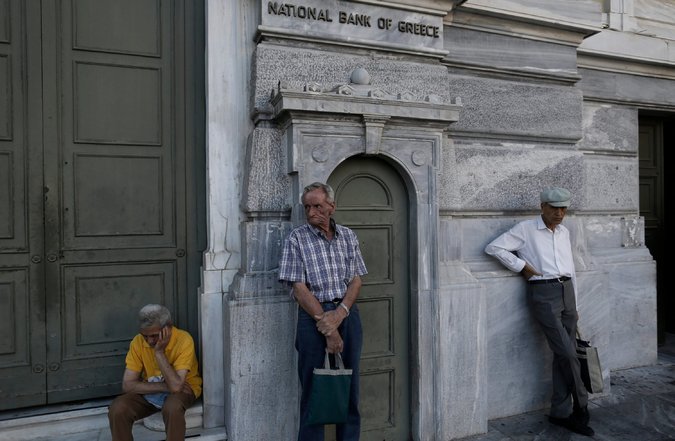
As Greek government officials on Thursday worked on their bailout proposal, residents lined up outside banks in Athens for strictly limited withdraws.Credit Emilio Morenatti/Associated Press
Donald Tusk, a former prime minister of Poland and the president of the European Council, said on Twitter that any “realistic proposal from Athens needs to be matched by realistic proposal from creditors on debt sustainability to create win-win situation.”
Mr. Tsipras went before his cabinet to seek a commitment for reform measures in the new plan that, presumably, went beyond what had been offered previously. He will seek the approval of Parliament on Friday. Much may hinge on his ability to persuade the more radical elements of his Syriza party to support a package that in essence was anathema to many of them last week.
It is still too early to gauge whether this prospective bailout will be any more effective than earlier pacts in balancing the demands of the creditors against some relief from austerity.
What was breathtaking, however, was how in a matter of hours the entire dynamic in the Greek crisis seemed to shift, from apocalyptic warnings of a Zimbabwe in the Balkans, to a fresh optimism that the basics of a deal could be worked out.
The question now is whether that apparent change of heart reflected a new political determination to cut a deal that keeps Greece in the eurozone.
The representatives of Greece’s main creditors — the eurozone nations, the European Central Bank and the International Monetary Fund — are scheduled to review the new proposal in Brussels on Friday. Approval will also require an assessment by the 19 finance ministers of eurozone countries. That meeting, of the so-called Eurogroup, has been scheduled for Saturday afternoon in Brussels.
One analyst said he thought the offer would be well received by creditors.
“The package takes a very substantial step in the right direction, and it should move us closer to a deal,” said Mujtaba Rahman, the Europe director for the Eurasia Group, a political risk consultancy, shortly after reading one version of the Greek offer translated into English.
“The question now is whether the Greeks are actually going to implement some of the measures over the course of the weekend by putting them before their Parliament as German officials seems to be demanding,” he added.
Prospects for a deal improved through the day as a procession of European leaders came around to Mr. Tsipras’s conviction that pure austerity measures were insufficient in their own right and had to be accompanied by a commitment to reduce the burden of Greece’s stupendous debt.
Greece received vital political support and technical assistance from France, help that highlighted the contrasting approaches being taken by the two leading powers in the European Union. Germany has played the bad cop, standing firm against concessions to Greece and, in Mr. Schäuble’s case, openly doubting that the country really belonged in the eurozone. France has thrown itself into the task of finding a deal.
The French assistance appeared to be an effort to make sure the Greek proposal, submitted just before a midnight deadline, would be as thorough and salable as possible to Greece’s creditors and would smooth the way for a compromise on a new bailout package to keep Greece afloat financially and inside the euro.
“There is a group of people who have been sent to help the Greeks, to try to transform words into action,” said a French government official with knowledge of the effort.
France has been the most steadfast major nation in Europe supporting Greece ever since Mr. Tsipras was ushered in to power in January on a mandate to repudiate austerity. Paris has been particularly outspoken in recent days about the need for a compromise that would help Greece and hold the eurozone together.
By contrast, Germany’s chancellor, Angela Merkel, has shown little inclination to compromise on demands that Greece take actions to show that it can be fiscally responsible before even considering new bailout aid.
Neither French nor German officials would discuss France’s involvement in the Greek proposal in any depth. But the development raised questions about whether France and Germany have split heading into the final negotiations or whether there is a back-room understanding between Paris and Berlin.
Mr. Tsipras and his team spent the day in meetings as they put together a proposal and sought to ensure domestic political support for it.
Ms. Merkel, speaking later in Sarajevo, reiterated her opposition to actually writing off some of Greece’s debt, though she was less definitive about steps like reducing interest rates or extending the payment period as ways of helping Greece manage its indebtedness.
Germany has taken an increasingly hard line toward Greece since the nation voted no on Sunday to an earlier bailout program in a referendum that sent political shivers across Europe. In the wake of the chaos sparked by the vote, Ms. Merkel flew Monday to Paris to join President François Hollande of France to discuss what to do next with Greece.
The situation has put Mrs. Merkel into the toughest position of her career. She has been forced to balance an angry German public, which sees no reason to give Greece billions of additional bailout money or to write down its debt, against the danger of a Greek exit from the eurozone.
Greece is a tiny country with limited economic impact on Europe, but considerable strategic value. European political experts had wondered throughout the week whether Ms. Merkel, as the leader of the most powerful country in Europe, would stand for becoming the first postwar European leader to countenance the first step back in Europe’s march toward greater integration.
They also wondered if she was willing to risk the prospect of a failed, embittered state within the European Union and NATO, an open wound in Europe’s southern and eastern flank that would be an open invitation to Moscow to exploit already inflamed division within the European Union.
When Greece in 2012 was the epicenter of the last flare-up in Europe’s long-running debt crisis, many French officials steadfastly maintained that the eurozone was fundamentally a historic project, and that it should not risk being broken up by the departure of Greece, nor of any other euro member country.
That sentiment was renewed by Prime Minister Manuel Valls of France on Wednesday. “France refuses that Greece leaves the eurozone in the name of our position and our commitments,” he told lawmakers in the National Assembly on Wednesday in a speech that was broadcast live on Greek television. To secure a deal, though, he said Greece needed to pledge to modernize its economy and overhaul pensions.
He also suggested that Mr. Tsipras’s most pivotal request — a program to make Greece’s mountainous debt more sustainable — be taken seriously by other European countries. Until recently, that has been nearly a taboo idea in Europe’s halls of power, since European taxpayers are currently on the hook if Greece defaults on its debts.
Kenyans have for decades preferred investment groups (chamas) as a way of saving and consolidating their money in order to access investments that would otherwise be out of reach for individuals. One of the most talked about success stories is Transcentury, an investment group started as a chama in 1995 at a golf course in Nairobi and which has grown by leaps and bounds since.
Mwai Kihu, a former planning manager at Sameer Africa, is among Kenyans who believe in the potential of investment firms— so much so that he quit his stable job in the tyre-making firm to venture out. His gamble has paid off with his investment group’s (Amalgamated Chama Limited) latest conquest being a Sh15 million buyout in April of Ethical Fashion Artisans, a textile company set up by the United Nations in 2009.
Amalgamated Chama Limited has diversified investments in Home Afrika,Metropol Limited,Unaitas ,Herbal Garden,Investq,Ethical fashion and Envirosafe Limited
“I had reached a point in my life where the need for self-realisation was strong,” Mr Kihu, 63, told Business Daily at his Uniafric House offices along Koinange Street.
“I wanted to test new waters in the world of business. My last pay slip was in October 1999.”
Years after resigning from Sameer, Mr Kihu had still not found his bearing in business. His fortunes however turned in 2007 when micro-lenders were trying to gain a foothold in the Kenyan market. These saccos were at the time looking for individuals and firms to offer insights on setting up as well as commercial advisory services.
Mr Kihu, together with a business partner Patrick Kariuki, formed the Kenya Association of Investment Group. The new company began offering training and management skills to saccos on how to sell their products in the market.
“We basically acted as a link between the saccos and customers, informing the latter what they market required including buyout opportunities for them,” said Mr Kihu. Some of his clients advised him to set up a business that would specifically focus on raising capital and target investments and buyouts in profitable venture and share the returns.
He heeded their advice and formed the Amalgamated Chama Limited (ACL) together with four other directors— Patrick Kariuki, Sundeep Raishura, Josephine Chepkoech and David Owino. Mr Kihu was (and still is) the chama’s chairman.
The founding members were required to raise a Sh1 million capital that would help them raise the fund for the initial investments.
‘‘We had two types of members that included other investment groups and individuals. There were no restrictions on members’ nationality,” said Mr Kihu. ACL has over the past seven years grown its portfolio to billions of shillings with most of their investments being in real estate as well as in the manufacturing sector.
Their latest acquisition Ethical Fashion Artisans exemplifies the group’s insatiable appetite for investment. The company was founded in 2009 in Industrial Area by the United Nations, through its agency International Trade Centre.
Ethical Fashion started as a women empowerment firm targeting women in the places such as Mukuru kwa Njenga, Kibera, Kawangware and Laikipia where they made beadworks and leather accessories for export.
The women, who number about 120, would also receive designs and material from international fashion labels and assemble them using local accessories and have them sold abroad for a commission.
Some of these international brands include Adidas, United Arrows, Manor, Sass and Bide, Lancaster, Oskle, Chan Luu among several others. Ethical Fashion’s new owners have since shifted the factory from the Industrial area to the Export Processing Zone premises in Kitengela, retaining all its the employees in the process.
“The beauty of this investment is that it is an impact-based investment programme. At the very end of the value chain, you are involving and benefitting members of the community but not just ACL owners,” said Mr Kihu.
In 2013, the company reported revenues of Sh71.8 million, a 47.7 per cent increase from the previous year’s Sh48.6 million. In November last year, ACL acquired a 30 per cent stake in Envirosafe Limited, a waste management company based in Kitengela.
Envirosafe collects waste from hospitals, pesticide firm and other manufacturing companies and disposes them in an environmentally safe way. Some of company’s clients are British American Tobacco (BAT) and Unilever.
“The company was previously co-owned by a South African and Zimbabwean investors. We bought our stake from the South African,” said Mr Kihu. The company, he adds, is currently in the red but their aim is to have it achieve portability this year even as they plan to expand regionally.
ACL is also currently eyeing investments in the hospitality industry in Loitokitok, Kajiado where they own 600 acres of land. Mr Kihu says they plan setting up a resort on the land, but did not give timelines and cost for the project saying it was still in the planning phase. On money and investments, Mr Mwai says he prefers passive investments and is averse to startups.
“Nearly all startups die in the formative years. I prefer to buy an existing company and if it is doing well, leave it to the management to run it,’’ he said.