Home Blog Page 2250

MP forgives man charged of robbing him at gunpoint

0

Makueni MP Daniel Maanzo has forgiven a suspected gangster accused of holding his family hostage and robbing him at gunpoint during a raid in his Nairobi residence last year. The MP asked the prosecution to withdraw a charge against Samuel Otieno, alias Tabu Ley, which was pending before a magistrate at the Milimani Law Courts.

“He spared my life and I want to extend the same kindness to him. I heard him tell the rest of his accomplices not to kill me even after one of them said I should be finished, and in the spirit of forgiveness, my family and I have chosen to drop the pursuit of this case,” the politician told the court.

Armed gangsters invaded the MP’s home in the Kisembe Kipevu area of Lang’ata on the night of February 19, 2014 at about 3.30 am while the MP, his wife, Catherine Mutheu, and a house-help, Patricia Muoki, were asleep but were awoken by “movement” inside the master bedroom. The suspects had reportedly scaled a perimeter wall before accosting the family, police said.

“I have forgiven you, go and do something better with your life, but if you get involved in robbery again, please do spare lives as you spared mine,” the MP told the suspect in court before he crossed the floor of the courtroom to shake hands with his assailant.

Positively Identified

He said he had positively identified the man as being among the four suspects who stormed his house. The thugs demanded a gun from the MP and threatened to shoot him if he failed to hand over the firearm, a report in the court file states.

“They forced the househelp into her employer’s bedroom during the robbery, the report states further. Mr Maanzo was injured in the forehead when one of the thugs, who wore a mask, hit him with a gun butt, while his wife was injured in the back of her head.

The couple was later admitted to Nairobi Hospital, where they were treated and discharged the next day. On May 28, one of the suspects, Grace Adhiambo Otieno, was traced to Racecourse in Dagoretti. She was found using one of the mobile phones stolen from the MP’s house and after her arrest she confessed to having bought the phone from Mr Otieno.

She was charged with the offence of handling stolen property and robbery with violence but later died in a shoot-out after her release on bail when police confronted a gang suspected to have participated in the robbery.

On May 29, Administration Police officers, acting on a tip-off, arrested Mr Otieno, who had been identified by Ms Adhiambo “as the one who sold her the mobile phone stolen at the MP’s home.”

He had been charged with robbing the MP of Sh110,000 in cash, a gold decoration of the Elder of the Burning Spear award valued at Sh100,000, a Pentax digital camera valued at Sh25,000 and spare car keys valued at Sh5,000.

Mr Otieno faced additional charges of robbing the MP’s wife of assorted jewellery and other valuables amounting to Sh100,000, and the househelp of a mobile phone valued at Sh2,500.

Asked whether he had been threatened or coerced to drop the case, the MP, a lawyer by profession, said he had chosen not to pursue the matter on his “own volition”.

However, the prosecution asked that the case be withdrawn under Section 87 (a) of the Penal Code, which allows rearrest and subsequent charging if fresh evidence emerges against the suspect.

Uchumi made a Sh. 459 million loss in the past two years but concealed it

1

Accounting reports by London-based Exotix and Kenya’s Equity Investment Bank have come out to reveal that Uchumi Supermarkets made a loss of Sh. 459 million in the 2013 and 2014 financial years. However, uchumi Supermarkets, through its sacked CEO Jonathan Ciano used the revaluation of its properties to conceal these losses. “After stripping out the revaluations, we calculate that Uchumi would have reported a Sh123 million loss in 2013 against the Sh357 million profit it reported and a Sh336 million loss in 2014 compared to the Sh384 million profit it declared,” Exotic analysts say, adding that they expect the retail chain to make a Sh413 million loss because of an even weaker top-line performance and increasing overhead costs.

The Exotix says that Uchumi’s decision to include the revaluations as part of its income had the effect of obscuring the true status of its financial position — moving it from loss-making to profitability.

Though a normal accounting practice, the International Accounting Standards (IAS) require that revaluation for companies that are not in the property business and which are not tax deductible, flow through the income statement after the net income.

Uchumi reported Sh14.6 billion sales for 2014 and Sh14.27 billion in 2013, a marginal 0.6 per cent increase while loyalty points stood at Sh92.8 million in 2014 down from Sh98.04 million a year earlier — indicating a decline in purchases from the regular customers.

Total revenues were Sh14.46 billion in 2014 from Sh14.37 billion a year earlier, a 10.6 per cent increase.

The information memorandum on the November 2014 rights issue that raised Sh896 million indicated that Uchumi had four registered properties, including the parcels of land where its Ngong Hyper and Langata Hyper branches are located and two parcels of land along Thika Superhighway.

The parcels of land, totalling 20 acres, are held under Uchumi’s property management subsidiary Kasarani Mall Limited and were valued at Sh2.2 billion at the end of June 2014.

The retailer has since reported a half-year loss of Sh262.3 million for the six months to December 2014 compared to a net profit of Sh106.9 million recorded for a corresponding period a year earlier.

Uchumi directors denied any accounting irregularity, insisting that everything was above board. “Uchumi Board did not overstate its profits, based on revaluation of its property holdings. International Financial Standards require a company to state the true value of its property when reporting its finances. We therefore complied with the requirement,” Uchumi chairperson Khadija Mire said.

The accounting revelation comes a week after the Uchumi board sacked Mr Ciano and Chadwick Omondi Okumu, the chief finance officer, and suspended human resource manager Michael Kibe.

How to convince anyone of anything in 10 seconds

0

You’re on the most important elevator ride of your life. You have 10 seconds to pitch — the classic “elevator pitch.”

Love or hate. Money or despair. And you may never get this chance again. As PM Dawn says, “I feel for you. I really do.”

There are books about this. But don’t waste your time. They are all garbage.

I’ve been on both sides of this equation. I’ve had people pitching me.

But mostly, I’ve been scared and desperate and afraid to ask someone to give me, want me, love me, all in the space of an elevator ride or in the time it takes one to ride an elevator.

Perhaps the hardest thing for me was when I was doing my “3am” web series for HBO.

I had to walk up to random strangers at 3 o’clock in the morning on the streets of New York and persuade them within five seconds to spill their most intimate secrets to me rather than kill me.

Not quite an elevator pitch but the same basic idea. I had a lot of practice. I probably approached more than 3,000 people cold.

In some cases people tried to kill me. In one case I was chased. In other cases people opened up their hearts, and I am infinitely grateful to them.

The ideas below have worked for me in the hundreds of times I have had to be persuasive. Either in writing, or in person. In business and in friendships and in love. I hope variations on it can work for you. You decide.

a) WHO ARE YOU?

People want to know they are talking to a good, honest, reliable person whom they can trust and perhaps even like, or love.

Yes, love.

They won’t love you by looking at your resume.

You have to do method acting. Imagine what your body would feel like if they already said “Yes” even before you open your mouth.

You would be standing up straight, smiling, palms open, ready to close the deal. You have to method act at the beginning of your pitch.

If you are slouched and your head is sticking out, then your brain is not as well connected to your nervous system and you will not be in “flow.”

I can drag out the science here, but this is a Facebook status update and not a peer-reviewed scientific paper for the Justice League of America.

The reality is: when you’re slouched over, not only are you not using the full potential of your brain, but you look untrustworthy.

b) RELAX

Think about how you breathe when you are anxious and nervous.

I will tell you how I breathe: short, shallow breaths in my upper chest.

So do the reverse before a 10-second pitch.

Breathe deep and in your stomach. Even three deep breaths in the stomach (and when you exhale try to imagine your stomach almost hitting your back) has been shown to totally relax the mind and body.

People sense this. Again, this builds trust and relaxes you.

Now, even though you haven’t said a single word, you’ve probably done the two most important things for convincing someone.

c) UHHH. YEAH. UHHH. MMMM-HMMM. UH-HUH

I have a hard time with this. It seems natural to say, “yup” or “right” or “uh-huh” or whatever.

But here are the facts (and, again, there have been studies on this): People perceive you as stupid when you do this.

Just keep quiet when someone is talking.

Then, when someone is done speaking, wait for two seconds before responding. They might not be done yet. And it gives you time to think of a response. If you are thinking of a response while they are talking, then you aren’t listening to them.

People unconsciously know when you are not listening to them. Then they say No to you.

d) THE 6 U’s

FINALLY, now we’re getting to the heart of the matter. THE ACTUAL NUTS AND BOLTS OF PERSUASION

This is not BS. This is not a way to persuade someone to do something they don’t want to do. This is a way for you to consolidate your vision into a sentence or two and then express it in a clear manner.

This is the way to bond and connect with another person’s needs instead of just your own pathetic wants.

You can use this in an elevator pitch, on a date, with your children, on your mother, whatever. But it works.

Think about these things when talking:

  1. Urgency


    Why the problem you solve is URGENT to your demographic. For example: “I can never get a cab when it rains!”
  2. Unique


    Why is your solution unique: “We aggregate hundreds of car services into one simple app. Nobody else does this.”
  3. Useful


    Why is your solution useful to the lives of the people you plan on selling to or deliver your message to: “We get you there on time.”
  4. Ultra-specific


    This shows there is no fluff: “Our app knows where you are. Your credit card is pre-loaded. You hit a button and a car shows up in 4-5 minutes.”

Of course the example I give is for Uber but you can throw in any other example you want.

I’ll throw in a fifth “U”
  5. User-friendly 
    In other words, make it as easy as possible for someone to say “yes.” Like a money-back guarantee, for instance. Or a giveaway. Or higher equity. Or testimonials from people you both know. Etc. Oh! And before I forget, a sixth U
  6. Unquestionable proof

    This can be in the form of profits. Or some measurable statistic. Or testimonials. Or a good wingman. Whatever it takes.

e) DESIRE

A lot of people say you have to satisfy the desires of the other person for them to say “yes.”

As much as we would like to think otherwise, people primarily act out of self-interest.

The less they know you, the more they will act of self-interest because to do otherwise could potentially put them in danger. We all know that kids should not take candy from strangers.

In an elevator pitch, the investor is the kid, what you are asking is the candy, and you are the stranger. So their gut reflex, unless you make the candy super-sweet, is to say “no.”

So make sure you make your candy sweeter by sprinkling in their desires.

And what are their desires?

  • recognition
  • rejuvenation
  • relaxation
  • relief
  • religion
  • remuneration
  • results
  • revenge
  • romance

If you can help them solve these URGENT problems or desires, then you they are more likely to say “yes” to you.

I don’t know what you are selling, but hopefully it’s not to satisfy their desire for revenge. But if it is, don’t do anything violent.

The one time I had to sell romance on an elevator, I had to do three things: tell her life would be OK, make sure I knew her address and last name, and send her a teddy bear and flowers the next day.

But that’s for another story.

BUT FIRST

f) OBJECTIONS

Everyone is going to have gut objections.

They’ve been approached thousands of times before.

Do you know how many times I’ve been approached to have sex in an elevator?

None.

But probably many others have, and you have to put up with their nonstop objection.

I will list them and then give solutions in parentheses:

  • No time
    (That’s OK. It’s on an elevator. So they have elevator-length time. The key here is to stand straight and act like someone who deserves to be listened to.)
  • No interest
    (You solve this by accurately expressing the urgency of the problem.)
  • No perceived difference
    (But you have your unique difference ready to go.)
  • No belief
    (Offer unquestionable proof that this works.)
  • No decision
    (Make their decision as user-friendly as possible.)

– – –

With great power comes great responsibility.

Most people don’t have the power of persuasion. They mess up on each of the points I have outlined above. It takes practice and hard work.

But this is not just about persuasion. It is about connection.

It is about two people, who are probably strangers, reaching through physical and mental space and trying to understand each other and reach common ground.

It is not about money. It is not about the idea. It is not about yes or no.

It is about two people falling in love.

Upcoming Event: Young Nairobi Stock Exchange Investors

Event: Monthly Group Discussion Meeting

Date: Sunday 28th June 2015;

Time: 15.00 – 18.00

Venue: Norwich Union House, Mama Ngina St, 4th Floor


Discussion Topics;
1. Scrapping of 5% CGT in favour of 0.3% WHT; a blessing or devil in disguise for investors? How about speculators & traders? We’ll do the practical math

2. Raising of core capital from Kes. 2B to Kes. 5B; the pros and cons. Its effect on Saccos that had listing plans; case in point; UNAITAS

3. Stock market reaction to the 2015/2016 budget; is it the end of the short bear or is it a mini bull-trap? Analysis of the NASI & N20I indices since the budget was read

4. Centum; the FY Results; effect on share price both short and long term

5. Manipulation of financial reports by companies and how not to be fooled; case in point being BRITAM, and lately Kirubi’s HACO Industries

6. NSE Counter; to invest or to ignore in this least talked about counter at the market

7. Alternative investment options during a bear run; Bonds or Treasury Bills? Definition and how to go about each

8. Uchumi, KQ, Mumias…what next? Is there hope? Will Jamii Bora finally get Uchumi out of the woods now that they are the majority shareholder? Will KQ become the Pride of Africa again? Is Mumias Sugar Company worthy all these efforts or the government should let the dead rest in peace?

9. Williamson Tea – why the surge in price despite the loss in earnings?

10. Any questions? (The ones below have been common esp from the new members);
– How to activate a dormant CDS account
– Requirements when buying shares; how to open a CDS account, where to open one and where not to open one. And of course, what on earth is a CDS account?
– What happens to shareholders if a company collapses?
– What happens to shareholders of OTC shares if the company doesn’t list?

11. Any other questions from the audience?

If you are unable to attend, you can post your question in the comments section below.

Who can attend: Anyone; feel free to invite your friends.
Entrance Fee: Kes. 100 (payable after discussions)
Dress Code: Your dress your choice…

Contact Person: George Mangs
Contact Tel: 0720 793983

You can join the group here

Ndindi Nyoro: National Bank of Kenya is burning

0

It was quite obvious that the National Bank of Kenya had to be the next on the news after Uchumi Supermarkets – and in the news for all the wrong reasons!

However you look at it, the problem at the bank begins with the CEO seat and the choice of appointment that brought in the current CEO Mr. Munir Mohammed. Was this choice objective?

On one hand, the board may come out guns blazing in defense of the bank and the CEO in the face of mistreatment of staff allegations and illegal monetary dealings. But how many of these board directors are independent? How many have arrived at the conclusion that everything at National bank is honky dory independently, without selfish interests? How independent are they?

The questions though do not just end here! We must ask why a CEO can find it right to carry their entire clan to the company and, or companies they are serving. For instance, if you are a CEO or Chairman to the Board, does that elongate your call to serving ‘your people’ or serving the institution you have been elected to serve?

How can a company with such an asset base be posting mediocre results in such a booming financial Industry?? If this is answered, National Bank of Kenya will start to crawl forward. But from the Investor perspective, my expectations from National Bank of Kenya are at their lowest level at the moment.

If the government held on to Safaricom in terms of Management and Board, would we be getting the kind of value from taxes and dividends from the company as Tax payers? NSSF should give some autonomy to the companies they own or have stakes in. Further, the government must also do the same if our Public Investments are to be expected to bear fruit.

As of now cronyism is the top qualification for some of these outfits, of which National Bank is threatening to evolve into.

Mistreatment of staff and illegal money transactions at National Bank are untrue, says board

0

Six board members of the National Bank of Kenya on Tuesday stood behind the bank’s chief executive, Mr Munir Ahmed, following allegations of mismanagement and questionable business dealings by the lender.

Led by Chairman Mohammed Hassan, the panel sought to dismiss the various claims around the five-year transformation strategy by the bank, which has raised questions regarding heightened staff exits and the sale of bank assets, among others.

“Anyone making these allegations is malicious. We take matters of characters very seriously and will consider appropriate legal action. We are running a change process and this is expected,” said Mr Hassan.

The board — whose members included Cotu Secretary General Francis Atwoli and Ms Beatrice Gathirwa, who represented the Treasury — said allegations of staff mistreatment, questionable money transfers and conflict of interest in the bank, were malicious, untrue and unfortunate.

A statement later sent to newsrooms, however, said unnamed persons were to blame for the stories, hinting at a possible internal discomfort in the bank’s transformation agenda.

Mr Atwoli, who chairs the human resources board committee defended the staff exit modalities as fair and wondered why no one had taken the bank to court over mistreatment or unfair dismissal.

How a Kenyan couple team built a promising food business

0

Eight years ago Kenyan accountant Wachira Kariuki quit his career to basically buy and sell milk. But he became frustrated with being a “middle man” so in 2009 took a loan, leased an old facility and started processing milk. Kariuki was later able to secure financing to outright buy the facility, located 50km from the capital Nairobi.

Today Kariuki’s company, Classic Foods, is involved in processing a wide range of products, including pasteurised milk, yogurt, maize flour, honey, tomato sauce, juices and animal feeds. Over the next decade, he hopes to build a US$100m business. And the only things that could stop his ambition are laziness and lack of focus, says the Classic Foods CEO.

“The potential in the food industry is unlimited. People will never stop eating,” he says. “If I stay focused the way I am, I don’t see why it shouldn’t be a $100m business in a few years.”

Husband and wife duo

Starting the business was a big risk for Kariuki and his wife Stella Kimemia, who is the managing director. They put up their family home as collateral for credit.

“Of course you can’t sleep when you do that. We were so determined not to fail. When you know that you will lose your house if you don’t repay a debt, it makes you responsible. We had to prioritise [paying back] that debt,” says Kariuki.

The couple have thrived by combining their strengths. Kariuki focuses on strategic decisions and engineering, while Stella handles daily operations.

“She is very good at counting every coin. I might ignore chasing after a Ksh.1,000 payment and focus on Ksh.10,000, for example, but she will multi-task and chase both,” he says. “So we have done well in collecting payments which is a key reason businesses fail. Quite often the entrepreneur becomes excited that they have sold a product, then become careless and don’t follow up on payments.”

Although traditionally dominated by multinationals, a growing number of smaller, home-grown manufacturers like Classic Foods are breaking into Africa’s lucrative food processing industry.

According to a World Bank report, Africa’s farmers and agribusinesses could create a trillion-dollar food market by 2030 if challenges in the industry are solved.

In fact some of these challenges motivated Kariuki to venture into the food business. He grew up in central Kenya and his family sold produce such as milk.

“We would milk the cows at 3am only to get to the dairy and find out that they won’t buy that day because there is a glut. Sometimes we’d be told to take the milk back home, yet that was an income the family needed. It occurred to me there was a need to liberate the milk industry. So the dream was installed by that pain of having to look for alternative markets to sell our milk,” says Kariuki.

Developing its supply chain

Classic Foods products are available across Kenya from supermarkets to remote mom and pop stores. The firm has expanded organically in its pursuit to solve challenges in the food supply chain. For example, it started milling animal feeds for sale to farmers from which it buys milk. This helped Classic Foods ensure a steady supply of high-quality milk.

But then maize is a raw material in processing animal feeds, so it began milling maize flour for human consumption. When it encountered shortages in maize supply, it started a non-profit arm called Enhance Business Solutions. It has already trained over 20,000 farmers in the cultivation of various crops, including fruits which are used by Classic Foods to make juices. And it plans to train 100,000 more over the next five years to ensure constant supply of the raw materials needed for its expansion.

Tiresome journey

Despite the accomplishments, Kariuki says it has often been a “painful” and “very tiresome” journey. “You struggle in the early stages. You make errors in judgment. You think that you’ll make a 100% profit, [then] you realise that you are making a 100% loss.”

These days the challenges the business faces include financing, keeping up with changing legislation on food safety, and fighting counterfeits. But Kariuki is undeterred by the rising competition in the food industry.

“Today you can find a burger for US$1 in one outlet, and one for $10 at a different outlet. Why are people spending nine times more on the same food? People are willing to pay if you produce quality. So we will continue investing, and enhancing our quality.”

Gap between graduate skills and what is required by industry

0

Developing Africa’s human capital is critical to the continent’s future growth given it has one of the world’s biggest youth demographics. Although enrollment to schools and higher learning institutions in Africa is rising, the quality of education offered is still low. Employers often complain of half-baked graduates, whilst young people struggle to find jobs.

Dubai-based Edulink Consultants recently invested US$3m in a new college in Kenya. Edulink chief operating officer, Dr Raj Gill, talks to How we made it in Africa about what Edulink International College brings to the Kenyan education sector and how to deal with Africa’s education challenges and unemployment.

What gaps have you spotted in Africa’s education sector and how big a problem will this be for the continent’s future growth?

There are many gaps, mainly the mismatch of what is being produced by the various institutions and what is required by industry, commerce and other businesses. Also, when we set up and were looking for staff, we found many candidates who had impressive qualifications and resumes, but had difficulty in explaining what they could actually do and how they could contribute.

Without a quality-educated workforce, there will be very little growth and it will be limited and short lived. To have sustainable levels of growth there must be a constant supply of a good, educated workforce that will be required at all levels, in the crafts, vocational and professional fields. These depend upon each other; a shortfall in one will hamper the capabilities of others.

Just obtaining a qualification will not be enough, they have to gain good experience and also be life long learners. The rapid changes in information and communications technology (ICT) and manufacturing technologies will drive major developments in all fields of business and will continue to form the bedrock of development for at least the next 20 years.

You recently opened Edulink International College in Kenya. How will your offering be different from what is already available in the market?

We believe that education is one of the most important pillars in wealth creation for nations to lift people into middle-income levels. Our aim is to produce graduates ready for work, hence our motto “education that works”. We want to produce lifelong learners who have the core skills and competencies in the fields they will choose. We believe that ICT is now the general-purpose toolkit for all professions and this will form a core skill in everything we do. Africa is no different from other parts of the world.

If the continent builds its infrastructure and communications base, supported by a well-educated workforce, then the recipe for development will largely have been put together and foreign investment inflows will increase. This is exactly what happened in the South Asian tiger economies, and China, and is rapidly taking shape in Brazil and India.

Describe the challenges you face in your Kenyan operations?

Lack of appropriate qualified staff, especially teaching staff, that will be able to meet the new regulations that have come into force for higher education institutions is a challenge. Other hurdles include non-streamlined procedures for business set up, and the length of time it takes to obtain approvals. Kenya needs to improve transparency in its processes and provide “one stop” services for investors from overseas who feel overwhelmed by some very archaic processes and some deep-rooted practices that belong in the last century.

Do you have plans to set up more training institutions in Africa?

Yes we are always exploring, but the business climate has to be suitable. Our decisions to start other institutions will be based on regulations, the business climate, the availability of a suitably qualified workforce, and of course how quickly we can set up an organically-grown locally sustainable business.

There are not enough jobs in Africa for the continent’s burgeoning youth population. What next after they get the best training and skills?

This is the classic chicken and egg scenario. I believe that in Kenya, and many other African countries, the flow of investment for industrial development has already started. This is being largely driven by local demand [as] the population is moving towards a middle-income economy. There needs to be a parallel process of improving infrastructure, better education, streamlined business start up procedures, and a serious effort to eliminate graft. Additionally, confidence building and the security situation needs to be better addressed.

The training and skills developments will also form a part of this concurrent process and there will be a lot of fine-tuning required for the different strands along the way. Adjusting one strand will require additional inputs in many other inter-connected areas. This is a continuous process. Building of confidence for investors and public-private partnerships will have to [be] addressed. Government can show the way by aligning all their processes, but they cannot undertake the task of the private sector, nor can any significant progress be made without having seamless processes in the various government departments that are charged with nation building.

Innovation Challenge for Kenya’s High School Students Unveiled

1

NIC Bank has partnered with Junior Achievement (JA) Kenya and Craft Silicon Foundation to launch an innovation award category in the annual secondary schools’ Student Entrepreneurship Competitions.

Dubbed the High School Innovation Challenge, the competition will encourage students who are members of JA clubs in over 300 high school in the country to develop transformational innovative solutions that will affect positive change in the financial sector to benefit individuals and communities across the nation.

“As an innovative Bank we are constantly working with various partners to come up with solutions to reach out to all our customers, including the youth. We believe the youth are a key segment in our society and we need to ensure they are well equipped with the right tools to empower them in all aspects of their lives, including finances,” said NIC Bank Group MD John Gachora.

Junior Achievement Kenya Executive Director John Wali, noted the initiative was an opportunity for the participating youth to play a role in shaping their future and that of their peers by coming up with innovative ways to educate on something noble as personal finance.

“This programme presents the students with a platform to influence financial literacy in their community. It offers participating students an opportunity to engage in the development process and bring their ideas to life by finding day-to-day solutions,” said Mr Wali.

Craft Silicon Foundation CEO Mrs Priya Budhabhatti acknowledges the partnership between NIC Bank and Junior Achievement Kenya in this productive initiative of mentoring students and the youth particularly in technology and financial sectors.

“As a technology company and Foundation we are cognizant of the fact that ICT has become the differentiating factor locally and globally in terms of social economic development and we have taken the bold initiative of extending the opportunity to not only the students in formal education, but also the youths in the informal settlements who might not afford post-secondary education,” said Mrs Priya.

She noted the foundation had rolled out a flagship project offering free computer education program. This has positively impact the lives of over 7000 students across seven slums in Nairobi. “We are happy to be part of this partnership as more students shall benefit from our technical experience. We can clearly affirm that the future is always bright for those who embrace innovation,”

This partnership is meant to harness raw talent and spur innovation. As experts in our respective fields – technology sector, financial sector and mentorship – the three partners have the opportunity to plant the seed of innovation and reap rewards in the future.

The three partners will later in the year launch a University Boot Camp where top students, totaling 200, from 14 campuses will participate in a tech challenge to find solutions in the financial sector using technology

How to inspect a used car – illustrated used car checklist

0
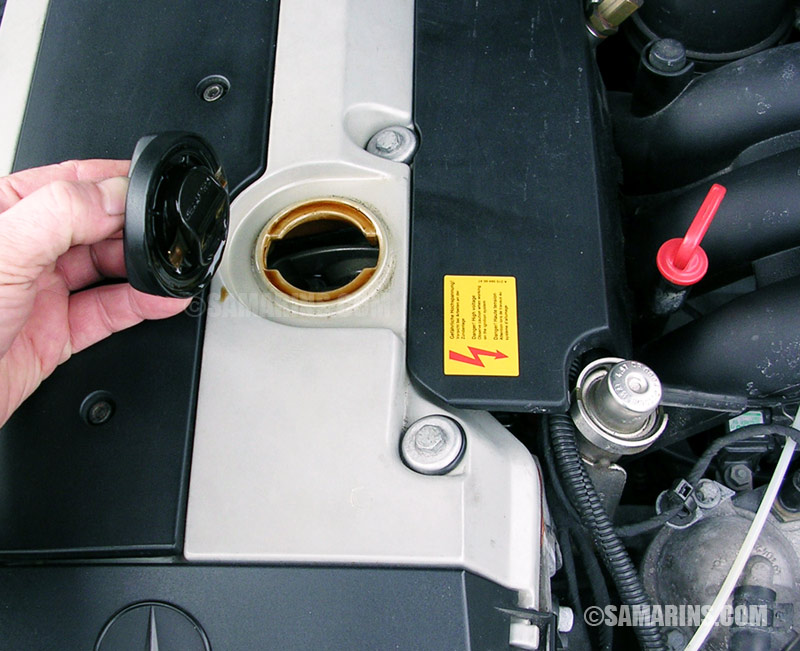
Looking under the oil filler cupUsed car buying process is always tricky, as a used car can have some hidden problems that aren’t obvious when you test-drive it. I hope this guide will help you recognise signs of potential problems and make more informed decision.
Before finalizing the deal, have the vehicle inspected by a knowledgeable mechanic. There are so many things that can only be properly inspected when the car is lifted on a hoist. If it’s possible, find a mechanic that is closely familiar with that particular brand. For example, many used car buyers arrange to have the used car to be brought to another dealer specialized in that brand for an inspection before buying.

What to look for in a used car

When inspecting a used car, you are looking for two things: signs of major problems that should tell you to avoid the car and any minor issues that need to be taken care of or that you can use in negotiations. If you found any evidence of a major problem in a car, there is no point to inspect it further, move on to the next car. Major problems include substantial rust damage, potential engine and transmission problems, previous serious accidents, flood damage, and signs that the car has been abused or neglected by previous owners. Minor issues are the ones that can be easily corrected, including worn tires, minor suspension and brakes problems as well as minor appearance flaws like dents, scratches, etc.

Research common problems

Almost any vehicle has some problems or weak spots that are common for this particular make and model. With the amount of internet resources available, it doesn’t take much to do a little research. Before going for a test-drive, research reliability and common problems for the car you are interested in. We’ve done some research on a number of cars and SUVs that you can find in our used car reviews section. Our site is easily accessible from a mobile device. You also can check other websites with owner reviews, dedicated forums, NHTSA complaints database and other sources. Once you know common problems, you will have much better idea what to look for. This will also help you to avoid “trouble” cars.

What you may need when checking a used car

You need something to take notes and a flashlight but with the technology available, your smartphone with a camera and a built-in flashlight will work just fine. If you have a small magnet, it might be helpful in detecting repaired corrosion spots. You also need a paper towel to check engine oil and a CD disc or iPod to check the CD player and audio system. If you will be using a child seat, it’s good idea to take one with you, so you can check if it fits easily. What’s most important, you need a knowledgeable friend who can help you weigh the pros and cons and make informed decision.

First step: quick overview

Interior overviewDuring a quick overview, you want to find out if it’s worth to check the car further or should you avoid it? Start with the quick walk-around. Major rust spots like this one should tell you to avoid this car. Check the interior. How does the steering wheel, driver’s seat and the inner door handle look like? Any smells? Tobacco and other strong odors are difficult to get rid of, especially in cloth interiors. Can you find a comfortable driving position? Is there enough legroom and headroom? How is the visibility? Check if the car has the features that are important for you, such as the cruise control or a USB port.
The easiest way to detect engine problems is to start it cold, after the car was sitting for a while. Ask the seller or salesperson to start the engine; is there any smoke from the exhaust? Car smoke Does the engine run rough or rattle loud when started? If the engine runs rough or makes loud noise at startup or if there is a blue smoke or white smoke that smells like antifreeze from the exhaust, avoid the car. The engine should start easily and run smoothly. If you think that this car is worth to check further, start from the exterior. If you are planning to inspect several cars, it might be a good idea to take photos of each car (if the seller or salesperson allows) including flaws and features so you can review them later when weighing pros and cons of each vehicle.

Exterior

Mismatched colorIt’s difficult to check the car when it’s parked in a tight spot; ask the sales person to park it in an open area, so you can have a better access to all sides. Have a look at the car from a distance; this way it’s easier to spot if the color of some panels doesn’t match. Colors certainly don’t match in this photo; this red Toyota have gone through some body repair. Walk around the car and mark (or take photos if allowed) all the dents, scratches and other flaws.

Check the windshield

Chip in the windshieldLook carefully at the windshield. Note any chips, scratches or other damage. Some chips and star cracks, if large enough, can cause the vehicle to fail a safety inspection.

Scratched windshieldThis scratch was made by the metal part of the broken windshield wiper. This scratch will produce a glare when driving at night. Similar scratches can be made by sand caught under the wiper blades.

Inspect body panels

checking carLook at the reflection from the body panels; it’s easy to spot difference in the paint texture and unevenness that could be possible signs of previous body repairs. The side of this car looks like it has never been damaged. Click on the image for larger view.
Paint texture of the repainted doorIf you look closely at this photo (click to enlarge), you can see that texture of the paint appears rough and the door is not very straight. It looks like there was some body repair here. It could be something minor, but at least, this area needs to be further investigated.
signs of body repairThis car has been rear-ended. Even after the repair, you can see that the rear fender still doesn’t look very straight. Click to see the larger view, look closely at the reflection.
Rusted spot on a carThis car is badly rusted and we would recommend to avoid it, as the rust can be repaired only temporarily. If you suspect a rust repair, try to to place your magnet at the suspected area, if there is no metal under the paint, the magnet won’t stick.

Try to open and close all the doors; they should close easily. Open the driver’s door and try to lift it on hinges; there shouldn’t be any freeplay.

Does the car have a trailer hitch? Does it show signs of excessive use? If the car was regularly used to tow, the transmission could be worn excessively.

Check the tires

Cut on the side of the tireCheck the tires. Do they look worn out? Do they have cuts or other damage like this one in the photo? This tire will need to be replaced. Are the tires of a reputable brand? All 4 tires should be of the same brand. Does it appear that tires worn out unevenly (e.g. more on the inside)? This would indicate possible wheel alignment issue.
Cut on the side of the tireThis tire has a bulge on the sidewall and must be replaced. A bulge is not repairable and the tire with the damage like this is unsafe to drive.
New tireNew tires have tread depth from 10/32′ to 11/32′. This is how the new tire looks like; click on the image to see larger view. New tires like this can last up to 50,000 miles.
Worn tireThis tire is worn out (it’s about 2/32′), which means this car needs new tires.