Home Blog Page 2249

Mumias Sugar is dead and will never rise with its lazy, joking farmers

0

Bizna came across this hard-hitting commentary on Mumias Sugar on one of its social media platforms. What are your views regarding it?

“Sadly, Mumias is dead. Besides looting, Kenyan farmers are generally lazy jokers. They prefer lazy kind of farming. And modern-day cane farming is a perfect example of such. They plant, sorry throw, cane cuttings in shallowly done gullies in farms, and wait for 18 months for a bumper harvest! Weeding and top dressing my foot!

Look, when Mumias was Mumias, the company had to push farmers and actively participate in production of better cane crop. I used to see extension officers all over, helping farmers to better their sugar cane husbandry. The moment these services vanished, farmer went back to the aforementioned shenzi farming practices. So even if Mumias got back on its feet, chances are we will be faced with yet another huge challenge; acute sugar cane supply. Most farmers moved on.

Few remaining ones are mediocre. So as we shout “bail out…bail out” and “looting…” let’s also focus on the lazy farmer and how to help him move on to other equally lucrative ventures. We shout from rooftops, “revamp Pan paper…revamp Pan paper…” but nobody stops to ask whether farmers are still interested in tree farming. Same madness with textile Industry. We whine about the industr y’s lost glory, but even if money was to be thrown at the problem, who is interested in cotton farming with the all the uncertainty?

The size of canes you see in farms and being transported to the factories–both towards Mumias and West Kenya– are too tiny you even want to cry. Methinks it’s time farmers tried other crops. I knew cane farming had become useless when headmasters began refusing farmers’ promissory notes from Mumias Sugar as surety for school fees.

Thing is, the earlier we encourage the few remaining cane farmers to invest elsewhere the better. But the tragedy is, like I began, most farmers are lazy because they don’t want proper farming, say, poultry, dairy, and other lucrative ones that require hands-on approaches.”

Home Afrika’s bond charged an expensive 17 per cent after investors shunned it

Buyers of Home Afrika’s corporate bond have re-priced the interest rate on the securities to 17 per cent, significantly raising the real estate developer’s finance costs from the initial coupon rate of 13.5 per cent.

At 17 per cent, the interest rate is the highest of all the corporate bonds currently listed on the Nairobi Securities Exchange by Kenyan companies, reflecting investors’ relatively high risk perception of Home Afrika’s debt instruments.

Centum recently issued a bond at a coupon rate of 13 per cent, Chase Bank has one at 13.1 per cent while the highest of all the bonds listed at the NSE is Consolidated Bank’s 13.6 per cent. Home Afrika had sought to raise Sh900 million through a bond sale between November 27 and December 10 last year, but did not hit the minimum subscription level of Sh500 million for the issue to be deemed a success.

The company subsequently raised Sh500 million from bondholders in a private placement, receiving most of the cash from investors who had subscribed to the first bond issue which was terminated. “It was largely the same investors who participated in the private placement. We gave them a higher interest rate,” said Home Afrika’s chief executive Njoroge Ng’ang’a in an interview.

The real estate company’s five-year bond is priced 3.9 percentage points above the latest government paper of a similar tenor, making it the highest spread between a corporate bond and treasuries. The company says the bond is partially secured by one of its parcels of land in Kiambu.

Home Afrika is now expected to pay about Sh85 million interest to the bondholders in the first year, compared to about Sh67.5 million if the rate was at 13.5 per cent. “Interest on the corporate bond is at 17 per cent per annum payable semi-annually in arrears,” the company says in its latest annual report.

The securities, issued in denominations of Sh100,000, are redeemable in part or full after December 2017. This means that Home Afrika can retire all or part of the debt before the maturity on December 16, 2019. The property developer has reviewed its capital expenditure plans after receiving Sh400 million less than it had earlier expected.

The Migaa housing project in Kiambu, which was to be the main beneficiary of the bond money, has been allotted Sh400 million while Sh50 million each goes to Llango Development in Kwale and Lakeview housing project in Kisumu. Home Afrika had planned to allocate Sh750 million to Migaa, Sh100 million to Lakeview Heights and Sh50 million to Llango.

National Bank suspends finance manager over Mumias scam

0

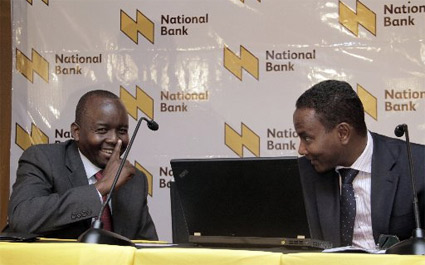
National Bank of Kenya (NBK) suspended its chief finance officer, Mr Chris Kisire to let him clear his name of corruption allegations while he served in the same capacity at Mumias Sugar.

The bank said it had consulted with the Central Bank of Kenya (CBK), the government, its lawyers and Mr Kisire before sending him on compulsory suspension.

“When he came to National Bank, the bank was looking for an experienced CFO – with experience working with listed companies – to support our transformation agenda. We reviewed his work at The Standard group, DHL, Mumias among other blues chip companies and he had the qualifications we sought. He has been doing his job well before this Mumias saga broke,” the bank said.

National Bank said as a responsible employer, it consulted with the Central Bank of Kenya, the government, its lawyers and Mr. Kisire before sending him on compulsory suspension to allow him time clear to his name. The bank said Mr. Kesire served well and that they wished him all the best in clearing his name.

National Bank says main challenge has been the delayed approval of the Rights Issue which, according to the strategic plan was to inject Sh13 Billion by July 2014 into the bank to further support its rapid growth. Shareholders approved the resolution in its June 2013 AGM and CMA is awaiting Treasury’s approval.


How To Create A Monthly Budget – The Essentials of Reducing Your Debt

0

Does the word budget send chills up your spine? It shouldn’t. Budgets allow you to have some control over what you spend. A monthly budget can help you to decide how to spend your money, plan for your future, pay off existing debt, and save a few pennies each month by reducing wasteful and impulsive purchases. To create your monthly budget

Categorize your expenses.

· When you begin setting up a monthly budget, start with big categories before breaking your budget down into smaller expense categories.

· From your list of expenses, develop two separate budget lists, one for essentials and the other for extras.

· Within each general budget category, some items are essential (the mortgage or rent payment, electric bill, and groceries); others are extra (new furniture, gifts, and pizza delivery).

· Look through these lists to find flexible budget expenses where you can cut back.

· Put a star next to these flexible items so you can identify them.

· Estimate what you spend.

· Go through your checkbook and any other receipts or records you’ve kept over the past few months so you can track how much you actually spend on both essentials and extras.

· Add up your budget essentials list and the extras list separately.

· By keeping the lists separate, you can make cuts more easily, if you need to.

· Subtract the essentials total from your monthly income and, if you have money left over, subtract the extras total from that amount.

· If you still have money left over, great! Look into a savings or investing plan (talk to your bank or a certified financial planner for help setting up a plan).

· If your extras list takes you into negative numbers, start looking for places to cut back.

· You can also trim from the extras list to put more money toward debt repayment if that’s a high priority in your financial picture.

Limit Some Fruits in Your Fight Against Belly Fat

0

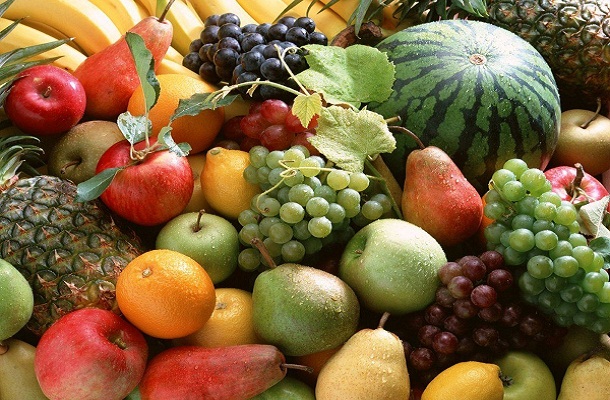
Fruit is great for you, but you do have to keep in mind the glycemic index (GI) of the type you choose. Choosing foods with a lower GI can help promote the loss of belly fat. Most fruits are in the low range on the GI scale, but a few are higher, most specifically watermelon.

Because it has an elevated GI, watermelon may cause spikes in both blood sugar and insulin levels, which can trigger storage of belly fat. Watermelon isn’t all bad, however. Out of almost all fruits and vegetables, it contains the highest content of lycopene, which is a phytochemical that has been shown to protect the heart by decreasing the buildup of plaque in the arteries.

Some studies have also shown a positive correlation between increased lycopene intake and a decreased risk of certain cancers, such as prostate cancer. Watermelon is also rich in the amino acid arginine, which has been shown to promote fat loss and increase muscle mass.

REMEMBER: You don’t need to avoid watermelon, just watch how often you eat it and how much you eat at one sitting. For the best belly-flattening results, keep your watermelon intake to about 1 cup per day. This way you get all the great benefits of watermelon without too much impact on your insulin levels.

Other fruits that can contain a high GI include

Dried fruits with added sugar: When choosing dried fruit, buy brands that only contain fruit. Dried fruits that list sugar, cane juice, or corn syrup in the ingredients are loaded with added sweeteners that can raise your GI and promote increased belly fat storage.

Fruits that have been canned in heavy syrup: If you enjoy canned fruits, choose varieties canned in 100 percent fruit juice rather than those packed in syrups.

Fruit juices, specifically juices that aren’t 100 percent juice: Because juices contain limited amounts of fiber, they aren’t as filling as eating a piece of fruit. They also may potentially raise blood sugar and insulin levels higher than a piece of fruit would.

If you do have juice, drink it in moderation (approximately 1/2 to 1 cup per day). Also be sure to select a brand that contains only 100 percent fruit juice. If you love juice in larger quantities, try this trick: Dilute 4 ounces of juice with 8 ounces of water for a delicious and refreshing beverage with less sugar.

TIP: To identify and avoid these high-GI fruits, make sure you read labels.

3G Firefox OS low-end Smartphone unveiled by Orange Telkom Kenya

0

Exclusive to Orange Telkom Kenya, the Orange Klif will retail at KSh. 3,999. This dual SIM device has data, voice and messaging capabilities.

“The Orange Klif’s launch is part of our broader long-term strategy of ensuring our network expansion into the country is supported by the provision of quality, competitive devices for our entry level customers,” says Orange Telkom Kenya CEO, Vincent Lobry, adding that the pricing of the Orange Klif goes to demonstrate the company’s commitment towards opening up the “smart phone space to aspiring smart phone owners to have that ‘smart’ experience.”

“Their Internet experience will be powered by Mozilla that ensures great usage across platforms,” adds Lobry.

The Orange Klif is typically characterised by the pay-as-you-go metric, offering predictability of data costs through an all-inclusive tariff at a price that sets a new benchmark.

“Customers seeking to upgrade from 2G feature phones to 3G smartphones can enjoy the benefits of multimedia and online usage without experiencing bill shock. A typical data bundle will be up to 500MB per month for four months, with the opportunity to top-up when reaching the end of that bundle,” says Lobry.

Content and services

The smartphone will also provide access to a range of compelling content, including established Orange services such as the Star Africa entertainment portal, the Orange Football Club as well as partner services like Dailymotion; the video sharing service. Additionally, customers will have access to the burgeoning Firefox Marketplace, providing access to thousands of mobile device applications.

Orange Klif provides enviable experience to smartphone newcomers. The Orange Klif promises an enviable introductory smartphone experience featuring the latest Firefox OS, ample screen size with its 3.5” HVGA screen and 2 mega pixel camera. With its 1300mAh battery offering 810 hours of standby, the smartphone also provides a reliable companion when on the move.

“Although the smartphone revolution is well under way across the African continent, there remains a proportion of the population that so far has been underserved, not just because of the cost of handsets, but because of concerns about data costs. By scooping up all the costs into one, incredibly priced digital offer, we hope that critical access to the mobile Internet and all the opportunities that that opens up, will be within reach of many more people,” says Lobry.

Orange Klif has also been successfully launched in other twelve Orange markets in Africa: Egypt, Senegal, Tunisia, Cameroon, Botswana, Madagascar, Mali, The Ivory Coast, Jordan, Niger, Mauritius and Vanuatu.

The phone’s launch follows a successful trend in the delivery and marketing of Smart phones in the region with the Orange Group witnessing a doubling of smartphone sales in 2014; representing a 35 percent slice of total handset sales.

Since launching its first smartphone in the region in 2010, the Orange Group has sold more than a million smartphones to date, attributable to the company’s strategy to launch the right device at the right price to the right customer at the right time.

Mumias Sugar asks court to dismiss Sh. 431 million claim by Dubai firm

0

A day after the Sh1 billion bailout announcement, the firm was in court battling Peeraj General Trading and Construction Company over $4.4 million (Sh431 million at the current exchange rate) contract.

The struggling miller asked High Court Judge Jaqueline Kamau to dismiss the case as it was still premature. “The defendant states that in view of the provisions of the contracts and the conditions of the Federation International des Ingenieurs-Conseils (FIDIC), the plaintiff’s suit is still premature and an abuse of the court process,” Mumias Sugar Company Lawyer John Khaminwa told the court.

Mr Khaminwa argued that the agreement between the two companies was that they would refer the matter to an arbitrator in case a dispute arose between them. He held that the case should be struck out.

On the other hand, Peeraj General argued that Mumias Sugar Company had undertaken to settle the debt in two equal instalments between November and December last year and it admitted in its papers that it owed the firm the amount. The firm said there was no case to be brought up before an arbitrator.

“There is no dispute to be referred to arbitration, the defendant has already admitted and accepted the claim,” Peeraj said in its court papers. The firm is among a list of creditors after Mumias over outstanding debt though the State has given its assurance of Sh1 billion. Kenya Power is claiming Sh1.1 billion and security firm G4S is after Sh45 million.

“The plaintiff (Peeraj), due to the hefty amount outstanding, made numerous pleas to the defendant (Mumias) to have the amount paid but despite the undertaking to have the amounts paid, the defendant failed, neglected or otherwise refused to honour the payments due to the plaintiff on the account of work done,” the Judge was told. Justice Kamau directed that the case be mentioned on September 19 to confirm if the two firms will have filed their submissions.

How to know quantity of feeds your cow needs

Feed intake is the key factor in maintaining high milk production.

Maximum milk production is not determined by feeding the cow a lot, it is by feeding the cow quality mixed ration in just right quantities and these rations are usually formulated based on crude protein and energy requirements; minerals and vitamins.

In situations where balanced dry matter intake cannot be achieved through bulk feeds, commercial concentrates are usually supplemented but depending on quantity of milk produced, more often at an approximate rate of 2kg per every litre of milk above the first five litres produced.

For example, a cow that produces 15 litres of milk can be supplemented with 5kg of standard dairy meal to a maximum of 12kg.

Alternatively, you can gradually increase supplements until the cow reaches its potential milk production and when any more increase in supplement does not yield additional milk, then you continue with the immediate previous quantity.

However, it is important to note that these parts of feed should be mixed and fed to cows depending on the stage of lactation as nutrient requirements are different.

Now that you have struggled to feed your cow for long, it must be in the mid lactation period.

Therefore, the key strategy is to maximise dry matter intake.

Feed the animal on high quality forage (minimum 40 to 45 per cent of the ration dry matter) translating to least 4 per cent of their body weight dry matter, each additional kilo of dry matter consumed will support 2 to 2.4kg more milk.

Concentrates should not exceed 2.3 per cent of body weight and crude protein should be 15 to 17 per cent.

Note that the requirement per cow based on the milk produced is a scientific calculation procedure and available in the market nowadays are computer software that an expert in animal nutrition can use to calculate individual feed requirements for a cow taking into consideration the breed, weight, milk quantity, locally accessible or available feed/nutrient sources, stage of lactation etc.

Ensure you provide your cow free access to fresh water. The pens should also be dry and comfortable because the cleanliness of the pens and, most importantly the animals, can save them from lameness and diseases like mastitis.

A good housing system should consider the spatial and behavioural needs of the animals.

Before constructing the pen, it is important the farmer understands how an animal behaves when undertaking routine activities such as drinking, feeding, walking, lying and rising

Bitange Ndemo: only innovation strategy will get Uchumi out of ICU

0

The following analysis by Bitange Ndemo was first published in the Business Daily.

Once more, Uchumi is in the intensive care unit after Mr Jonathan Ciano successfully turned it around from the jaws of bankruptcy. Last week, Mr Ciano was thrown out. His problem can be summarised as failure to heed the wisdom in Kenny Rogers’ song The Gambler, where he says, “You’ve got to know when to walk away.”

Truth be told, Mr Ciano was a great turnaround manager but not necessarily an innovation strategist. What Uchumi needs most right now is simply an innovation strategy. Uchumi should have changed its business model a day after its successful turnaround. Its current model of buying and selling of merchandise is outdated.

Uchumi, Kenya’s first State-owned supermarket, is a brand that evokes pride and patriotism. Personally, I can still vouch for the brand, but it needs innovation around it.

Whoever comes on board as CEO must turn the supermarket into a technology platform for goods and services where suppliers acquire space and strive to meet required standards.

Their future survival depends on how much technology capacity they develop to manage the emerging trends. Before rushing to hire a new CEO, the board must decide what is it they want Uchumi to become. If they want to increase shareholder value, my advice is that they need to learn from several technology platforms that have brought shareholder value within a very short period.

Take, for example, Uber, an American international transportation network company founded in 2009. It runs taxi companies globally without owning one taxi cab. CNN Money estimates Uber to be valued at $50 billion (Sh4.9 trillion). YouTube, founded in 2005 and now valued at $45 billion (Sh4.4 trillioni), makes no content, doesn’t buy and sell content but it is the largest distributor of content globally.

The Uchumi brand must establish its niche and market itself in order to increase customer numbers that can be leveraged on volume to lower the supply chain costs. Some of its competitors are already working towards such a strategy but the headache of maintaining low costs and continuous supply still nags the entire industry.

This is where opportunity lies to differentiate itself. Large supermarkets are notorious for delaying payments to suppliers but if the burden of inventory is passed to suppliers in return for prompt payments, it will be a win-win situation for everybody and a good strategy for retaining reliable customers.

The benefits for this proposed model include: improved product quality since it will attract quality suppliers; discourage carrying of dead inventory; greater efficiencies through reduced workforce especially the procurement unit which will become irrelevant; and, spurring development of new goods that would create more sustainable jobs.

These, I must say, are minimum reforms if Uchumi is to be salvaged. New and leaner competition such as Jumia, an online shopping mall, is emerging with very disruptive products.

It will be unwise to consider Nakumatt, Tuskys, Naivas and Foodplus as the only competitors. There are also newcomers like Game and Carrefour, which are even more experienced.

I further suggest that the board consults widely before making any conclusive decisions. There is wisdom in learning from its past turnaround. In his book Beyond the Shadows of my Dream, Martin Oduor-Otieno captures the behind-the-scenes efforts to turnaround Uchumi.

He writes: “KCB and team, together with the representatives of the PTA Bank, agreed to give Uchumi a lifeline and the opportunity to try and turn it around. They would work closely with the government and other relevant stakeholders in search of a strategy to revive this market chain. A task force was formed to oversee the whole process. Jonathan Ciano was recruited and appointed receiver manager. This became the most successful turnaround story in Kenya’s corporate history.” We must not ignore this institutional memory.

Jason Calacanis, an American Internet entrepreneur and blogger, once said: “You have to have a big vision and take very small steps to get there.

You have to be humble as you execute but visionary and gigantic in terms of your aspiration. In the Internet industry, it’s not about grand innovation, it’s about a lot of little innovations: every day, every week, every month, making something a little bit better.” Uchumi needs a lot of little innovations in order to compete.

East Africa’s largest shopping mall to have strong international flavour

In October, Kenya-based investment company Centum will open the largest shopping mall in East Africa. Located in the capital Nairobi’s diplomatic zone and near four affluent neighbourhoods, the Two Rivers development will feature retail, residential, office, leisure and hospitality components. The shopping centre will have 62,000m2 of lettable space.

James Mworia, CEO of the Nairobi Securities Exchange-listed investment firm, says the development was inspired by an opportunity around “the development of new cities”. Centum is also setting up the Pearl Marina estate in Uganda which comprises apartments, marinas, a hospital, school, offices and recreational facilities.

“What made sense for us was to go and create new destinations from scratch, provide the infrastructure, provide the development control guidelines and create new commercial urban development nodes,” says Mworia.

International flavour

French hypermarket chain Carrefour is the anchor tenant for the Two Rivers Mall which has also attracted Austrian jewellery brand Swarovski and health club chain Virgin Active. Mworia says 43% of the lettable space will be taken up by international retailers, adding this is one of the project’s key differentiating factors.

“We had a lot of interest from local tenants, but we strongly felt that we needed to differentiate the offering,” he says.Despite negative publicity surrounding the country, particularly because of corruption and terrorism, Mworia says “there is still interest among international retailers to come to Kenya”.

Read More: 11 banks book space at Centum’s Sh. 25 billion Two Rivers mall

Although big retailers took a longer time arriving at their decisions, he explains it was not difficult to convince those who already had an interest, into taking the final step of coming to Kenya.

“The per capita spend is fairly high [and] a lot of those retailers already have Kenyan customers. The challenge for them is getting the right entry point into the market. For Carrefour, [for instance] the challenge they always faced was that our malls were too small,” Mworia explains.

But putting up a development that would appeal to international retailers was not easy. For starters, Mworia notes there is always scepticism from some retailers as to whether such an ambitious project would be successfully executed.

Due to the scale of the project, Centum faced numerous challenges. “We had a lot of consultants, foreign and local, and coordinating them was very difficult.” Eventually the company set up a subsidiary Athena Properties that handled the master planning, urban development, engineering and letting. Mid last year Centum sold a 42% stake in the development to two investors for a combined $75m.

It has also invested millions of dollars in developing infrastructure in and around the Two Rivers development. It has constructed roads to ease access, secured a dedicated high-voltage power line, invested in a sub-station, and set up a power company that will reticulate power to individual tenants.

“We have also put up a 2MW solar power plant within the development. So the whole roof of the mall is solar. And there is a 9MW energy centre that is a back-up for the entire development. Tenants [do] not need to come in with their stand-by power,” he says.

Getting feet through the door

To attract consumers, Centum has focused on creating a destination that will feature a water park with dolphins and multiple food and beverages stores aimed at consumers seeking leisure and entertainment. The company is investing $10m in security technology, which has become a major concern for shoppers following the 2013 Westgate mall attack. Two Rivers Mall will also feature 4,000 parking bays.

“Parking is a key differentiator [because in] the whole city of Nairobi the parking that is managed by the county government is [only] 6,000 spots,” says Mworia.

He adds that though it requires massive investment, good infrastructure is a competitive advantage.

“When people are looking to invest in commercial real estate the biggest barrier to entry is infrastructure. Do you have sufficient power, sewer systems, good roads and security? It is easy to see it as a challenge but it is also an opportunity for a private developer who puts up a location and then addresses these problems.”

When completed, he reckons Two Rivers Mall will attract 40,000 visitors a day, adding that Kenya is well positioned to be a retail and entertainment destination in the region.