Home Blog Page 2296

How Fidel Odinga lived: the good and the bad

0

41-year-old Fidel Odinga is said to have been an easygoing person, who never found fault with his friends. He had established businesses and cut a niche for himself among his peers. Fidel was known to have invested in petroleum and real estate, and had an office block in Nairobi’s Kilimani area.

Fidel Odinga, though, is said to have been very active on the social scene. He frequented many popular joints in most urban centres across the country, but mainly in Nairobi, Mombasa and Kisumu. He loved his whiskey brands and would often find his way into the news for both wrong and right reasons.

In June last year, he was fined Sh30,000 by a Nairobi court after he pleaded guilty to drink-driving. One of the friends with him on Saturday night was Mr Robert Kimuchu Gichuru, son of former Kenya Power Managing Director Samuel Gichuru.

In September, Mr Gichuru was charged in court with killing a cyclist through dangerous driving on a Nairobi street. The Range Rover he was driving belonged to Fidel.

Growing up, Fidel Odinga attended Consolata Primary in Westlands before proceeding to Mbeji Academy in Siaya County for his High School education from 1989 to 1992, a school which belonged to the late Thomas Ogembo, founder of the International Centre of Insect Physiology and Ecology.

He then proceeded to India for his post-secondary education, where he stayed for one year before transferring to Washington DC in the US. He completed his studies and continued living and working there.

He returned home just before the 2002 elections, after which Narc formed the Government.

In July 28 2012, Fidel Odinga married an Eritrean beauty Lwam Gatchew Bekele, who has stayed clear of the limelight. This was after divorcing his first wife Veronica Wanjiru over what close friends termed as irreconcilable differences.

The two had been married at a colourful wedding ceremony held in 2007. His second wedding, though, was closely guarded and devoid of the colour and pomp that had characterized his first wedding. The wedding took place at the Orthodox Church in Nairobi.

Although in the last general elections Fidel Odinga was widely expected to contest for the Lang’ata/Kibra parliamentary seat, Fidel chose not. However, word has it that he was expected to take a plunge into politics in 2017.

Books Chris Kirubi draws valuable lessons from

0

When was the last time you read a book? And an academic one doesn’t count, God knows it’s all about cramming and that which we can’t cram, a trusty “mwakenya” saves the day.

I am talking about feeding your mind type of reading.

Facebook founder Mark Zuckerberg just set a pretty ambitious New Year’s resolution, reading a new book each week for the entire year. This is coming from a person who is so busy that small decisions like choosing what to wear or what to eat for breakfast could be tiring and consume energy, and he doesn’t want to waste time on.

“I really want to clear my life to make it so that I have to make as few decisions as possible about anything except how to best serve this community,” Zuckerberg said, after clarifying that he had “multiple same shirts.”Source Businessinsider.

So it got me thinking, what do our local billionaire s feed their minds with? Thanks to goggle and Capital fm I got to find out what kind of books Chris Kirubi has read and has drawn valuable lessons from.

Who knows one of these books might just make you the next billionaire.

1. Screw It, Let’s Do It – Richard Branson
2. Play to win in Business and in Life – Donald Trump
3. The Leader with No Title – Robin Sharma
4. The Monk who sold His Ferrari – Robin Sharma
5. The Corporate Sufi – Azim Jamal
6. Rich Dad, Poor Dad – Robert Kiyosaki
7. The Leadership Imperative: What Innovative Business Leaders are doing today to create the successful companies of tomorrow – Robert Heller

Fidel Odinga to be buried on Saturday

0

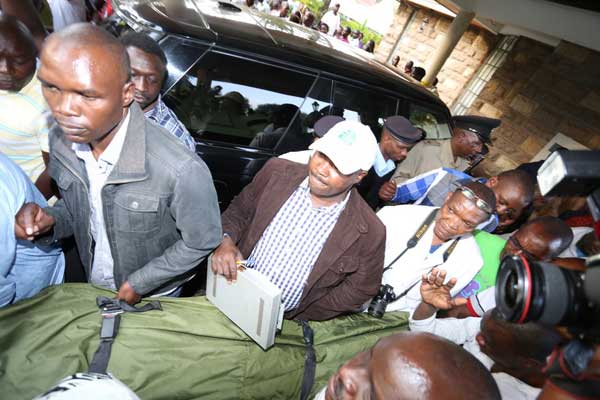
Raila Odinga’s family has set Saturday January 10 as the burial date for their son Fidel Odinga who died on Sunday. He will be buried in Bondo at his parent’s rural home.

Fidel Odinga’s body will be removed Thursday for a requiem mass at Coptic Church in Nairobi on Thursday afternoon.

The body of Fidel Odinga will then be returned to Lee funeral home for an overnight stay before being flown to Kisumu and Bondo for another stay before final funeral rights at his father’s Opoda farm. Funeral committee is meeting at the Karen home of the Cord leader.

Earlier on Monday, the post-mortem examination to determine the cause of death of Cord leader Raila Odinga’s eldest child, Fidel Odinga was carried out. Fidel, 41, was found dead in his bed on Sunday morning by his wife, Lwam Getachew Bekele.

On Sunday, CID Director Ndegwa Muhoro was among the first government officials to arrive at Fidel’s home, together with forensic detectives.

The government’s chief pathologist, Dr Johansen Oduor, was also present as was a family pathologist who could not be immediately identified.

They all spent hours examining the scene where the young Odinga died. It was not until 6.15pm that the body was taken to the Lee Funeral Home.

Kilimani Police Station CID boss Peter Mungai said three people had recorded statements about Fidel’s movements.

He said several people, including Fidel’s friends, would be interrogated to establish exactly what happened.

Blow by blow account of how Fidel Odinga met his death

2

As the country mourns the sudden, unclear death of CORD Leader Raila Odinga’s first born son, Fidel Odinga, new details are emerging on how the young man fondly called ‘General’ met his untimely death. Here is a blow by blow account:

Saturday, noon.

On Saturday around midday, Fidel Odinga leaves his house situated at the Bel Air Country Homes along Miotoni Road in Karen. He goes to meet his father Raila Odinga at their home to wish him New Year tidings since they have not met since January 1.

At his father’s residence, Fidel meets Senator Dan Mwazo and his wife. They interact briefly before Fidel excuses himself.

Saturday, 2pm

Fidel Odinga leaves his father’s house – which is situated at the end of Karen near the border with Kajiado County – and drives to Ruby Restaurant in Kilimani. He meets with one of his friends, Tom Alila, who is in the company of COTU Secretary General Francis Atwoli, Muhoroni MP Otieno K’Oyoo and former Lugari MP Cyrus Jirongo.

They hold a brief chat that lasts about five minutes before Fidel excuses himself. He leaves to pick up someone near the Somali Embassy.

Saturday 4pm

Fidel Odinga leaves Kilimani for Westlands, where he joins his friend Robert Gichuru for a late lunch at the popular Art Café, Oval place. After the lunch, he leaves to have drinks with his friends at an exclusive club called Capital Club.

Saturday 11.30pm

Fidel Odinga leaves Capital Club after a friend identified as Barnabas Temere, a Ugandan national, invites him for a drink at the Sankara Hotel. Sankara is in Westlands. At Sankara, Fidel is joined by Mabior Garang, the son of the late South Sudan leader John Garang, and a few other friends. Fidel and his friends, take drinks until around 2.30am on Sunday morning.

Sunday 2.30am

Fidel Odinga calls for a taxi to drive him home. Apparently, he feels drunk to drive. Two cab drivers from Smart Fellas Taxis arrive; one drives his Range Rover and the other follows them to his Miotoni Road residence in Karen. The Range Rover, which was surrounded by the police tape, was in the parking lot of Fidel’s residence Sunday afternoon, and still had its parking lights on.

Sunday morning

Fidel Odinga arrives home and rings the kitchen bell. He apologizes to her for waking her up so early and heads to the guest wing to sleep. Apparently, he does not want to disturb his wife and child who are in their bedroom.

Sunday 6.30am

Fidel Odinga’s wife checks on her husband. At first, she thinks he is asleep. A short-while later, she attempts to wake him up and discovers he is dead. She then calls in her mother in-law Ida.

Sunday Before 7am

Ida and Raila Odinga arrive at Fidel’s home. They call for an ambulance. A Red Cross ambulance arrives but upon first aid examination, the medics inform the distraught parents that their son, Fidel has passed away.

An eight-hour autopsy is then conducted on the body by a team of forensic pathologists led by the Chief Government Pathologist Johansen Oduor at the house.

Sunday Evening

The body of Fidel Odinga is moved to the Lee Funeral Home last evening.

How to be most productive in the morning

0

Great mornings don’t just happen. They’re planned and nurtured. It’s about creating a routine that works, that keeps you inspired and not just wired, about making you happier and satisfied. The moves can take some adjusting, but will put you in the company of some of the most successful creatives and leaders working today.

This infographic pulls together research from sleep experts and productivity thought leaders to help you not only take back your morning, but add hours to your week.

original:theentrepreneur

great mornings

Raila Odinga’s son Fidel Odinga found dead

0

Cord leader Raila Odinga’s son Fidel Odinga is dead. Some reports say Fidel Odinga, the eldest son of Cord leader Raila Odinga, was on Sunday morning found dead after a night out with friends.
Apparently, the lifeless body of Fidel Odinga son was found in his bed early Sunday.
Other sources indicated that Fidel died at Nairobi Hospital where he was rushed by his wife last night. It is not yet known what killed him.
On Saturday Fidel skipped family lunch to meet up with friends it is reported. He then went out in the evening with some friends and came home at around 1am, Fidel Odinga is said to have had breathing problems and was rushed in an ambulance to Nairobi Hospital where he died.

Investment Analyst: Four must-have stocks this year

Investment Analyst George Bodo: Playing the stock market and winning is never easy. And honestly speaking, stocks have had a harrowing 2014. But you will be pleasantly surprised when you find out there is still money to be made in stocks in 2015. You will only need to pay close attention to the monetary policy environment.

Let me spend a few minutes talking about the economy and the markets and then I’ll move right into some specifics. With the exception of the slump in tourism numbers, 2015 should be a good year for the economy.

First, to compensate for the plunging tourism numbers, the government plans to spend heavily on infrastructure, hence boosting liquidity; as a result, GDP could grow in the quantum of 6 per cent, which is considerably higher than the 5.3-5.5 per cent projections for 2014.

Second, the economy will receive significant support from plunge in oil prices through lower pump prices. And for consumers, the plunge in oil prices and further cuts in pump prices could lead to a greater level of disposable income, which will, in turn, lead to increased demand for goods and services (which could be some piece of good news for a consumption-driven economy like Kenya’s).

Oil prices are still expected to remain low in 2015. Well, the global oil market is too complex a system to be forecasted accurately because of the various demand and supply influences.

But taking into consideration all the expected demand/supply dynamics, there seems to be a general consensus on $70 a barrel as the average oil price forecast for 2015. This will still be very good for the economy. It will mean little or no worries for inflation watchers and could also result into a very relaxed interest rate environment.

So in 2015, inflationary environment is expected to be low and Kenya government will ramp up its spending and help boost overall liquidity. Consequently, the Central Bank of Kenya could loosen its monetary policy stance in 2015; and in fact, we could see the first rate cut as early as March. Stocks tend to thrive in such conditions.

And here’s why I mentioned the need to pay close attention to monetary policy environment in 2015: it’s because, generally speaking, stocks have an inverse relationship with short-term interest rates.

A very loose monetary policy regime (and a subsequent low interest rate environment) combined with a high liquidity environment could see stocks post better returns in 2015.

Exactly which stocks should you buy in 2015? To profit from this expected bull market, there are four stocks any investor should own in 2015—namely Equity Bank, KCB, Safaricom and East African Breweries Limited (EABL).

Why? First, they have fairly good fundamentals and will still find innovative ways of continuing to embed themselves in our lives.

Second, these stocks are highly liquid and move volumes in the market; in fact, over the last 36 months, they have accounted for 60 per cent of stock market volumes.

Thirdly, they are the biggest beneficiaries of foreign investor activity; over the last 24 months, foreign investor activity on the four counters have accounted for 60 per cent of their total turnover.

Forget people who tell you that there is no relationship between the level of foreign investor participation and stock valuation; these stocks, as a result of heavy foreign investor presence, have consistently beaten the market.

In 2014, they’ve returned an average of 30 per cent compared to the market’s three per cent. In 2013, they returned an average of 53 per cent compared to the market’s 19 per cent.

The only risk to watch out for these four stocks is the possibility of rate rise by central bankers in Europe and US, especially in the second half of 2014, which could see foreign investors reduce exposure in emerging markets.

Former Assistant Minister Betty Tett to face murder charges

0

Former Assistant Minister Betty Tett has been arrested and questioned by police in connection with a case of a plot to kill the Scanad Managing Director Andrew John Laird White in Nairobi.

On Monday, Betty Tett will be facing conspiracy to kill charges after the police linked her to the attempted murder of her business rival, Mr Andrew John Laird White.

Betty Tett was arrested from a Nairobi hospital where she had been admitted over undisclosed complications. She has been mentioned by her former employee in the alleged conspiracy.

Police alleged that Betty Tett had hired a jail bird, Mr John Wachira Linus to kill the Nairobi-based businessman.

She will be the second suspect to take plea after Mr Wachira, who pleaded not guilty Wednesday to the charge of conspiracy to kill Mr Laird and was remanded until Monday when his bond application will be heard.

It was alleged that on diverse dates between August 1, 2014 and December 29, 2014 at an unknown place in Nairobi County, jointly with others not before court, they conspired to kill Mr Laird. The prosecution told a Kibera court that Mrs Tett had paid Mr Wachira a substantial amount of money to execute the plan.

According to statements recorded by Wachira, Ms. Tett had allegedly asked him to “eliminate” White. The politician allegedly paid him a down payment of Sh. 1 million and was to deliver an extra Sh. 2 million after the mission.

Mr Wachira was acquitted of robbery with violence charges in 2012 for lack of evidence.

It was alleged that the relationship between Mrs Betty Tett and Mr Laird was constrained after the latter pulled out of an advertisement business they were operating together.

The police also produced money transfer messages allegedly sent by Mrs Betty Tett to Mr Wachira.

The police managed to put a trap on the accused after he tried to solicit for more money from the intended victim so that he could drop the killing mission.


What I’ve learned from every pitch made at the Shark Tank

0

Here’s what ‘Breakthrough Entrepreneurship’ author Bill Murphy Jr has learned from every Shark Tank pitch ever made.

1. Your odds are as good as anyone’s.

Let’s start by establishing a baseline. Out of 377 pitches that I reviewed, 185 were successful–meaning that the entrepreneurs on the show reached a handshake deal with at least one shark to invest in their company. That works out to a pretty amazing 49 percent success rate.

Of course, only a small percentage of entrepreneurs who apply for the show get picked to appear to begin with–0.4 percent, according to the show’s producers. Even after a deal appears to be struck, there is usually an intense due diligence process that kills many–maybe even a majority–of deals.

2. Bigger markets are better.

I used seven categories to characterize each of the entrepreneur’s pitches, and the most consistent predictor of success was “mass market.” An amazing 78 percent of the pitches we tagged in this category were successful.

Granted, there were a number of pitches where the sharks held back because they were wary of getting into a big industry dominated by big players. However, where all else is equal, the sharks wanted to see massive potential for growth. If you don’t have a big potential market, that’s hard to demonstrate.

3. Don’t get too far ahead of the customer.

Wannabe entrepreneurs often make a common mistake. They try to come up with a product idea that is actually too far ahead of the competition. The problem is that by doing so, you can get too far ahead of your customer as well.

Another way to look at this is that contrary to stubborn perception, real entrepreneurs and investors don’t like risk. These kinds of risky pitches were often tagged as “niche” in my analysis, and they were successful only 23 percent of the time.

4. Customer needs beat customer wants.

We’ve already seen that mass-market categories do best on Shark Tank, but it turns out that some specific mass-market categories do better than others. What do they have in common? The customer need they help solve has more to do with an actual “need” than a mere “want.”

Case in point: clothing, which is one of the most consistently successful categories on Shark Tank, with entrepreneurs getting a handshake deal 73 percent of the time. There have also been a heck of a lot of pitches for food, alcohol, and other related products–65 by my count. Those do better than average as well, with about a 55 percent success rate.

5. Don’t be ridiculous.

There have been a fair number of pitches over the first five years that seem at first designed more for comic relief than for a serious attempt to get a shark to invest. Unsurprisingly, they are rarely successful. Pitches whose primary tag was “just plain weird” were successful only 11 percent of the time.

You can imagine that some of these pitches–things like the guy who wanted to surgically implant Bluetooth devices in people’s heads, or the entrepreneur who said he could generate energy by harnessing the Earth’s rotation (while mining gold and producing fresh drinking water as byproducts)–seem like they got on the show because they’re fun television stunts. However, if you don’t think there are many entrepreneurs out there trying to pitch similarly crazy ideas, let me give you a tour of my email inbox sometime.

6. Focus on the customer, not on yourself.

It’s hard to overstate this. Sometimes, some of the sharks can appear on the show to have soft hearts, especially when they see entrepreneurs who are incredibly passionate about their products and have already overcome long odds to keep their dreams afloat. When it comes time to make a deal, however, an entrepreneur’s personal story is really only compelling if it demonstrates that he or she has a compelling insight into customer needs.

The show’s recent season premiere had a perfect example of this. An entrepreneur named Michael Elliott who had an incredibly compelling personal story–he’d been a ward of the state as a child, lived on the streets for a while, and ultimately became a successful magazine writer and screenwriter–clearly earned the Sharks’ respect. However, when it came time to make a deal on his Hammer & Nails “nail shop for guys,” there were no offers to be found.

7. It’s hard to be trendy.

There’s a lot of fool’s gold in trends. Things move so quickly in business that by the time a new entrepreneur can identify a trend and think of a way to capitalize on it, the trend is often over. That said, while the sample size is small–only five pitches that were tagged primarily as “trendy”–four of these entrepreneurs managed to leave the show with a handshake deal.

Despite that 80 percent success rate, I worry about people taking the wrong lesson. For every Buggy Beds (capitalizing on fear of bed bugs) with a $250,000 investment and a $1 million valuation, there’s a pitch like Broccoli Wad (a money clip capitalizing on the popularity of The Sopranos) with a much smaller $50,000 investment and a $250,000 valuation.

8. Women are better customers than men.

At least when the sharks are involved, entrepreneurs who are seeking to sell primarily to women do better. Pitches that I tagged primarily as targeting women had a 56 percent success rate. Beyond that, products aimed at children did 59 percent, and pitches that were tagged as “educational” had a phenomenal 73 percent success rate.

Combining the high success rates of products for women and children with the high success rate for clothing, however, might lead some entrepreneurs to an unfortunate conclusion. I found several instances in which entrepreneurs on Shark Tank wanted to sell maternity clothes. Not a single one was successful.

9. Know your numbers …

I’ve often found that you can predict whether a business is doomed to fail within about 60 seconds by asking two simple questions: What customer problem are you solving? Why are you the person to solve it?

That second question explains why there is no easier way to get eaten alive on Shark Tank than to walk into the studio looking for an investment of thousands or even millions of dollars, and not be able to articulate basic metrics about your business very quickly. This was a little bit harder to track, but anecdotally it came through time and again.

10. But don’t nickel and dime.

Finally, this last lesson also goes back to being able to do simple math–especially under pressure. Believe me, I understand working to get the best deal possible, and there are some times when an entrepreneur is better off leaving a lopsided deal on the table. (Case in point: Copa di Vino, which even ABC’s website describes as the most successful pitch that didn’t result in an investment.)

That said, there are many instances in which negotiations on Shark Tank get caught up in a tense back-and-forth over what is really a phantom equity–sometimes to the point of killing the deal on air. Moreover, you have to suspect that many of the deals that get killed after the show is over are the same ones in which the negotiations are toughest on air. Both on Shark Tank and in real life, a contentious tone during the deal can make working together later more difficult.


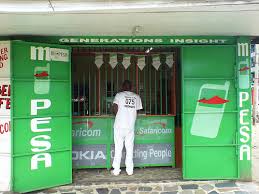
Safaricom to transfer M-Pesa servers from Germany to Nairobi by April

0

BY OKUTTAH MARK

The transfer of M-Pesa servers from Germany to Kenya will be complete by the beginning of April, promising users of the mobile money transfer service a more reliable system.

The ongoing installation of M-Pesa servers locally is expected to end nearly eight years of foreign hosting, which has at times been cited for delayed response to service interruptions. Safaricom CEO Bob Collymore says the new M-Pesa platform is currently undergoing test runs expected to be completed by end of March.

“We will be running a parallel network from time to time while undergoing the test runs, thereafter we will have a complete switch over. We expect the new platform located here will have bigger capacity, be much faster and allow other merchants to connect directly to the platform,” said Mr Collymore in an interview.

The process of installing the M-Pesa servers locally began 18 months ago. It is expected to minimise service outages that occur whenever the undersea fibre optic cables which relay information to Germany and back are damaged.

Local hosting is also expected to save costs for Safaricom, which will now be in charge of maintenance of the system as opposed to currently when it pays fees to British telecommunications firm Vodafone, which is its biggest shareholder.

Mr Collymore said the new platform would come with additional functions that allow for M-Pesa’s integration with those of other vendors in banking, micro-insurance and retail sectors, especially supermarkets. He, however, said it too early to comment on whether Safaricom will pass on the realised savings to customers in form of lower M-Pesa tariffs.

Safaricom has invested heavily on building the new infrastructure. A higher processing capacity is expected to enable Safaricom clients to settle post-paid electricity bills, insurance premiums and bank payments in real-time.

It currently takes 48 hours for payments made to Kenya Power to reflect on the electricity distributor’s systems while those made to the National Hospital Insurance Fund take 76 hours.

The current M-Pesa platform handles between 200 to 300 transactions per second but after migration the rate is expected to go up to 600 transactions per second.

The upgrade and relocation of the platform locally comes at a time when M-Pesa is also eyeing bulk government payments such as pensions and salaries paid to beneficiaries in remote locations.

The mobile money transfer service is also expected to come under increased competition with the licensing of four Mobile Virtual Network Operators (MVNO); including Equitel, Tangaza Pesa and ZionCell. China’s Huawei has been building the second-generation platform, which is also designed to have improve re-routing of traffic when the system fails.

Safaricom has recorded growth of M-Pesa subscribers to 19.95 million from 14.9 million in 2012 and its agents to 80,335 from 39,401 in the period.