Home Blog Page 59

Laikipia University announces job vacancies; how to apply

0

Laikipia University has announced job vacancies for professionals across various fields.

In a notice, the institution invited applications to fill 14 vacancies in the divisions of Administration, Finance and Planning, and Academics, Research, and Students Affairs.

According to the notice, the vacancies include:

Division of Administration, Finance and Planning

  • Fleet driver I (driver who also serves as a mechanic) – two-year contract (two vacancies).
  • Information, Communication and Technology (ICT) officer (specialist in programming and system development) – two-year contract (one position).
  • Information, Communication and Technology officer (specialist in networking) – two-year contract (one position).
  • Senior procurement officer (supplies management) – Five-year contract (one post)

Division of Academics, Research and Students Affairs

  • Educational technological specialist (one position) – three-year contract.
  • Lecturer, grade AC 12 (sociology education) – permanent and pensionable terms.
  • GIS technology specialist – three-year contract.
  • Senior lecturer, agricultural economics – permanent and pensionable terms.
  • Lecturer, agricultural engineering – permanent and pensionable terms.
  • Lecturer, horticulture – permanent and pensionable terms
  • Lecturer, animal production – permanent and pensionable terms
  • Lecturer, history – permanent and pensionable terms
  • Lecturer, religion – permanent and pensionable terms.

How to apply

Interested candidates are required to submit applications online through the institution’s recruitment email at [email protected].Hard copy applications will also be accepted.

“Submit five hard copies of the application to the registrar, administration and human capital, Laikipia University, P.O. Box 1100-20300, Nyahururu. In addition to the mentioned hard copies, submit a running PDF file of the whole package of application to [email protected],” the notice reads.

The deadline to submit applications is Tuesday, June 9, 2026.

Successful candidates will be required to obtain clearance from the Kenya Revenue Authority (KRA), the Higher Education Loans Board (HELB), the Ethics and Anti-Corruption Commission (EACC), the Directorate of Criminal Investigations (DCI) and the Registered Credit Reference Bureau (CRB).

Also Read: Water Resources Authority announces 120 job vacancies; How to apply

Top insurance mistakes that Kenyans make and how to avoid them

0

Top insurance mistakes: Conversations on long-term financial security often revolve around saving, budgeting, investing, or building wealth.

However, one of the most important aspects of financial protection is normally overlooked. A road accident, a fire or other unexpected occurrences can undo years of hard work if a financial safety net is not established.

The conversation is not simply whether people have insurance, but whether they have the right protection in place. It raises a difficult but necessary question: are Kenyans truly insured, or are many simply paying premiums without real protection?

Insurance is one of the most important financial safety nets you can have. While insurance uptake has steadily grown, having a policy is not enough on its own.

There are still common mistakes that can leave you or your business exposed because you only discover the gaps when you need to make a claim.

Understanding these common missteps can help you make more informed decisions and ensure your cover truly works for you when it matters most.

Also Read: Equity’s Insurance unit powers profit growth as premiums jumps by 75%

Choosing lowest premiums over value

One of the most common mistakes is choosing the lowest premium without fully considering the value of the cover.

While a lower premium may seem cost-effective at first, it often comes with reduced benefits, higher excesses, or important limitations.

For instance, a motorist may opt for the cheapest cover available, only to realize after an accident that key repairs are not fully covered, leaving them to pay a significant amount out of pocket.

This can be both frustrating and financially straining. A more effective approach is to assess what you are protecting and select a policy that adequately meets those needs, even if it means paying slightly more. The goal should be meaningful protection rather than short-term savings.

Not reading the fine print (Exclusions)

Another frequent issue is failing to read and understand policy terms and exclusions. Many policyholders sign up for insurance without taking time to go through the details, only to encounter surprises during the claims process.

A business owner may assume their policy covers all forms of loss, only to discover after an incident such as fire or theft that certain risks were excluded or subject to specific conditions they were not aware of.

Exclusions, waiting periods, and specific conditions can significantly affect how and when a claim is paid.

Taking time to review your policy documents and asking for clarification where needed helps you know exactly what is covered and prevents misunderstandings later on.

Are Kenyan insurance companies missing out on the SME opportunity?

Underinsuring assets

Another widespread challenge is underinsuring your assets. Whether it is a vehicle, property, or business, insuring it below its actual value may reduce premiums but can result in significant financial loss during a claim.

In the event of partial damage, compensation may be calculated proportionately, meaning you receive less than expected.

Ensuring that your assets are valued correctly and insured for their true worth allows you to recover more fully when losses occur.

Failing to update policies

Many people also take out insurance and then forget about it, even as their lives and financial situations change. Over time, this can result in cover that no longer reflects current realities.

For instance, a homeowner may insure their property and later carry out renovations, add new fittings, or acquire more valuable household items, yet the sum insured remains the same.

In the event of damage or loss, the compensation may fall short of the actual value, leaving them to cover the difference.

Regularly reviewing and updating your policy ensures that your cover keeps pace with changes and continues to offer adequate protection.

Making the right insurance decisions requires more than just purchasing a policy. It calls for a clear understanding of your cover, regular reviews to keep it aligned with your needs, and a proactive approach when it comes to managing risks and handling claims.

By avoiding common mistakes and staying informed, you are better positioned to protect what matters most and to avoid unexpected financial setbacks.

About the writer

Top insurance mistakes that Kenyans make and how to avoid them
Ephraim Mutua: Ag. Senior Branch Manager at Kenya Orient Insurance Limited.

Mutua has a background in insurance and banking, with a focus on bancassurance and client relationship management. They previously served as a Branch Manager at Clarkson Insurance Brokers, where they contributed to the company’s long-standing presence in the Kenyan insurance market. Before that, Mutua held a Regional Manager position in Bancassurance for KCB Group, a prominent financial services provider in East Africa. Their experience also includes a role as a Bancassurance Officer at Equity Bank.

At Kenya Orient Insurance, Mutua has been involved in managing branch operations and client interactions. The company emphasizes speed, convenience, and transparency in its insurance services, catering to clients who value integrity and excellence. Mutua’s work aligns with the company’s focus on customer relationships and innovation within the insurance sector, ensuring the delivery of reliable and timely insurance solutions.

Wilson Mwangi: Murang’a farmer taps into lucrative avocado oil market

0

Murang’a County is the leading avocado producer in Kenya, accounting for 31 percent of total avocado exports, according to the Horticultural Crops Directorate.

Most of the farmers in the region grow the crop for commercial purposes, with some directly exporting to international markets, including China, the Middle East, Mexico, and Egypt, among others.

Wilson Maina Mwangi, a 30-year-old farmer from Mathioya, in Murang’a County, is among the farmers reaping big from the “Green gold” through value addition.

Mwangi has innovatively created a system that transforms raw avocados into a higher-value product, saving farmers from post-harvest losses.

“I started sourcing avocados from farmers in 2018, which I would, in turn, sort and sell to companies that are involved in buying and exporting avocados,” he told KNA.

“In 2023, we experienced a challenge with a low supply of the fruit and could not meet the required quantity for the exporting companies, and we ended up discarding the fruit to pig farmers, leading to huge losses for us and the farmers as well,” he added.

Mwangi’s venture into avocado processing followed research that offered him insights into the production of skin care oil, thanks to juakali experts who helped the plant operator graduate to actualize his dream.

“I designed a customised oil-extracting plant from a prototype of a vehicle and engaged the juacali industry experts with my idea sketched on paper,” he recalled.

From the sketch, he said, the manually driven plant was created, and the oil processing venture became a reality in late 2023.

Through his Ewiva Farm Limited, Mwangi manufactures Avodrops Elixir, the skincare extra virgin avocado oil cold-pressed from the avocado fruit.

The firm, which also buys and sells avocados and Macadamia nuts, has employed more than 30 workers who source the fruits directly from farmers.

“We encourage our farmers to grow the avocados organically, and that is why we visit them on a daily basis for technical support so as not to compromise on the quality of our products,” Mwangi said.

On a normal day, he buys 10 to 15 tonnes of the fruit at Sh15 per kilogram, which he sorts and extracts the oil from, with the rest going to export companies.

Avocado Processing

The process of extracting the oil involves sorting the avocados by separating the ripe and unripe ones, washing the ripe ones and cutting them into pieces before making them into a puree (paste).

The pulp is then separated from the skin and sun-dried for a few days to drain off the water composition in the fruit.

The paste is then passed through the extracting machine, which presses the puree to extract the oil, which is then packed in amber bottles to extend its shelf life as there are no additives used.

In a week, the firm produces 30 to 50 litres of the oil, which is packed in 65 and millilitre bottles, with the former retailing at Sh250 and the latter at Sh500.

After pressing, the remaining paste is used as a supplement for animal feeds, while the seeds are used to make seed tea.

Also Read: Kenchic accelerates Mtaani Butchery expansion across Kenya

What Kenya Airways’ new AI pricing system means for your next flight

0

Kenya Airways has adopted Jupiter 5.0, an AI-powered pricing platform from FlyNava Technologies, to help deliver more competitive fares, quicker fare updates, and more consistent pricing for customers. By enabling faster responses to market changes and improving how pricing decisions are made, the airline aims to offer travelers better value, greater transparency, and a more reliable booking experience across its network.

With the AI platform, Kenya Airways can interpret market signals more rapidly, evaluate pricing scenarios with greater confidence, and implement decisions with full visibility and traceability. For travelers, this means more competitive fares, faster fare updates as market conditions shift, and greater reliability and value across the airline’s network.

“Jupiter 5.0 will help us manage pricing complexity with both speed and discipline,” said Hellen Mathuka, Chief Strategy and Innovation Officer, Kenya Airways. “It enables faster decisions while improving oversight and accountability across our pricing process, helping us respond to dynamic market conditions in a way that supports stronger customer value.”

Jupiter 5.0 brings together market intelligence, scenario simulation, decision validation, and execution into a single integrated workflow. Its built-in governance framework supports structured pricing processes, oversight, and auditability, enabling airlines to move faster without compromising accountability, a critical capability in today’s dynamic aviation environment.

Kenya Airways & Rubis to launch Africa’s first dedicated SAF refinery

“Connecting insight to execution in one workflow improves efficiency and control,” said Jackson Kamande, Head of Pricing and Revenue Management, Kenya Airways. “That alignment is essential for moving quickly in dynamic markets while keeping decisions consistent and well-governed.”

“Simulation and impact visibility allow us to evaluate options with greater confidence before execution,” added Triza Bomett, Revenue Manager Pricing, Kenya Airways. “It improves how we validate decisions, helping us respond faster while maintaining reliability.”

The adoption further strengthens Kenya Airways’ competitive position while supporting a more responsive and dependable travel experience for customers.

FlyNava Technologies is backed by IdeaSpring Capital and supported by AWS, combining strong venture backing with enterprise-grade cloud infrastructure.

“We are pleased to welcome Kenya Airways as a valued customer of Jupiter 5.0,” said Mahesh Shastry, CEO and Founder, FlyNava Technologies. “After a comprehensive evaluation, Jupiter’s AI/ML-driven capabilities stood out. By connecting insight, validation, and execution in one governed workflow, Jupiter is designed to deliver faster time-to-market, stronger pricing control, and meaningful revenue impact.”


How Kenyan Businesses Can Build Trust With Authentic Online Content

0

Have you ever checked a business online first before deciding to buy from it?

Many people in Kenya do the same thing every day. They look at a website, social media page, product post, blog, or customer update before they choose where to spend their money.

That means online content is no longer just “extra.” It is part of how people decide if a business feels honest, helpful, and worth their time.

For Kenyan businesses, authentic content can make a big difference. It helps customers feel like they are dealing with real people, not just a page trying to sell something. When the words sound clear, useful, and human, trust grows naturally.

Why Authentic Online Content Matters for Kenyan Businesses

Customers want to feel understood before they take action. They want simple answers, clear details, and a tone that feels natural. A small shop, service provider, farm business, school, clinic, or online seller can all benefit from content that speaks like a real person.

Chapa Pay: The payment link solution helping SMEs boost online revenue

Authentic content also helps a business stand out in a busy online space. Many businesses may offer similar products or services, but the one that explains things clearly often feels more reliable.

It Makes Customers Feel Comfortable

When content sounds honest and simple, people feel more relaxed. They can understand what the business offers, how it helps, and what steps to take next.

For example, a furniture seller can explain how to choose the right sofa for a small living room. A food supplier can share storage tips. A service provider can explain how booking works. These small details show care.

It Builds a Clear Business Voice

Every business has a voice. Some sound warm and friendly. Some sound practical and direct. Some sound calm and professional.

The key is to keep that voice consistent. If a business uses a friendly tone on social media, the same feeling should appear on its website, blog, and customer replies. This makes the brand feel familiar.

How Businesses Can Create Content That Feels Real

Good content starts with knowing what customers need. It does not have to sound fancy. In fact, simple words often work better because they are easier to understand.

Kenyan customers often want quick answers before calling, visiting, or ordering. Content that answers those questions saves time for both the business and the customer.

Share Useful Local Examples

Local examples make content feel closer to daily life. A business can talk about common customer needs in Nairobi, Mombasa, Kisumu, Nakuru, Eldoret, or other areas without forcing it.

For instance, a real estate business can explain what buyers usually check before viewing a home. A salon can share hair care tips for busy work weeks. A training center can explain how students can choose a course that fits their goals.

Keep Product and Service Details Clear

Clear details make people more confident. A customer should understand what is offered, who it is for, and how it helps.

Businesses can improve trust by explaining:

  • What the product or service does
  • Who can benefit from it
  • How the process works
  • What customers should prepare
  • How to ask for help

Simple answers can reduce confusion and make the customer feel supported.

How Content Quality Supports Online Trust

Quality content is not only about grammar. It is also about honesty, clarity, tone, and usefulness. A polished article or product page should still sound human.

Businesses using digital tools for writing can still keep their content warm and original. The best approach is to review every piece before publishing and make sure it matches the business voice.

Review Content Before It Goes Live

Before posting a blog, product page, or social media caption, a business can check if the message feels natural. Reading it aloud can help. If it sounds too stiff, it can be rewritten in simpler words.

An AI content detector can also support this review process by helping teams check if their content feels original and human before it reaches customers.

Add Real Customer Questions

A smart way to create useful content is to listen to what customers ask every day. These questions can become blog topics, social media posts, short explainers, or website sections.

For example, if customers often ask about delivery, write a clear delivery page. If they ask about pricing, explain what affects cost. If they ask how to choose between options, create a simple comparison.

Simple Ways to Keep Content Authentic

Authentic content does not need to be complicated. A business can improve its online voice by making small changes often.

Use plain language. Avoid making every sentence sound like an advert. Share tips that help people make better choices. Keep promises clear. Update old content when details change.

It also helps to include real photos, staff insights, customer questions, and practical examples from daily business life. These details give the content a personal touch.

Conclusion

Kenyan businesses can build strong online trust by creating content that feels clear, honest, and useful. Customers want to understand who they are buying from, what they are getting, and why it matters.

When a business uses simple language, answers real questions, and keeps its voice human, people feel more confident. Authentic online content is not just about being seen. It is about being trusted.

Ruto splashes taxpayer millions on private jet as Kenyans cry over fuel costs

0

As Kenyans stared down the barrel of a nationwide strike in the transportation sector, President William Ruto departed Kenya on a chartered luxury private jet.

President Ruto hired a Boeing 737-8DV (BBJ2) to take him from Nairobi to Azerbaijan on Sunday May 17 for a two-day State visit.

Estimates show that taxpayers may have paid for the jet at costs of over Sh32 million for the trip to Baku in Azerbaijan. This cost excludes additional costs that may have been incurred by the extra delegations that the president traveled with.

This private jet was manufactured in 2001 and is considered one of the most sought after private chartered jets in the world. It has a capacity for 19 to 50 guests on board.

Incidentally, this is not the first time that President Ruto is splashing millions of money on private jets at the expense of national crisis in Kenya. In May 2024, Ruto  hired a Boeing 737-700 business jet that is operated by the Royal Jet of Dubai to take him from Nairobi to the US.

The Royal Jet of Dubai is an airline that is based at Abu Dhabi in the United Arabs Emirates (UAE). To take Ruto to the US and back, Kenyan taxpayers will pay a bill of about Sh200 million.

A breakdown of the charges that the Royal Jet of Dubai offers for the Boeing 737-700 business jet shows that the plane is chartered at $18,000 (equivalent to Sh2.4 million per hour at the time).

The services of this plane are targeted at the elite markets of Europe and the USA. According to a quotation that was provided by the company that owns the jet to a local media house, a one-way flight from Nairobi to Atlanta, Georgia, where Ruto landed costs $748,600 (Sh98 million).

A return leg costs the same amount, bringing the total cost for a chartered Nairobi-Atlanta return flight to around Sh196 million. This quotation is for the 18-hour flight to and from Atlanta.

Ruto: Hiring over Sh. 200 million jet to US was cheaper than using Kenya Airways

This cost was expected to exceed Sh200 million as the President also used the same jet for his trip from Atlanta to Washington.

The jet plane was also expected to bill the Kenyan taxpayer for the flight from Abu Dhabi to Nairobi it took to come fly the president to US, and its return leg from Nairobi to Abu Dhabi.

After hiring this jet, he claimed that he had resulted to the hire as a way of living below his means.

“Fellow Kenyans, I have noted concerns on my mode of transport to USA. As a responsible steward of public resources and in keeping with my determination for us to live within our means and that I should lead from the front in so doing, the cost was less than travelling on Kenya Airways,” he said.

Why Minecraft Feels Completely Different With Modpacks

0

Vanilla Minecraft is fun for a long time.

But eventually a lot of players hit the same point where survival starts feeling predictable. You already know how progression works. You know where resources are. You know exactly what happens after the first few hours.

That’s usually when people start looking at modpacks minecraft communities online.

And honestly, modpacks can completely change the game.

Some packs turn Minecraft into hardcore survival where basic food becomes difficult. Others add technology, automation, magic systems, space travel, giant bosses, or hundreds of new creatures.

Sometimes the game barely even feels like normal Minecraft anymore.

Most Players Start With CurseForge

A lot of players discover modded Minecraft through curseforge minecraft modpacks first.

Mostly because it makes installation easier.

Years ago modding Minecraft was honestly a mess sometimes. Wrong versions, missing dependencies, crashes every twenty minutes, random folders breaking for no reason — modding used to scare away newer players pretty fast.

CurseForge simplified a lot of that.

Now players usually just install a launcher, pick a modpack, and start playing.

That doesn’t mean everything works perfectly though.

Some packs still break occasionally. Updates can cause problems. And huge modpacks sometimes take forever to load even on decent PCs.

But overall it became way easier than it used to be.

Why Minecraft Feels Completely Different With Modpacks

Some Modpacks Feel Like Entirely New Games

That’s probably the weirdest thing about modded Minecraft.

Two players can both say they’re “playing Minecraft” while having completely different experiences.

One person is building automatic factories powered by complicated machinery. Another is learning spell systems and fighting dragons. Somebody else is surviving freezing temperatures while trying not to starve during winter.

And all of those are technically still Minecraft.

That’s why top minecraft modpacks stay popular for years.

The best ones don’t just add random content. They create an actual progression system that keeps players interested for hundreds of hours.

And honestly, some modpacks are deeper than full standalone games now.

Modded Minecraft Gets Complicated Fast

Vanilla Minecraft already has a learning curve for newer players.

Modpacks can become completely ridiculous sometimes.

You open your inventory and suddenly there are six hundred items you’ve never seen before. Machines need power systems. Farms require automation. Storage turns into an engineering project.

And honestly, that confusion is part of the fun for some players.

Figuring things out slowly feels satisfying once everything finally starts working together.

But there’s also a downside.

Some huge packs become exhausting after a while because progression takes forever. Players spend hours managing systems instead of actually exploring or building.

That’s why lighter modpacks often work better for casual multiplayer groups.

Multiplayer Modpacks Create Chaos

Modded multiplayer worlds are honestly some of the funniest Minecraft experiences possible.

One player spends three days building advanced machines. Another becomes a wizard living in the mountains. Somebody else accidentally summons creatures strong enough to destroy half the base.

And somehow all of that becomes normal after enough time.

But modded servers also break way more easily than vanilla ones.

More mods means:

  • more bugs
  • more lag
  • more crashes
  • longer loading times
  • heavier world generation

That’s why people hosting bigger modded worlds usually start researching best rated hosting for minecraft servers before inviting large friend groups into long-term packs.

Especially for packs with hundreds of mods running simultaneously.

Weak servers become painful very fast in modded gameplay.

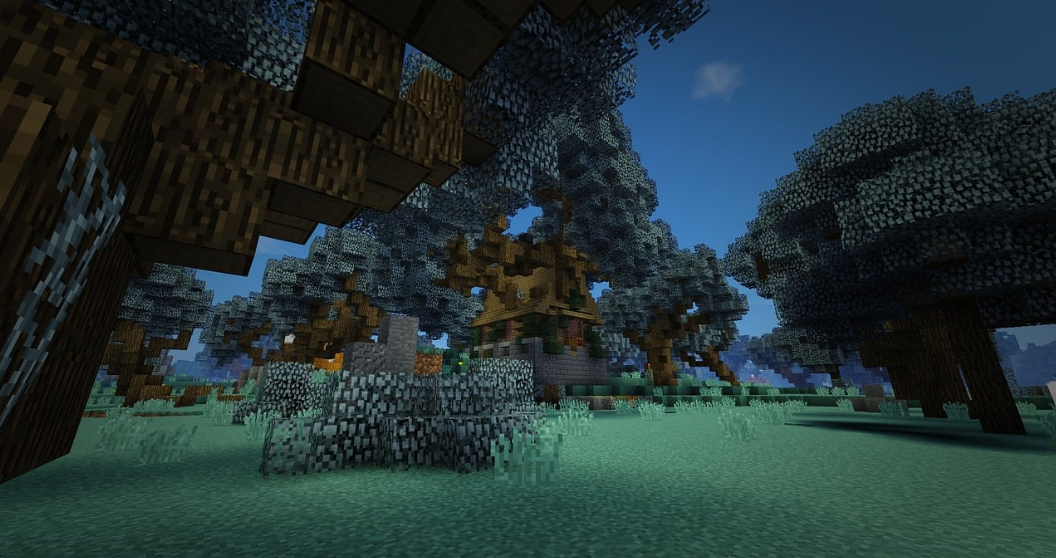
https://pixabay.com/illustrations/ai-generated-gamer-minecraft-8020814/

Some Players Spend More Time Choosing Packs Than Playing

This happens constantly honestly.

People spend hours scrolling through modpacks trying to decide what sounds interesting.

Technology pack? Hardcore survival? Fantasy RPG? Zombies? Space exploration? Farming? Magic?

There are way too many options now.

And every pack promises completely different experiences.

Some players install five different packs in one weekend and barely play any of them seriously because they keep chasing something newer.

That’s honestly part of modded Minecraft culture at this point.

Bigger Isn’t Always Better

A lot of newer players assume giant modpacks are automatically the best choice.

But honestly, some massive packs become overwhelming immediately.

You spawn into the world and suddenly have:

  • fifty quests
  • dozens of systems
  • hundreds of recipes
  • giant skill trees
  • complicated progression paths

And some players quit after thirty minutes because the game feels more stressful than fun.

Smaller focused packs often work better.

A simple farming pack or exploration pack can stay entertaining much longer because players aren’t constantly buried under mechanics they barely understand.

That’s especially true for multiplayer servers where not everybody wants to study giant progression guides for hours.

Modded Worlds Usually Last Longer

One interesting thing about modded Minecraft is how much longer worlds tend to survive.

Vanilla survival eventually becomes repetitive once players beat the Ender Dragon, build farms, and finish large bases.

Modpacks usually keep adding new goals constantly.

Maybe players start building factories. Then space programs. Then magical systems. Then giant automation networks.

There’s always another project waiting.

And once friend groups become heavily invested in large modded worlds, minecraft hosting starts mattering a lot more too because losing progress in huge packs feels absolutely terrible after weeks of work.

Especially when worlds contain complicated machines and builds that took dozens of hours to create.

Modpacks Keep Minecraft Feeling Fresh

Vanilla Minecraft is fun for a while, but eventually people already know everything by memory. Mods keep the game from feeling repetitive after hundreds of hours.

Some people only care about technical automation. Others want survival difficulty. Some just wanna build fantasy worlds with dragons and magic everywhere.

Minecraft somehow supports all of it.

And honestly, the game probably wouldn’t still feel this active without the modding community constantly adding weird new ideas to it.

That’s why people keep returning to modpacks again and again even after thousands of hours.

The game always feels slightly different once somebody installs a completely new pack and loads into another world.


 

The Internet’s Annual Blocky Civil War: Inside the Minecraft Mob Vote

0

So yeah, every year same thing, everyone talking about the minecraft mob vote. Mojang shows like three mobs, and players just pick one. The winner gets added to the game later.

Sounds simple. And yeah, it is.

But people take it way more seriously than you’d expect.

Like, you’ll see arguments everywhere. Reddit, Twitter, Discord — people trying to convince others why their pick is better. Some make memes, some make full posts explaining why one mob is “useful” and another is pointless.

And then the vote happens, one wins, and the other two just… disappear. That’s the part that always annoys people.The Internet's Annual Blocky Civil War: Inside the Minecraft Mob Vote

https://chatgpt.com/

How The Minecraft Vote Actually Feels

So yeah, the minecraft vote itself is quick. You log in, click one option, done.

But the whole thing around it is way bigger than the vote itself.

For example, one year people picked something that barely changed gameplay. Another option could’ve added something more useful, but it lost.

And then after that, you just see comments like “we picked wrong” everywhere.

Happens every time.

And yeah, sometimes the winning mob ends up being kinda underwhelming. Not useless, but not as big of a deal as people expected.

So you get that weird situation where everyone was arguing for days… and then forgets about it a week later.

Talking About Minecraft Mob Vote Mobs

The funny part is how people judge the minecraft mob vote mobs before they even exist.

You get like a short video or a few lines of description, and that’s it. No real gameplay, no full details.

But people already decide everything.

“This one is useless.”
“This one will change the game.”
“This one is boring.”

All based on almost nothing.

And yeah, sometimes people are right. Sometimes not even close.

A simple example: a mob sounds cool on paper, but when it finally gets added, it barely affects how you actually play.

Or the opposite — something that looked boring turns out to be useful in small ways.The Internet's Annual Blocky Civil War: Inside the Minecraft Mob Vote

https://pixabay.com/illustrations/minecraft-magic-forest-forest-biom-2053888/

Why People Care This Much

So yeah, you might wonder why people even care so much about this.

It’s just one mob, right? But it’s also about missing out.

Because the losing mobs don’t come back. At least not anytime soon. So people feel like they’re losing content forever.

And also, it’s one of the few times players feel like they can influence the game directly. Even if it’s just picking between three options.

So yeah, people take it seriously.

What Happens After The Vote

After the vote ends, things calm down pretty fast. The winning mob gets added later in an update. Usually not right away.

And when it finally shows up, reactions are mixed. Some people like it. Some say it wasn’t worth it. Some don’t even notice it much in normal gameplay.

And the other mobs? Gone. That’s why every year you see the same discussion again — people don’t want to “lose” the better option.

When Players Want More Control

So yeah, after a few votes, some players start thinking differently.

Instead of waiting for updates, they just want to change the game themselves.

That’s where mods come in.

You can add all the mobs you want, change mechanics, tweak everything. No need to wait for official updates or votes.

But yeah, setting that up can get annoying.

And that’s why you see people asking things like people recommend hosting for modded minecraft, because running a modded world smoothly is not always easy.

Some setups lag, some crash out, some don’t handle mods well. So yeah, you kinda learn by trying.

So Yeah, That’s It

It’s a small feature, but people still turn it into a whole debate every time. Some care a lot, some don’t care at all. And yeah, in the end it’s just one mob in a huge game. But for whatever reason, it turns into arguments again next year. That’s just how it goes with this game.


Equity Group reports Sh19.1 billion profit as group assets cross Sh2 trillion mark

0

Equity Group Holdings Plc has reported a strong first-quarter performance for 2026, underscoring the gains from its ongoing transformation into a resilient, technology-driven pan-African financial services group.

The lender’s Profit After Tax rose by 24 percent to Sh19.1 billion, supported by stronger balance-sheet quality, the use of digital banking channels, and rising contributions from its regional subsidiaries.

Equity’s balance sheet expanded by 16 percent to Sh2.04 trillion, reflecting sustained momentum across its markets.

Customer deposits grew by 13 percent, while net loans increased by 9 percent, pointing to continued customer confidence and steady economic activity in the region.

The performance was anchored on a growing customer base of 22.7 million, backed by a wide distribution network of 86,910 agency outlets and 1.4 million merchants.

The extensive footprint continues to reinforce Equity’s standing as one of the region’s leading integrated financial services providers.

The Group said its Q1 performance reflects a multi-year transformation agenda focused on resilience, diversification, and technology adoption.

Over time, Equity has restructured its operating model, deepened its regional presence, and increased investment in digital and AI-enabled capabilities aimed at building a future-ready institution.

Operational efficiency improved further during the quarter, with the cost-to-income ratio declining to 50.6 percent from 54.2 percent, largely driven by productivity gains, expanded shared services, and increased customer migration to digital channels.

Profitability indicators remained strong, with Return on Assets standing at 3.9 percent and Return on Equity at 22.6 percent.

Commenting on the results, Equity Group Managing Director and CEO Dr James Mwangi said the quarter’s performance reflects the progress made in transforming the institution into a diversified regional powerhouse.

“Our Q1 performance reflects the success of our deliberate transformation into a diversified, regional, technology-led financial services Group. We are building a future-ready institution; scalable, secure, and impact-led, anchored in digital capabilities, staff upskilling, and a culture of disciplined execution,” said Dr Mwangi.

He added that the Group is positioning itself beyond traditional banking as it pursues long-term ambitions.

“As we progress toward our 2030 ambitions, we are evolving beyond traditional banking into a Transformation Finance Institution that mobilizes capital, connects ecosystems, and accelerates inclusive, sustainable prosperity across Africa,” he said.

Equity’s technology-led strategy continues to take deeper root across its operations, with customers increasingly adopting digital channels.

The Group reported that 98.3 percent of all transactions were conducted outside branches, while 89.5 percent were processed through digital platforms, reflecting strong customer preference for its digital ecosystem.

The lender’s technology organization, strengthened following the establishment of a dedicated Technology Group in the fourth quarter, has continued to modernise core banking systems, upgrade payments infrastructure, and enhance risk analytics.

On risk management, Equity reported continued improvement in asset quality, supported by tighter controls and portfolio diversification.

Non-performing loan coverage strengthened to 72 percent from 67 percent, while loan loss provisions fell by 18 percent.

The bank also recorded a notable reduction in non-performing loans, with the NPL ratio improving year-on-year from 14 percent to 10 percent.

Subsidiaries continue to drive growth 

Regional subsidiaries continued to deliver strong growth accounting for 50 percent of Group banking profitability and 52 percent of total banking assets.

Equity Bank Kenya posted a 21 percent year-on-year increase in Profit After Tax to Sh10.3 billion from Sh8.5 billion in Q1 2025, maintaining its leadership in MSME banking.

The subsidiary disbursed 36.2 percent of the Sh101 billion MSME loans issued in Kenya between January and March 2026, highlighting continued focus on the SME segment.

In the Democratic Republic of Congo, EquityBCDC recorded a 32 percent rise in Profit After Tax to Sh5.0 billion. Equity Rwanda posted a 36 percent increase to Sh1.5 billion, while Equity Tanzania delivered standout performance, with profit rising by 150 percent to Sh1.04 billion.

Overall, the regional banking businesses contributed significantly across key metrics, accounting for 52 percent of assets, 51 percent of revenue, 54 percent of the loan book, and 50 percent of profit before tax.

Also Read: Africa forward: Equity group & France strategic partnership summary

Fuel prices in Kenya since January 2026: What’s driving the rise?

0

Kenya’s fuel prices have experienced notable fluctuations since January 2026, with motorists, businesses, and households feeling the effects almost immediately through transport costs and commodity prices.

While the year began with relatively stable or slightly declining pump prices, the situation changed sharply in April and May, when prices surged to some of the highest levels seen in recent years.

In the latest fuel prices announced on Monday, May 18, the Energy and Petroleum Regulatory Authority (EPRA) reduced diesel prices while significantly increasing kerosene prices.

Under the latest review, diesel prices have been reduced by Sh10.06 per litre, kerosene prices have been increased by Sh38.60 per litre, while super petrol prices remain unchanged for the next 25 days, from May 19 to June 14, 2026.

“In Nairobi, super petrol, diesel, and kerosene now retail at Sh214.25, Sh232.86 and Sh191.38 respectively, effective midnight for the next 30 days,” the authority said.

Earlier this month, EPRA had raised diesel prices by Sh46.29 per litre to Sh242.92 and petrol by Sh16.65 per litre to Sh214.25 due to the ongoing Middle East war.

The hike triggered nationwide protests with public transport operaters warning that a large disparity between diesel and kerosene prices could encourage the illegal blending of fuel.

The high fuel prices have been attributed to various geopolitical issues including the rising global oil prices, higher landed costs of fuel imports, shilling weakness against the dollar, and tax and levies.

Kenya imports nearly all its petroleum products, meaning international oil market movements have a direct impact on pump prices.

Early 2026 saw relative calm in global markets, which helped stabilize prices locally. However, as global crude oil prices rose due to geopolitical tensions and supply uncertainties, import costs also increased sharply.

EPRA says the landing cost of super petrol rose by 10 percent from Sh106,325 (USD 823.27) to Sh117,039 (USD 906.23) per cubic metre.

At the same time, landing costs for diesel surged by 20.32 percent from about Sh138,683 (USD 1,073.82) to about  Sh166,859 (USD 1,291.98) per cubic metre, while kerosene also increased by 1.59 percent.

Besides, landing costs, fuel prices in Kenya include several taxes and charges, including excise duty, VAT, road maintenance levy and petroleum development levy.

This means that even when global prices ease, these fixed levies keep pump prices elevated. As a result, consumers continue to pay high prices even during periods of reduced global oil costs.

Below is a comparison of how fuel prices have changed since January 2026:

Period Covered Super Petrol (Sh/litre) Diesel (Sh/litre) Kerosene (Sh/litre)
Dec 15, 2025 – Jan 14, 2026 184.52 171.47 154.78
Jan 15 – Feb 14, 2026 182.52 170.47 153.78
Feb 15 – Mar 14, 2026 178.28 166.54 152.78
Mar 15 – Apr 14, 2026 178.28 166.54 152.78
Apr 15 – May 14, 2026 206.97 206.84 152.78
May 15 – Jun 14, 2026 214.25 232.86 191.38

Also Read: Ruto borrows over Sh1 trillion in 8 months as debt crisis deepens