
Home Blog Page 60

A look at the Career profile of new KRA boss Adan Mohamed

0

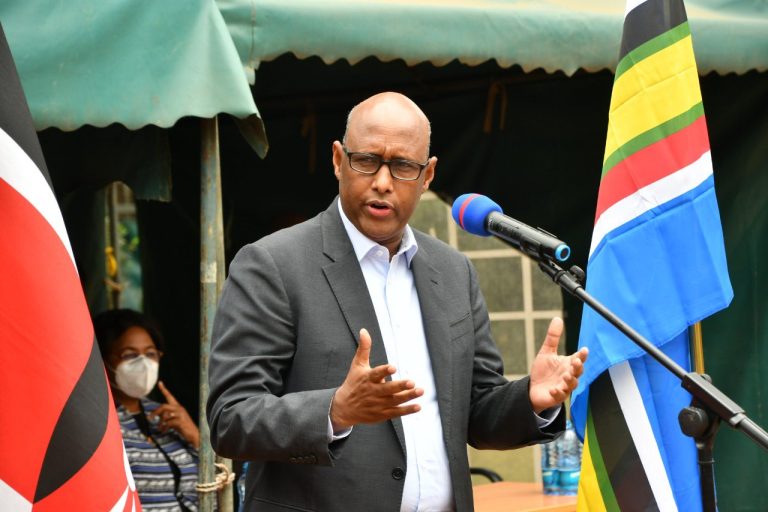
The National Treasury Cabinet Secretary, John Mbadi, has appointed former Cabinet Secretary Adan Abdulla Mohamed as the new Commissioner General of the Kenya Revenue Authority (KRA).

In a gazette notice published on Monday, May 18, Mbadi said that Mohamed will serve a three-year term, effective immediately.

“In exercise of the powers conferred by section 11 (1) of the Kenya Revenue Authority Act, the Cabinet Secretary for the National Treasury appoints Adan Abdulla Mohamed to be the Commissioner General of Kenya Revenue Authority, for a period of three (3) years, with effect from the 18th May, 2026,” the notice read.

Mohamed’s appointment places at the helm of Kenya’s tax agency a figure widely regarded as one of the country’s most accomplished technocrats, bringing decades of experience spanning corporate leadership, economic strategy and government administration.

Born in Kutulo, a remote village in Mandera County, Mohamed’s rise to national prominence reflects a steady progression shaped by academic excellence and professional discipline.

He attended Kangaru High School before joining the University of Nairobi, where he graduated in 1989 with a First-Class Bachelor of Commerce degree.

He later advanced his studies at Harvard Business School, where he earned a Master of Business Administration (MBA), further sharpening his credentials for high-level leadership in both the private and public sectors.

Mohamed began his professional career at PricewaterhouseCoopers (PwC), training as a chartered accountant in London. His early exposure to international finance and auditing laid the foundation for a distinguished career in banking.

He later joined Barclays Bank, where he rose through the ranks to become Chief Executive Officer of Barclays Kenya. His influence extended beyond the local market when he was appointed Managing Director for Barclays East and West Africa.

He subsequently served as Chief Administrative Officer for Barclays Africa, a role that placed him in charge of operational oversight across ten countries.

His entry into government came in 2013 when former President Uhuru Kenyatta appointed him Cabinet Secretary for Industrialisation and Enterprise Development. In that position, Mohamed was tasked with steering industrial policy and strengthening the country’s enterprise sector.

Over the years, he served in several key ministerial portfolios, including Cabinet Secretary for Industry, Trade and Cooperatives.

He was also appointed Acting Cabinet Secretary for Agriculture, and later served as Cabinet Secretary for East African Community and Regional Development between 2018 and 2022.

In 2022, Mohamed resigned from the Cabinet to contest the Mandera gubernatorial seat, though he did not win the election. Despite the setback, he remained a prominent figure in national policy circles.

President William Ruto reappointed him to government, naming him a member of the Council of Economic Advisors and later appointed him Chief of Strategy Execution in the Executive Office of the President in 2023, a role he held till his appointment to lead KRA.

Also Read: Ruto borrows over Sh1 trillion in 8 months as debt crisis deepens

Why more employees are turning to NCBA salary account

In today’s fast-paced economy, managing income efficiently has become just as important as earning it.

For many employees, the salary account is the first point of contact with formal banking, and increasingly, it is shaping how people budget, save, transact, and plan for the future.

A well-structured salary account offers more than just a place where wages are deposited. It provides convenience, stability, and a secure channel through which individuals can manage daily expenses while keeping track of their financial progress.

From paying bills and sending money to family, to accessing mobile banking and monitoring account activity, a salary account is often the foundation of modern personal finance.

For employees, the right account can mean lower banking costs, fewer transaction hurdles, and easier access to essential services.

NCBA Bank’s salary account is a perfect example of a practical option for individuals seeking an affordable and dependable everyday banking solution.

The facility is designed as a low-cost, low-transaction salary processing account tailored for routine banking needs for working individuals who want simplicity.

One of the most notable features is its accessibility. Customers can open the account with a zero opening balance, making it easy for new account holders to get started without financial pressure.

Additionally, the account maintains a zero operating balance requirement, offering flexibility for users who may need to withdraw their entire salary to meet monthly obligations.

The account operates in Kenyan Shillings ensuring it aligns with the everyday needs of local salary earners.

As many bank customers can attest, monthly ledger fees can quietly accumulate into high costs over time. NCBA’s Salary Account removes this concern by having monthly ledger fees waived, allowing customers to retain more of their income.

With digital services becoming a standard expectation, NCBA Salary Account holders benefit from Online and Mobile Banking, allowing them to manage their accounts wherever they are.

Whether checking balances, tracking transactions, or planning spending, customers can access their accounts conveniently through their phones or online platforms, an increasingly important feature in a country where mobile-based financial activity continues to grow.

Beyond basic salary processing, the account comes with several benefits that support convenient banking.

Customers receive free monthly e-statements, offering a reliable way to monitor spending and keep financial records without additional cost.

The account also provides free incoming funds transfers, a useful feature for individuals who may receive money from family members, business payments, or other deposits.

Additionally, customers enjoy free funds transfers to other NCBA accounts, boosting seamless transactions within families, workplaces, savings groups, or among business partners.

How to open NCBA salary account

To get started, customers are required to visit the nearest NCBA bank branch countrywide. Applications can also be made online via the NCBA website and mobile app.

Required documents include an original and a copy of the National ID, KRA PIN certificate, a passport-size photograph, and an introduction letter from the employer or employment contract.

Also Read: NCBA champions young ambition with the onboarding of the 2026 Go Getter Internship cohort

How Co-op Bank’s flexible Term Loan facility is supporting small businesses

Micro, Small, and Medium Enterprises (MSMEs) remain the backbone of Kenya’s economy, driving job creation, innovation, and community-level development.

From retail shops and agribusinesses to manufacturers and service providers, these enterprises keep markets active and households afloat.

Yet for many MSME owners, growth is often slowed not by lack of ambition or demand, but by limited access to timely and affordable financing.

As competition intensifies and operating costs rise, MSMEs increasingly require quick financing to expand operations, increase stock levels, purchase equipment or improve supply capacity.

However, the reality on the ground is that many small businesses still struggle to secure the capital needed to take advantage of opportunities when they arise.

For most MSMEs, cash flow is the lifeline of daily operations. A delay in receiving customer payments, unexpected supply shortages, or a sudden increase in demand can easily strain working capital.

In such situations, access to credit is not merely a convenience; it becomes a survival tool. Many businesses also require longer-term financing for expansion.

A trader may need to open a second outlet, a small manufacturer may need machinery, while a distributor may need larger storage and improved logistics.

These are investments that cannot always be funded through day-to-day income, making term loans a critical instrument for sustainable growth.

It is within this reality that the Co-operative Bank of Kenya launched the MSME Term loan to meet the financial needs of growing enterprises.

The facility provides businesses with access to funds for a defined period, enabling them to expand operations or strengthen supply capabilities without disrupting their working capital.

Unlike short-term credit products that may require quick repayment, the MSME Term Loan offers flexible repayment periods based on the level of business and the type of security provided.

Co-op MSME Term Loan options

The Co-op Bank MSME Term Loan is offered under three tiers, Bronze, Silver and Gold, each aligned to different business capacities and financing needs.

Under the Bronze package, MSMEs can access up to Sh600,000 as an unsecured term loan, or up to Sh3 million as a partially secured facility.

The Silver tier offers unsecured borrowing of up to Sh6 million, while partially secured financing can go up to Sh8 million.

For more established enterprises with larger capital requirements, the Gold tier provides unsecured loans of up to Sh10 million, and partially secured financing of up to Sh15 million.

This tiered structure allows MSMEs to access financing that matches their growth stage, while also creating room for businesses to scale progressively.

One of the key strengths of the facility is the repayment flexibility. MSMEs borrowing under the unsecured option can repay within a period of up to 24 months across all tiers.

For secured borrowing, repayment periods can extend to 60 months, allowing businesses to spread payments over five years.

To get started, customers are advised to visit the nearest Co-op Bank branch countrywide to apply for financing that matches their business needs.

Also Read: Unlocking growth for early-stage startups: Inside Safaricom’s spark accelerator program                                         

Ruto borrows over Sh1 trillion in 8 months as debt crisis deepens

0

Kenya is in a debt crisis. Every passing month, Kenya is sinking deeper into debts as the government engages high borrowing gears. Data from the Central Bank of Kenya (CBK) now shows that in just the first 8 months of the current financial year 2025/26, President William Ruto and his government had borrowed over Sh1 trillion.

At the same time, the data shows that from September 2022 when he was inaugurated as the fifth president to February 2026, Ruto and his government borrowed Sh4.1 trillion.

The data further shows that as at the end of February 2026, the total public debt stood at a staggering Sh12.844 trillion, having risen from the previous administration’s Sh8.7 trillion mark as at September 2022.

Domestic debt stood at Sh7.01 trillion while external dent was Sh5.78 trillion. This saw the total debt coming in at 69.5 percent of the national gross domestic product (GDP).

Alarmingly, President Ruto’s government is now spending over two thirds of tax revenues in paying debt interest. For instance, in February 2026, tax revenues were recorded as Sh172 billion while the government spent Sh124 billion to pay debt interest. Out of this amount, Sh101 billion was used to pay domestic debt interest while Sh23 billion was used on external debt interest.

The amounts set aside to pay debt interest is projected to rise even further. For instance, in the next financial year 2026/27, President Ruto and his government are projecting to spend Sh1.25 trillion on debt interest. At the same time, the government is estimating that in the coming financial year, exchequer revenue shall hit Sh3 trillion.

Read More: Ruto State House budget for this year hits a shocking Sh17 billion

It is however not clear how this amount shall be achieved at a time when the government has continued to struggle to raise beyond Sh2.3 trillion in annual tax revenues.

Despite the rising debt, the government has continue on a spending spree led by the State House and the Office of the President. For example, the budget for State House for the current financial year has been revised to a staggering Sh17 billion. This is after Ruto’s State House blew away Sh10.4 billion within the first seven months of the financial year.

The amounts allocated to State House now surpass the amounts that the United States allocates to the White House and the amounts first world countries such as Germany allocated to similar top offices.

Oraimo debuts flagship spaceBuds 2 with 52dB ANC and AI features in Kenya

0

Oraimo, the global smart accessories brand, has launched the oraimo SpaceBuds 2 (OTW-631) to the Kenyan market. This latest flagship True Wireless Stereo (TWS) earbuds are designed to redefine immersive audio, intelligent communication, and stylish everyday listening for Kenya’s fast-paced, digitally connected generation.

Built on the success of the bestselling oraimo Space series, the new SpaceBuds 2 combines advanced AI-powered features, immersive spatial audio, and powerful noise cancellation. Elevating this launch to a global stage, the SpaceBuds 2 has earned the professional endorsement of Burna Boy’s Grammy Award-winning audio engineer; Jesse Ray.

This partnership ensures that the earbuds’ acoustic tuning meets the rigorous standards of the world’s most elite music professionals. By involving a Grammy-winning expert in the sound engineering process, oraimo has refined the SpaceBuds 2 to deliver exceptional clarity, balance, and spatial detail, bridging the gap between professional studio quality and everyday consumer listening.

Beyond its technical prowess, the device’s aesthetic appeal has already turned heads internationally, with the presence of oraimo SpaceBuds 2 in Milan during Fashion Week highlighting its premium design and stylish aesthetic as a must-have tech accessory for the fashion-forward.

Key Features at a Glance

52dB Hybrid Active Noise Cancellation: Engineered to minimize surrounding distractions and create a deeply immersive personal listening environment.

Grammy-Level Sound – Immersive Spatial Audio: Delivers rich, multidimensional sound designed to elevate music, gaming, and movie experiences.

45-Hour Long-Lasting Playtime: Built to keep up with demanding schedules without constant charging interruptions.

How banks can transform compliance through technology

AI-Powered Intelligence: Featuring AI Translation for seamless multilingual interactions and AI Clear Calling technology to enhance voice clarity in noisy environments.

Lunar Eclipse Design: A sleek aesthetic complemented by a customizable and personalized lighting effect, making it a stylish tech accessory.

Highly positioned for Gen Z consumers and young professionals, the oraimo SpaceBuds 2 caters to users seeking premium sound experiences that flawlessly fit into their daily routines. Whether commuting to-and-from the office, during gym sessions, on coffee runs, or for gaming, the SpaceBuds 2 delivers high-end stereo performance.

 to our users across Kenya and beyond while continuing to strengthen oraimo’s position as a leading lifestyle technology brand,” stated Mr. Kevin Yuan, CEO, oraimo Audio. “With the oraimo SpaceBuds 2, we are introducing more than just a new pair of earbuds; we’re delivering a smarter, more immersive audio experience—vetted by Grammy-winning excellence—designed for today’s fast-paced consumer.”

The introduction of AI-powered capabilities is especially relevant for Nairobi’s multilingual and highly mobile urban environment. Whether you’re blocking out the loud matatu music on your way to work, blocking the street noise while navigating Nairobi traffic on your boda ride, or navigating a complex supplier negotiation between Swahili and English—the oraimo SpaceBuds 2 are built for Nairobi’s real-life rhythms, letting you switch smoothly between Swahili and other languages in real-time. These features help users communicate effortlessly across business, social, and everyday interactions. The soft launch phase has already shown significant interest among tech enthusiasts who prioritize both cognitive technology and professional-grade acoustic performance.

Customers can find the oraimo SpaceBuds 2 across all oraimo physical stores, Hotpoint stores, Miniso stores, Carrefour stores, China Square malls, Panda Mart, and China Village. The earbuds are also available online via the oraimo online marketplace at ke.oraimo.com.


India vs. Jamaica: What to Expect from the May 2026 Match – Prediction, Lineups, and Odds in the MelBet App

0

MelBet App: The upcoming clash between India and Jamaica in May 2026 is already attracting attention from football fans and sports bettors worldwide. The match will take place as part of the Unity Cup tournament in London and promises an interesting battle between two teams with completely different playing styles.

For bettors using the MelBet app, this game offers several valuable betting opportunities, including match winner, total goals, live betting, and player markets.

How to Bet Using the MelBet Mobile App

Many football fans prefer mobile betting, as the app allows them to track odds in real time and place bets directly during the match. Android users can download melbet app apk from the official platform,while iPhone and iPad users can install the iOS version via the official MelBet app in the App Store.. The mobile app provides access to live betting, betting statistics, initial odds tracking, withdrawals, and other sports betting features.

After downloading the MelBet app, users can:

  • place live bets on the India vs. Jamaica match;
  • view real-time odds changes;
  • access statistics and analytics;
  • use in-game cashout;
  • receive bonuses and promotions for mobile betting.

The mobile version is especially popular among players who follow international football tournaments and prefer quick access to dynamic markets without using a desktop browser.

An Industry At Growth: How Digital Tech Has Disrupted The Sports Betting Industry

Match Preview

India continues rebuilding under a more disciplined tactical system. The team has shown improvement defensively during recent international fixtures and now relies heavily on structured midfield play and quick counterattacks.

Jamaica, meanwhile, enter the match with greater physicality, pace, and attacking depth. Their squad includes several players competing in Europe and North America, giving the Reggae Boyz an edge in experience and athleticism.

While India may control possession in phases, Jamaica are expected to create the more dangerous chances through direct attacking football.

Predicted Lineups

India Predicted XI (4-2-3-1)

  • Goalkeeper: Gurpreet Singh Sandhu
  • Defenders: Akash Mishra, Anwar Ali, Sandesh Jhingan, Rahul Bheke
  • Midfielders: Suresh Singh, Apuia
  • Attacking Midfield: Lallianzuala Chhangte, Brandon Fernandes, Manvir Singh
  • Forward: Sunil Chhetri

Jamaica Predicted XI (4-3-3)

  • Goalkeeper: Andre Blake
  • Defenders: Dexter Lembikisa, Ethan Pinnock, Damion Lowe, Amari’i Bell
  • Midfielders: Kevon Lambert, Karoy Anderson, Demarai Gray
  • Attackers: Leon Bailey, Shamar Nicholson, Michail Antonio

Jamaica’s attack looks significantly stronger on paper, especially with the pace of Leon Bailey and the finishing ability of Michail Antonio.

Match Prediction

India are expected to defend deep and try to frustrate Jamaica during the first half. However, Jamaica’s attacking quality and physical superiority could become decisive later in the match.

Predicted Score

India 0–2 Jamaica

Best Betting Predictions

  • Jamaica to win
  • Under 3.5 goals
  • Jamaica to score first
  • Both teams to score — NO

These markets are expected to be among the most popular in the MelBet app ahead of kickoff.

Betting Odds in the MelBet App

Early odds may slightly change before the match, but current expectations look approximately like this:

Market Odds
India win 5.80
Draw 3.70
Jamaica win 1.60
Under 2.5 goals 1.75
Both teams to score — NO 1.68

Unlocking growth for early-stage startups: Inside Safaricom’s spark accelerator program

0

The Spark Accelerator program, launched in 2024 after the restructuring of Safaricom’s Spark Fund, has quickly become a leading platform for bold founders looking to grow their businesses. Centered on Safaricom’s main goal of transforming lives, this initiative aims to empower early-stage startups by giving them the access they need to thrive in tough markets. By using a strong network of corporate resources, industry experts, and technical advisors, the program sets emerging companies up for long-term success.

The execution of the accelerator relies on a strong partnership among multiple organizations. Safaricom, M-PESA Africa, and Sumitomo Corporation are the main supporters of the initiative, while iHub is the primary partner responsible for the daily operations of the acceleration process. Understanding that early-stage ventures need complete support, the program includes a network of specialized corporate partners. Key industry players like PwC, AWS, Bowmans Law, and Vodacom are involved, providing essential technical advice, legal support, cloud infrastructure guidance, and strategic mentorship to the participating founders.

Designed for startups in the Fintech and Digital Content sectors, the accelerator takes a thoughtful, ecosystem-based approach. Instead of giving generic business advice, the program has a dedicated team of experts who understand market dynamics and emerging technologies. This allows for continuous innovation among the participating companies. To support growth, the accelerator offers a mix of training, mentorship, funding, and go-to-market support. This structure tackles the three main challenges faced by early-stage innovators: securing product and technology support, gaining reliable market access, and obtaining necessary corporate funding.

Inside Safaricom’s Sh95.6 billion record-breaking net profit in 12 months

Since it started, the Spark Accelerator has successfully boosted growth for 18 startups across two cohorts. The first cohort included a remarkable group of innovators such as Chumz, Chpter, Faidi HR, HealthX, Churpy, VunaPay, Twiva, BlackRhino, and Nobuk. Maintaining this momentum, the second cohort introduced an additional diverse set of tech ventures: Mediakits, StockApp, Leta, Weplay, FlexPay, DigiTax, Oye, QuePay, and GoPay. Through the accelerator’s specialized tracks, these businesses have been able to improve their products and significantly increase their consumer reach.

The program concludes with the Investor Demo Day, which acts as both a graduation and an important launchpad for the founders. This day provides startups with a valuable chance to pitch their improved business models to a selected audience of local and international investors. The main goal is to help these businesses secure the seed or follow-on funding they need to grow. For investors, the Demo Day has become a key event for discovering high-potential, well-evaluated startups that are ready to scale. As the current cycles wrap up, the platform is already preparing for its next phase, with applications for Cohort 3 expected to open later this year.


Building the rails: How the intersection of tech and finance will unlock Intra-African trade

0

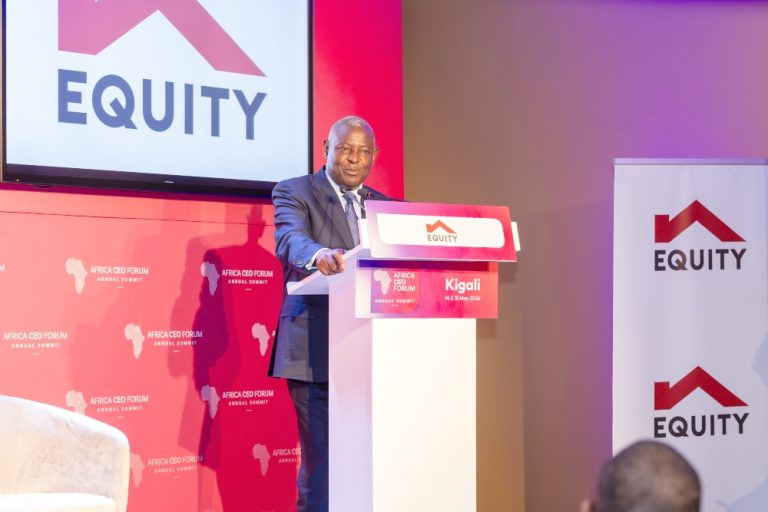
Equity Group Managing Director and CEO James Mwangi has called for deeper collaboration between governments, financial institutions and technology players to unlock Africa’s digital economy and accelerate intra-African trade.

Speaking during a high-level Tech Breakfast convened by Equity Group on the sidelines of the ongoing Africa CEO Forum 2026 in Kigali, Dr. Mwangi said Africa’s future growth will depend on the continent’s ability to integrate technology with finance to create scalable opportunities for businesses and young entrepreneurs.

“We need an intersection of technology and money,” Dr. Mwangi said.

“We want to enable trade across the continent and create platforms that empower businesses and entrepreneurs to scale.”

The breakfast meeting, themed “From Fintech to Futuretech: Scaling Africa’s Digital Economy,” brought together leaders from government, finance, technology and innovation sectors to discuss Africa’s digital transformation agenda and the infrastructure required to support future growth.

Dr. Mwangi emphasized the need for long-term investment in innovation and digital systems capable of expanding financial inclusion and supporting enterprise development across the continent.

“We want the youth to leverage technology to develop their enterprises and participate meaningfully in the digital economy,” he said.

He noted that Africa’s transformation would require institutions willing to build shared infrastructure and move beyond traditional approaches to collaboration.

Why Equity Bank’s Teen Member Account is a smart start for your child

“The Africa CEO Forum has been about scaling, and this is an invitation for all of us to scale together, partnering to build public infrastructure that serves the entire continent,” he added.

The discussions also explored how emerging technologies such as blockchain, digital assets and decentralized infrastructure could improve transparency, efficiency and access to financial services across African markets.

Rwanda’s ICT and Innovation Minister Paula Ingabire said African countries must take ownership of their digital transformation by building systems that create value for local economies and citizens.

She highlighted the growing importance of digital infrastructure, including cross-border banking systems, digital identity and data governance frameworks, noting that data is increasingly becoming a strategic economic asset.

“We need to start setting the pace on how technology empowers us and builds value for our people,” she said.

“Every generation of technology has promised inclusion. We now need to embrace these technologies intentionally and work together to build systems that truly expand opportunity,” she added. “The rails are ours to build and the rules are ours to create.”

The forum comes at a time when African governments and businesses are pushing for stronger regional integration and digital connectivity to support trade, innovation and economic inclusion across the continent.


SportPesa Aviator Multiplier of the week hits stunning 131,176.49x

0

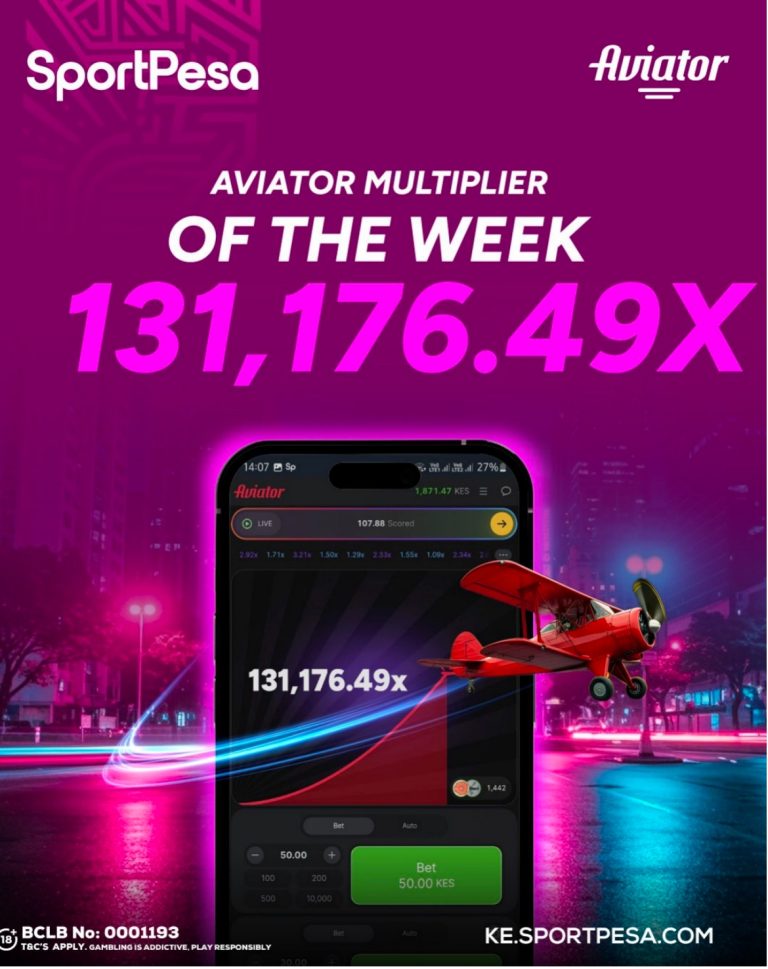
A massive 131,176.49x Aviator multiplier on SportPesa Kenya has left many Kenyan players stunned this week. The extraordinary multiplier quickly became one of the most talked-about moments among Aviator fans across the country. Players online could not stop imagining how even the smallest stake would have transformed into a life-changing payout.

The incredible multiplier once again highlighted why Aviator continues to dominate conversations in Kenya’s online gaming scene. Many players pointed out that a KSh 20 or KSh 50 stake could have delivered millions if someone had cashed out before the plane flew away. These unforgettable moments continue to strengthen SportPesa Kenya’s reputation as the home of thrilling gaming experiences.

The 131,176.49x multiplier that shocked players

The week’s latest multiplier created massive excitement from the moment the Aviator plane kept climbing higher and higher. As the multiplier crossed major milestones, anticipation grew among everyone watching the round unfold. By the time it reached the unbelievable 131,176.49x mark, many players were left speechless.

The multiplier demonstrated the incredible possibilities that Aviator can sometimes produce. A simple KSh 20 stake at that multiplier would have resulted in more than KSh 2.6 million for a player who cashed out at the perfect time. Even a KSh 50 stake could have delivered over KSh 6.5 million during the same round.

Such moments continue to capture the imagination of players across Kenya. The beauty of Aviator lies in how every round feels unpredictable and exciting from the very beginning. SportPesa Kenya continues to provide a smooth and reliable platform for these thrilling moments to unfold in real time.

SportPesa unveils exciting Easter spin campaign with daily free bets

Why Aviator continues to dominate in Kenya

Aviator has become one of the most popular games on SportPesa Kenya because of its simplicity and excitement. Players place a stake and watch as the plane takes off, with the multiplier increasing every second. The challenge is deciding the perfect moment to cash out before the plane disappears.

The fast-paced nature of the game keeps players fully engaged throughout every session. Each round creates tension and excitement as players balance patience with timing. This unique combination has helped Aviator build a loyal and rapidly growing community across the country.

SportPesa Kenya has also enhanced the Aviator experience through seamless gameplay and a user-friendly design. The platform allows players to join rounds quickly and track multipliers smoothly without interruptions. This reliability has played a major role in making Aviator one of the most loved games in the Kenyan market.

Small stakes, massive possibilities

One of the biggest attractions of Aviator is the possibility of turning small amounts into extraordinary payouts. The latest 131,176.49x multiplier reminded many players how powerful timing can sometimes be. A small stake placed at the right moment could potentially create unforgettable results.

Stories of players winning huge amounts from modest stakes continue to spread across Kenya. Previous winners have transformed as little as KSh 75 into millions after cashing out at the perfect time. These stories continue to inspire excitement among players who enjoy the thrill of the game.

The latest multiplier has once again shown why Sportpesa Aviator remains unique. Every takeoff carries fresh possibilities, and every second creates suspense. SportPesa continues to deliver a gaming experience that combines entertainment, excitement, and incredible moments.

Conclusion

The stunning 131,176.49x Aviator multiplier has once again demonstrated why the game continues to dominate conversations about online gaming in Kenya. The idea that even a KSh 20 could potentially turn into millions has amazed many players. These moments continue to fuel excitement and curiosity across the country.

SportPesa Kenya continues to lead the rest of the industry in offering dynamic gaming experiences. The aviator game combines simplicity and suspense, leaving players on the edge of their seats. Such multipliers will continue to encourage players to continue trusting in Sportpesa to give them a once-in-a-lifetime opportunity to change their lives for good.

NCBA & Salvador Caetano Kenya: Strategic asset finance partnership for ICE and Electric Vehicles

0

NCBA Bank has signed a strategic Memorandum of Understanding (MoU) with Salvador Caetano Kenya Limited, one of East Africa’s leading automotive distributors. This partnership introduces a structured Asset Financing Scheme to expand access to premium internal combustion engine (ICE) vehicles and electric vehicles (EVs) for both personal and commercial use.

The partnership reinforces NCBA’s position as Kenya’s leading asset finance provider while supporting the country’s transition towards sustainable mobility solutions through flexible, customer-centric financing.

The scheme includes financing of up to 100% for personal vehicles and up to 95% for commercial units, flexible repayment periods of up to 84 months, and discounted processing fees.

Through the partnership, customers purchasing vehicles from Salvador Caetano Kenya Limited will benefit from tailored financing solutions for a wide range of passenger and commercial vehicles from globally recognised brands, including Hyundai, Kia, Ford, JMC, and Chery. Customers purchasing EV models such as the KIA EV6, Hyundai IONIQ 5, and Hyundai Kona EV will access financing of up to 90%  with a repayment period of up to 60 months.

Speaking during the signing ceremony, NCBA Group Director, Asset Finance & Business Solutions, Lennox Mugambi, said the partnership reflects NCBA’s commitment to empowering customers and businesses through innovative financing solutions that support both economic growth and sustainable development.

NCBA group: Go getter internship program 2026

“At NCBA, we believe in the power of partnerships to ignite belief and empower ambitions. This collaboration with Salvador Caetano Kenya Limited places customers at the centre of practical, flexible financing solutions that make vehicle ownership more accessible and aligned to their needs today and into the future. As the market leader in asset finance with a Hire Purchase market share of 35.4% as of April 2026, we remain committed to delivering solutions that support individuals, SMEs, and corporates in achieving their aspirations while accelerating Kenya’s transition towards sustainable mobility,” said Mugambi.

The NCBA–Salvador Caetano Kenya Limited Asset Financing Scheme targets a broad customer base, including retail customers, SMEs, corporate fleet buyers, logistics operators, and organisations seeking to transition towards sustainable fleet solutions.

Salvador Caetano Kenya Limited , Managing Director, Aurélien Glay, noted that the partnership will enhance customer convenience and affordability at the point of sale while supporting the growth of modern mobility solutions in Kenya.

“Our partnership with NCBA marks an important milestone in making vehicle ownership more accessible to customers across Kenya. By integrating competitive financing solutions directly into the customer journey, we are creating a seamless experience for both retail and business customers seeking reliable, premium, and sustainable mobility solutions. We are particularly excited about supporting the adoption of electric vehicles as the market steadily evolves towards greener transportation,” said Glay.

The collaboration further strengthens NCBA’s dealer financing ecosystem and demonstrates the Bank’s continued investment in integrated, end-to-end financing solutions that enhance customer access at the point of sale. The partnership comes at a time when Kenya is experiencing growing demand for flexible vehicle ownership solutions and increased interest in cleaner, sustainable mobility alternatives.