
Home Blog Page 58

KCB Group shareholders approve Sh22.5 billion dividend payout

0

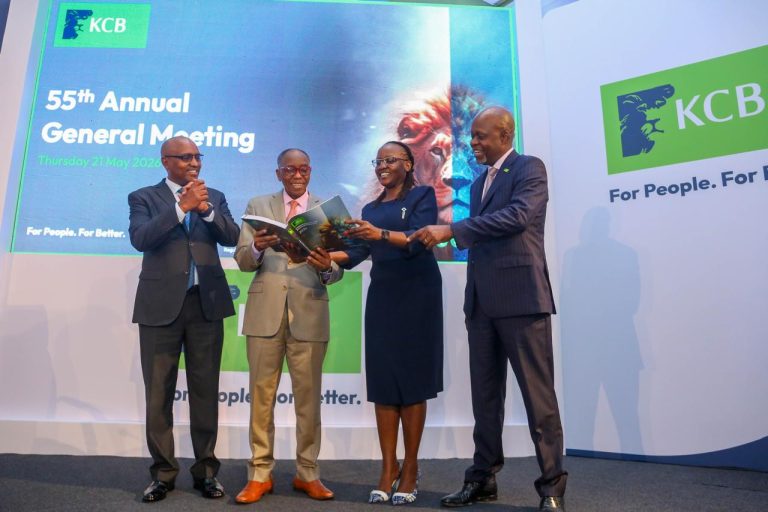
KCB Group shareholders have approved a total dividend payout of Sh22.5 billion for the financial year ended December 31, 2025. This dividend payout was approved at the Annual General Meeting that was held on May 21, 2026.

It comprises of an interim and special dividend of Sh4 per share that was approved by the KCB Board in November 2025 and a final and special dividend of Sh3 per share. This meant that the shareholders pocketed Sh7 per share as the total dividend for the year, which was a 133 percent increase from the previous year.

The final dividend will be paid on or about May 22, 2026 to KCB Group shareholders who will be on the Register of Members at the close of business on April 2, 2026. It will be net of withholding tax.

 “The payout reaffirms KCB Group’s strong financial performance, resilient balance sheet, and commitment to delivering sustainable shareholder value. As we look ahead to 2026, we remain cautiously optimistic about the outlook,” said KCB Group Chairman Dr. Joseph Kinyua.

“Despite the pressures in the operating environment, opportunities continue to emerge through regional integration, intra-African trade, infrastructure development, digital innovation, and the expanding role of the private sector in driving economic transformation.”

During the year, KCB Group’s net profit grew by 11 percent to a historic Sh68.4 billion while total assets were up 9 percent to Sh2.1 trillion. The regional diversification strategy continued to deliver impressive performance as subsidiaries outside Kenya delivered 29.5 percent of the overall net profit and accounting for 30.5 percent of the total assets.

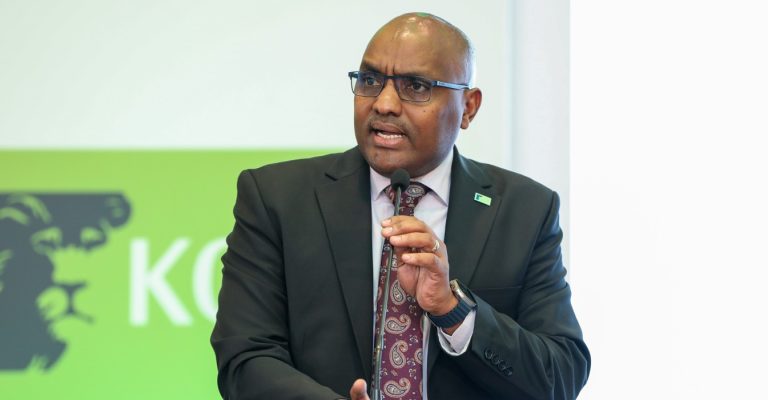
“We are running a well-diversified business which is sustaining our resilience, leveraging our regional footprint and scale, customer confidence and continued investment in digital transformation,” said KCB Group chief executive officer Paul Russo.

“The business continues to benefit from strong momentum across key business segments, improved operational efficiency, and our deliberate focus on supporting businesses, SMEs, and households across the markets we operate in.”

KCB Group in Sh68.4 billion full year 2025 net profit, pays Sh3 additional dividend

For the first quarter of 2026, KCB Group recorded a net profit of Sh17.81 billion, representing a 10.7 percent growth, compared to Sh16.09 billion for a similar period last year.

This was driven by an 8.5 percent growth in total operating income to Sh53.6 billion which mostly streamed from growth in interest bearing assets offsetting decline in net interest margin. The sustained rate cuts by regulators in the region saw a drop in asset yield across all our markets in the period under review.

KCB’s balance sheet closed the quarter at Sh2.3 trillion, marking a 10.8 percent expansion. This growth was anchored on rising customer activity and a 15.7 percent increase in customer deposits, which reached Sh1.7 trillion.

The Group’s gross loan book expanded to Sh1.32 trillion, up from Sh1.21 trillion in the first quarter of 2025, reflecting sustained credit uptake across corporate and retail segments.

Equity group’s insurance arm emerges as third growth engine

0

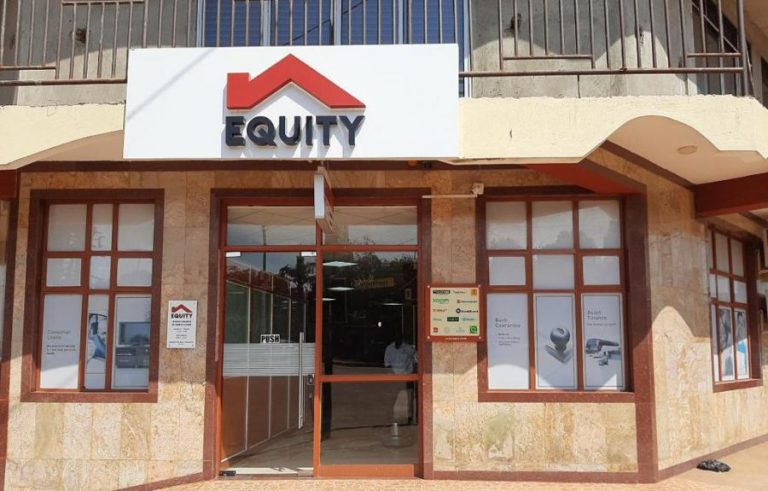
Equity Group Holdings insurance business continued to strengthen its contribution to the lender’s earnings in the first quarter of 2026, emerging as the Group’s third key growth engine after banking and payments.

The Group’s insurance subsidiaries posted a combined 30 percent growth in gross written premiums to KSh4.5 billion during the quarter, while profit before tax rose 53 percent to KSh640 million.

The performance comes as the Group deepens its diversification strategy by embedding insurance products within its broader financial services ecosystem, allowing customers to access banking, lending, payments and insurance services on a single platform.

The insurer’s growth was driven by rising uptake across life, health and general insurance products, with digital channels playing a major role in customer acquisition and policy distribution.

While announcing the Group’s Q1 2026 results, which saw profit after tax rise 24 percent to KSh19.1 billion, Group Managing Director and CEO James Mwangi said the insurance business was increasingly establishing itself among the industry’s top performers.

“In just three years of audited results, our Insurance Group is making its mark across the landscape. Ranking #3 in Return on Assets out of 56 players is a powerful validation of our capital efficiency. By breaking into the top 5 for profitability and top 6 for premiums, we have proven that a customer-centric model can scale at pace without compromising on returns,” said Dr Mwangi.

He added that the business had already broken into the top five most profitable insurers and top six in premiums, demonstrating the scalability of Equity’s customer-focused model.

Life insurance remained the largest contributor to the portfolioj⁹, generating KSh2.7 billion in premiums during the quarter. Health insurance contributed KSh1.2 billion while general insurance accounted for KSh600 million.

Equity Life Assurance Kenya remained the strongest-performing subsidiary, posting a 27 percent rise in profit before tax to KSh561 million from KSh442 million a year earlier.

Equity Bank retains top spot as Kenya’s most valuable brand in 2026

Gross written premiums at the life insurer rose to KSh2.7 billion from KSh2.1 billion, while insurance revenue increased 38 percent to KSh619 million.

The insurer has increasingly relied on digital channels to expand access to insurance products, particularly among underserved customers. As of March 2026, the company had issued 21.3 million policies serving 7.1 million unique customers, with more than 79 percent of policies issued digitally.

The Group says the digital model has simplified onboarding, premium collection and customer access to insurance products, helping accelerate uptake of education plans, savings-linked products and investment-backed insurance solutions.

At the same time, Equity General Insurance Kenya posted a turnaround during the quarter, recording a profit before tax of KSh58 million compared to a KSh7 million loss in the same period last year.

Insurance revenue at the general insurer surged 417 percent to KSh243 million, supported by stronger demand for motor, property and business protection covers among retail and SME customers.

Meanwhile, newly launched Equity Health Insurance Kenya posted KSh1.2 billion in premiums and a profit before tax of KSh17 million in its first quarter of operations.

The results highlight Equity’s growing push to diversify income streams beyond traditional banking while positioning insurance as a strategic pillar of future growth across East and Central Africa.

Training a generation before we lose the family structure

0

Family structure: Across Kenya, the institution of marriage is under visible strain. Divorce filings are rising, single-parent households are increasing, and more young people openly admit they no longer see marriage as necessary or sustainable. The modern battle between men and women has become a daily public discussion, fought on social media timelines, podcasts, clubs, and living rooms. Humanity created smartphones and somehow turned them into permanent courtrooms for relationship complaints. Efficient misuse of technology.

Structured social order.

For decades, African homes operated under a structured social order. Men were expected to lead, provide, protect, and carry responsibility. Women were expected to nurture, build the home, and support the family structure. Whether one agrees with traditional roles or not, there was at least a system that trained people into adulthood.

Today, that system is fading.

Scientifically, human beings are not born with complete behavioral discipline.

Biology gives men and women different hormonal tendencies. Men naturally lean toward ego, competition, and dominance, while women are often more emotionally responsive and relational. Both have to learn how to manage those traits because those traits alone do not create functioning homes. Human behavior is largely shaped through discipline, culture, correction, and intentional upbringing.

Many now complain about women behaving “manish” or men failing to act responsibly. But society must ask itself a difficult question: who trained them? In the past, boys were intentionally trained to become men, while girls were guided into womanhood and prepared for marriage and family life; these qualities were never automatic birthrights.

CBC and the cost of change: Why Kenya’s new curriculum deserves time

A man opening a door for a woman is not natural masculinity; everyone has their own hands they can get the door, so it is learned behavior acquired through upbringing and discipline. Likewise, a woman learning how to care for her husband, manage a home, or accommodate another person is not purely biological. It is intentional training, patience, and social guidance, much of which is now disappearing.

Traditional expectations

This decline is visible in everyday arguments. Many modern women respond to traditional expectations by saying, “I cannot do that because I am educated am not my grandmother.” But while many grandparents lacked formal English education, they passed through stages of cultural preparation that shaped discipline, patience, responsibility, and family stability. Education improved economic opportunities. A white man acquired education and degrees alone cannot replace emotional maturity or relational understanding.

At the same time, many men today also avoid responsibility, leadership, sacrifice, and accountability. Both sexes now lack basic and deeper lessons about coexistence, accommodation, commitment, and family building. Everyone wants the benefits of stable homes, but fewer people are willing to be shaped for them.

Alcohol culture has worsened the problem for both men and women. In many urban clubs today, women are outnumbering men in bars. Excessive drinking has become normalized as entertainment and empowerment, yet alcohol continues to destroy judgment, finances, relationships, and long-term stability for both sexes. Society keeps marketing self-destruction as freedom, then acts surprised when homes collapse. An impressive business model, honestly.

This conversation should not become an attack on women or a defense of irresponsible men. The reality is that both sides are struggling. Even the Bible teaches that husbands and wives each carry responsibilities toward one another, so it’s natural at birth.

The Kenyan mirror: why corruption isn’t just a leadership problem

Successful family structures require learning, sacrifice, discipline, and accommodation from both sides.

Without training, society produces adults who desire traditional partners while rejecting traditional responsibilities themselves. Many women still desire disciplined, responsible men but reject qualities associated with supportive womanhood. Many men demand respectful wives while failing to become respectable husbands.

Kenya must return to basics before an entire generation loses understanding of family structure altogether. Parents, schools, churches, and communities must once again teach discipline, emotional intelligence, respect, responsibility, and preparation for adulthood.

Civilizations rarely collapse overnight. Sometimes they slowly weaken because people stop teaching the next generation how to live together.

Why retirement planning is now a personal responsibility as family support declines

About the Author

Mulumi Mwangi is a seasoned businessman with more than five decades of life experience, bringing a rare depth of perspective to both enterprise and writing. Trained as an electrical engineer, he has founded, built, and managed ventures across diverse sectors, including advertising, marketing, agribusiness, real estate, and fintech.

His writing is firmly grounded in lived experience. It draws from family life as a father, husband, brother, and uncle; from public life through his service as a political party official; and from the hard lessons of business, both failure and success. These experiences, combined with everyday social interactions, have shaped a reflective and pragmatic worldview.

Mulumi’s work is offered as a personal perspective rather than a prescription. His views are candid, experience-driven, and open to debate—acknowledging that insight is often refined through dialogue, reflection, and the humility to accept that one may be right or wrong.

Contact: [email protected]

Running an Event in Nairobi? Here’s Why Myjiji Is the Smartest Place to List It

0

You’ve done the hard part. You’ve booked the venue, confirmed the talent, sorted the logistics, and spent more hours than you’d like to admit pulling everything together. Now comes the part that keeps every event organizer up at night: making sure people actually show up for the event.

Getting eyes on your event in Nairobi is a different kind of challenge. The city is loud, people are busy, and attention can cost you. You can post on Instagram every day, push it out on WhatsApp, and still walk into your event wondering why the room isn’t fuller. Sound familiar?

The organizers who consistently fill their events aren’t necessarily spending more on marketing. They’re just showing up in the right places. And increasingly, the right place is Myjiji.

Why Instagram Alone Won’t Fill Your Event

Let’s be direct about one thing, Instagram is an amazing tool, but it was never built for event discovery. It’s a scroll. People see your flyer, double-tap, and keep moving. The algorithm decides who gets to see your post in the first place, and unless you’re boosting every single one, you’re reaching a fraction of the audience you need, and that would be interested in your event.

Planning an event in Nairobi? Here’s how to find and book the perfect venue on Myjiji

WhatsApp groups are even more hit and miss. You’re relying on someone to forward your event to the right people at the right time, and there’s no way to track if it’s even working.

The problem with both is that they’re passive. You’re broadcasting into the noise and hoping the right person catches it.

What event organizers in Nairobi actually need is a platform where people are already looking, where the intent is already there. Someone who opens Myjiji isn’t passively scrolling. They’re actively searching for something that would capture their attention. That’s the audience you want your event in front of. That’s the right audience.

Running an Event in Nairobi? Here's Why Myjiji Is the Smartest Place to List It

 Where Nairobians Actually Search for Events

Think about how you find events in other places. You check a dedicated platform, filter by what you’re into, and buy a ticket. That kind of infrastructure, a go-to destination for event discovery, is exactly what Myjiji is building has created for Nairobi.

When someone searches ‘events in Nairobi this weekend’ or ‘things to do in Nairobi’, Myjiji surfaces in those results. Your listing on the platform means your event is found not just by your existing followers, but by people who have never heard of you and are actively looking for exactly what you’re offering.

That’s the difference between reach and discoverability. Instagram gives you reach within your existing audience. Myjiji gives you discoverability with a completely new one, an intentional one.

Why Nairobi’s Best Events Are All on Myjiji — And How You Can Be Part of Them

What a Myjiji Event Listing Gets You

When you list your event on Myjiji, you’re not just adding a date to a calendar. You’re giving your event a dedicated, professional home on the platform that Nairobi’s most active event-goers are using to plan their weekends.

Here’s what your listing includes:

A full event profile. Name, description, date, time, venue, and category, everything a potential attendee needs to decide whether your event is for them. Write it well, and it will do your marketing for you.

Category and search visibility. Your event is tagged and searchable by type, i.e. music, food, arts, networking, sports, and more. Someone browsing for live music events this weekend will find you, even if they’ve never seen your Instagram page.

Integrated ticketing. Sell tickets directly through the platform. No redirecting people to a third-party link that breaks on mobile or a paybill number with no confirmation. The ticket purchase happens on Myjiji, clean, simple, and trusted by the buyer.

A shareable listing link. Your Myjiji event page is the link you put everywhere: Instagram bio, WhatsApp, Twitter, and email. One link, all the information, and a direct path to buying a ticket.

Credibility. Being listed on a verified platform signals to potential attendees that your event is real and organised. In a city where people have been burnt by dodgy ticket sellers and last-minute cancellations, that trust matters A LOT!

Running an Event in Nairobi? Here's Why Myjiji Is the Smartest Place to List It

From Listing to Sold Out: The Myjiji Organiser Flow

The process of getting your event live on Myjiji is built to be straightforward. Here’s how it works:

  1. Go to myjijievents.com and create your event listing
  2. Add your event details; name, description, date, venue, category, and ticket pricing
  3. Your listing goes live on the platform and becomes searchable and discoverable
  4. Promote your Myjiji event link across your own channels, Instagram, WhatsApp, email
  5. Ticket sales happen through the platform, with confirmation sent directly to buyers
  6. Show up to your event knowing your attendees are coming with verified tickets

The organisers who get the most out of Myjiji treat the listing as their event’s digital home, the anchor point that everything else links back to. Your Instagram post links to it. Your WhatsApp message links to it. Your email links to it. That consistency makes it easier for people to commit and buy, rather than meaning to and forgetting.

Running an Event in Nairobi? Here's Why Myjiji Is the Smartest Place to List It

Ready to List? Here’s How to Get Started

If you have an event coming up in Nairobi, whether it’s your first or your fiftieth, listing it on Myjiji is one of the smartest moves you can make right now. The platform is growing, the audience is active, and the organisers who list early are the ones building a following on it.

 You’ve already done the hard work of building something worth attending. Let Myjiji make sure the right people find it.

List your event on Myjiji today and start reaching Nairobi’s most active event-goers.

#MyjijEvents #NairobiEventOrganisers #EventsInNairobi  #PromoteEventsNairobi #SellTicketsOnline

Nyeri County announces mass job vacancies, internship opportunities; how to apply

0

Nyeri County Government has announced a mass recruitment drive targeting professionals across various fields.

In a notice, the county invited interested candidates to submit applications to fill 97 job vacancies and 370 internship opportunities.

“The County Government of Nyeri wishes to recruit competent and qualified persons to fill the following positions,” the notice read in part.

The opportunities are in various departments, including Agriculture, ICT, Finance, Administration, Education, and Public Health, among others.

Interested candidates are directed to submit hard-copy applications, along with academic and professional documents, to the Nyeri County Public Service Board offices before June 10, 2026, at 5:00 pm.

Successful applicants will be employed on three-year contracts, while internship remuneration will be in accordance with the County Government of Nyeri Internship Policy and the Salaries and Remuneration Commission guidelines.

The advertised positions are:

County Government Job Vacancies

Department of Agriculture, Livestock and Fisheries

  1. Agricultural Officer – Job Group ‘K’ – 4 Posts
  2. Assistant Agricultural Officer III – Job Group ‘H’ – 3 Posts
  3. Livestock Production Officer – Job Group ‘K’ – 3 Posts
  4. Assistant Livestock Production Officer III – Job Group ‘H’ – 3 Posts
  5. Animal Health Assistant II – Job Group ‘G’ – 5 Posts
  6. Fisheries Officer – Job Group ‘K’ – 4 Posts
  7. Assistant Fisheries Officer III – Job Group ‘H’ – 1 Post
  8. Veterinary Officer – Job Group ‘L’ – 2 Posts
  9. Assistant Animal Health Officer III – Job Group ‘H’ – 4 Posts
  10. Engineer II (Agricultural) – Job Group ‘K’ – 1 Post
  11. Inspector (Agriculture) – Job Group ‘H’ – 1 Post
  12. Plant Mechanic III – Job Group ‘D’ – 1 Post
  13. Plant Operator III – Job Group ‘D’ – 1 Post

Office of the County Secretary

  1. Performance Analyst/Economist II/Statistician II – Job Group ‘K’ – 2 Posts
  2. Assistant Inspectorate Officer II – Job Group ‘F’ – 34 Posts

Office of the County Attorney

  1. County Solicitor – Job Group ‘S’ – 1 Post
  2. Legal Officer – Job Group ‘L’ – 2 Posts

Department of Finance, Economic Planning and ICT

  1. Accountant I – Job Group ‘K’ – 5 Posts
  2. Accountant II – Job Group ‘J’ – 3 Posts
  3. Senior Internal Auditor – Job Group ‘L’ – 1 Post
  4. Internal Auditor I – Job Group ‘K’ – 2 Posts
  5. Internal Auditor II – Job Group ‘J’ – 1 Post
  6. Information Communication Technology Officer (Software Development) – Job Group ‘K’ – 2 Posts

Water, Environment and Climate Change

  1. Chief Superintendent Engineer (Irrigation)/Assistant Director, Water and Irrigation – Job Group ‘P’ – 1 Post
  2. Assistant Engineer II (Water and Sewerage) – Job Group ‘K’ – 1 Post
  3. Inspector Water and Sewerage – Job Group ‘H’ – 3 Posts

County Public Service and Solid Waste Management

  • Internship Opportunities – 370 Posts

Re-Advertisement Vacancies

Department of Medical Services and Public Health

  1. Senior Assistant Director of Medical Services/Radiologist – Job Group ‘Q’ – 1 Post
  2. Senior Assistant Director of Medical Services/Orthopaedic Surgeon – Job Group ‘Q’ – 1 Post
  3. Registered Nurse III (Peri-Operative) – Job Group ‘K’ – 2 Posts

Department of Education, Training and Devolution

  1. Youth Polytechnic Instructor III in Plumbing Technology – Job Group ‘H’ – 1 Post

Department of Lands, Housing, Physical Planning and Urbanization

  1. Director Valuation and Housing – Job Group ‘R’ – 1 Post

Also Read: Why more employees are turning to NCBA salary account

P1 teachers to qualify for JSS deployment as TSC lowers KCSE grade threshold

0

Thousands of primary school teachers could soon become eligible for deployment to junior secondary schools (JSS) following proposed changes by the Teachers Service Commission (TSC) that relax academic requirements for teachers with bachelor’s degrees.

Under the proposed regulations, teachers holding bachelor’s degrees in secondary education will qualify for deployment to JSS if they attained at least a C+ in one teaching subject at the Kenya Certificate of Secondary Education (KCSE) level, even where their overall mean grade was a C (plain).

The move marks a shift from the current requirement, which demands a minimum KCSE mean grade of C+ and at least a C+ in two teaching subjects.

The existing criteria have locked out many P1 teachers who later upgraded their qualifications but remained in primary schools due to their KCSE performance.

The proposed changes come amid a growing teacher shortage in junior secondary schools following the rollout of the Competency-Based Curriculum (CBC).

JSS, which comprises Grades 7, 8, and 9, requires an estimated 149,350 teachers to fully implement the curriculum nationally. However, the current workforce stands at about 100,000 teachers, leaving a significant staffing gap.

The revised regulations also seek to lower the minimum qualifications for registration of secondary school teachers.

Diploma holders would qualify for registration with a Diploma in Education, a KCSE mean grade of C (plain), and at least a C+ in one teaching subject.

For persons with disabilities, the proposed threshold would be a KCSE mean grade of C (plain) and a minimum grade of C in one teaching subject.

To facilitate the changes, the TSC has initiated a stakeholder engagement process to review Regulation 20 of the Code of Regulations for Teachers (CORT).

On May 14, 2026, the commission held a public participation forum at the Kenya Institute of Special Education to gather stakeholders’ views before submitting the proposed amendments to Parliament for approval.

The commission says the changes are intended to align teacher registration and deployment policies with the demands of the CBC and provide a legal framework for the revised qualification requirements.

TSC has also indicated that deployment to junior secondary schools will remain a continuous exercise.

Once the regulations are approved, eligible teachers will be required to submit applications through the TSC online portal before undergoing verification by Sub-County Directors.

Applicants will be required to present original and copies of their degree or diploma certificates, academic transcripts, KCSE certificates, current payslips, and a letter from their head of institution confirming they are in active service and are not facing disciplinary action or interdiction.

Also Read: Britam Foundation, Davis & Shirtliff boost learning with solar water projects in Murang’a schools

Kenyan serving in US Army celebrates major promotion after 13 years

0

A Kenyan-born officer serving in the United States Army has celebrated a major career milestone after earning a promotion following 13 years of military service.

Gladys Kipsang shared the achievement on social media, announcing her elevation to the rank of Major during a colourful promotion ceremony attended by close family members and colleagues.

“Allow me to reintroduce myself. Presenting Major Kipsang! Today was my promotion ceremony, and it was beautiful. My heart is full,” she wrote in a Facebook post.

Photos shared online captured emotional moments from the ceremony, including celebrations with her daughter and relatives who turned up to witness the achievement.

The officer appeared overwhelmed with joy as she reflected on a journey marked by discipline, sacrifice and years of dedicated service.

Kipsang also delivered a heartfelt speech during the ceremony, expressing gratitude to her family, mentors and fellow soldiers who supported her rise through the military ranks.

Her promotion has since drawn admiration from Kenyans both locally and abroad, with many praising her resilience and determination in one of the world’s most demanding professional environments.

Kenyans making strides in the US military

Kipsang’s success mirrors a broader trend of Kenyans building distinguished careers in the US military, particularly in the Army, Navy and Air Force.

Over the years, Kenyan immigrants have increasingly joined the armed forces in pursuit of education opportunities, career growth, citizenship pathways and leadership development.

Many have risen through the ranks to serve as medics, engineers, logistics specialists, intelligence officers and commanders in various units across the globe.

For some immigrants, the military has also provided access to higher education through scholarship and tuition support programmes, while offering stable careers and competitive benefits.

Salaries and benefits in the US Army

Compensation in the US Army varies depending on rank, years of service and deployment status. Enlisted soldiers at entry level typically earn between about $2,000 and $2,600 (approximately Sh260,000 to Sh340,000) per month before allowances.

Non-commissioned officers and specialists earn significantly higher salaries as they gain experience and leadership responsibilities. Senior enlisted personnel can make upwards of $5,000 (about Sh650,000) monthly.

Commissioned officers, including Majors such as Kipsang, earn substantially more. A Major in the US Army can receive a monthly basic salary ranging from about $7,000 to over $10,000 (roughly Sh900,000 to Sh1.3 million), depending on years of service.

Additional benefits may include housing allowances, healthcare coverage, retirement plans and education support.

Beyond the financial rewards, military promotions are regarded as symbols of trust, leadership and professional excellence within the armed forces.

Also Read: I fought poverty while in Kenya, now I work as a nurse, US Army technician

NCBA Group Q1 2026 results: Strong capital position, digital growth, and subsidiary performance drive profitability

NCBA Group PLC has posted a solid performance for the first quarter of 2026, underpinned by a resilient balance sheet, sustained subsidiary growth, and continued investment in digital transformation.

The Group maintained a robust capital adequacy ratio of 21.8%, significantly above the regulatory minimum of 14.5%, reinforcing its financial stability and capacity to support future growth. Return on Average Equity (ROAE) remained stable at 18.4%, signaling consistent value creation for shareholders despite a dynamic macroeconomic environment.

Subsidiary Performance Anchors Growth

NCBA Bank Kenya remained the primary profitability engine, recording a 20% year-on-year growth to reach KES 6.5 billion in profit before tax (PBT). This performance continues to reflect strong lending activity, improved asset quality, and effective cost management.

Regional subsidiaries across Uganda, Tanzania, and Rwanda delivered a combined KES 707 million PBT, demonstrating steady operational performance across East Africa.

Non-banking subsidiaries also contributed meaningfully:

  • NCBA Investment Bank
  • NCBA Insurance
  • Leasing and BancAssurance units

NCBA Group 2025 full-year net profit hits Sh23.4bn, total dividend rises to Sh7.10

These collectively generated KES 641 million PBT, reflecting the Group’s diversification strategy.

The investment banking arm reported notable traction, with Assets Under Management (AUM) rising to KES 101.5 billion and wealth clients surpassing 60,000, signaling growing demand for structured wealth solutions.

Meanwhile, insurance subsidiaries expanded their footprint, with combined Gross Written Premiums (GWP) reaching KES 5.0 billion, supported by the Group’s integrated approach to embedding insurance across customer journeys.

Digital Transformation and Customer Experience Gains

NCBA continues to strengthen its digital-first strategy. Service uptime improved to 99.74%, supported by investments in cybersecurity, CRM systems, and AI-powered onboarding, credit, and claims processing.

Customer experience metrics also improved:

  • Digital Channels Net Promoter Score (NPS) rose to 62
  • Recognition in the Kenya Bankers Association (KBA) 2025 Customer Experience Survey

The upgraded NCBA ConnectPlus platform is enhancing transactional banking efficiency, supporting KES 181 billion in lending and KES 211 billion in deposits within the corporate segment.

Digital adoption remains a defining feature of NCBA’s growth model:

  • 98% of all transactions are now digital
  • Digital loan disbursements reached KES 391 billion in Q1 2026

Scaling High-Growth Segments

The Group is executing a hybrid strategy combining physical and digital channels, supported by a network of 123 branches.

In asset finance, where NCBA commands a 32% market share, the CarDuka platform has scaled rapidly, onboarding nearly 7 million users, positioning it as a leading digital marketplace for vehicle transactions.

The launch of NCBA BOOSTA, a KES 35 million digitally accessible SME lending product, is expected to accelerate growth in the MSME segment, which recorded KES 8.3 billion in lending during the quarter.

NCBA Logbook Loan offers timely relief for cash-strapped car owners

Sustainability and Social Impact

NCBA continues to align growth with sustainability and community development. In Q1 2026 alone:

  • Over 200,000 livelihoodswere positively impacted
  • Nearly 200 students received scholarships
  • More than 200,000 trees were planted in partnership with Kenya Forest Service and regional stakeholders

The Group also supported:

  • Over 1,900 golfers and 800 cyclists through inclusive sports sponsorships
  • More than 600 youth in the creative economy are unlocking commercial opportunities

On green financing:

  • Lead arranger for the KMRC Green Bondraising KES 3 billion
  • Trustee and receiving bank for the KES 4.8 billion TRIFIC Green REIT
  • Disbursed KES 190 million in green financing

Outlook: Strategic Transactions and Market Vigilance

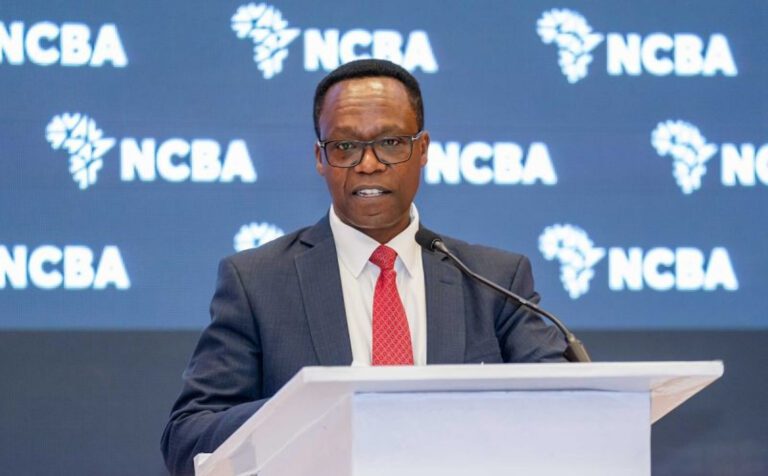
Group Managing Director John Gachora noted that the proposed transaction with Nedbank Group Limited is progressing as planned, with key milestones on track.

While the Group has not experienced material disruption from the evolving Middle East geopolitical situation, management remains cautious, actively monitoring potential implications on liquidity, inflation, and broader macroeconomic conditions.

Strategic Perspective

NCBA’s Q1 2026 performance reflects a disciplined execution model built on capital strength, digital leadership, and diversified revenue streams. The bank is not merely growing—it is reshaping how financial services are delivered across East Africa.

For business leaders and policymakers, the signal is clear: sustainable growth in today’s environment requires three things—strong capital buffers, digital infrastructure, and ecosystem thinking that integrates finance, insurance, and wealth management.

The institutions that will endure are those that balance profitability with resilience, and scale with responsibility. NCBA is positioning itself within that category.

KCB Group Plc Posts KShs. 24.4 Billion in Q1 2026 pre-tax profit as regional strategy delivers growth

KCB Group Plc strong Q1 2026 performance signals resilience

KCB Group Plc has reported a pre-tax profit of KShs. 24.4 billion for the first quarter ending March 31, 2026, representing a 15.3% year-on-year increase from KShs. 21.2 billion recorded in a similar period in 2025.

The performance reflects the strength of the Group’s diversified business model, supported by sustained growth across subsidiaries, disciplined cost management, and expansion in interest-earning assets.

Total operating income grew by 8.5% to KShs. 53.6 billion, largely driven by increased lending activity, even as declining Net Interest Margins weighed on yields due to ongoing regulatory rate cuts across regional markets.

Balance sheet expansion and deposit growth

KCB’s balance sheet closed the quarter at KShs. 2.3 trillion, marking a 10.8% expansion. This growth was anchored on rising customer activity and a 15.7% increase in customer deposits, which reached KShs. 1.7 trillion.

The Group’s gross loan book expanded to KShs. 1.32 trillion, up from KShs. 1.21 trillion in Q1 2025, reflecting sustained credit uptake across corporate and retail segments.

Notably, excluding the divested NBK business (May 2025), pre-tax profit and operating income would have grown by 17% and 16% respectively—an indicator of underlying operational strength.

KCB Group in Sh68.4bn full year 2025 net profit, pays Sh3 additional dividend

Subsidiaries drive earnings diversification

Regional subsidiaries and non-banking units continue to play a growing role in earnings contribution. Subsidiaries accounted for 29.5% of total profit before tax and 31.5% of the Group’s balance sheet.

Non-banking subsidiaries posted steady contributions:

  • KCB Bancassurance Intermediary: KShs. 209 million
  • KCB Investment Bank: KShs. 274 million
  • KCB Asset Management: KShs. 64 million

This diversification reduces reliance on traditional banking income and strengthens resilience across economic cycles.

Profitability, efficiency, and asset quality

Operating costs rose by 7.3% to KShs. 24.3 billion, driven by workforce expansion, technology investments, and regional growth initiatives.

Non-funded income increased by 8.3% to KShs. 17 billion, supported by digital lending growth and higher foreign exchange activity.

Asset quality showed measurable improvement:

  • NPL ratio declined to 16.6% from 19.3%
  • Non-performing loans reduced to KShs. 217.8 billion from KShs. 233.3 billion

The Group maintained a prudent provisioning stance, setting aside KShs. 4.9 billion to cover potential credit losses amid macroeconomic uncertainty.

Capital strength and shareholder value

KCB continues to maintain strong capital buffers:

  • Core capital ratio: 18.2% (vs. 10.5% minimum)
  • Total capital ratio: 21.6% (vs. 14.5% minimum)
  • Liquidity ratio: 51.1%

Shareholder returns remain robust:

  • Return on Equity (ROE): 21.5%
  • Earnings Per Share (EPS): KShs. 22.18 (up from KShs. 20.03)
  • Total equity: KShs. 352.2 billion (up 18.5%)

Historic dividend unlocks new era of wealth for KCB Group shareholders

Leadership perspective on market conditions

According to Group CEO Paul Russo, the results reflect disciplined execution and strategic investments:

“Despite the challenging operating environment, we delivered solid growth driven by disciplined execution, continued investment in digital innovation, and our commitment to financing economic transformation.”

He also noted the impact of the Middle East conflict, citing potential risks including reduced credit demand, higher credit risk, and lower remittance flows.

Group Chairman Joseph Kinyua emphasized long-term strategic alignment:

“The Group’s strong start affirms the effectiveness of our long-term strategy and our ability to navigate evolving market dynamics.”

Strategic developments and partnerships

KCB advanced several strategic initiatives during the quarter:

  • Partnered with UNHCR to drive financial inclusion for refugees and host communities
  • Secured $96.9 million financing from the Green Climate Fund to support green MSME and agricultural projects
  • Sponsored the WRC Safari Rally 2026 with KShs. 227 million, boosting brand visibility
  • Awarded a housing prize at Tatu City in partnership with Unity Homes
  • Collaborated with the Ministry of Education, Kenya, to finance clean energy solutions for schools

Additionally, KCB introduced a KShs. 20 flat fee on Pesalink transfers, aligning with industry efforts to lower transaction costs and enhance digital payment adoption.

Outlook: Growth with caution

KCB enters the remainder of 2026 with strong momentum but remains exposed to global macroeconomic pressures, particularly geopolitical tensions affecting commodity prices, inflation, and financial conditions.

The Group’s regional diversification, digital banking investments, and strong capital position provide a buffer against volatility while positioning it to capture growth in trade, MSME financing, and financial inclusion.

Strategic interpretation for business leaders

KCB’s Q1 performance reinforces three structural lessons relevant to African enterprises:

First, diversification across markets and products is no longer optional—it is a core risk management strategy.
Second, balance sheet discipline and liquidity strength are competitive advantages in uncertain environments.
Third, digital infrastructure is now central to revenue growth, not just operational efficiency.

The deeper implication is this: sustainable growth in Africa will increasingly come from institutions that combine scale with adaptability. Leadership, in this context, is less about expansion and more about precision—allocating capital, managing risk, and executing consistently across cycles.

SportPesa Casino players win big, with some receiving massive payouts from small stakes

0

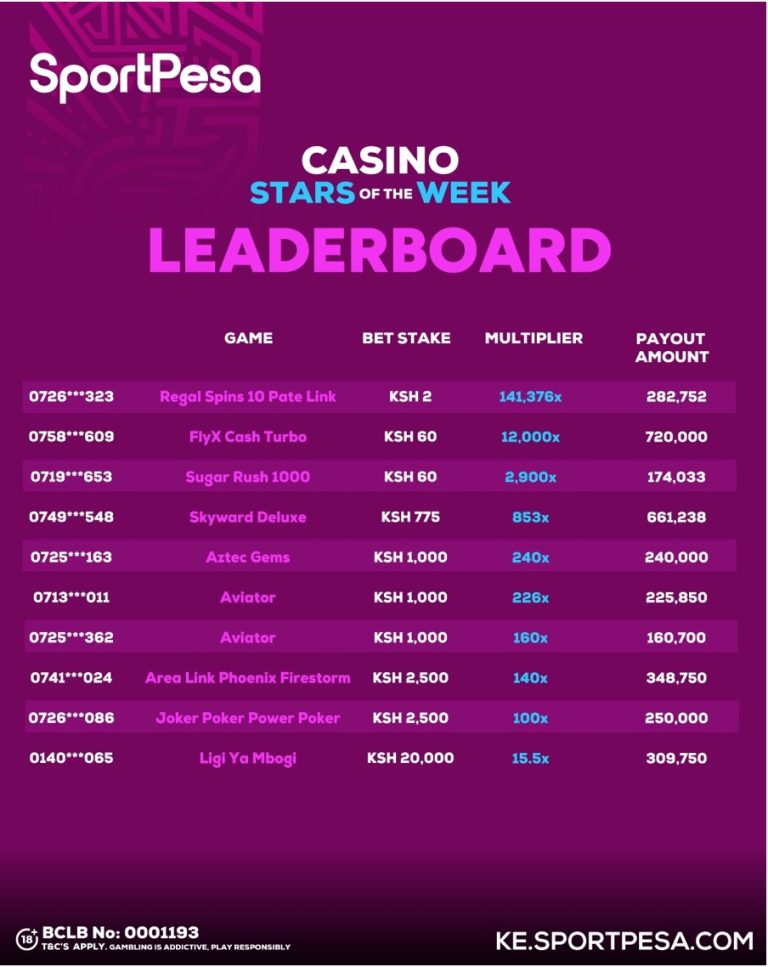
Another exciting week in the world of SportPesa Kenya casino gaming has produced remarkable winners across different games and categories. The latest Casino Stars of the Week leaderboard has captured players’ attention after several users turned modest stakes into impressive payouts. From massive multipliers to strategic stakes, the week once again highlighted the thrilling possibilities within SportPesa’s casino platform.

The leaderboard featured players from various casino games, each showcasing how timing, luck, and multipliers combined to create unforgettable outcomes. Some winners relied on very small stakes to unlock huge payouts, while others used bigger amounts to maximize their returns. These moments continue to reinforce SportPesa’s growing reputation as one of the most exciting gaming platforms in the country.

Small stakes create huge surprises

One of the most talked about wins of the week came from a player on Regal Spins 10 Pate Link. Using a stake of just KSh 2, the player managed to hit an incredible multiplier of 141,376x. That astonishing run resulted in a payout of KSh 282,752, leaving many players amazed by the potential of small stakes.

Another standout performer came from FlyX Cash Turbo, where a KSh 60 stake climbed to a stunning 12,000x multiplier. The lucky player walked away with KSh 720,000, making it one of the biggest payouts of the week. This win showed how the right timing and multiplier can completely transform even moderate stakes.

Sugar Rush 1000 also produced an impressive result after a player turned KSh 60 into KSh 174,033 through a 2,900x multiplier. Such moments continue to capture attention among casino fans across Kenya. The ability to unlock large payouts from relatively small stakes remains one of the biggest attractions on SportPesa Kenya.

SportPesa Aviator Multiplier of the week hits stunning 131,176.49x

Bigger stakes and smart timing pay off

The week also saw players using larger stakes to secure massive returns across different games. A Skyward Deluxe player placed a KSh 775 stake and managed to reach an 853x multiplier. The successful spin produced a payout of KSh 661,238, making it one of the most remarkable performances on the leaderboard.

Another major winner emerged from Aztec Gems, where a KSh 1,000 stake delivered KSh 240,000 after reaching a 240x multiplier. The result highlighted how strategic stakes combined with favorable multipliers can produce extraordinary payouts. These examples continue to fuel excitement among SportPesa casino players.

Aviator also remained among the top-performing games of the week. One player turned a KSh 1,000 stake into KSh 225,850 through a 226x multiplier, while another secured KSh 160,700 from a 160x run. These wins demonstrated why the Aviator game remains at the top of conversations across many Kenyan gaming scenes.

Variety of games creates weekly winners

SportPesa Kenya’s casino platform continues to stand out because of its wide selection of games. Different titles on the leaderboard showed how players can experience excitement across multiple categories. This keeps the platform fresh and ready for the players to enjoy.

Area Link Phoenix Firestorm delivered another strong performance after a KSh 2,500 stake generated KSh 348,750 through a 140x multiplier. Joker Poker Power Poker also produced a notable payout of KSh 250,000 from a similar KSh 2,500 stake. These wins highlighted how different games continue to produce rewarding moments throughout the week.

Ligi Ya Mbogi also joined the winners’ list after a player used a KSh 20,000 stake to secure KSh 309,750 from a 15.5x multiplier. Although the multiplier was lower compared to others, the larger stake ensured a substantial payout. This demonstrated how both stake size and multiplier strength can play important roles in determining outcomes.

Conclusion

The latest SportPesa Casino Stars of the Week leaderboard has once again showcased the excitement and unpredictability of online casino gaming in Kenya. From tiny KSh 2 stakes producing massive payouts to larger bets delivering huge returns, the week was filled with unforgettable moments. Multipliers proved to be the defining factor behind many of the biggest wins.