

Home Blog Page 82

New SACCO Amendment Bill 2025 could change how Kenyans save and borrow

0

Millions of Kenyans who save and borrow through SACCOs could soon enjoy stronger protection for their money after Parliament tabled the SACCO Societies (Amendment) Bill, 2025.

The proposed law seeks to introduce major reforms in Kenya’s cooperative financial sector, including a deposit guarantee fund, a central liquidity facility, and stricter regulation of SACCO operations. 

For many households, salaried workers, small business owners, and farmers, SACCOs remain the most accessible source of affordable credit and disciplined savings.

This is why the Bill is already attracting significant public interest.

What Will Change Under the New SACCO Bill?

One of the biggest proposals is the creation of a Deposit Guarantee Fund.

If passed into law, the fund will protect members’ savings in case a SACCO becomes financially distressed or collapses.

This would be a major shift for the sector, bringing SACCO deposit protection closer to the standards seen in commercial banking. 

Full list of Saccos with the most lucrative dividends

For ordinary members, this means stronger confidence that their deposits are safer.

The Bill also introduces a Central Liquidity Facility (CLF) that will allow SACCOs to access short-term funds and conduct inter-SACCO transactions more efficiently. 

This is expected to reduce the risk of liquidity shocks that can disrupt lending and withdrawals.

Why This Matters to Kenyans

SACCOs are deeply embedded in Kenya’s economy.

They finance school fees, home construction, land purchases, business expansion, and emergency household needs.

According to the sector regulator, the industry remains central to financial inclusion and member-based wealth creation. 

The reforms come amid increased focus on restoring confidence in the cooperative movement following governance concerns in parts of the sector. 

For millions of members, the most important question is simple:

Will my savings be safer?

Under the proposed law, the answer increasingly points to yes.

Bigger Impact on Businesses and SMEs

For entrepreneurs and SMEs, this Bill could have far-reaching implications.

A more stable SACCO sector means improved access to working capital, salary-backed loans, and business financing.

Top wealthiest SACCOs in Kenya by assets and deposits

Many small businesses across Kenya rely on SACCO credit because of its relatively lower borrowing costs and community-based trust model.

A stronger legal framework could therefore improve capital access for enterprise growth.

Parliament’s Next Step

The Bill is currently before Parliament for debate and consideration.

If passed, it will become one of the most significant reforms to Kenya’s cooperative finance ecosystem in recent years. 

The direction is clear: Kenya is moving toward stronger protection of citizen savings and tighter governance of member-owned financial institutions.

In the long run, trust is the currency that sustains financial systems.

When institutions protect the savings of ordinary citizens, they do more than comply with regulation—they strengthen economic dignity, enterprise growth, and national resilience.


Billions on the line in Mrima Hill tender amid explosive corporate dispute

0

Kenya recently announced a new tender for the Mrima Hill rare earth and niobium deposits — a prize long coveted by both the United States and China for its critical minerals. Yet Chuanshan nternational Mining Company, once a frontrunner led by Chinese investor Han Ke, has fallen conspicuously behind. Is this due to fierce external competition, or something more insidious — perhaps a bitter corporate infighting? As journalists dug deeper, the truth turned out to be far from straightforward.

A cloud of controversy has engulfed Chuanshan International Mining Company, once hailed as a key player in Kenya’s extractives sector, after startling claims emerged of forged court documents, an alleged faked death, and a coordinated scheme to push out one of its founding directors. Documents reviewed by journalists raise serious questions about corporate governance, the integrity of official processes, and the role of state agencies in what is shaping up to be a high-stakes corporate dispute with international implications.

Mr. Han Ke was once at the center of the firm’s operations in Kenya. A seasoned investor in the mining sector, Han played a pivotal role in establishing the company’s footprint in Baringo County, where he spearheaded the development of the region’s first diatomite processing facility. The project not only opened up economic opportunities but also created jobs and supported community development initiatives among the local Pokot population.

Under his leadership, the company expanded its activities and gained recognition, including participation in the Kwalai Rare Earth Standard Project under Kenya’s Ministry of Mining in January 2024, where it reportedly achieved top performance results. Chuanshan also entered into a Community Development Agreement (CDA) with local stakeholders, with projections of creating up to 1,500 jobs and establishing an industrial park focused on health and manufacturing.

The company’s community engagement efforts were equally visible. In one notable initiative, it donated 160 solar panels and batteries to remote households in Baringo, helping to bridge the region’s energy access gap. Local leaders and residents praised the move as transformative, underscoring the firm’s role in grassroots development.

However, behind this public image of progress and partnership, a bitter internal dispute appears to have been unfolding.

Billionaire Chris Kirubi on determining your success

According to documents now in the possession of journalists, the company tried to remove Han from his position as director under circumstances that are increasingly being questioned. Central to the dispute is a court document — referenced as E161/2025 — which purportedly declared Han dead, thereby paving the way for a change in the company’s shareholding structure.

But in a dramatic twist, the Kenya Companies Registration Authority flagged the document as suspicious. Subsequent verification efforts revealed that the alleged death certificate and court ruling were forgeries. Authorities at Capital Hill Police Station were drawn into the matter, launching investigations to authenticate the documents. Preliminary findings confirmed that the records used to effect changes in the company’s ownership were not legitimate.

The implications of this revelation are profound. Legal experts note that falsifying court documents and declaring a living person dead to alter corporate ownership constitutes serious criminal offenses, potentially involving fraud, conspiracy, and abuse of office. These claims, while yet to be fully substantiated in court, add a troubling dimension to the unfolding saga.

The fallout has already been significant. Chuanshan, once a strong contender for the very rare earth tender announced earlier, saw its advantage evaporate overnight after the forgery scandal became public. The damage to its credibility has severely undermined its operations in Kenya. Industry observers warn that the controversy could also dent investor confidence in the country’s mining sector, particularly at a time when Kenya is seeking to attract more foreign investment.

Government officials who had previously supported the company’s projects, including senior figures from the Ministry of Mining, had emphasized the importance of such investments in driving industrialization and improving livelihoods. The project had been aligned with national development blueprints such as Vision 2030, with expectations that it would transform Baringo into a hub for mineral-based industries.

Now, those ambitions risk being overshadowed by allegations of misconduct and governance failures.

For local communities in Baringo, the uncertainty is palpable. While the company’s projects had promised jobs, infrastructure, and economic growth, the ongoing dispute raises concerns about the sustainability of those benefits. Community leaders have called for transparency and accountability to ensure that development commitments are honored regardless of the corporate wrangles.

For Han, the battle appears far from over. From building a mining enterprise in Kenya to allegedly being declared dead on paper, his case underscores the high stakes and complex power dynamics that can define major investment projects.

What remains clear is that this unfolding scandal has exposed deep vulnerabilities not just within a single company, but within the systems meant to safeguard corporate integrity and the rule of law.

In a bitter satire of corporate malfeasance, a once excellent Chinese-funded company and a Chinese investor were effectively “killed” in Kenya — a damning indictment of both the perpetrators and the victim, while the forger’s actions stand as a blatant provocation to the Kenyan judiciary.

As of press time, Chuanshan had not responded to reporters’ requests for comment.


Are inexperienced investors copying Ndindi Nyoro when buying shares?

On Thursday, the Kenya Airways shares were the biggest gainers at the Nairobi Securities Exchange (NSE). The shares closed the day at a trading price of Sh5.48 per share. This was a gain of 9.82 percent from the previous day’s trading price of Sh4.99 per share.

This counter recorded a low of Sh5.20 per share within the day, and moved a volume of 762,292 shares by the end of trading.

Incidentally, these gains came following revelations that popular investor and Kiharu Member of Parliament Ndindi Nyoro is now the second-largest individual shareholder at Kenya Airways. He is also the seventh largest shareholder at Kenya Airways.

According to regulatory filings for the month of February 2026, Nyoro had acquired 10,396,251 shares. This means that as of Wednesday, these shares were worth Sh51.9 million. A day later, following the rise in price, the shares were worth Sh57 million.

Ndindi Nyoro: This is how I would invest a lumpsum of Sh20 million

The Kenya Airways shares rallied despite the national carrier announcing a mega net loss of Sh17.2 billion for the full year 2025.

This loss was a reverse shift from the record profit of Sh5.4 billion that the national carrier posted in the full year 2024. The national carrier blamed this heavy loss on the grounding of its wide body Dreamliner planes that were due for engine overhauls.

“Overall performance and operations in the year 2025 were severely impacted primarily by the temporary grounding of three of the wide body fleet, Boeing 787-8 Dreamliner aircraft. This was driven by the global supply chain constraints and limited engine availability,” Kenya Airways had said in a statement.

Nyoro’s investment in Kenya Airways has been widely interpreted as the strategic taking of position ahead of a possible takeover of the national airline by a foreign investor. In February 2026, the Cabinet Secretary for the National Treasury John Mbadi announced that President William Ruto and his government had decided to sell off Kenya Airways.

According to the Cabinet Secretary, the government will hand over the national carrier to foreigners who will pump in between Sh154.8 billion and Sh258 billion.

Mbadi claimed that the government will float an international expression of interest (EOI) in a bid to get an investor.

“The new investor is expected to inject a minimum of Sh154.8 billion and up to Sh258 billion into the business. We shall be rolling out an international expression of interest to search for a strategic partner,” said CS Mbadi. The CS, however, did not announce when this bid will be opened.

“The government took up Sh63.1 billion which it is now servicing. The government then signed an on-lent agreement with KQ. This amount can be converted to equity once we firm up the onboarding of a strategic investor.”

Although Nyoro has not revealed if this potential takeover is behind his purchase of Kenya Airways shares, inexperienced retail investors have taken note and are rushing to get a pie of the stock, which might explain why the counter experienced increased enthusiasm on the same day Nyoro’s interests were revealed.

Previously, the Member of Parliament has purchased counters such as Kenya Power on the low and reaped big following their gains. For example, in late 2025, Nyoro revealed that he had purchased Kenya Power shares over a four-year period starting from 2023 at an average of Sh1.89 per share.

Although he has since sold off chunks of this counter, a spot check shows that over this time, the counter has increased in price and is currently trading at Sh16.80 per share. Over the past 52 weeks, this counter has risen from a low of Sh5.70 per share.

With Nyoro’s moves at the NSE going public, novice investors have now taken to following in his footsteps by acquiring counters that he is interested in. The big question, though, is on whether these inexperienced investors are buying when he is selling or buying when he is buying.

StarTimes enters energy sector with new H50 solar power solution

0

StarTimes has unveiled the H50 Solar Solution, a new solar energy system designed to help households maintain reliable power for everyday activities and enjoying wide range of digital entertainment during electricity outages.

The solution combines a 5kVA hybrid inverter, a 5.12kWh battery, and 2.3kWp solar panel capacity delivered through four high-efficiency solar panels.

The integrated system is designed to provide stable backup power for modern homes while supporting the growing shift toward clean and renewable energy.

Myke Mwai, Head of PR and Content Syndication at StarTimes, said the solution is aimed at improving the overall customer experience while helping households manage power disruptions more effectively.

“At StarTimes, our goal has always been to ensure customers enjoy a seamless digital lifestyle. The H50 Solar Solution allows households to continue enjoying their favourite StarTimes TV content without interruption, even during blackouts. With reliable solar power, families can stay connected, entertained, and informed,” he said.

StarTimes premieres two engaging telenovelas to drive subscriber growth

With its capacity, the H50 Solar Solution can power several household appliances including a refrigerator, iron box, television, microwave, Wi-Fi router, electric kettle, and sound system, while also supporting up to 40 LED lights.

Mwai said the latest launch will allows households to continue cooking, working, studying, and relaxing even during unexpected power interruptions.

“The hybrid system is designed to intelligently manage solar energy generation, battery storage, and grid electricity, ensuring optimal performance and efficient energy use. This helps households reduce reliance on grid power while ensuring consistent electricity availability.,”Mwai said.

He advised customers interested in the H50 Solar Solution to visit the nearest StarTimes Business Hall, where teams are available to provide product information, consultation, and installation support.

Kenya airways MRO puts green maintenance at the heart of Africa’s aviation agenda

0

At the inaugural African MRO Conference in Addis Ababa, Ethiopia, Kenya Airways has presented sustainability as a practical operating priority, linking cleaner processes and technical efficiency to the continent’s wider effort to build a resilient aviation ecosystem.

The conference hosted by the Government of Ethiopia, brought together AFRAA and Africa’s founding MRO providers to address the theme of building a sustainable regional maintenance base. The event attracted more than 450 delegates from over 50 countries, including airline executives, regulators, and technology providers.

Kenya Airways Engineering & Maintenance used the platform to present its response to the sustainability challenge through a case study titled “Green Maintenance: Decarbonizing the African MRO Value Chain.”

The presentation outlined a comprehensive sustainability governance framework that integrates environmental priorities directly into maintenance operations. This roadmap includes a snapshot of impacts from 2025 and a 2026 flight path focused on scaling physical infrastructure, advancing digital maintenance tools, and achieving technical operational mastery.

George Kamal, Acting CEO of Kenya Airways, said the shift toward green maintenance is designed to make the African MRO sector more competitive and resilient.

“Currently, a large share of aircraft maintenance for African airlines is conducted outside the continent, a trend that drives annual capital outflows, increases operating costs, and extends aircraft downtime,” said Kamal.

By strengthening regional capability and improving supply chain resilience, Kamal said KQ’s MRO aims to demonstrate that sustainable practices are an essential part of the modern operating model required to keep African aviation competitive.

Security by design safeguards Kenya’s cloud-powered inclusive growth

Eric Mulati, KQ’s Lead of Technical Strategy, Risk & Compliance noted that the company is embedding sustainability into its core maintenance operations by aligning governance and shop-floor processes with long-term investment.

This approach is intended to improve efficiency and reduce environmental impact while simultaneously strengthening Africa’s overall MRO capability.

“Kenya Airways Engineering & Maintenance is embedding sustainability into the heart of our operations. By aligning our governance and shop-floor processes with long-term investment, we are improving efficiency and reducing environmental impact while strengthening Africa’s MRO capability,” said Mulati.

Operating from its base in Nairobi, Kenya Airways Engineering & Maintenance is a key player in the regional landscape, offering base maintenance, line maintenance, and component support across multiple aircraft platforms.

It is an approved EASA Part-145 and KCAA-certified organization, and it remains the only Embraer Authorized Service Centre in the region. Its technical services include heavy airframe checks, avionics and mechanical component repair, and non-destructive testing.

By combining operational efficiency with a focus on safety and reliability, KQ MRO is advancing a model that supports regional E-Jet operators and reduces the continent’s reliance on off-continent maintenance providers.

Embu county advertises 196 job vacancies: How to apply

The Embu County Government has announced 196 job opportunities across various departments.

In a notice, Embu County Public Service Board invited applications from interested and qualified candidates who wish to help the county in running its operations.

“Embu County Public Service Board wishes to recruit qualified persons to fill the following vacant positions in Embu County Public Service,” read part of the notice.

According to the notice, the county us seeking to recruit in several departments, including the Department of Roads, Public Works, Transport, Energy and Logistics; Department of Finance and Economic Planning; Department of Youth and Sports; and Department of Trade and Tourism.

Others are Embu County Revenue Authority; Department of Administration; Department of Health; Department of Lands, Mining, Physical Planning, Housing and Urban Development; Department of Investment, Industrial Development and Marketing; Department of Youth Empowerment; and the Office of the Governor.

How to apply

Interested and qualified candidates  are required to download the application form and a detailed document containing the requirements for the advertised positions from the Embu County website www.embu.go.ke.

The vacancy number of the position applied for must be indicated on both the envelope and the application form.

All applications should be addressed to the THE CEO/SECRETARY, Embu County Public Service Board, P.O. Box 2871-60100, Embu.

Candidates must attach photocopies of National Identity Card, Academic, professional certificates and testimonials, and any other relevant supporting documents.

Shortlisted candidates will be required to present original academic and professional certificates, as well as valid Chapter Six clearance documents from Ethics and Anti-Corruption Commission (EACC), Kenya Revenue Authority (KRA), Higher Education Loans Board (HELB) Credit Reference Bureau (CRB), and Directorate of Criminal Investigations (DCI).

The deadline for submitting applications is before April 21, 2026. Only Shortlisted candidates will be contacted.

Below is the full list of the advertised jobs:

Department of Roads, Public Works, Transport, Energy and Logistics

  • Director – Public Works
  • Assistant Engineer II (Structural)
  • Assistant Quantity Surveyor II
  • Assistant Landscape Architect II
  • Assistant Engineer II (Electrical)
  • Architectural Assistant III (4 vacancies)
  • Inspector (Building) (2 vacancies)
  • Structural Assistant III (2 vacancies)
  • Quantity Surveyor Assistant III (4 vacancies)
  • Inspector Roads
  • Inspector – Electrical (2 vacancies)
  • Artisan III – Mason (2 vacancies)
  • Artisan III – Carpenter (2 vacancies)
  • Artisan III – Plumber (2 vacancies)

Department of Finance and Economic Planning

  • Assistant Director Procurement
  • Supply Chain Management Officer I
  • Supply Chain Management Assistant III
  • Chief Human Resource Management Assistant
  • Human Resource Management Assistant III

Department of Youth and Sports

  • Director – Sports

Department of Trade and Tourism

  • Senior Weights and Measures Officer
  • Chief Tourism Officer
  • Chief Trade Development Officer
  • Senior Trade Development Officer (2 vacancies)
  • Tourism Officer

Embu County Revenue Authority

  • Board Member – Embu County Revenue Authority Board
  • Chief Executive Officer – Embu County Revenue Authority
  • Deputy Director Administration (Enforcement and Compliance)
  • Principal Administrative Officer (Revenue Supervisors/Cashiers/Billers)
  • Chief Administrative Officer (Revenue Supervisors/Cashiers/Billers)
  • Administrative Officer III
  • Administrative Officer II

Department of Administration

  • Ward Administrator (5 vacancies)

Department of Health

  • Senior Assistant Director of Pharmaceutical Services/Pharmaceutical Specialist I (Oncology Pharmacist)
  • Assistant Director Medical Laboratory Services (Clinical Cytology)
  • Principal Medical Laboratory Technologist I (Histopathologist) (2 vacancies)
  • Principal Medical Laboratory Technologist II
  • Senior Registered Clinical Officer (Anaesthetist)
  • Senior Assistant Director of Medical Services/Medical Specialist I (Pathologist)
  • Senior Assistant Director of Medical Services/Medical Specialist I (Obstetrics and Gynecology) (3 vacancies)
  • Deputy Director of Medical Services/Senior Medical Specialist (Orthopaedic Surgeon)
  • Deputy Director of Medical Services/Senior Medical Specialist (Neurosurgeon)
  • Medical Officer
  • Senior Assistant Director of Medical Services/Medical Specialist I (Family Physician)
  • Senior Assistant Director of Medical Services/Medical Specialist I (Maxillofacial)
  • Registered Clinical Officer II (12 vacancies)
  • Medical Laboratory Technologist III (7 vacancies)
  • Registered Nurse III (50 vacancies)
  • Medical Engineering Technician III (2 vacancies)
  • Pharmaceutical Technologist III (4 vacancies)
  • Human Resource Assistant III (2 vacancies)
  • Clerical Officer II (2 vacancies)
  • Records Management Officer II
  • Health Administrative Officer III (3 vacancies)
  • Radiographer III (2 vacancies)
  • Senior Radiographer (Sonographer) (5 vacancies)
  • Health Records & Information Management Assistant III (3 vacancies)
  • Assistant Public Health Officer III (5 vacancies)
  • Public Health Assistant III
  • Orthopedic Technologist III
  • Orthopedic Trauma Technician III (2 vacancies)
  • Registered Physiotherapist III (3 vacancies)
  • Assistant Occupational Therapist III (4 vacancies)
  • Nutrition & Dietetics Technologist III (2 vacancies)
  • Accountant II (5 vacancies)

Department of Lands, Mining, Physical Planning, Housing and Urban Development

  • Deputy Director Administration
  • Superintendent Fire Officer
  • Physical Planner I
  • Physical Planning Assistant III
  • Administration Officer III
  • Chief Public Health Officer
  • Principal Physical Planner
  • Mining Officer
  • Senior Support Staff

Department of Investment, Industrial Development and Marketing

  • Board Member – Investment and Development Corporation Board (4 vacancies)

Department of Youth Empowerment

  • County Chief Officer

Office of The Governor

  • Administrative Officer III

Also Read: Nakuru County announces over 150 job vacancies; how to apply

Doctors implant pacemaker without surgical blade in regional first

0

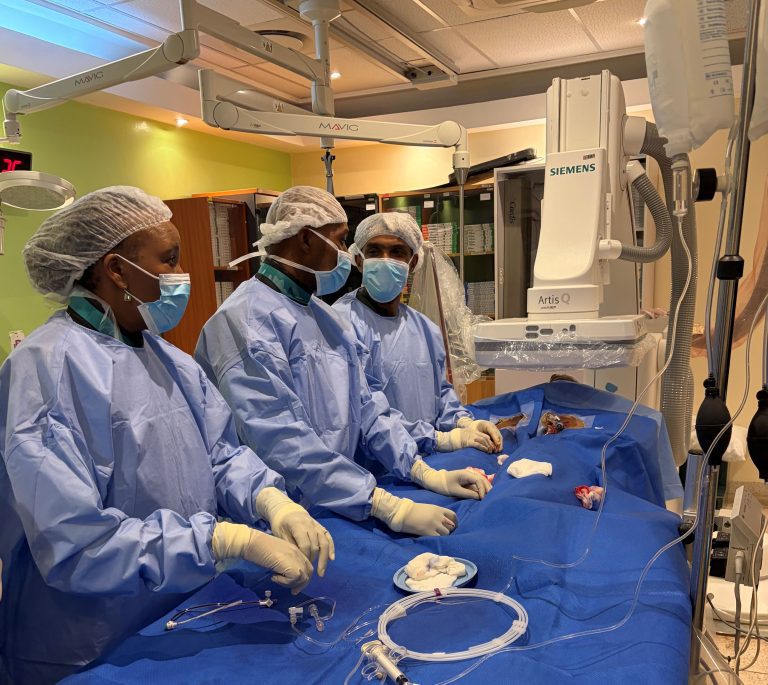
Specialists at Aga Khan University Hospital (AKUH) have successfully implanted a leadless pacemaker for the first time in sub-Saharan Africa, a milestone expected to expand treatment options for patients with heart rhythm disorders across the region.

The procedure was performed by a multidisciplinary cardiac team led by Dr Mohamed Jeilan, Head of Cardiology at AKUH, positioning the hospital among a select group of centres globally offering this next-generation technology.

Unlike conventional pacemakers, which require a surgical incision in the upper chest and electrical wires (leads) inserted through veins into the heart, leadless pacemakers are miniature capsule-sized devices delivered directly into the heart through a catheter inserted via a vein in the leg. The pacemaker lives entirely within the heart, eliminating the need for a surgical pocket or transvenous leads.

The first patient treated at AKUH required this advanced approach because traditional pacemaker implantation was not feasible. The patient had severe obstruction of the central veins normally used to insert pacemaker leads, related to long-term dialysis access and prior radiotherapy treatment, a combination that made conventional device placement difficult and high risk.

Everything you need to know about buying life and medical insurance in Kenya

“Leadless pacing provided an ideal solution for this patient,” said Dr Jeilan. “In cases where veins are blocked or access is compromised, this technology allows us to deliver effective therapy without the need for surgical pockets or transvenous leads.”

The device used was the latest-generation Micra AV2 leadless pacemaker, which can coordinate electrical activity between heart chambers in selected patients, expanding the number of individuals who can benefit from leadless technology compared with earlier systems.

Leadless pacemakers are roughly the size of a large tablet and are implanted inside the heart during a minimally invasive procedure that typically lasts under an hour.

Pacemakers are among the most impactful treatment options available in medical science, and the technology has evolved dramatically over recent years.

Dr Mzee Ngunga, President of the Kenya Cardiac Society, who was also part of the procedural team, described the development as a major step forward for cardiac care in the country.

“Increasingly, patients in our region are able to access cutting-edge technologies in heart care, something which contrasts with previous decades where most patients were unable to access advanced cardiac treatments,” he said. “Introducing leadless pacing demonstrates that we continue to provide world-class, cutting-edge care locally.”

Co-op Bank donates Shs2M to boost healthcare services in Murang’a

Experts recommend leadless pacemakers in specific situations where they may offer advantages over conventional devices. These include patients with blocked veins, those on long-term dialysis, individuals with a high risk of infection, and patients who have previously experienced device infections.

Because the device sits entirely within the heart and does not use leads, it reduces infection risk and long-term mechanical complications, two important concerns in regions where managing device complications can be challenging.

Medtronic, the manufacturer of the Micra system, said the introduction reflects confidence in the hospital’s expertise and regional leadership.

“We are committed to expanding access to innovative cardiac technologies globally. Aga Khan University Hospital has demonstrated strong clinical capability, infrastructure, and commitment to advancing cardiovascular care, making it an important centre for the introduction of leadless pacing in the region.” a Medtronic Spokesperson said.

Experts also note that the use of leadless pacemakers is expanding as technology advances, with future systems expected to treat more complex rhythm disorders and potentially heart failure conditions without traditional wires.

The achievement builds on a long tradition of pioneering cardiovascular innovation at Aga Khan University Hospital, which has introduced several minimally invasive cardiac technologies to Kenya over the past two decades, including coronary physiology (FFR) in 2006, rotational atherectomy in 2013, renal denervation for hypertension in 2013, and transcatheter aortic valve replacement in 2015. In 2017, the hospital also launched the country’s first cardiology specialisation training programme.

Healthcare leaders say the milestone reinforces Kenya’s growing reputation as a regional hub for specialised medical care.

“Our goal is not only to treat patients, but to build capacity. We want to train African cardiologists, expand access to modern therapies, and reduce the need for patients to travel abroad for treatment. This achievement demonstrates that, with the right expertise and institutional commitment, highly specialised therapies can be delivered locally,” said Dr Jeilan.

Cardiovascular disease is rising rapidly across the continent, and specialists believe innovations such as leadless pacing will play a significant role in strengthening cardiac care systems in the years ahead.

How I made my first million at 24 from Black Soldier Fly farming

0

At just 24, Kenyan agripreneur Charity Kelsy proved that farming innovation can turn everyday waste into real income, becoming a millionaire through black soldier fly production.

Now 26 and pursuing a Master’s degree at Egerton University, Kelsy has built a thriving enterprise that converts organic waste into protein-rich livestock feed and organic fertiliser.

Her approach offers a practical solution to two major challenges facing farmers today—rising feed costs and poor waste management.

Speaking to Farmers Trend, Kelsy explained that her production process starts with collecting biodegradable materials such as discarded fruit peels, vegetable leftovers, and other organic scraps.

Instead of letting this waste rot or go to landfills, she uses it as feed for black soldier fly larvae, which are known for breeding fast and growing rapidly.

The rearing process begins by preparing the organic waste and placing it in controlled rearing units made from repurposed mosquito nets, where black soldier flies lay eggs.

According to her, a female black soldier can lay up to 1,500 eggs in her lifetime, depositing them in structures called eggies.

Once the eggs hatch, the larvae feed aggressively on the waste, growing into nutrient-rich larvae within a short period. After reaching maturity, the larvae are harvested, dried, and processed into high-protein feed that can be used for poultry, pigs, and fish.

What remains after the larvae consume the waste is a residue known as frass. Kelsy packages this frass and sells it as organic fertilizer, one of the most in-demand products in her business due to the increasing shift toward sustainable farming.

Her model stands out in an industry dominated by expensive commercial feeds and synthetic fertilisers, offering farmers a cheaper and environmentally friendly alternative while ensuring waste is put to productive use.

Kelsy’s financial breakthrough came early. At 24, she earned her first million from the enterprise.

She describes the milestone as a turning point that confirmed agribusiness can provide youth with financial independence.

“It not only gave me financial freedom as a young woman but also improved my family’s earnings,” she stated.

Her success has since opened more opportunities. She has taken part in black soldier fly farming consulting engagements abroad, including in China and Jordan, and trains farmers on the practice.

Kelsy also advises government agencies and development organisations on black soldier fly production and its potential to strengthen food systems.

However, her journey has not been without challenges. Limited land ownership initially made it difficult for her to secure credit and scale up operations.

To overcome this, she partnered with farmers in Nakuru and Kisumu counties, establishing demonstration farms that allow her to expand production while training other farmers interested in the venture.

Also Read: Explainer: How to correctly feed a dairy cow after birth

Young innovators win up to Shs2M at NIRU AI Hackathon

0

The National Intelligence Research University (NIRU) has crowned Caroline Gakii, Daniel Maitethia, and Ezekiel Otieno of Meru University of Science and Technology as the overall winners of its 2025 National AI Hackathon, spotlighting a new generation of Kenyan innovators developing practical and scalable solutions to address the country’s most pressing challenges.

The trio clinched the top prize for their project, “A Low-Cost AI-Powered Digital Microscope for Accessible Cancer and Malaria Diagnosis in Kenya,” earning KSh 2 million during the final showcase and awards ceremony held in Nairobi.

Joshua Radula of Strathmore emerged as the first runner-up with his “Word 2 Sign” project, an AI-powered solution that translates spoken or written words into sign language to improve accessibility for the deaf community, taking home KSh 750,000.

Kelvin Mulama secured third place with “Veritas AI, Autonomous Intelligence for Financial Fraud Detection and National Financial Integrity,” earning KSh 500,000 for his solution focused on strengthening financial systems and combating fraud.

The hackathon drew over 5,600 registrations and generated more than 2,500 AI solution submissions from across the country, underscoring the growing depth of Kenya’s digital talent and innovation ecosystem.

Speaking during the award ceremony in Nairobi, NIRU Vice Chancellor Dr. James Kibon said the initiative is designed to move innovation beyond ideas into real-world application.

Kenyan innovators to compete at the continental hackathon

“What we are building is not just a competition, but a pipeline of deployable AI solutions. The quality of innovations we have seen demonstrates Kenya’s capacity to develop technologies that directly address our national priorities, from security and agriculture to public service delivery.”

The programme, delivered in collaboration with partners across government, academia, and industry, guided selected innovators through a structured incubation process. Participants received technical mentorship, product development support, ethical AI guidance, and commercialisation insights, enabling their solutions to evolve from concept to deployment- ready products.

Nordin Hajji, Chairman of the NIRU Board of Trustees and Director General of the National Intelligence Service, said the initiative is part of a broader national effort to strengthen Kenya’s technological self-reliance.

“By nurturing AI innovation locally, we are building the capacity to develop solutions that respond to our socio-economic realities while strengthening national security and economic resilience.”

On his part, Interior and National Administration Cabinet Secretary Hon. Kipchumba Murkomen commended the innovators, noting that their work reflects the country’s growing leadership in digital transformation.

“The diversity and quality of solutions presented here demonstrate that Kenya has the talent and creativity to compete globally. These innovations have the potential not only to solve local challenges, but also to create jobs and drive economic growth.”

The winning solutions were selected through a rigorous evaluation process based on national relevance, scalability, technical feasibility, originality, and measurable impact.

Innovations showcased during the hackathon spanned key sectors including security and intelligence, agriculture, cybersecurity, public service delivery, and digital infrastructure, highlighting the increasing role of Artificial Intelligence as a driver of national development.

“The winning solutions were recognised for their industry readiness and potential for real-world deployment across key sectors including security, intelligence, agriculture, public service delivery, cybersecurity, and digital transformation,” said Ali Hussein Kassim, the
Chief Judge of the Hackathon.

Beyond the competition, the hackathon is a critical bridge between digital talent and industry,bensuring that promising ideas are supported to scale into sustainable, real-world solutions.

The judging panel comprised of distinguished experts drawn from industry, academia, and the technology ecosystem, including Ali Hussein Kassim (Chair, FinTech Alliance Kenya), Juliana Rotich (Co-Founder, Ushahidi), Dr. John Olukuru (Head of Data Science and Analytics, Strathmore University, Business School), Joseph Mathenge (Technology and Digital Transformation Expert), Dr. Simon K. Nyambura (Academic and AI Researcher), Eng. Ruth Kirui (Engineering and ICT Specialist), and Oscar Otieno (Senior Deputy Data Commissioner, Office of the Data Protection Technology).

How to file your returns via WhatsApp as KRA introduces new tax filing service

0

Kenyans can now file their tax returns via WhatsApp after the Kenya Revenue Authority (KRA) introduced a new tax platform aimed at boosting compliance and simplifying tax filing.

The new development was announced on Wednesday, April 1, by KRA Commissioner General Humphrey Wattanga.

“Filing your taxes just got easier. We have introduced simpler ways for you to file, and the biggest update is this: you can now file through WhatsApp. No new apps. No extra steps. Just open WhatsApp and get it done,” KRA announced on its social media pages.

According to the Taxman, the service offers a range of services, including tax payments, return filing, eTIMS services, applications for tax compliance certificates, PIN checks, and the option to speak with a KRA representative.

To get started, users are required to initiate a conversation on WhatsApp, using the official number (0711099999) and select the type of return they want to file.

To verify identity, users are required to enter their KRA PIN and complete the verification process.

The new platform addresses the challenges many Kenyans face when filing their returns. KRA maintained that the platform is user-friendly and that no expert assistance is needed to complete the process.

“Everything is designed to make filing easier, with less back-and-forth and less time spent trying to resolve issues. It also helps reduce anxiety around deadlines while giving you greater confidence and control over the process. You no longer need to be an expert to file, all you need to do is get started,” KRA stated.

“For many people, filing is not hard because it is complicated. It is hard because it feels like a process, logging in, resetting passwords, figuring out forms, starting, stopping, and coming back later,” it added.

Also Read: KIPPRA announces fully-sponsored training opportunities; how to apply