Home Blog Page 85

KUCCPS reopens application for 21 KMTC courses

1

The Kenya Universities and Colleges Central Placement Service (KUCCPS) has reopened applications for 21 programmes offered at the Kenya Medical Training College (KMTC).

In a notice on Sunday, March 29, KUCCPS invited students seeking admission in 2026 to apply. The application window, which runs from March 28 to April 3, targets students who completed Form Four between 2000 and 2025.

Both first-time applicants and those who were not placed in earlier KMTC admission rounds are eligible to apply.

Interested candidates are required to submit their applications online through the KUCCPS student portal.

“Another round of application for KMTC programmes is open! 21 courses available! Log in to KUCCPS portal and apply before April 3, 2026,” read the KUCCPS statement.

According to KUCCPS, a total of 21 diploma and certificate courses are open for application. Diploma courses include Health Records and Information Technology, Radiography and Imaging, Medical Laboratory Sciences, Occupational Therapy, Optometry, Orthopaedic Technology, Physiotherapy, Medical Engineering, Medical Social Work, Community Health, Clinical Medicine and Surgery, Mortuary Science, and Health Promotion.

On the other hand, certificate courses include Health Records and Information Technology, Nutrition and Dietetics, Medical Engineering, Orthopaedic Trauma Medicine, Public Health, Community Health Assistant, Emergency Medical Technician, and Health Insurance Management.

 How to Apply

  • Visit the KUCCPS student portal using this link: students.kuccps.net
  • Click on the “Login” tab and enter your KCSE Index Number, KCSE Year, and Password. Note: Your password is either your Birth Certificate Number or your KCPE Index Number.
  • Once logged in, click on “KMTC Programmes” to view all available courses and their minimum entry requirements. Applicants can only apply for courses if they meet the minimum requirements.

Also Read: Marketable courses to take with a KCSE mean grade of D+ and below

Peter Ng’eno appointed Corporate Banking Director, KCB Bank Kenya

0

Peter Ng’eno has been appointed Corporate Banking Director at KCB Bank Kenya, reinforcing the lender’s strategy to strengthen its corporate banking franchise through internal leadership succession.

The appointment, effective March 27, 2026, is subject to regulatory approval and comes at a time when corporate banking remains a critical revenue driver for KCB Group. Ng’eno takes over the role following the exit of his predecessor, positioning him at the helm of one of the bank’s most strategic business units.

Ng’eno transitions into the role from his previous position as Executive Head of Client Coverage and Business Development within the Corporate Banking Division. In that capacity, he was responsible for managing key corporate relationships and driving portfolio growth across sectors.

With over 20 years of experience in banking, Ng’eno brings deep expertise in corporate and commercial banking, sector-driven financing, and client relationship management. His career spans senior roles across regional and international financial institutions, including Standard Chartered Bank, CfC Stanbic Bank, and Ecobank.

KCB Group in Sh68.4bn full year 2025 net profit, pays Sh3 additional dividend

Within KCB Group, he has held several leadership roles, including Sector Head for Manufacturing and Acting Director of Corporate Banking. These positions have given him direct exposure to large-scale corporate transactions, sector financing strategies, and regional banking operations.

Ng’eno holds a Bachelor of Commerce (Finance) degree from University of Nairobi.

Strategic Role in Corporate Banking Growth

As Director of Corporate Banking, Ng’eno will be tasked with driving growth, profitability, and sustainability within the division. His mandate includes strengthening relationships with large corporate clients, expanding structured financing solutions, and leveraging KCB Group’s regional footprint to unlock cross-border opportunities.

The appointment comes amid a challenging but opportunity-rich operating environment for banks in Kenya and across East Africa. Rising interest rates, tighter liquidity, and increased regulatory oversight are reshaping how banks deploy capital, particularly in corporate lending.

Corporate banking remains central to financing infrastructure, trade, manufacturing, and large enterprises—sectors that are critical to economic growth. As such, leadership in this division directly influences how capital flows into productive segments of the economy.

KCB’s Leadership Strategy

The elevation of Ng’eno reflects a broader leadership strategy within KCB Group that prioritizes internal talent development and continuity. By promoting leaders with institutional knowledge and proven execution capability, the bank is positioning itself to maintain stability while navigating a dynamic financial landscape.

This approach is increasingly common among leading African financial institutions seeking to balance growth ambitions with risk management discipline.

Outlook for KCB Corporate Banking

Ng’eno’s appointment signals a continued focus on client-centric banking, sector specialization, and structured financing solutions. As corporates demand more sophisticated financial products, banks are under pressure to innovate while maintaining asset quality.

For KCB Group, the Corporate Banking division will remain a key lever for growth, particularly as regional trade and infrastructure financing opportunities expand.

Leadership transitions at this level carry strategic weight. The Director of Corporate Banking role sits at the core of capital allocation within the bank and, by extension, the broader economy.

Ng’eno’s success will ultimately be defined by how effectively he channels capital into productive sectors while maintaining risk discipline. In banking, long-term impact is not measured by deal volume alone, but by the quality and sustainability of the investments made.

Racheal: How I grew my dairy farm from one cow to 15 cows

In the rolling highlands of Meru County, a quiet agricultural revolution is underway, led not by policymakers or multinational agribusinesses, but by women whose resilience is reshaping Kenya’s dairy sector.

At the forefront stands Racheal, a 50-year-old dairy farmer whose journey from grassroots farming to cooperative leadership offers a testament to the transformative potential of women in agriculture.

Racheal’s story began in 2011, when she purchased land and received her first heifer from her mother, drawing on a childhood steeped in farming.

Though she remembers watching her mother milk cows after long days, it wasn’t until later in life, after marriage and the realisation that her household needed milk, that she fully grasped the economic value of dairy cattle.

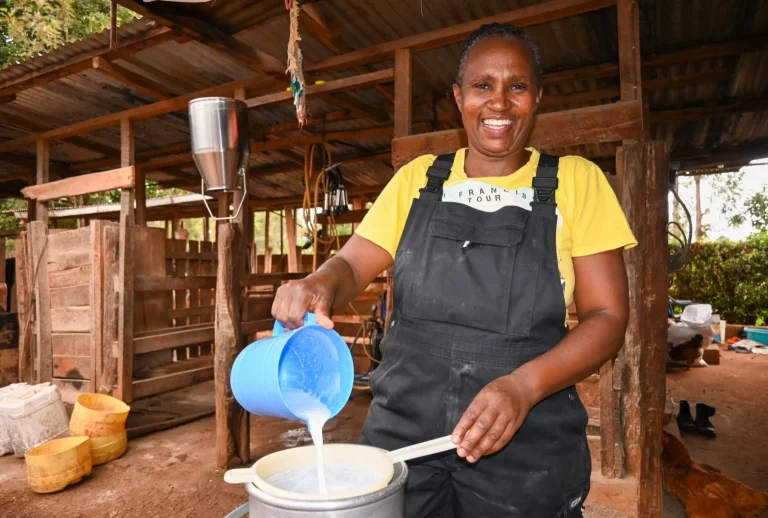
Starting with a single cow, Racheal gradually built her herd, adopting improved practices and expanding her expertise. Through diligent record-keeping and farm management, skills she attributes to her upbringing, her farm now boasts 15 cows, producing up to 164 litres of milk per day.

Her operation has become a model of smallholder efficiency, supporting her family and demonstrating the economic viability of well-managed dairy enterprises.

But her impact extends far beyond her own paddocks. Frustrated by the under-representation of women in agricultural leadership, Racheal entered the cooperative arena in 2016 when she was elected to represent farmers in the Nyaki dairy cooperative.

At the time, few women held formal leadership roles despite their heavy involvement in daily farming.

In 2021, determined to improve governance and accountability within the cooperative, Racheal ran for the position of chairperson.

Her campaign struck a chord with fellow members, leading to her election and ushering in a more inclusive era of cooperative leadership. Under her stewardship, milk collection soared from 1,200 litres per day to 3,750 litres, benefiting more than 400 active farmers.

Racheal credits part of her leadership success to training she received through the Economic Recovery to the Impact of COVID-19 on Agri-Food Value Chain project, a programme funded by the Italian Agency for Development Cooperation and implemented in partnership with AVSI Foundation, E4Impact, and local county governments.

These capacity-building sessions equipped her with governance know-how, conflict management strategies, and business planning tools, crucial for steering the cooperative through growth and change.

One of her most notable achievements was securing a matching grant that enabled the cooperative to purchase a milk transportation truck. The truck has reduced spoilage, improved market access, and strengthened pricing returns for producers.

Beyond administrative leadership, Racheal has embraced the role of mentor and teacher. Her farm has become a learning hub where other farmers, particularly women and youth, visit to observe best practices and gain practical insights.

“I invite farmers to my farm so they can learn. When we learn together we grow together,” she says.

Also Read: Kenyan entrepreneur transforms arid Kajiado land into thriving farm and eco-retreat

Kenyan entrepreneur transforms arid Kajiado land into thriving farm and eco-retreat

0

When Kenyan agripreneur Elijah Oenga inherited an 18-acre parcel of land in Oloosirkon, Tuala, in Kajiado County, he saw opportunity where others saw barrenness.

The property, acquired by his father in 1998 while Oenga was still a student, sits in one of Kenya’s arid and semi-arid landscapes, a region often dismissed as unsuitable for serious farming.

At first, Oenga shared the same doubts. The land appeared barren, covered in stubborn scrub and harsh savannah grass, and seemed unlikely to yield much.

Yet rather than sell it off, he made the decision to hold onto the inheritance and pursue a long-term plan to turn it into something productive.

Oenga, a graduate of Baraton University, later lived and worked in the United Kingdom, where he became deeply inspired by the country’s rich greenery. Scotland in particular left a lasting impression.

That exposure planted an idea: if the landscape could thrive there, perhaps elements of that success could be replicated back home, even in Kenya’s dry terrain.

After returning to Kenya, Oenga made a bold career shift. He walked away from positions as a procurement manager and a university lecturer to dedicate himself fully to developing the property.

The transformation began in 2017 with extensive clearing of rangau scrub, followed by soil restoration efforts and large-scale tree planting aimed at improving the land’s long-term fertility.

His farming venture took shape in 2018 when he invested Sh300,000 in his first greenhouse to cultivate basil. What started as a modest experiment has since grown into a thriving export operation. Today, Oenga runs 14 greenhouses producing basil for European markets.

Each greenhouse produces roughly 150 kilograms every 10 days, with a kilo going for Sh400. Onion sales also provide steady income, with prices ranging between Sh70 and Sh100 per kilogram depending on market demand and seasonality.

Beyond basil, his agribusiness includes bulb onion farming for the local market, an orchard featuring fruit and indigenous trees, and livestock rearing.

On the farm, he keeps poultry, ducks, rabbits and goats, building a diversified model designed to spread risk and generate multiple streams of income.

Building an Eco-Lodge and Events Destination

Oenga’s vision has expanded beyond farming. Five of the 18 acres have been developed into Ubuntu Kreative Village, an eco-lodge and events venue that blends hospitality with art, wellness and nature.

Located approximately eight kilometres from Ongata Rongai, the destination features a farmhouse, wellness stations, an events garden, and a gallery space that supports music and artistic performances. It has become a popular setting for weddings, cultural events and culinary experiences.

The farmhouse and an adjoining cottage currently provide four bedrooms, with expansion plans underway. Room rates range between Sh8,000 and Sh25,000 per night.

Guests also enjoy premium amenities including a sauna, jacuzzi, steam bath and massage facilities, offerings tailored to city residents seeking a quiet escape from Nairobi’s fast pace.

Environmental Turnaround

For Oenga, the most rewarding outcome has been environmental recovery. He recalls a time when the property was lifeless, with hardly any birds in sight.

Today, he says, more than 20 bird species regularly visit the land, a sign of ecosystem restoration that he considers one of his greatest achievements.

The entrepreneur’s journey has not come without challenges. He says some ventures, including strawberries, tomatoes, capsicum and Kuroiler chicken farming, failed to take off.

Additionally, water scarcity remains a persistent obstacle, forcing him to invest in water harvesting systems and boreholes to sustain both farming and hospitality operations.

Labour is another challenge, with the difficulty of securing and retaining skilled workers posing an ongoing concern.

Still, Oenga credits patience, calculated risk-taking, and diversification for keeping the enterprise resilient.

Also Read: Beyond M-Pesa: How Kenyan Businesses Accept Online Payments

NCBA Group reports KSh 23.4 Billion profit for FY2025 as dividend jumps 30%; new strategy unveiled

0

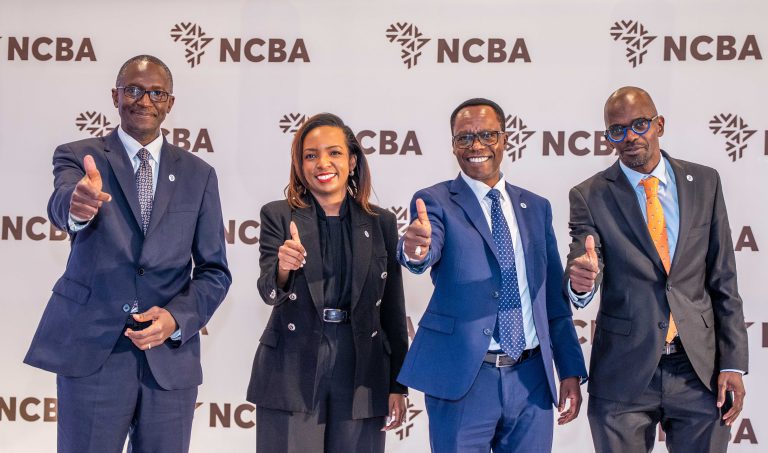
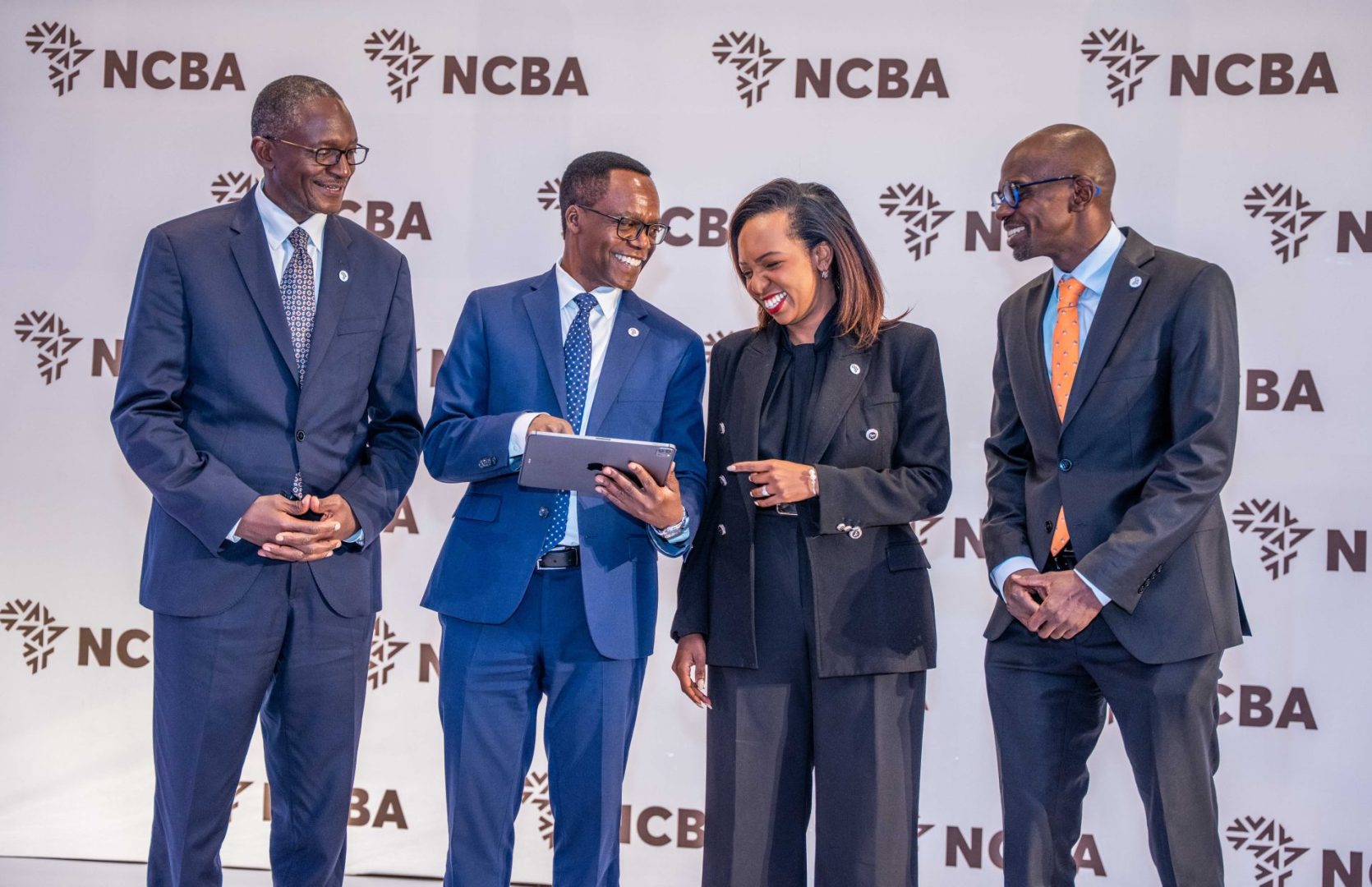
NCBA Group PLC has posted a net profit of KES 23.4 billion for the full year ending 2025, marking a 7% increase from KES 21.9 billion recorded in 2024. The results reflect sustained growth across its core banking and digital segments, alongside a strengthened balance sheet and expanding regional footprint.

The Group also announced a significant increase in shareholder returns, with total dividend payout rising to KES 11.7 billion, up from KES 9.1 billion the previous year. This translates to a final dividend of KES 7.10%, reinforcing the bank’s commitment to consistent value creation.

Strong Financial Performance Across Key Metrics

NCBA’s financial performance in 2025 was underpinned by robust revenue growth and operational scale:

  • Profit before tax rose to KES 27.9 billion, up 10.9 per cent year-on-year
  • Operating income increased 17 per cent to KES 73.3 billion
  • Customer deposits grew to KES 532 billion, reflecting a 6 per cent rise
  • Total assets expanded to KES 716 billion, up 8 per cent

However, the Group also recorded a 46.3 per cent increase in credit loss provisions to KES 8.0 billion, indicating a more cautious risk posture amid evolving macroeconomic conditions.

NCBA Group 2025 full year net profit hits Sh23.4bn, total dividend rises to Sh7.10

A notable highlight was the continued dominance in digital lending, with disbursements reaching KES 1.4 trillion, a 33 per cent increase year-on-year. Digital banking now contributes 32 per cent of the Group’s profitability, signaling a structural shift in how financial services are delivered and monetized.

Strategy Execution Drives Long-Term Positioning

According to Group Managing Director John Gachora, the 2025 results mark the successful conclusion of the bank’s 2020–2025 strategic cycle.

Over this period, NCBA focused on five core pillars: customer experience, retail expansion, corporate banking leadership, digital transformation, and organizational culture. The outcomes are measurable:

  • Branch network expanded from 89 to 123 locations
  • Customer base doubled through retail and digital channels
  • Asset finance market share maintained above 30 per cent
  • Over 20,000 businesses adopted its digital platform, NCBA ConnectPlus

The Group’s digital ecosystem, including AI-powered solutions such as Carduka, has driven scale, onboarding millions of users across the region.

Subsidiaries and Regional Operations Gain Momentum

The Kenyan banking subsidiary remains the primary profit driver, contributing 82 per cent of total profit before tax. Regional subsidiaries also showed strong growth, generating KES 3.6 billion in PBT and benefiting from improved asset quality and balance sheet expansion.

Non-banking units — including investment banking, insurance, and leasing — contributed KES 1.9 billion in PBT, supported by growth in assets under management, which surpassed KES 100 billion.

NCBA Group reports KSh 23.4 Billion profit for FY2025 as dividend jumps 30%; new strategy unveiled

Sustainability and Social Impact Investments Expand

NCBA continues to integrate sustainability into its operating model through its “Change The Story” strategy. Key milestones include:

  • KES 9.5 billion mobilized in green financing
  • Over 1.3 million trees planted
  • 70,000+ youth and women empowered through programs
  • 1.2 million livelihoods impacted

The bank has also invested in sports and the creative economy, allocating over KES 200 million to golf development and supporting young creatives through partnerships such as ELEV8 and HEVA Fund.

Launch of the 2026–2030 Ubuntu Strategy

Building on its current momentum, NCBA has unveiled its next strategic phase — the Ubuntu Strategy (2026–2030), anchored on the purpose: “Banking on Belief – Empowering Ambitions.”

The strategy is structured around four priorities:

  1. Strengthening core banking operations and data capabilities
  2. Scaling high-growth segments such as SME, consumer, and insurance
  3. Expanding into new markets and sectors
  4. Building a future-ready, purpose-driven organization

This reflects a shift from scale-building to precision growth and ecosystem expansion.

Nedbank moves to acquire controlling stake in NCBA Group in landmark East Africa expansion

Nedbank Transaction Signals Regional Expansion

The Group also highlighted strategic opportunities tied to the proposed acquisition by Nedbank Group of a 66 per cent stake in NCBA.

The transaction is expected to:

  • Enhance capital strength and liquidity
  • Enable access to global financial markets and products
  • Support expansion beyond East Africa into broader international corridors

This positions NCBA within a larger pan-African and global banking architecture, with access to advanced capabilities and funding channels.

Strategic Interpretation

NCBA’s 2025 results are less about headline growth and more about structural positioning. The bank has transitioned from a traditional lender into a digitally-led, regionally diversified financial platform.

Three signals stand out for founders, investors, and policymakers:

First, digital financial services are now a primary profit center, not a support function. Scale and data are the new competitive advantages.

Second, regional diversification is no longer optional for financial institutions operating in Africa. Risk distribution and growth opportunities demand cross-border strategies.

Third, capital partnerships — such as the Nedbank deal — are becoming essential for institutions seeking to compete at scale in a fragmented but rapidly integrating African market.

The broader implication is clear: African financial institutions that combine disciplined execution, digital infrastructure, and strategic partnerships will define the next phase of growth.

Leadership, in this context, is about sequencing — knowing when to consolidate, when to expand, and when to invite external capital. Institutions that get this balance right will not only grow; they will endure.

NCBA Group reports KSh 23.4 Billion profit for FY2025 as dividend jumps 30%; new strategy unveiled

Kenya secures strategic backing from Azerbaijan ahead of Africa urban forum 2 (AUF2)

0

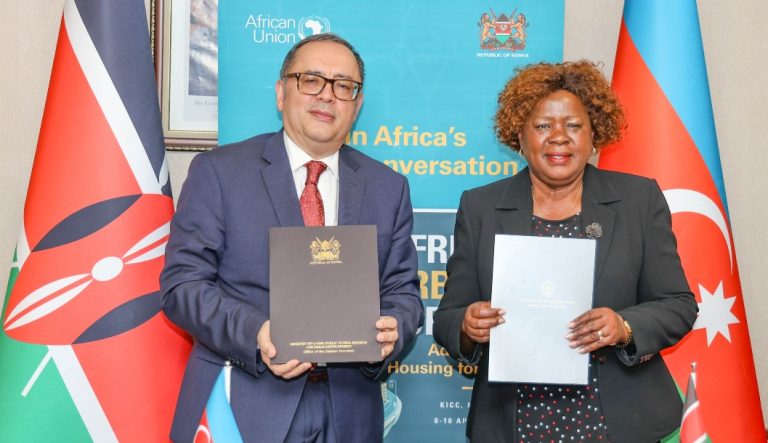
Nairobi, Kenya, March 26, 2026 … With just two weeks to go before Nairobi hosts Africa’s most significant urban development gathering, Kenya has secured a strategic financial and technical partnership with Azerbaijan to support the Second Africa Urban Forum (AUF2).

The agreement, signed in Nairobi, will see Azerbaijan, through the Azerbaijan International Development Agency (AIDA), support the successful delivery of the Forum, reinforcing Kenya’s role as a continental hub for urban policy, dialogue and innovation.

AUF2, hosted by the Government of Kenya in partnership with the African Union, is expected to convene policymakers, city leaders, urban planners and development partners from across Africa and beyond to advance practical solutions for inclusive, resilient and sustainable cities.

Speaking during the signing ceremony, Cabinet Secretary for Lands, Public Works, Housing and Urban Development, Alice Wahome, said: “In less than two weeks, Nairobi will bring Africa and the world together, and through this partnership, we are ensuring that the conversations we start here continue globally in Baku. That continuity is what will drive real change for our cities.”

She added:

“For Kenya, this is also an opportunity to showcase the progress we are making in housing, urban renewal and sustainable city development, while learning from global partners and scaling solutions that work for our people.”

The partnership comes at a pivotal moment as Kenya continues to position itself at the centre of conversations shaping the future of African cities, amid rapid urbanisation and growing demand for sustainable infrastructure and housing.

Kenya ready to host second Africa Urban Forum in Nairobi

Sultan Hajiyev, Ambassador of Azerbaijan to Kenya, underscored the shared ambition between the two countries: “Nairobi and Baku are connected in purpose. The discussions at the Africa Urban Forum will naturally feed into the World Urban Forum, creating a shared platform where Africa and the global community can learn from each other and act together.”

The collaboration establishes a strategic link between AUF2 and the World Urban Forum (WUF13), scheduled to take place in Baku from May 17–22, 2026, positioning the two gatherings as complementary platforms advancing global urban dialogue and action.

Azerbaijan will be represented at AUF2 by a high-level delegation led by H.E. Anar Guliyev, National Coordinator of WUF13 and Chairman of the State Committee for Urban Planning and Architecture. The delegation will include senior government officials, representatives from the State Support Agency for NGOs, and private sector players, reflecting a multi-stakeholder approach to urban transformation.

The Second Africa Urban Forum builds on the outcomes of the inaugural forum held in Addis Ababa in 2024 and is expected to culminate in the Nairobi Declaration, which will articulate Africa’s common position on housing and human settlements, while showcasing locally driven solutions, innovation and partnerships.

Beyond M-Pesa: How Kenyan Businesses Accept Online Payments

0

Accept payments easily and safely. Mobile money, bank cards, and digital wallets — everything in one integration.

Why Kenyan business needs a modern payment gateway

For many years, mobile money was the main way of payment in Kenya. M-Pesa changed the lives of millions of people. But today, customers want more.

If you are looking for a reliable payment gateway in Kenya, A-Pay covers all needs. Modern buyers expect choice. They want to pay with cards, through bank transfers, and QR codes. They need a fast checkout both on the internet and in normal stores. A good Kenya payment gateway must work with different payment methods, be safe, and be fast. This is exactly what we offer.

How payments in Kenya changed

The payment market of Kenya has gone a huge way. Digital payment started with mobile money, and now it is a complex ecosystem of many payment methods.

Before, online payment gateways worked only with cards. But Kenya is a special market. Here, payment service providers must accept mobile money, cards, and new tools. A-Pay understands this specificity. Our payment solution fits everyone — from online stores in Nairobi to entrepreneurs trading across Africa.

The market does not stand still. Tingg and iPay Africa appear, DPO and Pesapal grow. But a business needs one payment gateway that allows businesses to accept everything at once. With A-Pay, it works this way.

High-speed internet, mobile apps, online payments: how betting companies influenced Africa’s digitalization

Why mobile money is already not enough

Mobile money gave Kenya financial inclusion. This is a fact. But for modern commerce, other tools are needed.

Imagine situations:

  • A tourist wants to pay with their card
  • A store needs to accept payment from guests of the country
  • A customer asks for an instalment for an expensive purchase
  • A company accepts payments from neighboring countries

If you accept only mobile money, you lose customers. The best payment gateway in Kenya must offer a wide choice. A-Pay collects everything in one window.

What a good payment gateway gives to a business

A modern Kenya payment gateway solves several tasks:

Launches online sales

Without online payment processing, normal commerce on the internet is impossible. A payment gateway that allows businesses to collect online payments opens your store for everyone.

Increases trust

When a customer sees a familiar payment method, they buy more willingly. A payment gateway in Kenya with support for mobile money shows that you understand the local market.

Helps to go abroad

Kenyan companies trade across Africa and worldwide. For cross-border payments, a payment processor is needed that understands several currencies and countries, including Nigeria.

Speeds up money

Fast payouts = healthy cash flow. Payment gateway integration with short settlement times helps businesses grow.

How online payments happen

When a customer clicks “pay”, their data goes to the payment processor. The payment gateway encrypts sensitive customer information and sends it to the banking system. A good payment service provider and payment gateway makes this process invisible for the buyer. They just see “successful”. And the system checks money, confirms security, and processes the transaction. A-Pay takes this complexity on itself. We encrypt everything. Our panel shows each operation. M-Pesa, cards, or transfer — the process is always simple.

Sell more online with Co-op Bank’s Chapa Pay e-commerce solution

The best payment gateways of Kenya: who is who

Different payment gateway providers work in the market. Let’s compare the main players:

Capability A-Pay DPO Pesapal iPay Africa
Mobile money ✅ Yes ✅ Yes ✅ Yes ✅ Yes
Bank cards ✅ Visa, Mastercard ✅ Yes ✅ Yes ✅ Yes
QR codes ✅ Yes ❌ Limited ❌ No ✅ Yes
Cross-border ✅ Full ✅ Good ❌ Weak ❌ Weak
Payout currency KSH, USD, other KSH KSH KSH
Integration Simple API Complex Medium Medium
Prices Honest Market Market Market

DPO Group: cross-border leader

DPO Group grew into a major player among African online payment gateways. Now they are part of Network International. DPO is strong in cross-border payments and works in multiple African countries, including Kenya and Nigeria. If your business is oriented to abroad, DPO pay is a working option. They have good infrastructure and support of different currencies.

Minus: difficult entry. For a small business connection can seem heavy.

Pesapal: local favorite

Pesapal is one of the most recognizable payment service providers in Kenya. They know the local market отлично. Pesapal is friendly with mobile money and M-Pesa. Many Kenyan stores choose Pesapal as the main payment gateway in Kenya. Their checkout is familiar to local buyers. But Pesapal is tied to Kenya. If you plan to expand to other countries, most likely, more providers will be needed.

iPay Africa and Tingg: new names

iPay Africa and Tingg offer a fresh look at the Kenya payment gateway. They have modern tools and good developer support. iPay Africa gives a strong API and accepts QR codes and contactless payments. The platform fits those who build non-standard solutions. Tingg (from iPay Africa) is sharpened for recurring payments and utilities. It works well for schools, subscriptions, and housing and services.

API or ready page: what to choose

You can connect a payment gateway in two ways:

  • API — for those who want to manage everything themselves. Developers embed payment gateway integration directly into your site. A-Pay gives detailed documentation.
  • Ready page — simpler. The payment gateway itself leads the customer through the secure page. You just send the buyer there. Ideal for small projects.

A-Pay works in both modes. Choose for your силы.

Security: our main concern

Payment gateways work with sensitive customer information. This data must be under protection. All serious payment gateway providers follow PCI-DSS. A-Pay complies with these standards. In addition, we:

  • Encrypt all customer data
  • Track suspicious operations
  • Regularly check security
  • Tokenize card data

Each online transaction is protected at the level of large banks.

What payment methods to offer customers

The right set of a variety of payment methods increases sales. Kenyans like:

  • Mobile money. Without M-Pesa and Airtel, nowhere. Any payment gateway in Kenya must support them.
  • Bank cards. Tourists and wealthy buyers expect credit and debit cards. Their use in Kenya grows.
  • QR codes. Youth like to pay by QR. For normal stores, this is a convenient option.
  • Bank transfers. Good for B2B when sums are large.

A-Pay covers all these needs. The customer pays as they want — you receive money.

Cards through DPO Pay

Card payments are important for several reasons:

  • Foreigners use cards
  • Online buyers expect card payment
  • Expensive goods are often bought by card
  • Subscriptions are convenient to charge from cards

A-Pay works with DPO to give you reliable card infrastructure. Everything is managed from one panel.

E-wallets expand the audience

Besides mobile money, there are digital wallets. They attract:

  • Youth that does not part with the phone
  • Foreigners with their PayPal
  • Users who like bonuses from wallets

A-Pay connects to different wallets. Customers choose convenience; you just sell.

The future of payments in Kenya

The digital payment market in Kenya changes every year. Here is what awaits us:

  • Financial accessibility grows. More and more Kenyans are using cashless payment. The market expands.
  • Cross-border payments become an ordinary дело. Kenyan companies trade with neighbors. DPO and others help with this.
  • New payment methods appear constantly. QR codes, biometrics, and cryptocurrencies — this is no longer fiction.
  • Money transfers from abroad remain an important part of the economy.

A-Pay keeps up with time. We update our payment solution for new realities.

Ready to accept any payments in Kenya?

Enough losing customers because of inconvenient payment. Accept mobile money, cards, and wallets through one payment gateway in Kenya.

Frequent questions

Which gateway should small businesses in Kenya choose?

A-Pay. Simple connection, honest prices, all payment methods.

Do you accept M-Pesa?

Yes. Mobile money works excellently — both M-Pesa and Airtel.

How to accept payments from abroad?

A-Pay supports cross-border payments. Foreigners pay, you receive KSH.

Do you have PCI-DSS security?

Yes, we follow standards and encrypt all data.

Is a website required to work with you?

No. You can accept by links or via invoice.

How much do you take?

Prices are transparent. Write — we will tell you for your volume.

Do you accept cards?

Yes, through partnership with DPO Pay.

When does money arrive?

Usually, the next day. It happens faster, too.

Mobile-first as new standard: why apps define future of betting in Africa

0

Rapid technological progress has laid the groundwork for the future development of the iGaming industry.

Desktop platforms are a thing of the past, and 2026 marked the final shift of users toward mobile apps. More than 70 percent of betting activity in Africa now takes place on smartphones and tablets.

Mobile-first is not a passing trend, but the new logic of the iGaming market

Over 94 percent of users place bets on their smartphones, and leading operators have embraced this trend as the fundamental logic of the market, adapting their products in line with it.

1xBet was among the leaders in mobile betting, offering customers a responsive version of its official website and optimized mobile applications for iOS and Android. These allow users to place bets on the go and stay connected to the action at all times.

The growing popularity of mobile technology is shaping new approaches and generating revenue. The African iGaming market is expanding rapidly and has already reached $17.6 billion.

In many countries across the continent, smartphones have become the primary channel for accessing betting services. For this reason, an effective mobile platform is a must-have for every operator.

Given unstable internet connections and a wide range of device capabilities, technical optimization of the product is particularly significant. For example, the 1xBet app is designed for low data usage and stable performance even with limited resources.

Thanks to advances in mobile technology, the African iGaming sector is growing in both revenue and user activity. Today, it has over 440 million active players, and that number continues to rise daily.

Localization as a key to success

The African iGaming industry is a multi-tiered market comprising various countries, each with its own unique features.

1xBet offers the ideal combination of global expertise and regional flexibility, providing customers with a user-friendly interface featuring intuitive localization and a wide range of payment options, including services from niche operators.

Cash transactions via payment agents, as well as mobile services for depositing and withdrawing funds, are very popular in Africa, and 1xBet has integrated these solutions into its mobile platform.

In many countries, mobile wallets have become the primary financial tool for betting, further reinforcing the role of mobile apps as a crucial point of interaction with users.

Today, users choose a provider based on its experience and achievements, rather than the competitive advantages highlighted in commercials.

1xBet mobile offers a combination of speed, reliability, and convenience that creates a comfortable environment for an engaging gaming experience.

1xBet is at the forefront of building a new iGaming infrastructure in Africa

1xBet doesn’t simply follow market trends, but shapes a new market paradigm based on the mobile-first principle.

The brand’s mobile platform meets all players’ needs and is fully aligned with mobile-first user behavior.

At the same time, the company is constantly working to optimize the product and integrate new ideas.

Thanks to this approach, 1xBet has earned recognition from users and industry experts alike, winning the Best on Mobile 2026 award at SiGMA Africa 2026.

The company’s product has come to embody the new reality of mobile-first betting, strengthening its position in this strategically significant region.

In 2026, mobile betting no longer competes with desktop – it has completely replaced it. Products such as 1xBet mobile are setting the new standard in the market.

Also Read: 1xBet 2025: Strengthening Markets, Communities, and Trust

JSC announces 108 job vacancies: How to apply

0

The Judicial Service Commission (JSC) has announced multiple job vacancies across its departments.

In a job advert on Thursday, March 26, JSC invited interested and qualified candidates to apply for 108 vacant positions, which range from entry-level researchers to senior legal roles.

“The Judicial Service Commission (JSC) is a Constitutional Commission established under Article 171 of the Constitution of Kenya, 2010, to promote and facilitate the independence and accountability of the Judiciary and the efficient, effective and transparent administration of justice. The Commission invites applications from qualified persons to fill these positions,” the notice read.

According to the notice, the commission is seeking to recruit Law Clerk (1) post, Senior Legal Researcher (22) posts, and Legal Researcher (85) posts.

Successful candidates will be deployed to assist individual judges in the Superior Courts with legal research and analysis that informs decisions making.

How to Apply

Interested and qualified persons are required to visit the JSC jobs portal: https://jsc.go.ke/jobs-2/ to apply for their preferred positions.

All applications should reach the Commission not later than April 15, 2026, at 5:00 p.m. The commission noted that only shortlisted and successful candidates will be contacted for interviews.

JSC warned applicants that any form of canvassing will lead to automatic disqualification.

Further, the commission emphasized that the recruitment process is free of charge and urged applicants to remain vigilant against fraudsters seeking to exploit job seekers.

“The Judicial Service Commission is an Equal Opportunity Employer and selects candidates on merit through fair and open competition from the widest range of eligible candidates,” JSC added.

Also Read: Tom Mboya University announces 84 job vacancies: How to apply

NCBA Group 2025 full year net profit hits Sh23.4bn, total dividend rises to Sh7.10

0

NCBA Group 2025 full year net profit has risen by 7 percent to Sh23.4 billion. In the previous full year 2024, the banking group had posted a net profit of Sh21.87 billion.

The profit for the full year 2025 was derived from a profit before tax of Sh27.9 billion which was an increase of 11 percent from the profit before tax that was realized in the previous year.

During the year under review, customer deposits increased by 5.95 percent to Sh531.87 billion from the previous Sh502.02 billion, while total assets increased by 7.5 percent to Sh716.1 billion.

At the same time, net customer loans and advances jumped by 4.99 percent to Sh317.16 billion from the Sh302.08 billion that was recorded the previous year.

Gross non-performing loans went down by 6.7 percent to Sh34.7 billion. The banking group announced that the equity attributable to shareholders had increased by 16.2 percent to Sh127.5 billion.

In the same vein, the total dividend per share jumped by 29.1 percent during the financial year under review to Sh7.10.

This will follow a final dividend payment of Sh4.60 per share. On October 2, 2025, NCBA had paid shareholders an interim dividend of Sh2.5 per share. In the previous year, shareholders had received a total dividend payment of Sh5.50 per share.

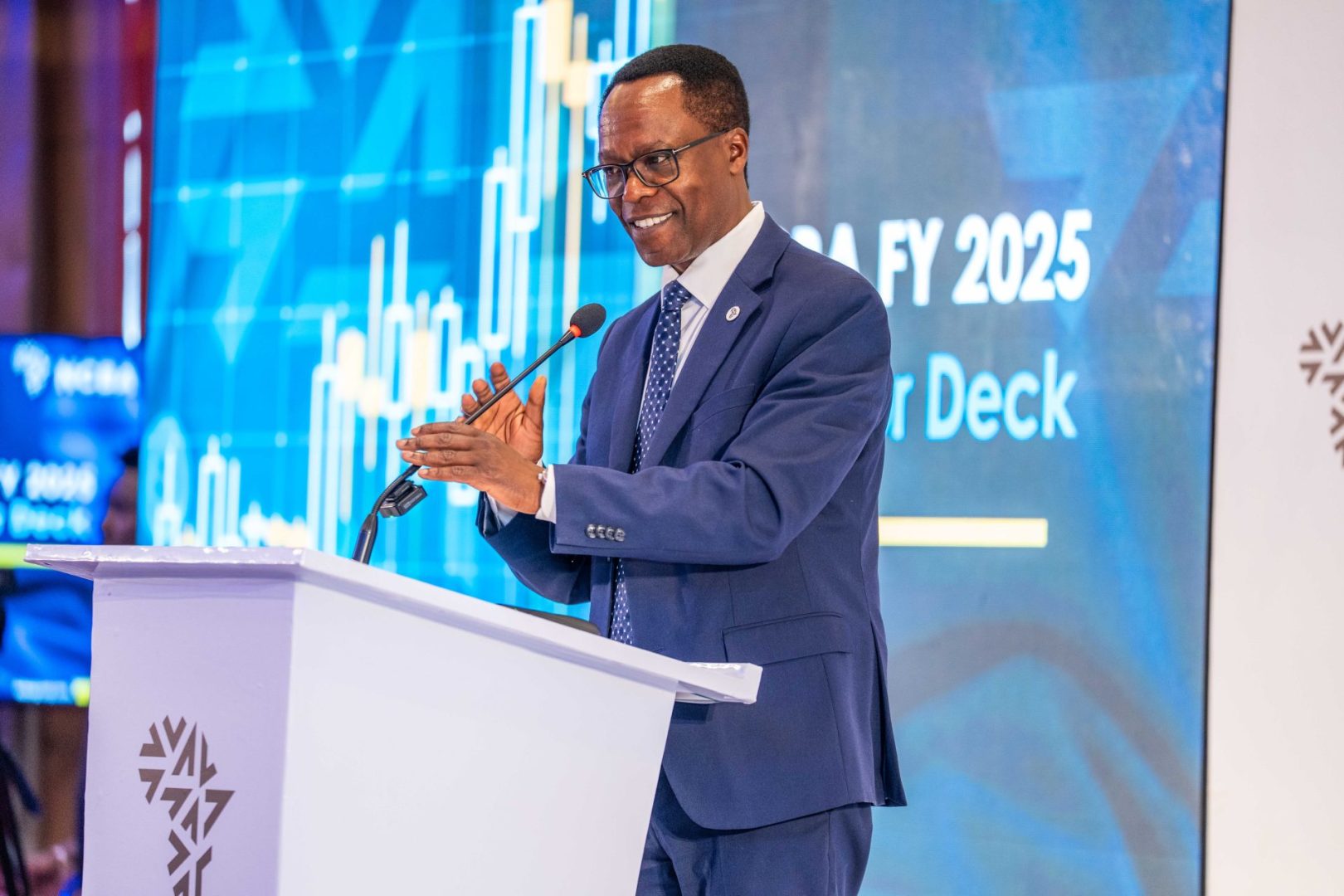
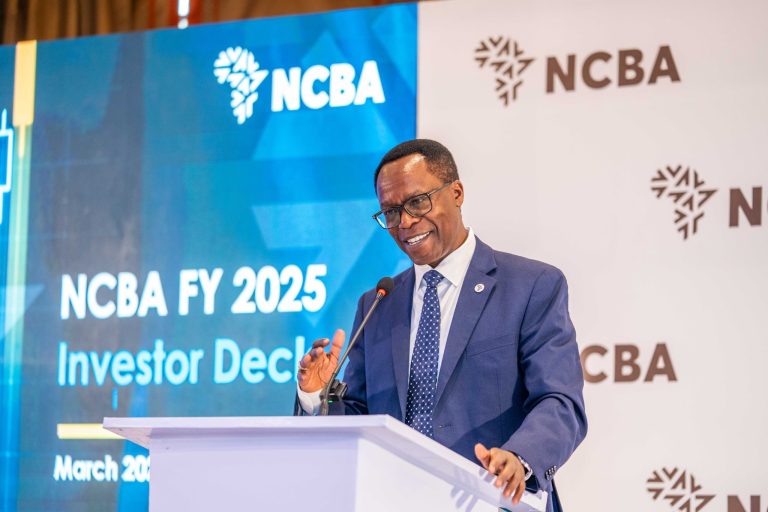
Speaking when the banking group released its results, Managing Director and Chief Executive Officer John Gachora said that the NCBA Group was now firmly a $5 billion business serving over 65 million customers across different markets in Africa.

He went on to reveal that the bank had now hit Sh1 trillion in loan disbursements, a testament to the group’s position as a solid financier of individuals, micro small and medium enterprises, and large businesses across the continent.

Gachora: Why NCBA Group agreed to Nedbank’s Sh110 billion offer 

The NCBA Group Director of Finance David Abwoga announced that regional subsidiaries had contributed Sh3.6 billion to the total profitability. This was equivalent to 13 percent. Non-banking subsidiaries on the other hand brought in Sh1.5 billion profit before tax.

On revenue growth, the Kenyan unit alone accounted for about 85 percent of the banking group’s revenue.

“The Kenyan bank subsidiary remains NCBA Group’s main profit engine, contributing 82 percent of profit before tax and growing at a 27 percent compound annual growth (CAGR) since the year 2020 to Sh22.9 billion. This, driven by balance sheet growth and margin management,” said Abwoga.

“NCBA has consistently provided growing returns for our stakeholders, driven by disciplined growth, effective risk management, and sustainable business practices.”

At the same time, the NCBA Group announced that the acquisition of a 66 percent stake by Nedbank has been strategically designed to accelerate long term growth while provide growth and value for shareholders.

“We chose Nedbank for good reasons. Nedbank has been listed on the Johannesburg Stock Exchange (JSE) since 1969. One of our key pillars is expanding into new markets , and as such, it made sense to have a strong parent,” said Gachora, adding that the banking group has made significant progress in the regulatory approval process.

Mr. Gachora announced that the impressive performance in the full year 2025 marked the conclusion of the bank’s 2020 to 2025 strategic cycle. Over this period, the bank focused on customer experience, retail expansion, corporate banking leadership, digital transformation, and organizational culture.

Now, the NCBA Group has launched a new strategy dubbed the Ubuntu Strategy covering the 2026 to 2030 period. According to Mr. Gachora, this strategy marks a shift to precision growth and ecosystem expansion.

It will be anchored on four principles which shall include the strengthening of core banking operations and data capabilities, the scaling of high growth segments including small and medium enterprises, consumer and insurance, expansion into new markets and sectors, and the building of a future-ready, purpose-driven organization.