Home Blog Page 86

I&M Group profit jumps 22pc to Sh24.2billion as regional units drive growth

0

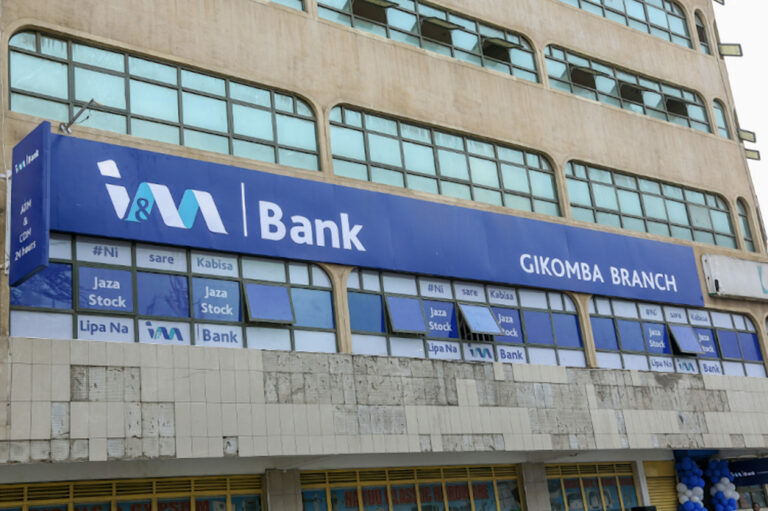
I&M Group PLC has posted a strong financial performance for the year ended December 31, 2025, recording a 22 percent increase in Profit Before Tax (PBT) to Sh24.2 billion.

The strong performance was largely supported by robust operating revenues across all markets, a resilient income mix, and a strengthening balance sheet.

The Group’s total revenue rose by 19 percent to Sh60.3 billion, supported by growth in both interest and non-interest income.

“The Group’s strong performance is a clear testament to the growing strength, resilience and synergy of our operations across all our markets. It reflects the disciplined execution of our strategy and reinforces our confidence that we are delivering meaningful value for both our customers and shareholders,” I&M Group Regional CEO Mr. Kihara Maina remarked.

“This momentum positions us firmly on the path toward our long-term ambition of becoming Eastern Africa’s leading financial partner for growth,” he added.

Net interest income increased by 16 percent to Sh46 billion, reflecting improved lending activity and stable interest margins. Meanwhile, non-interest income grew by an impressive 31 percent to Sh14.4 billion.

The Group’s total asset base expanded by 15 percent to Sh668.9 billion, reflecting steady business growth and increased customer confidence.

During the year, loans and advances increased by seven percent to Sh306 billion, signalling continued demand for credit and the Bank’s appetite to support productive lending across the region. Customer deposits also grew strongly, increasing by 17 percent to Sh484 billion.

Operating expenses increased by 19 percent, which the Group attributed to branch expansion, investments in brand-building initiatives, and staff upskilling aimed at supporting long-term growth.

Wealth and insurance businesses record sharp expansion

The lender reported a strong growth in Bancassurance and Wealth Management, two areas the Group has prioritised as part of its broader strategy.

Assets Under Management (AUM) surged by 223 percent to close at Sh99 billion, driven by rising consumer demand for wealth solutions and investment products.

I&M Bancassurance Intermediary Limited also posted significant growth, with underwritten premiums increasing to Sh4.7 billion in 2025 from Sh2.8 billion in 2024, supported by an expanded client base.

Commission and interest income rose by 20 percent to Sh549 million, up from Sh457 million the previous year.

In line with the improved performance, the Board recommended a final dividend of Sh2.25 per share, bringing the total dividend for the year to Sh3.75 per share. This represents a 25 per cent increase from 2024.

Kenya business remains anchor, PBT rises 29 percent

I&M Bank Kenya, the Group’s anchor unit, recorded robust growth, with total operating income rising by 22 percent to Sh40.4 billion in 2025 from Sh33.1 billion in 2024.

This performance was supported by a 17 percent increase in net interest income and a 41 percent jump in non-interest income.

Profit Before Tax at the Kenya unit climbed by 29 percent to Sh17.4 billion, up from Sh13.5 billion in 2024.

Operating expenses increased by 15 per cent year-on-year, reflecting continued investments in business growth initiatives and branch network expansion.

Despite a tight operating environment, customer deposits in Kenya grew by 15 percent, demonstrating resilience in the Bank’s customer base.

The lender also reported improved asset quality, with the gross Non-Performing Asset (NPA) ratio declining from 14.3 percent in 2024 to 13.3 percent in 2025.

Regional subsidiaries strengthen growth

The Group’s regional subsidiaries continued to play a critical role in driving earnings and supporting long-term ambitions across East Africa.

In Rwanda, I&M Bank Rwanda posted a 24 percent increase in Profit Before Tax in local currency, driven by increased economic activity.

I&M Bank Tanzania recorded a 21 percent rise in Profit Before Tax in local currency, supported by strong asset growth, while I&M Bank Uganda delivered the strongest performance among the subsidiaries, posting a 48 percent increase in Profit Before Tax in local currency.

The Uganda unit also reported a sharp rise in total assets, growing from UGX 1.1 trillion in December 2024 to UGX 1.4 trillion in December 2025.

Meanwhile, Bank One in Mauritius, the Group’s joint venture with CIEL Group, recorded a four percent increase in Profit Before Tax in local currency.

Also Read: DTB pre- tax profit jumps by 26%, increases dividend to KShs 9 per share

Tom Mboya University announces 84 job vacancies: How to apply

0

The Tom Mboya University has announced multiple job vacancies across its academic and administrative departments.

In an advertisement, the institution invited interested and qualified candidates to submit applications by April 14, 2026, at 5:00 PM.

“In pursuit of its mission and mandate, the University invites applications from qualified candidates to fill the following advertised positions,” read part of the notice.

The advertised positions cut across various sectors including Architecture, Civil Engineering, Chemical Engineering, Marine Engineering, Software Engineering, Pharmacy, Nursing, Cyber Security and Forensics, Data Science, Public Health, and Environmental Planning and Management.

Qualified candidates must submit three (3) hard copies of their application, clearly indicating the reference number of the position applied for. Applications should be addressed to: The Vice-Chancellor, Tom Mboya University, P.O. Box 199 – 40300, Homa Bay.

Applications must be accompanied by a detailed, up-to-date curriculum vitae, certified true copies of academic and professional certificates, a National Identity Card or Passport, testimonials, and other relevant supporting documents.

Below are the advertised positions:

Position Reference Number Grade No. of Positions
RomProfessor (Architecture) TMU/ACA/01/26 15A 1
Associate Professor (Aquatic and Fishery Science / Blue Economy) TMU/ACA/02/26 14A 1
Senior Lecturer (Architecture) TMU/ACA/03/26 13A 1
Senior Lecturer (Civil Engineering) TMU/ACA/04/26 13A 1
Senior Lecturer (Chemical Engineering) TMU/ACA/05/26 13A 1
Senior Lecturer (Marine Engineering) TMU/ACA/06/26 13A 1
Senior Lecturer (Software Engineering) TMU/ACA/07/26 13A 1
Senior Lecturer (Pharmacy) TMU/ACA/08/26 13A 1
Senior Lecturer (Nursing) TMU/ACA/09/26 13A 1
Senior Lecturer (Cyber Security and Forensics) TMU/ACA/10/26 13A 1
Senior Lecturer (Data Science) TMU/ACA/11/26 13A 1
Senior Lecturer (Public Health) TMU/ACA/12/26 13A 1
Senior Lecturer (Environmental Planning and Management) TMU/ACA/13/26 13A 1
Senior Lecturer (International Relations) TMU/ACA/14/26 13A 1
Senior Lecturer (Governance and Public Policy) TMU/ACA/15/26 13A 1
Senior Lecturer (Sustainable Blue Economy) TMU/ACA/16/26 13A 1
Senior Lecturer (Education in Technology) TMU/ACA/17/26 13A 1
Senior Lecturer (Food Science) TMU/ACA/18/26 13A 1
Senior Lecturer (Forensic Science) TMU/ACA/19/26 13A 1
Senior Lecturer (Project Management) TMU/ACA/20/26 13A 1
Senior Lecturer (Remote Sensing / GIS / Geomatics) TMU/ACA/21/26 13A 1
Senior Lecturer (Building Technology / Building Science) TMU/ACA/22/26 13A 1
Lecturer (Architecture) TMU/ACA/23/26 12A 2
Lecturer (Civil Engineering) TMU/ACA/24/26 12A 2
Lecturer (Chemical Engineering) TMU/ACA/25/26 12A 2
Lecturer (Marine Engineering) TMU/ACA/26/26 12A 2
Lecturer (Software Engineering) TMU/ACA/27/26 12A 2
Lecturer (Pharmacy) TMU/ACA/28/26 12A 2
Lecturer (Nursing) TMU/ACA/29/26 12A 2
Lecturer (Cyber Security and Forensics) TMU/ACA/30/26 12A 2
Lecturer (Data Science) TMU/ACA/31/26 12A 2
Lecturer (Public Health) TMU/ACA/32/26 12A 2
Lecturer (Environmental Planning and Management) TMU/ACA/33/26 12A 2
Lecturer (International Relations) TMU/ACA/34/26 12A 2
Lecturer (Governance and Public Policy) TMU/ACA/35/26 12A 2
Lecturer (Sustainable Blue Economy) TMU/ACA/36/26 12A 2
Lecturer (Education in Technology) TMU/ACA/37/26 12A 2
Lecturer (Food Science) TMU/ACA/38/26 12A 2
Lecturer (Ecotourism, Hotel and Institutional Management) TMU/ACA/39/26 12A 2
Lecturer (Remote Sensing / GIS / Geomatics) TMU/ACA/40/26 12A 2
Lecturer (Medical Laboratory Sciences) TMU/ACA/41/26 12A 2
Lecturer (Building Technology / Building Science) TMU/ACA/42/26 12A 2
Lecturer (Religion) TMU/ACA/43/26 12A 2
Lecturer (Criminology) TMU/ACA/44/26 12A 2
Lecturer (History) TMU/ACA/45/26 12A 2
Lecturer (Kiswahili) TMU/ACA/46/26 12A 2
Lecturer (English) TMU/ACA/47/26 12A 2
Lecturer (Literature) TMU/ACA/48/26 12A 2
Position Reference Number Grade No. of Positions
Senior Systems Administrator TMU/ADM/01/26 13 1
Legal Officer TMU/ADM/02/26 12 1
Assistant Internal Auditor TMU/ADM/03/26 10 1
Assistant Accountant TMU/ADM/04/26 10 2
Assistant Procurement Officer TMU/ADM/05/26 10 1
Clerk of Works TMU/ADM/06/26 10 1
Security Officer TMU/ADM/07/26 8 1
Technologist (Surveying/GIS/Geomatics) TMU/ADM/08/26 8 1
Technologist (Building Technology / Building Science) TMU/ADM/09/26 8 1

Also Read: How to integrate bulk whatsApp business API: A step-by-step guide

Why more business owners are choosing Safaricom’s Easy Talk Bundle

0

In today’s fast-paced commercial environment, consistent and affordable communication remains a cornerstone of success.

For many entrepreneurs and professionals, the ability to make uninterrupted calls and send timely messages can mean the difference between closing a deal and missing an opportunity.

It is within this context that Safaricom’s Easy Talk Bundle continues to stand out as a practical solution for customers seeking predictability in their voice and SMS spending.

The Easy Talk Bundle is a voice and SMS plan designed to offer a worry-free experience on calls and text messages.

The plan is available to all Safaricom’s prepaid, postpaid and hybrid customers and is designed to provide flexibility that suits a wide range of communication needs, from small business owners managing daily client calls to corporate teams coordinating projects across regions.

Customers can subscribe by dialing *444# and selecting the Easy Talk Monthly option, or through *544# under Calls & SMS – Easy Talk Monthly.

The process is straightforward, allowing users to quickly choose a plan that aligns with their usage patterns.

The bundles come with varying validity periods; 30 days, 7 days, 2 days and Midnight options,  giving subscribers room to select a duration that matches their workflow.

While minutes and SMS resources do not roll over or extend upon purchasing another bundle, customers are free to subscribe multiple times depending on their needs.

Importantly for enterprises that transact across different mobile networks, the bundle’s minutes and SMS can be used across networks. This cross-network functionality eliminates the inconvenience of juggling multiple plans or worrying about differential calling rates when engaging clients, suppliers or partners on other networks.

Monitoring usage is equally convenient. Subscribers can check their remaining balance by dialling *444#, *544*44# or sending an SMS to 144 to view the remaining minutes and SMS resources.

Beyond calls and SMS, the Easy Talk Bundle offers added value. Subscribers earn Bonga Points in line with existing terms and conditions, while prepaid customers also accumulate Storo bonus points once they subscribe.

Subscribers are also free to purchase other minutes and airtime bundles alongside Easy Talk, allowing for layered communication strategies when needed.

For entrepreneurs, SMEs and professionals seeking reliable, cross-network communication with predictable costs, Safaricom’s Easy Talk Bundle presents a practical option worth considering.

Also Read: Why Safaricom’s PostPay plans are emerging as a smart choice for SMEs

Best bulk SMS provider in Africa: Why celcom Africa leads in reliability, pricing & coverage

0

Africa’s Growing Need for Reliable Bulk SMS Services

Across Africa, businesses are rapidly adopting bulk SMS and business messaging platforms to reach customers instantly. From fintech startups in Lagos to schools in Nairobi and e-commerce brands in Johannesburg, SMS remains the most reliable, accessible, and cost-effective communication channel on the continent.

But not all SMS providers deliver on their promises.

If you’re searching for the best bulk SMS provider in Africa, one company consistently stands out: Celcom Africa.

The Leading Pan-African Bulk SMS Provider That Actually Delivers

Celcom Africa is a Nairobi-based bulk SMS and messaging platform serving businesses across all 54 African countries. Trusted by over 10,000 organizations, it powers mission-critical communication for startups, enterprises, governments, and NGOs.

Key Highlights

  • Coverage in all 54 African countries
  • 99.9% uptime SLA
  • SMS rates from KES 0.25
  • Direct-to-network connectivity in Kenya
  • Developer-friendly SMS API
  • Multi-channel messaging (SMS, WhatsApp, Email, USSD)

True Pan-African SMS Coverage (All 54 Countries)

Many providers claim African coverage—but rely on unreliable grey routes.

Celcom Africa delivers true pan-African reach, ensuring messages are delivered reliably in:

  • Nigeria
  • Kenya
  • South Africa
  • Ghana
  • Uganda
  • Tanzania
  • Ethiopia
  • Egypt
    …and every other African market

Direct Connectivity in Kenya

  • Safaricom
  • Airtel Kenya
  • Telkom Kenya

This ensures:

  • Faster delivery speeds
  • Higher delivery rates
  • Zero routing risks

High Delivery Rates & 99.9% Uptime SLA

For businesses sending OTP SMS, alerts, or critical notifications, reliability is everything.

Celcom Africa guarantees:

  • 99%+ SMS deliverability
  • < 2-second OTP delivery
  • Real-time delivery reports
  • Redundant infrastructure & failover systems

Why This Matters

Industries like:

  • Banking & fintech
  • Healthcare
  • Logistics
  • Government

…depend on instant and guaranteed message delivery.

Cheapest Bulk SMS Rates in Africa (Without Compromising Quality)

Celcom Africa dominates here.

Pricing Overview

  • From KES 0.25 per SMS (wholesale)
  • Up to KES 0.60 per SMS (retail tiers)
  • Free 50 SMS trial

What You Get

  • No hidden charges
  • Volume discounts
  • CAK-compliant messaging
  • Carrier-grade routes

👉 Compared to global providers, Celcom Africa offers lower pricing with better African network performance.

Powerful & Robust SMS API for Developers

For businesses building apps, automation is key.

Celcom Africa offers a robust SMS API in Africa designed for:

  • Fintech apps
  • E-commerce platforms
  • SaaS tools
  • Enterprise systems

Supported Integrations

  • REST API
  • SMPP Gateway
  • Webhooks

SDKs Available

  • PHP
  • Python
  • Node.js
  • Java
  • .NET

Developer Benefits

  • Sandbox testing environment
  • Fast integration (minutes, not days)
  • Built-in retry & idempotency
  • 99.9% API uptime

Omnichannel Messaging Platform (Beyond SMS)-A Complete Business Messaging Ecosystem

Celcom Africa is not just an SMS provider—it’s a complete communication ecosystem.

Available Channels

  • Bulk SMS campaigns
  • A2P messaging
  • WhatsApp Business API
  • Bulk Email Marketing
  • USSD & Shortcodes
  • M-Pesa SMS integrations
  • SMS Surveys

This allows businesses to centralize all customer communication in one platform.

Serving Africa Across Every Industry

Celcom Africa powers messaging across key sectors:

Banking & Fintech

  • OTP verification
  • Transaction alerts

Healthcare

  • Appointment reminders
  • Patient notifications

E-commerce & Retail

  • Order updates
  • Promotions

Education

  • Student alerts
  • Parent communication

Logistics

  • Delivery tracking
  • Dispatch updates

Government & NGOs

  • Emergency alerts
  • Citizen communication

Best Bulk SMS Reseller Program in Africa

For entrepreneurs, Celcom Africa offers one of the top SMS reseller programs in Africa.

Reseller Benefits

  • 1,200+ active resellers
  • White-label SMS platform
  • Custom branding
  • Wholesale rates (KES 0.25/SMS)
  • Automated billing tools

Fast Onboarding

  • Go live in 48 hours
  • Fast-track program for agencies

How to check 2025 KCSE results via SMS, online

24/7 Customer Support Across Africa-Customer Support That Goes Above and Beyond

Customer support is a major differentiator.

What You Get

  • 24/7 support from Nairobi
  • Dedicated account managers
  • Regional expertise
  • Priority enterprise support

Why Celcom Africa is the Best Bulk SMS Provider in Africa

Feature Advantage
Coverage All 54 African countries
Pricing From KES 0.25/SMS
Deliverability 99%+
Uptime 99.9% SLA
API Developer-friendly
Channels SMS, WhatsApp, Email, USSD
Support 24/7
Clients 10,000+ businesses

Conclusion: The #1 Bulk SMS Platform for African Businesses

If you’re looking for a reliable, affordable, and scalable bulk SMS provider in Africa, Celcom Africa checks every box.

It combines:

  • Continental coverage
  • Low pricing
  • High deliverability
  • Developer flexibility
  • Strong support

👉 Whether you’re a startup or enterprise, it’s built to scale with your business.

Get Started with Celcom Africa (Free Trial Available)

  • 🌐 Website: www.celcomafrica.com
  • 📧 Email: [email protected]
  • 📞 Phone: +(254) 703 72 72 72

🎯 Bonus: Get 50 free SMS credits when you sign up.

How to integrate bulk whatsApp business API: A step-by-step guide

0

Celcom Africa provides WhatsApp Business API integration in Kenya from KES 0.25 per message — enabling businesses to send bulk WhatsApp messages, OTPs, alerts, and automated notifications across Safaricom, Airtel, and Telkom networks. Trusted by 10,000+ Kenyan businesses, Celcom Africa is CAK-compliant and offers a free trial with 50 SMS credits on registration.

What Is the WhatsApp Business API and Why Does Your Business Need It?

WhatsApp has over 40 million active users in Kenya, making it the most-used messaging platform in the country. For businesses, from Nairobi fintechs to Mombasa hospitality groups to Kisumu SACCOs, WhatsApp is no longer just a communication tool. It is a core customer engagement channel.

The WhatsApp Business API (now part of Meta’s Cloud API) allows medium-to-large businesses and developers to send and receive WhatsApp messages programmatically at scale. Unlike the WhatsApp Business App , which is limited to a single device and manual sending , the API enables full automation, integration with CRMs, and bulk messaging campaigns.

According to the Communications Authority of Kenya (ca.go.ke), mobile messaging is the fastest-growing customer communication channel in East Africa, with SMS and WhatsApp combined reaching over 95% of the adult population. Businesses that integrate the WhatsApp API gain direct access to that audience.

WhatsApp Business App vs WhatsApp Business API — What’s the Difference?

Feature WhatsApp Business App WhatsApp Business API (Celcom Africa)
Device limit 1 phone, 1 user Unlimited agents, multi-device
Bulk messaging Manual only (max ~256/day) Thousands of messages per minute
Automation Limited quick replies Full webhook + CRM automation
API integration Not available REST API, cURL, Python, PHP
M-Pesa notifications Manual Automated Till/Paybill triggers
OTP / 2FA delivery Not supported Supported natively
Cost (Kenya) Free (limited) From KES 0.25/message
Compliance (CAK) Basic CAK-compliant via Celcom Africa
Support Meta supports only 24/7 local Nairobi team

WhatsApp Business API Pricing in Kenya 

How Much Does WhatsApp API Cost in Kenya?

WhatsApp Business API pricing in Kenya is conversation-based — you are charged per 24-hour conversation window, not per individual message. Celcom Africa offers among the most competitive rates for Kenyan businesses, starting from KES 0.25 per message equivalent.

Provider Approx. Rate (Kenya) Local Support Free Trial CAK Compliant
Celcom Africa From KES 0.25/msg 24/7 Nairobi 50 free credits Yes
Africa’s Talking KES 0.40–0.80/msg Developer only Limited Partial
Twilio ~KES 20–30/msg equiv No local team Trial credits USD pricing
Infobip Enterprise only Account manager Demo only Partial
SMS Leopard Variable Limited Limited Partial

💡 Celcom Africa’s non-expiring credits mean your WhatsApp budget is never wasted — unused credits roll over indefinitely. This makes Celcom especially attractive for seasonal businesses in Kenya’s e-commerce, hospitality, and logistics sectors.

How to Integrate WhatsApp Business API with Celcom Africa: A Step-by-Step Guide

The integration process with Celcom Africa takes between 24 and 72 hours from registration to live sending. Here is the complete step-by-step process for Kenyan businesses:

1. Create Your Celcom Africa Account

Visit Celcom Africa and register for a free account. You will receive 50 free SMS credits instantly. Navigate to the WhatsApp API section in your dashboard to begin the API access request.

2. Submit WhatsApp Business Verification

You will need: a Facebook Business Manager account (verified), a dedicated phone number not currently on WhatsApp, and your business registrapplication, CRM, or website.

5. Create & Submit Message Templates

For outbound business-initiated messages (marketing, alerts, OTPs), you must use Meta-approved message templates. Celcom Africa’s team assists with template creation and submission. Template approval typically takes 24–48 hours. User-initiated (session) messages can use free-form text within a 24-hour window.

6. Go Live and Monitor Delivery

Once templates are approved and API keys are configured, you can begin sending. Monitor delivery rates, open rates, and response rates from the Celcom Africa dashboard. Celcom’s 99.9% uptime SLA ensures your messages reach recipients across Safaricom, Airtel, and Telkom networks.

💬 What Kenyan Businesses Say

“We integrated Celcom Africa’s WhatsApp API in under 48 hours. Our M-Pesa payment notifications now reach customers instantly — open rates jumped from 22% (email) to 97% (WhatsApp).” — Nairobi-based e-commerce retailer, 2024

Celcom Africa has served 10,000+ businesses across Kenya, including banks, SACCOs, NGOs, schools, fintechs, logistics companies, and hospitality groups.

Why Casino Loyalty Programs Work Better Than Discounts in Gambling Businesses

WhatsApp API Use Cases for Kenyan Businesses

Industry Use Case Message Example
Banks & SACCOs M-Pesa payment alerts, loan approvals Your loan of KES 50,000 has been approved
E-commerce Order confirmations, delivery tracking Your order #KE201 is out for delivery
Schools Fee reminders, exam results, parent alerts Term 2 fees of KES 12,500 are due 15 Aug
NGOs Beneficiary updates, survey collection Your relief package is ready for pickup
Logistics Driver assignments, delivery confirmations Driver John arrives at 2 PM — Track: link
Healthcare Appointment reminders, prescription alerts Reminder: Your appointment is tomorrow 10 AM
Hospitality Booking confirmations, check-in notifications Welcome! Your room 214 is ready. Check-in now
Fintechs OTP delivery, transaction alerts Your OTP is 847392 — valid for 5 minutes

Celcom Africa vs Other WhatsApp API Providers in Kenya

Criteria Celcom Africa Africa’s Talking Twilio Infobip
Price/message From KES 0.25 KES 0.40–0.80 ~KES 20–30 Enterprise quotes
Local team Nairobi 24/7 Developer-only No local team Account manager
CAK compliant Yes Partial USD/US-based Partial
Free trial 50 SMS + API Limited Trial credits Demo only
Non-expiry credits Yes No No No
M-Pesa integration Native Basic Third-party Third-party
Setup time 24–72 hrs 3–5 days 5–7 days 2+ weeks
SME pricing Transparent Partial USD only Enterprise only


Celcom Africa is up to 80x more affordable than Twilio for Kenya WhatsApp API — and unlike Africa’s Talking’s developer-only model, Celcom offers dedicated 24/7 local support in Nairobi for businesses of all sizes, from SMEs in Eldoret to enterprise clients in Nairobi’s CBD.

How Kenyan SMEs can leverage whatsapp business api + bulk sms for 5x customer retention

0

Celcom Africa enables Kenyan SMEs to combine WhatsApp Business API and bulk SMS into a single, unified retention strategy that consistently delivers five times higher customer retention rates compared to businesses using either channel alone.

With WhatsApp reaching 97% of Kenyan internet users and bulk SMS hitting 98% open rates across all 78 million Kenyan mobile subscribers — including feature phone users without internet — this dual-channel approach is the most powerful, most affordable customer retention system available to Kenyan small and medium businesses in 2026.

Why Customer Retention Is the Most Underused Growth Lever for Kenyan SMEs

Every Kenyan SME owner knows the struggle: you spend money attracting new customers, they buy once, and then they disappear. The cycle repeats, costs climb, and growth stalls. Yet research consistently shows that retaining an existing customer costs five to seven times less than acquiring a new one, and a 5% increase in retention can increase business profits by 25–95%.

The painful truth for most Kenyan SMEs is that their communication strategy is almost entirely pointed at acquisition — social media ads, word-of-mouth, flyers, and walk-ins. Almost nothing is systematically designed to bring customers back.

The True Cost of Losing a Customer in Kenya

Consider a Nairobi salon with 500 active clients. If 30% churn annually — a conservative estimate for businesses with no structured retention system — that is 150 lost clients per year. At an average spend of KES 2,500 per visit and three visits per year, those 150 lost clients represent KES 1,125,000 in lost annual revenue. Replacing those 150 clients through advertising costs significantly more than retaining them through a KES 0.25/SMS message or a WhatsApp campaign.

The numbers are similar for restaurants in Mombasa, pharmacies in Kisumu, SACCOs in Nakuru, and online retailers serving customers from Nairobi to Eldoret.

Why Most Kenyan SMEs Rely on Acquisition Alone (And Lose)

The reason is simple: most Kenyan SMEs don’t have a structured, automated retention communication system. Sending a text to every customer after a purchase sounds simple — but without the right tools, it requires manual effort that doesn’t scale. The WhatsApp Business App limits broadcasts to 256 contacts. Manually sending SMS is error-prone and time-consuming.

The solution is a dual-channel strategy powered by WhatsApp Business API and bulk SMS — both automated, both affordable, and both accessible through a single platform.

Understanding the Two Channels — And Why Together They Win

What Is WhatsApp Business API and How Does It Work in Kenya?

The WhatsApp Business API is the enterprise-grade version of WhatsApp, designed for medium and large-scale messaging. Unlike the standard WhatsApp Business App (limited to 256 contacts per broadcast), the API allows Kenyan businesses to:

  • Send messages to unlimited contacts simultaneously
  • Automate responses with chatbots and workflow triggers
  • Send rich media — images, PDFs, videos, interactive buttons, product catalogues
  • Integrate with CRMs, e-commerce platforms, and payment systems
  • Display a verified green tick on your business number — building instant trust

In Kenya, where 97% of internet users are on WhatsApp, the API is no longer a luxury for large corporations. It is a retention necessity for any SME with more than 500 customers.

Celcom Africa is an official WhatsApp Business API provider in Kenya, meaning your business gets a verified account, template management, and full support — without navigating Meta’s complex direct approval process.

What Is Bulk SMS and Why Does It Still Dominate in Kenya?

In Kenya, where smartphone penetration has reached 85% and active mobile subscriptions exceed 78 million as of early 2026, bulk SMS remains a powerhouse for instant, reliable communication with open rates consistently hitting 98% and delivery in seconds.

Critically, bulk SMS reaches customers that WhatsApp cannot — the approximately 15% of Kenyan mobile users still on feature phones, rural customers with limited internet, and customers who have WhatsApp installed but notifications turned off. A text message lands in the native SMS inbox of every phone, every time, with no app required.

Celcom Africa offers bulk SMS from KES 0.25 per message with 99.9% delivery rates and 2-second delivery to Safaricom, Airtel, and Telkom networks.

The Retention Power Gap: Using Both Channels vs Either Alone

Here is the mathematical reality of the dual-channel approach:

Metric WhatsApp API Only Bulk SMS Only WhatsApp API + Bulk SMS
Audience Reach 97% of internet users 100% of mobile subscribers 100% of mobile subscribers
Open Rate 98% 98% 98% (combined, no gaps)
Rich Media ✅ Yes ❌ No ✅ Yes
Works Without Internet ❌ No ✅ Yes ✅ Yes
Automation ✅ Advanced ✅ Basic ✅ Full automation stack
Avg. Cost/Message (Celcom) Variable (per template type) KES 0.25 Best of both
Customer Retention Lift 3x vs no messaging 2x vs no messaging 5x vs no messaging

The retention multiplier comes from channel redundancy and contextual timing — WhatsApp for rich, engaging content; SMS for instant, urgent, always-delivered alerts. Together, no customer falls through the gap.

The 5x Retention Framework — WhatsApp API + Bulk SMS Combined

This is the exact playbook that Kenya’s most retention-focused SMEs are running in 2026. Each step maps a specific retention objective to the optimal channel.

Step 1 — Onboarding: Make the First 7 Days Count With Instant SMS

Channel: Bulk SMS (primary) + WhatsApp (secondary)

The first 7 days after a customer’s first purchase are the most critical window for establishing a retention habit. A customer who receives timely, helpful communication after their first interaction is significantly more likely to return.

Action: Within 60 seconds of a purchase, payment, or registration, trigger an automated bulk SMS via Celcom Africa’s API:

“Hi [Name], welcome to [Business Name]! Your order KES [amount] is confirmed. Track it here: [link]. Questions? WhatsApp us: +254703727272. – [Business Name]”

Within 24 hours, follow up on WhatsApp with a richer message: a welcome image, a video introduction to your team, or a product care guide — content that SMS cannot carry but WhatsApp does beautifully.

Why SMS first? Because the confirmation lands in the universal inbox within 2–5 seconds, before a WhatsApp notification is even seen. It sets the reliability tone immediately.

Step 2 — Engagement: Use WhatsApp for Rich, Personal Follow-Ups

Channel: WhatsApp Business API (primary)

Businesses using the WhatsApp API can achieve 45–60% conversion rates compared to 2–5% for email and SMS, and 68% of WhatsApp customers end up buying again.

At the 7-day and 30-day marks after first purchase, send WhatsApp messages that add genuine value:

  • A personalized product recommendation based on their first purchase
  • A how-to video showing how to get more out of what they bought
  • A loyalty offer — “As a valued customer, here’s 10% off your next order.”
  • A customer survey via WhatsApp interactive buttons (“Rate your experience: 👍 / 👎”)

These rich interactions drive the emotional connection that turns a one-time buyer into a loyal customer. WhatsApp’s 98% open rate and real-time read receipts mean you can see exactly who is engaging and who needs a different approach.

Step 3 — Re-engagement: SMS for Lapsed Customer Win-Backs

Channel: Bulk SMS (primary)

A customer who hasn’t interacted in 60–90 days is at high churn risk. This is where bulk SMS’s universal reach becomes invaluable — because lapsed customers often have WhatsApp notifications muted or the app deleted.

SMS cuts through every time:

“Hi [Name], we miss you at [Business Name]! Come back this week and save 15% on any purchase. Use code: COMEBACK15. Valid till [date]. Reply STOP to opt out.”

Businesses using WhatsApp for customer communication have reported 50% faster response times versus email, and win-back SMS campaigns with a WhatsApp call-to-action can reactivate customers who respond to personal follow-up there.

This “SMS to reopen the WhatsApp conversation” technique is one of the highest-ROI retention moves available to Kenyan SMEs.

Step 4 — Loyalty Loops: Combine Both Channels for Repeat Purchase Triggers

Channel: WhatsApp API + Bulk SMS (alternating)

Loyal customers — those who have bought 3+ times — deserve your richest communication. Use WhatsApp for:

  • Exclusive member announcements with images and product videos
  • Early access to sales before the general public
  • Birthday messages with personalized discount codes

Use SMS for:

  • Time-sensitive flash sale alerts (“SALE ENDS IN 3 HOURS — see your WhatsApp for details”)
  • Payment reminders for SACCOs, clinics, schools — where SMS delivers reliably regardless of internet access
  • Delivery confirmations and pickup notifications

The combination creates a cadence that feels personal and helpful rather than spammy — because each channel is used for what it does best.

Step 5 — Feedback & Trust: Two-Way WhatsApp + SMS Surveys

Channel: WhatsApp API (primary) + Bulk SMS Surveys (secondary)

Customer feedback collected at the right moment — immediately after a service interaction — is one of the most powerful retention tools available. It shows customers you care, it surfaces problems before they cause churn, and it generates social proof.

Via WhatsApp: Send a two-button interactive message (“How was your experience today? 😊 Great / 😞 Could be better”). Customers who rate you poorly trigger an automatic escalation to your support team — preventing a negative Google review and saving the relationship.

Via SMS: For customers without WhatsApp or with poor connectivity, Celcom Africa’s USSD and SMS survey tools deliver the same feedback loop to every Kenyan phone.

Trust Signal: “Reuben Kimani, Digital Marketing Executive at Username Investment, has used Celcom Africa for 6 years: ‘Celcom’s affordability, timely delivery, and reliability are unmatched.'”

Real-World Use Cases Across Kenyan SME Industries

  • Retail & E-Commerce SMEs in Nairobi

A Nairobi clothing retailer using Celcom Africa sends an order confirmation SMS within 30 seconds of purchase, a WhatsApp shipping update with a tracking image, a WhatsApp “How does it fit?” check-in 48 hours after delivery, and a personalized bulk SMS promotion 30 days later. Result: repeat purchase rate rises from 22% to over 60% within 3 months.

  • SACCOs and Microfinance

SACCOs across Nakuru, Kisii, and Thika use Celcom Africa’s bulk SMS for loan repayment reminders (reducing default rates), WhatsApp for AGM notifications and dividend announcements with PDF attachments, and USSD for self-service balance checks. The combined approach improves member retention and reduces manual follow-up calls by over 70%.

  • Restaurants, Salons & Hospitality Businesses

A Westlands salon sends appointment reminders via WhatsApp 24 hours and 2 hours before a booking, with an interactive confirm/reschedule button. No-show rates drop by 40%. Post-appointment, an automated SMS requests a Google review. Over 90 days, their Google rating climbs from 3.8 to 4.6 — driving significant organic new customer acquisition alongside improved retention.

  • Healthcare Clinics and Pharmacies

Nairobi clinics use Celcom Africa’s API to send appointment reminder SMS the day before, WhatsApp messages with clinic directions and pre-visit instructions, and post-visit SMS for prescription refill reminders. For patients in Mombasa and Kisumu without stable internet, the SMS fallback ensures critical health reminders always arrive.

  • Schools and Training Institutions

Schools in Nakuru and Eldoret send fee balance alerts via SMS (reaching every parent regardless of smartphone), term dates and event notifications via WhatsApp (with PDF timetable attachments), and end-of-term results via a secure WhatsApp link. Parent engagement — a key retention metric for private schools — increases measurably when communication feels personal and timely.

WhatsApp API vs Bulk SMS — Choosing the Right Channel for Each Message

Message Type Best Channel Why
Order/payment confirmation Bulk SMS Universal delivery, 2–5 sec, no internet needed
Promotional campaign with images WhatsApp API Rich media, 98% open rate, interactive
OTP / 2FA verification Bulk SMS Speed-critical, works on all phones
Product catalogue/menu WhatsApp API Scrollable, visual, shareable
Appointment reminder WhatsApp API (+ SMS backup) Confirm/reschedule buttons, then SMS fallback
Flash sale alert (urgent) Bulk SMS Instant delivery, cuts through regardless of notifications
Post-purchase follow-up WhatsApp API Rich, personal, drives conversation
Lapsed customer win-back Bulk SMS Bypasses muted WhatsApp notifications
Loan/fee payment reminder Bulk SMS Reaches rural areas, all handsets
Customer satisfaction survey WhatsApp API Interactive buttons, higher response rate
Staff/internal alerts Bulk SMS Guaranteed delivery, no app required

How Celcom Africa Powers This Retention Strategy for 10,000+ Kenyan Businesses

Unified Dashboard: WhatsApp + SMS in One Place

Celcom Africa is Kenya’s leading provider, offering official WhatsApp Business API and bulk SMS from KES 0.25/message in a single, unified dashboard. No switching between platforms, no reconciling two different providers’ bills, no duplicated contact lists. One login. One analytics view. Full retention stack.

API Integration That Works With Your Existing Systems

Celcom Africa’s REST API integrates with virtually any system your Kenyan SME already runs — WooCommerce, Shopify, accounting software, SACCO management systems, school ERPs, clinic management platforms, and custom-built apps. SDKs are available for Python, PHP, Node.js, and Java.

cURL API Example — Trigger Retention SMS After Purchase:

curl -X POST https://api.celcomafrica.com/v1/sms/send \

  -H “Content-Type: application/json” \

  -H “Authorization: Bearer YOUR_API_KEY” \

  -d ‘{

    “to”: “+254712345678”,

    “from”: “YourBrand”,

    “message”: “Hi John, your order KES 4,500 is confirmed! Track on WhatsApp: wa.me/254703727272. Thank you – YourBrand”, “network”: “safaricom” }’

The same API call can trigger across Safaricom, Airtel, and Telkom with automatic network detection — no separate integrations per carrier.

Pricing That Makes Retention Campaigns Affordable for SMEs

For a Kenyan SME with 2,000 active customers sending one retention touch per customer per month:

Campaign Channel Volume Cost (Celcom Africa)
Monthly SMS re-engagement Bulk SMS 2,000 messages KES 500
WhatsApp loyalty update WhatsApp API 2,000 messages Variable (per template)
Quarterly win-back SMS Bulk SMS 500 lapsed customers KES 125
Total per month From KES 625

Compare this to the cost of acquiring a single new customer through paid advertising in Kenya — typically KES 500–3,000 per acquisition. A full monthly retention programme costs less than acquiring one new customer.

Top 10 Reliable Bulk SMS Service Providers in Kenya -Ultimate Guide

Getting Started — Step-by-Step for Kenyan SMEs

  1. Register free at Celcom Africa— takes under 2 minutes. Receive 50 free SMS credits to test delivery immediately.
  2. Activate your WhatsApp Business API — Celcom Africa handles the Meta verification process and provides your verified business number within 3–5 business days.
  3. Import your customer contact list — upload a CSV, integrate via API, or connect your existing CRM.
  4. Create your retention message templates — WhatsApp requires pre-approved templates for outbound messages; Celcom Africa’s team assists with template creation and approval.
  5. Set up automation triggers — link your purchase system, appointment calendar, or payment platform to Celcom Africa’s API so messages fire automatically at the right moment.
  6. Launch and monitor — use Celcom Africa’s real-time dashboard to track delivery rates, open rates, and customer responses across both channels.
  7. Optimise weekly — review which messages drive repeat purchases, adjust timing and copy, and scale what works.


Industrial Development: CS Kinyanjui lauds Kakuzi value addition efforts, confirms government support for exporters

The government plans to intensify value addition and consumption of locally manufactured agro-products as part of the national industrial development strategy, Investments, Trade and Industry Cabinet Secretary Lee Kinyanjui has said.

The ongoing plans, CS Kinyanjui said, are geared toward promoting value addition and agro- business capacity building, targeting various crops and superfoods, including Macadamia, Avocado, and Livestock products.

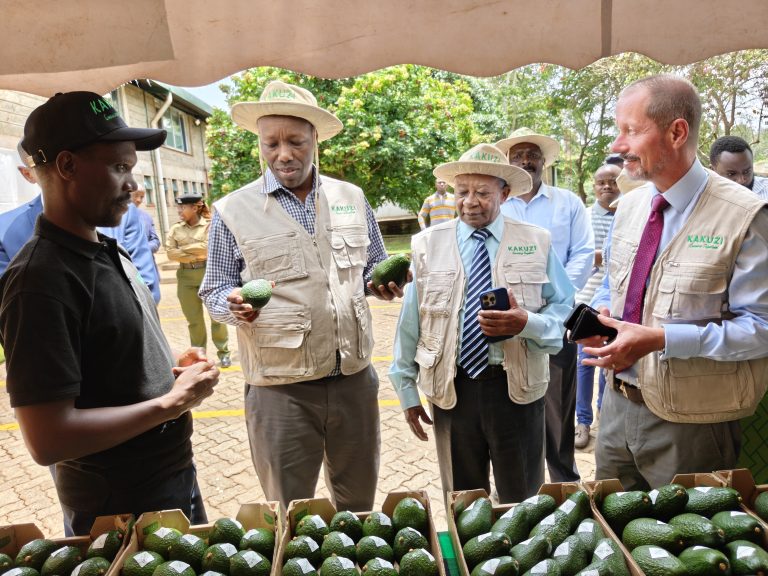
Speaking during a tour of listed agribusiness firm Kakuzi Plc’s orchards in Murang’a County, CS Kinyanjui noted that Kenya has latent potential to produce edible oils from Macadamia, among other oil crops. The local production of edible oils, he said, will play a key role in advancing import substitution efforts while promoting the Buy Kenya, Build Kenya agenda.

In Kenya, Kakuzi is the largest producer of avocados and the largest single macadamia orchard estate, with plans to double its current export capacity to more than US$100 million per year in the medium term. This year, Kakuzi is eyeing an investment of more than US$ 15 million to expand its blueberry-growing venture by increasing its orchards from 10 hectares to 100 hectares.

Avocado Millionaires: New generation of smallholder farmers reaping big from exports

While lauding Kakuzi’s value-added capacity, CS Kinyanjui noted that, as global demand for healthy foods grows, Kenya needs to position itself as a major producer of superfoods.
“Demand for food will always be there, even in difficult times such as war. I commend Kakuzi for the great work. As they expand, they also create employment opportunities,” he said.

He added, “The government will continue to support investors in exports. As we open up international markets through economic partnership agreements, we must also ensure we have enough produce to meet demand.”

The country, he acknowledged, spends more than KSh 500 billion annually importing agricultural products, including edible oils, which can be grown and produced locally. The government, he reiterated, is working to decisively shift our economy from dependence on imports to a net exporter of agricultural products, manufactured goods, and value-added commodities.

“I am impressed at the diverse manufacturing and agribusiness value addition that Kakuzi is undertaking, including the daily production of 1,000 litres of cold-pressed Macadamia oil,” Kinyanjui said.

He added, “As a strategic policy, the government is clear, and His Excellency President William Ruto is spearheading efforts to power agro-industrialisation. Working with partners such as Kakuzi and through SEZs, EPZs, and County Aggregation and Industrial Parks, the intention is to transform agricultural produce into high-value products for domestic, regional, and global markets.”

On his part, Kakuzi Plc Managing Director Mr Chris Flowers confirmed that the firm is actively undertaking a products-and-markets diversification strategy to boost its earnings and shareholder value.

The Story of Kenya Nut Company and the coffee farmer who brought it into existence

Kakuzi’s ongoing diversification strategy, he said, prioritises the development of high-quality consumer products for the domestic and export markets. Kenya, Mr Flowers added, is ideally placed (geographically) to be Africa’s largest producer of superfoods, supplying the Far-East, the Middle East, Europe and the USA.

“The Kakuzi business growth and diversification plan is firmly anchored in positively contributing to the development and promotion of locally produced, export-grade, quality, value-added products,” Mr Flowers said.

As part of Kakuzi’s commitment to industrialisation and the value addition of local oil crops, as envisioned in the Bottom-Up Economic Transformation Agenda (BETA), the company has integrated a Macadamia Processing Plant, including a Cold-Press Oil extraction unit. The Kakuzi Macadamia Processing Plant has an installed capacity of 2,000 tons of saleable kernel (SK), making it one of the largest in Kenya.

Early this year, Kakuzi introduced a quality loose-leaf tea brand, available in 250 gms and 500 gms packs. Alongside Kakuzi Pure Black Tea, Kakuzi has, in recent years, launched quality ready-to-eat Macadamia, Cold Pressed Macadamia Oil, and Blueberry products to the local market. These products are available at selected retail outlets, Kakuzi Farm Market along the Nairobi-Nyeri Highway, and online at the Kakuzi online shop.

HACO industries, Mama fua partner to empower laundry professionals in Eldoret

0

HACO Industries Kenya Limited, through its leading homecare brands SoSoft and ACE, has partnered with Mama Fua App to conduct a training and empowerment session in Eldoret aimed at equipping cleaning and laundry professionals with practical skills to enhance service quality and create sustainable income opportunities.

The initiative is designed to support individuals working in the cleaning and laundry sector, popularly known as Mama Fua – by providing professional training on modern laundry techniques, effective homecare practices, and the proper use of cleaning and fabric care products.

Through the training programme, participants gained valuable knowledge and hands-on experience that will help them improve efficiency, deliver higher-quality services, and expand their earning potential.

Speaking on the initiative, HACO Industries, Home Care Category Manager, Joan Chege noted that the programme reflects the company’s broader commitment to empowering communities and strengthening local enterprise ecosystems. “At HACO Industries, we recognize the important role that cleaning and laundry professionals play in households across Kenya. Through our partnership with Mama Fua and the support of our SoSoft and ACE brands, we aim to provide practical training and tools that empower these entrepreneurs to improve their services, grow their businesses, and increase their income opportunities.”

HACO Industries recognized as circular economy leader at Kenya ESG awards

The training offered by Cleaning School Kenya, a subsidiary of Mama Fua also provided participants with insights on best practices in fabric care, stain removal, hygiene standards and efficient cleaning solutions for housekeeping, safety & workplace hygiene using HACO’s homecare products. Financial literacy was also inculcated to ensure that sustenance beyond the training is achieved.

Mama Fua, a premier provider of high-quality cleaning and laundry services across Kenya, continues to champion professionalization within the sector by connecting trained service providers with households and businesses seeking reliable cleaning solutions.

A representative from Mama Fua, Stephine Nguta emphasized that partnerships such as this play a critical role in improving livelihoods and elevating service standards within the cleaning industry. “Empowering cleaning professionals with the right skills and tools not only improves the quality of services delivered to customers but also creates sustainable opportunities for individuals and families who rely on this sector for their livelihoods.”

The Eldoret training forms part of HACO Industries’ broader efforts to build stronger community partnerships and promote inclusive economic participation through skills development and entrepreneurship support. By combining product expertise with practical training, the programme aims to contribute to a more professional, empowered, and sustainable cleaning services sector in Kenya.


Loop Loan: What you need to know to secure up to Sh3 million instantly

The most common reason why small businesses fail is a lack of funding or working capital. A business needs a certain amount of money to keep operations running on a day-to-day basis.

This includes expenses such as stock, funding payroll, rent, utilities, and maintenance, among others. When a business does not make enough sales to cater for such expenses, it can face funding shortfalls that can put it out of operation.

Sadly, most small businesses in Kenya are unable to access credit when needed. In fact, the SME credit denial rate in Kenya is at 60 percent, with the high financing gap attributed to various issues, including limited experience in running a business and lack of collateral, among others.

At the same time, some SMEs lack information about available credit products, despite the rollout of various SME friendly products by financial institutions.

One of the products that SMEs can utilize is the NCBA Loop, a unique app that simplifies financial management by combining banking, transactions, budgeting, and savings in one place.

The platform not only gives business people instant access to credit but also flexible loan periods.

Borrowers can access unsecured loans of between Sh50,000 and Sh3 million, repayable in 6 to 36 months depending on the amount borrowed.

To qualify for a loan, users are advised to make LOOP their primary account, channel salary or proceeds from business through LOOP, and transact for at least 3 months.

“If you have a good credit history and we are happy with your transaction activity on LOOP, we will assign you a loan limit,” the platform states.

Once a loan is approved, all applicable fees including credit insurance, and excise duty are collected upfront on disbursement meaning the amount received is lower than the amount requested.

Interestingly, Loop users can also access an overdraft of up to Sh100,000 to complete transactions whenever short of funds in their Loop account.

How to apply for a loan from NCBA Loop

Below is the step-by-step guide to accessing the NCBA loop loan:

  1. Register for the service: To register for an NCBA Loop account, you need to download the Android appiOS app, or go to their website https://www.ncbaloop.com/
  2. Create an account: To create an account you need a phone number and your ID number. You will be sent a PIN to activate the service to access your account.
  3. Applying for a loan: Once you have successfully created an account, you can be able to apply for a loan.

How to repay NCBA Loop loan

  1. Allowed Payments: In an instance where a customer chooses to pay in bits, full and partial settlement shall be accepted
  1. Repayment Period: Every loan has a different schedule, this is found via the Loop App in the Loop Loan Menu Option. This schedule summarizes all future payment dates and amounts due with a clear view of the Principal and Interest component.
  2. Settlements: The app is curated in that, loan repayments will be automatically collected from your Loop Current Account every month from the date of disbursement.

Also Read: NCBA Insurance emerges as a pillar of trust in Kenya’s claims processing sector

Why Safaricom’s PostPay plans are emerging as a smart choice for SMEs

In today’s fast-paced business environment, small and medium-sized enterprises (SMEs) are under increasing pressure to remain agile, responsive, and cost-efficient.

Communication sits at the heart of this equation linking teams, customers, and partners in real time. It is within this context that Safaricom’s PostPay plans are gaining traction as a practical solution tailored to the evolving needs of SMEs.

Unlike traditional prepaid services that require constant top-ups and monitoring, Safaricom’s postpay model introduces a more flexible and predictable approach.

Businesses can call, text, and browse seamlessly throughout the month and settle the bill at the end of the billing cycle.

This “use now, pay later” structure not only simplifies operations but also allows entrepreneurs to focus more on growth and less on day-to-day airtime management.

At the core of the offering is flexibility. SMEs can choose a credit limit starting from as low as Sh1,000, making the plans accessible even to small startups and growing enterprises.

The tiered packages are structured to align with varying business demands, ensuring that companies only pay for what they need.

For instance, the Sh1,000 plan provides 8GB of data, 400 minutes, and 1,000 SMS alongside WhatsApp access, sufficient for small teams or solo entrepreneurs.

As businesses scale, higher tiers such as the Sh2,000 and Sh3,000 plans offer increased data and communication capacity, with up to 27GB of data and 1,500 minutes.

For more communication-intensive operations, such as customer service centres or sales-driven enterprises, the Sh5,000 and Sh10,000 packages provide substantial value for high-volume interactions.

Beyond the numbers, the predictability of postPay billing is a key advantage. SMEs can better manage cash flow by consolidating their communication expenses into a single monthly bill.

This transparency reduces the risk of unexpected service disruptions that can occur with prepaid systems when credit runs out at critical moments.

For SMEs seeking a balance between cost control and uninterrupted connectivity, the shift to postPay may well be a strategic move worth considering.

What Safaricom PostPay offers

  1. Sh1,000: 8 GB data, 400 minutes, 1,000 SMS+WhatsApp
  2. Sh2,000: 17GB data, 1,000 minutes,2,000 SMS+WhatsApp
  3. Sh3,000: 27GB data, 1,500 minutes, 3,000 SMS+WhatsApp
  4. Sh5,000: 47GB data, 2,500 minutes,5,000 SMS+WhatsApp
  5. Sh10,000: 100GB data, 7,500 minutes, 10,000 SMS+WhatsApp

How to subscribe to PostPay

  • Dial *544# select the option Monthly Plans then select Join Postpay
  • You will be presented with five integrated plans to choose from
  • You will be prompted to enter your email address for billing
  • Select a PostPay bundle Plan of choice
  • Accept terms and conditions
  • You will receive a notification that your

Also Read: Exploring Co-op Bank’s YEA account: What makes it a tick?