The National Youth Service (NYS) has announced a nationwide recruitment drive targeting young Kenyans wishing to join the service.
In a notice on Monday, March 16, NYS said the exercise will run from Monday, March 16, to Saturday, March 21 in all sub-counties across the country.
Interested youth are required to physically present themselves in designated recruitment centres in their respective sub-counties.
Interested youths have been encouraged to take advantage of the opportunity and visit designated recruitment centres in their respective sub-counties.
“The National Youth Service (NYS), nationwide recruitment exercise has officially kicked off today across all sub-counties, as earlier advertised. The exercise will run from 16th to 21st March 2026,” the notice read.
“Eligible young Kenyans are encouraged to turn up in large numbers at their respective sub-county recruitment centres and take advantage of this opportunity to serve the nation while gaining valuable skills, discipline, and training,” the statement added.
NYS is a state corporation focused on training and empowering youth through paramilitary, national service, and vocational training.
Through its programmes, the service equips recruits with technical and vocational skills in areas such as construction, agriculture, mechanical works, and community development.
Earlier, the service had said that interested candidates must be Kenyans citizens and residents of the respective Sub-County of recruitment aged between 18 and 24 years.
Additionally, applicants must have attained a minimum mean grade of D plain in KCSE. Required documents include a valid certificate of good conduct, original national identity card and academic certificates.
NYS noted that the candidates should be willing to undergo a medical examination during and after the recruitment exercise, be prepared to undergo Basic Paramilitary Training, and be ready to offer voluntary service to the nation in any part of the country.
Successful candidates will report to the NYS Paramilitary Academy in Gilgil or the NYS Technical Training Institute (NYSTTI) in Naivasha on the dates and times indicated in their respective calling letters.
As Kenya shifts to a cashless economy, businesses have adopted various forms of cashless payments including mobile-money transfers and card payments.
From public service vehicles to kiosks and hotels, hard cash is no longer the preferred mode of payment in Kenya.
According to the Central Bank of Kenya (CBK), Kenyans transacted Sh6.59 trillion on mobile money in 2024 compared to Sh2.3 trillion ten years ago.
This highlights the surging demand for mobile money services, with service providers stepping up to introduce more digital payment services.
The Co-operative Bank of Kenya is leading this transformation with its various products including its prepaid cards.
The CO-OP Bank pre-paid card is not linked to any bank account. It’s a card which you can load upfront and use it to pay for travel expenses, online shopping and subscriptions, fuel, and other expenses.
It can also be used as a pocket money card for students. The parent or guardian can load the card anytime from Mpesa, at any Co-op Bank branch or any Co-op Kwa Jirani agent. The student can use the card to:
Do back to school shopping
Pay for snacks and other items at the school canteen
Withdraw cash from any Co-op Bank ATM or Co-op Kwa Jirani Agent, incase they need cash for a school outing or transport on closing day.
Manage expenses during school holidays. They can pay for shopping, meals, fuel, entertainment, and any other expenses.
What are the benefits of having a co-op pre-paid card?
Free transactions
There are no charges for paying with the card, and you can pay for something in Kenya or abroad. The only amount which is deducted from the card is the cost of the item or service you are paying for.
You can pay any amount with your Pre-paid Card; it’s just like paying with cash.
Safety and convenience
It is safer to carry a Card than to carry cash. Even if the card is lost or stolen, it cannot be used without your secret PIN for amounts above Sh2,000.
Co-op Pre-paid cards have a tiny chip (microchip) embedded in the card, making the card virtually impossible to copy.
If your card is lost or stolen, contact the bank immediately on 0703027000. Co-op Bank will block the card to protect the money in your account and replace your card.
Track your spending
You get SMS alerts on your mobile phone every time you use the Prepaid Card. If your child is using the card in school, the parent/guardian will get the SMS alerts so they will know when to top up the card.
Also, you can receive monthly account statements or print mini statements at any Co-op Bank ATM or Co-op Kwa Jirani Agent.
This allows you to see where you’re spending your money in real-time, and can help you to budget your monthly expenses.
How to apply for a co-op pre-paid card.
Visit your nearest Co-op Bank branch with a copy of your ID and KRA PIN. Those below 18 years can use their Parent’s/Guardian’s ID and KRA PIN.
Once the card is ready, you will be alerted to collect it from the branch. You may request to collect it at another branch, in case you’re far from the branch where you applied for the card.
How to load the card
Deposit Cash at any Co-op Kwa Jirani Agent or Co-op Bank Branch. You must present your card to load it.
Use M-Pesa PayBill 400200. Account P******, where ****** is the card account, and P must be in CAPs.
To avoid fraud and keep your card safe:
Always ensure you shop on secure websites.
Do NOT share with anyone your Card Number, PIN, CVV (the 3-digit number at the back of your card) or the OTP’s (one-time passwords) you receive when transacting online.
Co-operative Bank will never call, SMS or email you to ask for your bank account or card details. Report such requests immediately to the bank through customer service no. 0703027000
Safaricom (NSE: SCOM), through its youth platform Safaricom-Hook, has partnered with the Coca-Cola Company in Kenya through its Sprite brand to bring the ‘It’s That Fresh’ campaign to life with the launch of the Hook’d on Fresh Masterclass Series.
This is a digital influencer hosted creator programme designed to equip Kenyan creators with the skills, tools and inspiration they need to thrive in the digital content economy. Starting 13th March at JKUAT, the series will visit four university campuses across the country, reaching an estimated 40,000 students.
Hosted by some of the country’s most influential digital voices like Carrie Wahu, Tileh Pacbro, Charisma and dance collective Cluster KE, the The Hook’d on Fresh Masterclasses will cover content creation, trends and virality, and maximising reach and engagement, giving attendees practical, applicable knowledge straight from the people doing it at the highest level.
Each session pairs content creator insights with hands on engagement, all fueled by a cold Sprite and the connectivity of Safaricom Hook Blive Bundle on *555#
THE HOOK’D ON FRESH UGC CHALLENGE
Alongside the Masterclasses, Sprite and Safaricom are launching the Hook’d on Fresh User Generated Content Challenge (UGC Challenge) a national digital competition inviting Kenyan youth to create short form videos showcasing their fresh take during different moments. Content can span from music, Sports, fashion or comedy, and must be posted on TikTok and/or Instagram using the hashtag #Hook’dOnFresh #SafaricomHook and tagging the Sprite Kenya and Safaricom Hook pages.
A tiered reward structure ensures that participants are recognised and rewarded as their views grow, with 403 digital creators set to win across nine reward levels. Cash prizes range from KES 3,000 at the entry level to KES 20,000 for top performers. Safaricom Hook will also reward outstanding content with a range of smartphone devices and data bundles. Top performers will be awarded monthly based on cumulative views, creating a sustained creative incentive that extends well beyond the Masterclass sessions.
This partnership brings together two brands that are deeply rooted in Kenyan youth culture and committed to empowering the next generation of creators and innovators.
“The Masterclass Series is the latest expression of Sprite’s broader ‘It’s That Fresh’ campaign, which positions the brand as the drink that gives young Kenyans the clarity and confidence to perform at their best under pressure,” said Juliana Kituma, Director of Marketing, Coca-Cola Kenya. “By partnering with Safaricom, the network that already powers the digital lives of millions of young Kenyans, Sprite is creating a seamless bridge between physical activation and digital participation, ensuring the fresh energy of every campus session translates into content that lives on across social platforms.”
Complementing the masterclasses, Safaricom Hook Green Couch will travel to campuses as a “podcast on wheels,” giving students a raw, unfiltered space to share their stories, ambitions and experiences through authentic, youth-led conversations.
“At Safaricom, we believe that connectivity goes beyond data, it is about unlocking what young Kenyans are capable of. Through our partnership with Sprite, we are focused on bringing together culture and creativity, putting real tools, real skills and real rewards directly into the hands of the next generation of creators. The Safaricom Hook BLIVE bundle is designed for the way young Kenyans live, and these masterclasses are the perfect platform to show what is possible when you are truly connected,” said Fawzia Ali-Kimanthi, Chief Consumer Business Officer, Safaricom PLC.
With the Hook’d on Fresh Masterclass Series, Sprite and Safaricom are doing more than hosting campus events. They are building a lasting creative infrastructure for young Kenyans, one that rewards talent, celebrates expression and proves that staying fresh under pressure is not just a feeling. It is a skill, and it starts here.
Tanzanian billionaire Rostam Aziz has emerged as a major figure in East Africa’s corporate landscape following a landmark deal that will see him become the majority shareholder in Nation Media Group (NMG), one of the region’s largest media houses.
The acquisition, announced on March 9, 2026, marks a significant shift in ownership at the Nairobi-based media company.
Aziz acquired the stake through his private investment vehicle, Taarifa Limited, which agreed to purchase 100 per cent of NPRT Holdings Africa Limited from the Aga Khan Fund for Economic Development (AKFED).
The transaction grants Taarifa indirect ownership of NMG’s 54.08 per cent stake, equivalent to 92,618,177 shares.
The deal effectively ends AKFED’s 66-year partnership with Nation Media Group, a relationship that began in 1959, while positioning Taarifa to steer the media company’s digital transformation. NMG will, however, retain its public listing on the Nairobi Securities Exchange.
Early life and education
Aziz was born on August 21, 1964, in Dodoma, Tanzania, and grew up in a family deeply involved in business and community service. He attended both primary and secondary school in Igunga District in the country’s Tabora region.
Seeking higher education abroad, he later moved to the United Kingdom, where he earned a bachelor’s degree in economics from the University of Exeter.
Entry into politics
Before fully committing to business, Aziz had a notable political career in Tanzania. In 1994, he was elected Member of Parliament for the Igunga constituency under the ruling Chama Cha Mapinduzi (CCM) party.
He held the seat until 2011, winning several re-elections during his tenure. Between 2005 and 2007, Aziz rose within the party ranks and was appointed CCM National Treasurer.
He also served as a member of the party’s Central Committee and Politburo until his departure from active politics in 2011.
Building a business empire
Aziz began his entrepreneurial journey in the early 1990s through his family’s trading business before branching into independent ventures in Tanzania’s agriculture and manufacturing sectors.
His biggest breakthrough came in the telecommunications industry during the 2000s when he co-founded Vodacom Tanzania and held a significant stake estimated at between 18 and 35 per cent.
In 2011, he stepped down from parliament to focus on expanding his business interests. Two years later, in 2013, he was recognised by Forbes as Tanzania’s first dollar billionaire, with an estimated net worth exceeding $1 billion.
In 2014, he sold a 17 per cent stake in Vodacom Tanzania through Cavalry Holdings in a deal valued at approximately $250 million.
Over the past decade, Aziz has broadened his investment portfolio across several industries.
He developed Taifa Gas, which has grown into one of the leading liquefied petroleum gas (LPG) suppliers in the region. His holdings also include stakes in MIC Tanzania, which acquired telecom operators TIGO Tanzania and Zantel in 2022 for about $100 million.
Beyond telecommunications and energy, Aziz has invested in mining through Caspian Mining, manufacturing through Ace Leather, and property developments in Dubai and Oman.
Expanding investments in Kenya
Aziz has also been steadily expanding his investments in Kenya. In 2022, he announced plans to build a Taifa Gas liquefied petroleum gas plant at the Dongo Kundu Special Economic Zone in Mombasa, a project valued at about $130 million.
The facility was commissioned in 2023 by President William Ruto and was described as the largest private foreign direct investment in Kenya since 1977.
In 2025, a court upheld the development of the Mombasa LPG terminal project after legal challenges had sought to block its construction.
The dust settled on another thrilling edition of the legendary Safari Rally Kenyaas the third round of the 2026 FIA World Rally Championship (WRC) concluded Sunday amid scenes of celebration across the Rift Valley.
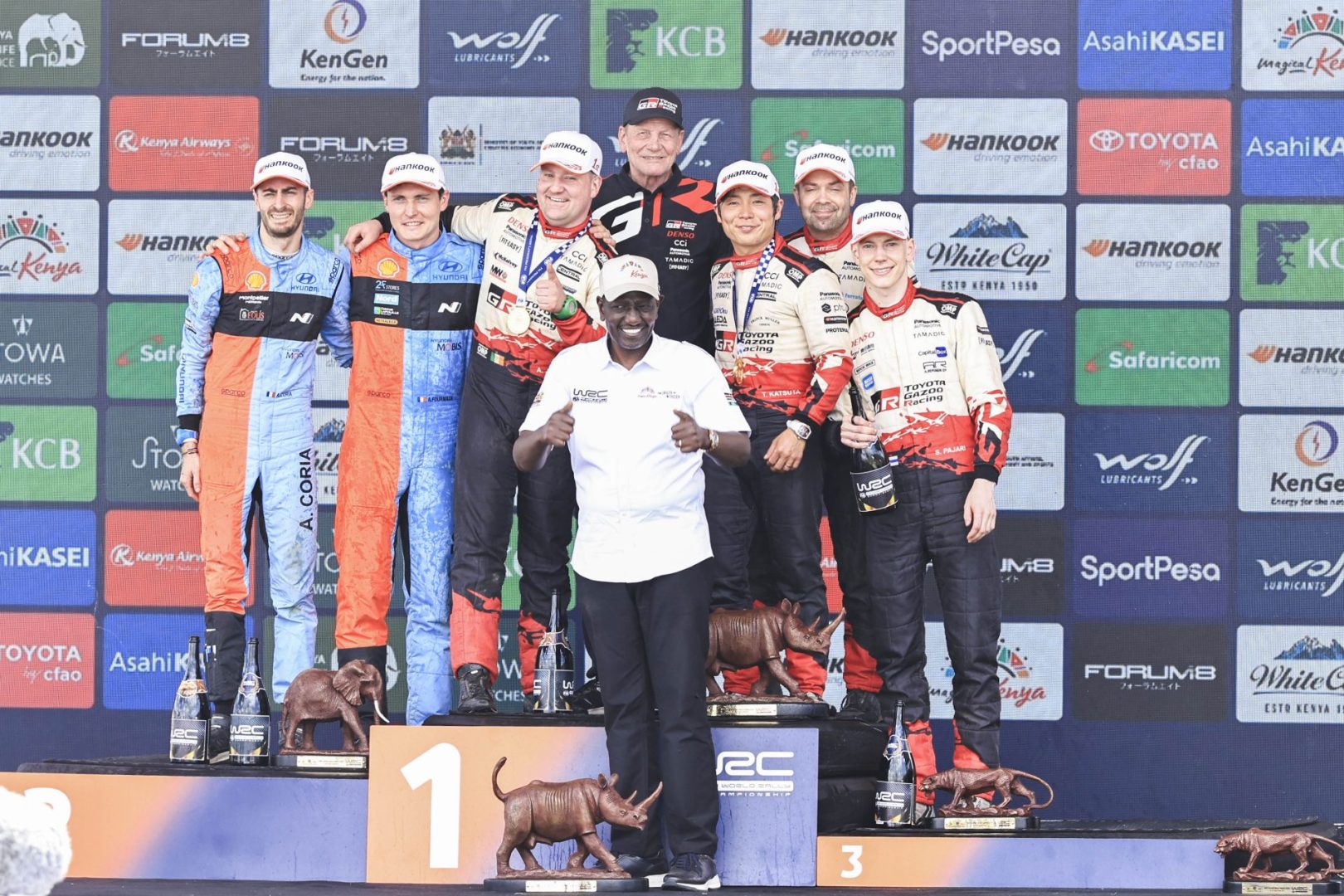
Japan’s Takamoto Katsuta and co-driver Aaron Johnston secured a historic maiden victory in the WRC, conquering the brutal terrain after four days of high drama on the toughest gravel rally in the world.
The Toyota Gazoo Racing (TGR) WRT pair inherited the lead during a chaotic Saturday morning when multiple frontrunners retired in the killer Sleeping Warrior stage.
TGR team-mates Oliver Solberg, Sébastien Ogier and Elfyn Evans, ran into trouble on the punishing SS13 section and the demanding transport section that followed.
Katsuta had deliberately adopted a cautious, survival-first approach as his peers bowed out all around him, and his strategy paid ultimate dividends.
After establishing an overnight lead of over a minute and 25 seconds at the end of Day 3, the popular Japanese ace nursed his GR Yaris Rally 1 in Sunday’s four stages to clinch his biggest WRC career win by 27.4s.
Kenyan President William Ruto attended the closing ceremony in Naivasha, praising the event’s global significance and offering reassurance about the country’s commitment to keeping the iconic event on the world stage.
“The Safari Rally is part of Kenya’s sporting heritage and a global showcase for our country,” said President Ruto.
He added: “The participation of fans from across the East African Community has elevated the Safari Rally into a truly regional event. Your presence shows the power of sport to bring East Africa together.”
Fans show up in large numbers
From the ceremonial flag-off on Thursday to the dramatic finale at Hell’s Gate National Park, tens of thousands of fans lined the stages across the Great Rift Valley, transforming the rally into a rolling festival of motorsport, colour and culture.
Scores of supporters gathered on rocky hilltops, dusty plains and river crossings to witness the world’s best rally drivers wrestle with the brutal conditions that make the Safari Rally unique.
For drivers, the rally delivered exactly what its reputation promises: adventure, endurance and breathtaking beauty.
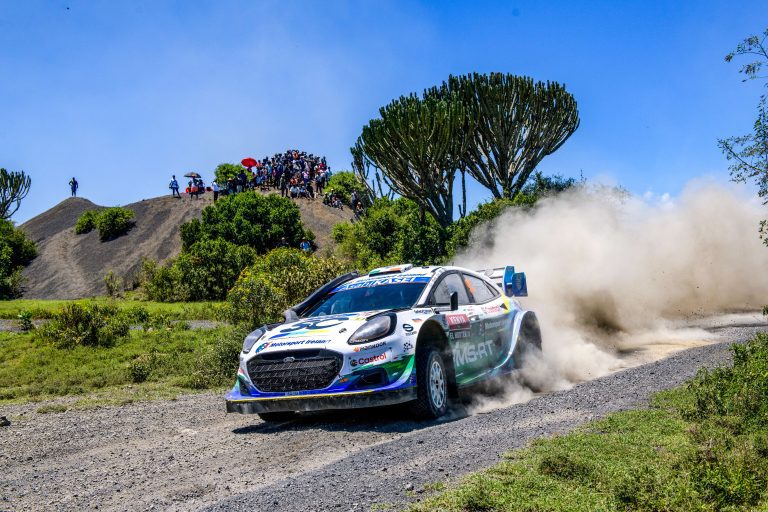
Competitors carved through choking clouds of ‘fesh-fesh’ dust, thundered across rocky escarpments and plunged through muddy water crossings as the Rift Valley’s scenic landscapes provided a breathtaking backdrop to the action.
The legendary stages, including the unforgiving plains of Soysambu and the winding roads beneath the Sleeping Warrior delivered mechanical failures and punctures that humbled the world’s best rally machines.
Throw in the unpredictable weather to the mix, sudden rains interchanging with baking sunshine, left competitors to contend with muddy and dusty sections that broke their cars and brought out their best driving skills.
On offer were trophies and points in the WRC1, WRC2 and WRC3 global categories as well as the African national championships.
Behind the WRC contenders, local drivers thrilled home fans who gathered in huge numbers across spectator zones stretching from Naivasha to Elementaita to cheer them on.
Rally veteran Carl Tundo, who now serves as the Head of Secretariat for the WRC Safari Rally, praised the scale of support from fans across the region.
“What we have witnessed this week – the crowds, the passion, the atmosphere – shows just how much this rally means to Kenya and to the entire East African region,” he said.
“Our focus now is to build on that momentum and continue raising the standard of the Safari Rally so that it grows even stronger for teams, fans and partners in the years ahead,” added the five-time winner of the WRC Safari Rally.
SportPesa Racing driver Leonardo Varese navigates his Toyota GR Yaris Rally 2 car through the dusty patches at the 2026 Safari Rally KenyaKenya’s President William Ruto takes a photo with drivers after the conclusion of the 2026 Safari Rally KenyaIrish Rally Academy Driver Josh McErlean navigates his M-Sport Ford Puma Rally1 through the mud at the 2026 Safari Rally Kenya
Three protagonists push all the way
For title contenders in the WRC, the Safari Rally once again proved why it is widely regarded as the most demanding round of the season.
Toyota, Hyundai, Shell, Mobis WRT and M-Sport Ford Puma WRT crews were forced to adapt to rapidly changing conditions, where a single puncture or suspension failure ended podium challenges in seconds.
Corporate partners also embraced the carnival atmosphere, with fan zones and entertainment areas set up by sponsors throughout Naivasha.
SportPesa CEO Ronald Karauri hailed the rally’s ability to unite fans across the continent.
“The Safari Rally is a celebration of Kenya, of Africa and of the incredible passion our people have for sport,” Karauri said.
He added: “The energy we’ve seen from fans this week shows why this rally deserves to remain a permanent fixture on the global motorsport calendar.”
As engines fell silent in Naivasha, Nakuru County, on Sunday attention now turns to the future of the iconic event.
The current contract to keep the Safari Rally in the WRC ended this year and discussions on a renewal are expected to gather momentum in the coming months.
Many across Kenya and the wider East African region hope the extraordinary turnout has once again demonstrated why the Safari Rally belongs on the global championship calendar.
Kenya’s education sector has been thrown into fresh uncertainty after the Court of Appeal declared the Teachers Service Commission (TSC) internship programme unconstitutional and invalid, a decision that could affect tens of thousands of teachers recruited under the policy.
The ruling is one of the most consequential labour decisions in the education sector in recent years, raising fundamental questions about teacher recruitment policy, labour rights, and the financing of Kenya’s Competency-Based Education (CBE) transition.
Background: The TSC Internship Policy
The Teachers Service Commission introduced the internship programme as part of a strategy to address teacher shortages while managing fiscal constraints. Under the programme, qualified teachers were hired as interns for a fixed period before possible absorption into permanent positions.
In 2023, TSC advertised over 35,000 teaching opportunities, including more than 21,000 junior secondary school internship positions and additional primary school internships.
Intern teachers typically received a monthly stipend rather than a full salary despite carrying out the same classroom duties as permanently employed teachers. Many taught multiple subjects, handled administrative tasks, and were responsible for full classes while earning significantly lower pay.
The programme was widely criticised by teacher unions and education advocates who argued it amounted to institutionalised casualisation of professional teachers.
The Court’s Decision
The Court of Appeal upheld an earlier decision by the Employment and Labour Relations Court which had ruled that the internship policy violated constitutional and labour protections.
The judges found that:
Teachers recruited as interns were already qualified and registered professionals.
Under Kenyan law, such teachers qualify as employees rather than trainees.
The Teachers Service Commission has a mandate to hire registered teachers as employees, not interns.
Because of this, the court ruled that the internship arrangement was unlawful and unconstitutional, effectively declaring the programme “null and void.”
The judges also held that the programme resulted in unfair labour practices, as interns performed the same duties as fully employed teachers but without equivalent pay, benefits, or employment protections.
The ruling could affect more than 40,000 intern teachers who were working in Kenyan schools under the programme.
Several implications immediately arise:
1. Employment Status Questions
Intern teachers may now have a legal basis to demand conversion to permanent and pensionable employment terms.
2. Potential Compensation Claims
Teacher unions have indicated they may pursue compensation claims for the period interns worked under lower pay structures.
3. Policy Vacuum in Teacher Recruitment
With the internship framework struck down, the government may need to rapidly redesign its teacher hiring model to maintain staffing levels in schools.
Implications for the Competency-Based Curriculum
The ruling comes at a delicate moment for Kenya’s education reforms. Junior Secondary Schools under the Competency-Based Education system require a significantly larger teacher workforce.
Government estimates previously indicated a shortage of over 70,000 teachers, particularly in junior secondary schools.
Internship recruitment had been used as a transitional solution to manage this deficit while limiting wage pressures on the public payroll.
By invalidating the programme, the court has effectively forced policymakers to confront a structural challenge: education reform cannot be financed through temporary labour arrangements that undermine employment law.
The case was filed by the Forum for Good Governance and Human Rights, which argued that the internship programme violated Article 41 of the Constitution on fair labour practices.
The court agreed, concluding that:
Intern teachers were functioning as full employees.
The programme disguised employment under a training label.
There was no clear statutory framework authorising TSC to hire qualified teachers as interns.
This interpretation reinforces a broader principle in Kenyan labour jurisprudence: substance takes precedence over labels in determining employment relationships.
What Happens Next
The government now faces several policy options:
Absorb intern teachers into permanent positions.
Design a legally compliant transitional employment framework.
Seek legislative amendments to formalise structured internship pathways.
Each option carries significant fiscal implications given the scale of teacher recruitment required nationwide.
Strategic Reflection
This ruling highlights a recurring challenge in public sector reform: the tension between fiscal constraints and institutional integrity. Governments often deploy temporary labour mechanisms to manage budget pressure, but courts increasingly scrutinise such arrangements when they undermine constitutional labour rights.
For policymakers, the deeper lesson is straightforward. Large-scale reforms—whether in education, healthcare, or infrastructure—require financial realism and institutional coherence. Structural gaps cannot be sustainably bridged through short-term administrative improvisation.
Leadership in public systems ultimately demands alignment between policy ambition, legal frameworks, and fiscal capacity. When those three elements diverge, courts often become the arena where governance contradictions are resolved.
Dr Amakove Wala was ridiculed by many people when she started frying and selling fish from a small kibanda near the Bomas of Kenya. In fact, one of her critics was so aggrieved that they wrote her a protest letter.
In the letter, they protested that Dr Wala was bringing the name of her former school, Alliance Girls High School, to shame by operating a kibanda fish frying business. For a medical doctor, this was a business that was below her, they argued.
But it is often said that it is the wearer of the shoe who knows where it pinches the most. Well, for Dr Amakove Wala, this bold move to start a side hustle came out of necessity. And when she started it, there were many people who cheered her on, visited her premises, and bought her delicious fried fish.
Dr Wala shared on her platform that by the time she decided to start her fish frying business, she had already left formal employment, and consultancies in health care where she was practicing had really slowed down. This translated into reduced income for the single mother of four.
“I had to face a difficult question: how do I sustain my family? As a single parent, bills do not wait. Life does not pause. And the world does not owe you anything. Some friendships faded. Calls went unanswered. Life demanded adjustments,” said Dr Wala.
Not one to stay down when things seem to be going rough, Dr Wala began exploring the type of side hustles she could venture into.
“I asked myself a simple question: what problem do I face that others around me also face?” she said.
She narrowed down to ordinary frustrations that people were facing and whose solutions they would find helpful and be willing to pay for.
“One of my frustrations was something very ordinary — getting good deep-fried fish in my neighbourhood. Often, you had to send someone very far to find it. So I asked myself: what would it take to start a fish business? The answer was simple: a small premise, a frying pan, heat… and of course fish,” said Dr Wala.
She acquired the frying equipment, hired a helper, and opened her business dubbed Koven Kafe in a small kibanda near the Bomas of Kenya.
“There was plenty of ridicule. People wondered: Why would a well-accomplished medical doctor be frying fish in a kibanda?” she recalls.
Take Starlings Muchiri, who as the Vice Chairman of the Alliance High School Old Boys Club, penned the protest letter to Dr Wala.
“You are peddling a narrative that being gifted counts for nothing. You are peddling a narrative that being focused on achievements counts for nothing,” claimed Muchiri.
“You are flaunting your polymorphic talents to peddle the false narrative that your less talented brothers and sisters can peel garlic and smoke fish in the morning and dine with president and foreign dignitaries in the evening.”
Dr Wala, in her response to such criticism, emphasized that she was living her truth.
“I am not peddling a false narrative. I am living my truth. A truth that embraces the fact that intelligence, talent, and ambition are not confined to a single lane. I am a doctor. I am an entrepreneur. I am a strategist. And yes, if I decide to peel garlic and smoke fish, that too is part of my journey—not a step down, not a failure, but a choice,” said Dr Wala.
“I will continue to share my journey unapologetically. Not for clicks, but to show that success is not a straight road—it is a landscape of many paths.”
One year later, she has been vindicated. Dr Wala recalls that in the first month of operation, her small fish business paid her rent in an affluent neighborhood.
“One year later, the journey has grown to three branches, 21 employees, and we have now moved from the kibanda to a bigger premise,” she says.
Dr Wala, who recently announced that she will be seeking the Vihiga Woman Rep seat during the 2027 General Elections, shared that this growth has been testament that small businesses in the kadogo economy matter.
“This experience reinforced something I deeply believe, that small businesses matter. They create dignity, jobs, and opportunity for families,” she said.
“It is also a reminder of why systems that support small entrepreneurs are so important — access to markets, fair licensing, safe working environments, and opportunities for growth.”
The betting industry grew faster than the rules written to govern it. That sentence could have appeared in any article about this sector at any point in the last fifteen years, and it would have been accurate every time. What changed in 2026 is that the gap is finally narrowing. Not because operators slowed down, but because the bodies responsible for oversight started investing in the same technology the platforms use.
Automated KYC verification, real-time transaction monitoring, and cross-border data sharing between licensing authorities are no longer conference-panel talking points. They are operational.
The Licensing Map in 2026
A betting platform operating internationally in 2026 holds multiple licences. One jurisdiction covers European users. Another covers African markets. A third might cover a specific territory where the platform has a local partnership. The variation is wide enough that two licensed platforms operating in the same football market, one of them a large European brand and another a regional service likeAfropari, can be held to noticeably different standards depending on which authority issued the licence.
That variation is not a flaw in the system. It reflects the fact that different markets developed their oversight structures at different speeds, with different priorities and different levels of technical infrastructure available to the licensing body. The direction across all of them, though, is the same: more verification, faster checks, stricter reporting.
Security feature
Where it stood three years ago
Where it stands in 2026
Identity verification (KYC)
Manual document review, 24-48 hour turnaround
Automated checks against government databases, clear in minutes for most users
Transaction monitoring
Batch review of flagged transactions by compliance staff
Real-time pattern scanning across all active accounts simultaneously
Customer fund protection
Required by some licences, absent from others
Spreading as a standard condition, with ring-fenced accounts becoming the norm at tier-one operators
Responsible participation tools
Deposit limits and self-exclusion are available on request
Built into account settings by default, with cooling-off delays on limit increases
Data encryption
SSL on payment pages, variable elsewhere
Full SSL/TLS across all platform pages, encrypted storage for documents and credentials at rest
Cross-border information sharing
Minimal, handled case by case
Formalised channels between several major licensing authorities for integrity and fraud cases
Some licensing frameworks run strict identity verification before a user can deposit a single unit. Others allow deposits first and verify later. Some require the operator to ring-fence customer funds in a separate bank account.
The differences are not cosmetic. A player under a licence that mandates fund segregation has a better chance of getting money back if the operator goes bust. A player under a regime that skips pre-deposit verification might find it easier to sign up, but harder to withdraw if the platform flags their account weeks later. Knowing which rules apply to your chosen operator saves time, frustration, and in some cases actual money.
What Changed on the Platform Side
Operators did not wait for every licensing body to mandate specific security features. The competitive pressure to appear trustworthy pushed many of them ahead of the minimum requirements. A platform that processes withdrawals through encrypted channels, verifies identity in under five minutes, and ring-fences customer deposits is not doing those things because every licence it holds demands all three.
The most visible change for the person using the platform is how fast verification clears. Uploading a document used to mean waiting a day or two before the first withdrawal could be processed. Automated systems now match the uploaded image against a database, confirm the name and date of birth, and clear the account in minutes.
Regulation tends to move more slowly than the businesses it covers, and online gambling is no exception. Operators launch new products, enter new markets, and change payment methods faster than most authorities can draft rules around them. Three areas where oversight has not caught up to the pace of the industry:
Advertising standards remain inconsistent across markets. What one licensing authority considers acceptable promotional language, another would flag as misleading.
Cross-border enforcement creates gaps that no single authority can close alone. A platform licensed in one jurisdiction that accepts users from a market where it holds no licence operates in a space between rule sets.
Responsible-participation tool standards differ in depth. Some frameworks mandate cooling-off periods before a user can raise their deposit ceiling. Others leave the tool available without a delay, which reduces its effectiveness during the moments when the delay would matter most
The direction is toward tighter standards, faster checks, and less room for platforms to operate in the spaces between jurisdictions. Whether the pace of that convergence keeps up with the pace of the industry expanding into new markets is the question that 2026 is answering in real time.
Kenyan writer and banker Kinyanjui Kombani has published a deeply personal new book, Dear Mama—a work that reads less like a conventional autobiography and more like a sustained conversation across time. It is, at its core, a son’s letter to his mother, written 26 years after her death, and an unflinching meditation on grief, purpose, and becoming.
Kombani makes one thing clear from the outset: grief does not run on a corporate timeline. There are no milestones after which loss is “resolved.” His mother passed away just before he sat his final exams, at the very moment when her sacrifices were about to bear fruit. That unfinished celebration—what might have been shared—becomes the emotional engine of the book.
Challenged to write his autobiography, Kombani initially resisted. He did not believe his life qualified as “remarkable.” But the idea evolved. What if the story was told as a series of letters to the one person who never got the updates? That reframing unlocked the narrative. Dear Mama was born.
The result is Kombani at his most vulnerable and most disciplined. He retraces his journey from a single-room house in Molo shared with his mother and four siblings, to their return to a struggling farm in Njoro, to the Ngando slums of Nairobi where he lost direction and found temptation. He writes candidly about addiction, survival hustles—selling knives in Banana, curios and groceries in Ngando—and the long road back through Kenyatta University.
The book also lifts the curtain on Kenya’s publishing industry: the quiet longing of staring at bookstore shelves, the grind of writing without guarantees, and the improbable arc that ends with Kombani being named among the 25 Notable Kenyan Authors of All Time. Professionally, he charts a parallel climb—from a banking clerk at Standard Chartered’s Moi Avenue Branch to relocating to Singapore during a period of global financial uncertainty.
Yet Dear Mama is not just memoir. It is instruction by example. The Kenya Institute of Curriculum Development (KICD) has approved the book as the compulsory autobiography set text for Grade 10 Literature students. That is a strategic inflection point. Over the coming years, hundreds of thousands of learners will encounter Kombani’s mother through the lessons she passed on: the power of asking, showing up, and building relationships.
This is legacy at scale. Personal pain converted into public value. A private letter that becomes a national classroom conversation.
“It’s been quite the ride,” Kombani writes. And it has. Dear Mama stands as proof that vulnerability, when executed with clarity and craft, is not weakness—it is leadership.
Dear Mama
Description
Growing up as a small, timid child and the youngest in a humble, single-parent family, Kinyanjui Kombani did not believe he was destined for greatness. How he overcame adversity to become a renowned writer, all while building an international career in banking, is a story that begs to be told.
In this collection of deeply personal letters to his beloved, departed mother, written during a pivotal moment in the world, Kombani writes about his life – the wins, the losses, the lessons and the journey from a junior clerk in a branch to the bank’s global offices in Singapore.
In his trademark easy style, he also gives us a behind-the-scenes view of the writing of the books that earned him multiple literary awards.
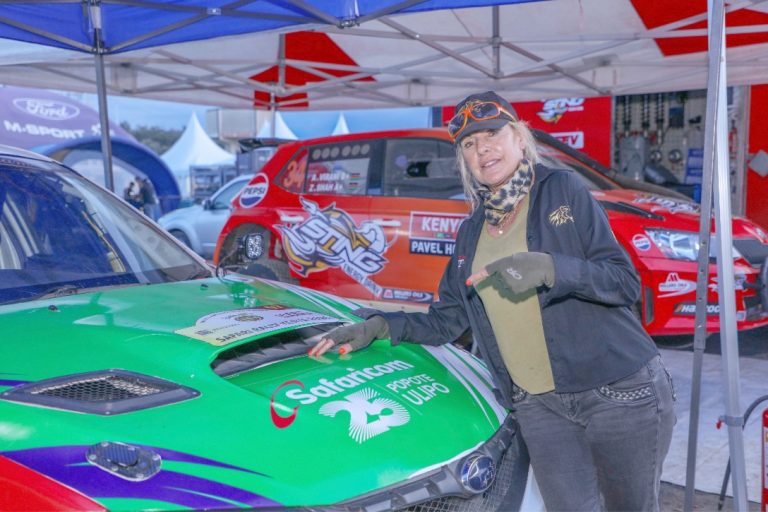
Kenya’s female rally driver, Lisa Christoffersen, has received a Sha1m boost from Safaricom PLC for this year’s WRC Safari Rally.
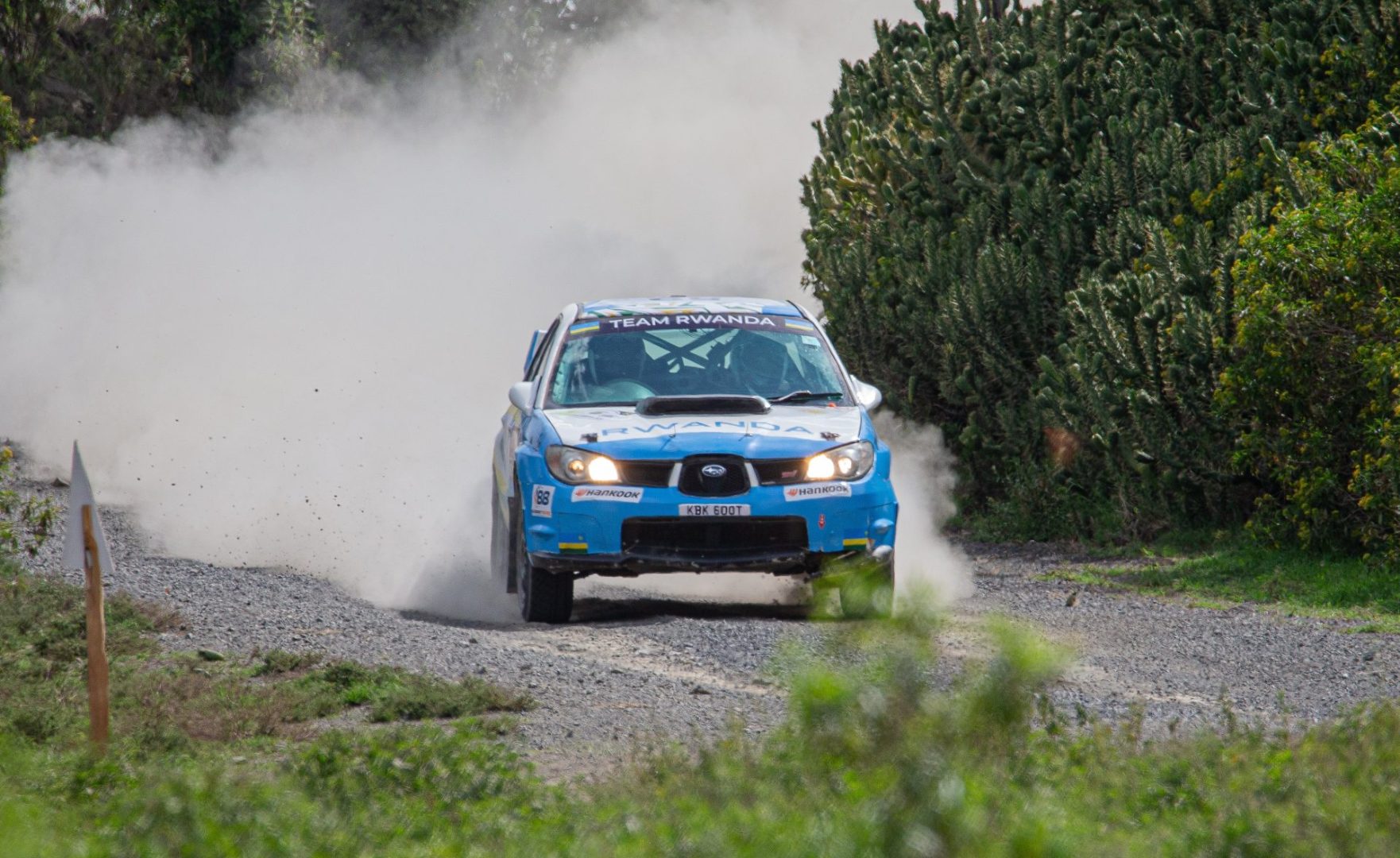
Lisa, also known as ‘Mama Chui’, of the Lioness Heels Rally Team, will be competing in this year’s rally in her new Subaru N15, alongside navigator Christabel Wacuka. The duo has been training together for the past six months in preparation for the event.
This is the second time that Lisa Christoffersen and Christabel Wacuka will be battling for honors in the Safari Rally, with their first attempt in 2024 where they made it to the podium.
In addition to the cash support, the iconic female rally driver has also received merchandise, Shs50,000 in airtime to assist with data and communication throughout the rally. Safaricom’s support underscores its commitment to fostering local talent and empowering more women to participate in motorsport events.
“As we continue to celebrate women during this special month, we recognize and uplift female trailblazers like Lisa who are breaking barriers in sports and beyond. This support goes beyond our broader commitment to the event, where we are providing reliable network connectivity, IoT-enabled telematics solutions and a world-class media centre, ensuring the rally is powered by technology and excellence from start to finish,” said Dr. Pete Ndegwa, Safaricom CEO.
For Lisa, the sponsorship means more than just financial help. It is evidence that her hard work is being recognized as she continues to make her mark in a sport long dominated by men.
“Competing in the WRC Safari Rally Kenya is a dream for many rally drivers and having Safaricom’s support gives our team the confidence to push forward. The Lioness Heels Rally Team was formed to show that women belong in motorsport too. This support allows me to focus on the race while also encouraging more girls to believe in themselves and chase their dreams,” said Lisa Christoffersen.
As the official technology and connectivity partner of the WRC Safari Rally Kenya, Safaricom has set up digital infrastructure across rally zones to support smooth operations during the global event.
The company has installed Connectivity on Wheels (COWs) at various locations to enhance network coverage in rally areas and optimize its 5G network for high-speed data needs, including livestreaming and real-time media updates from remote stages. Fully equipped media centres with high-speed Wi-Fi have been set up to support local and international journalists covering the rally.
Additionally, Safaricom has implemented IoT-enabled telematics solutions across the rally’s safety caravan fleet, including ambulances and rapid response units. These connected systems send real-time vehicle data and alerts to command centers, improving visibility, coordination and emergency response across the expansive rally routes.
By supporting drivers like Lisa Christoffersen, investing in better connectivity and safety measures, Safaricom is helping to make the 2026 WRC Safari Rally Kenya a safer, more inclusive and exciting experience for everyone involved