

Home Blog Page 95

NCBA and Kenya Seed Company convene Kitale farmers to strengthen agribusiness financing

0

Kitale, one of Kenya’s grain producing regions, took centre stage today. NCBA in partnership with, Kenya Seed Company, convened over 150 maize seed farmers for an engagement focused on financial solutions, productivity and enhanced market linkages for the upcoming planting season.

The forum, which enabled direct farmer engagement under the theme ‘Financing the 2026 Planting Season: Productivity and Market Linkages,’ brought together farmers, agribusiness traders and industry experts in Kitale, a region in Trans Nzoia County that plays a key role in Kenya’s national food security. The forum aligned with the Bank’s commitment to deepen its commitment to supporting the growth and resilience of the country’s agricultural value chains.

During the engagement, farmers were provided financial literacy insights, advisory support and opportunities to engage directly with NCBA specialists on agribusiness solutions designed specifically for agricultural enterprises.

Kitale sits at the centre of Kenya’s grain economy. Creating maize production worth over Kes. 23 billion annually according to Kenya Data and Statistics Report, growing diversification into dairy, poultry, fish and high-value crops, and emerging Agro-processing infrastructure, the region represents one of the most significant agribusiness ecosystems in Kenya. Agribusiness in Kitale represents a powerful economic engine with billions of shillings circulating across the value chain each year. The Agribusiness forum is therefore timely, as it looks to empower both smallholder and large-scale farmers in the region with financial tools and knowledge to unlock growth in the rural economy.

Commenting on the forum, the Director, Commercial & SME Banking, Robert Kiboti, emphasised the strategic role Agriculture plays within the Bank’s SME portfolio.

“Our approach goes beyond financing. We are building ecosystems that connect farmers to inputs, technical expertise and reliable markets.” He added, “Through partnerships such as the one with Kenya Seed Company, we are creating structured solutions that enable farmers to access timely financing, improve productivity and operate more sustainably within organised value chains.”

Gachora: Why NCBA agreed to Nedbank’s Sh110 billion takeover offer

The Bank continues to strengthen its support for farmers and agribusiness players in Trans Nzoia County and the wider Kitale region through tailored financial solutions designed to unlock growth across the agricultural value chain. The Bank is supporting livestock farmers through beef fattening programmes that provide structured financing and market linkages, while also enabling mechanisation through Asset Finance solutions for farm equipment and machinery in partnership with Inchcape plc. In addition, NCBA offers working capital facilities to agri-SMEs, traders and distributors operating across the agricultural value chain, helping them manage seasonal cash-flow needs and scale their operations. For agribusinesses looking to access regional and international markets, the bank also provides Trade Finance solutions such as Letters of Credit, enabling agricultural exporters to transact with confidence and expand their reach in global markets.

This NCBA–Kenya Seed Company partnership demonstrates the Bank’s retail and SME strategy in action by combining financing with capacity building and market linkages tailored to the realities faced by seed farmers.

Nicholas Sang, Production Manager, Kenya Seed Company welcomed the collaboration, noting its impact on farmer productivity and sector stability.

“Access to affordable and timely financing remains one of the biggest challenges facing seed growers. Our partnership with NCBA is helping bridge this gap by empowering farmers with financial solutions aligned to the agricultural cycle. By combining quality seed production with structured financing and farmer education, we are supporting improved yields, stronger value chains and greater income stability for farmers.”

NCBA commits to collaborate with like-minded institutions to expand inclusive financing and capacity-building initiatives across the country, reinforcing its commitment to supporting farmers as key drivers of economic growth, food security and SME development.


 

From matatu tout to lawyer: Benjamin Kiprop’s remarkable rise and Senate ambitions

0

Growing up with less is an ugly situation that many people have grappled with. But what if you also lose your Mom? What if you’re only 15? And are now an orphan?

This is the sad reality that struck Benjamin Kiprop from Baringo County whose extraordinary journey from a humble tout to a lawyer is a testament of hope.

The concept of independence was ingrained in him at a tender age after the demise of his mother, who was his only support.

Kiprono, then 15, had just been admitted to Njoro Boys High School in Form One when his mother, Milka Chebon, passed on, leaving his young life into darkness, given his father had departed earlier.

This marked the beginning of his life struggles due to financial constraints. After completing his secondary education in 2008, he did not attain the necessary points to further his studies.

Determined to make ends meet, he opted to work as a tout in Mogotio before graduating as a conductor and then a driver plying the Kabarnet-Nakuru route.

“I lost my parents when I was 15 years old, and that’s how I found myself at the stage as a makanga. Later on, I graduated to be a conductor. Then later, I became a driver. I have around 12 years of experience driving motor vehicles. And to me, I have never felt disadvantaged by the fact that I drive motor vehicles,”  Kiprop recalled.

It was while in the Public transport business that he decided to go back to school, determined to actualize his law dream. Kiprop, however, faced numerous admission rejections from various institutions due to his association with the matatu industry.

”I went to a school within Baringo County, and after informing the principal that I was working as a tout, he told me point blank that he would not offer me an opportunity in that school reason being that people who have worked at the stage are mostly drug abusers,’’ he said.

Despite the rejections, he managed to return to school thanks to a kind former school director he met at the Mogotio stage, who aided his admission and even sponsored his education.

He worked hard and attained the grade to join University. With the help of well-wishers, Kiprop enrolled for his undergraduate degree at Kabarak University, and his dream soon became a reality.

“When I was doing my undergraduate at Kabarak University, I used to go to classes whenever I had classes. When my schedule was not tight, I’d find myself at the stage. We used to call it squad; I used to go for a squad so that I can get something for a living,” Kiprop added.

He graduated in 2023 with a Law degree in a ceremony attended by former colleagues in the matatu industry and legal fraternity including former Law Society of Kenya (LSK) president Eric Theuri.

Kiprop is now eyeing the Baringo County Senatorial Seat in the upcoming 2027 General Elections.

Also Read: Tanzanian businessman Rostam Azizi buys Nation Media Group

ODPP announces 217 job vacancies: How to apply

0

The Office of the Director of Public Prosecutions (ODPP) has announced 217 job vacancies across various departments.

In a public notice on Tuesday, March 10, the ODPP invited interested and qualified candidates to apply for the 217 vacancies.

According to the notice, the ODPP is seeking to recruit Prosecution Counsel (140), Accountant (5), Supply Chain Management Officer (4), Research Officer (5) and Audit Officer (2).

Other open positions are Information Communication Technology Officer (5), Public Affairs & Corporate Communication Officer (5), Clerical Officer (25) and Office Assistant III (26).

Interested and qualified persons are required to make their applications online through the ODPP website www.odpp.go.ke or via https://jobs.prosecutions.go.ke/.

Applications should reach the Office on or before 30th March, 2026 by 5.00 p.m. The recruitment targets all Kenyans including persons with disabilities, intersex individuals, and those from marginalized and minority communities.

Shortlisted candidates will later be required to present original identification documents, academic certificates, professional certifications, and transcripts during the interview process as part of the standard verification procedures for public service recruitment.

Also Read: TSC announces 170 job vacancies; how to apply

How KPC shares performed on their first day of listing on NSE

The Kenya Pipeline Company (KPC) shares started trading on the Nairobi Securities Exchange (NSE) on Tuesday, March 10, 2026.

The KPC shares debuted in the market at a price of Sh9.30 apiece before making a retreat. At the end of trading, the KPC shares closed at an average of Sh9.18 per share.

This represented a positive change of 0.871 percent. Besides this movement, the KPC counter had a traded volume of 2.08 million shares with sellers on the book accounting for 1.47 million shares and buyers 1.15 million shares.

According to Rhina Namsia, the founder and chief executive officer of The Acemt Consulting, a training and consultation company that provides financial planning and investment advisory, the counter experienced selling pressure towards the end of its first day on the trading market.

“While the official closing price reads Sh9.18, the actual trades happening in the final minutes of the day were at between Sh9.10 and Sh9.12. That gap meant that selling pressure crept in as the session wound down,” says Namsia.

Ms. Namsia observes that the bid-ask spread was razor thin, which meant that KPC remained a liquid and well-traded counter.

“As at the end of trading, there were no illiquidity issues here. There were 357,829 shares sitting as bids at 9.10. As long as this holds, the floor is firm. A secondary support came in at Sh9 with another 104,000 shares. There was strong support at Sh9.10,” said Ms. Namsia.

“The biggest cluster of sellers (20,293 shares) was parked at Sh9.20. For KPC to push higher, it needs to chew through that supply first. Now this, is a resistance.”

Namsia noted that KPC ended its first day in a mild distribution phase, which meant that there were more sellers than buyers who were active, and the price drifted quietly from 9.18 towards 9.10 into the close of business.

READ MORE: Tanzanian businessman Rostam Azizi buys Nation Media Group

“The critical question is on whether the 9.10 bid wall will hold. If yes, KPC will stabilize and could push back toward the 9.18 to 9.20 zone. If that wall gets absorbed by aggressive selling, 9.00 will become the next line of defence,” she said.

“There was a 1.47 million on the ask versus 1.15 million on the bid which meant that sellers had slightly more firepower, which could create mild downward pressure at next open.”

Equity life assurance wins two awards at 2025 AKI Awards

0
At the AKI Awards 2025 held on Friday 6th March 2026 at the Carnivore, Equity Life Assurance (Kenya) Limited (ELAK) Limited emerged winner of two categories: Best Loss Ratio Award and Group Life Insurance Innovation under the Group Life Best Practice category.
ELAK also emerged as the 1st Runner-Up for Group Life Insurance Company of the Year. The awards, which marked the 24th edition of the Association of Kenya Insurers (AKI) Awards 2025 were held at Carnivore Grounds in Nairobi under the theme “Customer First: Strengthening Agent–Customer Relationships Through Digital Innovation”.
The Best Loss Ratio Award honours life insurance companies with the best average loss ratio by managing risk and generating profits from underwriting claims. ELAK, owned by Equity Group Insurance Holdings Limited (EGIHL), a subsidiary of Equity Group, recorded an impressive loss ratio, indicating efficient risk management and positive financial performance.
ELAK also received the Group Life Insurance Innovation Award, which celebrates insurers that develop creative and impactful solutions for corporate clients. The recognition highlights organizations that leverage technology, data, and innovative product design to meet evolving customer needs while improving access, convenience, and efficiency in insurance service delivery.
Speaking after receiving the awards, ELAK Deputy Managing Director, Calvince Onduru thanked customers, Equity’s leadership, and staff for their key role in the achievement. “These recognitions ultimately belong to our customers, whose trust inspires everything we do and motivates us to continuously improve how we serve them. Their confidence in us to protect what matters most drives our commitment to delivering solutions that are simple, reliable, and tailored to their needs.
The awards also reflect the dedication of our teams who work tirelessly to create innovative products and deliver exceptional service every day. As we move forward, we will continue investing in digital innovation to make our services more accessible, efficient, and responsive, ensuring we create even greater value for families and businesses across Kenya,” said Onduru.
As the first runner up in Group Life Insurance Company of the Year, ELAK was recognized for prudent pricing and risk selection, product innovation, full premium payment with adherence to AKI’s minimum rates and standard quotation forms, timely registry and data submissions, and steady portfolio growth. The category recognizes overall excellence in group life insurance and evaluates growth in corporate insurance portfolios, customer service standards, product offerings, and the ability to deliver value to employers and employees through well-structured group protection solutions.
Congratulating the winners for their exemplary performance in the past year, Insurance Commissioner and CEO of the Insurance Regulatory Authority, Godfrey Kiptum, urged industry players to remain committed to serving customers diligently despite challenging economic conditions. “I take this opportunity to congratulate all the winners. As insurers, our responsibility is to ensure that the policies we offer truly protect customers and shield them against losses when they need support the most,” he said.
Meanwhile, Tom Gitogo, Chairman of the AKI Board, emphasized the need for the industry to keep the customer at the center of service delivery while embracing innovation and digital transformation. He noted that this approach would strengthen collaboration among insurers, agents, and other stakeholders in building a stronger insurance ecosystem.

Tanzanian businessman Rostam Azizi buys Nation Media Group

0

Tanzanian businessman Rostam Azizi has acquired the Nation Media Group. Azizi has bought off the total majority stake of 54.08 percent that was owned by the Aga Khan Fund for Economic Development (AKFED). The AKFED is part of the Aga Khan Development Network (AKDN).

Azizi has made the acquisition through his firm which is known as Taarifa Ltd. To make this transaction, the Aga Khans will be offloading 100 percent of their shareholding in NPRT Holdings Africa Limited through which they have been NMG shareholders with a stake of 54.08 percent.

The acquisition brings the ownership of NMG by the Aga Khan family to an end after six decades.

“Today, AKFED announced that it has agreed to sell its 100 percent shareholding in NPRT Holdings Africa Limited, to Taarifa Ltd a statement that was issued by the Nation chief executive officer Geoffrey Odundo to members of staff said.

“This transaction marks the conclusion of AKFED’s 66-year association with Nation Media Group, a journey that began in 1959 with the founding of what would become the Nation Media and has helped grow the organization into a multi-platform media group serving audiences across Kenya, Uganda, Tanzania, Rwanda, and the rest of Africa.”

According to Mr. Odundo, this transaction is expected to be concluded by July this year.

“Completion of the transaction is subject to regulatory approvals across the jurisdictions in which Nation Media operates and is expected to take approximately three to four months,” he said.

READ MORE; Ruto State House budget for this year hits a shocking Sh17 billion

The ownership of NMG by Azizi will not be the first time that he is venturing into media business. The entrepreneur was previously the co-founder and shareholder of Mwananchi Communications Limited in Tanzania.

His stay at Mwananchi was between year 2000 and year 2006. While there, he founded Tanzanian newspapers Mwananchi, The Citizen, and Mwanaspoti. These newspapers were later acquired by NMG.

KPC debuts on NSE in historic privatization listing

0

Kenya Pipeline Company (KPC) PLC today marked its historic official listing on the Nairobi Securities Exchange (NSE) making it one of the exchange’s top ten largest companies by market capitalisation.

KPC PLC commenced trading on the Nairobi Securities Exchange (NSE) at an opening price of Shs9.30 per share, signaling strong investor interest as the company formally entered the capital markets.

The listing, which is the first privatisation under Kenya Kwanza government  and ended the bourse’s listing drought since 2008, was commemorated through a ceremonial bell ringing officiated by President William Samoei Ruto at the NSE Trading Floor in Nairobi.

The ceremony follows the successful completion of the Kenya Pipeline Company Initial Public Offering (IPO) that recorded a 105.7 percent oversubscription to raise Shs112.374b, underscoring strong investor confidence in the company and Kenya’s economic prospects.

Speaking during the ceremony, President Ruto said the listing of Kenya Pipeline Company is a powerful signal of strength, confidence, and maturity of our economy and represents a major step in broadening citizen participation, democratizing the ownership of strategic national assets and strengthening Kenya’s capital markets.

“This has been Kenya’s first fully electronic Public Offer with all applications submitted digitally, making it a truly paperless and modern IPO. It attracted more than 70,000 ordinary Kenyan investors, achieving one of its most important objectives; broadening ownership and giving more citizens the opportunity to participate directly in the growth of our national enterprises.” said President Ruto.

“Equally significant is the participation of the Government of Uganda and the Government of Rwanda. This now makes Kenya Pipeline Company a strategic national and regional enterprise and reflects the deepening economic integration within the East African Community.” added President Ruto.

President Ruto underscored that the proceeds of the KPC IPO have opened an opportunity for the country to shift towards a more sustainable model of financing infrastructural development and access to Shs.1.2t in long-term resources for financing of various infrastructure programmes.

Local retail investors, foreign investors, oil marketers shun KPC IPO

“Unlike previous privatisation proceeds that were absorbed into the government’s general budget, the proceeds of this IPO as well as future privatisation transactions will provide capital to the National Infrastructure Fund, which I signed into law. This is momentous because it marks a strategic shift in how Kenya finances development moving away from a framework in which infrastructure is financed by debts

and taxes to one in which infrastructure becomes an inevitable asset capable of attracting domestic and international long-term capital.” said the President.

Also speaking at the event, Kenya Pipeline Company PLC Board Chair, Mrs. Faith Bett-Boinett, pledged the Board’s commitment to steer the company to greater heights as it transitions into a publicly traded regional energy infrastructure company.

“To our new shareholders: This is your company. We pledge to steer it with integrity, with transparency, and with an unwavering focus on delivering value.” Speaking on the sidelines of the event, Kenya Pipeline Company PLC Managing Director, Mr. Joe Sang said the company’s listing cements a legacy built over 53 years of operational excellence.

“This listing is not driven by sentiment. It is anchored in strong leadership, robust cash flows (Shs.18b), disciplined cost management, operational resilience, zero debt ($350 billion syndicated loan was paid ahead of time), unqualified audit opinion (3 years in a row) and a solid track record of paying dividends. We are the organisation that was voted the best company in Kenya in 2025. We are not listing from weakness. We are listing from strength”

Nairobi Securities Exchange (NSE) Chairman, Mr. Kiprono Kittony, said the listing marks an important milestone for Kenya’s capital markets and reinforces Nairobi’s position as a regional investment hub.

“The listing of KPC PLC provides a transparent platform for investors to participate in the ownership of strategic national assets while strengthening the governance and market discipline that underpin dynamic capital markets. Transactions of this scale deepen our market, elevate the NSE’s standing within the global investment community, and support Kenya’s journey from a frontier market toward emerging market status. The strong participation from across East Africa also reflects growing regional confidence and highlights Nairobi’s role as a gateway for investment and capital formation in the region.”

The event brought together senior government officials, regulators, institutional investors, industry leaders, and capital markets stakeholders. It featured remarks from leaders across government and the capital markets ecosystem as well as a panel discussion on the role of Privatization in Accelerating Wealth Creation.

As one of the region’s most strategic energy infrastructure companies, Kenya Pipeline Company plays a vital role in the safe, reliable, and efficient transportation and storage of petroleum products across Kenya and the wider East African region. The listing positions the company to strengthen its regional footprint, expand its infrastructure capacity, and continue supporting economic growth and energy security in the region.


Africa forex trading expo 2026 opens in Nairobi with bold vision for Africa’s role in global finance

0

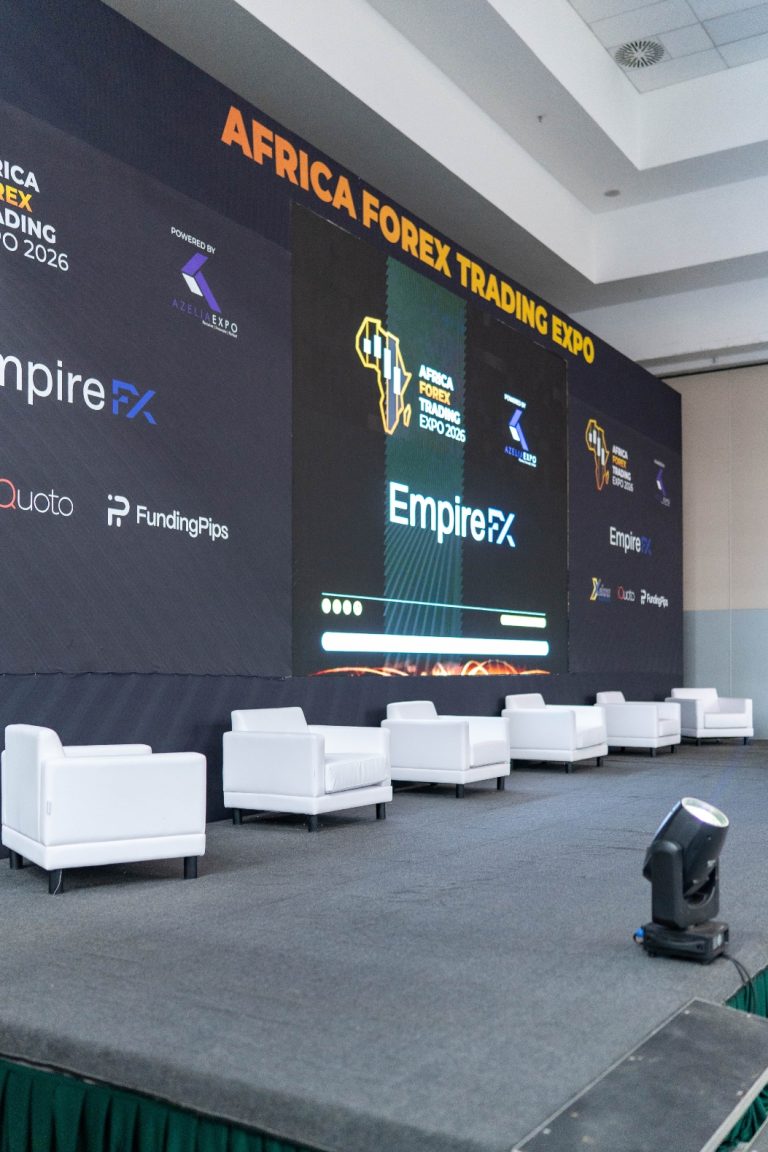
The inaugural Africa Forex Trading Expo 2026 opened today at Sarit Expo Centre with a powerful declaration: Africa has arrived as a force in global financial markets. Hundreds of forex traders, brokers, fintech innovators, Payment Service Providers, and financial educators gathered for the first day of the two-day event themed “Smart Money, Smart Africa; The Future of Forex & Digital Trading.”

“We are opening a gateway to the future of finance in Africa,” declared CPA Zack Kiratu, Director of Azelia Expo Ltd, in his opening remarks. “Across this continent, something extraordinary is happening. Millions of young, tech-savvy Africans are entering the global financial markets. Fintech innovation is accelerating. Digital payments are transforming economies, and a new generation of traders, entrepreneurs and builders is stepping forward to shape the financial systems of tomorrow.”

Kiratu set the tone for the expo with a bold assertion: “Africa is no longer just a market to watch. Africa is a market to build with. Africa is a market to invest in, and Africa is a market that will help define the future of global finance.”

Mobile Trading: Africa’s Digital Leap

A central theme of Day One was mobile trading’s transformative potential for Africa. Panelists in the “Mobile Trading & Africa’s Digital Leap” session explored how smartphone penetration is democratizing access to global markets.

“The most amazing thing about trading is that we all have equal opportunities and you can do it from anywhere,” said panelist Ali, highlighting the accessibility that mobile platforms offer African traders.

Kiratu reinforced this view: “The future is in mobile trading.”

However, Sheila, speaking on mobile payments infrastructure, offered a critical reality check: “You can build the best trading app in the whole world. But if your users are having a challenge to access their money or make deposits or refund their wallets, then it is of no use.” Her comments underscored the vital role Payment Service Providers play in enabling seamless trading experiences across the continent.

Designing for Real Human Behaviour

The day’s keynote address came from Joao Campos of Empire FX, who shared insights from building EFX Lite, the company’s retail trading platform. His presentation, titled “Designing Trading for Real Behaviour,” challenged conventional thinking about trader education.

“People don’t make decisions rationally. They respond to design,” Campos told the audience, explaining that “systems are designed to stay ahead.” His remarks emphasized the responsibility platforms have in building interfaces that encourage disciplined trading rather than impulsive behaviour.

Understanding Currency Markets: The Carry Trade and Interest Rate Dynamics

The session on “Monetary Policy Shifts and Their Cross-Border Impact on Currency Markets” provided traders with crucial insights into macroeconomic forces driving forex movements.

“When interest rates increase, it usually means that there’s higher returns. And normally when there’s higher returns, money tends to flow where there’s higher returns. So this movement is what is one of the main drivers of the currency markets,” explained Christine, breaking down complex monetary policy concepts for retail traders.

Nick added: “The key thing is higher returns and safer yields, and as well as something we call carry trade.” The session equipped attendees with frameworks for understanding how central bank decisions in major economies ripple through to African currency pairs.

Kenya Shilling now Africas second worst performing currency

Crypto, Forex and Stablecoins: Convergence, Not Competition

One of the most anticipated sessions explored the intersection of traditional forex and the emerging crypto ecosystem. The panel on “Crypto, Forex & Stablecoins: Competition or Convergence?” delivered a clear verdict: the future lies in integration.

“You’ll find that everyone has a stable token, and it is integrated in all trade aspects. So then the inflation will go lower, because you’re no longer now operating locally. It’s already standardized and global,” said Vincent, pointing to stablecoins as a bridge between traditional and decentralized finance.

Joseph brought a user-centric perspective: “In 10 years, or even right now, users don’t care about the technology that is being under it. What they care is, if I’m sending money to Nigeria, this money is sent instantly.”

Seth outlined the path forward for traditional forex players: “We don’t want to say that Forex will leave what they’re doing currently to come to crypto, to come to blockchain, but their systems should be working on chain. Our systems in the FX space can be done on chain, in the blockchain. Because that is the new innovation that is happening.”

He emphasized: “Both of them can be different, but what brings us together is the stablecoins.”

Practical Skills: Masterclasses and Workshops

Beyond the panel discussions, Day One featured intensive practical sessions. Empire FX delivered a masterclass on “Click, Copy, Trade? How to Use Copy Trading the Right Way – Not a Shortcut,” addressing the growing popularity – and pitfalls – of social trading platforms.

Xelans Markets led a session on “Scaling as a Forex Entrepreneur,” providing roadmaps for traders looking to build sustainable trading businesses.

The day also saw panels on “The Rise of AI in Forex Trading”, exploring how artificial intelligence and machine learning are reshaping trading strategies. Workshops on broker selection and professional accreditation drew significant attendance from traders seeking to professionalize their practice.

An exclusive Executive Session – “The Forex Room: Decision Frameworks for Institutional FX Governance” – brought together institutional players and regulators for high-level discussions on market structure and oversight.

Gala Dinner Caps Day One

Day One concluded with an invitation-only Gala Dinner hosted by Main Sponsor Empire FX, attended by 250 industry leaders, sponsors, and VIP guests. The evening provided networking opportunities and set the stage for Day Two’s continued programming.

Day Two Preview

The expo continues tomorrow (March 11) with sessions including “From Guesswork to Strategy: How Beginners Can Build a Trading System,” “Women Shaping the Forex, Crypto & Fintech Industry,” and “Trading Rails of Africa: The Fintech & PSP Infrastructure Powering FX Payments.” iQuoto will lead a masterclass on risk management strategies for retail traders.

Reflecting on the day’s success, Kiratu told journalists: “The conversations that begin here at Africa Forex Trading Expo have the power to influence the next chapter of forex and fintech across Africa.”


StarTimes premieres two engaging telenovelas to drive subscriber growth

0

StarTimes Media is leveraging premium content to strengthen its market position and boost subscriber growth in Kenya.

The company announced on Tuesday the launch of two new telenovelas premiering this March on Novela E Plus: It’s Okay to Not Be Okay and the highly anticipated Season 3 of Gangs of Manila.

Speaking on the developments, Myke Mwai, Head of PR and Content Syndication, said the launches reflect StarTimes’ focus on delivering compelling storytelling to attract, engage, and retain viewers.

It’s Okay to Not Be Okay, premiering on 16th March at 9:40 PM, follows a devoted caregiver navigating personal challenges while caring for his mother, who suffers from Alzheimer’s.

In contrast, Gangs of Manila, premiering on 28th March at 8:50 PM, offers high-octane drama that plunges viewers into Manila’s dangerous criminal underworld.

StarTimes to broadcast Carabao Cup semi-finals live to Kenyan fans

Mwai said the move to enrich bouquets with interactive series highlights the company’s content-driven growth approach.

“Investing in premium content is central to StarTimes’ vision of delivering unparalleled entertainment while expanding our subscriber base, these shows are not only powerful narratives but also strategic tools to engage audiences, build loyalty, and reinforce our competitive position in the pay-tv market,” Mwai said

He added that StarTimes has significantly invested in content promotion and marketing to maximize viewership, increase retention, and attract new subscribers across Kenya and the broader East African region.

He said StarTimes’ strategy demonstrates a growing understanding of content as a business driver while positioning the company as a leader in the East African pay-tv market.

“By prioritizing diverse, high-quality storytelling and pairing it with aggressive promotion, the company is able to enhance brand value, expand market share, and reinforce viewer trust,” he added.

TSC announces 170 job vacancies; how to apply

0

The Teachers Service Commission (TSC) has advertised 170 job vacancies for professionals across various departments.

In a notice dated March 10, 2026, TSC invited qualified candidates to apply for the positions which include directors in Human Resource, Audit, Teacher Management and Risk Management, and Principal Officers in teacher management and staffing.

According to the notice, the commission is seeking to recruit 132 Assistant Directors -Teacher Management (Field), Principal Officers Teacher Professional Management (20), Principal Officers Staffing (8), Principal Officers Teacher Discipline Management (3), and Deputy Directors – Human Resource Management (2).

TSC is also hiring a Senior Deputy Director – Human Resource Management and Development, Senior Deputy Director – Internal Audit, Deputy Director – Human Resource Development, Deputy Director – Internal Audit (Information System), and Deputy Director – Risk Management.

Interested and qualified candidates are directed to submit their applications exclusively through the official TSC website, www.tsc.go.ke. The deadline for submitting applications is March 23 at 23:59 EAT.

“Interested and qualified candidates are requested to visit the commission website for the full job description and specifications and submit an online application not later than 2359 hours (East African Time) on Monday, March 23, 2026,” the notice reads in part.

The application process is free with TSC warning that presenting fraudulent certifications or documents and providing false information on an application are both illegal.

“TSC is committed to affording equal employment opportunities to men and women, members of all ethnic groups and persons with disabilities. People with disabilities, the marginalized and the minorities are therefore encouraged to apply,” read part of the statement by TSC.

Also Read: KRA announces 13 job vacancies; requirements and how to apply