Home Blog Page 94

Digital innovation and county collaboration take center stage at Ambulensi EMS Conference

0

Kenya’s push to modernize emergency response took off at the Ambulensi Emergency Medical Services Conference 2026, held March 12th and 13th at The Heron Hotel. Health leaders rolled out new digital tools and protocols, all aimed at getting public ambulance services working together better, right across the country.

This first-ever conference pulled in people from national and county governments, ambulance providers, EMS training schools, development partners, and tech experts. The big question on everyone’s mind: How can coordination and innovation actually change the way Kenyans get emergency care?

One of the main moments was the launch of new features for the Ambulensi system. It’s a digital platform that brings public ambulance services together and opens up better communication between emergency responders and hospitals.

Right now, Ambulensi runs in 12 counties. It helps with dispatch, ambulance tracking, and links up emergency teams. Organizers have their eyes set on a bigger goal: getting all 47 counties on board, so every Kenyan gets access to a more reliable and organized ambulance service.

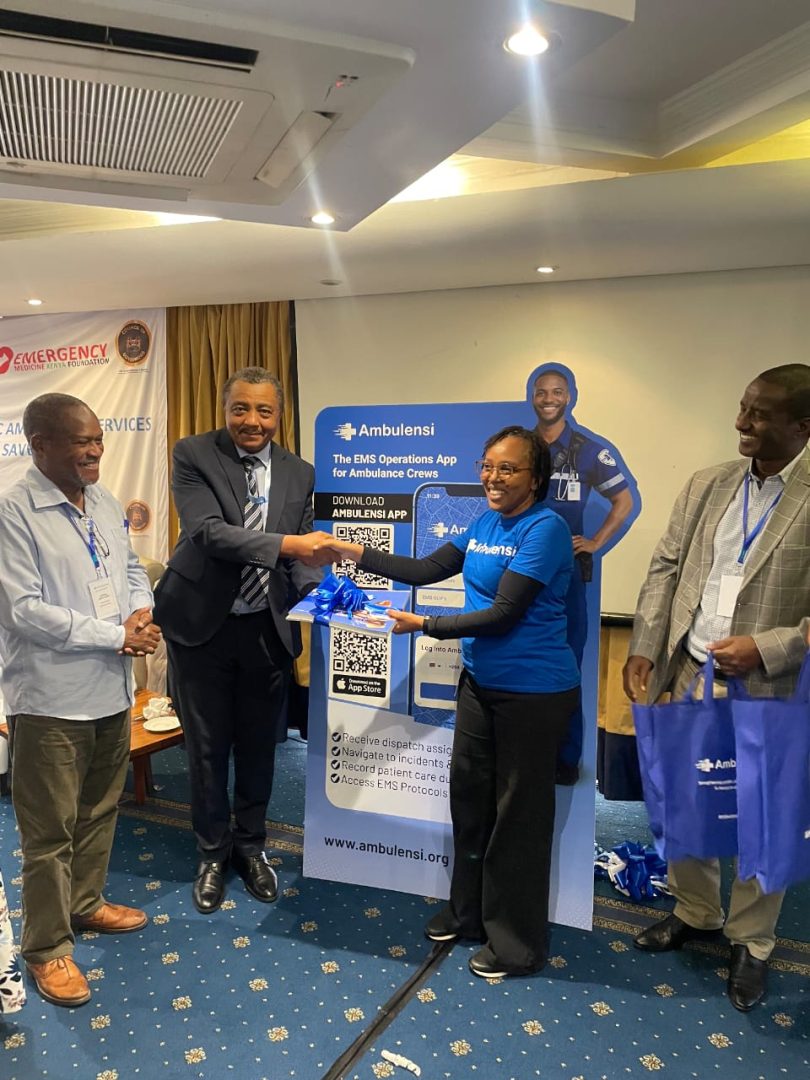
During the two-day event, Dr. Andrew Toro, Director of Curative and Nursing Services at the Ministry of Health, officially launched both the Ambulensi Mobile Application and the country’s new Emergency Medical Services (EMS) Protocols. This was a big step forward, pushing for standardized and digital emergency response everywhere.

The new app is built for ambulance operators and emergency teams. It connects them in real time with dispatch centers and puts clinical guidelines and protocols right at their fingertips when they’re out in the field.

Ambulance services and their hotlines in Kenya

Dr. Toro, speaking at the conference, made it clear that building a modern emergency care system means more than just buying more ambulances.

“Every day, thousands of Kenyans face life-or-death situations—car accidents, childbirth complications, serious illnesses. Improving emergency services isn’t just about numbers; it’s about building systems that connect communities, ambulances, and hospitals so patients actually get the urgent care they need,” he said.

People at the conference agreed: while counties have invested in ambulances, there are still big gaps. Coordination, dispatch, training, and long-term funding all need work.

To tackle these issues, the group dug into strategies for shoring up EMS across Kenya. They talked about better training and certification for emergency staff, creating standard procedures, strengthening dispatch centers, and making sure ambulances have the right medical equipment.Digital innovation and county collaboration take center stage at Ambulensi EMS Conference

The new EMS protocols are set to guide dispatchers and pre-hospital teams, helping them deliver consistent and high-quality care before patients even reach the hospital.

Organizers said that by building these protocols right into the Ambulensi platform, ambulance crews across different counties can follow the same playbook in emergencies.

The conference also gave counties a chance to swap stories and share what’s worked (and what hasn’t) in managing ambulance services. People kept coming back to the need for stronger leadership, steady financing, and smarter use of technology.

By blending innovation, strong training, and real coordination, everyone at the conference seemed confident: Kenya can build an emergency medical system that responds faster and saves more lives, no matter where someone calls for help.

Why I’d choose Nissan Note e-Power again and again

0

When Bramwel, a Kenyan motorist, set out to buy his first car, he was looking for something affordable, reliable and economical to run.

What he did not expect was to find a vehicle that would fundamentally change how he thought about driving.

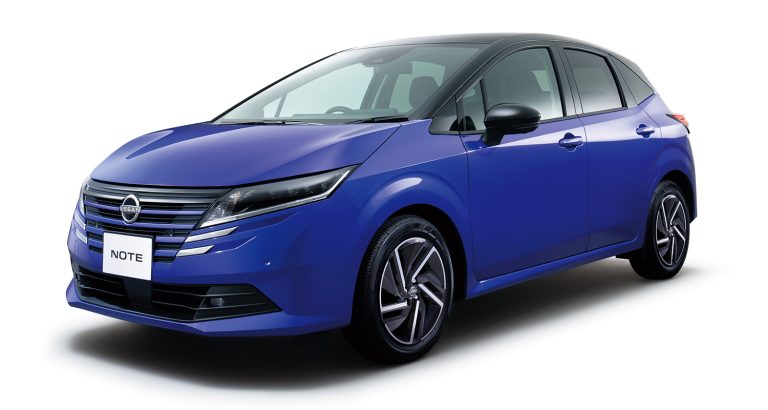
After weighing his options, Bramwel settled on a 2017 Nissan Note e-Power, purchasing the compact hatchback for Sh1.35 million. Since then, he says the car has completely redefined his expectations of what a modern vehicle can offer.

At the heart of the car’s appeal is its distinctive e-Power technology, which sets it apart from conventional hybrid systems. In the Note e-Power, the wheels are driven entirely by an electric motor, while the 1,200cc petrol engine functions solely as a generator, producing electricity to charge the battery.

The result, according to Bramwel, is a driving experience that closely resembles that of a fully electric vehicle.

“The car has an electric feel with instant torque and a very quiet cabin,” he explains to Money254.

Fuel efficiency has proven to be one of the vehicle’s biggest advantages, particularly in a country where motorists are grappling with high fuel costs.

On open highways, Bramwel says he has recorded fuel consumption figures of up to 32 kilometres per litre, while in the stop-and-go traffic typical of Nairobi roads, the car still averages an impressive 26 kilometres per litre.

For a first-time car owner, the savings at the fuel station have been significant.

However, owning an e-Power vehicle requires a slightly different approach to maintenance compared to conventional petrol-powered cars.

Because the system relies heavily on the battery pack, Bramwel ensures it undergoes annual servicing to keep it operating at peak performance.

Routine engine maintenance also requires attention to detail. Oil changes are done every 8,000 kilometres, using the specific 0W-20 engine oil recommended for the model.

Sourcing the correct oil locally has sometimes proved challenging, forcing him to be selective about suppliers.

Suspension components have also been an area requiring regular attention. Like many Nissan owners, Bramwel says he has had to replace the suspension bushes every year, a recurring maintenance issue.

Despite these extra considerations, the overall cost of upkeep remains manageable. Bramwel estimates that he spends between Sh30,000 and Sh40,000 annually on maintenance, a figure he considers reasonable given the substantial fuel savings the car delivers.

Parts availability has also improved over time. When he first purchased the vehicle, even simple components such as an air filter were difficult to find in the local market. But as more Kenyans adopt Nissan’s e-Power models, spare parts are becoming easier to access.

Still, the car is not without its limitations.

Bramwel cites the low ground clearance as his biggest concern. Designed primarily for smooth, paved roads, the Note e-Power performs best in urban environments.

“It’s a city car at heart, and the low stance means you have to be extra careful with Kenyan speed bumps and potholes.”

Even so, Bramwel remains enthusiastic about his purchase. For drivers who live and work in the city, he believes the Nissan Note e-Power strikes an ideal balance between innovation and practicality.

“It’s the perfect companion for someone who doesn’t have a large family or heavy loads to carry,” he says. “If you want a car that feels like the future but doesn’t require a charging port, the e-Power is the way to go.”

Also Read: 10 Worst cars to avoid in Kenya when on a tight budget

Man who sold all his property to fund 10 surgeries appeals for help for India treatment

0

A Kenyan man has narrated how a single anal surgical procedure ruined his life, leaving him in chronic pain, financially paralyzed and in a crumbling marriage.

James Gitonga who is battling an anal condition as a result of botched surgeries in reputable public and private hospitals in the country, revealed he has undergone 10 surgeries 6 of which were botched.

In an interview with a local daily, Gitonga revealed his problems began in 2008 when he underwent surgery to treat haemorrhoids, a procedure that was successful.

However, eight years later, he started experiencing persistent itching around the anus. At the time, he was working in Sudan but returned to Kenya after a war broke out in Sudan.

“I was in Sudan when the itching started, but I assumed it was a result of the previous haemorrhoid surgery,” he told The Star.

He started self-medicating, taking anti-haemorrhoid drugs, but the pain did not subside. Gitonga later reached out to a friend who is a clinical officer who examined him and informed him that he did not have haemorrhoid.

The friend referred him to a hospital in Kikuyu for a procedure that would ultimately destroy his life. By the time he arrived at the hospital, he was in excruciating pain and unable to sit and the doctors allegedly recommended a surgical procedure to check the problem.

“They told me they will take me to theatre, open me up and see what the problem is.” Consultation alone cost Gitonga Sh20,000.

The following day, two doctors, a senior female and a junior male, wheeled him to theatre.

Midway through the procedure, the senior doctor was called for an emergency, leaving the junior doctor alone.

“I think the young doctor messed me up. After he finished, the lady doctor returned and asked him what he had found. He said, ‘I saw some pus and drained it. I don’t think you have any other problem,’” Gitonga recounted.

The senior doctor appeared dissatisfied and started scolding him, repeatedly asking, “What have you done?”

From that exchange, Gitonga suspected that something had gone wrong during the surgery.

The doctors kept him hospitalised for two more days before discharging him. As if to cover their backs, the hospital refused to issue a discharge summary.

“I was in a lot of pain when they discharged me, and they did not give me a single document to show I had been admitted,” he said.

A few days later, his left buttock started to swell. His sisters moved him to his mother’s house to manage the condition as his wife was away for work. Soon, he was unable to pass stool. Shortly afterwards, another hole formed near his anus, oozing blood.

The swelling worsened and Gitonga lost control of his sphincter muscle, leaving him unable to control his bowel movements.

“My family bought me adult diapers to manage the situation. When the pain became unbearable and I could not sleep, they took me to another doctor who ran a private clinic,” he said.

After several tests and a physical examination, Gitonga was informed that doctors at the Kikuyu hospital had created a fistula and he needed corrective surgery.

Because the doctor did not have a theatre at his clinic, he transferred Gitonga to another private hospital in Mwea, Kirinyaga county, where he was charged about Sh100,000 for surgery.

Two days later, however, the wound swelled again and burst.

“Out of fear, I called my sister from the hospital and told her what I was experiencing. I warned her I might become septic,” Gitonga said.

His family cleared the hospital bill and arranged for an ambulance to transfer him to a top private hospital in Nairobi.

After examination, a team of surgeons concluded that he required reconstructive surgery, including the creation of a diverting stoma to stabilise his condition.

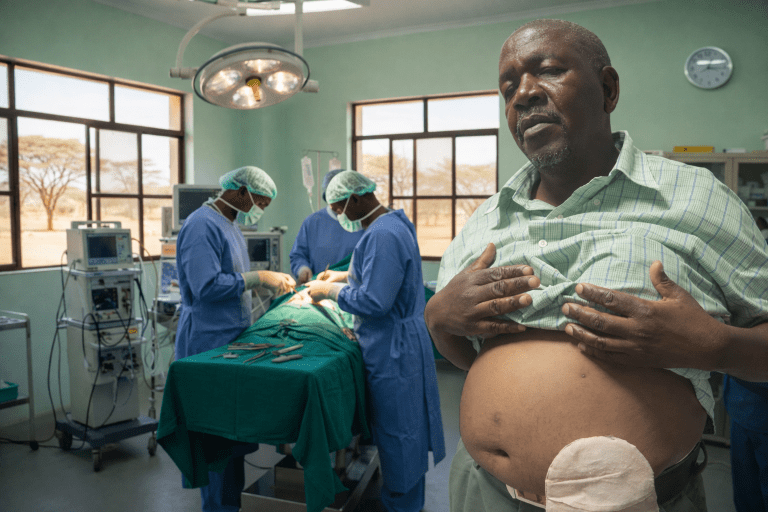
First, they created the stoma, bringing part of his intestine to the abdominal surface and attaching a colostomy bag.

Three months later, Gitonga returned for reconstructive surgery. This time, he was placed under general anaesthesia.

Unfortunately, a nerve stimulator malfunctioned mid-procedure, necessitating yet another surgery.

Also Read: Breast cancer is no longer a disease of older women

“I was deeply disappointed. Surgeries are not only extremely painful but also financially draining. I asked God many questions,” he said.

The doctor, however, remained optimistic and recommended plastic surgery at a renowned public hospital.

The plastic surgeon recommended reversing the stoma afterwards at a private hospital. However, the procedure backfired.

By this time, Gitonga was financially drained and had started relying on harambees to cover his medical expenses.

Despite an empty bank account, his resolve was clear: raise the required amount and get better.

“The stoma reverse surgery was very painful. For about six or seven days, I was not allowed to eat and was fed through tubes,” he said.

Unfortunately, while recovering at the hospital, the Covid-19 pandemic struck, and around that time, Gitonga became feverish.

He says the fever sent the hospital into panic mode. He was removed from the ward and placed in isolation.

For four days, Gitonga saw no doctor, only Kenya Medical Research Institute personnel who came to collect swabs for Covid-19 tests.

“Only I know what I went through. It was the worst period of my life. They stopped treating me and shifted all focus to Covid, yet I was in extreme pain,” he said.

After four days, he tested negative and was taken back to the ward.

One morning, while still in the ward, a clear substance started to leak from the stoma wound. When the surgeon visited, he asked whether Gitonga was diabetic. He said he was not.

The surgeon then removed the surgical clips, left his abdomen open and switched off his phone. Gitonga says he stayed the entire day with an open abdomen.

“I think he panicked and didn’t know what to do when the wound started oozing grey matter. We tried calling him but he refused to pick up his phone. The nurses at the hospital also refused to touch me,” Gitonga added.

He was later transferred to a public hospital where he says even the most senior surgeons declined to handle his case.

Eventually, another friend referred him to a doctor who proposed reinstating the stoma while attempting to assess the underlying problem.

After surgery, the doctor informed him that the condition was highly complex and suggested seeking specialised treatment in India.

By then, Gitonga had sold his land and car. He struggled to pay school fees and his marriage was crumbling.

“My children stayed home for days because of unpaid school fees. My wife even moved out of our bedroom because of the indignity of living with a colostomy bag,” he said.

Beyond the physical pain, he endured public humiliation.

“The anal opening sometimes releases clear fluid that stains my trousers,” he said.

A friend later connected him to Pathway International, an organisation that links patients to specialists in India.

After reviewing his reports and conducting tests, specialists from Apollo Proton Cancer Centre in India concluded that his sphincter muscle had been severely damaged. They recommended specialised therapy to repair the muscle.

“They said if the damage is less than 60 per cent, they could repair it. If it exceeds 60 per cent, they would consider a transplant,” John Kibe of Pathway International said.

To undergo treatment, Gitonga needs about Sh4.1 million to cover surgery, medication, travel, food and accommodation.

“All I need right now is to get better,” he says. “I would not want to sue the hospitals because even if I did, who would admit liability from the series of botched surgeries?”

To help Gitonga, you can reach out to him on 0700386856 or Pay Bill number 247247 Account number 0010101204247.

Also Read: Warning signs of postpartum complications you shouldn’t ignore

Kenya ready to host second Africa Urban Forum in Nairobi

0

The Government of the Republic of Kenya, in partnership with the African Union Commission (AUC), have officially declared their readiness to host the Second Africa Urban Forum (AUF2), scheduled for 8–10 April 2026 at the Kenyatta International Convention Centre (KICC) in Nairobi.

Held under the theme: “Adequate Housing for All: Advancing Socio-economic and Environmental Transformation towards the Realization of Agenda 2063” AUF2 will convene Heads of State and Government, Ministers, Mayors, Governors, development partners, private sector leaders, academia, civil society, youth and urban practitioners from across Africa and beyond.

It comes at a critical moment as Africa undergoes the fastest urban population growth globally. By 2050, nearly two-thirds of Africans are expected to live in urban areas – presenting both unprecedented opportunities for economic transformation and urgent challenges related to housing access, infrastructure, climate resilience and inclusive urban planning.

Alice Wahome, CS State Department for Housing & Urban Development, said Kenya is ready to welcome Africa and the world to Nairobi.

“We are honoured to host Africa and the world in Nairobi for AUF2. As African cities expand rapidly, we must reimagine housing as a driver of economic opportunity, innovation and environmental sustainability. This Forum provides a unique platform to accelerate practical solutions and partnerships that will transform urban living for millions of Africans,” she said.

AUF2 is a continental platform supporting implementation of the African Union’s Agenda 2063: The Africa We Want, Africa’s long‑term blueprint for inclusive growth and sustainable development. The Forum will also contribute to advancing the Sustainable Development Goals and the New Urban Agenda through partnerships, investments and knowledge exchange.

The African Union Commission (AUC) emphasized the strategic importance of AUF2 in shaping Africa’s urban future and strengthening continental cooperation around sustainable development priorities.

Dr. Mary Mbole-Kariuki, African Union Representative, Kenya noted: “The next frontier for Africa lies in building cities that are both green and resilient, cities that can withstand climate shocks while unlocking economic opportunities for their citizens. AUF2 will provide a continental platform to deepen policy coherence, mobilize partnerships and scale transformative investments in sustainable housing, infrastructure and urban services.”

The Forum will focus on practical solutions including affordable housing delivery, urban planning, climate-resilient infrastructure, financing mechanisms, smart cities innovation and inclusive growth models. It will also provide a platform for showcasing African-led solutions and strengthening collaboration between governments, development institutions and the private sector.

Small estate malls are redefining Kenya’s retail landscape

As home to UN-Habitat and a growing ecosystem of multilateral organisations, Nairobi continues to strengthen its position as a convening centre for global urban dialogue. Expected partners for AUF2 include UN-Habitat, development finance institutions, regional economic communities, private sector innovators and international development partners committed to advancing sustainable urbanisation across Africa.

In addition to policy dialogue, the Forum will highlight investment opportunities in housing and infrastructure, innovative financing mechanisms, smart urban planning, climate adaptation strategies and inclusive development models.

A key outcome of AUF2 will be the Nairobi Declaration, expected to establish a continental roadmap for sustainable urban development and amplify Africa’s voice in global urban policy discussions.

Kenya has finalized all preparations in collaboration with the African Union Commission and partners and looks forward to welcoming delegates, partners and media to Nairobi.

For more information including registration, visit: https://auf2.go.ke/

KPA announces 194 internship opportunities across multiple departments

0

The Kenya Ports Authority (KPA) has announced 194 internship and apprenticeship opportunities across multiple departments.

In a notice on Wednesday, March 10, KPA invited qualified candidates to fill the open positions by March 27, 2026.

The programme is designed to provide young adults with the opportunity to gain hands-on experience and exposure to the real workplace environment for one year starting in Apri.

“KPA is pleased to announce 194 internship/apprenticeship vacancies across various departments. The objective of the Kenya Ports Authority internship/apprenticeship program is to provide young adults with the opportunity to gain hands-on experience and exposure to the real workplace environment,” the notice reads in part.

To be eligible, applicants must have graduated with a first degree (undergraduate), diploma, or certificate from a recognised institution between January 2023 and December 2025.

Additionally, they must not have previously undertaken any internship programme or gained work experience related to their field of study since graduation, and must not have retired or exited formal employment.

The opportunities are in 22 divisions including Container Terminal Operations, Container Terminal Engineering, ICT, Innovations and Business Process Re-engineering, and Civil Engineering.

Others are Port Electrical Engineering, Marine Engineering, Corporate Communications, Commercial, Insurance Services, Marketing and Human Resources.

How to Apply

Interested and qualified candidates are urged to submit their applications online through the Kenya Ports Authority career portal.

They must complete the form with accurate details, including personal data and educational background.

The Authority warned applicants against canvassing, stating that it would lead to automatic disqualification.

Successful candidates will be expected to serve the full 12-month internship period to benefit from the programme. KPA clarifies that the programme does not guarantee employment after completion.

Also Read: ODPP announces 217 job vacancies: How to apply

New changes announced to US diversity visa lottery program (Green Card)

The United States Department of State has announced new changes to the diversity visa lottery program.

The new changes will affect all applicants to the next US diversity visa lottery program that is yet to be announced. According to US Immigration Lawyer Brad Bernstein, there are three major changes that have been announced.

Every applicant in the diversity visa lottery program will now be required to have a valid and unexpired passport when they apply. Each applicant will also be required to enter their personal information and photo found in the passport and then upload the passport page together with the photo.

At the same time, applicants will be charged $1 (equivalent to about Sh129) registration fee when submitting their entry.

Can I travel to UK or Australia if my USA visa was cancelled and I was deported?

The form where they fill in their information will no longer use the wonder gender but will henceforth use the word ‘sex’ to distinguish between male and female applicants. Age has also bee replaced with date of birth.

“These new rules go into effect about April 10 to 11 2026. That means that the visa lottery registration dates should be announced soon and the next entry period will likely be open sometime after mid-April 2026,” said Mr. Bernstein.

“If you plan to enter the green car lottery, make sure you have a valid passport ready now.”

According to the State Department, the new changes will allow customs and immigration officials to verify identities and limit duplicate or fraudulent entries.

These changes come close to four months after the United States suspended the green card lottery scheme following a mass shooting at Brown University in December 2025. This shooting was attributed to 48-year-old Claudio Neves Valente.

Valente had entered the US through the diversity visa lottery program (DV1) in 2017 after which he was granted a green card.

KCB Group in Sh68.4bn full year 2025 net profit, pays Sh3 additional dividend

0

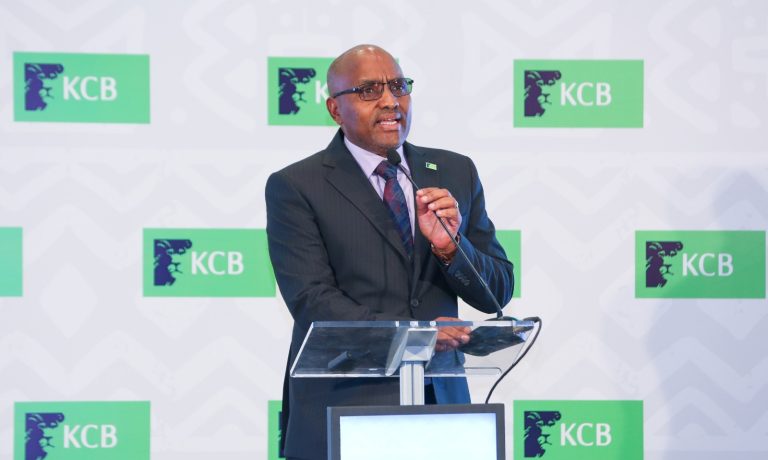
KCB Group has announced a profit after tax of Sh68.4 billion for the full financial year 2025. This full year 2025 net profit was a growth of 11 percent from the profit the Sh60.09 billion net profit that the bank had realized in the previous full year 2024.

During the financial year under review, KCB Group’s subsidiaries contributed about 30 percent of the total profit after tax.

The banking group’s costs went down to 42.3 percent while total revenue grew by 4 percent to Sh214 billion.

Announcing the performance, KCB Group chief finance officer Lawrence Kimathi said that the non-performing loans went down by about 14 percent to Sh211 billion.

The non-performing loans ratio of 16.9 percent is current the lowest it has been for the banking group since the full year 2021. Locally, KCB Kenya’s non-performing loans went down to 19.9 percent.

During the financial year under review, the banking group saw its customer numbers grow by about 2 million from 32 million customers to 34 million. At the same time, the bank’s mobile lending increased by 30 percent, with the bank lending Sh544 billion.

“During the year, we supported the creation of 265,000 jobs and supported 4,260 students,” KCB Group chief executive officer Paul Russo announced.

Following these results, KCB Group has proposed to pay a final dividend of Sh3 per share. This dividend will now bring to the total dividend paid out for the full year 2025 to Sh7 per share. This comprises of the already paid out interim dividend of Sh2 per share and the paid out special interim dividend of Sh2 per share.

The ordinary dividend per share represents a 33 percent increase from the dividend payout that was done in the financial year 2024. The total payout for the full year 2025 will now amount to around Sh22.5 billion.

READ MORE: How KPC shares performed on their first day of listing on NSE 

On acquisitions, Mr. Russo said that the banking group is not considering making any local banking buyouts. “There is no consideration for an acquisition in Kenya. We divested the National Bank of Kenya in order to have a single focus for the growth of KCB Kenya,” he said.

Nonetheless, the banking group will continue to explore possibilities for expansion into the Ethiopian market.

Real estate firm to pay employee Sh800,000 for firing her via SMS

The Employment and Labour Relations Court in Nairobi has ordered a real estate firm to compensate a former employee for firing her via SMS. The court ordered Topcare Lands Investment Limited to pay Lydia Wanjiku Sh800,000 for ending her employment through a text message while she was on probation.

During the hearing of the case that was filed by Wanjiku, the court heard that she was fired on February 6, 2022 by the real estate firm’s chief executive officer James Macharia. She then moved to court seeking compensation on November 18, 2022.

Wanjiku told the court that Macharia had employed her on January 2022 with a monthly salary of Sh200,000. However, she was suspended indefinitely barely a month after her employment without receiving notice on the reasons for her termination.

Wanjiku informed the court that she had been hired through an oral contract. She successfully urged the court to acknowledge the contract after arguing that it was binding because she had reported to the firm’s offices in the position of chief executive officer and carried her duties without qualms until her suspension.

In response to the case, Topcare Lands Limited denied that it had offered Wanjiku employment. However, the firm said that she was on probation. The firm claimed that Wanjiku had not been issued with a formal employment contract because she was not in employment but on probation.

The firm went on to claim that during the one month that she was on probation, Wanjiku reported to the company’s offices for only 11 days, some which were half days.

The firm went on to say that the amount of Sh200,000 that was paid to Wanjiku for the month was not her actual salary. Sh100,000 was the salary while the addition Sh100,000 was paid in lieu of notice.

However, in the ruling, the court stated that the firm could not claim that Wanjiku was not an employee while acknowledging in its replying affidavit that she had been hired on probation and was receiving a salary.

“The claimant states that she was employed by oral contract and the respondent did not adduce any evidence to the contrary. The claimant adds that her request for a formal contract of employment was not responded to. The respondent chose not to document the claimant’s employment and the tale about a probationary appointment therefor collapses,” Justice Linet Ndolo ruled.

“There is evidence that the claimant was paid a salary of Sh200,000 for the month of January 2022. The respondent’s averment that this payment was for a probationary appointment and notice pay was not supported by any evidence.”

READ MORE: Tanzanian businessman Rostam Azizi buys Nation Media Group

Justice Ndolo went on to declare that indeed there was a work relationship between the firm and Wanjiku which was enforceable by the labour court.

She awarded Wanjiku Sh600,000 which was equivalent to three months’ salary compensation based on her salary of Sh200,000 and Sh200,000 as one month’s salary in lieu of notice.

KRA drops taxpayers from the infamous ‘Special Table’

0

The Kenya Revenue Authority (KRA) has announced a major shift in its tax compliance enforcement strategy, dropping most taxpayers from the controversial “Special Table” system that has long been associated with strict compliance restrictions.

In an internal memo dated March 10 from the Compliance Management Department, the tax authority confirmed that the Special Table will no longer be broadly used as a compliance enforcement tool. Instead, it will now be reserved only for taxpayers directly involved in tax fraud or the missing trader scheme.

The decision marks a significant policy change aimed at protecting legitimate businesses that had previously been penalized through the system despite having no direct involvement in tax crimes.

Why the Special Table Was Introduced

The Special Table was originally introduced as part of KRA’s compliance programme to deter tax evasion and fraud, particularly within value-added tax (VAT) systems. Authorities used it to flag taxpayers suspected of irregularities and prevent potential abuse of the tax framework.

Business owners decry high taxation, call for intervention to spur business growth

However, according to the memo, the tool gradually evolved beyond its intended scope.

Rather than focusing only on tax fraud or missing trader networks, the system began to be applied broadly across various compliance issues. This shift, KRA acknowledged, resulted in unintended consequences for legitimate businesses.

“This has led to abuse of the tool and punishing of genuine businesspeople and taxpayers instead of facilitating them to do business and subsequently pay their fair share of taxes,” part of the memo stated.

What Changes Now

Under the new directive, most taxpayers previously listed on the Special Table will be removed unconditionally.

KRA indicated that the removal process will begin immediately, with affected taxpayers expected to be cleared from the system by Thursday, March 12, 2026. Relationship managers will notify affected taxpayers about the removal and outline the compliance expectations moving forward.

Going forward, taxpayers will only be placed on the Special Table under strict conditions. The measure will apply specifically to individuals or companies involved in:

  • Missing trader schemes
  • Tax fraud or other tax-related crimes

Before any taxpayer is added to the list, both a manager and chief manager must submit a detailed description of the alleged scheme to the Deputy Commissioner for approval.

The Missing Trader Problem in VAT

The missing trader scheme remains one of the most significant VAT fraud risks facing tax authorities globally.

The scheme typically involves businesses claiming input VAT credits on transactions where the supplier either does not remit the tax to the government or does not exist at all.

KRA to validate income and expense from January 2026 tax returns

In December 2025, Ndiritu Muriithi, the chairperson of the Kenya Revenue Authority board, revealed the scale of the problem during a discussion on VAT compliance.

According to Muriithi, in March and April 2025 alone, around 9,000 businesses claimed approximately Sh39 billion in input VAT that the tax authority could not trace within its systems.

These irregular claims were a key factor behind the creation and expansion of the Special Table system.

How the Special Table Worked

When a taxpayer’s PIN was placed on the VAT Special Table, several restrictions were triggered within KRA’s digital tax systems.

Affected taxpayers were unable to file VAT returns through the system. Instead, an error message would appear stating that the PIN was under review for VAT compliance irregularities and instructing the taxpayer to contact their Tax Service Office.

The restrictions also had wider implications for business operations.

For example, traders could not claim input VAT from suppliers whose PINs had been placed on the Special Table. If a VAT return included such a supplier, the system would automatically reject the claim for input tax deduction.

In addition, system enhancements were designed to block VAT claims from nil filers, non-filers, and suspected missing traders identified through audits and intelligence reports.

Administrative Penalties and Compliance Requirements

Taxpayers who were unable to file VAT returns because of Special Table restrictions still faced administrative penalties for non-filing, which had to be addressed through KRA offices.

Businesses whose PINs were listed due to failure to transition to the electronic Tax Invoice Management System (TIMS/eTIMS) were also required to visit their Tax Service Offices for onboarding before they could resume normal filing.

Inside Tax: What you need to know about KRA’s Turnover Tax

Where suppliers had been incorrectly flagged but had already declared the sales invoice in their VAT returns, traders could apply to their Tax Service Office to have the input VAT reinstated. This process required supporting documentation in line with Section 17(2) of the VAT Act 2013.

Implications for Businesses

For many Kenyan businesses, the decision to remove most taxpayers from the Special Table is expected to ease operational bottlenecks that had previously disrupted supply chains and VAT claims.

Companies that were incorrectly flagged often struggled to transact with suppliers, claim input VAT, or complete routine tax filings.

By narrowing the use of the Special Table to cases of confirmed fraud and missing trader schemes, KRA is signaling a shift toward a more targeted enforcement model.

The move also reflects growing pressure on tax authorities to balance revenue collection with a business-friendly compliance environment.

For entrepreneurs and SMEs, the message is clear: tax enforcement is becoming more data-driven and focused on genuine fraud rather than blanket compliance restrictions.

Effective tax systems must protect government revenue without undermining legitimate enterprise. The challenge for policymakers is maintaining that balance. When enforcement tools become blunt instruments, they discourage compliance rather than encourage it. When used precisely, they reinforce trust in the system and support sustainable economic growth.

HACO Industries recognized as circular economy leader at Kenya ESG awards

0

HACO Industries Sales Manager Collin Namayuba (centre), alongside colleagues receiving the prestigious award at Emara, Ole Sereni

HACO Industries Kenya Limited has been recognized as a Circular Economy Leader at the prestigious Kenya ESG Awards held at Emara Ole Sereni. The award honours organizations demonstrating outstanding leadership in embedding sustainability and resource efficiency into their business operations. The recognition underscores the organization’s commitment to advancing responsible manufacturing practices and integrating circular economy principles across its operations and supply chains.

The Kenya ESG Awards celebrate organizations that are setting the pace in environmental stewardship, social impact, and governance excellence across industries. HACO’s recognition highlights the company’s efforts to reduce waste, improve resource efficiency, and promote sustainable production models that create long-term value for both business and society.

Speaking following the award, Mary-Ann Musangi, the Managing Director of HACO Industries noted that sustainability is increasingly central to the company’s growth strategy and operational philosophy. “This recognition reinforces our belief that responsible manufacturing is essential to the future of business. At HACO, we are committed to embedding circular economy principles in the way we design products, manage resources, and collaborate with our partners across the value chain. Sustainability is not just an obligation; it is a pathway to innovation, resilience, and long-term competitiveness.”

Haco Industries powers up with solar in landmark NCBA–Ofgen sustainability partnership

HACO Industries has continued to implement initiatives aimed at reducing environmental impact, including improving production efficiencies, promoting responsible sourcing, and supporting recycling and waste reduction efforts within its manufacturing processes. The organization also continues to work closely with partners and suppliers to strengthen sustainable value chains and encourage environmentally responsible practices across the broader manufacturing ecosystem.

The award comes at a time when businesses across Kenya and the region are increasingly recognizing the importance of sustainable business models in addressing climate change, resource constraints, and evolving consumer expectations.

By integrating circular economy approaches, HACO Industries aims to contribute to a more resilient and sustainable manufacturing sector while supporting Kenya’s broader environmental and economic development goals.