
Home Blog Page 96

AI Disruption and Reputation Management Take Centre Stage in African PR

0

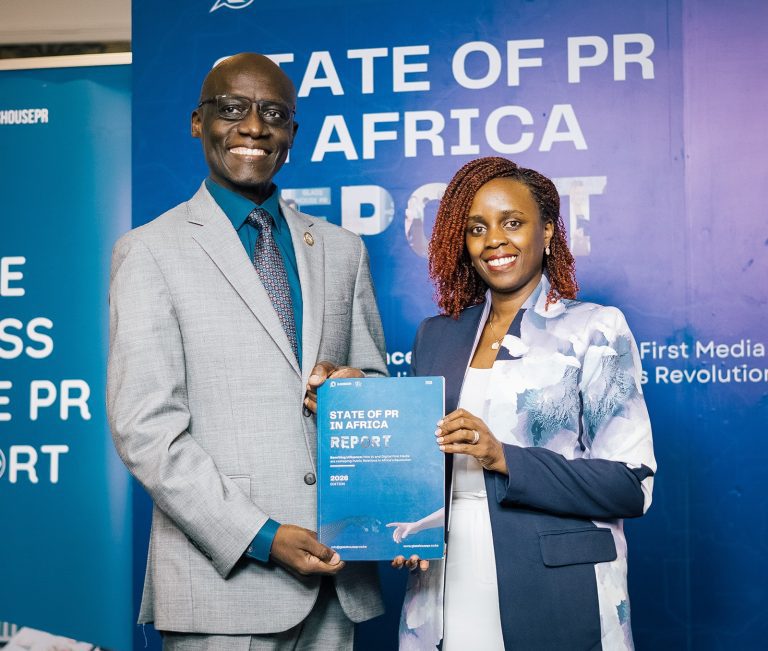
Artificial intelligence (AI) is fundamentally disrupting the public relations profession, creating both new opportunities and new risks for reputation management, according to remarks by Ambassador Phillip Thigo, Special Envoy on Technology for the Republic of Kenya, during the launch of the State of PR in Africa 2026 Report by Glass House PP in Nairobi.

Ambassador Thigo noted that the rapid rise of conversational technologies and AI-driven communication tools is forcing the PR industry to rethink how it safeguards information, credibility and public trust.

“AI is fundamentally disruptive, especially in an era where conversational technologies have become highly precise,” said Amb. Thigo. “The field is still grappling with the potential of how AI creates intelligence, but also how it can be used as an opportunity to ensure reputations are protected as the technology continues to develop.”

He noted that public relations, which revolves around information and knowledge management, now sits at the centre of debates about responsible AI use.

“In this era where AI is pervasive in how we work and communicate, the field, like many others, is being challenged,” he said. “People are using artificial intelligence to enhance reputations, whether through online presence or digital engagement with communities. But there is also a challenge around misinformation and the misuse of AI-generated information that can damage reputations.”

Museum of Illusions Nairobi Marks One Year with Bold New Focus

Amb. Thigo added that the growing influence of AI means PR professionals must remain vigilant about how technology is applied.

“Like any other sector, public relations must understand the trends, the challenges and the opportunities presented by AI. The question is how professionals use these tools to enhance their work while also helping shape the future of responsible communication.”

His remarks came as new research revealed that artificial intelligence is already deeply embedded in the daily work of communications professionals across Africa.

The State of PR in Africa 2026 Report, published by Glass House PR, draws insights from 54 agencies across 16 African countries, representing between 6,500 and 7,800 communications professionals. The study also includes interviews with senior industry leaders and a survey of university students pursuing public relations and communication studies.

According to the report, 81.5 per cent of senior PR professionals describe themselves as “very familiar” with artificial intelligence tools and actively use them in their daily work. More than 90 per cent use AI writing assistants such as ChatGPT and Microsoft Copilot, while over 80 per cent rely on AI-powered design tools.

Content creation has seen the most dramatic transformation. About 85.2 per cent of respondents say AI has significantly changed how they develop messaging, press materials and campaign assets. Campaign planning, media monitoring and crisis management are also increasingly supported by AI technologies.

FarmBizAfrica launches AI tool to help Kenyan farmers choose survival crops for 2026 planting

However, the industry remains cautious about the risks. Seven in ten respondents believe AI poses ethical threats to public relations, particularly around misinformation, authorship and bias. More than half say algorithm changes by major technology platforms have affected campaign performance in the past year, underscoring the risks of heavy reliance on social media distribution.

Glass House PR Founder and CEO, Mary Njoki, noted that the transformation goes beyond efficiency gains. “AI is not replacing public relations professionals. It is amplifying them,” she said. “What will differentiate African PR in this new era is not who uses AI fastest, but who uses it responsibly, creatively and with sound judgment.”

The report also finds that 74.1 per cent of professionals believe AI enhances rather than replaces human creativity and emotional intelligence. Nearly half of the organisations surveyed have introduced mandatory human oversight policies to review AI-generated content before publication, while 42.6 per cent have adopted transparency guidelines on AI use.

Beyond artificial intelligence, the research highlights a broader shift in how stories are told.

Digital platforms have transformed PR from one-way messaging to participatory engagement. Practitioners say they are moving beyond traditional press releases to build online communities through short-form video, interactive content and real-time audience feedback. Platforms such as LinkedIn, Instagram, YouTube and TikTok now dominate campaign strategies, while Facebook plays a smaller role than in previous years.

Trust is also emerging as the industry’s most important currency. Instead of focusing solely on impressions and reach, PR professionals say they are increasingly measuring sentiment, quality of engagement, direct audience feedback and organic advocacy.

China makes AI lessons mandatory for kids as young as 6 years old

The report suggests the next generation of African PR professionals is already AI-native. Among students surveyed, 97.5 per cent report using AI tools for brainstorming, drafting press releases and refining tone. However, many also expressed concerns about authenticity, over-reliance on AI and plagiarism.

Looking ahead three to five years, respondents expect AI to automate routine tasks such as media monitoring and reporting, freeing professionals to focus more on strategy and relationship-building. There is also optimism that AI could support hyper-localised storytelling across Africa’s diverse languages and cultural contexts.

At the same time, concerns remain about deepfakes, cultural bias in Western-trained AI models, data privacy gaps and the risk of widening the continent’s digital divide.

“The future of African PR will belong to professionals who can combine technology with human insight,” noted Njoki. “Our stories are deeply cultural and community-driven. AI must serve that reality, not erase it.”

The State of PR in Africa 2026 Report offers one of the most comprehensive snapshots yet of how artificial intelligence and digital-first media are reshaping the communications landscape across the continent, signalling that the transformation is already well underway.

Kenyan motorist shares frustrations after buying used Nissan X-Trail

0

A Kenyan motorist has shared his candid experience owning a used 2006 Nissan X-Trail, warning prospective buyers that the popular compact SUV may come with unexpected costs if not properly understood before purchase.

According to his narration on Money 254, the driver, who bought the vehicle in 2022, says the purchase was driven by a long-held desire to own an SUV.

With a budget of Sh700,000 at the time, he acquired the X-Trail for Sh550,000, a decision he now says he regrets three years later.

According to the motorist, the vehicle appeared to be a practical and affordable option at the time, but the reality of ownership exposed several challenges ranging from inconsistent fuel consumption to maintenance issues linked to its transmission system.

Unpredictable Fuel Consumption

One of the biggest frustrations, he says, has been the vehicle’s inconsistent fuel economy. On highway drives, the SUV performs reasonably well, returning an average of about 10 kilometres per litre. However, the story changes significantly in city traffic.

“In the city it becomes a gamble. On a good day it will give around 8 km per litre, but on a bad day it drops to around 6 km per litre. Driving through a Nairobi snarl-up can cost me over S30 per kilometre. I honestly have no idea what causes the disparity, but I’ve learned that for an older SUV, “city driving” is a very expensive hobby,” he explains. Adding that the unpredictability makes budgeting for fuel difficult.

Sensitive CVT Transmission

Another major lesson came from the vehicle’s Continuously Variable Transmission (CVT), a gearbox technology that differs from traditional automatic transmissions.

As a first-time owner unfamiliar with the system, the motorist says he initially struggled with recurring transmission problems and surging fuel consumption.

“I didn’t know the difference between a normal automatic gearbox and a CVT. I learned the hard way that the CVT is extremely sensitive,” he says.

In the early months of ownership, he frequently drove the vehicle on rough terrain for recreational events. However, he later realised that each off-road outing was often followed by costly mechanical attention.

His understanding of the vehicle improved only after joining online communities for X-Trail owners on Facebook and WhatsApp, where other drivers shared maintenance advice.

“That’s when I learned the engine doesn’t just need any oil,” he explains. “It requires specific synthetic oil and strict service intervals if you want it to run well.”

Spare Parts: Available but Frequent

The motorist also highlights maintenance frequency as another challenge.

While spare parts for the X-Trail are readily available in Nairobi’s well-known automotive hubs such as Kirinyaga Road and the Industrial Area, he says the issue is not availability but how often certain components need replacement.

“Compared to my friends who drive other Japanese cars, I find myself visiting the spare parts shop far more often,” he says.

Lessons for Prospective Buyers

Despite his frustrations, the motorist acknowledges that the X-Trail remains a popular SUV among Kenyan drivers due to its affordability, spacious interior and off-road capability.

However, he advises potential buyers of older models to conduct thorough research before purchasing, particularly regarding transmission systems, servicing requirements and fuel consumption expectations.

“I think the 2006 X-Trail is a good car; it’s just not a good “first” car. It requires a level of mechanical awareness and proactive maintenance that you only develop with experience.”

“If you’re shopping for a second-hand car, make sure you check for reviews from past owners and mechanics. And ensure to check the resale price, it’s been three months trying to sell mine to no avail,” he added.

Also Read: Meaning of new green number plates and distinctive features

Importing business stock with Co-op Bank: Everything you need to know

0

One of the challenges faced by Kenyan entrepreneurs who rely on imported goods is the high cost of importation, which has made some businesses unable to reach their potential.

To help address this challenge, the Co-operative Bank of Kenya introduced the Import Duty Financing Solution to help importers have a seamless process during clearing and transportation of imported cargo from either the port or airport to the final destination.

The product which targets importers of goods and services seeks to solve the unexpected costs incurred during importation by providing working capital to facilitate duty payment, clearing costs or any other logistical expenses associated with the clearance of imported goods.

It covers various business groups including importers of motor vehicles and equipment, importers of second-hand items for sale, importers of other goods such as manufacturers (raw materials), construction materials suppliers or other businesses, as well as clearing and logistics companies.

According to Co-op Bank, the facility is booked in the customer’s account and payments/disbursements are done directly to the service provider e.g. KRA against proforma invoices.

Under the product, the lender offers financing of up to 100% of the value of invoice or quotation raised by third parties (KRA, clearing agent, freight company, etc.).

”Facility will revolve for 12 months upon which the applicant will be reviewed for renewal. One-off applications allowed,’’ Co-op states.

To be eligible, customers in the import business must be in business for more than six months and demonstrate having undertaken an import transaction previously.

On the other hand, customers in the MSME sector must be importing for purposes of reselling, increasing efficiency, productivity, or own use. No proof for a previous import transaction is required for MSME customers.

In addition, Co-op requires that customers present some documents which include:

  • A quotation for duty (duty entry form) and other related charges,
  • Copy of import documents: (Bill of lading/Airway bill, commercial invoice, copy inspection certificate by KEBS certified agent, IDF, etc.)
  • For motor vehicles – export certificate (Japanese logbook) & inspection certificate issued by QISJ or any other inspection company approved by KEBS.
  • All the other requirements as per the MSME lending terms – strong financials, good account conducts, debt ratio-below 50%  & all KYC & supporting documents.

Benefits of Co-op Bank Import Duty Finance

The product facilitate MSME importers to:

  • Pay for import duty and other related costs promptly.
  • Pay for storage charges and demurrages if any.
  • Pay for clearing, forwarding, and other logistics costs.
  • Facilitate transportation of goods from the port to the final destination.
  • Enable the importer to avoid high storage and demurrage charges at the port.
  • Enable the importer to avoid auction of goods imported, due to non-payment of duty.

For more information about Co-op Bank’s Import Duty Financing, visit the nearest Co-op bank branch countrywide or contact its team via 020-2776000, 0703027000 or [email protected]

Also Read: Safaricom’s Ziidi Fund wins global fintech innovation award at MWC 2026

Full list of Saccos with the most lucrative dividends

Kenya’s Savings and Credit Cooperative Societies (SACCOs) remain one of the most trusted savings institutions for professionals across various sectors.

Beyond secure savings accounts and loan products, Saccos reward members through dividends on share capital and interest on deposits.

As of March 2026, several Saccos have released their financial results for the year ended December 31, 2025, offering insight into their performance.

The reports also detail the dividends paid to members and the interest earned on non-withdrawable deposits, as shown below:

SACCO DIVIDEND RATE (%) INTEREST ON DEPOSIT (%)
Nyati DT SACCO

Tower SACCO Society Limited

21

20

11.3

13

Ports SACCO 20 12.5
Yetu DT SACCO Limited 19 13
Unison SACCO 18.5 12.6
Nation DT SACCO 18 10
Ollin SACCO 17.5 12.2
Kenya National Police DT SACCO 17 11
Hazina SACCO 17 10.75
Suluhu DT SACCO 17 11.8
Cosmopolitan DT SACCO 16.5 12.05
Winas SACCO 16.5 12.5
Stima SACCO 16 11
Capital SACCO 16 9
Trans Nation SACCO 15 12.5
Mentor SACCO 15 12.5
Simba Chai SACCO 15 11
Nawiri SACCO 15 15
Daima SACCO 15 10
Imarisha SACCO 15.01 10.5
Newfortis SACCO 14 13
Boresha DT SACCO 13 9.5
Shirika DT SACCO 10 10.5

Also Read: Ndindi Nyoro: This is how I would invest a lumpsum of Sh20 million

Can I travel to UK or Australia if my USA visa was cancelled and I was deported?

Can you be able to travel to any of the G7 countries if your USA visa has been cancelled? Can I travel to these countries if I got deported from America following the cancellation of my USA visacancellation of my USA visa?

This is the predicament that one Kenyan has found themselves in. This Kenyan was deported from the USA in December of 2025 after overstaying in the country for one week.

Whereas they claim to have had reasons for their overstay, the US customs and immigration did not consider them, and proceeded to cancel the visa on her passport and initiate deportation.

The same passport, however, has a valid UK visa and a valid Australia visa. Can these be used? This Kenyan posed this question. Here’s what they said:

“My USA visa was cancelled and I was deported due to an overstay of one week in December 2025. My overstay was due to unavoidable circumstances of which USA immigration was not convinced).

I, however, have a valid United Kingdom and Australia visas which I haven’t used to travel. These are all expiring in October of 2026.

I intend to travel to both countries in May 2026 for 3 weeks in each country. Will I have a problem at port of entry considering that my passport has the cancelled USA visa?

Here are some of the responses Kenyans provided:

****

Have physical proof of the “unavoidable circumstances” that caused the US overstay (e.g., hospital records, flight cancellations).

Also, a one-week overstay in the US is minor, but the deportation is the red flag. UK Border Force officers have the power to cancel an existing visa on the spot if they believe your circumstances have changed or that you didn’t disclose relevant history. – Clinton.

****

Your passport shows a U.S. visa cancellation due to an overstay, so immigration at the airport might have some concerns or think you could repeat the same thing. But that shouldn’t stop you from trying because sometimes life surprises us, and you never know, maybe your luck will be on your side that day.

And if a little miracle happens and you’re granted entry into the UK, make sure you look for me. I’ll be happy to take you to Nando’s at the O2 arena North Greenwich for some good chicken. – Jungle.

****

99 percent chance you will have a problem with immigration officers in both countries! if you have been recently deported from the USA.

You have a valid visa, Yes, but be ready to board the next flight home at the airport! Sorry but it’s good to be prepared psychologically and financially as you take your chances on this occasion! All the best! – Sammy.

Ex-US Visa Officer: Why visa officer won’t look at your documents during interview

****

You can’t be sure. These embassies share information. But just take a risk. – Kenia Esther.

****

I think some countries like Australia see what is currently happening in US regarding cancelled visas and they may be more understanding and grant you entry. Best wishes to you. – Lwali

Business owners decry high taxation, call for intervention to spur business growth

0

Business owners across the country have urged the government to lower taxes and ease the cost of doing business.

In a Facebook post by Bizna Kenya to business owners on what policy changes the government could implement to help businesses succeed, the majority of the respondents pointed to high taxes as the single biggest obstacle facing businesses today.

The respondents argued that the current tax burden, coupled with compliance requirements, has made it increasingly difficult for businesses to expand, with small and medium-sized enterprises bearing the biggest brunt.

“There are a lot of taxes, left, right and centre and several types of licences which are a cost to business owners,” Chichir Ednah stated.

SMEs are widely regarded as the backbone of Kenya’s economy, contributing significantly to employment creation and economic activity.

Also Read: Simple habits that will make you a successful business owner if you start today

However, business owners say these enterprises are struggling to survive under the current tax regime, arguing that lower taxes could stimulate business activity by freeing up capital that could otherwise be reinvested into operations, innovation, and job creation.

“Reduce taxes. Some businesses pay taxes to the county government, taxes to several national government agencies like NEMA, the Department of Mining, KRA, etc. This multiple-level taxation is killing businesses adding to the problem of unemployment in the country,” Jimnah Kamau lamented.

The government has recently made several adjustments to the tax structure amid mounting public debt, rising inflation, and increasing pressure to raise revenue.

In the 2024–2025 financial year report, Controller of Budget (CoB) Margaret Nyakang’o said the pending bills increased by Sh9 billion in just 12 months.

The increase in pending bills has further strained businesses, particularly those supplying goods and services to the government. Delayed payments have left many firms struggling with cash flow challenges while still being required to meet tax obligations and operational expenses.

Moreover, the country has been trapped in a debt cycle with Sh7 out of every Sh10 collected going to debt repayment, which currently stands at Sh11.81 trillion.

Why Kenya’s middle class is the cause of bad leaders, poor economy

The mounting debt vulnerabilities have caught the attention of the global lending arm, the World Bank, which recently recommended an excise duty increment for Kenya to clear existing pending bills.

In its Africa’s Pulse reports on economic growth in Sub-Saharan Africa, the World Bank urged Kenya to “remove distortions” that cripple economic growth to curb adverse demand impacts.

“Clear pending bills, finance their payment with higher consumption taxes,” read the report in part.

“Second, deploy a combination of fiscal, governance, and structural measures to deliver productivity-driven growth, quality jobs, equity, and increased fiscal space,” the statement added.

The government recently announced plans to simplify tax administration and improve the business environment.

Speaking before the National Assembly’s Departmental Committee on Finance and National Planning, Treasury Principal Secretary Chris Kiptoo said that the government is working closely with the Kenya Revenue Authority (KRA) to identify innovative ways of bringing more taxpayers into the formal tax system to improve collection.

Kiptoo said that the tax reduction plans will depend on the expansion of the tax base, adding that the government must first improve revenue collection coverage before cutting rates.

“We are very serious about reducing tax rates just as the CS said and as envisioned in our medium term revenue strategy and tax policy. We would like to reduce taxes; we want to see PAYE, VAT, and income tax come down. However, this will only be possible if we expand the tax base,” Kiptoo stated.

Safaricom’s Ziidi Fund wins global fintech innovation award at MWC 2026

0

Safaricom’s (NSE: SCOM) Ziidi Money Market Fund has won the Best Fintech and Digital Commerce Innovation Award at the 2026 Global Mobile Awards (GLOMO), held during Mobile World Congress 2026 in Barcelona.

Selected from a competitive global shortlist of five finalists, the award recognises solutions that are redefining digital financial services and commerce. Ziidi Investment Platform was honored for expanding access to investment opportunities through mobile technology, empowering more Kenyans to save as well as participate in capital markets easily and securely.

“This global recognition is a proud moment for Safaricom and for Kenya. Ziidi reflects our commitment to harnessing technology to create meaningful financial opportunities for our customers. As we mark 19 years of M-PESA, this milestone underscores our journey from enabling simple money transfers to providing a comprehensive digital financial ecosystem that supports savings, credit, payments and now investments.” said Stephen Chege, Chief Corporate and External Affairs, Safaricom Plc.

The Global Mobile (GLOMO) Awards are the mobile industry’s top honours presented at MWC Barcelona, recognising the most innovative digital and mobile solutions worldwide. Safaricom has previously won multiple GLOMO awards, including recognition for the M-PESA Super App and the BLAZE DigiTruck in 2022, as well as earlier wins for DigiFarm and its contribution to the mobile industry.

Kenyans invest over Sh. 2.8 billion in Safaricom Ziidi MMF in one month

The platform enables customers to move seamlessly from savings to investing within the M-PESA ecosystem. By simplifying access to investment products and integrating them into everyday financial journeys, Ziidi lowers traditional barriers to entry and supports inclusive wealth creation.

As a foundational technology partner, Huawei has been central in enabling Fintech 2.0 through next-generation digital rails that support real-time processing, strengthened security, and the rapid rollout of new financial products. This has allowed Safaricom to build and scale the innovative suite of solutions available on the Ziidi Investment Platform, expanding access to inclusive and technology-driven wealth creation.

The recognition comes as M-PESA marks its 19th anniversary, highlighting its evolution from a mobile money transfer service into a broad digital financial platform spanning payments, savings, credit and investments.

As we advance towards our ambition to become Africa’s leading purpose-led technology company by 2030, we remain committed to innovating and expanding our digital financial services—having evolved beyond payments into a comprehensive ecosystem that empowers individuals and enterprises to participate fully and confidently in the digital economy.


KUCCPS opens TVET course applications for May intake

0

The Kenya Universities and Colleges Central Placement Service (KUCCPS) has opened applications for Technical and Vocational Education and Training (TVET) courses for the May 2026 intake.

In a notice on Sunday, March 8, KUCCPS said the application targets candidates who sat the Kenya Certificate of Secondary Education from 2000 to 2025.

The courses open for application are offered in National Polytechnics, Technical Training Institutes, Institutes of science and technology, and other accredited technical colleges across the country.

Interested candidates are encouraged to log in to the KUCCPS student portal http://students.kuccps.ac.ke and select courses of their choice.

The placement body notes that students with any KCSE mean grade are eligible to apply for various TVET programmes. The application window will remain open until March 18, 2026, after which the placement process will begin.

KUCCPS opens applications for 31 KMTC courses

The opening of the TVET applications follows the recent opening of applications for 31 courses at the Kenya Medical Training Colleges (KMTC).

KUCCPS said the application window targets both fresh applicants and applicants whose placement was not successful during the January 2026 intake.

The available courses are:

Diploma Courses

  1. Clinical Medicine and Surgery
  2. Mortuary Science
  3. Radiography & Imaging
  4. Medical Engineering
  5. Medical Laboratory Sciences
  6. Health Counselling
  7. Physiotherapy
  8. Community Health
  9. Nutrition & Dietetics
  10. Medical Social Work
  11. Health Records and Information Technology
  12. Orthopaedic & Trauma Medicine
  13. Emergency Medical Technology
  14. Public Health
  15. Orthopaedic Technology
  16. Occupational Therapy
  17. Pharmacy
  18. Community Oral Health
  19. Optometry
  20. Dental Technology
  21. Speech and Language Therapy
  22. Health Promotion
  23. Health Insurance Management

Certificate Courses

  1. Medical Engineering
  2. Orthopaedic Trauma Medicine
  3. Health Records and Information Technology
  4. Health Insurance Management
  5. Emergency Medical Technician
  6. Community Health Assistant
  7. Nutrition & Dietetics
  8. Public Health

Also Read: HELB announces up to Sh500,000 loans for nurses; how to apply

Blooming in Your Own Season – International Women’s Day 2026 Reflections

0

International Women’s Day is often marked by celebration, recognition, and reflection on the achievements of women across sectors. Yet for many women leaders, it is also a moment to pause and acknowledge the individuals who quietly shaped their journey.

This International Women’s Day 2026, I choose to honour the many women leaders who invested their time, wisdom, and resources into my own leadership development. Their influence came in different forms — mentorship, guidance, encouragement, and sometimes difficult but necessary counsel.

There are many of them, and their contributions vary widely. To each of them, I remain deeply grateful.

Leadership rarely develops in isolation. Behind every confident leader stands a network of individuals who offered insight, opened doors, or simply believed in their potential before the world recognised it.

Leadership Does Not Follow a Uniform Timeline

One of the most misunderstood aspects of leadership development is the assumption that success should follow a predictable timeline.

In reality, leadership journeys unfold differently for each individual. Some leaders step into influence early in their careers, while others grow into it through years of experience, reflection, setbacks, and quiet preparation.

Empathy in the workplace

The idea of “blooming in your own season” captures this reality well.

Just as nature moves through cycles, leadership maturity also develops through seasons. It cannot be rushed. It must be cultivated.

Many of the strongest leaders are not those who rose the fastest, but those who used each stage of their journey to deepen their understanding, refine their judgment, and strengthen their character.

The Invisible Work of Leadership

Modern organisations often measure progress through visible markers.

Titles earned.
Positions held.
Public recognition received.

While these milestones have value, they rarely tell the full story of leadership growth.

The deeper work of leadership often happens away from public attention.

It is developed through the quiet disciplines of learning to listen carefully, making difficult decisions, navigating uncertainty, and taking responsibility for outcomes that affect others.

It involves building emotional resilience, strengthening ethical judgment, and cultivating the patience required to guide teams and institutions through complexity.

These qualities cannot be developed overnight. They are shaped over time.

Understanding the Seasons of Growth

Every leadership journey moves through seasons, and each season has its purpose.

There are seasons of learning, where curiosity and humility are the most important strengths.

There are seasons of waiting, where preparation continues even when visible progress appears slow.

From farm to boardroom: 7 powerful leadership lessons

There are seasons of testing, where challenges reveal character and resilience.

And eventually, there are seasons of impact, where the lessons accumulated over time begin to bear fruit.

Wise leaders understand that growth is rarely linear. What may appear to be a delay is often preparation.

The discipline developed in quieter seasons becomes the foundation for clarity, foresight, and steady leadership when opportunity finally arrives.

The Responsibility to Pay It Forward

Reflecting on the women who helped shape my journey also brings with it a responsibility.

Leadership is not only about personal advancement; it is about stewardship.

The mentorship, support, and wisdom that leaders receive should not end with them. It must be extended to others who are still navigating their own paths.

Across Africa and globally, the next generation of women leaders is emerging in business, policy, technology, academia, and community leadership. They will require the same guidance, encouragement, and opportunities that previous generations received.

Paying forward that investment is one of the most meaningful ways to honour those who came before us.

A Word to Women Who Feel Stagnated

Not every season of leadership feels like progress.

There are moments when growth feels slow, opportunities seem distant, and comparison pressures become overwhelming.

If you find yourself in such a season, take heart.

Pause and assess the season you are in. Sometimes what feels like stagnation is actually a period of deep preparation.

Avoid the temptation to measure your journey against someone else’s timeline. Leadership development is not a race; it is a process.

The roots you grow today will support the responsibilities you carry tomorrow.

Bloom in Your Own Season

International Women’s Day is ultimately about more than recognition. It is about reaffirming the importance of growth, mentorship, and purposeful leadership.

To the women leaders who have shaped my path, thank you for the time, wisdom, and encouragement you offered along the way.

And to those still navigating their own journey: bloom in your own season.

Leadership built on patience, character, and preparation is the kind that endures.

Happy International Women’s Day. 🌿

About the Author

Millicent Marutit Mello is an experienced corporate banker, having worked with some of Kenya’s leading commercial banks. She is also a business writer and mentor.

To reach her, email [email protected]

About the Author Millicent Mello is an experienced banker, having worked with some of Kenya's leading commercial banks. She is also a business writer and mentor - Bizna Kenya
About the Author Millicent Mello is an experienced banker, having worked with some of Kenya’s leading commercial banks. She is also a business writer and mentor – Bizna Kenya

Banking on Her Belief: NCBA’s AFAWA Partnership Unlocks Growth for Women Enterprises

0

As the pre-season showers signal the onset of the long rains across Kenya, a familiar rhythm returns to the countryside. Fields soften, seedlings are prepared, and anticipation fills the air. Across Kenya’s farms, aggregation centers and processing facilities, women are positioning themselves to take full advantage of the planting season.

These women form the backbone of a sector that feeds the nation. They sustain rural households, power local economies, and safeguard food security not only in Kenya but across Africa. Yet their participation in the higher-value segments of the agri-food ecosystem is often constrained.

For many, the challenge is not ambition, innovation, or market demand. It is access to affordable finance, structured markets, formalization pathways, and the technical support required to scale sustainably. As a result, businesses with robust growth potential stall before they reach scale.

The outcome is not merely individual stagnation; it is losing productivity within one of the country’s most strategic sectors.

Understanding this gross economic impact, last year, NCBA sharpened its focus on women operating across the agri-food value chain by partnering with the African Guarantee Fund under the Affirmative Finance Action for Women in Africa (AFAWA) initiative led by the African Development Bank Group.

The NCBA–AFAWA WSMEs Acceleration Program was designed with a simple but strategic objective: to move beyond conventional lending and build an ecosystem where women-owned agri-food enterprises can access finance, strengthen capacity and unlock markets in a structured way.

Yvonne Wawira: From corporate world to starting own women’s fashion business

This renewed partnership builds on the impact of the initial collaboration with the African Guarantee Fund in 2025, which unlocked over KES 17 billion in lending through a risk-sharing facility and reached more than 700 SMEs, while supporting over 7,000 jobs — including 2,200 opportunities for women.

Building on that foundation, the renewed programme, delivered under AFAWA, doubles lending capacity for women and youth entrepreneurs from KES 1.5 billion to KES 3 billion, targeting more than 80 women entrepreneurs across two cohorts. The initiative also aims to unlock USD 5 million in financing and create at least 300 new jobs, reinforcing the role of tailored finance in inclusive growth.

Since its launch in October last year, NCBA has facilitated over KES 747 million in loans to women-led enterprises, with a broader ambition to unlock USD 5 million in financing and support the creation of more than three hundred jobs.

Rather than viewing women-owned enterprises as high-risk segments, this partnership demonstrates that with the right support structures, these businesses represent high-potential growth opportunities.

Yet the significance of the programme lies not only in the capital deployed, but in how that capital is delivered.

Too often, promising businesses remain informal, unable to meet traditional lending requirements and locked out of the capital that could help them scale. The NCBA–AFAWA programme changes that narrative by de-risking women-owned enterprises through blended credit and partial guarantees, paired with mentorship and tailored business advisory support.

Empowering women entrepreneurs: A guide to credit guarantee schemes in Kenya

It further creates a space for deeper engagement through conversations that stretch across agribusiness value chains, financial management, climate and market risk, special economic zone opportunities, and long-term strategic planning. The intention is not merely to extend credit, but to cultivate resilience and vision.

In doing so, the programme confronts both the financial and structural barriers that have long constrained growth. It is not merely about unlocking capital; it is about shaping women entrepreneurs who are future-ready, equipped to compete, adapt, and lead within an evolving economic landscape.

At its heart, the acceleration programme reflects a long-held conviction within NCBA: that meaningful transformation in the SME sector begins by empowering the very entrepreneurs who sustain it.

Through targeted mentorship and practical skills development, the bank is translating that belief into action. By channelling at least 30 per cent of its procurement spend to women and youth, the Group is deliberately widening access to opportunity and embedding inclusion into everyday economic activity.

For NCBA, investing in women in the agri-food sector is not charity. It is disciplined capital allocation informed by evidence, risk-sharing, and ecosystem support. Because when women, who form a substantial share of the agri-food sector’s workforce, gain access to finance, training and markets, the multiplier effects extend across households, communities, and supply chains.

For Kenya, the implications are particularly significant. Agriculture remains a key contributor to GDP, employment, and export earnings. Improving productivity and resilience within the agri-food sector has direct consequences for food security, inflation stability, and rural income growth.

As restricted land ownership, collateral limitations and informality continue to lock viable enterprises out of traditional lending systems, the need for intentional design becomes more urgent. Supporting women in agri-food requires an understanding of these lived realities from the outset, not as an afterthought, and not through products retrofitted at scale. Without solutions tailored to seasonal cash flow cycles, climate exposure, and value-chain dynamics, capital alone can fail to translate into sustained growth.

Banking on her belief, therefore, involves recognising that Kenya’s agri-food future will be shaped not only by rainfall patterns and commodity prices, but by how effectively institutions enable the women who power the value chain to scale, formalize, and compete.

As we celebrate progress in financial inclusion and confront the barriers that remain, one lesson remains clear: transformation happens when investment meets belief and when institutions invest intentionally in women’s potential.