

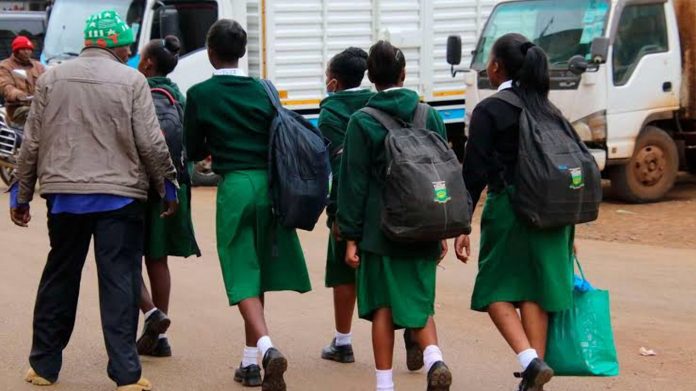
Parents of secondary school students could soon face significantly higher school fees if a proposal by public school principals is approved.
The proposal, presented to Education Principal Secretary John Ololtua during the 49th Kenya Secondary School Heads Association (KESSHA) conference in Mombasa, sought a review of the current fee structure to ease financial pressures faced by schools across the country.
School Heads argued that the existing funding model has become unsustainable and no longer reflects the actual cost of educating learners.

Under the proposed changes, parents with children in national schools would pay up to Sh87,781 annually after government capitation, while those in extra-county schools would pay Sh83,622.
Day schools, which currently do not charge fees under the Free Day Secondary Education programme, would charge Sh7,675 per learner annually after government support.
Currently, the secondary school fees for learners in national schools is capped at Sh53,554. However, KESSHA says the actual annual cost of educating a student in a national boarding school has risen sharply to Sh110,025.
KESSHA Chairman Willy Kuria said the current fee structure, introduced in 2015, has failed to keep pace with the changing economic environment and the increasing cost of running schools.
“The current fees charged in secondary schools were set in 2015, about 11 years ago. It is, therefore, no longer possible to sustainably run our institutions under the existing framework,” Kuria said.
He noted that schools have been heavily affected by escalating prices of food, learning materials and other essentials, as well as additional costs associated with the implementation of Competency-Based Education (CBE).
“The movement in the price index of goods and services between 2015 and 2026 reflects a substantial increase in the general cost of living and, by extension, the cost of running educational institutions,” he said.
According to KESSHA, the prices of goods and services commonly used in schools have risen by an average of 65.3 percent over the past decade.
The association pointed to the cost of photocopy paper, which increased from Sh420 per ream in 2015 to approximately Sh800 in 2026. Similar increases have been recorded in food supplies, fuel, electricity, salaries, and construction materials.
The principals also argue that the current government capitation of Sh22,244 per learner, last revised in 2018, no longer matches prevailing economic realities.
Data presented by KESSHA shows that schools received an average of Sh10,636.92 per learner for operational expenses between 2020 and 2025, a figure barely different from the Sh10,625 allocated in 2008.
Funding shortfalls have further strained school operations. KESSHA reported that by 2025, schools were owed Sh22.5 billion after receiving only Sh15,383 per learner instead of the expected Sh22,244.
The situation persisted in 2026, when schools received just 35 percent of the first-term allocation and 21.8 percent of the second-term allocation, creating substantial budget gaps.
Faced with increasing expenses and inadequate funding, school heads are now calling on the government to either enhance capitation funding or allow schools to charge higher fees to bridge the deficit and maintain education standards.
Also Read: Details of new TSC promotion reforms for all teachers in Kenya