



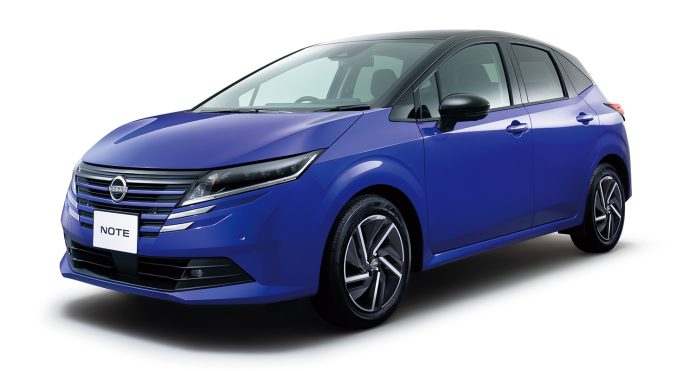
When Bramwel, a Kenyan motorist, set out to buy his first car, he was looking for something affordable, reliable and economical to run.
What he did not expect was to find a vehicle that would fundamentally change how he thought about driving.
After weighing his options, Bramwel settled on a 2017 Nissan Note e-Power, purchasing the compact hatchback for Sh1.35 million. Since then, he says the car has completely redefined his expectations of what a modern vehicle can offer.

At the heart of the car’s appeal is its distinctive e-Power technology, which sets it apart from conventional hybrid systems. In the Note e-Power, the wheels are driven entirely by an electric motor, while the 1,200cc petrol engine functions solely as a generator, producing electricity to charge the battery.
The result, according to Bramwel, is a driving experience that closely resembles that of a fully electric vehicle.
“The car has an electric feel with instant torque and a very quiet cabin,” he explains to Money254.
Fuel efficiency has proven to be one of the vehicle’s biggest advantages, particularly in a country where motorists are grappling with high fuel costs.
On open highways, Bramwel says he has recorded fuel consumption figures of up to 32 kilometres per litre, while in the stop-and-go traffic typical of Nairobi roads, the car still averages an impressive 26 kilometres per litre.
For a first-time car owner, the savings at the fuel station have been significant.
However, owning an e-Power vehicle requires a slightly different approach to maintenance compared to conventional petrol-powered cars.
Because the system relies heavily on the battery pack, Bramwel ensures it undergoes annual servicing to keep it operating at peak performance.
Routine engine maintenance also requires attention to detail. Oil changes are done every 8,000 kilometres, using the specific 0W-20 engine oil recommended for the model.
Sourcing the correct oil locally has sometimes proved challenging, forcing him to be selective about suppliers.
Suspension components have also been an area requiring regular attention. Like many Nissan owners, Bramwel says he has had to replace the suspension bushes every year, a recurring maintenance issue.
Despite these extra considerations, the overall cost of upkeep remains manageable. Bramwel estimates that he spends between Sh30,000 and Sh40,000 annually on maintenance, a figure he considers reasonable given the substantial fuel savings the car delivers.
Parts availability has also improved over time. When he first purchased the vehicle, even simple components such as an air filter were difficult to find in the local market. But as more Kenyans adopt Nissan’s e-Power models, spare parts are becoming easier to access.
Still, the car is not without its limitations.
Bramwel cites the low ground clearance as his biggest concern. Designed primarily for smooth, paved roads, the Note e-Power performs best in urban environments.
“It’s a city car at heart, and the low stance means you have to be extra careful with Kenyan speed bumps and potholes.”
Even so, Bramwel remains enthusiastic about his purchase. For drivers who live and work in the city, he believes the Nissan Note e-Power strikes an ideal balance between innovation and practicality.
“It’s the perfect companion for someone who doesn’t have a large family or heavy loads to carry,” he says. “If you want a car that feels like the future but doesn’t require a charging port, the e-Power is the way to go.”
Also Read: 10 Worst cars to avoid in Kenya when on a tight budget