
NAIROBI, November 2026: For many Kenyan businesses, China is a source of affordable products, machinery and technology. But what if the relationship worked the other way around? What opportunities would open up if more Kenyan businesses began looking at China not just as a place to buy from, but as a market to sell to?
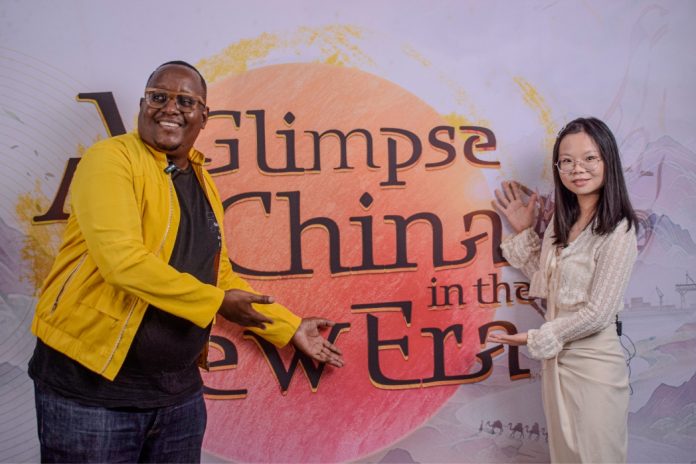
That is one of the questions explored in A Glimpse of China in the New Era 2026, a television series featuring stories of entrepreneurs, professionals and individuals building connections between China and other countries. It also looks beyond commerce at the culture, traditions and everyday lives of the Chinese people, to create greater mutual understanding making business partnerships stronger.
StarTimes says the series was designed to change the way Kenyans usually think about the relationship, according to Michael Mwai Mugo, Head of PR and Content Syndication at the company. “When you think about our relationship with China, we always think about it from a very unilateral perspective, where we get things from China,” he said. “What we hope to achieve with this particular project is to show that it can be a two-way traffic.”

With Kenya’s exports to China standing at Sh16.9 billion in 2025 against imports of Sh671.25 billion, Kenyan exporters have considerable room to grow in a market of more than a billion consumers that is only now opening up to them on better terms.
China’s decision to extend zero-tariff treatment to goods from 53 African countries, which took effect on 1 May 2026, has changed the terms for exporters. Reports show that avocado oil exports had risen 700 per cent and coffee exports had nearly doubled by the end of August.
Avocados are the most obvious opening, and Joyce Qiuyue Xiahou, Assistant Marketing Manager at StarTimes. “From my experience, avocados are the most obvious export from Kenya to China. China doesn’t grow them, so they rely on imports,” she said.
Mwai pointed to the sheer size of the market. “China is a country of 1.4 plus billion people. Imagine what it would mean if we could satisfy even part of that market with coffee and tea and other agricultural exports? These are growing opportunities.”
How Kenyan students can apply for scholarships to study in China
Among those featured are Kenyan entrepreneurs Stephen and Dela, whose experiences form part of the programme’s exploration of cross-border business opportunities.
One of the business stories discussed during the series involves a Kenyan entrepreneur who has partnered with Zambian and Chinese companies to export food products to China. The collaboration illustrates an important lesson for African businesses: accessing international markets sometimes requires working with partners who understand the market, its regulations and the scale of demand.
“China is a huge market, and volumes matter,” Mwai said. “The Kenyan entrepreneur merged with a Zambian company and a Chinese company so they could export food products to China together. There is real power in collaboration.”
Each episode goes beyond the success story to the practical steps behind it. “The people featured also explain the regulations they had to deal with,” Mwai said. “How do you export avocados to China, for example? How do you partner with a Chinese company to make selling into a new market easier? And how do you find that market in the first place?”
The series is not only about deals. It also follows Kenyans and others who have studied, worked, married and built lives in China, and StarTimes says that the human side is deliberate. Mwai said roads and stadiums only go so far. “Physical infrastructure is one thing. But the thread that puts all of us together is culture,” he said.
Mwai said the series aims to open the cultural exchange by showing martial arts, traditional medicine, family life and cross-cultural marriages. As each side understands the other better, he said, relationships grow stronger, and that extends to doing business together.
Now in its third season, the series airs on ST Zone and ST Novela E every Saturday and Sunday until 15 November, and can also be watched on the StarTimes ON app. StarTimes said it is in talks with free-to-air channels and could extend the run if viewers ask for more.
Beyond television, StarTimes is holding free community screenings in Nairobi, Mombasa, Kisumu, Eldoret and Nakuru, with more venues to be announced on its digital platforms. Mwai said the screenings are aimed at farmers of all ages, and are meant to show them that beyond traditional food supply chains, a new market is open. “Farmers can be both old and young people,” he said. “That market is China.”
Xiahou said that, from her converhttps://drive.google.com/drive/folders/1WNz-jTsg88iKtMHrk-hUKh2emJ2l8z6Osations with Kenyans, interest in China goes beyond business. Many people, especially younger Kenyans, want to visit for work or travel, and she believes the new generation is less drawn to Western culture than before.
Asked for one message to Kenyans, Mwai said: “China is open, and Africa is open. See this as a two-way, bilateral relationship. We can now take our goods to China, the same way China brings goods to us.”