

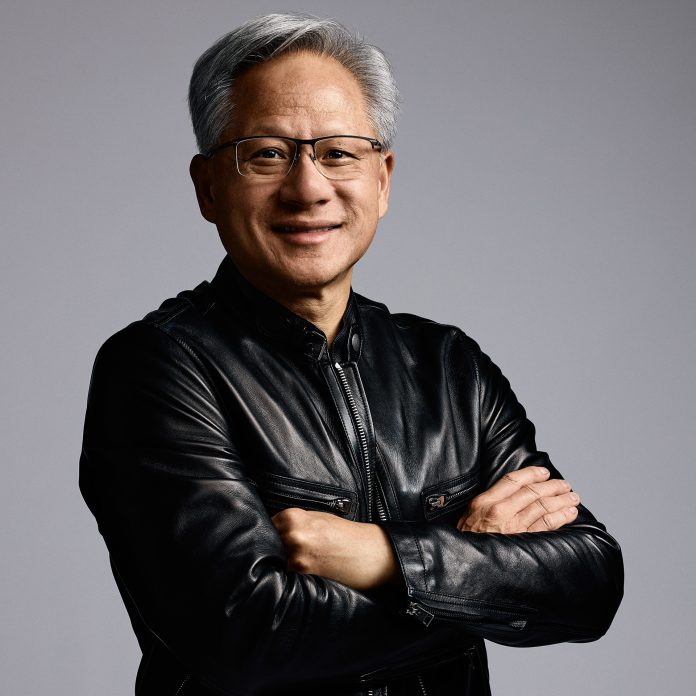
Nvidia founder and Chief Executive Officer Jensen Huang has resigned from the world’s leading artificial intelligence chipmaker following a series of controversies involving alleged extramarital affairs, national security concerns, a suspected Chinese intelligence connection, and growing pressure on the company’s leadership.
Huang’s resignation, announced on Thursday, November 12, 2026, marks a major turning point for Nvidia, the technology giant that has become one of the world’s most influential companies through the global artificial intelligence boom.
The 63-year-old billionaire stepped down as President, CEO and a member of Nvidia’s Board of Directors, ending a 33-year leadership journey at the company he co-founded in 1993.

Nvidia’s Executive Vice President and Chief Financial Officer, Colette Kress, has been appointed interim CEO as the board begins searching for a permanent successor.
The resignation followed weeks of damaging media reports, allegations that attracted attention from US lawmakers and questions about whether Huang’s personal relationships had exposed Nvidia to national security and corporate governance risks.
Nvidia becomes world’s first company to hit $5 trillion in market valuation
Here are the major events that led to Jensen Huang’s resignation.
1. Reports Linking Jensen Huang to a Suspected Chinese Intelligence Operative
The controversy intensified on October 29, 2026, following a report by The New York Times about Huang’s alleged relationship with Alice Huang, a Singapore-based technology executive associated with Megaspeed.
According to reports, US intelligence officials had raised concerns about Alice Huang’s alleged connections to China’s Ministry of State Security.
The concerns were particularly sensitive because Megaspeed operated in the artificial intelligence infrastructure sector and was reportedly involved in transactions involving Nvidia’s advanced graphics processing units (GPUs).
US authorities were also investigating allegations surrounding the movement of advanced Nvidia chips to Chinese companies, raising questions about possible violations of American export controls.
The reported relationship between Huang and Alice Huang therefore attracted attention beyond his personal life, creating concerns about corporate security, access to sensitive information and the potential exposure of American technology.
Nvidia disputed suggestions that the business interactions were unusual, arguing that its CEO regularly engages with executives from companies that purchase its products. China has also denied allegations of intelligence activity.
2. US National Security Concerns and Government Scrutiny
The controversy became more complicated after reports emerged that senior US government officials had previously received intelligence about Alice Huang.
A reported classified memorandum circulated within the US government in 2026 allegedly raised concerns about her connections and relationship with the Nvidia chief executive.
The development raised questions about whether Nvidia’s leadership had adequately assessed potential security risks associated with its international business relationships.
The issue was particularly significant because Nvidia manufactures some of the world’s most important AI processors, which are strategically important to the United States and its competition with China.
Huang’s close involvement in discussions surrounding US technology exports to China also placed him under increased political scrutiny.
The controversy subsequently attracted the attention of lawmakers responsible for national security, intelligence and foreign affairs.
Why billionaire couple Bill and Melinda Gates is divorcing after 27 years
3. US Lawmakers Demand Answers From Jensen Huang
On November 5, 2026, Republican lawmakers sought a closed-door briefing with Huang over the allegations and the national security implications surrounding Nvidia’s business dealings.
The lawmakers wanted answers about his reported relationship with Alice Huang, the potential exposure of sensitive American technology and Nvidia’s safeguards against foreign intelligence threats.
The proposed briefing involved senior members of congressional committees dealing with China, foreign affairs and intelligence.
The development increased pressure on Huang, who was now facing questions that extended beyond his responsibilities as a corporate executive.
The controversy also highlighted the increasingly complicated relationship between America’s technology industry, national security interests and the global semiconductor market.
4. Jensen Huang Admits to Being Unfaithful to His Wife
On November 8, 2026, Huang addressed Nvidia employees following the growing controversy.
In a statement, he acknowledged that he had been unfaithful to his wife, Lori Huang, whom he has been married to for approximately four decades.
The admission intensified the public attention surrounding the Nvidia founder, whose personal life had become a major subject of international media coverage.
Huang also expressed support for an independent investigation initiated by Nvidia’s Board of Directors into reports of a possible foreign intelligence effort targeting him.
The board said it had no reason to believe that Nvidia’s confidential information or national security interests had been compromised but would examine the available information.
The investigation was intended to establish the facts surrounding the allegations and assess any potential risks to the company.
Nvidia overtakes Microsoft to become the world’s most valuable company
5. A Second Alleged Affair With a Senior Nvidia Executive
The controversy escalated further on November 11, 2026, when The New York Times reported another alleged relationship involving Huang.
The report, citing five people familiar with the matter, linked the Nvidia CEO to Kimberly Powell, a senior company executive who serves as Vice President of Healthcare.
Powell reportedly joined Nvidia in 2008 and had risen through the company’s leadership ranks.
The allegations raised additional corporate governance concerns because of the reported professional relationship between the two executives.
Questions emerged about workplace policies, executive accountability and potential conflicts of interest, particularly given Huang’s position at the top of the organisation.
The second report proved particularly damaging because it came as Nvidia’s board was already dealing with the investigation into the earlier allegations involving Alice Huang.
The claims about both relationships have been reported by media outlets and should be distinguished from independently established findings.
6. Nvidia’s Board Holds Meeting to Discuss Huang’s Future
As the allegations mounted, Nvidia’s Board of Directors came under pressure to determine whether Huang could continue leading the company.
Reports indicated that the board met on November 11 to discuss the CEO’s future, with concerns about the potential reputational and corporate implications of the unfolding controversy.
The meeting came amid reports that directors were considering whether Huang should remain in charge.
The situation was particularly sensitive because Huang had been the central figure in Nvidia’s growth from a relatively small graphics chip manufacturer into a global technology powerhouse.
His departure would therefore require the company to manage an important leadership transition while maintaining confidence among investors, employees, technology partners and customers.
On November 12, the board announced that Huang had resigned with immediate effect.
Tesla shareholders approve massive Elon Musk’s $1 trillion pay package
7. Nvidia Faces Investor Concerns and a Declining Share Price
The scandal also affected investor confidence in Nvidia.
The company had enjoyed extraordinary growth during the artificial intelligence boom, with its graphics processing units becoming essential components in AI data centres operated by major technology companies.
However, the allegations surrounding Huang created additional uncertainty about the company’s leadership and reputation.
According to reports, Nvidia’s shares experienced significant declines during the controversy.
ABC News reported that Nvidia shares fell by more than 13% at the opening of trading on November 12 before recovering some of the losses.
The market reaction demonstrated the importance investors attached to Huang’s leadership and the potential consequences of the controversy for Nvidia’s corporate stability.
However, the stock movement should not be attributed entirely to the scandal, given the wider volatility affecting technology and AI-related shares.
8. Colette Kress Takes Over as Interim CEO
Following Huang’s resignation, Nvidia announced that Colette Kress would serve as interim Chief Executive Officer.
Kress has been Nvidia’s Executive Vice President and Chief Financial Officer since joining the company in September 2013.
Before joining Nvidia, she spent nearly 25 years in finance positions at major technology companies, including Cisco and Microsoft.
Her appointment is intended to provide leadership continuity as Nvidia begins the process of identifying a permanent replacement.
The company also announced the appointment of Harvey C. Jones as its first-ever Chairman of the Board.
The board said it would consider both internal and external candidates when selecting a permanent CEO.
MacKenzie Bezos to become World’s Richest Woman after divorcing Jeff Bezos
What Jensen Huang’s Resignation Means for Nvidia
Huang’s departure represents one of the most significant leadership developments in the global technology industry.
Since co-founding Nvidia in 1993, he has overseen its transformation from a graphics processing company focused largely on gaming into a dominant supplier of processors used in artificial intelligence, cloud computing and advanced data centres.
The company’s growth has been closely associated with the explosion in demand for AI computing infrastructure following the emergence of generative AI technologies.
His resignation raises several important questions:
- Leadership stability: Can Nvidia maintain its growth strategy under a new CEO?
- Investor confidence: Will shareholders remain confident in the company’s long-term prospects?
- Corporate governance: What changes will Nvidia introduce to strengthen oversight of senior executives?
- National security: Will the controversy lead to closer scrutiny of Nvidia’s international business relationships?
- US-China technology relations: Could the developments influence future decisions on exporting advanced AI processors to China?
The immediate priority for Nvidia will be maintaining operational stability while protecting its position in the highly competitive artificial intelligence industry.
Did Jensen Huang Resign Because of the Scandal?
Although the timing of Huang’s resignation has intensified speculation about the allegations, Nvidia’s official announcement confirmed his immediate departure without explicitly stating that the reported affairs or national security concerns were the reason for his decision.
Nevertheless, the resignation followed a series of developments that placed unprecedented pressure on the company’s leadership, including the independent investigation, media revelations, congressional scrutiny and reports of a board meeting to discuss his future.
The full implications of the departure will become clearer as the investigation and leadership transition progress.
Conclusion
Jensen Huang’s resignation marks the end of an extraordinary chapter in Nvidia’s history.
The billionaire executive helped build one of the world’s most valuable technology companies and became one of the most influential figures in the artificial intelligence revolution.
However, the allegations surrounding his personal relationships, questions about national security and growing corporate governance concerns have overshadowed his business achievements.
For Nvidia, the immediate challenge is ensuring that the controversy does not undermine investor confidence, strategic partnerships and its leadership in the global AI industry.