Home Blog Page 113

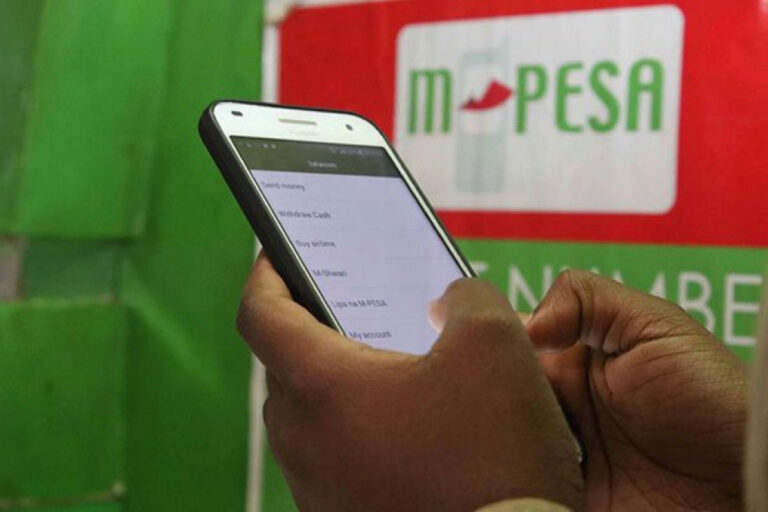
A look at new M-Pesa feature letting others spend directly from your account

Safaricom is set to roll out a new M-Pesa feature that allows shared spending on an individual’s account.

Dubbed Shiriki Pay, the new feature allows an account holder to give another person controlled access to spend directly from their M-Pesa wallet.

The feature is designed to simplify everyday transactions such as household management, business support, or assisting dependents without transferring funds out of the wallet or sharing sensitive login details.

The feature will be accessed through M-Pesa app, Sim Tool Kit, and My Safaricom App.

To get started, the account holder must provide key details, including the authorized User’s phone number, full name, contact information, and any additional verification documents that Safaricom may require as part of its compliance and security checks.

The authorization process is completed through the M-Pesa App and requires the account holder’s PIN, which remains confidential and is not shared with the Authorized User.

Shiriki Pay comes with strict safeguards to protect both parties. Spending by the Authorized User cannot exceed limits set by the Account Holder.

In addition, the authorized user is not permitted to withdraw cash or send money to other individuals. This means that spending is limited to merchants through Lipa na M-PESA (Buy Goods & Paybill) and Pochi la Biashara merchants.

Safaricom further says that an account holder can revoke access at any time, while the authorized user also retains the option to stop using the service whenever they choose. However, transactions already completed through Shiriki Pay cannot be reversed.

Also Read: Amount of pay raise clinical officers in Kenya will earn in new deal

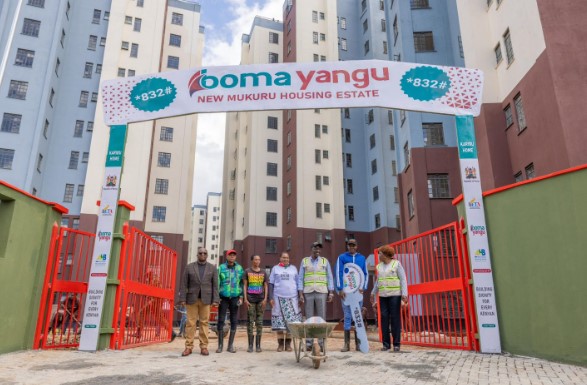
Step-by-step guide to buying affordable housing units, features and charges

0

The affordable housing program is gaining momentum in Kenya, with high occupancy rates in completed projects in Nairobi, Homa Bay, and Nakuru.

Official data indicate that over 290,000 Kenyans had registered on the Boma Yangu platform for affordable housing as of June 2025.

Designed around the principles of affordability, transparency and long-term ownership, these housing units are significantly expanding access to decent housing for low- and middle-income earners.

Below is the step-by-step guide on how to buy an affordable housing unit in Kenya, the typical features of available units, and the indicative prices and monthly charges based on unit size.

Step 1. Register on the Boma Yangu Platform

The first formal step is registration on the government’s Boma Yangu digital platform. This is the official portal for all affordable housing applications.

What you need to register:

  • A valid Kenyan National ID
  • KRA PIN
  • Active mobile phone number

Once registered, applicants can indicate whether they intend to rent or purchase and select preferred projects when they are announced.

Step 2. Make Regular Savings Contributions

Applicants interested in buying are encouraged to activate their accounts by saving a minimum of Sh200. After activation, applicants can save any amount at any time, as many times as they wish through the various payment options available.

Savings can be made via mobile money across all networks, Credit and debit cards, or cash deposit at any of the authorised custodial banks (KCB, NCBA and Cooperative bank).

As a registered and saving member, you can view all the available projects on Boma Yangu, add those you like to your wishlist and select a preferred unit

Selecting a preferred unit will show you how much deposit you’d need to save to be eligible for allocation, which is 10% of the unit value.

“Please note that you can save as many times as you want to, daily monthly etc. The amount of savings is not capped. Refunds on savings will be in accordance with the housing fund regulations and can be requested through this portal,” Boma Yangu states.

Step 3: Choose a Unit Type Based on Budget

Affordable housing projects consists of a mix of studio, one-bedroom, two-bedroom and three-bedroom units. Below is an overview of common unit sizes, features and indicative pricing.

Studio Units (20–30 sqm)

Indicative Price: Sh640,000– 1.5 million
Monthly Charges: Sh3,000 – 6,000

Features:

  • Open-plan living and sleeping area
  • Kitchenette
  • Bathroom with modern fittings
  • Tiled floors and basic cabinetry

Best suited for single occupants or young professionals.

One-Bedroom Units (30–45 sqm)

Indicative Price: Sh1.8 – 2.5 million
Monthly Charges: Sh5,200 – 10,000

Features:

  • Separate bedroom
  • Living and dining area
  • Fitted kitchen
  • Bathroom with shower
  • Secure steel door and prepaid utilities

Ideal for small households or couples.

Two-Bedroom Units (50–65 sqm)

Indicative Price: Sh3.0 – 3.8 million
Monthly Charges: Sh6,500– 18,000

Typical Features:

  • Two bedrooms with wardrobes
  • Living and dining area
  • Fully fitted kitchen
  • Bathroom and separate WC (in some projects)
  • Balcony in mid-rise developments

This is the most popular option for young families.

Three-Bedroom Units (70–85 sqm)

Indicative Price: Sh4.0 – 4.8 million
Monthly Charges: Sh20,000 – 25,000

Features:

  • Master bedroom with ensuite bathroom
  • Two additional bedrooms
  • Spacious living and dining area
  • Modern kitchen with storage
  • Balcony and enhanced finishes

Targeted at larger households with stable incomes.

Note: Prices and monthly charges vary by location, developer and financing structure. Figures above are indicative averages.

Step 4: Allocation, Contract Signing and Payments

Once projects are completed, the allocation process begins. Registered members are notified when the allocation process starts.

Registered members are asked to select a unit and are notified of the amount they need to have saved to be eligible for allocation. The allocation process for homes is done through a fair and transparent process.

The initial eligibility for allocation depends on several factors, such as when you reached the amount of deposit required, family status and other social factors, as well as the demand across various housing categories.

Those who do not get an allocation in the first instance are put on a waiting list to ensure they have priority in subsequent allocations. For private sector projects, allocation is done according to the terms and conditions of sale.

Step 5: Occupation and Transfer of Ownership

Upon completion of payments or reaching agreed milestones, the buyer is issued with ownership documents or a long-term lease, depending on the project structure.

Most developments include basic estate management services funded through modest service charges.

Also Read: Piped gas and WiFi: Inside Mukuru houses handed over by Ruto

Amount of pay raise clinical officers in Kenya will earn in new deal

0

Clinical officers in Kenya are set to take home bigger salaries after the signing of a Collective Bargaining Agreement (CBA) between the Kenya Union of Clinical Officers and the Council of Governors (CoG).

This CBA was the first of its kind to be signed in the country and will see clinical officers receive Sh10,000 or more depending on their job groups.

A breakdown of the deal shows that every clinical officer shall be paid a fixed risk allowance of Sh4,000. There will also be additional increments ranging between Sh6,000 and Sh15,000. These will depend on each job group.

“If you combine the Salaries and Remuneration Commission (SRC) salary review and risk allowance, the increase should be close to Sh10,000 or more. In addition, counties have to implement the SRC-advised salary increments with arrears as well as the risk allowance,” said Kenya Union of Clinical Officers national chairman Peterson Wachira.

In addition, under the new agreement, health workers who have been working under the Universal Health Coverage (UHC) and whose contracts were set to expire in April and May will now get an extension to June. From July, they will then be transitioned to permanent and pensionable terms.

Those under Global Fund will also be transitioned to permanent and pensionable and will also receive their salary arrears that have remained unpaid for nineteen months.

Clinical officers had gone on strike on December 23, 2025 demanding for better salaries and better working terms. Their nationwide strike lasted for a period of 36 days and has now been ended following the new deal.

READ MORE: KQ top employees get half salaries as cash flow problems persist

Are Cordless Homes Ever Going To Become Reality?

0

In the early twentieth century, Nikola Tesla envisioned a world where electricity would be transmitted wirelessly between generators and the objects that use the energy. His idea was that this could occur through the air through some unseen mechanism, and he spent most of his life working towards this dream. Of course, that isn’t how things worked out in reality. What happened instead was physical cords and traditional plugs with true wireless technology never really emerging at a mass scale.

What’s already happening today?

Interestingly though Tesla’s vision is starting to become a reality on a small scale. Companies are investing in short-range inductive charging, which is now mainstream. This includes wireless charging pads for phones, smartwatches, earbuds, and other small devices. Even some kitchen tools now have these systems, which means that home owners don’t have to plug them in all the time to get them to work. They can simply place them back in their bay and use wireless technology to charge them up.

True over-the-air wireless power, which transmits energy over several meters, is still relatively rare but it is becoming a possibility in commercial settings. For example, Wi Charge is a company that uses infrared and light-based beaming to deliver power to sensors and digital signage. These devices are quite small but they work highly effectively and have been demoed at trade shows throughout the last 12 months. Other companies are using radio frequency as a wireless power source for Internet of Things devices. These technologies allow sensors and batteries to be location-independent and not plugged into specific circuits.

Broader adoption

Various advances are now pointing to the idea that long-range power beaming could be adopted more broadly. Tesla’s original idea was that power would be transferred in a similar way to how lightning works, and there would be sudden static discharges of energy. However, given the delicate nature of modern electronics, this no longer seems feasible. What’s more likely is that microwaves and lasers will be used. These are other forms of electromagnetic radiation which are relatively easy to convert back into electrical currents.

The US secret military technology agency DARPA has already demonstrated long-range power beaming of hundreds of watts over several kilometers. This technology it hopes will be used to power combat vehicles, robots and drones in future wars. The technology is fundamentally being developed by the government because of its innate usefulness. While it has military applications right now, it is likely that it will see civilian applications in the near future. However, the government isn’t the only entity that is investing in the broader adoption of wireless technology. Other startups like Willow are also doing the same for homeowners. They’re demonstrating wireless charging demos for consumer devices that promise to make properties and dwellings cable-free in the future.

A particularly hot area is the topic of kitchen appliances. Many people have too many of these in their kitchens, and wires can clutter up countertops. Finding a way to power these remotely using microwaves or other forms of electromagnetic radiation could be a great way to make minimalist living more practical.

The market projections for this trend are looking good right now. According to official data, the global wireless transmission market is worth around $5-17 billion per day. However, it is going to double over the next 6 years to more than $37 billion because of the rise in demand for smart homes, electric vehicles, and Internet of Things technologies. Consumer electronics is going to drive the development of the underlying technology so that it can move out of military applications and into homes.

This sort of technology would be useful for a battery lawn mower and other appliances that use up large amounts of electricity during operation. These devices tend to run down quickly, but if there was a way to supply them with energy remotely, owners could keep using them all day.

What a switch to a fully cordless home requires

Are Cordless Homes Ever Going To Become Reality?Unsplash – CC0 License

Homes were obviously fully cordless in the distant past, but they didn’t have any of the modern conveniences that we enjoy today. That’s essentially why we put up with all of these cords. We want to be able to power our large appliances like our fridges, ovens, and washers. We also need wiring for climate control and even basic lighting.

Unfortunately, there are some significant hurdles to fully cordless homes of the future. The main problem is efficiency. Transmitting electrons through copper wires is very efficient compared to beaming power over distances. The problem with beaming energy is that it loses its potency as it travels. Some forms of energy can become more diffuse, making them less useful. There is also the cost of installing transmitters all over a property in the walls and ceilings. These would need to be high-powered and focused in the right direction.

Then there is the power scale. Most wireless transmission technology is in the milliwatt to the tens of watts. It’s about the same amount of power that you would need to light a conventional LED, but of course this power scale is too small for most modern homes. A lot of families use kilowatts of power, not just a few watts here and there. Clearly regulators are going to be looking into this as well once the technology starts to take off. They’ll need to know that it’s keeping people safe.

Realistic timeline

What can we expect to happen on this front in the future over the next three to seven years? It’s likely that homes will become more cordless for low and medium power devices. This means that things like laptops and cordless kitchen appliances will no longer need wires to keep them running. After the 2030s, it could be possible to embed transmitters across homes, but the technology would have to improve. Also, high-powered beaming would need to be proven safe before mass consumer adoption.

Right now, we’re sort of in an early stage with this technology. Wireless cops have been proven, but it’s a case of rolling them out commercially.

StarTimes to broadcast Carabao Cup semi-finals live to Kenyan fans

0

StarTimes is set to light up February for football lovers as it brings the Carabao Cup semi-finals live to screens across Kenya, delivering two nights of elite English football and intense rivalry.

On the nights of February 3 and 4 at 11:00 PM, StarTimes subscribers will watch four of England’s biggest clubs battle for a place in the Carabao Cup Final.

Speaking ahead of the matches, StarTimes Public Relations and Communication Officer Robert Ouma said the broadcaster is focused on giving fans a world-class viewing experience.

“Our audience is king. Everything we do is about serving their interests and delivering the football experience they deserve,” he said.

StarTimes adds more kids’ channels in festive free upgrade offer

The action begins at the Emirates Stadium, where Arsenal and Chelsea clash in one of English football’s fiercest rivalries, with both teams arriving in strong form.

The following night, attention shifts to the Etihad Stadium, where Manchester City face Newcastle United.

Newcastle come into the tie as defending champions after their dramatic 2–1 win over Liverpool last season, while City will be keen to block another cup run.

He added that StarTimes remains committed to bringing fans closer to the game.

“These Carabao Cup semi-finals are moments fans live for, and we are committed to bringing every second of that drama directly to them,” Ouma said.

SportPesa commits Shs120M to multi-sport sponsorship drive in Kenya

0

SportPesa has launched a major multi-sport sponsorship investment, spanning Boxing, Motorsports and Rugby, reaffirming its long-term commitment to the growth, professionalism and sustainability of Kenyan sport.

The investment, totaling Kshs. 120 million, marks a strategic expansion of SportPesa’s sports development agenda, supporting multiple sporting disciplines while strengthening local sports ecosystems and creating structured opportunities for Kenyan athletes.

Speaking at the event, SportPesa Chief Commercial Officer, Jason Gibson says the investment reflects the company’s belief in sport as a national asset and a pathway for talent development and its commercialization.

“Kenya has exceptional sporting talent across disciplines, but talent alone is not enough,” said Jason.

“Sustainable success requires investment, structure and belief. This sponsorship is about backing Kenyan athletes, supporting local systems and ensuring sport can thrive as a career, not just a passion.”

The multi-sport approach is designed to deepen impact at grassroots and elite levels, while working closely with federations, athletes and partners to unlock long-term value.

SportPesa Boxing-Rising Stars

SportPesa has had a long history with boxing, working with Ultra Fight Series (UFS) to bring in title fights to Kenya. Launched today, the SportPesa Boxing-Rising Stars, will see an investment of Kshs. 40,000,000 to strengthen talent pathways and revive Kenya’s presence on the continental boxing stage.

UFS promoter Maurice Odera said, “This partnership is about rebuilding belief in Kenyan boxing. With SportPesa’s support, we can develop fighters properly, promote them professionally and give them a real chance to compete beyond our borders.”

HBSC SVNS2 – Backing Kenya 7s Ambition

Other than being the primary sponsors of the Kenya rugby 7s national team – Shujaa, SportPesa is further injecting Kshs. 40 million in cash and kind to aid Kenya Rugby Union stage a world-class HSBC SVNS2 tournament on 14th & 15th February.

How One Prediction Made a KSh 10 Millionaire | SportPesa Goal Rush Winner Kenya

“This investment speaks to the everyday work behind Kenyan rugby — the training fields, the players, the pathways. That’s how you build a sport that lasts. Working together with corporates as SportPesa confirms we are ready to host the SVNS2 tournament,” said Kenya Rugby Union (KRU) Chairperson Harriet Okatch.

SportPesa Racing Stars – Two Generations, One Legacy

In Motorsports, SportPesa has extended its existing partnership with 6-time Kenya National Rally Champion Leonardo Varese ahead of the iconic 2026 WRC Safari Rally Kenya, reaffirming its commitment to a sport where Kenya commands global respect.

The Kshs. 40 million sponsorship spans two generations – supporting the seasoned rally driver and his son, an emerging talent being developed through SportPesa’s Tujiamini program, a pathway designed to identify, nurture and inspire young Kenyans to pursue sporting excellence.

“Rallying has given my family everything. To now see my son supported to chase the same dream is something I don’t take lightly,” noted Varese, a 2WD Kenyan rally legend.

The multi-sports sponsorship builds on SportPesa’s strong legacy of supporting sport in Kenya. Locally, the brand has played a key role in the growth of the top-tier Sportpesa League where it invested Kes. 1.12 billion over a 10-year period. The firm also locally sponsors historic clubs, Gor Mahia FC, Shabana FC and Murang’a SEAL, contributing to improved competitiveness, fan engagement and club sustainability.

Beyond Kenya’s borders, SportPesa has also demonstrated that local brands can operate on the global stage. In 2019, the company made history as the first homegrown African firm to sponsor a Formula 1 team, the SportPesa Racing Point F1 Team.

“Our journey in sport has always been intentional and remains focused on building meaningful partnerships, credible platforms and lasting impact,” concluded Gibson.

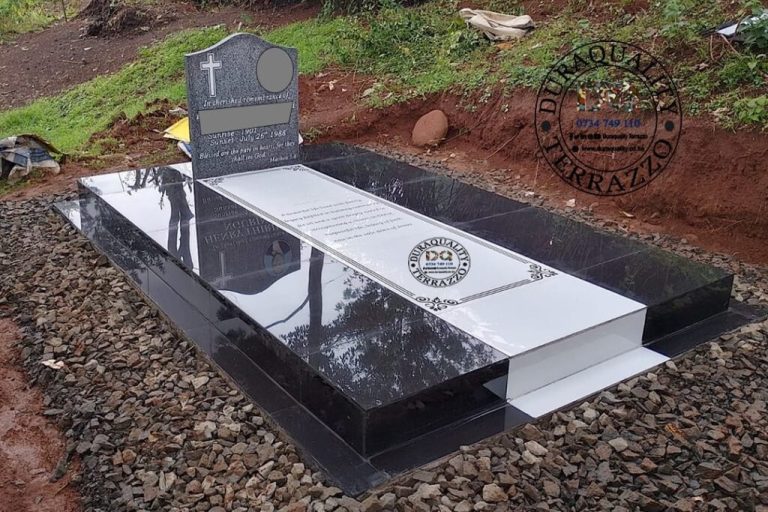
Inside Kenya’s grave decoration business: A silent cash cow powering local artisans

0

In Kenya’s cemeteries, quiet spaces often associated with grief and remembrance, a modest but steadily growing industry is taking root.

Grave decoration, once limited to simple flowers and occasional repainting, is evolving into a specialized business offering customized designs, landscaping, maintenance, and memorial branding.

Honouring the dead through decorated graves is not new in Kenya. Across communities, families have long marked burial sites with flowers, stones, and symbolic items.

However, urbanization, migration, and changing lifestyles have altered how families maintain these sites. Many relatives now live far from ancestral homes or cemeteries, creating demand for paid services to keep graves neat and dignified year-round.

Despite its income potential, grave decoration is rarely discussed as a viable business. Cultural sensitivity plays a role with many Kenyans uncomfortable to openly commercialize activities linked to death. 

The few individuals who have filled their boots in the sector say the business is well-paying. Charles Karanja from Kiambu is one of the businessmen earning from grave decoration, an opportunity that came by chance.

How It All Started

When Karanja graduated after pursuing a construction course, getting a job was not easy, a situation that forced him to look for opportunities in other sectors.

With good skills in construction, he found a construction gap that needed to be filled, only that his audience this time would be the dead.

He started to paint and embellish graveyards to give the deceased a nice resting home. Karanja revealed he settled on painting graves because it was an untapped market.

He did his first project using internet technology because he had not done such work before. The output was so encouraging, inspiring him to do more.

“I build graves and embellish them. People are constantly coming up with new methods to honor the deceased. A long time ago, people were buried in the bush, or a banana plant was planted to serve as a marker for the graves, but today, people honor and remember their loved ones.

“In a unique way, I assist them in doing that. A person’s special home remains thereafter burial for all time. So it’s good that you respect the deceased and value that individual,” Karanja said.

The Kiambu-based grave decorator revealed he earns Sh300,000 in a good month and Sh150,000 in a bad one. His normal rate for a project is Sh60,000, which has enabled him to create employment for other young people.

“I have a managing director, seven regular employees, and a few temporary employees. I had no money when I started. My business was launched with the help of a client’s down payment, “He said.

Just like any other business, Karanja has sailed through a myriad of challenges, among them financial constraints and unruly customer behaviors.

“Yes, I do face obstacles, particularly financial ones. There are situations when a client underpays you and might even refuse to pay. You are required to follow up by phone, particularly if they are outside of Kiambu. People would disregard and even block you, “He said.

He plans to expand his business so as to create employment for more young Kenyans and solve the challenge of joblessness in the country.

“I aim to reach higher, where I would be the best decorator in the country. I also want to inspire the youth and employ more of them as I open more workshops,” he added.

Also Read: Simple practical skills that can move you from joblessness to millionaire

How I used Sh50,000 to start a passion fruit farm, challenges and opportunities

0

Soon after completing his studies at Kabarak University in 2018, all Patrick Kirui wanted was a job opportunity, and he was lucky to get one.

Kirui was employed as a marketer at a Nakuru-based motor vehicle company, but time proved this was not the right job for him. He was paid a commission at the firm, and for six good months, Kirui sold only one car.

This dampened his spirit, prompting him to quit and explore opportunities in other sectors. From his childhood, Kirui had traded passion fruits, a venture he was introduced into by his friends.

He decided to return to trading passion fruits as he had already mastered it and earned some reasonable amount from this business.

“I realized selling cars was a seasoned job, so I decided to quit and fully venture into passion fruits. I started selling passion fruits in 2010 when I was still a student at a local secondary school after I was introduced to it by a friend with an initial capital of Sh100,’’ he said.

It was in this trade that Kirui raised capital of Sh50,000 which he used to start a passion fruit farm. He used Sh20,000 of the amount to lease two acres of land in Nakuru while Sh30, 000 catered for fertilizer, herbicides, ploughing, and labor.

He got some seedlings from a relative for free, helping him actualize his farming dream. Kirui harvests 600kg of passion fruits from his farm and sells them at Sh120 per kg.

This means his farm makes Sh72,000 per month, but after deductions of the monthly production cost amounting to Sh12,000, Kirui pockets Sh60,000.

His venture into passion fruit farming not only made him a successful agripreneur but also created a new market for other passion fruit farmers in the region.

 “Sometimes, when ferrying my produce to the market, I buy more fruits from my village and sell them at a profit to boost my earnings,” he said.

One of the biggest challenges he has struggled with in the venture is the fluctuation of market prices occasioned by high supply.

“When the supply at the market is high, the demand lowers, and thus we end up selling a kilo of passion fruit at Sh80, which is a huge loss, especially for those of us who have a high stock,” added Kirui.

He is planning to set up a factory for value edition, which will enable him and other farmers to sell their produce directly to consumers and big retail outlets without relying on brokers.

Also Read: Livestock expert calls on farmers to invest in Dorper farming as demand for mutton soars

How Co-operative Bank is helping SMEs take their businesses to the next level

0

Small and Medium-sized Enterprises (SMEs) play a significant role in a country’s economy, especially in emerging markets where they represent 90 percent of all businesses, 66 percent of all jobs created, and 50 percent of the world’s GDP.

However, various challenges have led to the stagnation or collapse of these enterprises. A survey by the Kenya National Bureau of Statistics (KNBS) indicates that approximately 400,000 MSMEs do not celebrate their second birthday.

Additionally, very few SMEs reach their fifth birthday, leading to concerns about sustainability in this critical sector. Data from the World Bank indicate that the annual SME credit gap in Sub-Saharan Africa is about US$330 billion.

Also Read: Co-op Bank cuts interest rates for personal loans, asset financing

This is because lenders often neglect SMEs due to different factors, including the high cost of customer acquisition and due diligence, insufficient data availability for accurate credit assessments, and lack of collateral.

Also, uncertain customer lifetime values and the high costs of distribution and servicing are among the barriers for SMEs to access credit.

The cooperative bank is one of the few lenders who have stepped up to address the challenge of lack of access to credit among SMEs.

Co-op bank has rolled out various products where SMEs can opt-in and access the amount of credit they need for their expansion. A good example is the Msamaria Women’s Loan which is tailored for women entrepreneurs.

Through the product, women entrepreneurs can borrow from as low as sh 5,000 and up to 10 million, with a repayment period of 24 months.

Co-op Bank giving Sh. 500,000 to 6mn loans to buy or build a home at 9.9% reducing

This gives the entrepreneurs enough time to plan, invest and generate income from their businesses. To qualify for the loan, one is required to have a business that is not less than a year old, as well as proof of a regular business cash flow.

In addition, one should have a business license of the current year where applicable and should Provide certified bank statements from other banks if their Co-op Bank account is less than 6 months old

The lender also has another product known as MSME Term Loan that targets all medium and small-sized enterprises.  

According to the bank, the amount borrowed can be repaid in up to 60 months based on your level of business and the type of security provided.

The bank recently slashed interest rates charged on loans as part of providing affordable loans to its customers.

While the biggest beneficiaries of the new lower rates are corporates and institutions, Co-op Bank advised customers looking to take advantage of this low loan pricing rate for personal loans and asset financing to apply at any of their Branches countrywide.

Co-op Bank starts rolling out matatus financed at Sh703 million

0

Co-operative Bank has launched a mega financing program for Kenyans looking to acquire public service vehicles. Over the past one week alone, Co-op Bank has rolled out 31 brand new 33-seater matatus.

These matatus are part of two multi-million deals through which the bank is financing the acquisition of public service vehicles for two Saccos.

In the first deal, the bank rolled out 21 matatus for the MetroTrans Sacco, marking the first phase of an 85-bus asset financing programme valued at Sh590 million.

In the second deal, the bank rolled out ten 33-seater buses for Raj Safaris Limited. These matatus are part of an asset finance deal for 20 buses worth Sh113 million. With financing from the bank, Raj Safaris has gone from leasing 15 buses two years ago to full ownership.

Under its asset financing programme, the bank is providing up to 90 percent financing with a 60-month repayment period. At the same time, the lender is also providing insurance financing and support for digital, cashless fare collection systems.

“Public transport is not a side economy in Kenya, it is a core economic artery that moves millions of people to work, school, and commerce every day,” says Alex Mwanthi, the Head of Transport, Housing and Investment Cooperatives at the Co-operative Bank of Kenya.

“Our role is to ensure operators can access financing that reflects the real operating models of this sector and supports long-term, disciplined growth.”

The bank currently commands approximately 70 percent of the market share in financing Kenya’s public transport sector, positioning it as the leading institutional financier of PSV and Sacco-based fleet investments.

The bank’s transport-focused financing model has supported hundreds of operators in renewing fleets, professionalizing operations, and improving service reliability.

Read More: Co-op Bank leads 11 Kenyan firms named among fastest growing in Africa

Over the past months, the bank has broadened its asset financing package, including the financing of 60 brand new Forward Travellers Sacco buses worth over Sh313.5 million. The lender has invested more than Sh10 billion in the last few years to finance over 2,000 matatus to PSV Saccos and companies through leasing and direct hire purchase arrangements.

The bank has also been the force behind the financing scheme that provides a ninety-five per cent financing option for Isuzu N-series, Isuzu F-series and Isuzu pick-ups TFS and TFR Series in a partnership with Isuzu East Africa.