Home Blog Page 153

Ethiopian Airlines acquires two A350-900 wide body passenger planes

0

Ethiopian Airlines has added two Airbus A350-900 wide body passenger planes to its fleet. The two passenger planes were delivered to Ethiopian Airlines within a span of two weeks in the month of November 2025.

After receiving these two planes, the airline now boasts of 22 Airbus A350-900 planes. “We are excited to welcome our 22nd Airbus A350-900 to our fleet family in less than two weeks of welcoming our 21st [of this model of plane],” the airline stated.

“This is a significant step forward in delivering modern, efficient, and truly comfortable journeys for travellers around the world.” Ethiopian is currently the largest airline in Africa.

Over the past few years, Ethiopian has been expanding its fleet as it seeks to entrench its position as the undisputed king of the skies in Africa. In November 2024, in-service fleet at the carrier inched closer to surpassing the 150 milestone following the arrival of the coveted A350-1000 aircraft.

The carrier became the first airline in Africa to own the brand new aircraft when the new plane touched down at Bole International Airport in Addis Ababa in the first week of November 2024.

According to the chief executive officer of the Ethiopian Airlines Mesfin Tasew, Ethiopian Airlines in-service fleet is set for more growth with 124 new planes already on order and pending delivery from both Airbus and Boeing.

The growth of the fleet has also been tandem with growth in passenger numbers. According to data from aviation analytics firm Cirium, Ethiopian had 151,543 flights in the year ended December 2024. The airline canceled 1,622 flights in that period.

At the same time, the carrier moved 17.1 million passengers in the 2023-2024 financial year that ended June 2024.

The growing fleet and passenger numbers at the airline are expected to align with plans  for the construction of what is set to become Africa’s largest airport with a capacity for up to 100 million passengers per year.

READ MORE: KQ tops Africa, Middle East in flight delays and cancellations

Ndegwa Njiru: Profile of Kenya’s most sought-after ‘impeachment lawyer’

0

Advocate Ndegwa Njiru is a household name in the Kenya’s legal field and one of the most sough-after lawyers especially in high- profile matters and impeachment cases.

He has participated in impeachment cases involving various government officials including former Meru County Governor Kawira Mwangaza, former Nairobi Governor Mike Sonko, former Kiambu Governor Ferdinand Waititu, and Kirinyaga Governor Anne Waiguru, among others.

Born in Gichugu constituency, Kirinyaga County, Njiru attended Kerugoya Municipality School, Kianyaga High School and Kampala International University to study Bachelor’s of law before returning to Kenya to join the Kenya School of Law.

In a past interview, he revealed that the decision to venture into the legal feed followed a childhood experience when he accompanied his father to court hearings. Njiru, then a young boy, admired the lawyers’ arguments and aspired to be like them.

“As early as 1993, Mzee a teacher by profession used to take us to court and he was mentoring us without knowing it,” he said in a past interview.

He was admitted to the bar in 2011 and later founded Ndegwa and Ndegwa Advocates where he practises alongside his wife and his younger brother.

Njiru says he is passionate about impeachment cases because he wants to protect and strengthen devolution, which he calls the engine of growth.

He first gained widespread recognition in June 2020 during the Senate hearing of Kirinyaga Governor Anne Waiguru’s impeachment by the county assembly.

How Danstan Omari went from deputy head-teacher to top lawyer in Kenya

At the time, he was representing the Members of County Assembly (MCAs) and went head-to-head with Waiguru’s husband, Kamotho Waiganjo, who was defending her in the case.

After the hearing, Njiru was praised for being eloquent and giving Waiguru’s witnesses a hard time during cross-examination over alleged abuse of office and procurement issues.

However, he did not win, as the Senate committee cleared Waiguru of all the allegations she was facing.

Five months later, Njiru represented Nairobi County MCAs in the impeachment of former Nairobi County Governor Mike Mbuvi Sonko, who was impeached on December 17, 2020.

The advocate was also involved in the impeachment cases of former Embu Governor Martin Wambora and former Kiambu Governor Ferdinand Waititu, where he defended both. Waititu and Wambora were impeached but Njiru secured court orders to reinstate Wambora.

Njiru also represented Mohamed Abdi Mohamud, the Wajir governor who was impeached on May 17, 2021.He faced off against Senior Counsel Ahmednassir Abdulahi, who represented the Wajir County Assembly.

The advocate says he represents both governors and county assemblies and does not choose a particular side in impeachment cases.

“I am not motivated by where the public lies in any of the impeachment cases, but rather with where justice falls,” Njiru said in a past interview with the Star.

One of his notable achievements is petitioning the court alongside LSK council member George Omwanza to allow lawyers admitted to the bar to set up their own law firms.

Previously an advocate would not be allowed to set up his own practice until after two years. Apprenticeship in a law firm was required.

Njiru advised aspiring lawyers to follow their passion and not money, saying they will only survive if they have integrity.

“If you are driven by the money and a quick killing, you may not make it because in this profession money comes progressively,” he said.

NYOTA program issues mandatory directive to beneficiaries in 25 counties

0

The National Youth Opportunities Towards Advancement (NYOTA) program has announced that it will conduct a Business Development Skills (BDS) Training for selected beneficiaries across various counties.

In a notice on Thursday, November 13, NYOTA said the training program will commence from Friday, November 14, to Monday, November 17.

Selected beneficiaries will receive official SMS notifications indicating the venue of their training. The training is mandatory and selected beneficiaries must attend to qualify for the Sh50,000 business capital support.

“Attendance of the BDS training is mandatory for all selected beneficiaries to qualify for the next step, which is receiving business capital support under the NYOTA Project,” the notice reads.

According to the notice, the training sessions will take place in the following counties:

Lower Eastern: Kitui, Machakos, and Makueni

North Rift: Uasin Gishu, Trans Nzoia, West Pokot, Turkana, Baringo, and Laikipia

What is NYOTA program? Eligibility and how to apply for Sh50K gov’t grant

Upper Eastern: Meru, Tharaka Nithi, Embu, and Isiolo

South Rift & Maa: Nakuru, Narok, Kajiado, and Nandi

Nyanza & South Rift: Siaya, Kisumu, Homa Bay, Migori, Kisii, Nyamira, Kericho, and Bomet.

The notice comes days after President Ruto announced that the government will begin disbursing a further Sh4.4 billion to NYOTA grantees from next week.

“I am informed by CS [Wycliffe Oparanya] and his team that they will be training the rest of the country from this Friday. So from next week, we will disburse another Ksh4.4 billion to the people who will have been trained and identified,” Ruto said.

NYOTA is a five-year transformative agenda by the government, funded by the World Bank. It aims to empower youths by addressing unemployment, income insecurity, and limited savings.

The programme aims to provide Sh50,000 in grants for young people selected from each of the 1,450 wards in Kenya, enabling them to launch business ventures. The first batch of beneficiaries receivied funds on November 7.

World’s First PvP Crash Game: Why SportPesa Kenya’s Sky Control is the future of online gaming

0

In Kenya’s vibrant digital gaming scene, SportPesa Kenya continues to lead innovation — turning ideas into movements and games into experiences.

With the launch of Sky Control, the first PvP crash game in Kenya, SportPesa has introduced a world-first multiplayer format that puts skill, nerve, and precision at the heart of every win.

This isn’t just another online game — it’s the next evolution of Kenyan entertainment.

The rise of Sky Control

For years, crash games have relied on luck. But SportPesa’s Sky Control changes everything.
Built on player-versus-player competition, it invites gamers to challenge each other in real-time. No bots. No random outcomes. Just pure skill and smart decision-making.

In Sky Control PvP multiplayer crash game, timing is everything. Will you cash out first or risk it all to outlast your opponent?
Players can invite friends to Sky Control challenge rooms, join live battles, or participate in large-scale tournaments and pool betting in Sky Control with up to 250 players per round.

Every click is a heartbeat. Every second is strategy.
This is what makes it the most competitive crash game Kenya has ever seen — where mastery matters more than luck.

Real Stories, Real Wins

Across the country, players are celebrating hard-earned victories in Sky Control.
Take Brian M., a Nairobi-based tech student who joined a private challenge room with friends.

Try your luck in the Crash game and win big money!

“We all thought it was another crash game,” he laughs, “but Sky Control is different. It’s about timing and instinct. I waited, watched, cashed out just before the crash — and won the entire pot.”

Moments like this show why SportPesa Kenya online casino is attracting both casual gamers and serious competitors. Each win tells a story of courage and calculation — a combination that defines this innovative crash game from SportPesa Kenya.

More than just gaming

Beyond the rush of competition, Sky Control has sparked a sense of community.
Players in Nairobi, Mombasa, Kisumu, and Eldoret are connecting through friendly rivalry, learning from each other, and forming digital gaming circles.

This Sky Control multiplayer experience encourages interaction, strategy, and responsible play — proving that SportPesa Kenya is more than a platform; it’s a community builder for the next generation of digital players.

For young creators and streamers, SportPesa Kenya Sky Control offers an opportunity to showcase content, host live tournaments, and join the fast-growing esports conversation across East Africa.

Why Sky Control is redefining the iGaming space

The launch of Sky Control signals a new era for online gaming in Kenya and beyond.
While others focus on random outcomes, SportPesa Kenya has built a feature where players control their own destiny.

What makes Sky Control revolutionary:

  • Skill-based outcomes: Players win by strategy, not chance.
  • Transparent gameplay: You compete with real people, in real time.
  • Dynamic reward system: The longer you hold, the higher you climb — until someone dares to take control.
  • Community tournaments: From casual rooms to pro-league-style battles, competition has never felt this social.

This bold innovation solidifies SportPesa Kenya as a leader in digital entertainment, not only within the iGaming space but also in Africa’s emerging tech-driven culture of competitive gaming.

A new era of Crash Games

In a few short weeks, Sky Control has become the talk of Kenya’s gaming world. Social media buzz, influencer streams, and peer-to-peer challenges have turned it into a cultural moment.

From office breaks in Nairobi to weekend tournaments in Kisumu, Kenyans are embracing a smarter, more connected form of entertainment.

For SportPesa Kenya, this is more than a product launch — it’s a milestone. A statement that the future of gaming in Africa will be defined by creativity, fairness, and home-grown excellence.

Play Sky Control now — only on SportPesa Kenya, where champions don’t wait for fortune. They control it.

Kenya’s young workforce and the shift toward self-directed investment tools

0

Ahead of 2030, you may have noticed Kenya’s youthful population is reinvigorating the nation’s financial identity. Today, more than three-quarters of citizens are under the age of 35, making it one of the youngest countries in the world. This generation is digitally skilled, ambitious and increasingly motivated to build independent financial paths. Yet, despite this energy, formal employment growth has failed to match population trends, where over 800,000 young people enter the job market each year, with only a fraction securing long-term positions.

The rest look beyond traditional employment models, turning to side businesses, freelancing and financial technology to achieve stability. A recent survey found that 71% of employed Kenyan youth reported having side hustles to supplement their income. You can see the shift in how mobile apps, e-wallets and online investing tools have replaced bank queues and manual paperwork. Today, instead of waiting for institutions to create opportunity, Kenya’s youth are using innovation to build their own.

Digital skills and economic shifts among the young workforce

Widespread mobile access has been central to this change; in 2025, the Communications Authority of Kenya reported mobile internet penetration exceeding 118%, with most adults owning more than one active SIM card. This connectivity has made digital engagement a defining feature of Kenya’s youth. The same skills that drive social media fluency now power financial participation.

Many young professionals are exploring accessible trading platforms in Kenya, built for simplicity, transparency and small investments. You can open an account with as little as KES 100, track returns in real time and access global markets through numerous apps. These tools make investing less intimidating and more social, blending community learning with independence. The result is a workforce empowered to act on financial decisions rather than waiting for intermediaries to do it for them.

From saving to market participation

A fundamental behavioral shift is taking place as more young Kenyans move from passive saving to active investing. Financial literacy programs by the Capital Markets Authority and universities have made complex ideas more approachable, encouraging participation in local and international exchanges. Many now learn about trading stocks through apps that visualize price changes, company data and potential returns in ways that make the market feel alive rather than abstract.

Cheruiyot: How Sh6k can make you Sh500k in five years

For example, some platforms allow you to buy fractional shares in both Nairobi-listed and global companies, letting you invest small amounts without needing large capital. According to an April 2025 report, one Kenyan app lets users open global stock or local equity positions for as little as KSh 1,000, reducing previous barriers to market entry. This shift reflects a deeper change in mindset: wealth is now seen as something that can be built gradually through informed participation. Ultimately, you can begin with minimal resources and still feel part of Kenya’s growing investment story.

Financial literacy, regulation and risk awareness

Even as access widens, challenges persist. Research from 2025 shows that just over 42% of Kenyan adults have adequate financial literacy skills to navigate investment products safely. Limited understanding can lead to impulsive decisions or exposure to unregulated schemes promising unrealistic profits. Regulators have begun addressing this issue with stronger oversight and education. The Virtual Asset Service Providers Bill, passed in 2025, brought crypto exchanges and online brokers under new legal frameworks.

The Capital Markets Authority has also launched campus programs designed to teach young investors the principles of diversification and long-term thinking; in the first half of 2025, the number of new individual investor accounts opened at the Nairobi Securities Exchange increased by 44% compared to the same period the previous year. The lesson is clear: having access to digital finance is powerful, but it requires patience and discipline. Typically, investing should feel like a steady, informed partnership between knowledge, risk management and consistent effort.

The broader impact on Kenya’s economic future

The momentum of self-directed investing among young Kenyans has implications that reach far beyond individual wealth, where every small investment contributes to broader financial inclusion, increasing the flow of capital through formal systems and helping local businesses grow. As more of you engage with structured products, banks and fintech developers are pushed to innovate, creating transparent, affordable and mobile-first tools.

This rising participation is already influencing Kenya’s capital markets, where domestic retail investors are gradually balancing out institutional dominance. It also builds resilience: when a population saves and invests strategically, it strengthens its capacity to weather economic shocks. The habits being formed today among twenty- and thirty-somethings could define Kenya’s financial landscape for decades, turning technology-driven autonomy into a cornerstone of national development.

Key takeaways

Kenya’s young workforce is driving a quiet revolution in how financial independence is defined. Faced with limited formal employment and armed with digital fluency, many are embracing self-directed investment tools that provide control, confidence and opportunity. If you are experimenting with trading platforms in Kenya, exploring new ways of trading stocks or building diversified portfolios through mobile apps, the shift represents a reimagining of wealth itself.

Therefore, you belong to a generation that views finance as a skill to be learned and practiced. As literacy improves and regulation continues to strengthen, Kenya’s digital investors will propel an economy that rewards initiative and transparency. Decidedly, the country’s future wealth will be built one small, deliberate investment at a time, guided by data, driven by curiosity and fueled by the confidence of a generation that invests in itself.


Co-op Bank to pay interim dividend as Q3 net profit soars to Sh21.6 billion

0

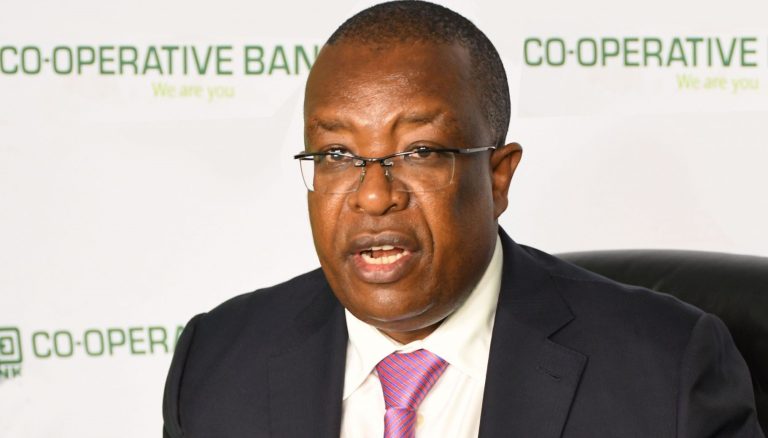
The Co-operative of Kenya has declared an interim dividend following the release of its Q3 2025 results. The interim dividend has come riding on the back of a Q3 net profit that soared by 12.3 percent to Sh21.6 billion.

The Q3 net profit of Sh21.6 billion that Co-op Bank posted for the period that concluded on September 30, 2025 was an improvement from the Sh19.2 billion that the bank had posted in the same period the previous year. The net profit was derived from a profit before tax of Sh30.03 billion, which was an improvement of 4.4 percent from the previous period’s Sh26.78 billion.

During the period, the bank’s total assets grew by 8.6 percent to Sh815.3 billion from the Sh750.78 billion that was recorded in the same period the previous year.

At the same time, customer deposits soared by 6.7 percent to Sh548.6 billion. In the previous period, customer deposits had come in at Sh513.98 billion.

Loans and advances to customers increased by 6.6 percent to Sh406.5 billion. Loan loss provision went up by 31.9 percent to Sh7.4 billion. Net interest income grew by 22.8 percent to Sh45.3 billion while non-interest income came in at Sh22.1 billion.

Over the same period, shareholder funds expanded by 24.5 percent to stand at Sh164.2 billion from the Sh131.83 billion that had been realized by the bank as at September 30, 2024.

For the shareholders, the interim dividend that the bank announced will see shareholders of Co-operative Bank pocket Sh1 per share by December 4, 2025.

“The directors have approved payment of an interim dividend of Sh1 for every ordinary share held. The interim dividend will be payable to the shareholders in the company’s register on the close of business on 26th November 2025 (the closing date for determination of entitlements) and will be paid on or immediately after 4th December, 2025,” the Co-op Bank’s Board of Directors said in a statement.

READ MORE: Co-op Bank introduces Sh100,000 Kamilisha overdraft mobile loans

Kenya to ban importation of electricals and electronics older than 12 years

0

Importation of electronics and electricals that are older than twelve years will soon be prohibited in Kenya. This is according to draft regulations by the National Environment Management Authority (NEMA).

The draft regulations, says NEMA, are aimed at curbing the dumping of e-waste into the Kenyan market. These regulations will impact the importation of electronics such as refrigerators, televisions, smartphones, computers amongst other home and office appliances.

“Age restrictions are based on UNEP (United Nations Environment Programme) technical guidelines establishing 10 to 12 years as a threshold beyond which equipment typically requires replacement rather than repair,” states the impact assessment report on the Environmental Management and Coordination Electrical and Electronic Waste Management Regulations 2025.

The report goes on to state that the new regulations once passed shall “prohibit import of electronic and electrical equipment (EEE) above 12 years from the manufacturing date except heritage and, or museum items.”

The regulations further state that electronic and electrical equipment shall be declared as waste if they are unused for over twelve months, fail functionality tests, cost of repairing them goes above 60 per cent of the current market price, or if they contain prohibited components.

In addition to this, non-functional or hazardous items such as those that contain substances such as chlorofluorocarbons (CFCs), mercury switches and lead solder shall be barred.

Electronic and electrical equipment that are performing below 85 percent of the original specifications will be declared as waste at the port of entry even if they are below the maximum age of 12 years.

At the same time, all second-hand equipment shall be tested in laboratories that will be approved by the Kenya Bureau of Standards (KEBS) to ensure they meet the minimum entry requirements under the regulations.

The draft regulations further state that the Kenya Revenue Authority (KRA) will withhold the clearance of the imports until a compliance certificate is issued by NEMA.

Importers who are found importing equipment that violates these rules shall be subject to a fine of up to Sh10 million or 10 percent of the imported goods, which is higher. The importer will also face a possible ban from importing goods into Kenya and or a jail sentence.

READ MORE: Sam Wanjohi loses Sh1.1 billion compensation in M-Pesa apps ownership fight

Safaricom increases Home Fibre FUP limit for all plans; see new limits

0

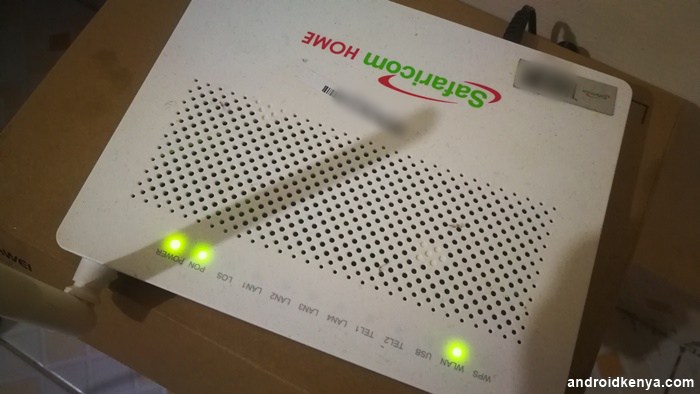
Telecommunication giant Safaricom has revised its Home Fibre Fair Usage Policy (FUP), bringing major improvements for users across all packages.

According to the updated data limits on the telco’s official Home Fibre FAQs, all Home Fibre packages now share a uniform FUP limit of 15TB.

FUP is a data cap set by internet service providers (ISPs) to ensure fair network usage for all users. When a customer exceeds a certain data limit (their FUP), their internet speed is reduced, but they can still access the internet until the plan renews.

Previously, Safaricom’s Home Fibre customers faced much lower data thresholds ranging from 500GB for the Bronze plan to 1TB (1,000GB) for Silver, Gold and Diamond plans before their speeds were throttled. Once the limit was hit, users experienced significant slowdowns, with post-FUP speeds dropping to as low as 1Mbps on the Bronze plan.

However, under the new structure, the Bronze package will offer speeds of 15 Mbps at Sh2,999 per month, with speeds reduced to 2 Mbps after reaching the 15 TB limit.

The Silver package, priced at Sh4,100, offers 30Mbps, with a post-FUP speed of 4Mbps up from the previous 3Mbps. On the other hand, the Gold package offers 80Mbps for Sh6,299, with a usage limit of 8Mbps, up from the previous 3Mbps.

Safaricom’s half year 2026 net profit jumps 52.1 percent to Sh42.8 billion

Moreover, the Diamond package now offers 500Mbps for Sh12,499, with speeds capped at 50Mbps up from 3Mbps, while Platinum plan offers 1 Gbps for Sh20,000, with a throttled speed of 100 Mbps.

Safaricom Home Fibre FUP Limits

Fibre Package Speeds Price (30 days) Fair Usage Limit Speeds after Fair Usage
Bronze 15Mbps Sh2,999 15TB 2Mbps
Silver 30Mbps Sh4,100 15TB 4Mbps
Gold 80Mbps Sh6,299 15TB 8Mbps
Diamond 500Mbps Sh12,499 15TB 50Mbps
Platinum 1Gbps Sh20,000 15TB 100Mbps

Post-FUP Speeds

Package Post-FUP (Old) Post-FUP (New)
Bronze 1Mbps 2Mbps
Silver 3Mbps 4Mbps
Gold 3Mbps 8Mbps
Diamond 3Mbps 50Mbps
Platinum Not specified 100Mbps

How I made Sh400,000 from NSE shares in 5 months

0

Financial advisor Good Joseph has shared how he made Sh400,000 from the Nairobi Securities Exchange (NSE) in five months.

In a video on his YouTube channel, Joseph revealed that investing in shares does not require a lot of capital, adding that he buys as low as 200 shares per month, depending on how the month is.

He narrated how he started investing in Cooperative Bank and Absa Bank shares for as low as Sh4. For a whole month, the shares remained flat before eventually rising to Sh5.

He later decided to try purchasing the NSE shares at an average of Sh5, investing about Sh97,000.

“If you go to share buying at NSE, you’ll actually see one of the companies listed under the NSE as NSE Shares. This means that the NSE platform can self-list itself to investors to purchase shares,” he said.

“I felt like banking on the platform (NSE shares) would be a great move because people are buying shares, then the company will grow, meaning the shares will also go up,” he added.

According to him, the shares he purchased at Sh5 are currently worth Sh20.65. He currently holds about 19,400 shares, equivalent to Sh400,610.

NSE crosses Sh3 trillion milestone for the first time in history

The NSE recently crossed the Sh3 trillion milestone in market capitalization for the first time in history.

Market data from the NSE shows that the local bourse made this achievement on Thursday November 6, 2025 when it gained by Sh52.52 billion from Sh2.991 trillion to end the day’s session at Sh3.044 trillion.

This milestone was achieved in a day in which 35,407,884 shares were traded. At the same time, the NSE 20-Share Index gained by 38.28 to hit 3,221.23 points.

These gains have come riding on the back of a bullish market that has recorded gains by all major stocks. For instance, on the day the market surpassed the Sh3 trillion market, leading telecommunications firm Safaricom announced a Sh42.8 billion net profit for the first six months of its current 2026 financial year.

Namsia: Taking loans isn’t wrong, ignoring affordability is the problem

0

There’s a common belief that debt is bad. But truthfully, it’s not the debt itself that’s the problem; It’s not the idea of debt that makes it bad. It’s the reason and use of the debt that often leads people into trouble.

Most of the debt people are dealing with today comes from consumer loans; quick, easy, and often emotionally driven. But even that isn’t the biggest culprit. The real issue is the ignorance surrounding affordability and the true cost of credit. The ignorance around affordability.

𝐓𝐡𝐞 𝐇𝐢𝐝𝐝𝐞𝐧 𝐂𝐨𝐬𝐭 𝐨𝐟 𝐂𝐨𝐧𝐯𝐞𝐧𝐢𝐞𝐧𝐜𝐞

It’s understandable to take a consumer loan, especially in moments of emergency. Life happens. But if the cost of that loan ends up being ten times its actual value, then what seemed like relief becomes a trap not a solution.

Many loans in the market today come with hidden costs i.e, high interest rates, late payment penalties, insurance charges, and account maintenance fees. These small print costs quietly erode financial health. By the time repayment begins, the borrower realizes that the loan’s cost far outweighs the benefit.

𝐓𝐡𝐞 𝐒𝐚𝐯𝐢𝐧𝐠𝐬 𝐆𝐚𝐩

We are living in an era where saving habits are weak. For most people, savings are reactive, not consistent.

Because of this, more affordable credit options such as SACCO loans remain out of reach for many.

SACCOs typically require consistent savings and membership tenure, but with irregular saving behavior, people miss out on these cheaper and more flexible lending avenues.

𝐓𝐡𝐞 𝐂𝐚𝐬𝐡 𝐅𝐥𝐨𝐰 𝐑𝐞𝐚𝐥𝐢𝐭𝐲

Formal institutions like banks have structured lending models. To qualify, you often need a salary account or pay slip. That automatically locks out a large segment of small business owners and informal sector earners.

Yet, these individuals are not necessarily broke, many run businesses that record strong revenues but poor cash flows.

And in lending, cash flow is king. It tells whether a borrower can meet loan repayments sustainably. Without solid cash flow management, even profitable businesses are seen as risky borrowers.

𝐓𝐡𝐞 𝐑𝐞𝐚𝐥 𝐏𝐫𝐨𝐛𝐥𝐞𝐦: Loan 𝐀𝐟𝐟𝐨𝐫𝐝𝐚𝐛𝐢𝐥𝐢𝐭𝐲

Taking loans, in itself is not bad. Loans can be powerful tools for growth whether to build a business, handle an emergency, or invest in an asset.

However, what makes loans “bad” is the ignorance of affordability; the failure to calculate what a loan truly costs, how long it will take to repay, and whether it aligns with one’s income and cash flow.

Financial literacy is not just about knowing how to borrow; it’s about understanding when to borrow, how much, and why. We don’t need to demonize debt.

We need to educate borrowers on the affordability, structure, and impact of the loans they take. Debt becomes dangerous only when it’s taken blindly. When used wisely, it can be a bridge not a burden.

Namsia: 3 phases of a retirement plan you need for a good lifestyle after retiring 


Rhina Namsia is the founder and chief executive officer of The Acemt Consulting, a training and consultation company that provides financial planning and investment advisory.