Home Blog Page 2

Aga Khan university hospital expands robotic surgery to ovarian cyst removal

0

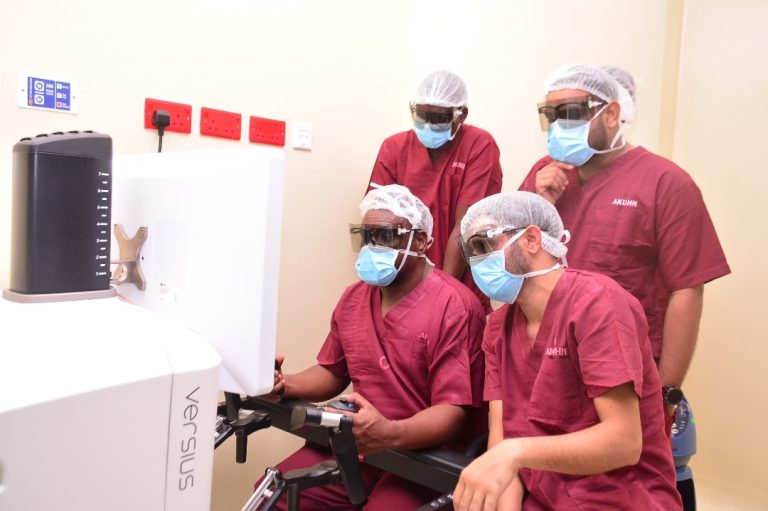
Aga Khan University Hospital, Nairobi (AKUH,N), has performed robotic-assisted surgery to remove an ovarian cyst, extending its robotic surgery programme to gynaecological care and expanding access to advanced minimally invasive treatment.

The procedure, known medically as a robotic-assisted ovarian cystectomy, was performed on a patient with a cyst measuring more than 10 centimetres.

The procedure follows the hospital’s first robotic-assisted surgery, performed in August 2026, to remove a patient’s gallbladder. Known medically as a robotic-assisted laparoscopic cholecystectomy, that operation marked the launch of the hospital’s robotic surgery programme.

“We are proud that we will extend top-of-the-range best surgery to our women right here in Kenya. This milestone advances access to high-quality, minimally invasive surgery and makes it easier to operate on even very complex cases,” said Dr Elkanah Omenge Orang’o, Associate Professor and Consultant Gynaecological Oncologist at Aga Khan University Hospital, Nairobi.

Increasing access to Cancer Surgery will improve Cancer Care and Outcomes

During robotic-assisted surgery, the surgeon controls the camera and specialised instruments from a console. The system provides a three-dimensional view of the surgical area and instruments with an enhanced range of movement, supporting precision and control during delicate procedures. Despite its name, the robot does not perform the operation independently; the surgeon remains in control throughout.

Like conventional keyhole surgery, the robotic-assisted approach uses small incisions rather than the larger incision required for open surgery. For appropriately selected patients, this can mean less postoperative pain, a shorter hospital stay and a quicker recovery.

“Because of the small cut we make, reco/very is quicker. Most patients would go home the same day or the following day,” Dr Omenge explained.
Aga Khan University Hospital has a long tradition of being the first to introduce medical advances that respond to the needs of patients in Kenya and the region.

“Extending robotic-assisted surgery to gynaecological care is another step in that journey. Our investment brings together advanced technology, skilled clinical teams and strong safety standards to give more patients access to specialised, evidence-based care closer to home,” said Rashid Khalani, Chief Executive Officer of Aga Khan University Hospital, Nairobi.

Ten aviation realities one wished that your Senator had bothered to learn

0

Recently, Kenya Airways, our national carrier and perennial punching bag, was hauled before the Senate for the ritual public flogging. What followed was a masterclass in confident conjecture delivered by honourable members who were, to put it charitably, factually unencumbered. It was long on theatre, short on turbulence charts and entirely innocent of how aviation actually works.

Since the complexities of a global airline cannot be absorbed in one theatrical afternoon of playing to the gallery, allow me to offer ten inconvenient truths for future reference.

1. Skills in any aspect of aviation are not inherited like eye colour or family farm

They are forged through years of punishingly rigorous training, endless examinations and humbling practical experience in which the sky grades you without favour. They are not, as one distinguished Senator seemed to suggest with a straight face, transmissible by bloodline or absorbed through osmosis at the family dinner table. The fact that one’s brother has endured 29 years in the cockpit does not, by some miraculous process of fraternal contagion, confer aeronautical expertise upon the entire lineage.

2.⁠ ⁠Kenya Airways is not the Illuminati with wings

Contrary to popular parliamentary fantasy, KQ is not a secret society. It is a public limited company. Its books are audited annually by eminently reputable firms whose professional existence depends on not inventing numbers to please Senators.

The contracts it signs do not vanish into a vault. They are disclosed in its annual accounts, having been arrived at through that quaint, old-fashioned ritual known as sound corporate governance.  There are no shadowy politically incorrect bogeymen lurking in its shareholder register. And every finance and operating lease that keeps its aircraft in the sky, not by levitation but by contract, is available for scrutiny to anyone curious enough to actually ask.

Khafafa: Think Kenya Airways is expensive? Consider these 10 factors on air tickets

3. Kenya Airways does not source its Jet Fuel from a chap with a jerry can in a back alley

Contrary to the thrilling conspiracy floated in the chamber, the airline procures its standard, fossil-based Jet A-1 through perfectly ordinary commercial agreements with major, legitimate petroleum distributors; at JKIA and at every other respectable airport where it lands. It pays the prevailing market price, like everyone else who wished to remain airborne. There is no secret discount, no black-market premium.

And no, it is not currently engaging in fuel hedging. Not because it has forgotten how derivatives work, but because trying to predict fuel prices while the Middle East is on fire is akin to trying to do precision astrology during an earthquake. In such an exquisitely fluid global situation, getting one’s hedging instruments right would require, not financial acumen, but prophecy.

4.⁠ ⁠Jambojet is a wholly owned subsidiary of Kenya Airways

It is not, despite what feverish parliamentary imagination might conjure, owned by a labyrinth of shell companies registered on a sunny beach in the Caymans. It is a fully private entity, run by its own independent Board and its own Chief executive; a structure that actually exists outside the Senate. That board happens to include two members from KQ, because even in aviation, the parent is generally permitted to know what the child is doing.

A word to the wise; because KQ is a public limited company cross-listed in the exchanges of both Uganda and Tanzania, any changes to the registration of its subsidiaries including Jambojet or any sale or spinoff, would have to be publicly made known across all three countries. Listed companies don’t lend themselves to shadowy deals.

And for those concerned about transparency, Jambojet’s performance and financial figures are not hidden in a treasure chest. They are incorporated, line by line, in the Group reports.

5. Prepare to be astonished: Jambojet actually makes money

We know it ruins a perfectly good narrative, but facts can be so inconsiderate. The airline turned a profit from 2025 and remained stubbornly in the black, defying predictions of imminent demise, right up until Covid-19 politely grounded the entire planet.

Between 2020 and 2023, owing to the minor inconvenience of almost no one flying anywhere, it did slip into a brief period of losses, as did virtually every airline that wasn’t in the business of transporting unicorns. It then dared to recover. It returned to profitability in 2024 and has remained steadily profitable ever since, no Senate intervention required.

6. Kenya Airways and its subsidiary Jambojet are not locked in some Shakespearean rivalry to the death

Kenya Airways is a full-service carrier. It flies medium to long-haul, serves you a meal, offers you a drink and generally behaves like a national carrier that remembers its manners. Jambojet is a low-cost carrier. No frills, no free meals, no complimentary champagne. It is a stripped-down, honest model designed for the budget-conscious traveller, the weary bus passenger seeking salvation and the wide-eyed first-time flyer.

Operationally, KQ runs the hub-and-spoke model; it gathers you from the world and brings you home. Jambojet runs point-to-point; it gets you here to there without ceremony. The two carriers complement each other. One feeds the other international traffic; the other provides the last-mile connection to the corners of the country. It is called synergy. It is taught on day two of business school.

7.⁠ ⁠Kenya Airways has had some grounded aircraft

Not because its engineers have taken up gardening but because of global supply chain constraints. Spare parts are scarce. The return to service of aircraft undergoing perfectly scheduled maintenance is delayed by months. This is a rather irritating reality that sits beyond the airline’s control and which, inconveniently for local conspiracy theorists, has affected every airline on the planet, manifesting itself in the universal symphony of delays and cancellations.

Airline margins in Africa are, as ever, famously generous: less than one percent this year, according to projections. One dreams of such largesse. Consequently, one cancelled Dreamliner flight; a mere 234 passengers who must suddenly be rescheduled, rerouted or accommodated; is enough to see that already gossamer-thin margin vaporise, quite literally, into thin air.

8.⁠ ⁠High prices are a global reality

They are not a particularly vivid hallucination suffered by Kenya Airways. Since the beginning of this year, the war in the Middle East has driven jet fuel prices up by more than twofold. In KQ’s case, fuel costs have surged by 70 percent, a detail that tends to put a slight damper on profitability.

It is not alone in this predicament. Three large Chinese carriers have just reported net losses for the first half of the year, presumably also part of the same conspiracy. Globally, the industry’s net profit margin has halved; from 4.2 per cent to 2.0 per cent.

The full, glorious extent of the carnage across the entire sector will only become evident when full-year results are announced. Until then, we may continue to pretend that fuel is cheap and airlines are just being dramatic.

9. The sale of Kenya Airways’ slot at Heathrow was not an act of national treason

It was actually a practical necessity. That particular slot was, in fact, a spectacular inconvenience: it permitted a KQ aircraft to arrive in London in the morning and then sit, idle and ornamental, on the tarmac for twelve hours before it was graciously allowed to depart in the evening.  To ground an aircraft for twelve hours, when your network is fully optimised, is not a strategy. It is simply bleeding revenue in a very expensive parking lot.

The sale therefore killed two birds with one very sensible stone: it ensured that none of KQ’s aircraft would suffer costly ground time at Heathrow and it added a tidy sum to KQ’s coffers at precisely the moment it desperately needed financial restructuring.  Moral of the story: sometimes selling the family silver is wiser than paying to polish it all day.

10. Utterances in the August House should, ideally, bear some passing acquaintance with facts

We understand it thrills the citizenry when audacious, chest-thumping claims against the national carrier are launched from the floor of the House. It makes for excellent theatre. Such claims, comfortably protected by parliamentary privilege, tend to wither rather quickly once exposed to the harsh sunlight outside the House, where privilege does not pay the bill.

In the meantime, they do risk jeopardising the very real relationships the airline has painstakingly cultivated with manufacturers, financiers, lessors, suppliers and other stakeholders; people who, unlike the House, deal in contracts, not applause lines.

Is it too much to ask that our legislators trouble themselves to verify an allegation before repeating it with such vigour on the floor of the House? Apparently, it is!


Emirates, KTB partner to drive more international tourists to Kenya

0

Nairobi, Kenya 17 September 2026 – Emirates and the Kenya Tourism Board (KTB) have signed a partnership agreement at the 2026 Arabian Travel Market, to strengthen collaboration and support the growth of inbound tourism to Kenya. Already one of the most consistently in-demand destinations on the airline’s Africa network, the partnership will build on this strong demand and help unlock new opportunities for Kenya to attract visitors from emerging and established markets around the world.

The partnership agreement was signed by Adil Al Ghaith, Emirates’ Senior Vice President of Commercial Operations, Centre, and June Chepkemei, Chief Executive Officer of the Kenya Tourism Board, in the presence of Ambassador. (Professor.) Julius K. Bitok, CBS. Principal Secretary, State Department for Tourism, and Adnan Kazim, Deputy President and Chief Commercial Officer, Rashid Alardha, Vice President of Commercial Operations for Sub-Saharan Africa, Emirates and Christophe Leloup, Emirates’ Country Manager in Kenya, along with other senior officials.

Adil Al Ghaith said, “Kenya has been an important market for Emirates for over three decades, and our commitment goes much deeper than operations and connections. We’ve consistently invested in our presence in the market, working closely with travel trade partners and tourism stakeholders to stimulate inbound travel, and contribute positively to the global perception of Kenya. Nairobi remains one of the top 5 busiest gateways for Emirates in Africa, with significant traffic coming from UK and Europe, as well as the US. This partnership solidifies that longstanding commitment, enhancing our collaboration with the Kenya Tourism Board and the full, thriving tourism ecosystem across Nairobi and Kenya.”

Emirates A380 gets ‘better-than-home’ Wi-Fi with starlink upgrade

June Chepkemei said, “We are delighted to partner with Emirates to strengthen Kenya’s global tourism profile and showcase the remarkable experiences our destination offers to travellers around the world. Emirates’ extensive international network and strong reach in both established and emerging markets will help us build on the growing demand for Kenya and unlock new opportunities to attract more visitors. This collaboration reflects our shared commitment to promoting Kenya as a leading, diverse and unforgettable destination, while supporting the continued growth of inbound tourism and the many communities that benefit from it.”

Tourism is a key pillar in Kenya’s economy, creating thousands of employment opportunities and serving millions of tourists who visit the country each year. The Kenya Tourism Board has bold plans to establish Kenya as the most visited tourism destination in Africa, with a year-round calendar of diverse, sustainable and authentic experiences that appeal to a swathe of international visitors.

Under the framework of the partnership agreement, Emirates and KTB will explore joint initiatives to promote Kenya in key markets on the airline’s global network, showcasing the breadth of Kenya’s year-round tourism offering, and encourage more travellers to visit. The partners will also closely collaborate to develop programmes for trade partners and tour operators that educate and excite the industry, such as incentives, familiarisation trips and other marketing initiatives.

Last year, Emirates marked 30 years of operations to Nairobi and, during that tenure, has established deep-rooted ties with local communities and the travel trade ecosystem. Earlier this month, the airline’s tour operating arm, Emirates Holidays, signed a Memorandum of Understanding with the Kenya Association of Travel Agents to stimulate outbound travel by equipping over 300 travel agencies with enhanced product and network insight and competitive promotional opportunities.

Smart way to make a Sh25,000 monthly salary work for you

0

A budget is more than a record of income and expenses. For households living on a tight monthly income, it can be an important tool for ensuring that essential needs are met while creating room for saving, investing and supporting family members.

Financial experts generally recommend giving every shilling a specific purpose and balancing present needs with future financial security.

A practical budget should cover necessities first, provide for important family obligations, allow for a modest amount of discretionary spending and, where possible, set aside money for emergencies and long-term goals.

For someone earning Sh25,000 a month, financial advisor Benjamin Cheruiyot of Abojani Investment has developed a budget that allocates income across these competing priorities while keeping the level of saving realistic.

The Sh25,000 monthly budget

According to Cheruiyot, someone taking home a net salary of Sh25,000 should divide it into four broad categories:

  • Needs — Sh15,000 (60 per cent): This includes Sh7,000 for rent in a suburban area, Sh4,000 for food, Sh2,000 for transport and Sh2,000 for airtime and utilities.
  • Parents — Sh3,000 (12 per cent)
  • Wants — Sh2,000 (8 per cent)
  • Saving and investing — Sh5,000 (20 per cent)

Cheruiyot cautions against increasing the saving and investment allocation beyond Sh5,000 while earning Sh25,000 a month.

Although saving more may appear attractive, he argues that putting too much pressure on a limited income could leave an individual struggling to meet basic expenses.

“Don’t invest more than this until your income grows, else you’ll be stressed,” he states.

The first priority: build an emergency fund

For the first 14 months, Cheruiyot recommends putting the entire Sh5,000 monthly saving into a Money Market Fund (MMF).

At an assumed annual return of 9 to 10 per cent, regular contributions of Sh5,000 could accumulate to around Sh70,000 before accounting for interest after 14 months, bringing the saver close to the Sh75,000 target.

He recommends using the accumulated funds for emergencies to reduce reliance on expensive short-term loans when emergencies arise.

From month 15: introduce SACCO savings

Once the emergency fund has been substantially built, Cheruiyot recommends changing the way the Sh5,000 monthly allocation is used.

From the 15th month, the amount can be divided equally between the MMF and a SACCO:

  • Sh2,500 — Money Market Fund: This continues to strengthen the emergency reserve.
  • Sh2,500 — SACCO: The money goes towards building savings and deposits in a stable SACCO.

At Sh2,500 a month, a member would contribute Sh30,000 over 12 months, excluding any returns or other SACCO considerations.

Cheruiyot notes that such savings may help a member qualify for a loan, depending on the SACCO’s specific rules and lending requirements.

Under the example he gives, Sh30,000 in deposits could support eligibility for a loan of up to Sh90,000, assuming a three-times-deposit lending arrangement.

At an indicated rate of 1 per cent per month, such borrowing could potentially be directed towards acquiring an income-generating asset or paying for skills development.

The approach, however, requires discipline. Borrowing should be considered only when repayment can comfortably fit within the monthly budget and when the money is being used for a clearly defined purpose.

Also Read: I earn Sh150,000 net salary but it all disappears by the fifth of every month

Dangote IPO: How Kenyans can buy shares using their mobile phones

0

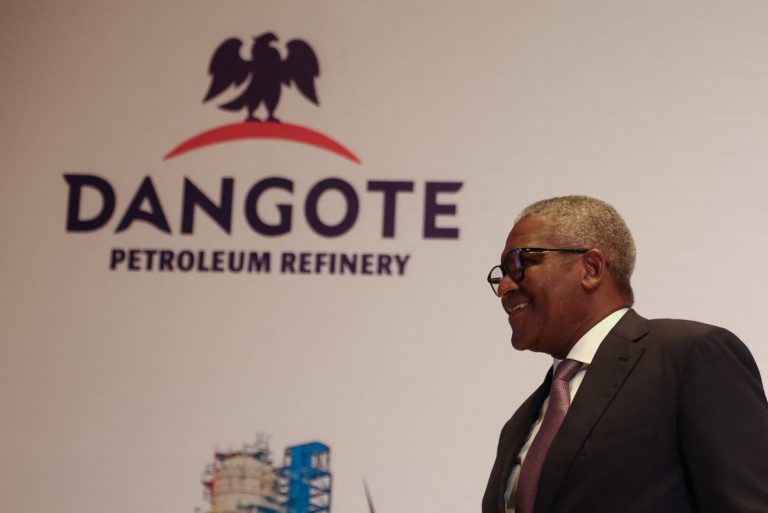
Kenyans can now invest in the Dangote Petroleum Refinery after Africa’s largest oil refinery opened its initial public offering (IPO), allowing retail investors to buy shares through their mobile phones.

The offer, which opened on September 14, 2026, will run until October 13, giving investors nearly a month to submit applications.

Nigerian billionaire Aliko Dangote is offering about three per cent of the refinery to the public in a share sale targeting up to $2.1 billion (about Sh272 billion). If fully subscribed, the transaction would rank among the largest initial public offerings on the African continent.

Each share has been priced at ₦525. Kenyan investors can apply for a minimum of 10 shares, with additional applications made in multiples of 10. Based on the indicative exchange rate provided in the offer guide, the minimum investment is approximately Sh550.

The funds raised will help finance the refinery’s expansion plans. Dangote Group intends to double the facility’s processing capacity to 1.4 million barrels of crude oil per day over the next three years.

The share sale will also support the group’s plans to increase its ownership of the refinery and strengthen its access to capital markets in the future.

How Kenyans can invest in the Dangote IPO

Kenyans seeking to participate in the offer can apply through MyStock Africa using a mobile phone.

The first step is to open an account on the platform and deposit funds in Kenyan shillings. The money is then converted into US dollars before the investor selects the Dangote IPO.

The investor can subsequently indicate the number of shares they wish to purchase, subject to the minimum requirement of 10 shares and the stipulated multiples for additional applications.

Once the application is submitted, the funds are held in escrow while the allocation process is completed. Applying for a particular number of shares, however, does not guarantee that the investor will receive the full amount requested.

If demand exceeds the number of shares available, the IPO will be oversubscribed and investors may receive a smaller allocation than they applied for.

Any money left over because of a reduced allocation will be returned to the investor’s MyStock Africa wallet.

Also Read: Businessman builds app that gives Kenyans access to US stocks and ETFs

Inside Kenya’s dog market where indigenous breeds fetch up to Sh3,500

0

By Thursday morning, Lubao takes on a different rhythm. Along the market lanes in Malava, Kakamega County, dogs bark from the ends of ropes as their handlers lead them through the crowd, while prospective buyers stop to inspect their size, build and temperament.

Traders negotiate over prices, buyers move from one animal to another and the otherwise ordinary shopping centre comes alive with the unusual business of buying and selling dogs.

For generations, Thursday has been market day at Lubao, a trading centre synonymous with dogs. Unlike many rural markets where cattle, goats and sheep dominate the livestock section, dogs have long occupied a special place here.

Now, the indigenous dog trade is reportedly showing signs of a comeback, with traders saying demand for local breeds remains steady despite the growing popularity of exotic breeds and changing tastes among Kenyan pet owners.

The dogs on sale are largely valued for their usefulness. A buyer looking to protect a homestead may be interested in a large and alert dog.

A farmer may want one capable of guarding livestock. Others look for animals believed to have the stamina and keen sense of smell needed for tracking.

Traders say an indigenous dog can fetch between Sh2,000 and Sh3,500, depending on factors such as size, maturity, appearance and perceived ability.

Previous accounts from the market have recorded even wider price variations, particularly for mature or highly sought-after animals.

Over the years, Lubao has attracted traders and customers from across western Kenya and beyond. Reports from the market have documented sellers sourcing dogs from areas including Nandi and Uasin Gishu before bringing them to Kakamega for sale.

A market built around dogs

The prominence of dogs at Lubao dates back in the early 1950s, when the market was already developing as a trading centre. By the 1970s, it had gained a reputation as an important livestock market, with dog auctions becoming one of its distinguishing features.

The market’s development is closely linked to increased demand for dogs due to changes in farming and the need for households to protect themselves and their livestock.

Dogs became valuable working animals in rural homes. They barked at intruders, guarded livestock and homesteads and, according to older residents, were sometimes used in hunting.

By the time modern breeds such as German Shepherds, Rottweilers and Boerboels became increasingly popular among urban dog owners, Lubao had already developed a long-standing market for indigenous dogs.

A 2013 study on dog ownership and rabies in Kakamega found that the county had several weekly dog markets, with Lubao recording the highest sales volume among them at the time — about 80 dogs a week.

From hunting companion to security guard

The role of dogs in the region has changed with the times. As hunting declined and rural lifestyles evolved, the animals’ role increasingly shifted towards guarding homes and livestock.

At the same time, the growth of towns and changing consumer preferences brought greater interest in foreign breeds.

However, for a rural household that needs a dependable guard dog but cannot afford an expensive imported breed, the local dog remains an accessible option. That may partly explain why traders believe the market continues to attract buyers.

The market also serves as a meeting point where people exchange information about dogs — from breeding and feeding to training, and the characteristics buyers should look for.

A market that has changed

Lubao’s dog market, however, has not remained untouched by change. Its surroundings and trading arrangements have evolved as the wider livestock market has expanded.

In 2019, Kakamega County modernised the market’s livestock yard in a project reported to have cost Sh10 million. The improved facility was intended to serve traders from several counties, including Kakamega, Nandi, Uasin Gishu, West Pokot and Bungoma.

The dog section has also faced challenges. A 2019 report on the market raised concerns about the treatment of dogs, including allegations that some animals were deliberately made aggressive before being offered to customers seeking guard dogs.

Beyond dog auction, the market is said to be used by veterinary officials to provide rabies vaccination and educate owners.

Also Read: Key tips for farmers looking to venture into Sheep farming

Your First Business VPS: Costs, Support, and Setup

0

Getting a first VPS feels a lot like buying a first car. You know you need one. The options still blur together after the third browser tab. Shared hosting was fine for a hobby blog, sure. A real business needs more room to breathe, and more control too. This is roughly where VPS hosting for beginners starts making sense — right around the point where “just use whatever’s cheapest” stops working.

What a VPS actually costs you

Price tags look simple until someone actually digs in. A $5 plan and a $40 plan can run the exact same operating system, side by side, no visible difference on the surface. The real gap hides in CPU cores, RAM, and something providers love calling “burstable bandwidth.” Beginner VPS hosting deals often pull people in with a rock-bottom intro price, then quietly double it at renewal — month thirteen, not month one.

Backups, extra storage, dedicated IPs, control panels, and managed support can also sit outside the advertised price, adding to the monthly bill. Read the fine print. Or just screenshot the pricing page before signing up, so there’s proof later.

Support matters more than specs

Here’s the part most beginner VPS hosting guides gloss over. Then regret skipping, usually around 11 pm on a Tuesday. A cheap VPS with terrible support ends up costing more than a pricier one with people who actually answer. Servers crash for no clear reason sometimes. DNS breaks. Someone edits the wrong config file, and the storefront goes dark for forty minutes.

When that happens, response time is the only spec that matters, full stop. The marketing page won’t tell you much. Before committing to anything, run an uptime and support comparison across two or three providers — and judge it by the live chat window.

Benjamin Franklin put it neatly: “An ounce of prevention is worth a pound of cure.” Test support before you need it. Nobody wants to discover a two-hour response time while the site’s down and customers are emailing.

Your First Business VPS: Costs, Support, and Setup

Setting up without losing a weekend

Easy VPS hosting doesn’t mean zero effort — nothing technical really is zero effort — but it shouldn’t swallow an entire Saturday either. A first setup usually breaks down into something like this:

  1. Pick an OS image, Ubuntu or CentOS usually, based on what the app needs.
  2. Set up SSH key access instead of leaning on a plain password.
  3. Sort out a basic firewall first — before anything public-facing goes live.
  4. Get the domain’s DNS records pointed at the new server’s IP.
  5. Get the web stack up, then test it on a subdomain before you touch the live one.

Skipping step three is how servers get compromised in the first 48 hours. It happens more than most people admit out loud. A few providers, Antihost among them, bundle managed setup help right into their beginner plans — handy for anyone short on patience or nerve for terminal work.

Once that list is done, the server stops being an abstract monthly charge. It’s the thing quietly running checkout pages or client dashboards while nobody’s watching it.

Antoine de Saint-Exupéry said it nicely— perfection isn’t when you’ve got nothing more to add; it’s when you’ve got nothing left to remove. That’s not a bad standard for a first business server either. Once it’s secure, stable, and doing its job, the best VPS is often the one you barely have to think about.

A practical last word

Getting the VPS running isn’t really the finish line, and that’s worth repeating for anyone still shopping around. Most of the VPS hosting for beginners advice online focuses only on price, which misses half the picture. It’s closer to moving into a new office space, honestly. Signing the lease is one thing; running the place day to day is another. Easy VPS hosting, chosen well, means picking with the next two years in mind — not this month’s traffic spike, which will fade anyway.

Key tips for farmers looking to venture into Sheep farming

0

Demand for quality meat, adaptable breeds, and relatively manageable production costs are driving growing interest in sheep keeping

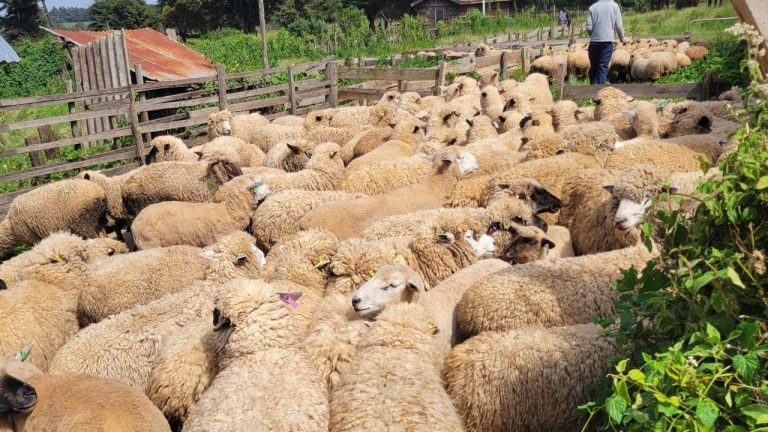
The animals require less space than larger livestock, can make use of available pasture and crop residues, and, with proper management, can provide farmers with regular income through the sale of lambs and mature animals.

Among the breeds attracting growing attention is the Dorper, a meat-oriented breed known for its ability to perform under relatively harsh conditions.

Dorpers are valued for their adaptability, fast growth and good meat production, making them suitable for farmers targeting the expanding demand for sheep meat.

Their hardiness and ability to utilise available forage have also made them an attractive option for both small-scale and commercial producers.

However, breed choice alone does not guarantee a profitable flock. Farmers entering sheep production need to pay close attention to breeding, feeding, housing, disease prevention and marketing.

Below are key tips every sheep farmer should master to raise a healthy flock:

Breed selection and culling determine the strength of the enterprise

A profitable flock begins with choosing animals that can consistently perform. Farmers should assess sheep based on their health, growth, fertility and ability to raise lambs.

Animals that repeatedly fall ill, remain in poor body condition or fail to care adequately for their offspring can become a financial burden.

Such animals should be identified and removed from the breeding flock rather than consuming feed and other resources without delivering returns.

Regular culling helps farmers gradually build a healthier and more productive flock.

Good nutrition before and during pregnancy can improve lambing results

Feeding management plays an important role in reproductive performance. Giving ewes adequate nutrition before mating can improve their chances of conceiving and may increase the likelihood of multiple births.

The nutritional needs of pregnant ewes become particularly important toward the end of pregnancy.

Providing additional energy during the final weeks helps support foetal growth and prepares the ewe for milk production after lambing.

Keep housing simple, dry and well ventilated

Sheep do not require elaborate housing, but their shelters should protect them from rain, strong winds and prolonged exposure to damp conditions.

The sleeping area should remain dry, with clean bedding and adequate airflow. Poor ventilation combined with wet and dirty surroundings can create conditions favourable to respiratory diseases, including pneumonia, while persistent moisture can contribute to foot problems.

Responsible parasite control saves money and slows drug resistance

Regularly administering deworming medicine without determining whether treatment is necessary can become an expensive and ineffective practice.

More importantly, excessive use of the same drugs can contribute to parasite resistance, making future treatment less effective.

Farmers should instead monitor their animals for signs of parasite problems and use appropriate veterinary guidance when treatment is required.

Rotating grazing areas can also reduce parasite pressure, while keeping feed and water troughs clean and raised off the ground helps limit contamination.

The first hours and days can determine whether a lamb survives

Newborn lambs require close attention immediately after birth. One of the most important steps is ensuring that each lamb receives colostrum, the ewe’s first milk, soon after delivery.

Colostrum provides essential nutrients and antibodies that help the young animal develop immunity.

Farmers should also disinfect the newborn’s navel using iodine or an appropriate antiseptic to reduce the risk of infection.

Close observation during the first few days allows farmers to identify weak lambs or animals that are struggling to suckle before their condition deteriorates.

Balanced feed, water and minerals support growth and flock health

Successful sheep production depends on more than simply providing pasture. Animals need adequate quantities of nutritious forage, reliable access to clean water and appropriate mineral supplementation.

Farmers should ensure that feed resources are sufficient for the size of the flock and adjust feeding according to the animals’ stage of production.

Ewes carrying lambs, lactating mothers and growing lambs may have higher nutritional requirements than other animals.

For breeds that produce substantial amounts of wool, regular shearing is also important. Removing excess wool helps animals cope with heat and reduces the risk of fly-related problems, including maggot infestations.

Farm records can reveal which animals generate income and which consume it

Record keeping is a simple management tool that can have a significant effect on profitability. Farmers should document lambing dates, birth weights, treatments, feed expenditure and other important events.

These records make it easier to identify fast-growing animals, productive mothers and recurring health problems. They also help farmers determine the actual cost of raising their sheep and identify areas where money is being lost.

Without reliable records, it can be difficult to tell whether a flock is genuinely profitable.

Buy healthy stock and sell strategically

Farmers looking to expand their flocks should be cautious when purchasing breeding stock. Animals that appear inexpensive may be in poor condition or carrying diseases that could spread to an established flock.

Where possible, farmers should source sheep from reputable breeders or farms and inspect animals carefully before bringing them home.

New purchases should also be managed responsibly to reduce the risk of introducing infections into the existing flock.

Marketing should begin well before animals reach sale weight. Farmers can plan breeding and finishing schedules around periods when demand traditionally rises, including festive seasons, when the market for sheep meat may strengthen.

The objective is to have market-ready animals when buyers are actively seeking quality stock.

Also Read: Nyeri farmer turns rejected avocado into oil selling at Sh800 a bottle

Farmer doubles profit after ditching maize for clone 13 Napier grass variety

0

Gibert Melli, a Kitale-based farmer, is now reaping big from Napier grass farming on his six-acre farm after quitting maize farming.

The farmer makes at least Sh2m per year from  Napier grass as opposed to the Sh900,000 he made from maize over the same period. In a good season, the farmer would harvest 50-90Kg bags of maize per acre, which he sold at Sh3,000 per bag.

He, however, saw an opportunity for big money in Napier grass after extensive research guided by the Kenya Agriculture and Livestock Research Organisation, KALRO.

He grows the high-yielding clone 13 variety that is also resistant to snow mold. He harvests about 10 tons of Napier grass per acre every two months and sells it to dairy farmers in the region at between Sh5,000-Sh6,000 per ton.

Growing Napier Grass

Experts recommend the use of the Tumbukiza method when planting the grass as it results in higher yields of better quality feed.

This method involves digging pits in which to plant the grass. The pits are filled with a mixture of topsoil and manure, which provides the plants with the nutrients they need to grow.

Several varieties of Napier grass are suitable for the Tumbukiza method, including Bana, Clone 13, French Cameroon, and Pakistan Hybrid.

Farmers can obtain planting material from research institutions, other farmers, or the Ministry of Agriculture.

Apply compound fertilizer (NPK: 20-20-0), 1 teaspoon per hole at planting time. Apply NPK (20-10-10 or 20-20-0) fertilizer during heavy rains at the rate of 4 teaspoons per plant. Additional topdressing may be done using CAN at the rate of 1 teaspoon per plant after cutting.

For pests and diseases, control by removing infected material and planting resistant varieties. Harvesting should be done 3 to 4 months after planting when the Napier is about one metre high.

Also Read: How to plant Napier Grass For Your Dairy Cows

I earn Sh150,000 net salary but it all disappears by the fifth of every month

0

A woman has shared that she is always broke by the fifth of every month, despite taking home a net salary of Sh150,000.

The woman, a single mother of two children aged eight and two, lives in Nyandarua and is seeking advice on how to put her income towards buying a plot and eventually building a home.

Her financial situation was shared by Benjamin Cheruiyot, a financial advisor at Abojani Investments, on his X account.

According to the woman, identified as July, her monthly expenses include a Sh50,000 loan repayment, Sh5,000 in Sacco savings, Sh10,000 in a chama, Sh5,000 sent to her mother, Sh18,000 for shopping, Sh10,000 rent and Sh10,000 for a househelp.

She also spends Sh24,000 on school fees per term, leaving the remaining amount to miscellaneous expenses.

Despite earning Sh150,000 each month, July said she finds herself without money as early as the fifth day of the month and wants a financial plan that can help her acquire property.

Responding to the matter, Cheruiyot said the figures suggest that the problem is not necessarily her income but a lack of control over part of her expenditure.

He noted that about Sh34,000 could not be accounted for in the stated budget. If left unchecked, this would amount to Sh408,000 a year—money that could instead contribute towards her property goal.

He advised July to identify the expenses hidden under the miscellaneous category, which can include transport, fuel, airtime and data, online purchases, eating out and financial assistance to friends and relatives.

According to Cheruiyot, the first step towards investing should be to close these spending gaps and establish where every shilling is going.

He also questioned the purpose of the Sh50,000 loan and urged her to establish whether it was taken for a property purchase, home improvements or consumption. Knowing the outstanding balance would also help determine how best to manage the debt.

Cheruiyot further advised her to reconsider the Sh10,000 monthly chama contribution. While she is putting away Sh15,000 through the chama and Sacco combined, he noted that such savings may not be readily available when she needs cash.

He recommended reviewing the chama’s returns and structure, particularly if it operates mainly as a merry-go-round rather than an investment vehicle. In such a case, he suggested redirecting some of the contribution towards a money market fund (MMF).

The Sh18,000 monthly shopping bill was another area he identified for review. With food prices and household needs varying, he advised the mother to examine her kitchen expenses, plan meals and consider buying produce directly from farmers’ markets where possible.

“Sh 18K food shopping appears a lot in “Potato County” With two young children and a househelp, examine leaks in your kitchen. You can cut costs by purchasing directly from farmers’ markets,” he advised.

To make progress towards her property goal, Cheruiyot proposed setting up separate sinking funds for school fees and the planned plot purchase.

He suggested making automatic transfers immediately after payday so that saving becomes a priority rather than relying on whatever money remains at the end of the month.

Under his proposed budget, Cheruiyot advised her to set aside Sh50,000 for loan repayment, Sh5,000 Sacco contribution, Sh10,000 rent, Sh10,000 househelp, and Sh5,000 support for her mother.

Other proposed allocations include Sh5,000 for Chama contribution; Sh10,000 for shopping; and Sh10,000 for miscellaneous.

The revised budget would bring monthly spending to Sh113,000, leaving Sh37,000 for saving and investment.

Cheruiyot’s proposed allocation of the surplus is Sh20,000 a month towards a property fund, Sh8,000 towards school fees and Sh9,000 towards an emergency fund.

If maintained for 24 months, the property fund would accumulate Sh480,000, while the school fees fund would reach Sh192,000 and the emergency fund Sh216,000.

The approach would give July separate funds for her major financial obligations while creating a dedicated pool of money for her long-term goal of purchasing land.

Cheruiyot also advised her to compare her total chama contributions with the expected payout and assess whether the arrangement is delivering meaningful returns.

If the benefits are unclear after reviewing the arrangement, she could reconsider her participation during the next cycle.

Also Read: How to grow wealth with Sh30,000 salary