
Home Blog Page 31

Messi’s 2026 World Cup: 8 Business Lessons on Strategy, Tenacity and Talent

0

As Argentina prepares for another FIFA World Cup final, Lionel Messi has once again demonstrated why greatness extends far beyond talent. At 39 years old, the Argentine captain has shown that experience, intelligence and leadership can be just as decisive as pace and athleticism.

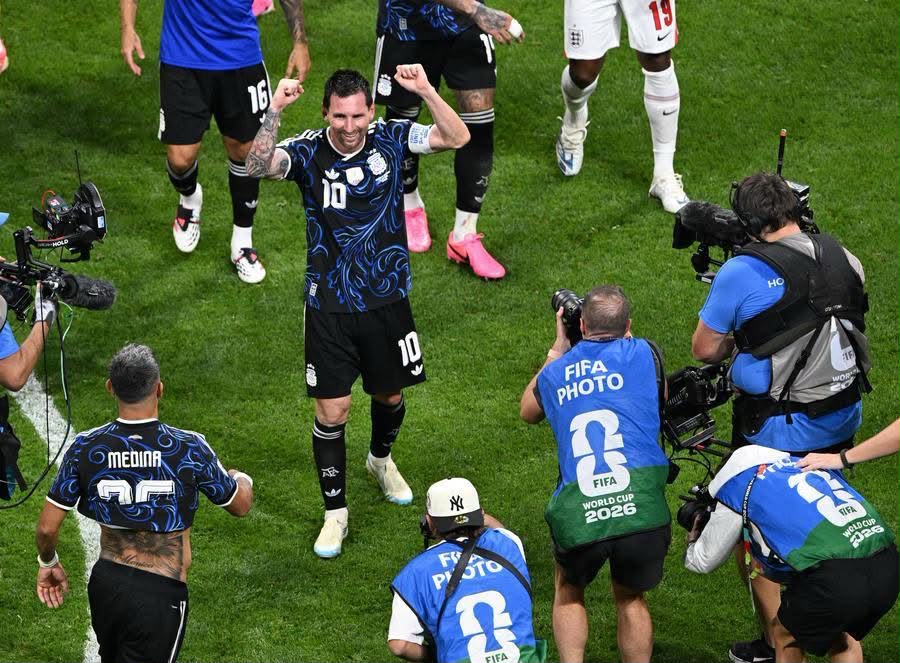
Against England in the 2026 FIFA World Cup semi-final, Messi did not score. Instead, he orchestrated Argentina’s dramatic comeback by providing assists for both goals as the defending champions secured a 2-1 victory to book a place in the final against Spain. His performance illustrated that leadership is often measured not by personal statistics but by the ability to elevate everyone around you.

For entrepreneurs and business leaders, Messi’s tournament offers valuable lessons on building sustainable success.

1. Strategy Eventually Outperforms Talent

Early in his career, Messi overwhelmed opponents with speed, dribbling and extraordinary technical ability.

Today, his greatest strength is his football intelligence.

Rather than chasing every ball, he conserves energy, studies the game and intervenes at precisely the right moments.

10 Entrepreneurship Lessons from the 2026 World Cup Every Business Owner Should Learn

Business follows the same principle.

Young companies often compete through energy, long working hours and relentless execution. Mature businesses win through superior positioning, market intelligence and disciplined decision-making.

The most successful entrepreneurs do not simply work harder. They learn to think better.

2. Reinvention Is the Key to Longevity

Very few athletes remain world-class for two decades.

Messi has achieved this because he has continuously reinvented his game.

He has evolved from an explosive winger into a playmaker capable of controlling an entire match without dominating possession.

Businesses must evolve in the same way.

Consumer behaviour changes.

Technology changes.

Competition changes.

Founders who refuse to adapt eventually become irrelevant, regardless of how successful they once were.

Continuous reinvention is often the difference between companies that survive and companies that disappear.

How to leverage AI for soccer predictions – The Things you Probably Don’t Know

3. Great Leaders Create Success for Others

One of the defining moments of Argentina’s semi-final victory came when Messi created—not scored—the winning goals.

His vision and timing allowed teammates Enzo Fernández and Lautaro Martínez to finish the opportunities.

This reflects one of the most important principles of leadership.

A founder who insists on making every important decision eventually limits business growth.

True leadership means creating systems, culture and opportunities that allow others to perform at their highest level.

Organizations scale when leaders become multipliers rather than bottlenecks.

4. Experience Compounds Like Capital

Every major setback in Messi’s career has become part of his competitive advantage.

He experienced World Cup heartbreak in 2014.

He lost multiple Copa América finals.

He endured years of criticism before finally lifting the World Cup in 2022.

Those disappointments built the experience that continues to define his leadership today.

Entrepreneurs should treat business failures the same way.

Each failed product launch, difficult client, cash flow crisis or economic downturn builds knowledge that competitors cannot easily replicate.
Messi's 2026 World Cup: 8 Business Lessons on Strategy, Tenacity and Talent
Messi’s 2026 World Cup: 8 Business Lessons on Strategy, Tenacity and Talent

Experience is accumulated intellectual capital.

5. Emotional Discipline Wins Under Pressure

High-pressure situations reveal leadership quality.

Against England, Argentina remained composed despite conceding first and facing elimination. Messi resisted the temptation to force individual brilliance, instead trusting the team’s structure until opportunities emerged late in the match.

Business leaders face similar moments during market disruptions, funding shortages or major operational crises.

The entrepreneur who stays calm usually makes better strategic decisions than the one driven by emotion.

Comedian Kinyash: Renowned ‘Pasua’ prankster who owns Kenyan football club

6. Tenacity Often Beats Natural Ability

Messi’s career has never followed a perfect script.

He has battled injuries, criticism and painful defeats.

Yet he continued improving season after season.

That persistence has taken Argentina to consecutive World Cup finals, with Messi remaining influential despite being in the twilight of his career.

Entrepreneurship rewards persistence in much the same way.

Many businesses fail not because founders lack intelligence or funding, but because they give up before momentum begins to compound.

Success belongs to those who remain in the game long enough to benefit from experience.

7. Teams Always Beat Individual Brilliance

Although Messi remains Argentina’s biggest star, this team is built around collective responsibility.

The squad defends together.

The midfield works together.

Every player understands their role.

That culture has allowed Argentina to remain among the world’s strongest teams.

Businesses should aim for the same model.

Companies dependent on one exceptional founder remain vulnerable.

Businesses built around capable teams, clear processes and shared accountability become resilient.

8. Legacy Is Built Through Consistency

Many athletes produce one memorable tournament.

Messi has remained among football’s elite for nearly two decades.

His greatest achievement is not one goal, one assist or one trophy.

It is sustained excellence over time.

Business leadership follows the same principle.

Customers trust brands that consistently deliver value.

Employees follow leaders who consistently demonstrate integrity.

Investors back founders who consistently execute their strategy.

Consistency creates reputation, and reputation creates long-term opportunity.

Final Thoughts

Lionel Messi’s 2026 FIFA World Cup campaign is not merely another chapter in an extraordinary football career. It is a masterclass in strategic leadership.

His evolution from a player who won games through individual brilliance to one who wins through vision, experience and teamwork mirrors the journey every successful entrepreneur must eventually make.

In business, talent may open the first door.

Strategy keeps it open.

Tenacity carries you through adversity.

Leadership ensures others walk through that door with you.

That is how enduring businesses—and enduring legacies—are built.

Messi's 2026 World Cup: 8 Business Lessons on Strategy, Tenacity and Talent
Lionel Messi

Kericho youth invests Sh44,000 NYOTA funding in sugarcane farming

0

Government efforts to address youth unemployment through entrepreneurship are beginning to bear fruit, with beneficiaries of the National Youth Opportunities Towards Advancement (NYOTA) Programme using financial support to establish income-generating ventures across the country.

One such beneficiary is 23-year-old Godwin Ng’eno from Kapsing’aru Village in Soliat Ward, Soin/Sigowet Constituency, Kericho County, who has turned the programme’s funding into a growing sugarcane farming enterprise while pursuing his ambition of building a career in Medical Biotechnology.

Ng’eno received the first NYOTA disbursement of Sh22,000, which he invested in sugarcane cultivation, a crop he says offered the best opportunity due to its strong presence in the region and an established market.

“Growing up in Soin/Sigowet, where sugarcane is one of the region’s major cash crops, I wanted to invest in a business that I understood and one with a ready market. I saw it as an opportunity to start building my future while waiting to secure employment in my profession,” he said.

He has remained actively involved in every stage of production, from land preparation to crop management.

His successful establishment of the first crop qualified him for the programme’s second disbursement of Sh22,000, which he has used to prepare additional land and expand the venture.

The expansion reflects the broader objective of the NYOTA Programme, which the government is scaling up to equip young people with financial support and entrepreneurial skills as part of efforts to reduce unemployment and promote self-employment.

Ng’eno credited the initiative with giving many young people an opportunity to create their own livelihoods instead of waiting for formal employment.

“I am grateful to President William Ruto and the Government for introducing the NYOTA Programme. It has given many young people hope and the confidence to start businesses instead of remaining dependent or waiting indefinitely for jobs,” he said.

Despite the encouraging progress, Ng’eno acknowledged that establishing a business has presented several challenges.

Rising prices of farm inputs, limited capital and unpredictable weather have tested the venture’s sustainability, but he remains confident that persistence will pay off.

“Every business has challenges, especially when you are starting. Farm inputs are expensive and farming requires patience, but I believe every challenge is an opportunity to learn and become better,” he said.

Looking to the future, the young entrepreneur plans to increase the acreage under sugarcane production, diversify into other high-value agricultural ventures and establish a modern agribusiness capable of creating employment opportunities for other young people in his community.

Also Read: Ruto orders licence waiver, unique ID for NYOTA fund beneficiaries

Building Sh5 million retirement home is my biggest financial regret

0

A Kenyan retiree has narrated how his lifelong dream of returning to his rural home after decades of employment turned into a costly lesson on retirement planning, saying he now wishes he had invested more in income-generating ventures than in building an oversized house.

According to his narration on Money254, the former agricultural officer, who worked in Nakuru for more than 30 years, spent much of his career looking forward to retirement in his ancestral home in Sakwa, Siaya County.

He envisioned a peaceful life surrounded by family, with grandchildren filling the compound as he enjoyed the quiet pace of village life.

That vision influenced nearly every major financial decision he made throughout his working years.

Although he considered buying land in growing towns such as Luanda or Maseno, where property could appreciate in value or generate rental income, he ultimately chose to invest in his ancestral land.

He had already built a modest two-bedroom house there and believed it was the place where he truly belonged.

In 2018, four years before leaving employment, he demolished the existing house and embarked on constructing what he hoped would be his ideal retirement home.

Rather than rushing the project, he financed it gradually, using part of his savings each year to complete different stages.

He started with the foundation before putting up the walls, roofing the structure and finally completing the interior finishes.

By the time he retired, the property had grown into a five-bedroom house valued at about Sh5 million. He also landscaped the compound, planted trees and paved sections of the homestead, creating what he considered the perfect reward after decades of service.

However, retirement unfolded differently from what he had imagined.

Once the excitement of leaving formal employment faded, he realised the house was far larger than he and his wife actually needed. Most of the time, only two bedrooms were occupied while the remaining rooms stayed locked for months.

The bustling family life he had envisioned never materialised.

One of his sons relocated to Australia with his family shortly before his retirement, making visits to Kenya infrequent because of the high cost and logistical challenges of international travel.

His second son joined the military, where the demands of his profession often prevented him from travelling home, even during holidays.

Meanwhile, the family’s grandchildren in Kenya divided their holiday time between different grandparents, with some spending festive seasons in Nairobi instead of the village.

As a result, the expansive home he had built to accommodate a large extended family remained occupied by only two people for most of the year.

The experience eventually forced him to question whether he had made the right financial choices.

Looking back, he believes constructing a smaller three-bedroom house would have been sufficient, leaving him with substantial capital to invest elsewhere.

With his professional background in agriculture, he says the money spent on additional rooms, premium finishes and landscaping could have established commercial farming projects such as an orchard, greenhouse or dairy enterprise to supplement the income from his poultry business.

Instead, he says, a significant portion of his retirement savings is tied up in a property that generates no income.

Because the house stands on ancestral land, selling it is not an option. Leasing it out is equally impractical, as demand for large rental homes in rural areas is extremely limited.

Suggestions to convert the property into an Airbnb have also proved unrealistic because the village attracts too few visitors to sustain such a business.

While the home carries considerable value, he says it remains an unproductive asset.

Reflecting on his retirement journey, the retiree says his greatest mistake was concentrating on where he wanted to retire without giving equal thought to how he would live after leaving employment.

He devoted years to building his dream house but invested far less in creating sustainable sources of income, meaningful activities and opportunities to remain socially engaged.

Also Read: How construction loans are helping Kenyans build their dream homes

59 Kenyan men killed while fighting for Russia in Ukraine

0
59 Kenyans have been killed while fighting for Russia in Ukraine. This is according to the watchdog Stop Russian Recruiters which has been keeping tally of the number of Africans who have been killed in the war.

The watchdog says that it has so far identified up to 2,984 Africans from 40 African countries who signed up military contracts with Russia to join the war.

Among the dead, Cameroon has the highest casualty numbers with a loss of 104 men followed by Ghana which has lost 85 men who secretly joined the war. Egypt has so far lost 81 men while Kenya comes in fourth with a loss of 59 men.

As more Kenyan men die in the war, the identities of the bodies of the dead recruits have been hardly retrieved from the war zones.

In April this year, Ukraine recovered the bodies of several Kenyan men in the Donetsk region. Among them were the bodies of 39-year-old Ombwori Denis Bagaka and 35-year-old Wahome Simon Gititu. At the time, reports released by the Ukraine military’s Defense Intelligence of Ukraine unit said that these Kenyans had been working for security companies in Qatar from where they were lured into joining the Russia army in its aggression against Ukraine.

For Russia, the young Kenyan men they are recruiting, and many others from different African countries, are disposable. Their vulnerability amd desperation to make money openly evident, the Russians send them to war as their frontline.

These Kenyans are the first to receive fire when things get thick. They act as a protective vest for the Russian forces.

In one video that was recently circulated online, Russian forces were seen recording Kenyan men in the warzones and mocking them in Russian languages, labeling them as fools who would die in the war.

In one video that was shared by Ukraine intelligence, a Russia soldier was captured on video bragging how Russia had so many disposable recruits from Africa.

“Behind their backs, he comments in Russian that they are essentially disposable cannon fodder,” Ukraine’s intelligence interpreted the message.

The Russian soldier went on to say:

“Look how many disposables are here. They’re even singing. So cheerful. No problem – once they’re sent to the assault, they’ll sing a different tune.”

According to a report by the the National Intelligence Service (NIS), Kenyan men who were recruited to go fight for Russia started off by leaving the country on tourist visas. They would travel via Istanbul, Turkey, and via the United Arab Emirates.

The reports states that the government started rejecting travels to Russia via the Jomo Kenyatta International Airport (JKIA), these recruits started using alternative routes that include travel to Russia via Uganda, the Democratic Republic of Congo (DRC) and South Africa.

READ MORE: Blood money Russia is using to lure Kenyan men into war with Ukraine

The recruits are being hired through recruitment agencies that are based in Kenya. The report states that these recruitment agencies have also been colluding with staff at the JKIA, immigration officials, rogue officers from the Directorate of Criminal Investigations, Anti-Narcotics and National Employment Authority officers in order for the recruits to be allowed safe passage via the JKIA.

There’s also the allure of monetary rewards by Russia. It is claimed that men who are recruited into the Russian army as mercenaries are paid an initial payment of approximately Sh4.4 million within the first three weeks after signing the contract. They are then paid a monthly compensation of Sh540,000.

In the event a recruit suffers injury in the war, he is paid Sh5 million while compensation for those killed in Ukraine has been set at Sh24 million.

A related report by the NIS that was presented to parliament placed the monthly salaries that are promised to these recruits at Sh350,000 with bonuses of Sh900,000. It is however not clear if the recruits ever receive these monies.

Justice Aggrey Muchelule’s missing pistol linked to crime

0
A missing pistol belonging to Justice Aggrey Muchelule of the Court of Appeal has been linked to a spate of crimes including an attack that happened at a restaurant in Westlands, Nairobi over the weekend.

The gun has also been linked to gun-related crimes that have taken place in Nairobi, Kilifi and Kiambu Counties. The pistol has been identified as a Beretta 92-series model.

The pistol was recovered in Joska, Machakos County in the house of a suspected robber who has been accused by the police as a lead in the theft that occurred at Chaii Wali Café in Westlands. The robber was hiding at his girlfriend’s house. He was shot dead by the police after a shootout.

According to reports, when the police called Justice Aggrey Muchelule to inform him that the pistol had been recovered from a suspected robber, the judge told them that he had only discovered that the pistol was missing from his control after that call.

The judge’s pistol was recovered together with four rounds of 9mm bullets and three mobile phones. When the pistol’s serial number was checked at the firearm registry, detectives found out that it belonged to Justice Muchelule. The firearm had been issued to the judge in 2018.

See More: Ruto govt spends Sh1.1 trillion on office supplies like tea, snacks, fuel in 9 months

Justice Muchelule said that upon receiving the call from the police, he had rushed home to see if his gun was still under his control only to find that it was missing!

In addition, Justice Aggrey Muchelule told detectives from the Directorate of Criminal Investigations that when he acquired the weapon in 2018, it had 15 rounds of ammunition.

This implied that since then, at least 11 rounds had been fired from the gun, most likely during robbery incidents that it has been linked with in Kilifi, Nairobi and Kiambu counties.

Justice Aggrey Muchelule also told the police that he had rarely carried the firearm since acquiring it, and that his firearm holder’s license had expired on October 1, 2025.

According to records from the Firearms Licensing Board, the gun had been listed as inactive on the same day that the judge’s license had expired.

Kenya Power opens applications for 2026 industrial attachment programme

0

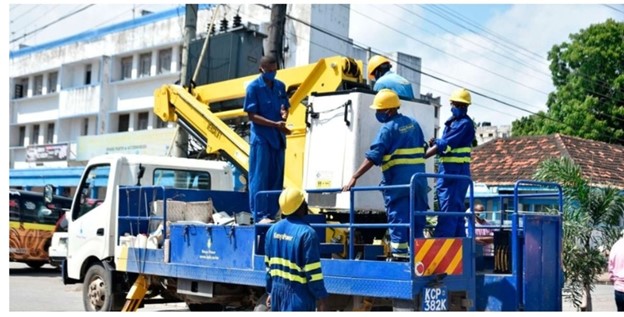
Kenya Power and Lighting Company (KPLC) has opened applications for its 2026 industrial attachment programme, offering continuing students an opportunity to gain practical workplace experience as part of the government’s broader efforts to promote youth empowerment and enhance employability.

In a notice, the utility company said the attachment programme will run for a maximum of three months, from September to November 2026, and is designed to equip students with hands-on skills and exposure to professional work environments across various departments.

“In line with the Government’s commitment to support youth empowerment, Kenya Power is offering exciting attachment opportunities to continuing students, to gain hands-on work experience and develop key employability skills,” the notice reads in part.

The opportunities are open to students pursuing Degree, Diploma and select Craft Certificate programmes at accredited learning institutions across the country.

“There are no vacancies for Information & Communication Technology (ICT)related courses for this intake,” the notice adds.

To qualify, applicants must be continuing students who will be available on a full-time basis throughout the attachment period.

They are also required to present a valid introduction letter from their respective learning institutions and maintain a valid personal accident insurance cover for the entire duration of the programme.

The company has issued separate application references for each category of applicants. Undergraduate students are required to apply using Reference No. KP1/ATTGRAD/26/3, while Diploma students are required to use KP1/ATTDIP/26/3.

Students pursuing Craft Certificates in Electrical and Electronics Engineering (Power Option) or Mechanical/Automotive Engineering should quote Reference No. KP1/ATTCERT/26/3.

Interested candidates have been directed to submit their applications online through the Kenya Power website under the Public Information tab and Career Opportunities section.

The application window will close on Monday, July 27, 2026.

Kenya Power said only shortlisted candidates will be contacted, warning that any form of canvassing will result in automatic disqualification.

Also Read: Kenya School of Government announces 122 job vacancies

Atlanta awaits: England and Argentina revive intense rivalry

0

Everything can wait! England and Argentina will revive their intense rivalry with a 2026 FIFA World Cup Semifinal meeting at the Atlanta Stadium on Wednesday evening. The Three Lions slayed the Vikings of Norway in the previous round thanks to Jude Bellingham’s brace, while La Albiceleste took down the stubborn Swiss – thanks in the main to a sensational strike from Julian Alvarez. Here’s the breakdown as England and Argentina battle for a spot in Sunday night’s final.

Head-to-head

Matches played 14

England wins 6

Argentina wins 3

Draws 5

England goals 24

Argentina goals 19

England and Argentina have met in 14 matches, with the Three Lions claiming six wins compared to three for Argentina, while five games have been drawn. Five of their matches have come in the World Cup, and include iconic clashes such as the 1986 Quarterfinal in which Diego Maradona scored both goals in a 2-1 win for Argentina, and the 1998 Round of 16 match in which David Beckham was sent off and the South Americans advanced on penalties. The teams’ most recent match was a friendly in Geneva in 2005 which England won 3-2.

Players to watch

England – Jude Bellingham

Tournament stats

– Appearances: 6

– Goals: 6

– Assists: 1

– Yellow/red cards: 1/0

A brace of goals in the Quarterfinal against Norway underlined Bellingham’s importance to England. He is not just a goal scorer, but a talismanic figure whose composure, leadership and determination inspires his teammates to lift their games.

Atlanta awaits: England and Argentina revive intense rivalry
epa13106330 Lionel Messi of Argentina in action during the FIFA World Cup 2026 quarterfinals match Argentina vs Switzerland, in Kansas City, Missouri, USA, 11 July 2026. EPA/CHRISTOPHER NEUNDORF

Argentina – Lionel Messi

Tournament stats

– Appearances: 6

– Goals: 8

– Assists: 2

– Yellow/red cards: 0/0

Lionel Messi has been brilliant for Argentina in this tournament, with 10 goal involvements (8 goals, 2 assists). He may have struggled to assert himself against Switzerland this past weekend, but oyu can bet he will be hungry to take on the English defence.

Key stats

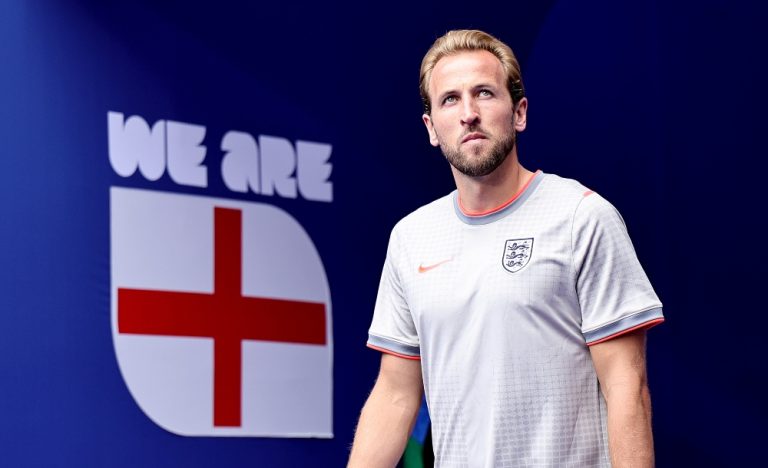
– 6 – Both Harry Kane and Jude Bellingham have scored 6 goals each for England at this World Cup.

– 3 – The 2026 World Cup is just the third time that the Three Lions have reached the semifinals of the tournament.

– 0 – Argentina have never lost a World Cup semifinal in four previous appearances in this round (1986, 1990, 2014 and 2022).

– 8 – Lionel Messi is the tournament’s co-leading scorer, having scored 8 times (level with France’s Kylian Mbappe).

10 Entrepreneurship Lessons from the 2026 World Cup Every Business Owner Should Learn

Tactical battle

England and Argentina arrive in Atlanta with contrasting but equally dangerous identities. England under Thomas Tuchel are structured and adaptable, mixing controlled possession with mid-block pressing and rapid transitions, often funnelling attacks through Jude Bellingham and Harry Kane.

Argentina, by contrast, are fluid and unpredictable, shifting between systems while building around a technically dominant midfield and Lionel Messi’s free role between the lines.

The key battle will be central control: if England’s double pivot can disrupt Argentina’s rhythm, they can spring forward quickly. But if Argentina dictate tempo and isolate England’s defence, Messi and their runners can exploit gaps decisively.

Broadcast details

Times CAT

Wednesday 15 July

21:00: Semifinal 2 – England v Argentina – LIVE on SuperSport World Cup Central

Kenya School of Government announces 122 job vacancies; details & how to apply

2

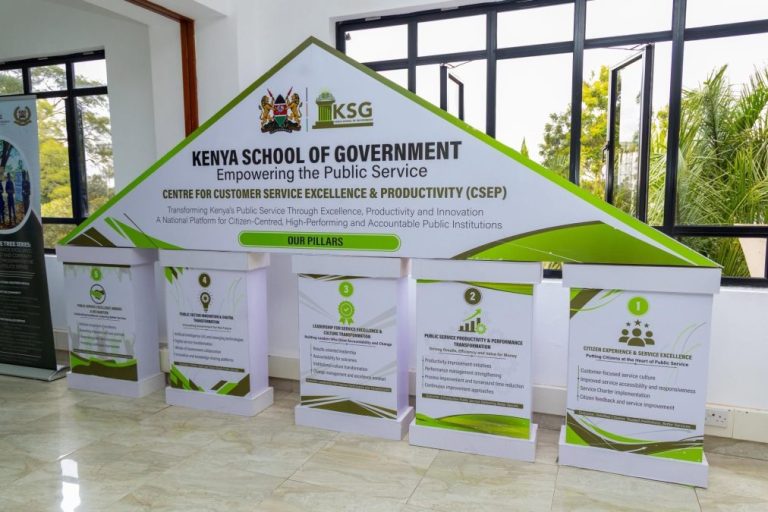
The Kenya School of Government has announced 122 job vacancies on behalf of its client, a leading hospitality group with hotels across Kenya.

The recruitment drive targets professionals across management, finance, hospitality operations, customer service, engineering, human resources, security, supply chain, and technical support functions.

The advertised positions are:

  1. Driver II -3 positions
  2. Kitchen Attendant III- 8 positions
  3. Laundry Operator- 3 positions
  4. Swimming Pool Attendant III – 2 positions
  5. Public Area Attendant I- 4 positions
  6. House Keeper III (Room Steward)- 7 positions
  7. Hotel Attendant I – 2 positions
  8. Waiter I -16 positions
  9. Cook I – 17 positions
  10. Artisan III (Plumber) – 1 position
  11. Artisan III (Electrician) – 2 positions
  12. Artisan III (Animator) – 1 position
  13. Artisan I (RAC Technician) – 2 positions
  14. Information Communication Technology Assistant II – 1 position
  15. Accountant I – 3 positions
  16. Accountant II – 6 positions
  17. Supply Chain Management Assistant I – 3 positions
  18. Hospitality Officer I – 1 position
  19. Human Resource Management Officer II – 1 position
  20. Senior Waiter – 2 positions
  21. Senior Cook – 4 positions
  22. Senior House Keeper (Public Area Supervisor) – 1 position
  23. Senior Hotel Attendant (Receptionist/Cashier) – 9 positions
  24. Senior Hospitality Officer – 1 position
  25. Senior Hospitality Assistant – 1 position
  26. Senior Accountant – 4 positions
  27. Senior Chef – 1 position
  28. Principal Hospitality Assistant – 3 positions
  29. Principal Information Communication Technology Assistant – 1 position
  30. Assistant Manager Supply Chain Management – 1 position
  31. Assistant Manager Finance – 1 position
  32. Manager Internal Audit – 1 position
  33. Senior Internal Auditor – 1 position
  34. Senior Security Officer – 2 positions
  35. Senior Sales and Marketing Officer – 2 positions
  36. Manager Hospitality Services – 1 position
  37. Manager Facilities Management & Maintenance – 1 position
  38. Manager Sales & Marketing – 1 position
  39. General Manager – 1 position

How to Apply

Interested candidates can access detailed information about individual positions, role profiles, qualifications, and experience requirements through the official recruitment website.

Applications must be submitted online through the application link provided on the recruitment portal.

Applicants should clearly indicate the position they are applying for and upload all the required documents, including an application letter, curriculum vitae, certificates, and testimonials.

The deadline for submitting applications is August 4, 2026.

Also Read: NLAS announces 78 job vacancies

Full list of new licensed digital lenders as total number hits 252

0

The Central Bank of Kenya (CBK) has licensed 25 additional Digital Credit Providers, raising the total number of regulated digital lenders in the country to 252.

In a notice on Tuesday, June 14, CBK said the licensing is part of the regulator’s efforts to protect consumers from rogue operators.

DCPs are institutions that carry out their lending activities digitally through Unstructured Supplementary Service Data (USSD) codes and loan products, including educational loans, development loans and short-term personal financing, among other products.

Since March 2022, CBK has received more than 800 applications and has continuously engaged with the applicants in reviewing their applications.

The review process focuses on business models, consumer protection measures and the fitness and propriety of proposed shareholders, directors and management teams.

“This is to ensure adherence to the relevant laws and, importantly, that the interests of customers are safeguarded,” CBK stated.

CBK noted that many other applicants remain at different stages of the licensing process, with most awaiting submission of the required documentation.

The new licensed DCPs are:

  1. Baraka Credit Limited
  2. Bashy African Credit Limited
  3. Centenary Micro Enterprise Services Ltd
  4. Equal Reach Credit Limited
  5. Eversure Credit Limited
  6. Glad Agritech Kenya Limited
  7. Hawkins Credit Limited
  8. Jiweze Credit Limited
  9. KalTris Limited
  10. KN Global Services Limited
  11. Lin-Cap Limited
  12. Nirvana Credit Limited
  13. Onward Digital Company Limited
  14. Pesakay Credit Limited
  15. Rapidcash Ventures Limited
  16. Rukisha Solutions Limited
  17. Signature Capital Limited
  18. Solvezy Technology Kenya Limited
  19. Statim Capital Limited
  20. Stemtide Credit Limited
  21. Stepwise Credit Limited
  22. Transventures Capital Limited
  23. Trinmarc Ventures Limited
  24. VisionFund Kenya Limited
  25. WeLend Limited

Also Read: CBK reopens Treasury bonds with returns of up to 14.19pc

Refurbishment emerges as top strategy for commercial property investors in Kenya

0

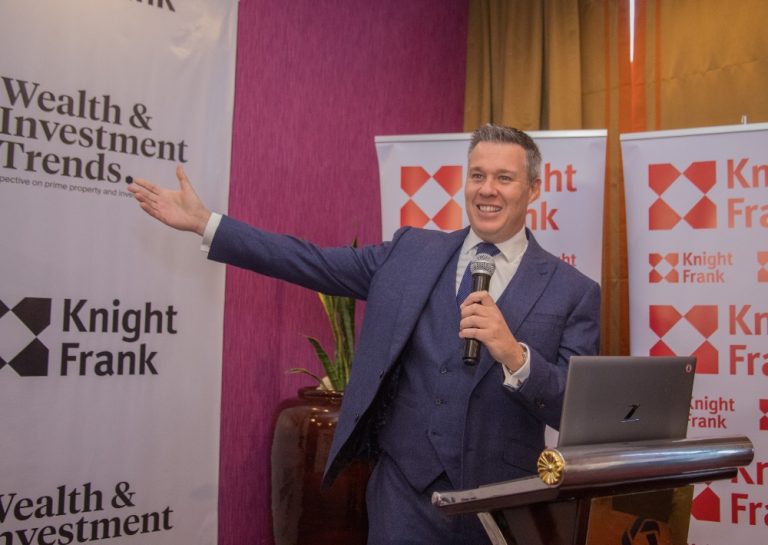
 Investors are increasingly turning their attention to refurbishing older commercial buildings as environmental, social and governance considerations reshape investment decisions in Kenya’s commercial property market, according to Knight Frank Kenya’s Wealth & Investment Trends Report 2026.

Rather than focusing solely on acquiring new developments, investors are identifying opportunities to upgrade existing office and commercial assets through energy-efficient improvements, renewable energy integration and sustainable building enhancements. The report finds that 38 percent of respondents said their clients are targeting underperforming commercial properties for refurbishment while maintaining their existing use, signalling a growing preference for improving asset quality and long term resilience.

Boniface Abudho, Research Analyst, Knight Frank Africa, “Commercial property is entering a new phase where value is increasingly created through thoughtful refurbishment. Investors recognise that improving the environmental performance of existing buildings not only extends their useful life but also enhances competitiveness in a market where occupiers are demanding higher quality space.”

The findings also show that sustainability is becoming central to investment decisions. Seventy five percent of respondents cited renewable energy as a leading consideration when assessing commercial property, while green building certifications continue to gain importance among investors seeking future-ready assets.

Knight Frank H2 2024 Market Update: Real Estate Navigates Economic Headwinds

“Refurbishment is no longer simply about aesthetics,” said Mark Dunford, CEO of Knight Frank Kenya. “It is about reducing operating costs, improving energy efficiency and ensuring buildings remain attractive to tenants and investors in an increasingly competitive market.”

Knight Frank notes that older commercial buildings present significant opportunities for landlords willing to modernise assets through improved energy systems, better building management technologies and upgraded occupier amenities. Such investments can help protect long-term asset values while supporting broader sustainability objectives.

Mark Dunford added, “The buildings that perform best over the coming years will be those that adapt to changing occupier expectations. Investors who enhance existing assets today are positioning themselves for stronger performance tomorrow.”

Boniface Abudho concluded, “Kenya’s commercial property sector is evolving. Refurbishment demonstrates that sustainable investment can deliver both environmental benefits and sound commercial returns without fundamentally changing a building’s purpose.”

The Wealth & Investment Trends Report 2026 highlights that ESG is increasingly influencing how investors allocate capital, reinforcing a broader shift towards resilient, efficient and future focused commercial real estate.