

Home Blog Page 42

Absa Bank Kenya partners with Google Hustle Academy to train 3,000 SMEs

0

Small and medium-sized enterprises (SMEs) across Kenya are set to benefit from enhanced business training and financial support following a strategic partnership between Absa Bank Kenya PLC and Google Hustle Academy.

The 12-month programme aims to support 3,000 SMEs by equipping entrepreneurs with digital skills, financial knowledge, business growth strategies and the tools needed to formalise and sustainably expand their enterprises.

So far, the initiative has delivered three training cohorts, attracting more than 600 SMEs.

The partnership combines Google’s expertise in digital innovation with Absa’s financial services capabilities to help entrepreneurs navigate an increasingly digital business environment.

Google Hustle Academy is a free, one-day virtual boot camp designed to help small businesses thrive in the digital economy.

The programme focuses on training entrepreneurs in the latest artificial intelligence (AI)-driven tools and techniques, creating a pathway for long-term business growth while connecting participants to Google’s suite of products and services.

Participants undergo a structured curriculum covering AI adoption and digital skills development, enabling them to improve efficiency, strengthen operations and scale their businesses.

The programme also incorporates practical workshops, mentorship sessions and peer-learning opportunities to ensure entrepreneurs gain actionable insights that can be applied directly to their enterprises.

Absa Bank Kenya Business Banking Director Renato D’Souza said the collaboration reflects the bank’s commitment to supporting entrepreneurs with the resources needed to succeed.

“We are thrilled to partner with Google to bring the Hustle Academy to more Kenyan entrepreneurs. This partnership is a testament to our commitment to empowering businesses with the tools they need to succeed. By combining Google’s digital expertise with our financial solutions, we are confident that we can help SMEs formalise and grow their businesses,” he said.

Under the partnership, Absa will provide participants with financial expertise, mentorship and access to tailored SME banking solutions, including credit facilities, cash flow management tools and market linkages.

The initiative forms part of Absa’s broader strategy to support the SME sector, which contributes more than 30 per cent of Kenya’s Gross Domestic Product and remains a key source of employment and economic growth.

The collaboration also supports Google’s goal of making digital skills and technology more accessible to entrepreneurs, enabling small businesses to leverage innovation to expand their operations and reach new markets.

Google Hustle Academy representative Kristy Grant said the programme is designed to strengthen Africa’s digital economy by empowering entrepreneurs with future-focused skills.

“We believe that the future of Africa’s digital economy lies in the hands of individuals and entrepreneurs alike. Our new strategy focuses on scaling reach by training individuals in the latest AI-centered tools and techniques. By doing so, we are creating a long-term pathway for growth that connects learners directly to world-class Google products.”

Also Read: Safaricom inches closer to 60M subscribers in Kenyan market

10 things you should do with your money before age 40

As people approach their 40s, financial decisions made in earlier years begin to reveal their long-term impact.

While the decade often comes with increased responsibilities such as raising children, supporting aging parents, paying mortgages, and preparing for retirement, it also presents an opportunity to strengthen financial security and build lasting wealth.

According to Benjamin Cheruiyot, a Financial Advisor at Abojani Investment, strategic financial planning before reaching one’s 40s can significantly improve financial stability and reduce future economic stress.

  1. Invest for the long term

One of the most important financial decisions before turning 40 is committing to long-term investments.

With years of earning potential still ahead, individuals can take advantage of compounding returns by investing in instruments that align with their financial goals.

Long-term investments provide an opportunity to steadily build wealth and prepare for future financial needs.

  1. Clear outstanding debts

Entering one’s 40s burdened by high-interest debt can limit financial growth and flexibility. Cheruiyot advises individuals to prioritize clearing bad debts, particularly consumer loans and credit obligations that attract high interest rates.

Becoming debt-free not only reduces financial pressure but also improves creditworthiness and access to future financing.

  1. Obtain adequate insurance cover

Insurance coverage is another critical pillar of financial preparedness. Cheruiyot emphasizes that obtaining adequate insurance protection early provides a safety net against unexpected events that could otherwise derail financial plans.

Whether it is health, life, property, or income protection insurance, having appropriate coverage helps safeguard both assets and loved ones while fostering a greater appreciation of long-term risk management.

  1. Build an emergency fund

Financial resilience also depends on the ability to handle emergencies without disrupting daily life or investment plans. Building a dedicated emergency fund allows individuals to respond to unforeseen circumstances such as medical emergencies, job loss, or urgent repairs without resorting to borrowing. Experts generally recommend maintaining easily accessible savings that can cover several months of essential expenses.

  1. Automate financial payments

As financial obligations increase with age, automation can play a valuable role in maintaining discipline.

Setting up automatic payments for bills, loans, savings contributions, and investments helps prevent missed deadlines, avoid penalties, and encourage consistent financial habits.

Automation also simplifies money management by reducing the likelihood of forgetting important financial commitments.

  1. Invest in personal development

Beyond traditional financial investments, investing in personal development remains one of the most rewarding commitments individuals can make.

Continuous learning through professional training, educational courses, skill development, and health improvement initiatives can enhance earning potential and overall quality of life.

In a rapidly changing economy, staying relevant and adaptable often translates into stronger financial prospects.

  1. Embrace financial independence

Cheruiyot also highlights the importance of embracing self-reliance. Establishing personal financial independence through home ownership, entrepreneurship, or other forms of asset creation can strengthen financial management skills and foster long-term stability.

Building one’s own financial foundation reduces dependence on external support and creates greater control over future outcomes.

  1. Avoid impulse spending

Another crucial aspect of financial success is managing spending habits. Impulse purchases may appear insignificant in the short term, but over time they can erode savings and hinder investment growth.

Practicing intentional spending enables individuals to prioritize meaningful financial goals while preserving resources for wealth creation.

  1. Diversify investments

Diversification is equally essential in protecting and growing wealth. Concentrating all financial assets in a single investment exposes individuals to significant risk should that investment underperform.

Spreading investments across different asset classes, sectors, and opportunities can help cushion against market volatility while improving the potential for sustainable returns.

  1. Maintain liquid assets

Finally, maintaining a portion of assets in liquid form ensures financial flexibility. Liquid assets can be converted into cash quickly when emergencies arise, allowing individuals to meet urgent needs without being forced to sell long-term investments at unfavorable prices.

Also Read: Expert guide: smart money moves to make after landing your first job

Expert guide: smart money moves to make after landing your first job

Landing a first job is often a major milestone for many young people. After years of schooling and job hunting, the first salary brings excitement, independence, and a sense of achievement.

However, financial experts caution that the decisions made during the first years of employment can have a lasting impact on an individual’s financial future.

According to Benjamin Cheruiyot, a financial advisor at Abojani Investment, newly employed individuals should focus on building a strong personal and financial foundation before pursuing ambitious investment opportunities.

  1. Establish the Basics

For a 25-year-old entering the workforce, Cheruiyot says the first priority should be securing the basic necessities that support a stable and productive lifestyle.

These include obtaining suitable housing, furnishing the living space, acquiring essential kitchenware, purchasing quality electronics and building a wardrobe that meets both professional and casual needs.

  1. Invest in knowledge and skills

Once the basics are in place, the next step should be investing in personal growth. This includes pursuing additional education, professional certifications, short courses and skills development programmes that can enhance career prospects.

Cheruiyot notes that increasing one’s knowledge and skills is among the most rewarding investments a young professional can make because it improves earning potential over time.

In a competitive job market, continuous learning can open doors to promotions, better-paying jobs and entrepreneurial opportunities.

  1. Improve the Situation of Parents and Siblings

Beyond personal advancement, young earners are also encouraged to consider the wellbeing of their families. Many young professionals become important sources of support for their parents and siblings soon after securing employment.

Cheruiyot advises that one of the most meaningful contributions a young worker can make is helping parents access medical coverage. As people age, healthcare needs tend to increase, making medical insurance an important safeguard against unexpected expenses.

Ensuring that parents are enrolled in a health insurance scheme can help protect family finances from the burden of recurring medical bills. Similarly, supporting younger siblings through school or college can create opportunities for long-term economic advancement within the family.

“Ensure parents are enrolled in NHIF. Medical expenses are recurrent in old age. Support siblings through school or college,” Cheruiyot advises.

  1. Build Social Capital

Cheruiyot emphasizes the need to think beyond short-term responsibilities and focus on building assets and relationships that will create future security.

One often-overlooked asset is social capital. This refers to the network of trusted friends, colleagues, mentors and professional contacts that individuals cultivate over time.

Strong relationships can provide emotional support, career opportunities, business partnerships and assistance during difficult periods.

5.Build Financial Capital

Equally important is the gradual accumulation of financial capital. Rather than spending every salary increase on lifestyle upgrades, young professionals are encouraged to channel part of their income into investments that generate future returns.

These may include savings plans, money market funds, stocks, bonds, real estate or other income-generating assets depending on an individual’s financial goals and risk tolerance.

Building financial capital early allows individuals to benefit from compound growth and creates opportunities for passive income in later years. It also provides a financial cushion against emergencies and economic uncertainties.

Also Read: I got a job in Europe. How do I budget my money to build my family a house?

Breaking down NCBA’s mortgage facilities for land and home ownership

0

When it comes to choosing the best investment vehicle to keep your financial future secured, the choices can be overwhelming, with many people stuck between starting a business, investing in shares, or venturing into farming.

While all the choices have their risks and rewards, land investment remains one of the best options given its appreciating value and minimal risks.

The rising population has pushed the demand for land high as people look for places to settle away from the hustle and bustle of the city.

The rise in land value has also been helped by the rapid urbanization in Kenya as cities expand and infrastructure projects take shape.

Statistics indicate that land in Nairobi and its metropolitan areas has appreciated by an average of 10-15 percent per year over the last decade, higher than most traditional investment returns.

According to the Nairobi Metropolitan Area Land Report, land in Kenya appreciates at an average of 10 percent per year, with some areas experiencing even higher rates.

Some of the areas that have in recent years experienced a high growth rate in land value are Ngong, Konza Technopolis, Matuu, and Nakuru, due to the ongoing expansions and infrastructure projects.

Land in areas like Matuu, one of the fastest growing towns in Machakos County,  is going for as low as Sh250,000 for a 1/8 acre plot, with the price set to skyrocket in the future when infrastructure completely takes shape.

Besides rising value over the years, land investment is also one of the stress-free investments, as no continuous management is required. The only charges that apply are the annual land rates, which are affordable.

Additionally, with land, you can use your title deed as collateral to secure loans for other ventures.

Interestingly, unlike many investments, such as stocks that require a lot of liquid money, owning a plot is achievable even with irregular income.

According to the Kenya Economic Survey, 83 percent of Kenyan workers are in the informal sector, relying on irregular incomes. This is a clear indication that not everyone can save and buy a plot.

As such, many companies have come up with flexible payment plans to enable Kenyans to own plots even with irregular income.

NCBA is one of the financiers that has earned consumers’ trust, with its affordable and flexible payment plans for Kenyans seeking to invest in land.

The bank is offering financing of up to 70 percent of the plot value for plots in Nairobi, Mombasa, and other major urban and rural areas within major towns.

The repayment period is flexible with tenors ranging from 36 to 60 months. The minimum loan amount is Sh500,000, with facility fees of 1 percent of the loan value for local clients, and 2 percent for diaspora clients.

Whether you are looking to purchase land for investment or construction, partnering with NCBA can be a great move.

NCBA Home Loans

Besides land financing, NCBA is also offering home loans for aspiring homeowners in major urban and rural areas within major towns.

Whether you are looking to construct or purchase a house, NCBA will offer financing tailored to meet all your needs with a flexible repayment period. Some of the available financing options are:

Home Purchase Loan: This mortgage facility offers financing of up to 105 percent of the value of the property.

It targets individuals seeking to acquire, construct, or finance property in major urban and rural areas within major towns. The loan’s terms are friendly, with a repayment period of up to 25 years.

Michael Njeru, a homeowner in Joska in Machakos County, is one of the beneficiaries of this product. Despite not having enough funds to finance the construction of his modern 3-bedroom house, Njeru’s dream became a reality after approaching NCBA with the plan.

“I had a good plan and strategy, and I think that’s how I made it to build the house. I did not have much money then, but I trusted God that everything would be okay. So, in February 2022, I approached NCBA with the plan to build a house, and they offered me Sh3 million funding,” he says.

NCBA Easy Build: This property financing solution gives customers full access to building plans and professional services. NCBA provides you with approved experts to build your house, guaranteeing quality.

These experts comprise Architects, Quantity surveyors, Structural, Mechanical, and Electrical engineers, who will supervise the construction process end-to-end. Under this facility, NCBA also has pre-approved house designs to select from.

Equity Release: Would you like to unlock the value of your property with financing against an existing mortgage or on a property as collateral?

This product provides financing of up to 90 percent of the property’s value on single and investment residential units, and up to 80 percent of property value for residential multiple dwellings and investment commercial property.

Borrowers enjoy a repayment period of up to 5 years for loans of Sh100,000 to Sh2 million and up to 25 years for loans above Sh2 million.

Also Read: Why more Kenyans are embracing debit cards for everyday payments

What fatherhood teaches us about security

Fatherhood: When we think about fathers, we often think about the lessons they teach us. This June, as the world celebrates fathers, we are given an opportunity to celebrate the men who have shaped our lives through their guidance, sacrifice and unwavering commitment to their families.

Throughout generations, fathers have taken on the role of teachers, some of them teaching us how to ride a bicycle, overcoming obstacles, or how to navigate life’s challenges. Others teach us through the quiet, everyday decisions they made and roles played to keep loved ones safe.

It is checking that the doors are locked before bed, teaching a child how to cross the road, planning for emergencies, and making sacrifices to provide stability and security for their loved ones. It is in these everyday actions that we begin to understand something deeper: fatherhood and security are closely connected. Both are rooted in a simple but powerful commitment, ensuring others can live, work, and thrive without fear.

Fatherhood and the Foundation of Security

At its core, fatherhood is about responsibility. It is about creating an environment where others feel safe, supported and empowered to thrive. In many ways, these same principles form the foundation of security.

Father’s Day: Man giving identity to homeless, fatherless kids

Why Prevention Matters More Than Reaction

Contrary to popular belief, security is not only about responding when something goes wrong. The most effective security often goes unnoticed. It is found in preparation, vigilance and prevention. It is the ability to identify risks before they become problems and to put measures in place that protect people from harm.

Fathers understand this instinctively.

A father teaches a child to look both ways before crossing the road, not because danger is imminent, but because preparation matters. He ensures emergency contacts are available, encourages responsible behaviour and imparts values that help children make sound decisions long after they have left home. These actions may seem ordinary, yet they reflect a mindset centred on protection and preparedness.

The same approach applies to communities, workplaces and businesses. Safety is not achieved through reaction alone. It is built through consistent actions, careful planning and a commitment to looking ahead.

The Shared Responsibility of Fathers and Security Professionals

Across the world, thousands of men and women work every day to help create safer environments. Among them are security professionals who spend long hours safeguarding homes, businesses, schools, hospitals and public spaces. According to industry estimates, tens of thousands of private security personnel support safety and business continuity across the country, often serving as the first line of response during disruptions.

For these professionals, many of them fathers, the responsibility of protection does not begin or end with their work shifts. They understand what it means to care deeply about the well-being of others because they carry that responsibility both at home and in their profession.

19-year-old born and raised in US, now working at Dandora dumpsite

Like many fathers, security professionals often make sacrifices that are rarely seen. They work nights, weekends and public holidays. They miss family celebrations and important milestones so that others can go about their daily lives with much needed peace of mind.

Their contribution, much like that of many fathers, is often most visible when something goes wrong, yet their greatest achievements are the incidents that never happen because they remained alert, prepared and present.

Technology Supports Protection, People Deliver It

This is where technology plays a supporting role, but never the leading one.

CCTV systems, access control systems, radios, and alarms extend vigilance, but they cannot replace human judgment. A camera does not interpret intent. A radio does not calm panic. A system does not decide between escalation and de-escalation. Behind every tool is a person whose values, training, and discipline determine the outcome.

Fatherhood operates on the same principle. It is not the rules, routines or resources that shape a child most profoundly, but the judgment, character and example of the person behind them. Like security, effective fatherhood relies not only on systems, but on the people who bring them to life.

This is why security, at its best, is ultimately about people.

Teacher who quit job for pineapple farming is now a pineapple millionaire

Leadership Through Consistency and Trust

Fatherhood also reminds us that true protection extends beyond physical safety. It involves creating environments where people feel respected, supported and valued. Children flourish when they feel secure. Communities prosper when people trust those around them. Businesses grow when employees and customers feel safe.

Ultimately, fatherhood teaches a quieter but equally important lesson, leadership is not about visibility, but consistency. The most effective leaders are rarely the most visible. They show up. They build trust over time. They reduce fear not through words, but through dependable action. This is as true in a home as it is in a security operation.

As we celebrate Father’s Day, it is worth reflecting on these shared values. The importance of preparation. The discipline of responsibility. The power of calm communication and the quiet strength of consistency.

This Father’s Day, take a moment to thank a father, a father figure, or a security professional who helps create stability in our daily lives.

After all, both fatherhood and security share a common purpose: helping others live with confidence, knowing that someone is looking out for their well-being.

What fatherhood teaches us about security
Jules Delahaije, SGA Security Chairman and CEO

Make free transactions with Co-op Bank prepaid card: how to get started

0

Arguably, most Kenyans, especially in urban areas, use cashless payments to make their day-to-day purchases, thanks to the high mobile penetration and increased financial literacy.

While cash is still the dominant payment method in Kenya, its usage is declining as mobile money rapidly gains popularity and card payments slowly gain traction.

While cashless payments have reduced crimes such as money-related robberies, it has brought in extra charges incurred by users when making transactions via mobile money services.

The good news is that consumers can evade transaction charges by simply transacting via prepaid cards.

For instance, the Co-op Bank prepaid card allows users to load money upfront and pay for travel expenses, online shopping and subscriptions, fuel, and other expenses.

There are no charges for paying with the card, and users can pay for something in Kenya or abroad. The only amount deducted from the card is the cost of the item or service being paid for, and users get sms notifications after every transaction.

The card is safe to carry around, and even if it is stolen, it cannot be used without the user’s secret PIN for amounts above Sh2,000.

In case of lost cards, users are advised to contact the bank immediately on 0703027000. Co-op Bank will block the card to protect the money in the account in question and replace the card.

How to apply for a co-op pre-paid card.

Visit the nearest Co-op Bank branch with a copy of ID and KRA PIN. Those below 18 years can use their parents’/guardians’ ID and KRA PIN.

Once the card is ready, applicants are alerted to collect it from the branch. They are then required to deposit Cash at any Co-op Kwa Jirani Agent or Co-op Bank Branch to load it.

Co-op Bank advises customers to use M-Pesa PayBill 400200. Account P******, where ****** is the card account and P must be in CAPS.

Also Read: How Co-op Bank’s MSME Overdraft facility is helping businesses stay afloat

Safaricom inches closer to 60M subscribers in Kenyan market

0

The latest sector statistics from the Communications Authority of Kenya (CA) for the Third Quarter of the 2025/2026 financial year (January–March 2026) show significant growth in active mobile subscriptions, which reached 84.1 million, representing a 7.4 percent increase from the previous quarter. This growth pushed the mobile penetration rate to 157.7 percent.

During the period under review, Safaricom further strengthened its leadership in the mobile subscriptions market, adding approximately 5.5 million new subscriptions and bringing its total subscriber base to 57.9 million, up from 52.4 million in the previous quarter. The operator is now approaching the significant milestone of 60 million subscribers in the Kenyan market with 68.9% market share.

Airtel is at 23.2 million subscribers and a market share of 27.6%. Equitel (Finserve) recorded a marginal increase in subscriptions to 1.51 million, representing 1.8% of the market, while Jamii Telecommunications (Faiba) stood at 883,944 subscribers, accounting for 1.1%. In contrast, Telkom Kenya experienced a sharp decline, losing 160,464 subscribers during the quarter to close at 584,438 subscribers, equivalent to 0.7% of the market.

The Communications Authority attributed this robust growth primarily to customer win-back campaigns run by operators during the reference period. Other sustaining factors include falling device costs, the expansion of high-speed mobile network infrastructure and the growing necessity of mobile-based economic and social services in Kenya. This shift continues to be marked by a migration from basic feature phones to smartphones, with smartphones now accounting for 63.7 percent of total mobile phones connected to networks.

Furthermore, as of March 31, 2026, Kenya had 62.6 million mobile broadband internet subscriptions. Safaricom also leads in this segment with 62.7 per cent market share compared to  64.3 per cent in the last quatre.

Inside Safaricom’s Sh95.6 billion record-breaking net profit in 12 months

In the fixed data segment, Safaricom leads with a 35.4 percent market share. Key challengers in this space include Jamii Telecommunications (19.5%), Wananchi Group (10.4%), and Poa Internet Kenya (9.7%). Smaller providers such as Ahadi Wireless (9.2%), Vilcom Network (6.0%), and Mawingu Networks (3.7%) continue to serve niche segments, while Starlink maintains a market share of 0.9 percent.

Safaricom remains the market leader in mobile money subscriptions with an 89.1 percent share, as the sub-segment grew to a total of 53.4 million active subscriptions.

Domestic voice traffic is distributed among operators as follows: Safaricom (64.96%), Airtel (34.88%), Telkom (0.07%), Equitel (0.05%), and Jamii (0.04%). For SMS traffic, the shares are: Safaricom (93.96%), Airtel (6.01%), Telkom (0.01%), Equitel (0.01%), and Jamii (0.0%).


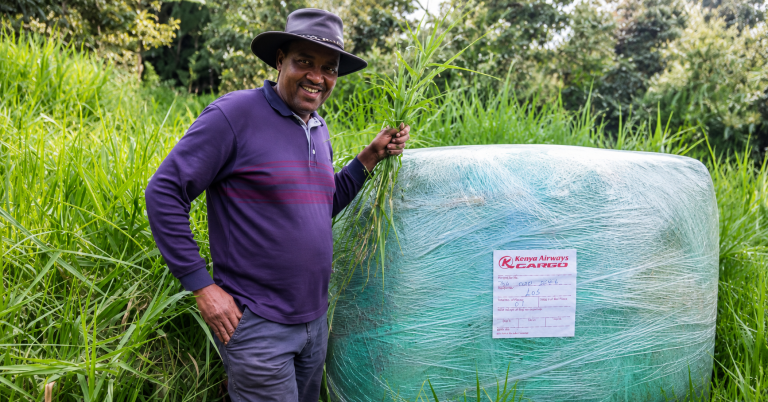
Nyeri farmer builds thriving fodder empire exporting across Africa

As climate change, shrinking land sizes and rising feed costs continue to challenge livestock farmers, fodder production is increasingly emerging as one of the most promising agricultural ventures.

The growing demand for quality animal feed, coupled with the expansion of dairy and livestock farming, has created lucrative opportunities for entrepreneurs willing to invest in forage production.

Unlike many traditional crops, fodder can offer multiple harvests annually, a ready market and the potential for value addition through products such as silage.

Mr. Githaiga Kihara, a farmer in Chorong’i village in Nyeri Central Sub-county, is among the few farmers who have successfully tapped into this opportunity.

What began as a personal quest to find quality feed for his dairy goats has evolved into a thriving agribusiness that now exports fodder planting materials to 12 African countries.

Kihara ventured into fodder farming a decade ago after shutting down his printing business in Nairobi. Seeking a new direction, he turned to agriculture and started researching ways to improve livestock nutrition on his farm in Gakindu, Mukurwe-ini.

“I started this enterprise about ten years ago in Gakindu, Mukurwe-ini sub-county, out of a need because I had some dairy goats which did not have enough feed. When I did some research, I realised that I could get better feed, and I went for it,” he told KNA.

His journey began with the cultivation of signal grass, introduced through support from the then Kenya Agricultural Research Institute (KARI), now the Kenya Agricultural and Livestock Research Organization (KALRO), at its Katumani station in Machakos County.

That initial experiment opened the door to a wide range of forage crops. Today, Kihara manages about 100 hectares under animal feed production, growing varieties such as Australian Red Napier grass, Guinea grass, Guatemala grass, Juceo grass, Signal grass, Super K vine and Nacedero.

Among these, Australian Red Napier has become the flagship product of his enterprise and the backbone of a growing export business.

Farmers from countries including Nigeria, Sierra Leone and the Democratic Republic of Congo are among those purchasing planting materials from his farm.

The popularity of Australian Red Napier stems from its superior nutritional value and productivity.

According to Kihara, the grass contains between 20 and 24 per cent crude protein, making it one of the most nutritious Napier varieties available to livestock farmers.

Beyond its nutritional benefits, the grass is highly productive. A single acre can yield between 180 and 200 metric tonnes of biomass annually. It also matures quickly, allowing farmers to begin harvesting within 45 to 60 days after planting.

The entrepreneur sells individual Red Napier splits at Sh50 each for retail customers, while bulk buyers pay as little as Sh15 per split, with room for negotiation depending on volume.

In addition to supplying planting materials, Kihara has established a successful silage business aimed at helping farmers overcome feed shortages during dry seasons.

His silage, packaged in 70-kilogram bales, retails at approximately Sh1,050 and can remain viable for up to three years when stored under recommended conditions.

The bulk of the silage is supplied to arid and semi-arid regions, including counties in the former North Eastern Province and parts of the Rift Valley, although local farmers also purchase the product as a reliable feed reserve.

Kihara currently dedicates about 75 hectares in Mweiga to silage production. To improve accessibility, he has established several sales outlets along the Ruring’u-Kiandu road, Gatitu, Karatina, Chaka Milimani and Sasini, with plans underway to open another outlet in Othaya.

While quality products have played a major role in the growth of the business, Kihara attributes much of his success to digital marketing.

Through social media platforms including Facebook, WhatsApp, Instagram and TikTok, where the enterprise operates under the brand name Moo Fodder Supermarket, he has been able to reach customers far beyond Kenya’s borders.

“When I started posting my products on Facebook, people started making inquiries, and it became a business. This went on until I got what I can call a breakthrough when I received an order of one million splits,” he recalls.

The overwhelming response encouraged him to diversify further, leading to the introduction of additional fodder varieties such as Super Napier, which has also performed well in the market.

Beyond commercial production, Kihara’s farm has become a centre for agricultural training, offering practical lessons on fodder establishment and management to individuals and organized groups.

The enterprise has also created employment opportunities for numerous young people who work as part-time marketers, helping connect farmers with quality forage products.

“This enterprise has given me a lot of money. I have never seen any other business which can potentially give you the kind of money this fodder business has given me,” he said adding that through the business, he has been able to educate his children up to university level, and build a house for his family.

Also Read: You need at least Sh500,000 to start a 300-bird layer farm. Here is the breakdown

Turn a 2 shilling bet into a massive multiplier on SportPesa world champion X

0

The exciting race to grab a piece of the massive KSh 1,000,000 prize drops is officially on, and Kenyan players are jumping on the opportunity. SportPesa has transformed online gaming yet again by introducing world champion X, a thrilling virtual soccer penalty shootout game. The new game proves that you do not need a lot of money to chase after life-changing payouts. The game offers players an incredible opportunity to multiply their stakes by up to 100x in seconds.

Sportpesa Kenya continues to transform online gaming entertainment by introducing highly rewarding experiences that fit the budgets of everyday citizens. SportPesa world champion X stands out as a fast-paced crash game designed to give huge wins to soccer-loving gaming fans. Winning is highly possible because the penalty kick setup is straightforward, highly visual, and determined by the player’s choices.

The mechanics behind world champion X payouts

The mechanics behind the massive multiplier on SportPesa world champion X rely on an escalating probability curve. Every single round kicks off with the multiplier sitting at a baseline of 1.00x your initial stake. As the striker steps up to the penalty spot, the potential payout begins to multiply in real-time. Unlike traditional betting, where odds are locked in before the game starts, this system allows your potential winnings to grow in real-time.

The magic happens when the ball flies past the goalkeeper, instantly multiplying your humble KSh 2 stake up to an incredible 100x return. This means a microscopic wager can effortlessly transform into a substantial cash payout in the blink of an eye. SportPesa Kenya uses a fully certified, transparent algorithm to ensure that every single multiplayer climb is completely random and fair. Players love the new game because it eliminates human bias, referee errors, and unpredictable real-world team drama.

From KSh 20 Aviator Stake to KSh 1.25M With SportPesa Kenya Aviator Multiplier

Chasing the one million prize drop

The chase for the massive KSh 1,000,000 prize drop on SportPesa world champion X adds an extra layer of excitement to every single session. Unlike online casino game promotions that require complicated rollover requirements, this massive cash pool is distributed entirely through random instant prize drops.

The platform rewards regular players by giving every active bet, regardless of its size, an equal opportunity to trigger. This means that even if your 2 KSh penalty kick does not find the back of the net, you could still instantly walk away with a slice of the one-million-shilling prize. The automated reward system operates silently in the background, continuously scanning active player lobbies to drop unpredictable cash gifts directly into user accounts.

Understanding the massive maximum payout

Unlike traditional casino games that limit your potential winnings to low amounts, these games leave the ceiling wide open for lucky players. Sportpesa’s world champion X offers a generous payout potential of up to KSh 7,000,000. This huge win completely redefines what a small budget can achieve, turning the world champion virtual penalty spot into a high-stakes arena.

Local fans are captivated by the idea that a single moment of perfect timing can instantly launch them into the millionaires.  The world champion X game has been built for a safe, thrilling environment where the dreams of everyday Kenyans are supported by real, verified multimillion-shilling payouts. Every time you step up to the virtual spot, you are taking a shot at a life-changing financial win.

Unbelievable wins as SportPesa Aviator just clocked a mind-blowing 63,297.42X multiplier

Conclusion

Sportpea’s world champion X has completely rewritten the rules of online entertainment in Kenya by making huge million-shilling payouts accessible to all. By dropping the entire barrier to a 2 bob stake, the platform ensures that absolutely anyone can experience the penalty shootout. The game successfully bridges the gap between simplicity and life-changing wealth.

With an incredible maximum payout of KSh 7,000,000 and a continuous KSh 1,000,000 random prize drop, the winning momentum across the country grows daily.  While the goalkeeper might occasionally make a save, a completely new opportunity resets every round. Your very 2 bob coin could be the next exact spark that triggers the 100x multiplier magic of SportPesa Kenya world champion X.

Nyandarua County announces 174 job vacancies; how to apply

0

The Nyandarua County government has announced a mass recruitment drive targeting professionals across various fields.

In a notice on June 18, Nyandarua County Public Service Board invited applications to fill 174 vacancies across various departments

“The Nyandarua County Public Service Board invites applications from suitably qualified, competent, and experienced persons to fill the following vacant positions in the County Government of Nyandarua,” the advertisement read in part.

Among the advertised positions are roles Health Services, Agriculture, Finance, Education, Roads, Public Administration, Trade, Water, and other sectors.

The County Government has advertised three Chief Officer positions and 171 staff positions across various departments.

The Chief Officer vacancies include Youth Affairs, Sports and Innovation (1), Water and Sanitation (1), and Education and Vocational Training (1).

For staff recruitment, the Health Services Department has the highest number of vacancies with 76 positions, followed by Finance, Economic Planning, Revenue and ICT (27), Education, Vocational Training, Culture, Gender and Social Protection (21), and Agriculture, Agribusiness, Livestock and Fisheries (19).

Other vacancies are available in the County Secretary and Head of Public Service Department (8), Roads, Transport, Energy and Public Works (9), Public Service, Administration and Devolution (4), Water, Sanitation, Environment, Tourism, Natural Resources and Climate Change (4), and Trade, Industrialization, Cooperative Development and Partnership (3).

How to apply

Interested and qualified candidates are directed to download and complete the employment application form available on the county website, www.nyandarua.go.ke.

Completed application forms together with supporting documents must be submitted to the Board in Ol’Kalou by July 1, 2026, at 5 p.m.

Application can be submitted either by registered mail or hand delivery in a sealed envelope addressed to the Secretary, County Public Service Board, P.O. Box 38–20303, Ol’Kalou.

Applicants must attach a detailed Curriculum Vitae (CV), a copy of their national identification card, academic and professional certificates, testimonials, and any other relevant supporting documents.

Successful applicants will be required to provide clearance documents to meet the requirements of Chapter Six of the Constitution.

Also Read: Laikipia County announces 191 job vacancies; how to apply