Home Blog Page 43

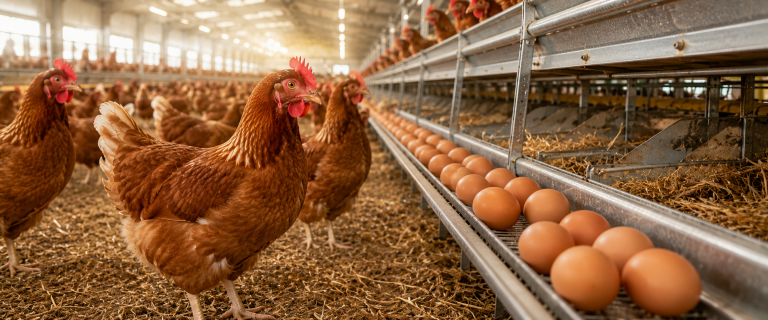
You need at least Sh500,000 to start a 300-bird layer farm. Here is the breakdown

Layer chicken farming continues to rank among the most profitable agribusiness ventures due to the consistent demand for eggs across households, hotels, schools and food businesses.

Unlike some agricultural enterprises that depend on seasonal markets, egg production provides farmers with a steady source of income throughout the year.

However, while the returns can be attractive, poultry experts caution that success in layer farming requires adequate capital, particularly during the early months when birds are not yet producing eggs.

Agriculture expert and agronomist Antonio Mudong’i estimates that a farmer intending to start a simple layers poultry farm with 300 birds should be prepared to invest at least Sh500,000 to comfortably cover the first six months of operation.

According to Mudong’i, feed is the biggest expense in layer farming as it accounts for approximately 80 percent of the total production cost. Below is the cost breakdown:

Feed Costs During the First Six Months

Day 1 to Day 60: Chick Mash

During the first two months, each chick consumes an average of 45 grams of feed per day. For 300 chicks, daily consumption comes to 13.5 kilograms.

Over a 30-day period, the birds consume:

13.5kg × 30 days = 405kg

For two months, total consumption rises to:

405kg × 2 = 810kg

Since chick mash is sold in 50kg bags, the birds will require:

810kg ÷ 50kg = 16.2 bags

With a 50kg bag of chick mash retailing at Sh4,000, the feed cost will be:

16.2 bags × Sh4,000 = Sh64,800

After factoring in transportation costs from the agrovet to the farm, the total expenditure for chick mash rises to approximately Sh70,000.

Day 61 to Day 120: Grower Mash

Between the third and fourth month, the birds transition to grower mash and consume an average of 65 grams each per day.

Total feed consumption during this period is calculated as:

65g × 300 birds × 60 days = 1,170,000g

This is equivalent to:

1,170,000g ÷ 1,000 = 1,170kg or 1.17 tonnes

The birds will therefore require:

1,170kg ÷ 50kg = 23.4 bags

At a retail price of Sh2,950 per 50kg bag, the feed cost comes to:

23.4 bags × Sh2,950 = Sh69,030

Adding transportation costs brings the total expenditure to approximately Sh70,000.

Mudong’i advises farmers to continue feeding birds on grower mash until the first egg is laid.

“The birds should be fed on grower mash until the day you see the first egg. This is important for the formation of high-quality eggshells. If the birds do not receive sufficient grower mash, farmers may experience challenges with weak eggshells during production,” he says.

Day 121 to Day 180: Grower Mash Mixed With Layers Mash

Assuming the birds have started laying eggs, feed consumption increases to an average of 90 grams per bird daily.

The total feed requirement for 300 birds over 60 days is:

90g × 300 birds × 60 days = 1,620,000g

This translates to:

1,620kg or 1.62 tonnes

The number of 50kg bags required is:

1,620kg ÷ 50kg = 32.4 bags

At Sh3,000 per bag for the grower and layers mash mixture, feed costs amount to:

32.4 bags × Sh3,000 = Sh97,200

Including transport expenses, the total cost rises to approximately Sh100,000.

Total Feed Budget

The cumulative feed budget for the first six months is:

  • Chick Mash: Sh70,000
  • Grower Mash: Sh70,000
  • Grower Mash Mixed with Layers Mash: Sh100,000

Total Feed Cost: Sh240,000

Cost of Chicks

A day-old chick currently costs Sh184.

For 300 chicks:

300 × Sh184 = Sh55,200

The cost can therefore be estimated at approximately Sh55,000.

Equipment Requirements

A farmer will also need basic poultry equipment.

Drinkers

A flock of 300 birds requires about six drinkers.

  • Cost per drinker: Sh300
  • Total cost: 6 × Sh300 = Sh1,800

Feeders

Ten feeders are sufficient for a starter flock of 300 birds.

  • Cost per feeder: Sh600
  • Total cost: 10 × Sh600 = Sh6,000

Bedding Materials

At a stocking density of six birds per square metre, approximately 25 bags of wood shavings will be required.

  • Cost per bag: Sh200
  • Total cost: 25 × Sh200 = Sh5,000

Labour and Water Costs

Labour remains another significant expense.

Assuming a farmhand earns Sh10,000 per month, labour costs over six months will amount to:

Sh10,000 × 6 = Sh60,000

Water expenses are estimated at:

  • Sh10,000 for six months

Farmers should also budget for brooding equipment, including two brooding jikos and charcoal for the chicks during their early growth stages, as well as disease management.

Minimum Capital Requirement

When all major expenses are considered, including chicks, feed, equipment, labour, water and brooding costs, Mudong’i advises prospective poultry farmers to have a minimum capital of Sh500,000 before venturing into a 300-bird layers project.

“If you want to start a layers chicken farm of 300 birds, the least amount you should have is Sh500,000,” Mudong’i says.

Also Read: Why your chickens are not laying enough eggs: top causes and solutions
Paul Muthaura appointed AmCham Kenya CEO

0

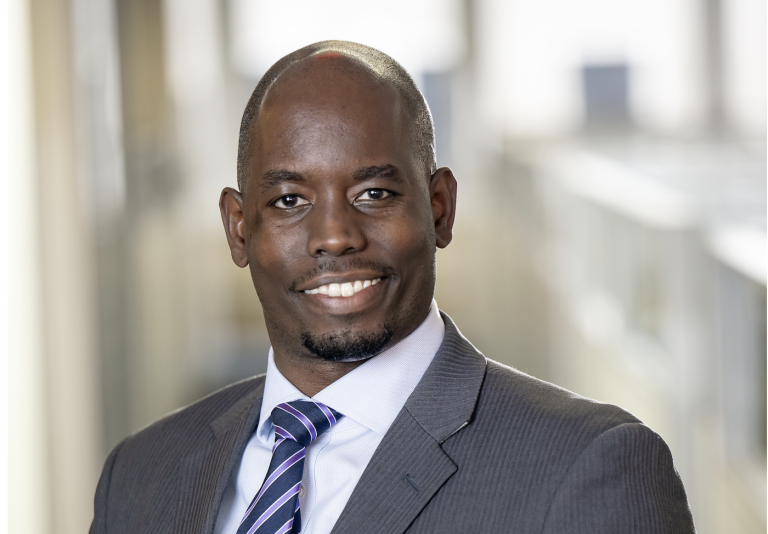
AmCham Kenya: The American Chamber of Commerce Kenya has appointed Paul Muthaura as its new Chief Executive Officer, effective June 17, 2026.

The appointment comes at a critical time as Kenya and the broader East African region continue to strengthen trade, investment, and economic partnerships with the United States. Muthaura brings decades of experience in financial markets, regulatory reform, corporate leadership, governance, and sustainable finance.

Experienced Leader Takes Helm at AmCham Kenya

Before joining AmCham Kenya, Muthaura served as Chief Executive Officer of the Africa Carbon Markets Initiative, where he played a key role in advancing carbon market development and climate finance frameworks across Africa.

His extensive leadership portfolio also includes serving as an independent consultant at EMRD Advisory Limited, Chief Executive Officer and Principal Officer of ICEA Lion General Insurance Company, and Chief Executive Officer of the Capital Markets Authority.

During his tenure at the Capital Markets Authority, Muthaura led significant reforms aimed at enhancing market integrity, expanding investor participation, and promoting regulatory innovation within Kenya’s financial sector.

8 Tips for Setting Up Your Company the Right Way

Board Expresses Confidence in New CEO

AmCham Kenya Board President Angela Ng’ang’a welcomed the appointment, describing Muthaura as a leader with a strong blend of regulatory expertise, private sector experience, and strategic vision.

“Paul brings a compelling combination of regulatory expertise, private sector leadership, and strategic vision, with a nuanced understanding of Kenya’s policy and investment landscape. His track record of driving institutional growth and cross-sector collaboration makes him exceptionally well-suited to lead AmCham into its next chapter,” she said.

Ng’ang’a added that his leadership will help the Chamber create greater value for members through stronger advocacy, enhanced stakeholder engagement, expanded business opportunities, and deeper economic partnerships between Kenya and the United States.

Focus on Strengthening Kenya-U.S. Trade Relations

Speaking following his appointment, Muthaura said he was honored to join the Chamber at a time when opportunities for Kenya-U.S. commercial engagement are expanding.

“I am honored to join AmCham Kenya at such a consequential moment for U.S.-Kenya commercial relations. The opportunities to strengthen trade, attract investment, and expand economic collaboration between our countries have never been greater,” he said.

Your business is designed to deliver the results you see

He noted that he intends to work closely with members, government agencies, investors, and the wider business community to strengthen Kenya’s competitiveness, deepen commercial ties, and unlock new opportunities for innovation, investment, and economic growth.

Distinguished Career in Governance and Finance

Muthaura is an Advocate of the High Court of Kenya and an Honorary Fellow of the Institute of Certified Public Secretaries. He holds academic and professional qualifications from the University of Warwick, London School of Economics and Political Science, Maastricht School of Management, KCA University, and the Academy of Executive Coaching.

He also serves as a Trustee of the International Valuation Standards Council and sits on the boards of ICEA LION Asset Management and British American Tobacco Plc. In addition, he is an Independent Member of the Program Investment Committee at the Financial Sector Deepening Trust Kenya.

AmCham Kenya’s Growing Influence

AmCham Kenya is one of the leading business associations promoting trade and investment between Kenya and the United States. The Chamber represents more than 300 companies, including major multinational corporations and local businesses operating across diverse sectors of the Kenyan economy.

Through advocacy, policy engagement, trade facilitation, and business networking, the organization seeks to foster an enabling business environment that supports entrepreneurship, innovation, sustainable development, and economic growth.

The appointment of Muthaura is expected to further strengthen the Chamber’s role in advancing Kenya-U.S. economic relations at a time when both countries are seeking to expand trade, investment flows, and private-sector collaboration.

Laikipia County announces 191 job vacancies; how to apply

0

The Laikipia County government has announced a mass recruitment drive targeting professionals across various fields.

In a notice, the Laikipia County Public Service Board invited qualified candidates to submit applications to fill 191 vacancies in medical, nursing, public health, laboratory, pharmaceutical, nutrition, engineering, and administrative fields.

“Pursuant to the above constitutional and legal provision, the board invites applications from suitably qualified persons who wish to be considered for the positions listed below,” the notice reads in part.

Interested candidates are required to submit applications online through the Google Forms link on the County’s website.

The county added that all supporting documents should be combined into one PDF document, not exceeding 5 MB.

Only shortlisted candidates will be contacted and will be required to present their academic and professional documents during the interview.

The county has set July 8 as the deadline for submitting applications.

Below is the full list of the advertised positions:

  • Assistant Community Health Officer III – 7 vacancies
  • Assistant Health Records and Information Management Officer III – 4 vacancies
  • Assistant Public Health Officer – 1 vacancy
  • Assistant Occupational Therapist III – 6 vacancies
  • Assistant Physiotherapist III – 2 vacancies
  • Community Health Officer III – 2 vacancies
  • Community Oral Health Officer III – 2 vacancies
  • Dental Technologist I – 1 vacancy
  • Enrolled Nurse III – 26 vacancies
  • Health Administrative Officer III – 2 vacancies
  • Health Records and Information Management Assistant III – 5 vacancies
  • Medical Engineering Technician III – 1 vacancy
  • Medical Engineering Technologist III – 2 vacancies
  • Medical Laboratory Technologist III – 5 vacancies
  • Medical Officer – 5 vacancies
  • Nursing Officer (Intern) – 18 vacancies
  • Nutrition and Dietetics Officer – 3 vacancies
  • Nutrition and Dietetics Technologist III – 5 vacancies
  • Orthopaedic Trauma Technician III – 2 vacancies
  • Pharmaceutical Technologist III – 2 vacancies
  • Radiographer III – 7 vacancies
  • Registered Clinical Officer II – 12 vacancies
  • Registered Nurse III – 70 vacancies
  • Senior Assistant Director of Medical Services/Medical Specialist I (General Surgeon) – 1 vacancy

Also Read: Modern Furniture Pacific announces job opportunities; how to apply

Modern Furniture Pacific announces job opportunities; how to apply

0

Renowned businessman and CEO of Modern Furniture Pacific, Gibson Murage, has announced job opportunities for various professionals.

In a video posted on the company’s Facebook Page, the company said it is seeking to recruit individuals to fill positions in sales, Human Resources, and Secretarial Departments. The company is also recruiting carpenters to assist in various carpentry work.

According to the CEO, no previous work experience is needed for sales representatives, adding that successful applicants would be trained.

“No previous work experience is needed, but you must have an academic background in sales. The company will cater for the training,” Murage said.

However, he noted that carpentry applicants need to have prior experience and should include details of places they have worked before, as well as past projects they have completed.

The businessman encouraged job seekers from all over the country to apply, adding that Kenyan citizens would be given the first priority.

How to apply

Interested candidates have been urged to submit their applications and supporting documents to [email protected].

Applicants must clearly indicate their academic background, skills, and areas of expertise in the application. The CEO warned applicants against contacting him personally, maintaining that the right job application channel must be followed.

Successful applicants will be deployed to run operations at the company’s newest branch in Kihunguro, Ruiru.

Murage said the formal review of applications will be conducted between Monday, June 22, and Wednesday, June 24.

“Don’t try to contact me in person or the manager because you will not be considered,” he warned.

Modern Furniture Pacific, headquartered in Ruiru, Kiambu county is one of the popular furniture stores in the country.

The company, which deals with the sale of a variety of furniture, including beds, sofa sets, and dining tables, has branches in Ruiru, Nyeri, and Nakuru, creating employment to hundreds of Kenyans.

Also Read: Gibson Murage: School dropout who owns multi-million Modern Furniture Pacific

https://www.facebook.com/share/v/1EFyCVvUCM/

Equity Group enters retail pharmacy business with first outlet in Nairobi

0

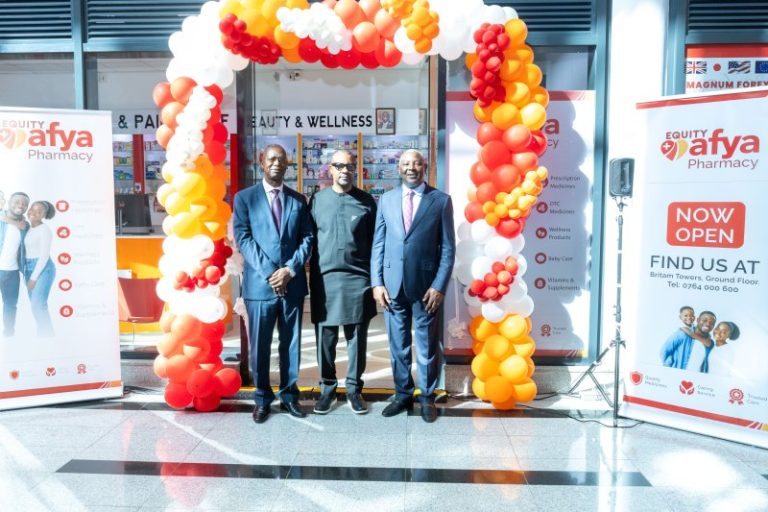
Equity Group-backed healthcare franchise Equity Afya has expanded its healthcare footprint with the launch of its first standalone community pharmacy in Nairobi, marking its entry into the retail pharmaceutical sector.

The new facility, situated at Britam Towers in Upper Hill, signals the beginning of a wider expansion strategy that will see the organization establish a network of community pharmacies across Kenya and other African markets.

Speaking during the launch on Wednesday, Equity Group Foundation Executive Chairman Dr. James Mwangi said the initiative is intended to bridge longstanding gaps in access to affordable, quality medicines, particularly for communities that remain underserved by formal healthcare systems.

He noted that many Kenyans still face challenges accessing licensed pharmacies, a situation that continues to contribute to disparities in healthcare delivery and outcomes.

“Today, very few Kenyans have convenient access to a licensed pharmacy, underscoring deep inequalities that leave vast populations underserved and excluded from essential care,” said Mwangi.

According to Dr. Mwangi, the community pharmacy model is designed to make essential medicines more accessible while significantly lowering healthcare costs.

He said the initiative aims to reduce the cost of medicines by between 50 and 80 percent through an integrated healthcare approach that combines pharmaceutical services with broader medical care.

“Through this franchise model, our strategic objective is to enhance access to high-quality, affordable medicine and integrated healthcare, with the goal of reducing the cost of medicine by 50 percent to 80 percent while significantly expanding access to safe and effective pharmaceutical care for all Kenyans,” he said.

The pharmacy will stock both prescription and non-prescription medicines and offer additional preventive health services, including free blood pressure and blood sugar screening.

Customers will also have access to nutrition and wellness advice, with referrals to Equity Afya clinics provided where specialized medical attention is required.

The launch represents a strategic evolution of Equity Afya’s healthcare model, extending its services beyond clinic-based care to include dedicated pharmaceutical outlets within communities.

Equity Afya currently serves an average of 130,000 patients every month through its growing healthcare network. The franchise operates 146 facilities across Kenya and an additional four in the Democratic Republic of Congo.

The network is staffed by multidisciplinary healthcare professionals, including doctors, nurses, pharmacists, pharmaceutical technologists, dentists, oral health officers, laboratory technologists, sonographers and optometrists.

Its facilities are equipped with modern medical technology to support the delivery of both preventive and curative healthcare services.

Also Read: EU and Equity Group Foundation partner to send 100 Kenyan scholars annually to European Universities

Ruto in secret JKIA deal with controversial Zimbabwean man

0
President William Ruto has once again unleashed a controversial multi-billion deal involving the Jomo Kenyatta International Airport (JKIA) that is shrouded in secrecy. This JKIA deal comes after the previous controversial deal between President Ruto’s government and the Indian conglomerate Adani Group flopped following intense public pressure and demonstrations.

In the deal, the government has handed a Chinese firm a mega contract for the modernization and expansion of the JKIA. The deal is also alleged to involve a Zimbabwean figure who has lately become a regular visitor at State House, Nairobi. The Zimbabwean has been identified as Wicknell Chivayo.

It however remains a mystery when the tender for the JKIA project was announced, how interested bidders were vetted, which bidders presented applications, and how the Chinese and Zimbabwean were awarded the deal.

Red flags have also been raised over the involvement of the Zimbabwean figure in such a mega national deal, with questions raised on why President Ruto can’t seem to carry out a transparent process for the airport’s modernization.

According to a report that appeared in the Daily Nation on Thursday, the JKIA contract is estimated to cost between Sh150 billion and Sh180 billion.

The report further quotes sources associated with the Kenya Airports Authority (KAA) saying that there were two Chinese firms that had allegedly participated in a bid that was allegedly opened in March 2026. The two alleged firms are the China Road and Bridge Corporation (CRBC) and Sinohydro.

Claims now are that a company that is fully owned by Chivayo will implement the modernization of JKIA in partnership with CRBC. Curiously, it has remained puzzling why a mega company such as the CRBC which is known to have operated mega infrastructure projects required input from a Zimbabwean businessman who is closely associated with President Ruto.

Peter Muthoka: Why I sold my JKIA business to Germans at Sh5.2 billion

The Consumers Federation of Kenya (COFEK) told a local publication that it would challenge the involvement of Chivayo in the project, terming him as fraudulent.

“COFEK has established that joint-venture partner IMC Construction Kenya Limited is wholly owned by Chivayo, a man COFEK had already petitioned the High Court to bar from Kenya entirely, citing his fraud and money-laundering record and tender scandals in Zimbabwe, including the Gwanda solar project and Zimbabwe Electoral Commission contracts,” COFEK Secretary-General Stephen Mutoro told the media.

The deal being pushed by Ruto and his government has also drawn condemnation from Kenyans on social media with may wondering how the government settled on a Wicknell Chivayo, the contractor from Zimbabwe.

“Why is it so hard for our government to build a new international airport as Ethiopia and Rwanda have done in an above-board deal? Why do we like to use people with criminal pasts?” lawyer Donald B Kipkorir had posed on X (formerly Twitter).

“Is it so hard to undertake a multi-billion project with open transparency? How can we use a contractor from Zimbabwe of all places? JKIA deserves our respect and patriotism.”

In March, Kenya Airports Authority’s acting chief executive officer Mahamud Gedi, had said that the construction works at the airport would be funded by the government.

One of the ways through which the government would fund the project would include the securitization of the Air Passengers Service levy which is currently Sh18.5 billion. This levy would be used to support a Sh154.8 billion bond for the project.

“The government of Kenya is going to fund this project through a government finding model, not through PPP as was previously decide,” Gedi had said.

According to statement by the Cabinet Secretary for Roads and Transport Davis Chirchir, the JKIA has a capacity of about 8.93 million passenger and is expected to hit a capacity of  22.31 million passengers by the year 2045.At the same time, air cargo at JKIA is expected to grow from 407,214 tons in 2025 to 860,400 tons in 2045.

All in One Place: Fixing the small money problems that add up every day

It shows up in small, familiar ways. A moment of hesitation before sending money because you are not sure you keyed in the right number. The quiet frustration of repeating the same payment several times. The panic of hitting a transaction limit when you are already at the till. Or that lingering doubt after sending money to an agent; was that the right one?

These are not major financial crises. They are everyday frictions. But they add up.

They sit in the background of daily life, shaping how people interact with their money; cautiously, sometimes anxiously, often with unnecessary effort.

For a long time, digital banking has focused on enabling transactions, not easing that stress. Making it possible to send money, but not always making it simpler, faster, or safer in a way that feels intuitive.

Take something as simple as sending money. Traditionally, it has required careful attention; asking for details, confirming digits, double-checking names. It is functional, but fragile; one mistake, and the consequences are immediate.

Then there is the weight of repetition. For anyone making multiple payments, whether a small business owner paying suppliers or an individual supporting family, transactions can feel like a task list that never ends. Each one separate and requiring attention.

Control, too, has long been a silent pain point. Few things are more frustrating than having funds available but being unable to transact because of preset limits.

And then there is trust.

As digital transactions expand, so do risks around fraud and mistaken transfers. One of the most sensitive areas has been float purchases, where errors or bad actors can lead to direct financial loss.

Equity Online for Business boosts efficiency for SMEs, corporates and public sector

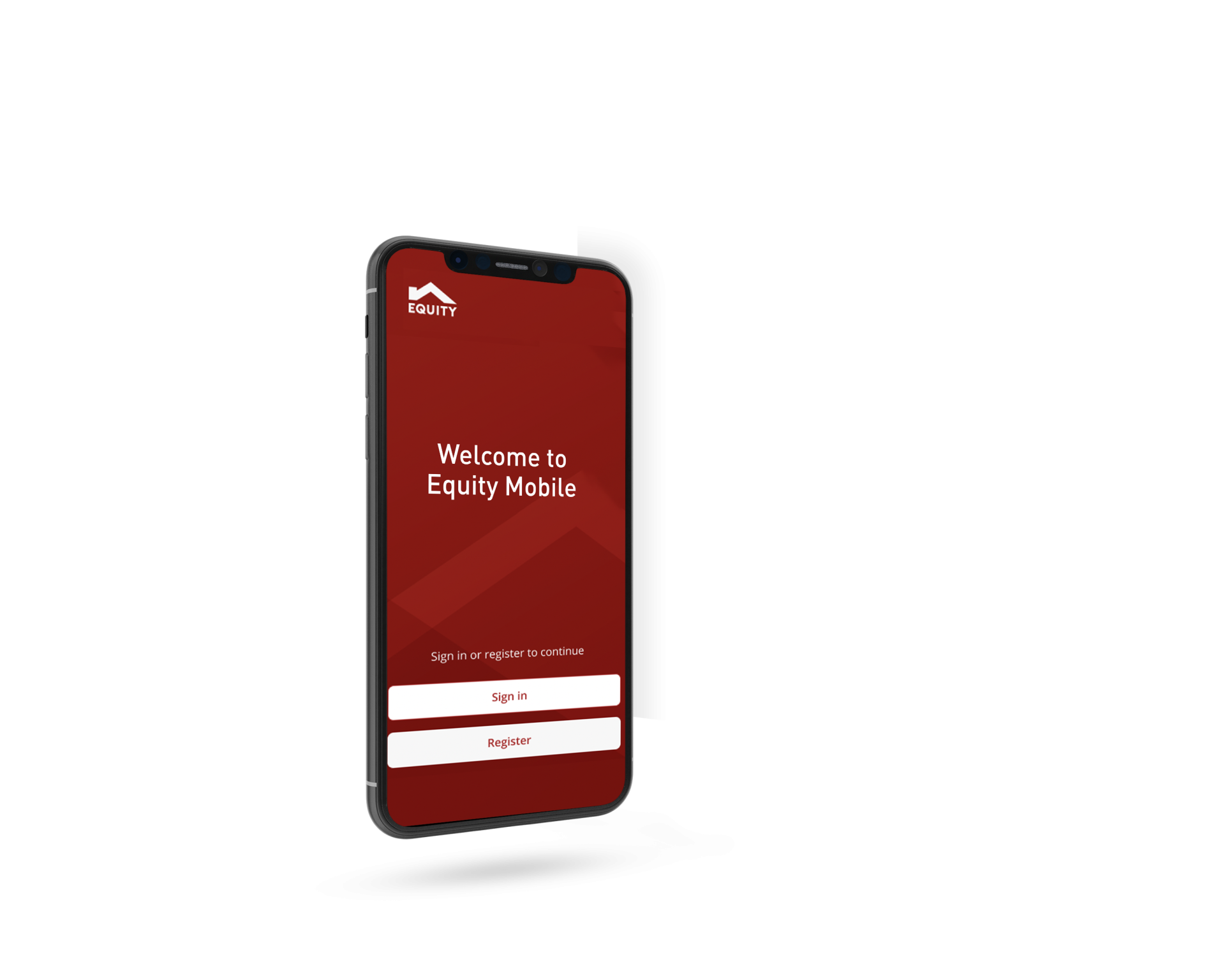
It is against this backdrop that the Equity has introduced new features on the Equity Mobile App designed around these everyday friction points.

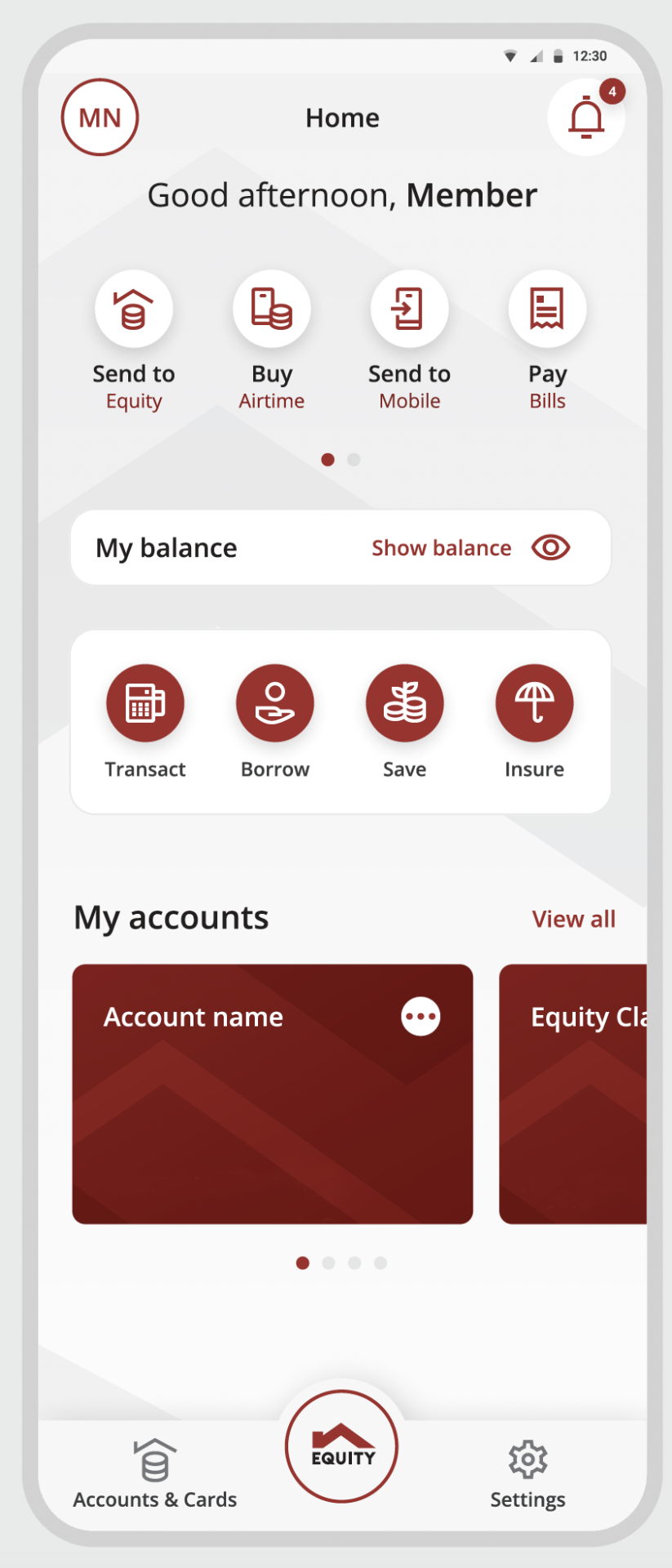
QR-based payments on the Equity Mobile App now enables users to generate their own QR codes to request payments or simply scan to send money. Instead of typing, users scan a code. This removes uncertainty and replaces it with speed and clarity; allowing transactions to happen without the constant need to double-check.

Bulk payment functionality on the Equity Mobile Ap now enables users to handle multiple transactions in a single action, whether entered manually or uploaded through a file. What used to take time and focus becomes one workflow. Less repetition, fewer errors, and significantly reduced mental load.

All in One Place: Fixing the Small Money Problems That Add Up Every Day

Transaction limits management on the Equity Mobile App now allows customers to view, adjust, and personalize their own limits; temporarily or permanently. It brings flexibility back into the hands of the user, whether it is for a large payment, a business cycle, or an urgent need. The system adapts to the customer, not the other way around.

The updated float purchase process on the Equity Mobile App introduces an added layer of protection through a pre-approved agent list. Customers only transact with agents they have explicitly trusted and added themselves. Every new addition goes through verification and approval. It shifts float transactions from open exposure to controlled trust; reducing risk while maintaining convenience.

Across all these advancements, a pattern begins to emerge: less friction, more control, fewer uncertainties.

These new features simplify how customers interact with money in their daily lives. The focus is not on adding complexity, but on removing it; redesigning moments that previously required effort, caution, or repeated steps.

To access Equity Mobile App, please log on to: https://equitygroupholdings.com/ke/download-equity-mobile-app/
All in One Place: Fixing the Small Money Problems That Add Up Every Day

NCBA hands over chery vehicles to rubis energy in fleet financing deal

0

NCBA has handed over 24 Chery Tiggo vehicles to Rubis Energy Kenya, marking a significant milestone in a strategic partnership that has spanned more than two decades.

The handover forms part of a broader asset financing solution under which NCBA leases and manages a fleet of 72 passenger and commercial vehicles for Rubis Energy Kenya. The structure enables the business to optimise capital allocation while maintaining high fleet availability, supported by comprehensive fleet management delivering utilisation rates above 98%.

Speaking during the handover ceremony, NCBA Bank Kenya Managing Director, James Gossip said the milestone reflects both the depth of the relationship and the Group’s evolving role as a solutions partner and trusted advisor to its corporate clients.

“Our relationship with Rubis Energy Kenya is built on more than two decades of trust, shared growth and a commitment to creating long-term value. Over the years, we have evolved from a banking provider into a strategic partner, supporting the business through tailored financial solutions that enable operational efficiency and sustainable growth.”

He added:

“We do not approach our clients with predefined products. We structure solutions around each customer’s operating model, industry dynamics and growth ambitions. This is what allows us to deliver long-term value beyond financing.”

This approach is aligned to a shifting operating environment in Kenya, where businesses are increasingly prioritising capital efficiency. Economic growth remains steady, with GDP projected at approximately 4.5% to 5% in 2026, supported by expansion across key sectors such as energy, infrastructure and logistics. At the same time, rising financing costs, currency pressures and changing consumer behaviour are accelerating the transition toward asset-light and efficiency-driven models.

Kenya Airways & Rubis to launch Africa’s first dedicated SAF refinery

SMEs, which contribute and estimated 40% of Kenya’s GDP, remain central to economic activity, further reinforcing the need for structured and accessible financing solutions that enable productivity and growth. In this context, asset financing solutions such as leasing and hire purchase are becoming critical tools for capital optimisation.

NCBA is strategically positioned to meet this need, with a leading role in asset finance and a strong track record in hire purchase solutions. The Rubis partnership illustrates how the Bank structures sector-specific solutions that enable clients to sustain operations, optimise capital and scale efficiently.

Rubis Energy Kenya Managing Director Frederic Joseph Maupetit welcomed the fleet renewal, noting its impact on operational performance and capital efficiency.

“At Rubis Energy Kenya, our mission is to serve our customers well. That sounds straightforward. But behind it is a network of more than 300 service stations and thousands of commercial and industrial customers, spread across this country, each one requiring daily attention — from our commercial teams visiting partners, our field staff troubleshooting on site, our people moving constantly to make sure that what we promise, we deliver.” Rubis Energy Kenya Managing Director, Frederic Maupetit remarked, “These vehicles are for them. This is a direct investment in the people who carry the Rubis name onto the roads of Kenya every single day. Better tools mean better service. And better service is what our customers deserve.”

Beyond asset financing, NCBA provides an integrated corporate banking platform that brings together asset finance, leasing, trade finance, cash management solutions, investment banking and insurance. This one-stop-shop approach enables the Group to deliver holistic solutions that address both financing and operational needs across entire value chains.

The energy sector remains a key focus for NCBA, given its role in driving industrial activity and economic growth. 2025 sector data shows continued expansion, with fuel consumption rising by over 10% year-on-year, and electricity consumption rising by over 6% year-on-year, reflecting increased commercial and industrial demand. NCBA continues to support players across the energy value chain with tailored solutions that enable efficient capital deployment, supply chain optimisation and regional expansion.

Salvador Caetano Kenya Managing Director Aurélien Glay highlighted the importance of partnerships in delivering end-to-end solutions for corporate clients.

“When we started working together on this first fleet, it was never just about supplying vehicles. It was about understanding the operational needs of our customer, finding the right financial structure, aligning expectations, and, ultimately, building a solution that creates value for everyone involved.”

Since 2004, NCBA and Rubis Energy Kenya have built a relationship anchored on trust, innovation and shared growth. The fleet renewal programme reflects a proven model that enables businesses to preserve capital, maintain operational efficiency and scale sustainably, while reinforcing NCBA’s position as a strategic partner across sectors.

15 Nations sign Mombasa declaration to strengthen fisheries transparency and fight Illegal fishing

0

Fifteen national governments from across Africa, Asia, the Caribbean, Europe, and the Pacific today adopted the Mombasa Declaration at the 11th Our Ocean Conference, committing to advance global fisheries transparency and strengthen efforts to combat illegal, unreported, and unregulated (IUU) fishing.

The Mombasa Declaration is a call to action for coastal and flag States on fisheries transparency, with a particular focus on better collection and dissemination of vessel information and allowing for better access to fisheries data. It builds support and momentum for the Global Charter for Fisheries Transparency, which outlines 10 low-cost or no-cost policy principles that governments can adopt globally, in law and in practice.

Endorsed at Our Ocean by a diverse coalition of countries including Belgium, Cameroon, Chile, the Dominican Republic, France (on behalf of its overseas territories), Gambia, Ghana, Guinea, Liberia, Panama, Papua New Guinea, Peru, Republic of the Congo, Somalia, and South Korea – the Mombasa Declaration unites nations committed to strengthening ocean governance and leading global action on fisheries transparency. Once adopted, signatory countries will begin putting the Declaration into action. The signing launches a campaign for other nations to join the effort in advance of the next Our Ocean Conference in 2027.

Deeping financial inclusion: The Equity Group and MSC partnership in Kenya’s blue economy

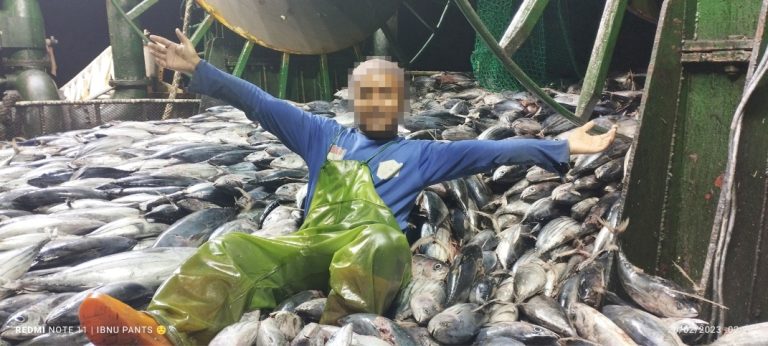
Coastal communities, small-scale fishers, and economies that depend on marine wildlife bear the brunt of IUU fishing, which threatens livelihoods, food security, and the long-term health of ocean ecosystems. The Mombasa Declaration responds to these challenges by advancing practical transparency measures, outlined in the Global Charter, to improve access to information on vessel ownership, licensing, and fishing activity; strengthening accountability; and enabling more sustainable and equitable management of marine resources.

Hon. Emelia Arthur, Minister of Fisheries and Aquaculture, Ghana, said, “In my country, our very existence depends on fish. Sixty percent of our animal protein comes from fish, and ten percent of our population depends on the fisheries value chain for livelihood. Fisheries are a matter of culture and national security for us. I’m happy that Ghana is among the first countries to sign the Mombasa Declaration, because it provides a platform for all of us, the different governments, to come together and declare on an international platform that we are working together, fighting together for transparency in the fisheries sector.”

Madame Catherine Chabaud, Minister Delegate for the Sea and Fishery, France, said, “France is proud to be among the first supporters of the Mombasa Declaration on Fisheries Transparency, through its Overseas Countries and Territories (OCTs).

ACORN partners with Absa and the Co-operative Bank to ease access to affordable student accommodation

Addressing Kenya’s student housing crisis