

Home Blog Page 50

Why Jijenge account is the best savings account for small business owners

As Kenya’s small and medium-sized enterprises (SMEs) continue to navigate a dynamic and often challenging business environment, access to reliable savings solutions remains critical to long-term growth and resilience.

And as financial institutions continue to roll out tailored solutions to fill this gap, Equity Bank’s Jijenge account is emerging as a practical financial tool that enables entrepreneurs to cultivate a strong savings culture while preparing for future business opportunities.

While the account is available to individuals, its features make it particularly relevant for SME owners who are looking to accumulate capital for business expansion, equipment purchases, inventory financing or emergency reserves.

True to its name, “Jijenge” – meaning “build yourself” – the account is tailored to encourage consistent saving through affordable and flexible terms.

Customers can open the account with as little as Sh300 and maintain it through minimum monthly contributions of Sh300, making it accessible to entrepreneurs at different stages of their business journey.

One of the account’s defining features is its minimum six-month lock-in period, during which no partial withdrawals are permitted.

This not only encourages financial discipline but also helps business owners protect funds that may otherwise be diverted to day-to-day expenses.

This feature further allows for long-term capital accumulation for future investments and planned growth initiatives.

The account also comes with no ledger or monthly maintenance fees, ensuring that savers retain more of their funds.

For SME owners who rely on regular cash flow management, the availability of free internal standing orders offers added convenience by enabling automated contributions into the account.

This allows entrepreneurs to establish a savings routine without the burden of making manual deposits every month.

Beyond savings, the Jijenge Account provides an important financing advantage. Customers can access instant loans of up to 90 percent of their accumulated savings at discounted rates.

This feature can be especially valuable for SMEs that require quick access to working capital without disrupting their long-term savings plans. Instead of withdrawing their savings and potentially derailing their financial goals, entrepreneurs can leverage their deposits to secure financing when opportunities or urgent needs arise.

Accessibility is another key benefit. Customers can access their accounts through any Equity Bank branch across the country, ensuring convenience regardless of their location.

In addition, the bank provides round-the-clock customer support, offering assistance whenever account holders require guidance or information.

For many business owners, the account has become a strategic growth tool. Nairobi-based retailer Wanjiku Githinji says the account has helped her develop a consistent savings habit that has translated into tangible business growth.

“Running a small business means there are always expenses competing for your attention. The Jijenge Account gave me a structured way to save towards expanding my stock. Knowing that my savings are protected helped me stay focused on my goals,” she says.

Similarly, agribusiness entrepreneur Peter Mwangi notes that the ability to access a loan against his savings has provided valuable financial flexibility.

“There are times when business opportunities come unexpectedly. Through the Jijenge Account, I was able to access financing quickly without having to go through a lengthy borrowing process. That helped me secure additional inventory during a peak season,” he explains.

How to open a Jijenge Account

Opening a Jijenge Account is straightforward. Individuals can open the account either singly or jointly online via the Equity Bank mobile app, or physically by visiting the nearest branch countrywide.

Requirements include an original identification document and a KRA PIN certificate.

Also Read: 4 Fanikisha loans helping women in business unlock growth

Dime: Inside Kenyan company empowering businesses through practical AI adoption

1

As artificial intelligence (AI) reshapes industries across the globe, many businesses are still grappling with a fundamental question: how can they effectively harness its potential?

In Kenya, one company is helping organisations, including small and medium-sized enterprises (SMEs), answer that question.

Dime, a consulting and AI training firm, is helping corporates, SMEs, and professionals across multiple sectors navigate the rapidly evolving world of artificial intelligence through customised training, AI-powered solutions and workplace transformation programmes.

The firm was founded in 2018 as a consultancy focused on innovation, digital strategy, and transformation for financial institutions, a space it operated in for four years.

However, as AI technologies began to redefine how businesses operate, the company recognised a growing need for practical AI literacy and adoption in the corporate world, leading to its focus shift in 2022.

According to Dime CEO and Co-founder John Fernandes, the company’s shift into AI was driven by a growing realisation that while AI tools were becoming increasingly accessible, many businesses lacked the knowledge and skills required to use them effectively and securely.

“We felt that in the Kenyan market, there is a big gap, as far as training for corporates and SMEs, and individuals in the AI space. So we developed a programme to do training for groups, and really this is for corporates and SMEs, for their employees to understand AI and become a lot more efficient,” Mr. Fernandes told Bizna Kenya.

Mr. Fernandes notes that one of the biggest challenges facing organisations today is understanding how to use AI effectively.

Dime addresses this challenge through structured AI literacy and workplace training programmes that focus on practical application, helping businesses automate routine tasks and improve efficiency.

Participants are guided through real-world scenarios relevant to their industries, ensuring that the learning experience directly aligns with their day-to-day responsibilities.

“From a simple thing as writing an email, to a complex thing like a business plan, AI will help you. So typically, if an email took you 4 or 5 hours to write, AI will do this for you in a matter of minutes, 5 to 10 minutes maximum. A businessman might take you days to come up with, but with AI, you can cut that time down to a business plan, or a new product offering, into basically an hour or less.”

Unlike generic training providers, Dime tailors its programmes to the unique needs, goals and workflows of each organisation.

Before conducting training, the company assesses business processes, employee needs and organisational objectives to develop content that delivers measurable impact.

The training is delivered through both in-person workshops and virtual sessions, making it accessible to organisations with different operational requirements and schedules.

To ensure lasting impact, the company provides structured follow-up support over a 90-day period. During this phase, trainers work closely with participants to reinforce concepts, encourage practical application and address implementation challenges.

Clients also gain access to Dime’s learning management platform, where they can continue developing their skills and stay informed about emerging AI tools and best practices.

So far, the company, which operates from his office at Two Rivers Mall, Nairobi, has trained close to 500 professionals in the AI space, and aims to increase that figure to approximately 2,000 individuals by the end of the year.

The training has significantly improved productivity, with beneficiary clients reporting productivity improvements of between 30 and 40 percent.

Beyond training, Dime also builds customised AI agents for its various customers. The AI agents are capable of handling business functions such as workflow automation, data reconciliation, customer engagement, operational support, and information management.

Unlike traditional chatbots that rely on predefined responses, AI agents analyse context, understand user intent, and provide more personalised interactions.

“Today when you’re chatting to a sales agent, actually you’re chatting to an AI agent only. And there’s a big difference between an agent and a bot. A bot will give you a standard response, but an AI agent will go back, analyse actually what you’re asking, and respond to you like a human being would,” Mr. Fernandes notes.

Data privacy and security remain key concerns for many organisations considering AI adoption. To address these concerns, Dime co-founder Brian Aleri says the company develops solutions designed to operate within organisational environments, ensuring sensitive information remains protected.

“We ensure that the data that is inputted into these tools remains secure, within the organisation, and is never leaked to the public. After the initial training, we sit with these companies, we find out how their processes are, we find out their daily motions, their challenges, where they aspire to be, and their targets. And then we come up with customised solutions specifically meant for them,” he says.

Dime’s services have attracted organisations from diverse sectors, including financial services, logistics, manufacturing, agriculture, and professional services.

While Kenya remains its key market, the firm is also seeing interest from organisations across Africa, including Rwanda, Tanzania, Somalia, and Ghana.

Also Read: Strategy execution: Turning ideas into action

Kenya’s military spashes Sh190.3 billion in 12 months

0

The Kenya Defense Forces (KDF) spent a record Sh190.25 billion on expenses such as modern weapons in 2025. This level of spending marked a 17 percent increase on the Sh162.64 billion that Kenya’s military spent in the previous 2024 year.

This spending has been revealed by data collected by Swedish security think tank known as Stockholm International Peace Research Institute (SIPRI).

Regionally, Kenya’s military was the largest spender on weapons while in the Sub-Saharan region, Kenya’s military was ranked third in spending.

According to the data provided by SIPRI, Uganda’s military expenditure came in at about Sh167.9 billion while Tanzania’s military spending was Sh133.4 billion.

Ethiopia’s military recorded a 24.6 percent decline in spending after using Sh68.4 billion.

The data further showed that Kenya’s military expenditure in the year 2025 accounted for 4.63 percent of the total government spending in 2025.

Mercy Koech: Rejected by KDF for being ‘too short,’ recruited into the US Navy

According to SIPRI, military expenditure includes all of the government’s spending on current military activities and obligations including salaries, benefits, operational expenses, arms and equipment purchases, military construction, research and development, and central administration, command, and support.

The spending by the government on the KDF has been rising steadily over the last ten years. For instance, since 2016, spending has increased by 57.5 percent from Sh120.8 billion to the current Sh190.25 billion.

This has come amidst regional threats from Somalia- linked terror outfits such as Al Shabaab.

At the same time, Kenya has been seeking deals with more military powers including Israel.

In late 2025 for instance, Kenya received the SPYDER air defense system from Israel as part of a Sh3.4 billion loan deal that was made to boost Kenya’s air defense capabilities.

The SPYDER system was developed by Israel’s Rafael Advanced Defense Systems and it has the ability to intercept aircraft drones, UAVs, helicopters, and precision-guided munitions.

School Fires: How principals, teachers fuel secondary school fires and strikes

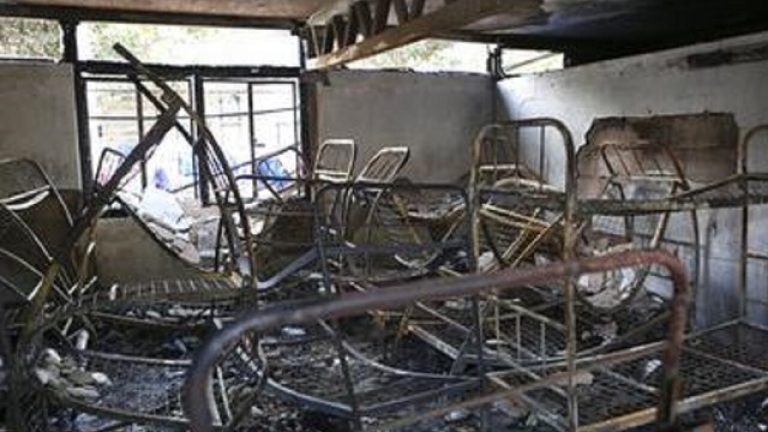
In Kenya, when a school fire occurs, it rarely happens without the knowledge and involvement of adults within the institution. In many instances, teachers, support staff, principals, deputies, and teachers on duty can feel the tension building.

Others find out through informants, or students who write anonymous notes and slip them under the doors of Heads of Departments (HODs), deputies, or principals. Ultimately, an adult in the school is usually fully aware of what is about to happen.

In schools where the staff operates with goodwill, a routine inspection and investigation are carried out, and students are sent home on suspicion, thereby averting a disaster.

However, a precedent has long been set in Kenya where nobody in the school is held accountable when a fire occurs. The burning down of government infrastructure is not treated as criminal arson, and the Directorate of Criminal Investigations (DCI) is usually not the first responder.

Instead, board members and principals routinely turn the misfortune of a burning school into a money-making venture through fundraising efforts, forcing parents to pay readmission fees and exaggerated damage costs.

This corruption is frequently tied to broader financial mismanagement. When a principal has embezzled or misappropriated school funds and lacks the capital to complete the term—running out of money for meals, salaries, and basic supplies—the easiest way to manoeuvre through the financial quagmire is to engineer a strike or a walkout.

The most strenuous financial period for a boarding school is the second term because it is long and funds deplete quickly. The narrative that students strike simply because they want to avoid mock examinations is often a smokescreen.

Because mock exams take three to four weeks, forcing a student walkout allows the principal and board members to keep and save the operational funds that would have otherwise been spent on food and utilities for the remainder of that term.

Furthermore, when an administration block burns down, the principal is typically trying to cover their tracks by destroying all financial documentation, effectively sabotaging audit trails to avoid being caught for embezzlement.

Teenagers have no inherent interest in administration blocks, as they do not know what happens inside them. Conversely, dormitories are targeted because the principal and certain staff members want the students sent home indefinitely, creating a prime opportunity to solicit funds from parents.

The involvement of the administration is highly suspected in instances where dormitories burn down during evening or morning preps when students are confirmed to be in their classrooms.

Notably, classrooms themselves almost never burn down. Additionally, schools often claim that students looted bulk provisions like beans, green grams, and sugar during a strike. In reality, it is the school staff who steal these supplies, as teenagers during an ongoing riot are not preoccupied with stealing sacks of raw food, nor do they understand their monetary value.

Teachers also play a direct or indirect role in aiding school unrest. A well-known strategy used by teachers to avoid the heavy workload of marking up to three papers per subject is to repeatedly tell current students about the destructive exploits of past classes.

This subtly encourages a walkout to deter the administration from administering the mocks; consequently, some schools have avoided holding mock exams for a decade.

In other instances, teachers and support staff actively incite student radicalization to resist or undermine an unpopular principal or deputy. To achieve this, teachers on duty may become extremely hostile toward the student body, while kitchen staff deliberately sabotage the food in the dining hall.

This creates a well-coordinated effort between support staff and a select group of rogue teachers. Within a week, the environment becomes toxic enough that the students are ready to leave. Ironically, the principal is usually kept entirely in the dark regarding these internal efforts to depose them.

READ MORE: Kenya should scrap CBE education system and go back to 8-4-4 system

In most of these schools, teachers and support staff live within the compound, yet these resident staff members are never at the scene and are never the first responders, despite the screams and chaos.

For example, in a fire incident that occurred at one girls High School in Nairobi, teachers remained in their houses during the day while the dormitory burned and students jumped from windows. It was the residents in Buru Buru who lived outside the school perimeter wall who rushed in to help.

Similarly, at one national High School in Nyanza region, the teachers on duty and those who reside on school grounds were completely absent when the fire started; instead, local villagers rushed in and filmed the event. The school administration then used that opportunity to milk the parents dry, eventually forcing the parents to take the matter to court.

Burning school infrastructure has become the quickest way for school administrations to generate illicit money, and Ministry of Education officials are more often than not in on it.

In yet another incident, a principal at a High School in Nairobi knew beforehand that the school was going to be burned because she kept receiving warning notes under her door.

Instead of taking protective action, she went to the parade ground and told the students, “You can burn it if you want!” She was never disciplined by the TSC, and at one point, she even taunted the students, telling them to just walk out and leave because she did not care.

Households risk jail, Sh50,000 fine for paying house helps less than Sh18,000

0

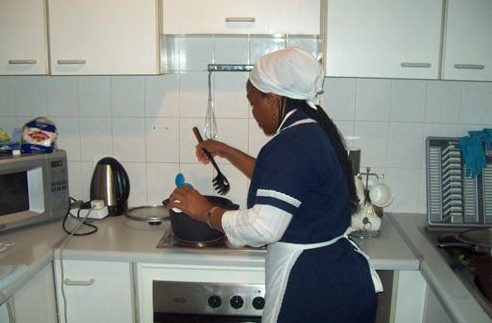
Households and other employers who underpay domestic workers risk prosecution, including fines of up to Sh50,000, the government has warned.

The latest directive is in line with the Ministry of Labour, which increases the minimum monthly pay for domestic workers, including house helpers, gardeners, and watchmen.

Labour Cabinet Secretary Alfred Mutua announced the new wage rates through a legal notice, implementing a 12 percent increase in the minimum wage as directed by President William Ruto during this year’s Labour Day celebrations.

Under the revised wage order, domestic workers in Nairobi, Mombasa, Kisumu and Eldoret will earn a minimum monthly salary of Sh18,047, up from Sh16,113 in 2024.

The new rates take immediate effect and apply to a wide range of workers, including house helps, gardeners, watchmen, messengers and sweepers.

Domestic workers employed in former municipalities and other major urban centres will now be entitled to a minimum monthly wage of Sh16,650.

Those working in smaller towns and rural areas will earn at least Sh9,268 per month under the new regulations.

The Labour Ministry said employers are required to comply with the revised wage structure, warning that failure to observe the prescribed minimum pay rates will attract legal sanctions with penalties including a fine of up to Sh50,000, a jail term of up to three months, or both.

The salary adjustments follow President Ruto’s announcement of a nationwide general wage increase during the Labour Day celebrations held in Vihiga County on May 1, 2026.

Speaking during the event, Ruto said his administration had approved the pay rise after consultations and requests presented by workers through the Central Organisation of Trade Unions (COTU).

“I am pleased to announce a 12 percent increase in general wages and a 15 percent increase in agricultural wages to all Kenyan workers,” Ruto said.

The adjustments are aimed at improving workers’ earnings and align with the government’s commitment to enhancing labour standards and protecting low-income employees across the country.

Also Read: Second term unrest: List of over 30 schools closed indefinitely

Strategy execution: Turning ideas into action

While ideas may seem promising on paper, they remain just that, ideas, without effective execution. Implementation is the crucial step that transforms vision into reality.

When strategies are communicated clearly to teams, execution becomes more manageable, even without constant supervision, as everyone understands their importance and direction.

For successful execution, communication must align with organisational goals and be accessible to every team member. If individuals interpret the strategy differently, they will act based on personal assumptions rather than shared intent.

Execution isn’t merely about following a document; it involves ensuring that everyone is on the same page and working towards common objectives.

Some may perceive execution as a cultural shift and resist it, but in most cases, it serves as a roadmap for more effective operations, with leaders playing a central role.

Leaders must have a deep understanding of the strategy to communicate it accurately. Miscommunication at this stage can mislead teams and hinder progress.

While generating ideas can be challenging, execution is where the real work occurs. It requires patience to bring people on board, ensure understanding, and guide proper implementation.

Execution is not a one-time event; it is a continuous process that needs ongoing refinement. Through execution, organisations uncover new and improved ways of working while enhancing existing systems.

It impacts not only internal structures but also external perceptions, shaping how customers and stakeholders view the company. A well-executed strategy conveys reliability and competence, while poor execution can lead to missed opportunities and hidden losses.

For some organisations, a new strategy may signify a complete change in operations, especially where systems were previously weak or absent.

For others, it is about enhancing what already exists. In both scenarios, execution is what helps organisations achieve their goals. It translates plans into actions, enabling teams to measure their impact and assess the effectiveness of the chosen strategy.

Successful execution requires a collective effort. Teams must embrace change, align with the strategy, and remain open to diverse perspectives on how to accomplish tasks.

Alignment provides direction, while flexibility ensures that execution adapts to evolving markets and conditions. Clear objectives, strong leadership, and team collaboration are essential for keeping execution on track.

Furthermore, execution demands accountability. Every team member must understand their role and how it contributes to the larger goal. Without accountability, execution loses momentum, and results become inconsistent.

Therefore, leaders must implement systems that track progress, measure outcomes, and provide feedback. This ensures that execution occurs and produces the desired impact.

Adaptability is another critical aspect of execution. Markets change, customer expectations evolve, and technology advances. Flexibility allows organisations to adjust their methods while staying true to the overall strategy. This adaptability keeps execution relevant and effective over time.

Additionally, execution is about building trust. When teams observe that ideas are being implemented and yielding results, they gain confidence in leadership and the organisation as a whole.

Trust strengthens collaboration and motivates individuals to commit to the process fully. Without execution, trust erodes as ideas remain abstract and promises unfulfilled.

Ultimately, execution serves as the measure of a strategy’s practicality. A strategy that appears impressive in theory may falter in practice if it cannot be executed effectively. This is why execution encompasses not just action, but also learning. Organisations must be willing to evaluate what works and what does not, refining their approach accordingly.

Execution is the bridge between ideas and results. It transforms strategy from theory into practice, ensuring that organisations not only plan but also progress.

By fostering alignment, encouraging flexibility, and maintaining clear communication, leaders can guide their teams through the challenges of implementation.

Execution builds trust, accountability, and adaptability, making strategy a living process rather than a static document. In the end, execution is what gives strategy its true value, turning vision into measurable outcomes and positioning organisations for long-term success.

The Writer, Miss Queen Opondo is a Strategy Consultant at WYLDE International. You may connect with Queen via email: [email protected]

Also Read: How Kenyan Businesses Can Build Trust With Authentic Online Content

Second term unrest: List of over 30 schools closed indefinitely

0

A fresh wave of student unrest has swept across Kenyan secondary schools since the beginning of the second term, disrupting learning, destroying property, and forcing the indefinite closure of several institutions across the country.

The disturbances, which have been reported in schools in various regions, have manifested in different forms, including dormitory fires, arson attacks, student riots, destruction of school property, and planned strikes.

The trend has raised concerns about a potential disruption to the school calendar, which the Ministry of Education insists will remain unchanged.

The situation has been exacerbated by the tragic fire at Utumishi Girls Academy in Gilgil, Nakuru County, which claimed the lives of 16 learners.

The Utumishi tragedy has heightened scrutiny on schools amid a growing number of unrest cases reported during the second term, traditionally viewed as one of the most volatile periods in the school calendar.

Responding to the matter on Thursday, June 4, Basic Education Principal Secretary Julius Bitok reassured parents and learners of smooth learning operations across schools, ruling out any plans for an early nationwide closure of schools despite the unrest.

Speaking while attending The Kenya High School’s Prize Giving Day the PS noted that learning remained uninterrupted in the majority of institutions and emphasized that the government was addressing the incidents.

Bitok said the Ministry of Education had launched a nationwide audit of safety standards in schools while working with stakeholders to restore normalcy in affected institutions.

“As we honour these accomplishments, I remain keenly aware of the challenges that have recently disrupted learning in some parts of the country,” Bitok revealed.

“The Ministry is actively undertaking targeted interventions in collaboration with relevant stakeholders to restore normalcy, safeguard learning, and ensure that our learners remain in school,” he added.

Bitok also reiterated the need for school administrators to strengthen communication channels between students, teachers and parents, arguing that unresolved grievances and poor engagement often contribute to unrest.

Among the schools that have been closed indefinitely following unrest incidents reported since the start of the term are:

  1. Utumishi Girls Academy
  2. Lenana School
  3. Alliance High School
  4. Mang’u High School
  5. State House Girls High School
  6. Loreto Girls High School Limuru
  7. Nakuru Girls High School
  8. Naivasha Girls High School
  9. Ingotse Boys High School
  10. Mwasere Girls High School
  11. Barding Secondary School
  12. Saseta Girls Secondary School
  13. Maanda High School
  14. Moi Forces Academy Lanet
  15. Tarakwa High School
  16. Joseph Seminary Senior School, Molo
  17. Njoro Girls High School
  18. Aggrey Boys High School
  19. Kenyatta High School, Mwatate
  20. Moi Boys High School, Voi
  21. Eldoro Girls High School
  22. Mahoo Girls High School
  23. Mary’s Lushangonyi Secondary School
  24. Kangaru School
  25. Kangaru Girls High School
  26. Sacred Heart Kyeni Girls High School
  27. Kimangaru Mixed Secondary School
  28. Kavuthu Secondary School
  29. Kyamuthei Secondary School
  30. Nguumo High School
  31. Kalama Secondary School
  32. Kaumoni Boys High School

Also Read: How rogue principals, teachers fuel secondary school fires and strikes

Teaching career: How much do TSC teachers earn in Kenya?

0

Teaching remains one of the most sought-after professions in Kenya, playing a critical role in shaping the country’s future through education and skills development.

Teachers serve as the backbone of the education system, nurturing learners, imparting knowledge, and helping prepare the next generation of leaders, professionals, and innovators.

Beyond the classroom, teachers contribute significantly to social and economic development by fostering literacy, critical thinking, and values that are essential for nation-building.

As demand for quality education continues to grow, attention has increasingly turned to the welfare of teachers, including their remuneration and working conditions.

Under the newly signed 2025–2029 Collective Bargaining Agreement (CBA) between the Teachers Service Commission (TSC) and teachers’ unions, educators across various job groups earn varying salaries based on their grades and responsibilities.

According to the salary structure, teachers at the entry level in Grade B5, comprising Primary Teacher II positions, earn between Sh28,600 and Sh37,100 per month.

Teachers serving under Grade C1, which includes Primary Teacher I and Secondary Teacher III, receive salaries ranging from Sh35,300 to Sh47,300.

For educators in Grade C2, including Senior Teacher II and Secondary Teacher II, monthly earnings range between Sh41,400 and Sh57,200.

Those in Grade C3, comprising Senior Teacher I and Secondary Teacher I positions, earn between Sh49,800 and Sh66,200.

School administrators and teachers with additional leadership responsibilities earn higher salaries. Deputy Headteacher II and Senior Master IV officers in Grade C4 receive between Sh58,600 and Sh77,100 monthly.

Headteachers and Deputy Headteacher I officers classified under Grade C5 earn salaries ranging from Sh69,700 to Sh96,100.

Teachers occupying senior leadership positions also benefit from enhanced remuneration. Senior Headteachers and Deputy Principals III in Grade D1 earn between Sh81,000 and Sh99,300 per month.

Deputy Principals II and Senior Master I officers in Grade D2 receive salaries ranging from Sh95,300 to Sh116,000.

Principals and Deputy Principals I serving in Grade D3 earn between Sh109,200 and Sh133,300. Senior Principals in Grade D4 take home between Sh121,800 and Sh150,700, while Chief Principals in Grade D5 earn salaries ranging from Sh135,300 to Sh167,400.

In addition to basic salaries, teachers are entitled to a range of allowances designed to support their welfare and improve working conditions.

These include commuter allowance, house allowance, baggage allowance for teachers transferred from one station to another, hardship allowance for those serving in challenging environments, and disability guide allowance for teachers living with disabilities.

Teachers also receive an annual leave allowance, which is paid every January, helping to cater for expenses during their leave period.

The rates on all allowances vary depending on whether a teacher is stationed in Nairobi, major municipalities, former minor municipalities, or other areas across the country.

Also Read: How rogue principals, teachers fuel secondary school fires and strikes

Kenya Safari by Season: The Best Time to Visit Kenya for Wildlife, Migration & Perfect Weather

0

So you have decided Kenya is your next adventure. Smart choice. But now comes the question that trips up almost every traveller: When exactly should you go? The truth is, Kenya does not have a bad time to visit. What it has is different seasons that each deliver a completely different experience. Your job is simply to match your travel dates to the experience you are dreaming about. This guide walks you through every season honestly, so you can plan your Kenya safari with total confidence.

Understanding Kenya’s Two Main Seasons

Kenya sits close to the equator, which means it does not follow the four seasons most travellers are used to. Instead, the country moves between wet and dry periods — and these shifts drive everything from animal behaviour to lodge pricing.

The two dry seasons run from July through October and January through February. The two wet seasons cover March through May (long rains) and November through December (short rains). Each window has genuine strengths, and knowing them changes how you plan.

July to October: Peak Season & the Great Wildebeest Migration

If you want the most iconic Kenya safari experience possible, this is your window. The long dry season from July through October is when the Masai Mara becomes the centre of the wildlife world. Over a million wildebeest pour across the Mara River from Tanzania’s Serengeti in one of the most staggering natural spectacles on earth. The dramatic river crossings, the thundering hooves, and the crocodiles waiting below, this is what most people picture when they think of a Kenya safari.

Budget-Friendly and Luxury Kenya Safari Options with KETS Safaris

What Else You Can Expect

Beyond the migration, predator activity across the Masai Mara is extraordinary. Lions are active in the open, cheetahs stalk the golden grasslands, and leopards rest in riverine trees along the banks. Amboseli National Park also shines during this period; elephant herds gather around the swamps in huge numbers, and Mount Kilimanjaro tends to be clearest in the early mornings.

Kenya safari packages during peak season carry higher price tags. Book well in advance because the best lodges and camps fill up months ahead, especially for August and September.

January and February:  The Short Dry Season Sweet Spot

January and February are genuinely one of the best-kept secrets in Kenya tours planning. The short dry season delivers outstanding wildlife viewing, active predators, excellent visibility, and large animal concentrations around dwindling water sources at meaningfully lower prices than peak season.

The Masai Mara during January and February is quieter but still packed with resident lions, cheetahs, elephants, and buffalo. Amboseli is particularly rewarding during this window, with clear Kilimanjaro views and elephant herds in full force. This is an ideal time for families, couples, and solo travellers who want premium game viewing without the peak season crowds and prices.March to May: Kenya Safari in Rainy Season

Here is where most travellers hesitate and where savvy ones find real opportunity. The long rains from March through May bring Kenya’s most affordable travel window. A Kenyan safari in the rainy season has a reputation for mud and missed sightings, but the reality is more nuanced than that.

Ketsafaris: for relaxing and memorable tours in Kenya and around the world

The Hidden Rewards of Green Season

Yes, afternoon downpours are common. Some dirt roads in remote areas become challenging. But the landscape transforms into something genuinely cinematic: lush, dramatic, alive with colour. Newborn animals appear across the parks as calves, cubs, and foals take their first steps. Birdwatching peaks as migratory species arrive from Europe and Asia. And because most travellers avoid this period, you have the parks largely to yourself.

Kenya safari packages during the long rains can be 30 to 40 per cent cheaper than peak season rates. If you are flexible with your travel dates and happy to embrace a wilder, quieter Africa, this season rewards you handsomely.

November and December: Short Rains & Shoulder Season Value

November brings short rains that tend to clear quickly, leaving landscapes fresh and photography conditions dramatic. The Masai Mara quietens significantly as the migration winds down, but resident predators remain active year-round, and lodge availability opens up.

December Festive Season Surge

Early December is one of the most underrated windows in all of Kenya’s tours, planning good wildlife, lower prices, and quieter parks before the festive rush. From around December 23rd, prices climb sharply as families and international travellers arrive for Christmas and New Year. If you can travel before that window, early December delivers exceptional value.

Which Kenya Safari Season Is Right for You?

Here is the honest breakdown. If witnessing the Great Migration is your priority, plan for July through October and book early. If you want excellent wildlife with better value and smaller crowds, January and February are your answer. If budget matters most and you are happy to embrace a greener, quieter adventure, a Kenya safari in the rainy season from April to May is genuinely underrated. And if you want a November or early December trip with solid wildlife and reasonable prices, the short rains season is a fantastic choice.

Whatever month you land, Kenya delivers. The wildlife adapts, the landscapes shift, and every season offers moments that stay with you for the rest of your life. Book your safari today: ketsafaris

Co-operative Bank of South Sudan hosts Co-operatives Forum in Northern Bahr el Ghazal State 

The Co-operative Bank of South Sudan (CBSS) hosted 41 Cooperatives Societies based in Northern Bahr el Ghazal State (NBG) for a capacity-building forum to deepen the impact of the cooperative model in the farming and business communities in the State and across South Sudan.

The state forum, hosted in partnership with Northern Bahr el Ghazal State Co-operatives Union and the NBG State Government, is part of the commitment by the Co-op Bank of South Sudan to build and replicate the successful cooperative banking model in South Sudan.

Government and Cooperative Leaders Chart Economic Recovery Strategies

The Forum was officially opened by the State Minister of Land & Housing, Mr Dominic Kang, who represented the Governor of NBG State, accompanied by the State Minister of Co-operatives & Rural Development, Hon. Ayak Zacharia Ngor and the Chairman of Co-op Bank South Sudan, Eng. William Wol. The key agenda of the forum was to discuss and formulate approaches that cooperatives can adopt towards rejuvenating the South Sudan economy through food security, market access, and employment creation.

READ Project Beneficiaries Highlight Impact of Rural Finance

Out of the primary cooperatives participating in the forum, 11 are beneficiaries of the Rural Enterprise & Agriculture Development (READ) Project, a seven-year IFAD-funded initiative in which CBSS is participating as an implementation partner alongside UNDP and the Government of South Sudan through the Ministry of Agriculture & Food Security. The role of Co-op Bank in this project is the provision of rural financial services to beneficiaries based in six counties of South Sudan, including Aweil Centre in NBG State.

Co-op Bank named ‘SME Bank of the Year in Africa’ at the 2026 African Banker Awards

Growing Cooperative Network Drives Local Development

Northern Bahr el Ghazal State has over 300 cooperative societies located across five counties, drawing their membership from agricultural and business communities. Primary cooperatives came together and formed the Northern Bahr el Ghazal State Cooperative Union in September 2025 to serve as the umbrella organization representing all cooperatives outside the State, while also helping to pool resources and strengthen advocacy efforts. The NBG State Cooperative Union is also one of the founding unions of the South Sudan Co-operative Alliance, which was launched in May 2026.

Strategic Partnerships Expand the Reach of Cooperative Banking

Co-operative Bank of South Sudan continues to invest in partnerships with key stakeholders, including the national and state governments, development partners, NGOs, and the private sector, to enhance the adoption of the successful cooperative banking model across South Sudan.

Co-operative Bank of South Sudan hosts Co-operatives Forum in Northern Bahr el Ghazal State 
Eng. William Mayar Wol – Board Chairman Co-op Bank of South Sudan (COBSS), Mr. Dominic Kang – Minister of Land, Housing & Public Utility, Mrs Ayak Zacharia – Minister of Co-operatives & Rural Development, Mr. William Wol Wieu – Chairman NBG Co-operative Union and Ms. Caroline Mburu – Head Coop Consultancy, COBSS with participants at the inaugural Northern Bahr el Ghazal State Co-operatives conference held at Aweil Town. Co-op Bank of South Sudan continues to build and replicate the successful co-operative banking model in South Sudan.