
Home Blog Page 51

Patrick Analo Akivaga: Man busted with Sh65 million cash at his home

0

Nairobi County chief officer Patrick Analo Akivaga was on Thursday busted by detectives from the Ethics and Anti-Corruption Commission (EACC) with millions of cash at his home.

Analo was busted with Sh65.3 million at his residence in Syokimau, Machakos County.

According to the EACC, the money was in batches of Sh51,300,000 and USD130,000 (equivalent to Sh14,605,250). The money was all hidden in the boot of Analo’s vehicle.

“Our operation yielded valuable evidentiary material to support thre ongoin g investigations, including Sh51,300,000 and 113,000 US Dollars (approximately 14,000,000), totaling Sh65,300,000 recovered at his residence in Syokimau within Machakos County and in his motor vehicle’s boot,” the EACC stated.

At the same time, the EACC detectives recovered  several title deeds, motor vehicle log books, laptops, land and motor vehicle sale agreements, electronic devices including mobile phones and iPads, documents and approval plans from the County Government of Nairobi.

According to the EACC, the raid on Analo’s residence was part of ongoing investigations into allegations of conflict of interest, abuse of office, bribery, and possession of unexplained assets involving the senior Nairobi county official.

“The Commission is investigating allegations of conflict of interest, abuse of office, bribery, and possession of unexplained assets against Mr. Patrick Analo Akivaga. It is alleged that Mr. Akivaga receives millions of shillings in cash and M-Pesa deposits,” the EACC said in a statement.

The EACC added that Analo is being alleged to have accumulated immense assets that are disproportionate to his known legitimate sources of income.

According to the Salaries and Remuneration Commission (SRC), County Chief Officers in Job Group S/T are entitled to a gross salary ranging from Sh217,070 to Sh283,010 per month.

According to the anti-corruption commission, Analo had allegedly received over Sh170 million through numerous suspicious cash and M-Pesa deposits between the 2019/2020 and 2025/2026 financial years.

“Upon conclusion of the investigations, the findings will inform appropriate action, including prosecution and the recovery of unexplained wealth and proceeds of corruption,” the EACC stated.

Read More: Kenyatta family, Ndegwa family to pocket Sh21.9 billion in mega deal

Patrick Analo currently serves under Nairobi Governor Johnson Sakaja as the Chief Officer for Urban Development and Planning.

This department is considered one of the most influential departments in the County of  Nairobi. It handles development approvals, planning permissions, change-of-user applications, and enforcement of urban planning regulations across Kenya’s capital city.

Analo was nominated for the position by Sakaja in 2022. He was among two others whose names were presented to the County Assembly of Nairobi for consideration. He was approved by the Members of the County Assembly.

Months later in 2023, Analo was appointed by Sakaja as the County’s Secretary after Members of County Assembly (MCAs) rejected Mr Jairus Musumba.

This appointment meant that Analo would be tasked with co-ordinating the business of the County Executive Committee and keeping its minutes, subject to the committee’s directions. This appointment was however stopped by the High Court of Kenya.

Analo had previously, worked under former Nairobi Governor Mike Sonko and Ann Kananu as the Deputy Director for Urban Development and Planning, a role in which he led in planning and development functions within the city administration.

He holds a Master’s degree in urban management from the University of Nairobi, which he pursued between 2009 and 2011.

At the same time, Analo holds certifications from the United Nations Institute for Training and Research, Makerere University, and Maseno University.

School Fires: How rogue principals, teachers fuel secondary school fires and strikes

The cash findings by the EACC left Kenyans in shock, with many wondering how such an amount could be accumulated by a single individual at a time when the country’s economy is on a downward spiral.
Kenyatta family, Ndegwa family to pocket Sh21.9 billion in mega deal

0

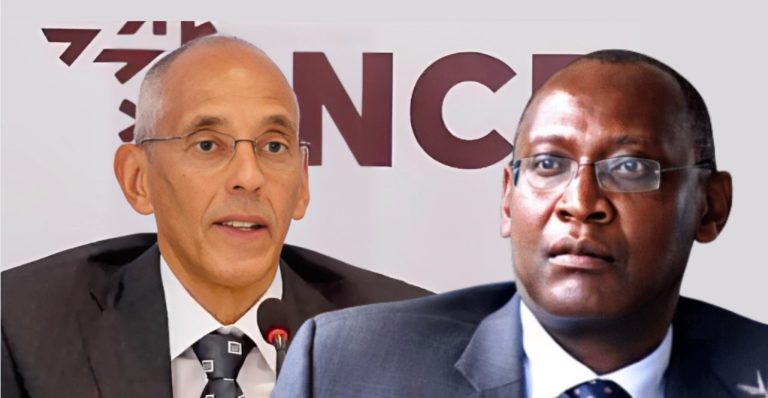
The prominent Kenyatta family and the family of former Central Bank of Kenya Governor Philip Ndegwa are set to receive up to Sh21.9 billion from a trading deal involving the sale of NCBA Group to South Africa’s Nedbank Group.

In the deal, the Kenyatta family and the Ndegwa family have agreed to sell 66 percent of their NCBA shares to Nedbank. They will also receive some 10.14 million stocks in Nedbank in exchange for the shares they sell which have an estimated combined worth of around Sh20.6 billion. This will bring the total amount they pocket from the deal to Sh21.9 billion.

In the deal, 80 percent of the NCBA shares that are acquired will be converted to Nedbank stock. This stock is listed at the Johannesburg Stock Exchange. This will be done at a rate of 4.02994 shares for every 100 NCBA shares. The remaining 20 percent of the shares shall be bought in cash at a rate of 2,100 for every 100 shares. This will equal to about Sh21 per NCBA share.

This means that the Ndegwa family’s 129.97 million shares will be converted into 5.24 million Nedbank shares which shall be valued at Sh10.65 billion. The family will then get a cash payment of Sh682.34 million.

The Kenyatta family shall receive Sh602.9 million in cash while their 143.54 million shares shall be converted to 4.63 million Nedbank shares with a value of Sh9.4 billion. Former president Uhuru’s brother Muhoho Kenyatta who holds NCBA shares shall receive 271,383 Nedbank shares worth Sh551.6 million and Sh35.4 million in cash.

At the same time, the two families have told Nedbank that they will put their total shareholding in NCBA Group up for sale to the South African lender should other shareholders fail to accept the cash-and-stock deal that is being offered by Nedbank.

“Nebank has obtained irrevocable undertakings from the designated shareholders to accept the offer in respect of their pro-rata entitlement (and, where applicable, to participate in excess applications) and confirms that all irrevocable undertakings have been signed,” the South African lender stated.

In this cash-and-stock deal, Nedbank will acquire 66 percent of NCBA Group for an estimated Sh109.6 billion. The remaining 34 percent shall continue to trade publicly at the Nairobi Securities Exchange. In this transaction, only NCBA shareholders with more than 7,520 shares or more have been offered the deal.

After the deal is completed, the Kenyatta family will be left with 73.94 million shares worth about Sh6.5 billion while the Ndegwa family will be left with 83.69 million shares worth about Sh7.4 billion.

The Kenyatta family currently has a shareholding stake of 13.2 percent in NCBA through the family’s investment vehicle which is known as Enke Investments. It is ranked second after the Ndegwa family. The Ndegwas have a 14.94 percent shareholding stake in the banking group through the family’s investment vehicle which is known as First Chartered Securities.

In May this year, it was revealed that former president Uhuru’s brother Muhoho Kenyatta holds a stake in the NCBA Group that is worth an estimated Sh20 billion.

Muhoho holds these shares directly and indirectly through investment vehicles. This disclosure comes barely five months after he was named as the new non-executive director at the board of the NCBA Group. He assumed his new position starting from December 1, 2025.

Uhuru’s brother Muhoho owns Sh20 billion stake in NCBA Group

When he announced Muhoho’s appointment, NCBA Group Managing Director and Chief Executive Officer John Gachora described him as an accomplished business executive with over 35 years of experience in leading and developing businesses across East Africa, spanning diverse sectors including manufacturing, healthcare, insurance, and banking.

“Mr Kenyatta has previously served as Deputy Chairman of one of the predecessor institutions of NCBA between 2000 and 2019, and as a director of NCBA Bank Uganda. He continues to support the Group’s growth in its digital strategy as a member of the Board of LOOP DFS Limited, a wholly owned subsidiary of NCBA Group PLC,” said Mr. Gachora.

Inside East Africa’s 2025 trade boom: Key takeaways from the NCBA forum

0

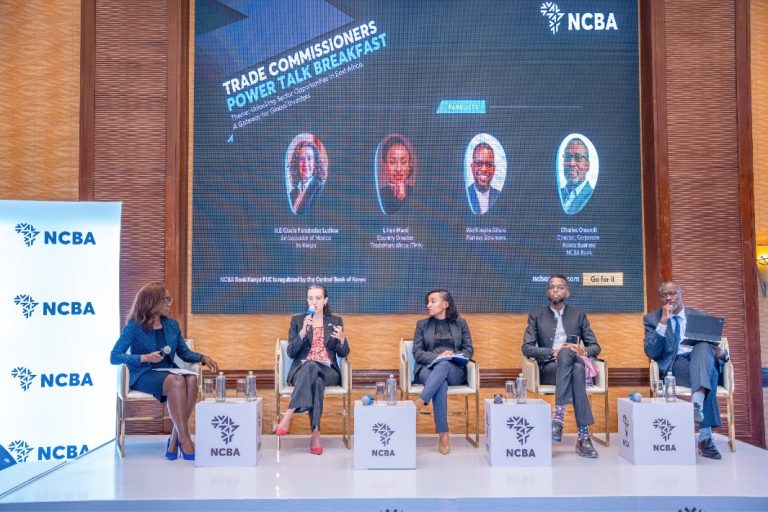
NCBA convened diplomatic trade commissioners and ambassadors from over 20 countries and missions, alongside development partners and investors, for a high-level forum in Nairobi aimed at deepening trade and investment across East Africa.

The engagement underscored the importance of coordinated action in unlocking economic growth, expanding market access, and supporting East African businesses in navigating a rapidly evolving global trade environment.

Recent East African Community (EAC) data highlights the region’s strong trade performance. Exports rose by 37.7% to USD 77 billion in 2025, while imports increased by 15.4% to USD 79.6 billion. Intra-African trade also gained momentum, growing by 40.1% to USD 39 billion and accounting for 25.2% of total trade. Additionally, intra-EAC trade expanded by 28%, reinforcing the critical role of regional integration and cross-border commerce.

Speaking during the session, Filippo Amato, Head of Trade and Economics at the European Union Delegation to Kenya and keynote speaker at the NCBA Trade Commissioner forum, emphasized the importance of collaboration:

“Public-private partnerships (PPPs) are essential in accelerating economic growth in the region. However, their success depends on strong financial institutions that can mobilize and deploy capital effectively for enterprises, investors, and governments. Together, these partnerships position East Africa as an attractive investment destination globally.”

NCBA & strathmore partner to support SMEs

The forum reflects NCBA’s ongoing commitment to connecting businesses to both regional and international opportunities. The Group serves more than 50 diplomatic missions, strengthening linkages between regional enterprises and global markets through its embassy banking and foreign direct investment support capabilities.

James Gossip, Managing Director of NCBA Bank Kenya, noted the importance of collaboration in the current global context:

“Global trade is increasingly shaped by geopolitical uncertainty, supply chain disruptions, and shifting market dynamics. Strengthened collaboration among governments, diplomatic missions, investors, and financial institutions is essential to expanding market access, sustaining trade flows, and unlocking long-term growth across the region.”

He further emphasized that deeper partnerships among financial institutions, development partners, consulates, investors, educational institutions, and policymakers will be critical in accelerating economic transformation and unlocking new business opportunities across East Africa.

The engagement also highlighted key investor opportunities across sectors including agribusiness, energy, manufacturing, fintech, technology, healthcare, education. Participants gained practical insights into market entry strategies, supplier value chains, and sustainable growth pathways within the region.


Unbelievable wins as SportPesa Aviator just clocked a mind-blowing 63,297.42X multiplier

0

The digital entertainment and instant win gaming scene in Kenya is buzzing following an extraordinary record-setting event on the SportPesa Kenya platform. This week, the popular aviator game captured widespread attention through a historic 63,297.42x multiplier. Such a multiplier shows the unique mathematical curve and high velocity thrill built into modern online gaming software. This flight perfectly captures the electric energy and wide-open possibilities that make online gaming more fun.

SportPesa Aviator multiplier is taking Kenya by storm, capturing the imagination of players who crave fast-paced instant excitement. This week’s spectacular 63,297.42x Aviator multiplier shows that a single flight holds a universe of exciting possibilities. The joy of watching the plane soar creates a shared social experience that connects gaming enthusiasts all over the nation.

Epic flights of the week

Gaming enthusiasts nationwide are celebrating a spectacular series of historic climbs that turn ordinary screen time into absolute legends. After a record-smashing SportPesa Kenya Aviator hitting a mindblowing 63,297.42x multiplier. This week, the little red plane is on a mission to deliver maximum fun and unforgettable moments.

Every single takeoff has been filed with excitement as the multiplier digits rolled higher than anyone expected. The thrilling countdowns shown live on screen have brought a massive burst of positive energy to the entire local gaming community. From the busy streets of Nairobi to the lakeside breezes of Kisumu, everyone is talking about these epic, high-flying journeys.

The thrill of the take-off

Every single flight on the SportPesa grid begins with a powerful burst of anticipation that instantly captures the mind. The simplicity of the screen layout creates an immediate connection, making it very easy for everyone to dive straight into the fun. Watching the plane roll upwards sparks a unique sense of wonder and epic moment on your screen.

SportPesa Casino players win big, with some receiving massive payouts from small stakes

The real magic happens as players feel the gentle pull of deciding exactly when to secure their journey. As the online virtual plane lifts off, it carries the collective imagination of players climbing towards unlimited possibilities. SportPesa Kenya casino ensures that every round is a fresh place where players can dream big and enjoy a quick, fun, and easy journey. The simple joy of the takeoff ensures that every virtual flight is an unforgettable experience.

Sharing the rush

The digital sky becomes a lively social hub the exact moment players enter the SportPesa Aviator in-game chart. Across Kenya, thousands of gaming fans connect instantly to share jokes, celebrate big flights, and enjoy friendly competition. The Aviator in-game chat transforms  a standard mobile application into a warm, welcoming community of friends. When the little red plane reaches historic heights, the message board explodes with big wins.

This is a beautiful space where experienced flyers pass down playful tips to brand-new players joining the platform. Watching the live reactions roll in creates a feeling of unity and shared excitement nationwide. The vibrant network becomes more than an ordinary afternoon of mobile gaming into a massive nationwide watch party.

The ultimate spectator sport

The true magic of the SportPesa Aviator grid extends far beyond just taking your own virtual flights. For thousands of fans across Kenya, watching the real-time leaderboard has made mobile gaming become a digital spectator sport. There is a big excitement that comes from tracking other players as they ride massive multipliers.

As the iconic virtual plane climbs past amazing new levels, spectators nationwide hold their breath at the same time. This collective cheer that echoes through the live interface creates a celebratory feeling right on your smartphone screen. The joy of watching these historic flights highlights how modern mobile apps can create unforgettable collective entertainment.

Conclusion

The record-breaking 63,297.42x flight on SportPesa’s Aviator will easily go down as one of the historic multipliers in gaming history. This is phenomenal, portraying the unlimited possibilities of fun and huge wins while enjoying unforgettable moments. The platform power behind the Sportpesa Aviator provides a high-energy, engaging digital recreation.

This week’s climb is just a show of how unimaginable dreams can come true in seconds. In a platform where anyone can join the fun, share the laughter, and experience the unique thrill of SportPesa Kenya Aviator. So buckle up, enjoy the ride for a virtual flight filled with fun and high-flying rewards.

From starting cereal business with Sh5,000 to making over Sh800,000 monthly

0

The cereals business remains one of the most lucrative agribusiness ventures in Kenya, particularly in regions with strong agricultural production.

By connecting farmers to reliable markets and ensuring a steady supply of staple grains to consumers, traders play a critical role in the food value chain while creating sustainable income streams for themselves.

For 39-year-old Jane Chebet from Songhor Soba Ward in Tinderet Sub-County, Nandi County, the cereal business has transformed her life.

What began as a small venture financed through a Sh5,000 loan has grown into a flourishing enterprise generating a monthly turnover of over Sh800,000.

Chebet’s entrepreneurial journey started 15 years ago when she borrowed Sh5,000 from a local women’s table banking group.

With the funds, she began purchasing small quantities of maize and beans from farmers before reselling them in local markets. Although the earnings were initially modest and barely sufficient to support her household, she soon recognized the vast potential within the grain trade.

“I saw that farmers struggled to find reliable buyers, while traders in towns needed consistent supply. I decided to bridge that gap,” she told KNA.

Driven by determination and prudent financial management, Chebet steadily expanded the business. Through continuous savings and reinvestment of profits, she grew her working capital to Sh50,000 within three years.

She also broadened her network of farmers, embraced bulk purchasing during harvest seasons, and invested in simple storage facilities to minimize post-harvest losses.

Today, her business handles between 20 and 25 tonnes of cereals every month, including maize, beans, finger millet and sorghum. During peak harvesting periods, volumes can exceed 40 tonnes.

With maize selling at an average of Sh4,000 per 90-kilogram bag and beans fetching up to Sh8,000 per bag, the enterprise’s monthly turnover ranges between Sh800,000 and Sh1,000,000 depending on market conditions.

Over the years, her customer base has expanded significantly. From serving individual consumers in local markets, she now supplies schools, small-scale millers and traders in towns such as Kapsabet, Nandi Hills and Eldoret.

The adoption of mobile money platforms has further enhanced the efficiency and security of her transactions.

The growth of the business has also created employment opportunities within the community. Chebet employs five permanent staff members responsible for sorting, drying, packaging and record-keeping, in addition to hiring casual labourers during busy seasons.

Many of the beneficiaries are young people from the area who previously struggled to secure stable jobs.

“Giving jobs to the youth is something I take seriously because I was once in a position where I had no income at all,” she says.

Beyond creating jobs, her enterprise has become an important market outlet for local farmers. By purchasing produce directly from growers at fair prices, she helps shield them from exploitation by middlemen who often take advantage of oversupply during harvest periods.

Her rise in business was not without obstacles. In the early stages, she encountered skepticism from some members of the community who perceived large-scale trading as an activity reserved for men.

Access to financing also proved difficult, with many financial institutions requiring collateral that she did not possess.

Rather than give up, Chebet relied on women’s savings groups to raise capital while gradually building a credible financial record.

Her persistence paid off in 2018 when she secured her first formal bank loan worth Sh300,000. The funds enabled her to construct a storage facility with a capacity of 100 tonnes, significantly reducing losses caused by pests and moisture while improving profitability.

The proceeds from the business have enabled her to educate her four children, improve her family’s living standards and diversify into dairy farming.

She has also emerged as a mentor within her community, having trained more than 25 women on cereal aggregation, storage practices and basic financial management.

To cushion her business against fluctuating grain prices, Chebet has ventured into value addition by milling and packaging branded flour for retail markets. The move has helped increase profit margins while opening up new market opportunities.

Looking to the future, she plans to expand further by investing in a larger warehouse and modern grain-drying equipment. She is also working towards establishing a cooperative society that will unite farmers and traders, strengthen their bargaining power and improve access to markets.

Also Read: NCBA & strathmore partner to support SMEs

Kenya’s automotive leap: KVM commissions shs2.3B Toyota Hiace assembly line in Thika

0

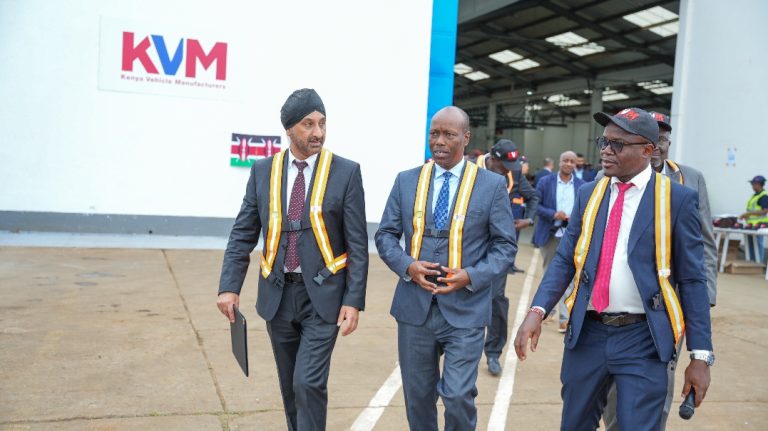
Kenya Vehicle Manufacturers (KVM) today officially commissioned a new Toyota Hiace assembly line at its Thika manufacturing facility, marking a significant milestone in Kenya’s automotive industrialization journey and reinforcing the country’s position as a leading vehicle manufacturing hub in East Africa.

The new assembly line forms part of a broader modernization and expansion programme supported by a ksh 2.3 Billion investment by CFAO Mobility Kenya in KVM. The project underscores a long-term commitment to local manufacturing, technology transfer, skills development, and job creation while supporting Kenya’s industrial growth agenda.

The Toyota Hiace has for decades been one of the most recognizable and trusted commercial vehicles on Kenyan roads, serving businesses, schools, institutions, tour operators, logistics providers, and the public transport sector. Its local assembly represents a major step toward deepening local value addition and expanding Kenya’s automotive manufacturing ecosystem.

The commissioning ceremony was presided over by the Cabinet Secretary for Investments, Trade and Industry, Hon. Lee Kinyanjui, and attended by senior representatives from Toyota Motor Corporation, Toyota Tsusho Corporation, CFAO Group, government agencies, industry stakeholders, and development partners.

Speaking during the launch, CFAO Mobility Kenya Managing Director, Arvinder Reel, described the investment as a landmark achievement for Kenya’s manufacturing sector and a demonstration of confidence in the country’s industrial capabilities.

“The launch of the Toyota Hiace assembly line at KVM represents more than the introduction of a new production line—it is an investment in Kenya’s industrial future. For over 50 years, Toyota has been part of Kenya’s mobility story. Today, we take that commitment a step further by expanding local manufacturing capacity, creating skilled employment opportunities, transferring advanced production expertise, and supporting the growth of local supplier networks.”

Spiro secures $215M to expand African EV network

“By assembling the Toyota Hiace locally, we are strengthening the domestic automotive value chain while delivering world-class vehicles built to global Toyota standards and tailored for Kenyan operating conditions. This project demonstrates what can be achieved through strong partnerships between government, industry, and global manufacturers.”

The investment is expected to generate substantial economic impact, creating over 200 direct jobs and more than 600 indirect jobs across the automotive value chain. In addition, KVM and its partners have invested heavily in technical training and knowledge transfer, with Kenyan engineers and assembly specialists undergoing advanced training programmes in South Africa and Cambodia to acquire global best practices in vehicle assembly and quality management.

The company also continues to work closely with local component manufacturers to increase local content participation and support the development of globally competitive automotive supply chains within Kenya.

From a customer perspective, locally assembled Toyota Hiace units will offer fleet operators, transport SACCOs, institutions, and corporate customers access to a globally trusted product backed by Toyota’s renowned quality, durability, and reliability. Customers will also benefit from a comprehensive manufacturer warranty of five years or 150,000 kilometres, providing enhanced peace of mind and reduced total cost of ownership.

Safety remains a key priority in the production process. Every vehicle assembled at KVM undergoes rigorous quality assurance procedures to ensure compliance with Toyota’s global manufacturing standards. The locally assembled Toyota Hiace incorporates advanced safety features, including dual SRS airbags, Anti-lock Braking System (ABS), reinforced impact protection structures, and technologies designed to enhance occupant safety in the event of a collision.

The launch of the Toyota Hiace assembly line also marks the successful completion of the first phase of KVM’s facility modernization programme. The upgrade has included significant investments in production infrastructure, environmental compliance initiatives, new assembly technologies, and enhanced logistics capabilities aimed at supporting future growth and additional vehicle assembly programmes.

As Kenya continues to advance its industrialization agenda under the “Buy Kenya, Build Kenya” framework, KVM and CFAO Mobility reaffirm their commitment to supporting local manufacturing, developing technical skills, creating employment opportunities, and contributing to the growth of a sustainable automotive industry.

The company expects to assemble approximately 600 Toyota Hiace units in the first year of production, with capacity expected to increase progressively in line with market demand and the continued implementation of policies supporting local vehicle assembly.

Nairobi partners with bloomberg philanthropies to tackle traffic fatalities

0

The Nairobi City County Government has today announced a new collaboration with the Bloomberg Philanthropies Initiative for Global Road Safety (BIGRS) aimed at promoting and enhancing road safety across Nairobi County.Nairobi joins more than 30 cities globally that will participate in this initiative, which is part of Bloomberg Philanthropies’ $350 million global commitment to prevent traffic deaths and injuries worldwide, announced by Mike Bloomberg at CityLab 2026 in April.

Each year, more than one million people – including over 4000 people in Kenya lose their lives in road crashes, and another 20 to 50 million are injured, many with lifelong disabilities. Most of these deaths and injuries are not accidents, but the result of system failures including poorly designed roads, and public policies and urban design that favors vehicle speed over public health and safety.

The initiative seeks to support proven policies and interventions that make roads safety for all and create more sustainable urban mobility systems.Nairobi County’s participation will help advance efforts to improve road design, support enforcement initiatives, and expand connected cycling and pedestrian infrastructure within Nairobi.Speaking during the official kickoff meeting, Nairobi Governor H.E. Johnson Sakaja welcomed the partnership and reaffirmed the county government’s commitment to improving road safety in the capital city.

“We are delighted to be part of the Bloomberg Philanthropies Initiative for Global Road Safety. As the capital city of Kenya, Nairobi serves a large and rapidly growing population, making this collaboration both timely and critical,” said Governor Sakaja.

How billionaire Michael Bloomberg made his fortune

“This partnership will greatly strengthen our ongoing efforts to protect and safeguard the lives of Nairobi residents. We remain committed to working closely with the BIGRS initiative and are grateful for the technical support and expertise that this partnership will provide.

”Governor Sakaja further noted that road safety remains a key priority for the county government as Nairobi continues to expand its urban mobility systems and infrastructure.Hon. Ibrahim Nyangoya, County Executive Committee Member (CECM) for Mobility and Works, also commended Bloomberg Philanthropies for inviting Nairobi as part of the global initiative and pledged the county’s commitment to fostering multi-sectoral collaboration to improve road safety outcomes.

“As the Department of Mobility and Works, we are committed to embracing the Safe System Approach and ensuring that our interventions are informed by evidence, global best practices, and data-driven solutions,” said Hon. Nyangoya.

“We shall continue working closely with all relevant stakeholders to implement sustainable road safety measures that will ultimately save lives and protect vulnerable road users across Nairobi.

”Road traffic crashes claim nearly 1.2 million lives every year worldwide, including approximately 560 lives in Nairobi City County. We are proud to welcome Nairobi City County to the Bloomberg Philanthropies Initiative for Global Road Safety, a global partnership dedicated to saving lives and preventing injuries on our roads.

Through this initiative, we work with governments to strengthen road safety policies, improve the use of data to guide interventions, and implement proven, life-saving measures in cities around the world. These efforts include safer speed management, stronger traffic law enforcement, and street designs that prioritize the safety of all road users.”— Kelly Larson, Bloomberg PhilanthropiesUnder the initiative, Nairobi will receive support in several key areas, including:• Implementing proven road safety policies and infrastructure improvements•

Strengthening efforts to reduce dangerous speeding, a contributing factor in nearly 50% of road traffic fatalities globally• Enhancing data collection, monitoring, and evidence-based decision-makingNairobi now joins a growing network of cities and regions across 13 countries participating in the Bloomberg Philanthropies Initiative for Global Road Safety.

Other participating locations include: Buenos Aires and Córdoba (Argentina); Chittagong (Chattogram) and Dhaka North (Bangladesh); Campinas, Salvador, São Paulo State, and Rio de Janeiro (Brazil); Cali and Medellín (Colombia); Santo Domingo (Dominican Republic); Guayaquil and Quito (Ecuador); Oromia State (Ethiopia); Karnataka State, Maharashtra State (including Mumbai and Pune), Delhi (India); Mombasa and Nairobi (Kenya); Kuala Lumpur (Malaysia); Jalisco State and Mexico City (Mexico); Kampala (Uganda); and Da Nang and Hanoi (Vietnam).

NCBA & strathmore partner to support SMEs

0

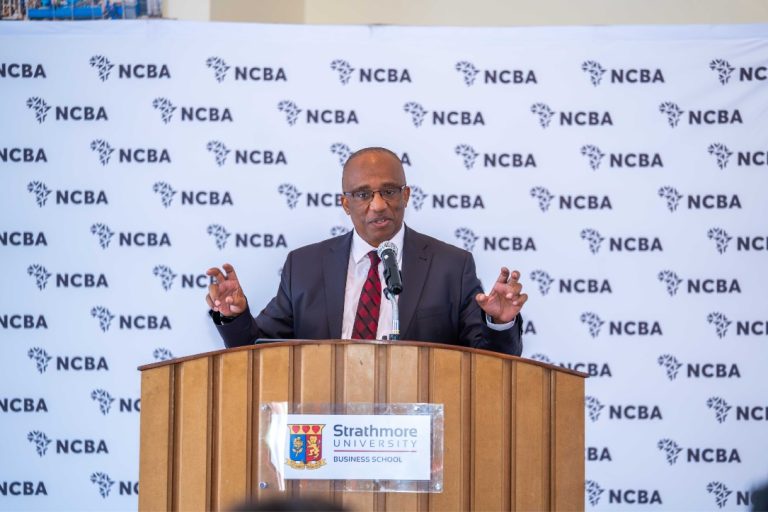
NCBA, in partnership with Strathmore Business School, today graduated 17 entrepreneurs under the 2026 Cohort of the Enterprise Development Programme (EDP), reaffirming its commitment to empowering small and medium-sized enterprises (SMEs) through capacity building, strategic partnerships, and sustainable business support.

Since the programme’s inception in 2016, a total of 354 NCBA SME banking customers have successfully undergone the Enterprise Development Programme. This forms part of NCBA’s broader SME empowerment agenda, which focuses on strengthening Kenya’s entrepreneurial ecosystem through tailored financial solutions, advisory services, strategic partnerships, and enterprise development initiatives.

SMEs remain the backbone of Kenya’s economy, contributing approximately 40 percent of the country’s Gross Domestic Product (GDP) and accounting for over 80 percent of employment opportunities across the country. As one of the largest contributors to economic growth, innovation and job creation, the sector continues to play a vital role in driving inclusive economic transformation and community development.

Speaking during the graduation, NCBA Director Commercial & SME Banking, Robert Kiboti said, “At NCBA, we recognize that sustainable business growth requires more than access to capital. SMEs need the right knowledge, leadership capability, and ecosystem support to thrive in an increasingly dynamic business environment. Through the Enterprise Development Programme, we are intentionally investing in entrepreneurs by equipping them with practical skills and strategic insights that enable them to scale sustainably and create long-term impact within their communities.”

NCBA group partners with ElandX to finance browns plantations’ new electric truck fleet

The 16-week programme, designed to equip entrepreneurs with practical business skills, leadership capability, and strategic direction, continues to play a critical role in supporting the growth of SMEs across key sectors including agribusiness, manufacturing, retail, logistics, and professional services.

The Enterprise Development Programme combines academic learning with practical coaching, peer-to-peer learning, and real-market insights, enabling participants to strengthen operational efficiency, sharpen strategic decision-making, and unlock sustainable growth opportunities.

Kiboti added that the initiative aligns with NCBA’s Ubuntu philosophy, which is anchored on the belief that shared prosperity is achieved by uplifting businesses, communities, and individuals collectively.

“The Ubuntu philosophy reminds us that progress is strongest when it is shared. By empowering SMEs, we are not only supporting individual enterprises but also contributing to job creation, innovation, and economic transformation across the country,” said Kiboti.

Since its inception, the EDP programme has continued to demonstrate measurable impact among participating businesses, with entrepreneurs reporting improved business structures, enhanced leadership capability, stronger financial management practices, and increased confidence in scaling their enterprises.

The graduation ceremony marks another milestone in NCBA’s broader mission to support SMEs beyond financial solutions by providing entrepreneurs with the knowledge, networks, and tools required to scale resilient and future-ready businesses.

Through initiatives such as the Enterprise Development Programme, NCBA continues to position itself as a leading partner for SMEs by supporting entrepreneurs at every stage of their growth journey and reinforcing its comml

How Co-op Bank’s MSME Overdraft facility is helping businesses stay afloat

Managing cash flow is one of the biggest challenges faced by many small and medium-sized enterprises (SMEs).

From delayed payments from clients, seasonal fluctuations in sales, and unexpected expenses, these enterprises often struggle to meet their day-to-day obligations despite having work in progress or pending invoices.

It is a challenge that has forced many entrepreneurs to postpone supplier payments, delay staff salaries, or even suspend operations temporarily while waiting for customers to settle outstanding bills.

To help businesses bridge these gaps, the Co-operative Bank of Kenya (Co-op Bank) offers MSME Overdraft Facilities designed to provide working capital when it is needed most.

The facility allows businesses to withdraw funds from their current accounts beyond their available balances up to an agreed limit, enabling them to continue operating smoothly while awaiting payments.

The overdraft facility is available for a period of up to 12 months and can be renewed based on performance, giving businesses flexibility to manage their short-term financing needs.

Under the facility, businesses can access different borrowing limits depending on their needs and the security they provide.

Customers under the Bronze category can access unsecured overdrafts of up to Sh600,000 and secured facilities of up to Sh3 million.

The Silver category offers unsecured limits of up to Sh6 million and secured facilities of up to Sh8 million, while Gold customers can access unsecured overdrafts of up to Sh10 million and secured facilities of up to Sh15 million.

According to business owners who have benefited from the facility, access to working capital has significantly reduced the pressure they previously experienced when running their businesses on limited resources.

“There are times when we deliver materials to large projects and have to wait several weeks before payment is processed. During that period, suppliers still expect to be paid, and business expenses continue. The overdraft facility has helped us bridge that gap without interrupting operations,” says Peter Mwangi, a Nairobi-based Hardware supplier.

Mwangi notes that the ability to access funds quickly has enabled him to maintain healthy relationships with suppliers and take on larger orders with confidence.

Similarly, Grace Wanjiku, who runs a food processing enterprise in Nakuru, says the facility has helped her manage seasonal fluctuations in demand.

“Our business experiences periods when orders increase sharply, requiring us to purchase more raw materials. Sometimes customer payments take longer than expected. Having access to an overdraft means we can continue production and meet customer demand without delays,” she explains.

She adds that the facility has enabled her company to maintain a consistent supply while avoiding disruptions that could affect customer trust and future business opportunities.

How to get started

Customers interested in this facility are directed to visit the nearest Co-op Bank branch countrywide.

Also Read: Co-op Bank named ‘SME Bank of the Year in Africa’ at the 2026 African Banker Awards

NCBA offering contract farmers up to Sh6 million loan with flexible repayment

Agriculture remains the backbone of Kenya’s economy, supporting millions of households, creating jobs, and contributing significantly to national food security.

Despite its importance, access to affordable and flexible financing continues to be one of the biggest hurdles facing farmers.

Many growers struggle to secure the capital needed to purchase quality seeds, fertilisers, chemicals, and other essential farm inputs, often limiting productivity and profitability.

To bridge this financing gap, NCBA Bank is providing tailored financial solutions designed to empower farmers and strengthen agricultural value chains.

Through its Agribusiness Scheme Loan, the bank is helping contracted farmers access the funding they need to invest in their farms while aligning repayment schedules with agricultural production cycles.

The Agribusiness Scheme Loan is specifically designed for farmers engaged in contract farming arrangements with seed companies, cooperative societies, and other institutions that provide a buy-back guarantee for crops or seeds produced.

The facility finances the purchase of key farm inputs, including seeds, fertilisers, chemicals, and other farm operation requirements, enabling farmers to focus on improving yields and meeting contractual obligations.

“We offer loans to finance the purchase of farm inputs by farmers who are engaged to produce crops or seeds for scheme companies such as seeds, chemicals, fertilisers and related farm operation activities,” NCBA states.

Recognising the unique nature of farming, NCBA has structured the facility to offer flexible repayment periods that correspond with crop cycles and harvesting seasons.

This approach allows farmers to repay the loan when they generate income from their produce, easing financial pressure during the production period.

“Farming requires substantial investment long before income starts coming in. Through the scheme loan, I was able to manage farm operations efficiently and meet the quality standards required by the contracting company. As a result, my earnings have improved, and I am now planning to diversify into additional crops,” says Mary Atieno, a contract sunflower farmer, in Siaya County.

The financing solution offers loan amounts of up to Sh6 million, providing farmers with sufficient capital to undertake both small-scale and large-scale farming operations.

Who is eligible?

The loan is available to farmers who have maintained a farming relationship with their scheme company for at least two years.

In addition, the facility features flexible security requirements, making it more accessible to farmers who may not possess conventional forms of collateral often demanded by traditional lending products.

Eligible farmers interested in this loan are directed to visit the nearest NCBA bank branch countrywide for further application guidance.

Also Read: NCBA group partners with ElandX to finance browns plantations’ new electric truck fleet