
Home Blog Page 68

I am 34, single, making Sh130,000 per month. How do I retire at 40?

0

Gertrude Njeri who is an accountant, personal finance and investment consultant and the founder of Financial Buddy Africa Ltd, responds to a Kenyan who is looking to retire at 40. Is this the right age to retire? How much money should he invest to guarantee himself a comfortable post-retirement life? Take a look…

The Question: My name is Peter. I am unmarried but in a relationship. I make Sh130,000 monthly. My budget is as follows;

1). Rent: Sh30,000

2). Food: Sh15,000

3). Vehicle fuel: Sh10,000 to Sh5,000

4). Home entertainment: Sh15,000 (Pay tv, Wifi, and online subscriptions)

5). Electricity & Water: Sh3,000

6). Black tax: Sh18,000

7). Partner: Sh15,000

8). Weekend night outs: About Sh6,000 (not sure)

9). Miscellaneous and savings take the balance.

I have Sh340,000 savings in the bank. I also have three acres that I bought from our family’s neighbour upcountry. This land is worth a total of Sh3.6 million. My mom has been using it for farming. I am 34, and  going to be 35 in August this year. I would like to retire from working in five years at age 40 and have my money work for me, pay me and sustain my lifestyle through passive investments and income. How can I achieve this with the income and budgetary allocations?

The Answer: Alright, Peter, let’s walk through this. You’re earning Sh130,000 a month, and from your budget, most of it is already committed. Rent, food, black tax, your partner, entertainment, all of that adds up quickly. What stands out is that your savings and investing are not structured. It’s more like whatever remains at the end of the month, and that makes it very hard to build serious wealth.

Now your goal is clear. You want to retire in 5 years at 40 and have your investments fully replace your income. That’s a strong goal, but we need to ground it in real numbers.

To replace Sh130,000 per month, you need about Sh1.56 million per year. If your investments are earning around 8 percent annually, you’d need roughly Sh20 million invested to generate that kind of income consistently. That’s the real target.

Now, when you ask what it would take to get there in 5 years, the answer is where things become very clear. You would need to invest about Sh270,000 every month for the next 5 years to reach Sh20 million.

You are currently earning Sh130,000. So this version of the plan doesn’t work, not because you’re doing anything wrong, but because the numbers simply don’t allow it. The gap is too large for that timeline. So instead of forcing that, the smarter move is to adjust the path while keeping the goal alive.

Rather than aiming for full retirement at 40, think about building financial strength by 40. That means getting to a point where your investments and assets are covering a meaningful part of your life, even if not everything.

A more realistic, and still powerful, target is building a portfolio of around Sh7 million to Sh10 million over the next 5 to 7 years. Now let’s make that feel real.

If you start investing about Sh50,000 every month consistently, at around 8 percent, you’re looking at roughly Sh4 million in 5 years. If you keep going, that grows to around Sh9 million to Sh10 million in about 10 years. That’s how the path actually builds over time.

But to get there, your current budget needs a bit of structure. Right now, you’re not clearly prioritizing investing. You’re spending first, then saving what’s left. That needs to shift.

You don’t have to change your life completely, but there’s room to tighten. Spending Sh15,000 on home entertainment can be adjusted without affecting your lifestyle too much. Even freeing up an extra Sh10,000 to Sh20,000 and directing it into investments consistently makes a big difference over time.

You have mentioned some allocations that you may not be certain about, Sh6,000 for weekend night outs for example. You need to be clear on where every coin goes. Every coin matters in the journey to financial freedom. Being single, I would recommend that you slash your rent to around Sh20,000. It is not clear why you have your partner on a monthly stipend of Sh15,000. This would make more sense if the situation was that of a spouse, under which the money would still be considered ‘in-house’. Does your spouse work? Does she have an income? Is she financially independent? You need to cut this expenditure off and, or at least bring it down to Sh5,000. You also need to cut down your home entertainment down to Sh5,000. With digitization and proper wifi, you can access much of the premium pay tv content that you are currently paying for.

These adjustments alone will give you an extra Sh30,000 that can be directed towards your savings and investments. In order to get your saving plan on track, be clear about the amount allocated for savings. Currently, your allocation for miscellaneous and savings is the balance from your expenses of about Sh15,500. Don’t be vague about what you allocate for your miscellaneous expenses. Allocate Sh3,500 and use the balance of Sh12,000 to top on your savings. Depending on your home situation, if you can readjust your black tax from Sh18,000 to Sh10,000, you would get an extra Sh8,000 which will bring the total amount saved from your readjustments to Sh50,000 per month.

You can start saving this amount at the net rate recommended above, and you may also opt to diversify it amongst various savings vehicles, for example, in order to start building an emergency fund (via a money market fund for instance). You may set aside Sh10,000 every month for this. You may further diversify another Sh10,000 to a professionally run Sacco, and use the balance of Sh30,000 to build on your existing kitty of Sh340,000.

READ MORE: I earn Sh13,000; how do I raise Sh250,000 for poultry, dairy farming business?

Now let’s talk about what you already have. That Sh340,000 in the bank should not just be sitting there. Move it into a high-yield savings account or a money market fund so that it starts earning something while still being accessible. It’s a simple move, but it gets your money working immediately instead of being idle.

Then there’s your land.

This is actually one of your biggest opportunities. It’s worth Sh3.6 million, which is significant, but right now it’s not producing income for you. Your mum is using it, which is fine, but from your financial perspective, it’s an asset that hasn’t been activated yet.

If you can turn even part of that land into something that brings in Sh20,000 to Sh50,000 per month over time, your entire situation will start to change. This requires you to evaluate what portion of the land your mom is currently using and how the remainder can be commercialized. If the land is worth Sh3.6 million currently, what has been its rate of appreciation since you acquired it? Is it in a prime location or is it in a location where land appreciation is exceedingly slow? What agribusiness activities can be activated there to turn it into a profit generating machine? To get proper clarity on this, you may also need to consult an agricultural professional from this area. The answers to these questions will let you know whether you can offload part of the land and redirect the money to investment vehicles that will earn you better returns over and above the sentimental attachment to land.

If we bring this back to your original goal, you are no longer in a bad financial position. You have a good income, no dependents yet, savings, and a valuable asset in land. What needs to change is not your ambition, but your approach.

Over the next 5 years, focus on building momentum. To maintain consistency, automate your money by placing a standing order that sends your Sh50,000 savings and investments kitty to its respective accounts the moment your salary hits your checking account.

I will also urge you to start enrolling for masterclasses on personal finances and investments to start advancing your knowledge on how investments work, for example shares and treasury bonds. This will come in handy as you will need to invest in better instruments such as infrastructure bonds and strong, dividend earning stocks as you build up your investments for that passive income you are targeting from age 40.

By the time you’re 40, you may not be fully retired, but you could be in a position where your money is working for you, your income doesn’t rely on one source, and you have real financial breathing room. And honestly, that’s what financial independence actually looks like in real life.

A version of this personal finance question and answer was previously published in the Saturday Magazine. The Saturday Magazine is a publication of the Nation Media Group.
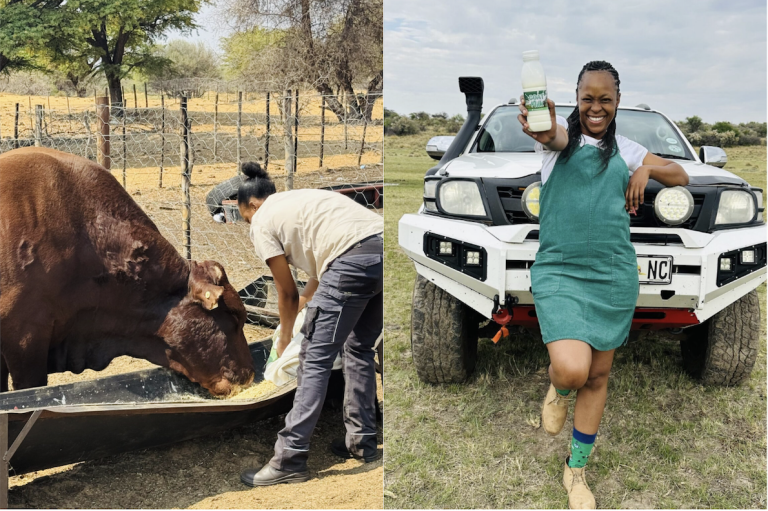
South Africa’s Tlhalefo Dithebe: Quit her job and to invest in livestock farming

Family Legacy: From retail job to full-time farming

In 2021, South African-based farmer Tlhalefo Dithebe made a decision many would consider risky. She resigned from her permanent job in the retail sector and invested her pension into livestock farming.

Today, that decision has paid off. She runs Agro Queen, a growing livestock enterprise with 133 cattle and 147 goats, supplying both meat and milk to local markets. Farming was not new to Dithebe. She comes from a family with a strong agricultural background, with both her grandfather and father actively involved in farming.

Her entry into agribusiness was supported by early financial discipline. While in college, her father saved 80 percent of her semester allowance, creating a pool of capital that she later used to buy her first livestock.

Growing from 31 cattle

Dithebe started her livestock journey with just 31 cattle in 2021. She adopted a simple but effective model:

  • Sell male calves at auction once they reach 180kg–220kg
  • Retain heifers to grow the herd
  • Reinvest proceeds into acquiring more breeding stock

Farmer’s Guide: Intensive livestock farming benefits and shortcomings

This approach has enabled her to steadily grow her herd to over 130 cattle without relying heavily on external financing.

Operating in a dry region influenced her production decisions. She focuses on:

  • Bonsmara cattle, known for drought resistance and fertility
  • Boer goats, valued for fast growth and meat production

To further improve productivity, she has adopted artificial insemination, which has enhanced genetics while reducing the cost of maintaining bulls.

South Africa's Tlhalefo Dithebe: Quit her job and to invest in livestock farming

The owner of Agro Queen, Tlhalefo Dithebe. Photo: Supplied

Livestock business

Like many farmers in arid areas, Dithebe relies on natural grazing supported by supplements. She uses seasonal licks and adjusts feeding depending on whether animals are pregnant, lactating or growing. To manage costs, she also produces her own feed using maize residues mixed with molasses, reducing reliance on commercial feeds.

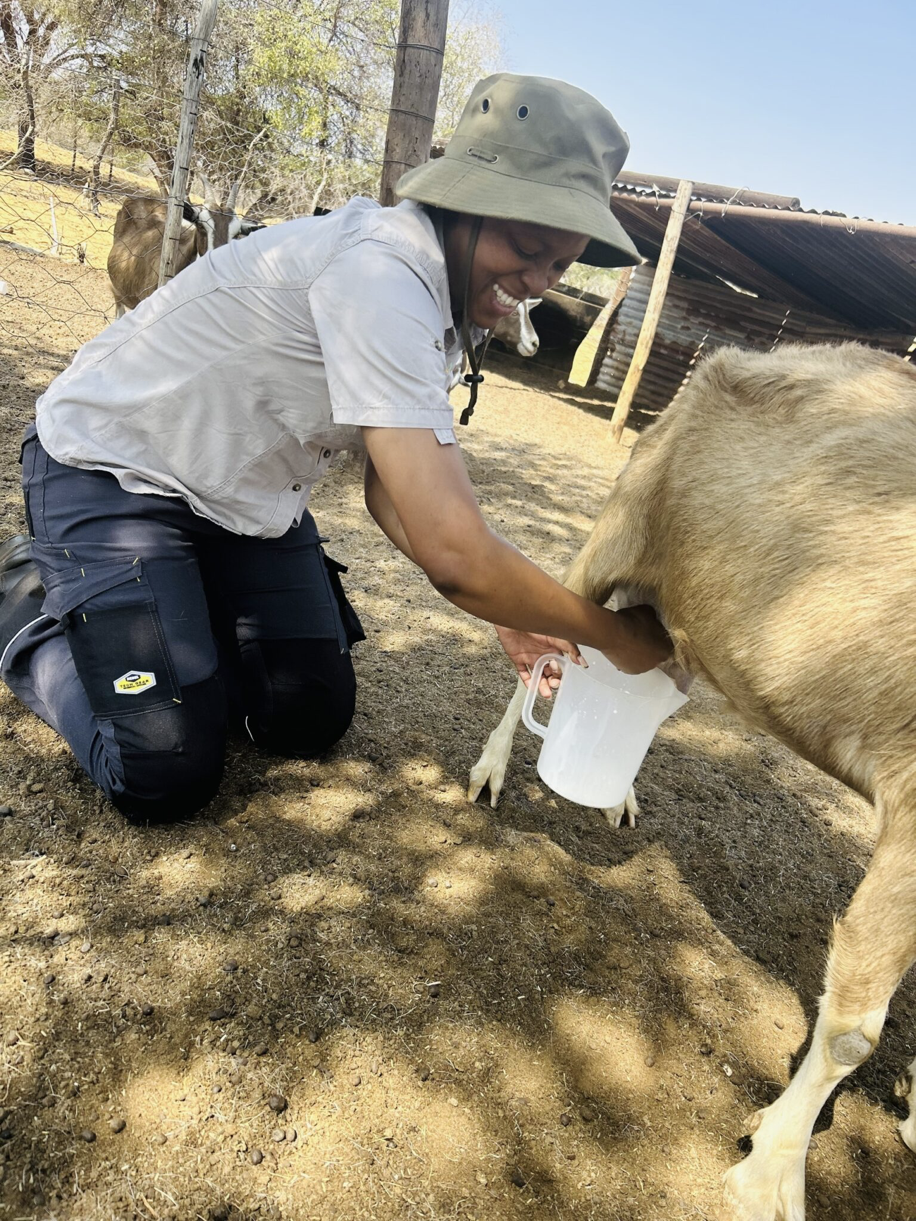
One of the standout ventures in her business is goat milk production.

The idea emerged after she noticed health improvements in her son after consuming goat milk. She has since commercialised the product, supplying local markets. Currently, the farm produces about 126 litres per week against a target of 210 litres, with production affected by breeding cycles.

Multiple revenue streams

Dithebe sells her products through different channels to ensure consistent income:

  • Weaners sold through auctions and to feedlots
  • Slaughter-ready animals sold within the community
  • Breeding livestock sold to other farmers
  • Goat milk sold locally for consumption

This diversified approach allows her to respond to market demand while maintaining steady cash flow.

How I made my first million at 24 from Black Soldier Fly farming

Building a modern agribusiness

She maintains a strict animal health programme that includes vaccination, parasite control and nutritional supplementation. Her approach is preventative, aimed at reducing losses and maintaining productivity in a challenging environment.

Beyond farming, Dithebe has invested in building her business skills. She has participated in enterprise development programmes and adopted digital tools to improve planning and efficiency. She is also focused on branding Agro Queen as a professional and scalable agribusiness.

South Africa's Tlhalefo Dithebe: Quit her job and to invest in livestock farming
Tlhalefo Dithebe feeding one of her bulls. Photo: Supplied

A Growing legacy

Her message to those looking to enter farming is straightforward: start small and take action. She encourages new farmers to seek knowledge, join support programmes and learn from others in the industry.

Dithebe’s journey reflects a broader shift across Africa, where young entrepreneurs are entering agriculture with a business mindset. With her daughter already showing interest in farming, Agro Queen is positioning itself not just as a business, but as a legacy.

Final Word

Dithebe’s story underscores a key reality in African entrepreneurship: success is rarely driven by a single bold move. It is built through disciplined execution, reinvestment, and a clear understanding of local conditions.

In sectors like agriculture, where volatility is constant, the advantage lies with founders who combine patience with structured decision-making—and who treat business not as a gamble, but as a long-term responsibility.

Safaricom doubles Home Fibre speeds to power smart living customers to enjoy faster internet at no extra cost across all plans

0

Safaricom doubles Home Fibre speeds

Safaricom has announced an upgrade to its Home Fibre offering, increasing internet speeds by up to 2.5 times at no additional cost to customers.

Under the new enhancements, customers across all Home Fibre plans will benefit from substantial speed boosts while retaining their current pricing. Entry-level packages will now deliver speeds of up to 15 Mbps, while mid-tier plans will offer 35 Mbps and 80 Mbps. Premium packages will reach speeds of up to 400 Mbps, making it suitable for homes with heavy internet usage.

“As homes become increasingly connected, reliable high-speed internet is no longer a luxury but an essential service for modern living. By upgrading Home Fibre speeds, we are delivering greater value to our customers, strengthening our market leadership, and laying the foundation for smarter, more connected homes and communities across Kenya. Customer expectations continue to rise, and we are committed to meeting them while maintaining a competitive edge. With this upgrade, we aim to provide smooth multi-device streaming, buffer-free video calls, and reliable performance”. said Peter Ndegwa, CEO, Safaricom.

With coverage reaching over 800,000 homes, Safaricom continues to lead in fixed internet services, driven by strong customer trust, reliable networks, and consistent performance. The speed upgrade is designed to ensure customers receive greater value for their current spend while future-proofing households for emerging smart technologies.

Going to Kenya: Traveler’s Internet Guide for Africa’s Gem Tourist

Below is a summary of the new speeds

Product

Old Speeds

New Speeds

Price (Kes)

Wi-Fi Bamba 6 Mbps

6 Mbps

15mbps

1,600

Wi-Fi Bamba 10 Mbps

10 Mbps

20mbps

2,000

Wi-Fi Bamba 5 Mbps (Boma Yangu)

10 Mbps

10mbps

800

Fibre Lite 5 Mbps

5 Mbps

15mbps

1,500

Fibre Lite 7 Mbps

7 Mbps

20mbps

2,000

Bronze

15 Mbps

40mbps

2,999

Silver

30 Mbps

60mbps

4,100

Gold

80 Mbps

150mbps

6,299

RUBY

N/A

300mbps

9,999

Diamond

500 Mbps

500 Mbps

12,499

Platinum

1000 Mbps

1000 Mbps

20,000

Kenya Airways vs Kenya Airports Authority: Understanding two pillars of Kenyan aviation.

0

The recent experience of a seasoned traveller from South Africa underscores a persistent confusion between Kenya Airways (KQ) and Kenya Airports Authority (KAA). The distinction is not merely semantic; it reflects two fundamentally different mandates. The following five points delineate the divide between the two institutions

  1. Kenya Airways is the country’s flag carrier, operating a fleet that serves more than 40 destinations across Africa and beyond. Its network is structured around a hub-and-spoke model, with Nairobi as the central node linking routes to Africa, Asia, Europe and North America.

By contrast, KAA is the state agency responsible for managing the nation’s airports. Its principal asset is Jomo Kenyatta International Airport (JKIA), which generates the bulk of its revenue. KAA owns and maintains the airport and its associated infrastructure. In effect, it acts as a landlord, while airlines, including KQ, operate as tenants within its facilities.

2. KQ operates like any carrier, within the slot allocations assigned at JKIA. It adheres strictly to the timings and parameters set by KAA. Its mandate is confined to flight operations; it does not extend to provision or maintenance of airport infrastructure. The installation of airbridges, for instance, falls squarely within the airport authority’s remit.

KAA regulates slot allocation not only at JKIA but across the country’s principal airports, distributing access among airlines according to a fixed schedule. It is also responsible for the upkeep of core facilities, including baggage handling systems and related equipment. Decisions on aircraft parking positions are likewise determined by the authority, often necessitating passenger transfers between aircraft and terminal by bus.

Kenya Airports Authority and Kenya Airways are two distinct institutions

3. The mandate of KAA extends only as far as the aircraft door. Beyond that threshold, authority passes entirely to Kenya Airways (KQ), where the captain exercises ultimate discretion over all matters, including the decision of who may board. Reviews of KQ’s in-flight experience are, by and large, favourable. Its cabin crew are widely regarded as world-class; a reputation underscored by the steady stream of awards the airline garners each year.

4. Kenya Airways is responsible for checked baggage once it has been accepted at check-in; liability does not rest with KAA. In cases of loss, delay or damage, the airline bears responsibility, subject to limits set out under international law, most notably the Montreal Convention. Even so, claims are governed by strict procedures. Passengers are expected to report any irregularity upon arrival and file a Property Irregularity Report. Claims for damaged baggage must be submitted within seven days, while those relating to delayed baggage must be lodged within 21 days.

5.⁠ ⁠KQ and KAA may be separate institutions but in practice, they operate in a symbiotic relationship. One is the soul while the other is the body. Over the years, the airline has found itself at the centre of moments that extend beyond commercial aviation into national sentiment. It has, for instance, assisted in the repatriation of former prime minister Raila Odinga, an operation that underscored its role in moments of political and public significance. More recently, it has flown home contingents of Kenyan troops returning from peacekeeping duties in Haiti, offering a quiet logistical service to the country’s overseas commitments.

This week, KQ turned its attention to sport, carrying back marathoner Sabastian Sawe, the first person to run a competitive, official marathon in under two hours. His arrival at JKIA was marked with a ceremonial arc of a water cannon salute, a gesture typically reserved for aircraft and passengers deemed to have brought particular honour.

Although KQ and KAA are often conflated, their roles are distinct yet deeply interconnected. KAA provides the essential infrastructure that keeps the country’s aviation systems running, while Kenya Airways represents its operational and symbolic face to the world. One manages the ground; the other moves through the skies.

Together, they form a complementary system where efficiency in airports and excellence in flight operations must align for the broader success of Kenyan aviation. Understanding this distinction not only clears public confusion but also highlights how both institutions, in their separate mandates, contribute to national connectivity, pride and global presence.

Absa, GIZ and AGF launch Kenya’s largest circular economy programme

0

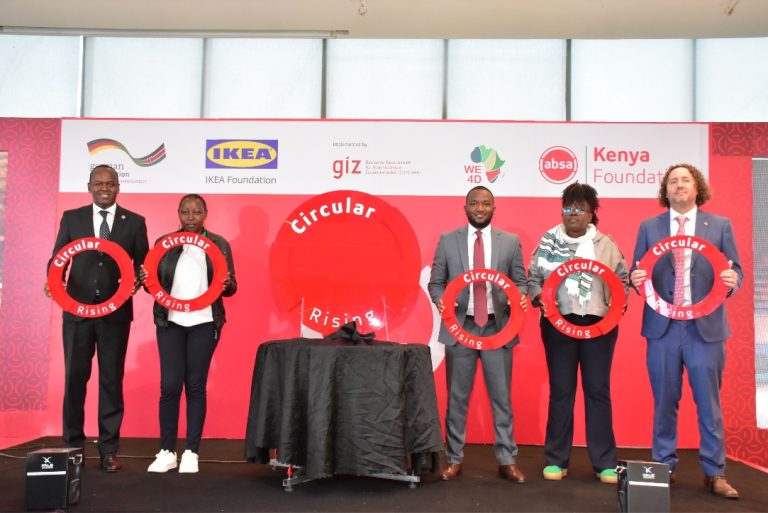
Absa Kenya Foundation, in partnership with the German Corporation for International Cooperation (GIZ) and the African Guarantee Fund (AGF), has today launched Kenya’s first and largest CirculaRising Programme, targeting the creation of over 6,000 new and improved jobs in the next two to three years.

The transformative initiative aims to reach and empower more than 2,000 women- and youth-led MSMEs operating within Kenya’s circular economy, while recycling over 6,000 tonnes of waste and positively impacting more than 30,000 lives indirectly.

The programme’s overall objective is to promote and integrate circular solutions and gender-inclusive strategies within the circular economy, contributing to sustainable growth, environmental conservation, and inclusive economic development.

Speaking during the programme’s launch in Nairobi, Absa Bank Kenya Managing Director and CEO, Abdi Mohamed, acknowledged the role of partnership and noted that this initiative is a collaborative response to one of the most defining economic questions of our time, how economies can grow without exhausting the very resources that such growth depends on.

“For decades, global growth has largely followed a linear model where we take, make, use and discard. While this model has delivered progress, it has also generated enormous waste, placed immense pressure on natural systems, and widened inequality in how opportunity is distributed. The next chapter of growth will belong to economies that create value differently. Economies where waste becomes input, efficiency becomes advantage, and sustainability becomes enterprise. That is the opportunity the circular economy offers, and what underpins the launch of this initiative.”

The programme is co-funded by the German government and IKEA Foundation and will be implemented by the Deutsche Gesellschaft für Internationale Zusammenarbeit (GIZ) GmbH, and its partners through three tailored phases to address the diverse needs of MSMEs. The CirculaRising Academy, fully funded by Absa Kenya Foundation will target over 2,000 microenterprises through training, coaching, market access, and financing support over 27 months.

On the other hand, the CirculaRising Accelerator component, implemented by GIZ will support 150 growth stage small enterprises across Nairobi, Central, Western, Nyanza, and Coastal regions through capacity building, market linkages, and access to finance. Additionally, the CirculaRising Scale-Up component will target 25 to 30 medium- and large-sized enterprises that generate high volumes of waste and intend to scale their export operations.

These enterprises will receive tailored training and coaching to support the development and integration of circularity and gender-responsive practices, as well as certification in global sustainability standards.

“With CirculaRising, we combine the empowerment of women’s employment with the scaling of circular business models in Kenya. Together with the Absa Kenya Foundation, we will support MSMEs in achieving economic, social and environmental impact, from increased employment and better incomes to improved recycling and waste management practices. This cooperation combines financial and advisory expertise to promote women in green value chains and to drive the transformation of the Kenyan economy,” said GIZ’s Employment promotion for women for the green transformation in Africa (WE4D) programme Kenya team leader, Thomas Jaeschke.

While officiating the launch, Susan Mang’eni, Principal Secretary State Department of Micro, Small and Medium Enterprises Development through her remarks read by Mohammed Doyo, the Secretary for MSMEs, underscored the importance of Micro, Medium and Small Enterprises in Kenya’s economic transformation and reaffirmed government’s support for such initiatives.

SMEs set for boost as Airtel Money and Absa roll out seamless transfers

“MSMEs remain the backbone of Kenya’s economy. Initiatives such as CirculaRising are critical in unlocking their potential, enabling access to finance, and supporting their transition into sustainable and competitive enterprises. As the government, we are committed to creating an enabling policy and regulatory environment, strengthening enterprise support frameworks, and working closely with partners such as Absa to scale programmes that drive inclusive growth, job creation, and long-term economic resilience,” said Hon. Mang’eni said.

Also in attendance was Dr. Selly Kimosop, Secretary Environment, on behalf of the Principal Secretary for Environment and Climate Change, Dr. Eng. Festus K. Ng’eno who highlighted the role of MSMEs in the circular economy in advancing climate action and economic development.

“The transition to a circular economy presents significant opportunities for Kenya, particularly for MSMEs. Programmes like CirculaRising are essential in supporting green enterprise development, reducing waste, and driving climate action at scale in our country,” said Dr. Ngeno.

Speaking at the same event, the Africa Guarantee Fund (AGF) Group Director of Capacity Development, Patrick Lumumba, said: “Despite owning 40% of all MSMEs and contributing up to 20% of the country’s GDP, women-led enterprises continue to face significant barriers, with an estimated 70% lacking access to adequate financing and only 7% having formal access to financial services. Recognising the critical role women entrepreneurs play in driving Kenya’s economy, including in green value chains, the partnership between AGF, GIZ and Absa Kenya leverages the Affirmative Finance Action for Women in Africa (AFAWA) initiative to bridge the financing gap that MSMEs and more so, women-led MSMEs face. Through the SHE Academy Programme, Absa Kenya and GIZ reaffirm their commitment to empowering women-owned MSMEs as catalysts for change, fostering inclusive growth, and strengthening Kenya’s economic resilience.”

By 2028, the programme aims to mobilise over EUR 2 million in financing while delivering measurable environmental impact by redirecting 6000 tonnes of waste through reduction, reusing, repair and recycling

The Absa Kenya Foundation is anchored on four key pillars, Entrepreneurship, Education and Skills Development, Natural Resource Management, and Health and Humanitarian Relief, with CirculaRising directly advancing three of these pillars. The programme reflects Absa’s purpose of empowering Africa’s tomorrow, together, one story at a time, by supporting entrepreneurs, strengthening businesses, and driving sustainable economic transformation across Kenya.

Alliance Girls principal on the spot over illegal school fees hike to Sh120,000

0

The Ministry of Education has initiated disciplinary action against Alliance Girls High School Principal Margaret Njeru over an illegal school fee hike far beyond the approved limit.

Ms. Njeru is accused of hiking school fees from the recommended Sh53,558 to Sh120,179 without the required legal approval.

Education Cabinet Secretary Julius Migos Ogamba has formally written to the Teachers Service Commission (TSC), directing it to commence disciplinary proceedings against Ms. Njeru.

“The unauthorized fees structure was imposed without the approval of the Cabinet Secretary as by law required and is therefore contrary to Section 29(2)(b) of the Basic Education Act, 2013,” read part of the statement by CS Julius Ogamba.

The CS also called for further investigations into the conduct of the Alliance Girls High School board, over alleged funds mismanagement.

According to findings by the Ministry Quality Assurance team that investigated the institution, the school reportedly spent Sh16 million on trips, Sh13 million on prize-giving ceremonies and speeches, Sh5 million on prize vouchers, Sh3 million on airtime and administrative allowances, and Sh1 million on moral and spiritual activities.

The ministry said such spending was unjustifiable and raised concerns over financial accountability, insisting that the board must be compelled to explain why the expenditures were approved.

“We are working with other stakeholders in the education sector, including the Teachers Service Commission (TSC), to ensure teachers who disregard directives from the ministry don’t go unpunished. We’ll amend the TSC Act to streamline the disciplinary process so that there are no technicalities to shield anyone,” said Ogamba.

The disciplinary action comes amid ongoing complaints from parents over rising fees in public schools, with the ministry reiterating that all public institutions must strictly comply with the annual fee guidelines.

Under the rules, schools seeking to introduce additional levies are required to obtain written approval from the Cabinet Secretary through the County Education Board (CEB).

According to the guidelines issued in November last year, senior school learners enrolled in boarding schools are required to pay Sh53,554 annually, depending on their institution’s cluster.

“The school fees to be charged for all categories of boarding school shall, for the time being, remain at Sh53,554.00 as per the Gazette Notice No. 1555 of 10th March 2015,” reads part of the ministry directive.

Former national schools, now categorized as Cluster 1 (C1) institutions, are required to charge Sh53,554 per year. Extra-county schools, classified as Cluster 2 (C2), are expected to charge Sh45,054 annually, while county schools—now Cluster 3 (C3)—should charge Sh40,035 per year.

Learners admitted to Cluster 4 (C4) schools, formerly sub-county institutions, will continue to benefit from free secondary education under the government’s programme.

The ministry reiterated that schools must observe transparency in fee collection, maintaining that parents must be notified in advance about fee deadlines.

Additionally, institutions are required to designate official payment channels to avoid irregular transactions, and all payments must be issued with official receipts indicating the amount paid, the date, and the purpose of the payment.

Also Read: 73pc of all Grade 3 learners can’t do basic Math; 59pc can’t read basic English

Connected Africa summit calls for urgent action to unlock seamless digital connectivity

0

Industry leaders, policymakers and technology stakeholders convened at the 15th annual Connected Africa Summit, held at the Edge Convention Centre, issuing a call for the removal of structural and regulatory frictions to unlock seamless connectivity across Africa.

The summit, which is a key platform for advancing Africa’s digital transformation agenda, underscored the continent’s vast potential to build a unified digital market. Speakers highlighted that while Africa possesses the fundamental ingredients, including a youthful population, growing digital adoption, and expanding infrastructure, greater collaboration and alignment are critical to accelerate progress.

Speaking during a panel discussion at the Summit, Safaricom CEO Peter Ndegwa emphasized the importance of stronger collaboration between the public and private sectors.

“To unlock Africa’s full potential, we must deepen collaboration between governments and the private sector. By working together, we can create enabling policies, invest in the right infrastructure and accelerate public sector digitisation in a way that is inclusive, scalable and impactful for millions of Africans”

Safaricom’s Ziidi MMF records Sh784.3 million profit in 14 months

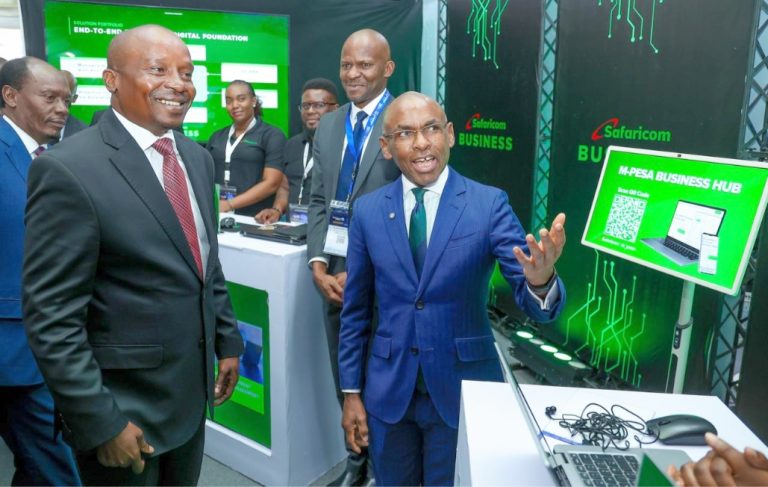
During the summit, Safaricom showcased the digital capabilities of its converged services, a cross-functional approach that brings together Safaricom’s Enterprise Business, Financial Services, Public Sector Digitisation & Transformation (PSDT), and Technology teams. This integrated model positions Safaricom as a unified partner to governments across the continent, enabling a more cohesive approach to delivering secure, scalable, and citizen-centred digital solutions.

The Deputy President of the Republic of Kenya, Prof. Kithure Kindiki, emphasised the need for Public-Private partnerships and including the people in the dialogue of digital transformation.

”The public sector does not have a monopoly on resources. In order to achieve inclusion in the digital market, we must collaborate with the private sector and the citizens themselves,” he said.

As the summit continues to its 3rd day tomorrow, the call for renewed commitment to drive collective action, recognising that Africa’s digital future will depend on coordinated efforts, policy alignment and a shared vision for a connected continent


Emma Onyango: Migori farmer reveals the secret to getting better onion prices

0

Emma Onyango owns two onion farms in Migori and Ngong, with each making her some good cash.

The farmer who doubles as a Human Resource consultant says she opted for horticultural crops after maize farming proved to be unrewarding.

“I planted maize on one acre and got slightly less than 10 bags of 90kgs. Maize is not rewarding and the returns are low. So I decided to venture into onions and watermelon farming,” she told The Star.

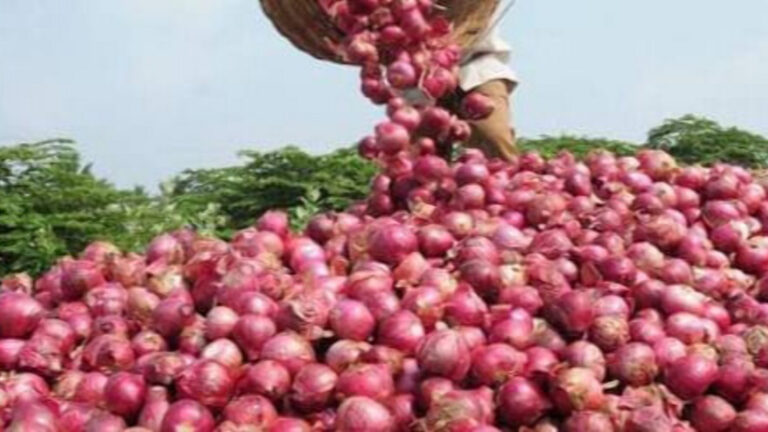
From her first harvest, Onyango says she harvested 8,000kgs from her Migori farm and sold at Sh150 per kilo. The Ngong farm produced another 10 tonnes (10,000kgs), selling at Sh100 per kilo.

“By the time I was selling my produce from the Ngong farm, a kilo of onions was priced between Sh30 to Sh40 in the local market, but I was able to find a good market price for my produce,” Onyango says.

Purity Mbae: Kenyan farmer milking cash from 300 hybrid goats

However, the farmer adopted one strategy that helped her improve her income.

“I was able to secure a good price by harvesting between the end of May and June when there was a shortage of onions in the market,” she adds.

While the venture has proved to be lucrative, it has a fair share of challenges. According to Onyango, heavy rains that cause flooding countrywide affect production.

In addition, inadequate access to pesticides and insecticides, which forces her to buy from Nairobi, also makes production expensive.

“Another challenge is the human resource; you have to get your labour from outside this area. People are not ready to work and do manual jobs. In the end, these challenges increase the cost of production,” she says.

High production cost as a result of expensive seeds is also a challenge. For instance, a kilo of onion seeds, which is only enough for one acre, sells between Sh46,000 to Sh48,000 depending on the variety.

She sells her produce to wholesale traders, retail markets, and estates thanks to her strong social media marketing.

Onyango advises anyone intending to venture into farming to invest in good farm inputs to reap more.

BYD by CFAO: SBM Bank and Avenue Lease & Rentals E.A lead Kenya’s Green Mobility Drive with first fleet of Plug-in hybrid vehicles

0

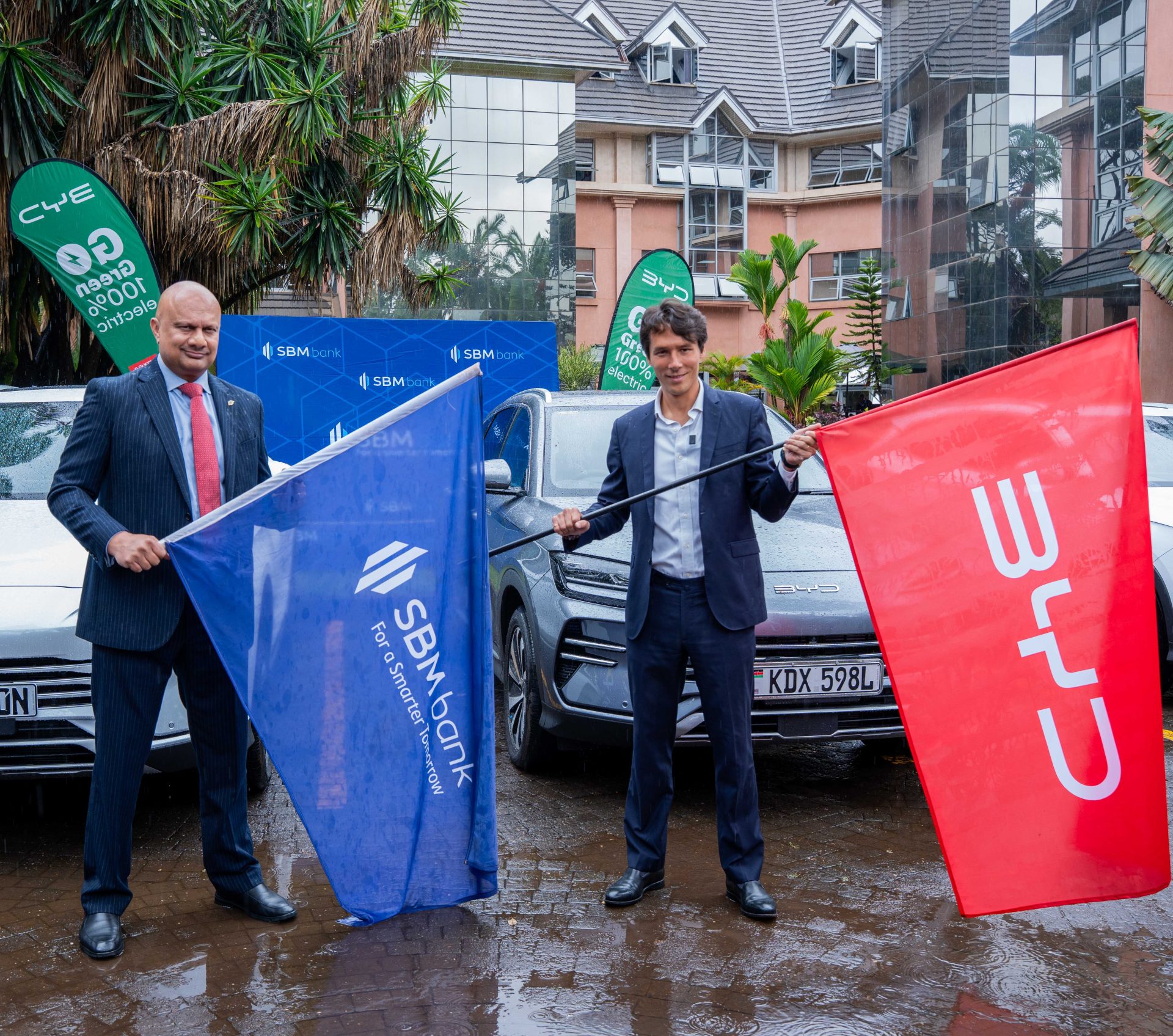
BYD by Cfao Mobility Kenya has delivered its first fleet of five plug-in hybrid electric vehicles (PHEVs) to Avenue Lease & Rentals E.A, with the fleet set to be leased to SBM Bank Kenya, signaling a growing shift among corporates toward sustainable and energy-efficient mobility solutions.

BYD models

The delivery, consisting of one BYD Shark 6 (DMO Plug-in Hybrid Pickup) and four BYD Sealion 6 (DM-i Plug-in Hybrid SUVs), marks the first significant corporate fleet deployment of these specific models in the Kenyan market signally a key appetite for hybrid models within fleet operations.

BYD by CFAO Mobility Kenya, GM Nicolas Ruffier des Aimes, lauded the ongoing corporate efforts by local motor dealers to introduce Electric Vehicles and Plug-in Hybrid Electric Vehicles (PHEV) in the local market.

“As the pioneer in New Energy Vehicles (NEVs), BYD is thrilled to see this partnership come to fruition. We are proud to see leading institutions like SBM Bank and Avenue Lease & Rentals E.A embrace the future of the automotive industry,” said Nicolas Ruffier des Aimes during the handover ceremony.

Auto shift: Kenyan companies move toward electric vehicle production

“By introducing the cutting-edge to the Kenyan market, you welcome a cleaner and safer environment in our streets and highways. We look forward to more opportunities to make sustainability a daily endeavor of our partners.”

EV Technology

The BYD Sealion 6 Premium and BYD Atto 3 Extended use advanced EV technology offering strong driving range, energy efficiency and modern safety and comfort features to provide a smooth, eco-friendly driving experience while keeping running and maintenance costs low.

“We are excited to take this significant step towards achieving our sustainability goals. Our commitment to reducing direct emissions is a dedication to creating positive environmental change,” said Bhartesh Shah, CEO of SBM Bank Kenya. “The introduction of BYD’s advanced hybrid technology allows us to modernise our logistics while significantly cutting down our CO2 emissions.

The transition to e-mobility is a core pillar of Kenya’s national climate action plan, which targets a 32% reduction in carbon emissions by 2030. BYD vehicles are rapidly becoming the preferred choice for Kenyan consumers who demand innovative, reliable, and sustainable mobility solutions. By integrating BYD’s advanced PHEV technology into its operations, SBM Bank Kenya is setting a new standard for the financial sector’s role in environmental stewardship.

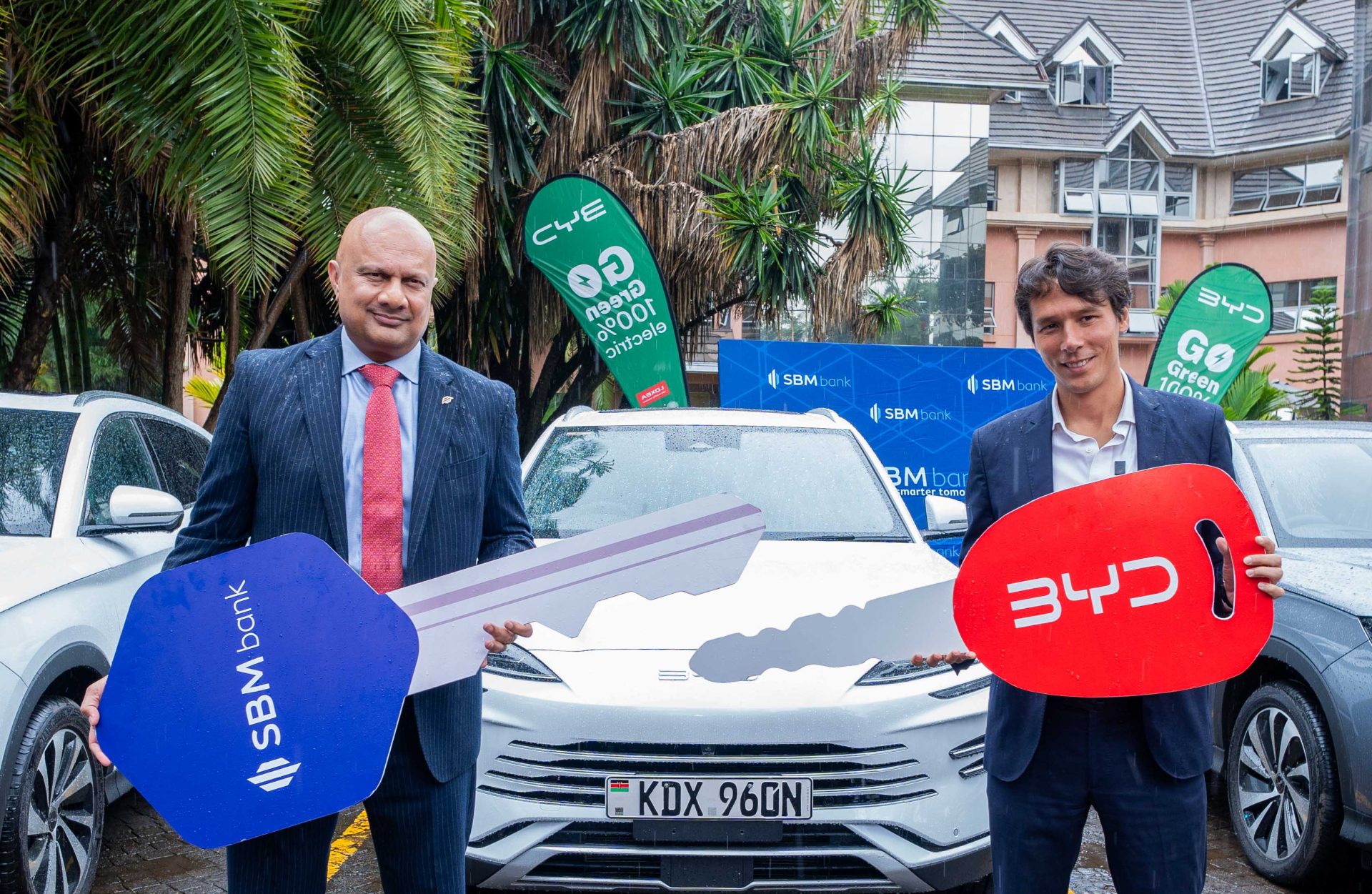
SBM Bank & Avenue Lease & Rentals E.A lead Kenya’s Green Mobility Drive with first fleet of BYD by CFAO mobility Plug-in Hybrids
From left: SBM Bank Kenya CEO Bhartesh Shah and BYD by CFAO Mobility Kenya General Manager Nicolas Ruffier des Aimes during the official handover of BYD fleet comprising one BYD Shark 6 and four BYD Sealion 6 SUVs to SBM Bank which will be leased through Avenue Lease & Rentals E.A, setting a new benchmark for corporate sustainability in the financial sector

Commenting on the partnership and fleet delivery, the Chief Operating Officer of Avenue Lease & Rentals E.A, the leasing company highlighted;

“Our decision to actively enter the electric vehicle leasing market through our partnership with CFAO Mobility reflects both our commitment to environmental stewardship and the evolving needs of our clients. Leasing EVs allows organizations to transition to clean transportation solutions without the heavy upfront capital requirements traditionally associated with fleet replacement.”

Environmental benefits

The COO noted that leasing PHEVs provides immediate environmental benefits for fleet users while accelerating the broader transition to e‑mobility.

“Leasing plug‑in hybrid vehicles allows organizations like SBM Bank Kenya to lower emissions today, while gradually transitioning toward full electric mobility. Reduced fuel consumption, lower CO2 output, and improved operational efficiency are critical outcomes of this model”

Looking ahead, the COO emphasized that the move lays the foundation for future EVfocused transactions and longterm partnerships.

“This collaboration sets the stage for future EV fleet transactions, expanded adoption of electric and hybrid vehicles, and the development of supporting services such as charging solutions, fleet management, and lifecycle optimisation. Our goal is to build a sustainable leasing ecosystem that supports Kenya’s green mobility ambitions while delivering measurable value to our partners.”

SBM Bank & Avenue Lease & Rentals E.A lead Kenya’s Green Mobility Drive with first fleet of BYD by CFAO mobility Plug-in Hybrids
From left: SBM Bank Kenya CEO Bhartesh Shah and BYD by CFAO Mobility Kenya General Manager Nicolas Ruffier des Aimes during the official handover of BYD fleet comprising one BYD Shark 6 and four BYD Sealion 6 SUVs to SBM Bank which will be leased through Avenue Lease & Rentals E.A, setting a new benchmark for corporate sustainability in the financial sector

KCB targets MSMEs and the informal sector with a single-digit interest rate mortgage financing solution

0

KCB Bank has announced the launch of a transformative mortgage solution designed to unlock home ownership for Kenya’s informal sector, marking a significant step towards supporting the affordable housing agenda.

Single-digit interest rate

With a single-digit interest rate, the new offering is tailored to SMEs, artisans, boda boda operators, players in the gig economy, as well as digital content creators whose income streams may be irregular but consistent and have historically faced barriers in accessing mainstream mortgage financing options.

Who qualifies?

To qualify for the facility, an individual must have operated a business for at least 2 years. The mortgage loans range from KShs. 1 Million to KShs. 4 Million, with a maximum repayment maximum period of 15 years.

Speaking during the launch, KCB Bank Kenya Director of Mortgage Business, Caroline Wanjeri, noted that the new product reflects KCB’s commitment to supporting Kenya’s evolving workforce landscape.

Mumo Muinde: Taking 15 to 25-year mortgage is same as accepting slavery

“For years, Kenya’s mortgage uptake has been concentrated among formally employed and middle to high-income earners, a scenario that has kept the mortgage penetration levels at around 3%. With more than 80% of Kenya’s workforce operating in the informal sector, the new mortgage solution seeks to increase financial inclusion, ease the rigid credit assessment mortgage models and enable an increase in homeownership for Kenyans,” Wanjeri said.

The solution

Unlike conventional mortgage products that rely heavily on formal payslips and employer contracts, KCB’s new solution leverages transactional history, mobile money flows, business records, savings patterns, and alternative data to assess affordability and repayment capacity

“This solution acknowledges that Kenya’s economy runs on enterprise. By combining alternative credit assessment and financial discipline, we are making mortgage financing accessible by redefining eligibility through consistency in business performance as a credible pathway to dignified home ownership,” Wanjeri added.

With an annual urban growth rate of 4.4%, Kenya faces a significant housing backlog that continues to adversely impact the health and well-being of low-income households. Kenya’s Vision 2030 Third Medium Term Plan (MTP III) 2018-2022 highlights affordable housing as a crucial element to the realization of inclusive growth that is capable of supporting the development of a sustainable future.

The realization has however, been hindered by a constrained flow of investment finance to the sector, increased costs of construction for developers, as well as diminished affordability levels for customers throughout the housing and demand value chain. This timely structural intervention will therefore help to unlock the much-needed long-term capital for the ordinary Kenyan to own a home.

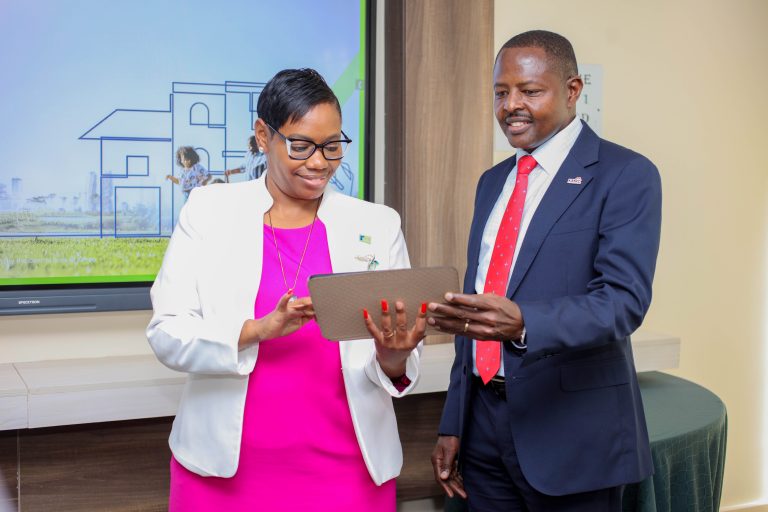
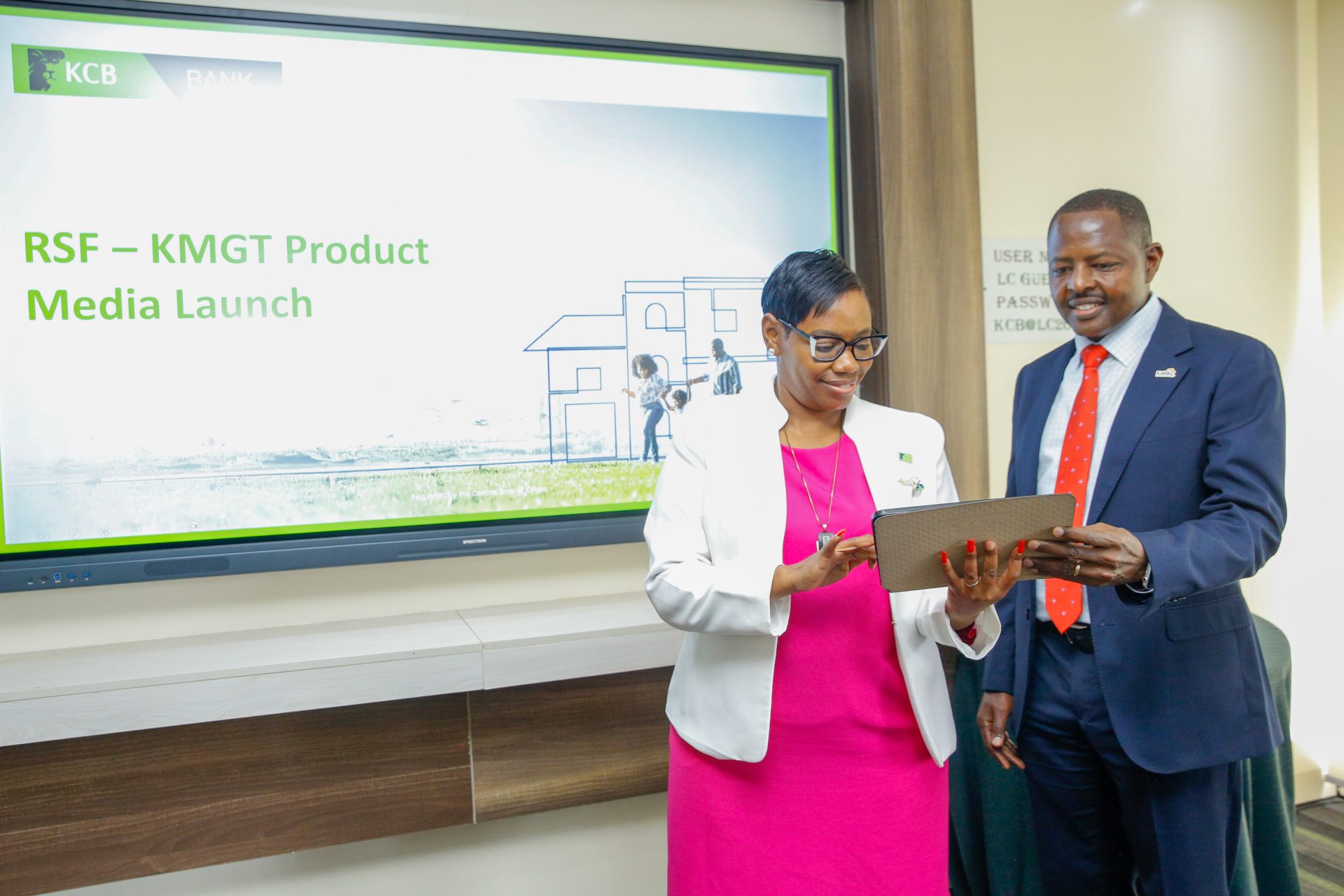
KCB targets MSMEs and the informal sector with a single-digit interest rate mortgage financing solution
KCB Bank Kenya Director, Mortgage, Caroline Wanjeri (left) and Kenya Mortgage Refinance Company CEO Johnstone Oltetia during the KMGT Product Media Launch at the KCB Leadership Centre. The new product is a transformative mortgage solution designed to unlock home ownership for Kenya’s informal sector.