
Home Blog Page 69

2025 Hedera Africa Hackathon announces winners, officially becomes the largest Web3 hackathon globally

0

The Hashgraph Association (THA), the Swiss-based non-profit advancing digital enablement, innovation, and education across the Hedera ecosystem, together with Exponential Science (ES), a global non-profit dedicated to accelerating emerging technologies through research, education, and ecosystem building, today announced the winners of the 2025 Hedera Africa Hackathon.

The announcement marks the conclusion of the world’s largest Web3 hackathon to date, which brought together more than 13,000 developers, produced over 1,300 project submissions, and onboarded more than 45,000 participants into its education and certification pipeline across 20+ major African hubs and online.

The winning projects reflect a more mature and pragmatic vision of what Hedera technology can deliver. Developers from all over the world focused on building real infrastructure: systems that route payments across incompatible networks, verify renewable energy certificates, and secure medical records against silent or unauthorized alteration.

Together, these projects offer a glimpse of what distributed ledger technology becomes when builders prioritize problem-solving over abstraction, creating the connective tissue between systems that were never designed to communicate. The USD 1 million prize pool, among the largest ever awarded at a Web3 hackathon, was distributed across four thematic tracks, alongside a cross-track championship recognizing the strongest projects overall.

Young innovators win up to Shs2M at NIRU AI Hackathon

In addition to the success of the hackathon, The Hashgraph Association also announces the formation of an Investment Committee, which will make multi-million-dollar commitments in strategic partnerships, expanding the ecosystem’s global footprint and emphasis on emerging markets. This committee positions Hedera as one of the few ecosystems directly supporting builders with capital, mentorship and enterprise pathways.

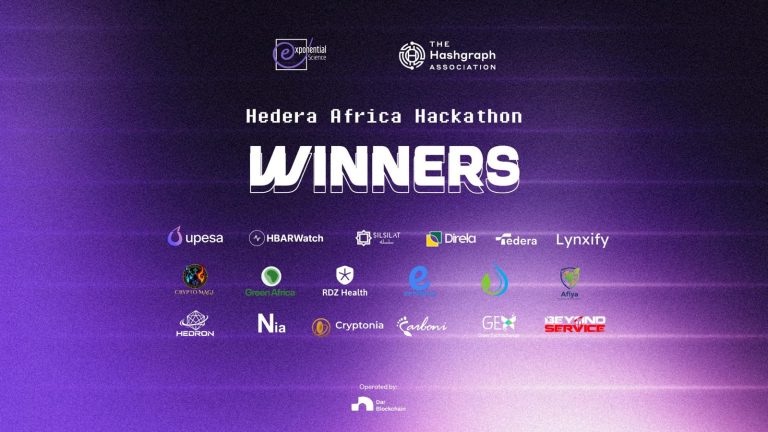
2025 Hedera Hackathon Winners

The hackathon tasked developers with creating scalable, real-world solutions tailored to the continent’s most urgent challenges using Hedera’s DLT across four tracks: On-Chain Finance & Real-World Assets, Distributed Ledger Technology (DLT) for Operations, Immersive Experiences and AI & DePIN. It was co-funded by The Hashgraph Association and Exponential Science, in partnership with Orange Digital Center and operated by Dar Blockchain.

Commenting on the win, the team behind Carboni Renewable Energy Certificate Platform said: “We’re honored that the judges endorsed our vision for rebuilding renewable energy reporting and financing, and excited to turn this win into a real service on Hedera that supports the 1.5-degree goal.”

The Cross-Track Champions were selected for exceptional innovation, execution and real-world impact across all categories:

  • 1st Place ($100,000): GreenAfrica (Nigeria) – Environmental verification platform enabling transparent tracking of sustainability initiatives
  • 2nd Place ($70,000): Carboni Renewable Energy Certificate Platform (Egypt) – Infrastructure for proving and trading verified renewable energy credentials
  • 3rd Place ($60,000): Effisend X Africa (Mexico) – AI-powered payment routing layer connecting incompatible African payment rails
  • 4th Place ($40,000): Silsilat Finance (Malaysia) – Cross-border settlement infrastructure for emerging markets
  • 5th Place ($30,000): Beyond Service (Nigeria) – Mobile game with persistent digital identity and asset ownership

Kenyan innovators to compete at the continental hackathon

The winners by track are:

On-Chain Finance & Real-World Assets

  1. Silsilat Finance (Malaysia)
  2. Direla (South Africa)
  3. Upesa (Nigeria)
  4. Tedera (Romania)
  5. Nia (Madagascar)

DLT for Operations

  1. Carboni Renewable Energy Certificate Platform (Egypt)
  2. Building a Chain of Trust in the Green Power-to-X Market (USA)
  3. RDZ Health (Zimbabwe)
  4. Afiya (Nigeria)
  5. A.T.A (Brazil)

Immersive Experiences

  1. Beyond Service Game (Nigeria)
  2. Cryptonia CITY (Nigeria)
  3. KeyRing (USA)
  4. CryptoMage (India)

AI & DePIN

  1. Effisend X Africa (Mexico)
  2. GreenAfrica (Nigeria)
  3. Hedron (Morocco)
  4. APIx: Intelligent Web3 Deployment Layer (Ivory Coast)

“The Hedera Africa Hackathon reached historic heights, scaling the depths of talent and ambition across the continent and beyond with our online participants,” said Kamal Youssefi, President of The Hashgraph Association. “Hedera has a longstanding commitment to enabling global innovation and powering real utility, proven by the applications built this year spanning finance, sustainability, AI and DePIN verticals. Through supportive partnerships and The Hashgraph Association’s new Investment Committee, we are committed to nurturing these developers long after the hackathon ends and really focusing on empowering the next generation of builders.”

Block announces winner in TBD hackathon at Africa bitcoin conference

Building on the success of this year’s hackathon, The Hashgraph Association is proud to announce that it will return in 2026. Additional details on the location, tracks and partners will be released at a later date.

“Any strong, innovative, and responsible technical ecosystem begins with education. At Exponential Science, we have focused on building structured pathways that enable developers to translate emerging technologies into practical, real-world applications,” said Dr. Paolo Tasca, Executive Chairman at Exponential Science.

“Through this initiative, we have seen that approach materialise at scale, with participants advancing from learning to the development of meaningful infrastructure. We look forward to continuing this work and supporting the next generation of builders within the Hedera ecosystem.”

The organizers extend their sincere thanks to the partners and sponsors whose support made the 2025 Hedera Africa Hackathon possible, including Sygnum Bank, Orange Digital Centers, and the Nairobi Securities Exchange. Additional thanks go to Shamba Records, Hashgraph Online, and Swisscoast, alongside ecosystem and institutional partners Taylor Wessing, Rearden Digital Assets, and Object Computing, Inc. Their continued commitment to open innovation, developer education, and real-world blockchain adoption across Africa was instrumental in delivering the scale, quality, and impact of this year’s hackathon.

To stay up to date on the next Hedera Hackathon, please visit: The Hashgraph Association (THA).

Tito: 14-year-old raising 4 siblings lands scholarship to join Oshwal School

0

Jackson Tito, a 14-year-old boy who went viral after being captured caring for his four siblings, has landed a full scholarship to study at the prestigious Visa Oshwal School in Westlands, Nairobi.

Tito’s admission to the institution was facilitated by Nominated Senator Tabitha Mutinda, one of the well-wishers, moved by his story.

Announcing the admission, Mrs. Mutinda Said Tito joined the boarding section to continue with his education initially disrupted by family chores.

“Today, early in the morning, I ensured Jackson Tito joined Visa Oshwal primary school boarding, as the boy revived his dream of advancing his knowledge through education,” She wrote on her Facebook Page.

“Thank you Visa Oshawl Primary Principal and board of management for admitting Jackson Tito to school. God bless you all,” she added.

Tito has in the past weeks, been the talk of the town after viral social media videos that revealed the extraordinary burden placed on him after his mother allegedly abandoned the family at their humble home in Maili Saba Slum in Nairobi.

In one of the clips, Tito was seen cooking while holding a one-month-old baby. The young boy narrated how he assumed the role of both caregiver and provider.

Tito revealed how his single mother abandons the family every time the youngest child hits 3, leaving him with the responsibility to care for them.

He has been collecting garbage to earn a small income, which he uses to buy food for his siblings. Beyond earning a living, he also manages household duties such as cooking, fetching water, washing clothes, and feeding the baby, tasks that consume most of his day and leave little room for rest or play.

In emotional accounts shared online, Tito expressed his exhaustion and longing for a normal childhood, questioning when he might finally get a chance to rest.

His story quickly circulated across social media platforms, sparking public outrage, sympathy, and a strong call for intervention.

The response was immediate and overwhelming, with well-wishers mobilizing support to improve the family’s living conditions and secure a better future for the children.

Among those who responded is Citizen TV presenter Lulu Hassan, who acquired a 65-inch television for the family.

Other well-wishers also raised over Sh200,000 to support the family. In addition to financial assistance, the family has been relocated to a safer and more stable housing environment.

Tito’s siblings have also been enrolled in school through coordinated efforts by well-wishers and support groups.

Also Read: 73pc of all Grade 3 learners can’t do basic Math; 59pc can’t read basic English

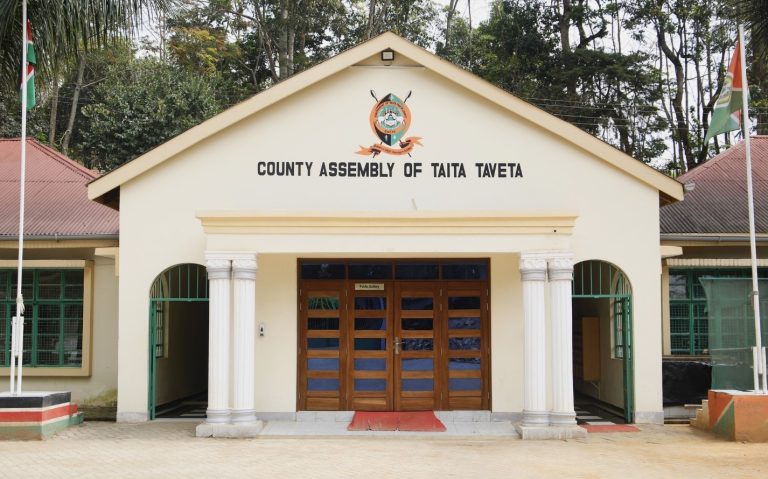
Taita Taveta county advertises 31 job vacancies; how to apply

0

The Taita Taveta County Public Service Board has advertised 31 job vacancies across various departments.

The board invited qualified professionals to submit applications to fill the positions that cut across various departments, including the Office of the Governor, Department of Health Services, and Department of Finance and Economic Planning.

In the Office of the Governor, the county advertised one position for County Chief Officer for Livestock Development.

In the Department of Health Services, the county is seeking to recruit Senior Deputy Chief Health Administrative Officer, Chief Registered Nurse, Nutrition and Dietetics Officers (2), Health Administrative Officer I, Registered Clinical Officer II (3), and Kenya Registered Nurse III (10).

Other open positions are Medical Social Worker III, Orthopaedic Technologist III (2), Assistant Physiotherapist III, Assistant Public Health Officer II (5), Medical Laboratory Technologist III, and Sonographer II.

In the Department of Finance and Economic Planning, the county is seeking to recruit Assistant Director Internal Audit.

How to apply

The board has directed that all applications be addressed to the Secretary and Chief Executive Officer of the Taita Taveta County Public Service Board, Private Bag, Voi.

Hard copy applications may also be hand-delivered to the County Public Service Board offices in Voi, located opposite Voi Prison.

Candidates must clearly indicate the vacancy reference number for the position they are applying for. Additionally, each application should include a clear copy of a national identity card or a valid passport.

Applicants are also required to attach copies of academic and professional certificates, as well as other relevant testimonials.

The deadline for submitting applications is May 18, 2026. Only shortlisted candidates will be contacted. The County has reiterated its commitment as an equal employer and has encouraged youth, women, and persons with disabilities to apply.

Also Read: IPOA announces multiple job vacancies: How to apply

Anthony Ngatia: How Kiambu farmer is using AI to grow strawberries year round

0

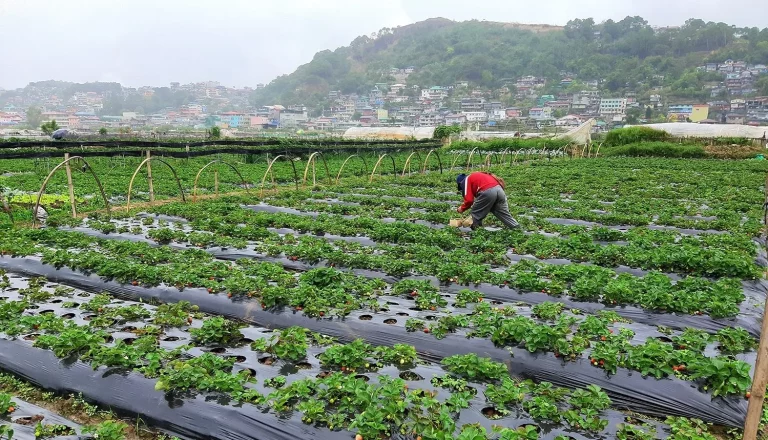
Anthony Ngatia, a farmer in Mwihoko, is steadily carving out a niche in premium strawberry production by blending modern technology with smart agribusiness practices.

Inside his greenhouse in Bilima Mbili, Kiambu County, rows of neatly tended strawberry plants stretch across a quarter-acre plot that also hosts his residence.

The fruits he harvests are deep red, glossy and firm, qualities that have secured him a loyal clientele in high-end markets across Kiambu, Nairobi and neighbouring counties.

At 30, Ngatia represents a growing generation of young professionals returning to agriculture with a modern outlook.

A graduate of electrical and telecommunications engineering from Multimedia University, he ventured into farming two years ago after working in several companies following his graduation in 2018.

“This is my main source of income. Every morning, I come here to work,” he said in an interview with the Nation.

Ngatia’s decision to grow strawberries was deliberate. While exploring agribusiness opportunities, he initially considered herbs and greenhouse crops such as capsicum.

However, he opted for strawberries after identifying their potential for steady production and strong market demand.

“Herbs are good, but they are seasonal. I wanted something that could provide consistent production throughout the year,” he explains.

His interest deepened after watching an online feature about a local strawberry farmer. He reached out for guidance and sourced runners, the planting materials used to propagate strawberries, marking the start of his journey.

With Sh60,000 drawn from personal savings and support from his mother, Ngatia set up his greenhouse and planted about 300 seedlings which have now multiplied to around 1,300 plants.

The growth has translated into higher yields. In the early stages, he harvested between 1.5 and 2 kilograms per week, averaging about 6 kilograms monthly.

Today, his production ranges between 50 and 60 kilograms per month, depending on plant performance and weather conditions.

Central to this transformation is the integration of technology. Ngatia has embraced artificial intelligence tools to enhance crop management.

The technology helps him diagnose plant issues, access agronomic advice and make timely decisions, significantly reducing his reliance on costly consultancy services.

“AI has been very helpful, especially in offering guidance on crop management. It helps me diagnose plant issues and make decisions faster,” he says.

Leveraging his engineering background, he is also developing Internet of Things (IoT) systems tailored to his farm. These include sensors to monitor soil pH and nutrient levels, as well as mechanisms to track water levels in storage tanks.

He is working towards automating irrigation and other routine processes to maintain optimal growing conditions with minimal manual intervention.

Ngatia primarily cultivates the San Andreas strawberry variety, an ever-bearing type that produces fruit continuously. This allows him to maintain a steady supply for his customers throughout the year.

He practices organic farming, enriching the soil with manure, biochar and agricultural lime. Nutrients are delivered through fertigation systems, while organic foliar sprays help manage plant health.

“It’s all about good farming practices: proper feeding, pruning, watering and pest control,” he says.

Despite the progress, challenges persist. Access to experienced strawberry farmers remains limited, making peer support scarce. Pest and disease management is particularly demanding under organic systems, where chemical interventions are restricted.

Climate variability has also tested the enterprise. Heavy rainfall previously caused fungal infections when he farmed in an open field, significantly affecting yields.

The shift to greenhouse production has since provided a controlled environment that shields the delicate crop from extreme weather conditions.

Also Read: Inside President Ruto’s multimillion modern farming business

FINAS 2026 Summit sets the stage for action on financing Africa’s food systems

Over one thousand stakeholders from across government, finance, development, and the private sector are set to convene in Nairobi for the Financing Agri-Food Systems Sustainably (FINAS) 2026 Summit, seeking to drive a dialogue to unlock sustainable financing for Africa’s agri-food systems.

Scheduled to take place from 30 June to 2 July 2026, the summit will be held under the theme: “Towards Sustainable Financial Architecture for Africa’s Food Systems.” Building on the outcomes of previous editions, FINAS 2026 will place a strong emphasis on implementation, investment mobilisation, and measurable outcomes across Africa’s agri-food systems financing landscape.

 Africa’s agri-food systems remain central to economic growth and livelihoods, contributing up to 20–30 per cent of GDP in many countries and employing more than 60 per cent of the workforce. Yet the sector continues to face a financing gap estimated at over USD 100 billion annually, with agriculture receiving less than five per cent of formal bank lending in most markets. These gaps disproportionately affect smallholder farmers, women, youth, and agri-SMEs, even as they produce up to 70–80 per cent of the continent’s food supply.

At the same time, climate change, market volatility, and rising food import bills are increasing the urgency for resilient, inclusive, and scalable financing solutions.

Losing Indigenous Knowledge on Climate Change Pauses Risk in Food Security

Speaking during the official media launch of FINAS 2026 Summit, Dr Paul Ronoh, Principal Secretary, State Department of Agriculture, noted that the summit comes at a critical moment for the continent in strengthening the industry.

“The FINAS summit provides an opportunity to take stock of the funding in the sector and check if our goals have been realised. Building on the strong track record of previous editions, this summit will unlock key opportunities for Africa. Financing must be results-oriented, delivering measurable outcomes to enhance agri-food sustainability. Let’s move forward to improve efficiency, ensuring that every shilling invested delivers value,” said Dr Ronoh in a keynote speech read on his behalf by Rashid Khator, Secretary of Administration in the State Department of Agriculture.

Africa has spent years articulating the challenges facing its food systems. FINAS 2026 is about accelerating action, aligning policy, finance, and partnerships to unlock investment and deliver tangible results for farmers, agribusinesses, and economies.”

Dr Sophia Baumert, Project Manager, Sustainable Agricultural Systems and Policies (AgSys) at GIZ Kenya, termed the summit a crucial platform for advancing collaboration and partnerships towards reliable, secure and timely agri-food systems in Africa.

She said: “FINAS began as a national platform in 2024 and has advanced into a continental forum advancing agri-systems dialogue from a pan-African perspective. The platform holds all actors accountable, and as GIZ, we are coming to drive the dialogue as process facilitators and foster stronger collaborations towards our common goal. We look forward to a strong FINAS 2026 summit and rally more partners to join us in this cause.”

FINAS 2026 will be preceded by a series of high-level pre-summit dialogues, targeted engagements focused on structuring an Agricultural Development Fund, unpacking the Kampala Declaration, advancing green finance as a lever for meaningful change and laying ground for the unveiling of a private-sector-led agri-food systems finance working group.

FINAS 2026 Summit sets the stage for action on financing Africa’s food systems
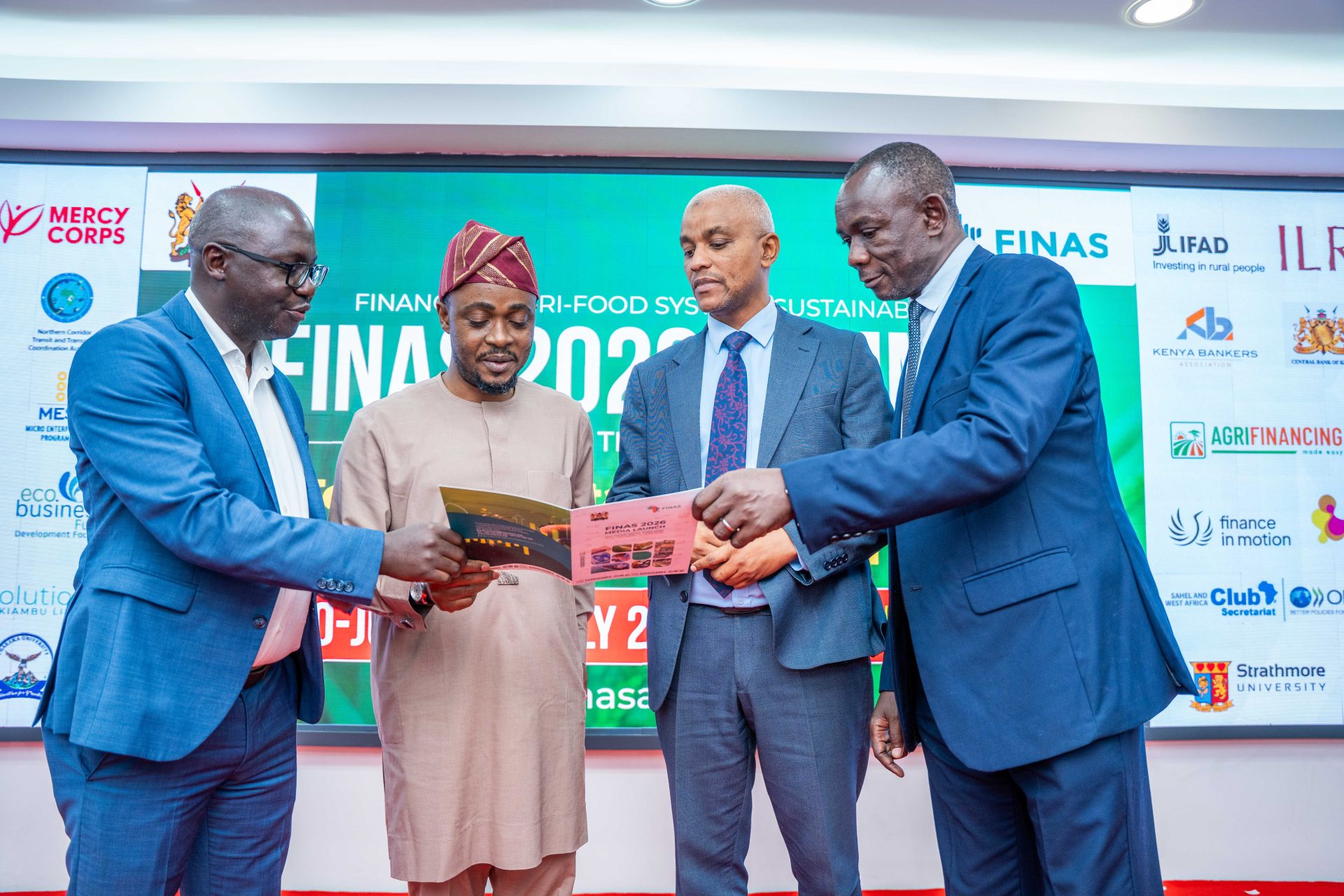
From Left: Kennedy Oketch, Agriculture Economy and Financial Advisor, GIZ Kenya, David Adama, Senior Policy Officer, AGRA, Rashid Khator, Secretary of Administration in the State Department of Agriculture (representing Dr Paul Ronoh, Principal Secretary, State Department of Agriculture) and Peter Owoko, Director of Policy at the State Department of Agriculture, Ministry of Agriculture, during the FINAS 2026 media launch in Nairobi.

The three-day summit programme will feature a ministerial and CEO roundtable, keynote addresses, side events, and deal-making sessions centred on four core pillars: policy alignment, innovative and inclusive finance, green and climate-resilient economies, and trade, investment, and multilateral cooperation. The summit will end with some site tours, whereby participants will have the opportunity to see and experience some of Kenya’s most dynamic innovation investment hubs at the Northern Corridor Transit and Transport Coordination Authority (NTCCTA) in Mombasa, Konza Technopolis and Tatu City.

According to Prof. Hamadi Boga, Vice President in charge of Programme Delivery at AGRA and the Chair of FINAS Secretariat, the summit represents a turning point for the food systems finance agenda:

“FINAS 2026 is about moving beyond commitments to coordinated delivery. By bringing together policymakers, financiers, and practitioners, the summit provides a platform to unlock capital at scale and translate policy ambitions into bankable investments that reach farmers and agri-enterprises.”

The summit will also place strong emphasis on climate-smart finance, recognising the need to align agricultural financing with climate adaptation and mitigation goals. Jared Ochieng’, Agriculture Finance Lead at FSD Kenya, underscored the importance of collaboration for innovative financial models.

He said: “Food systems in Africa have been hit with challenges such as funding & market challenges, wars and climate change. As key stakeholders, we need to join hands, reshape economies and find a greater path toward financing Africa’s agri-food systems effectively.”

The summit comes at a time when there is growing momentum around agri-food systems transformation across Africa. Governments are increasingly prioritizing agriculture through budget allocations and policy reforms, while private sector players and development finance institutions are expanding investments into sustainable agriculture and food systems.

Stakeholders are encouraged to participate in the summit as delegates, partners, or exhibitors, and to contribute to shaping a more inclusive, resilient, and investment-ready future for Africa’s food systems.

Demand for used goods surges – Jiji data reveals

0

Jiji has seen a significant rise in demand for pre-owned goods. Search results in Q1 2026 showed a 70% increase in used-item searches versus the same period in 2025. This represents over 14.7 million unique searches in Q1 alone. Thus, reflecting a sustained shift in consumer purchasing behaviour.

This growth outpaces interest in new items, signalling a structural change in how consumers approach value, affordability, and utility in their purchasing decisions.

Across categories such as electronics, vehicles, and home essentials, buyers are increasingly prioritizing functionality and cost-effectiveness. This shift comes amid continued pressure on household budgets. According to the Kenya National Bureau of Statistics, inflation has remained between 3–5% through 2025 and into early 2026. Food, transport, and housing have become the primary drivers of household expenditure growth.

The trend also shows a bigger shift toward circular commerce. More people are choosing pre-loved goods as their first option rather than just a backup. This reflects global trends in which affordability and sustainability are becoming increasingly important. According to the World Bank, rising living costs and constrained household incomes across emerging markets are accelerating demand for lower-cost alternatives. Consumers are adjusting their spending behaviour in response to ongoing economic pressures.

Rural Kenya emerges as e-commerce growth engine, Jumia report

Speaking on the findings, Maxim Makarchuk, COO, Jiji Africa, said:

“Kenya has historically been a second-hand driven market, with pre-owned goods forming a critical layer of everyday trade. What’s emerging now is accelerated growth within this segment, underpinned by a more discerning and economically aware consumer base. At Jiji, we’re making this ecosystem more efficient and accessible. We’re connecting buyers and sellers more seamlessly and helping unlock more value from goods already in circulation across the country.”

– Maxim Makarchuk, COO, Jiji Africa

In the Cars category, buyers cite affordability and the ability to physically inspect vehicles before purchase as key drivers of confidence in their decision-making.

“I saw the car online, then went to inspect it in person before buying. This allowed me to confirm its condition myself and gave me confidence that I was truly getting value for my money.”

– David, buyer on Jiji Kenya

In the Electronics category, buyers highlight cost savings and access to higher specifications as major advantages of buying pre-owned goods online. One buyer, Kimani, noted:

“I found a laptop at almost half the retail price. It was in good condition, and I was able to get better specifications than I could afford if it was new.”

– Kimani, buyer on Jiji Kenya

Increased digital adoption and improved access to online marketplaces are also supporting this shift. Kenya continues to be one of Africa’s most advanced digital economies. Many people now use mobile internet to access online platforms. According to the Communications Authority of Kenya, growth in mobile and internet connectivity has significantly expanded access to digital services. This includes e-commerce platforms that allow users to compare prices and make better choices.

Across the platform, categories like electronics, vehicles, and household goods remain very active. This shows the importance of online classifieds in helping people access affordable goods. As economic pressures continue, demand for pre-loved goods is expected to stay strong through 2026.

Jiji continues to focus on improving trust, user experience, and access within the growing circular economy across Africa.

73pc of all Grade 3 learners can’t do basic Math; 59pc can’t read basic English

A report by the Kenya National Examinations Council has unearthed the deteriorating standards of education under the Curriculum Based Education. The National Assessment System for Monitoring Learner Achievement Grade 3 study report has found out that 73.2 percent of all Grade 3 kids are unable to perform basic math. These learners failed to attain the minimum proficiency in numeracy.

At the same time, 58.9 percent of learners in this grade failed in basic English literacy. Nationally, the study established that only 26.8 percent of learners were able to attain the benchmark of 50 percent at Level 4 in numeracy while only 41.4 managed the same in English language activities.

However, the baseline findings were more dismal, with only 23.9 percent of learners achieving Level 4 benchmark in English and only 15.8 percent of learners achieving 15.8 percent in mathematics.

The study was conducted by KNEC through the Kenya Primary Education Equity in Learning program (KPEEL). The report attributed the falling levels of literacy in Grade 3 in Kenya on absenteeism by the teachers, unequal access to learning materials including textbooks, supplementary books, class readers and other learning assistive devices by learners, and poor basic infrastructure.

“The Ministry of Education should provide adequate teaching and learning resources such as textbooks, supplementary books and class readers as well as other resources,” KNEC recommended in the report.

The rate of teacher absenteeism due to sick days and official duties was found to be at 44.4 percent nationally. This rate increased to 62.5 percent in informal settlement schools, and 75 percent in refugee camp schools.

KNEC releases 2026 KCSE timetable: See exam start date and subjects

This report by KNEC is the latest to sound alarm bells on the state of the education sector in Kenya. Two years ago, a report by Usawa Agenda that assessed 39,298 children aged 6 years to 15 years in 1,813 public and private primary schools found that two in ten class 8 learners could not read a Grade 3 English text.

At the same time, 3 in 10 Grade 6 learners failed to read a Grade 3 text while 2 in 5 Grade 4 learners failed the assessment.

Denmark suspends work permit applications from Kenya over fake academic papers

0

Denmark has suspended the processing of applications from Kenya for internships in its agricultural sector over fake academic papers that are being presented by applicants.

The Danish government has also suspended applications from Kenya’s neighbours Uganda and Tanzania. The suspension affects applications for internships for agricultural jobs including herdsmen and farm managers.

According to the Danish Agency for International Recruitment and Integration (SIRI), the suspension affects applications for residence and work permits in cases where applicants received their education from the three countries.

“This [suspension] applies, in the first instance, to applications for residence and work permits as an intern, as well as for herdsmen and farm manager, where the applicant in their current or previous application has stated that they have an education from Uganda, Tanzania or Kenya,” said the agency.

“Applications for a residence and work permit as an accompanying family member to the affected applicant group are also included. This applies as well to applications where the applicant is already staying in Denmark and wants to change their internship host, or wants to apply as a herdsman after the end of their internship.”

SIRI operates under the Danish government’s Ministry of Immigration and Integration. The agency noted that during the processing of applications from Uganda for residence and work permits for an agricultural internship in February 2026, it was discovered that academic documents from the three countries were suspicious.

“The stricter case processing has uncovered conditions, including patterns in grade information as well as other aspects of the submitted educational documents, that give cause for severe doubt about the authenticity and the contents of the submitted educational documents from applicants with an educational background from Uganda, Tanzania, and Kenya, where similar patterns have been observed,” the agency stated.

READ MORE: Consignments of meth worth Sh21.8 million seized at JKIA

The processing of applications is however expected to resume from June 2026. It was not immediately clear how current and future applicants shall be impacted by the move.

Consignments of meth worth Sh21.8 million seized at JKIA

0

Anti-narcotics officers in Nairobi have intercepted and seized methamphetamine drugs worth an estimated Sh21.8 million. The consignments of meth were seized at the Jomo Kenyatta International Airport and in Juja area.

According to a statement by the National Police Service, the first haul of 1,730 grams valued at Sh13.8 million was concealed in items that had been declared as car pistons at the JKIA airport. It had originated from Tanzania and was destined for the Philippines.

In a related operation, a second consignment weighing 1,020 grams and valued at Sh8 million was traced to Juja and intercepted. This consignment was also heading to the Philippines.

This becomes the latest incident of meth being seized at the JKIA. In November last year, anti-narcotics officers seized meth worth an estimated Sh20 million at the airport. The drugs were intercepted at one of the cargo facilities at the airport.

The crystal meth drugs were concealed in African mosaic bags. They were head out to Mahe in Seychelles from Nairobi. According to reports, detectives who found the drugs were acting on ‘intelligence’ that a cargo heading out the country from the airport had drugs in it. Upon measurement, the drugs weighed about 2.5 kilograms and were confirmed through tests to be Meth.

This was as concerns increased over the exploitation of the Jomo Kenyatta International Airport by drug traffickers. For instance, in an expose that was shared by local television station KTN, a drug trafficker was captured on camera moving drugs through the JKIA unnoticed. According to the expose, the trafficker successfully avoided having his carry-on luggage that contained cocaine screened with help from an  individual who was allegedly working at the airport. The helper was captured on CCTV wearing a yellow reflector vest.

The trafficker then successfully boarded a British Airways flight to London Heathrow. He was arrested upon arrival at Heathrow with the cocaine worth millions of money.

The expose further stated that the individual had previously visited Kenya, raising questions on whether his previous visits were for the purposes of trafficking drugs, and even more alarmingly, from where within the country he was sourcing the drugs from.

Weeks later, a multi-agency team led by the Kenya Navy seized 1,024 kilograms of methamphetamine worth Sh8.2 billion. The drugs were seized off the Kenyan coast, about 630 kilometres east of Mombasa.

READ MORE: How rogue KDF soldiers stole crystal meth worth hundreds of millions

38.7 kilograms of these drugs were later allegedly stolen by rogue KDF officers from the consignment of 1,024 kilograms that were recovered from the vessel. The total consignment was estimated to be worth Sh8.2 billion. This placed the value of the stolen drugs to over Sh330 million.

Laikipia farm bets on value addition to unlock premium beef markets

0

In the plains of Rumuruti in Laikipia County, a cattle farm is quietly reshaping how beef production is approached; shifting focus from numbers to value, and from local markets to premium buyers.

At the centre of this model is Philip Kimeru, chairman of Ongole Beef Farm, who is steering the operation toward an integrated system designed to maximise returns from every animal.

The farm, which keeps more than 2,000 head of cattle, brings together breeding, feeding, processing and distribution under one system. For Kimeru, this is a deliberate strategy to control quality and manage costs in a sector often exposed to volatility.

“Feed costs remain our biggest expense, which is why we are investing in producing our own,” he said.

To address this, the farm grows its own maize, cotton and hay using organic methods, while recycling manure back into crop production.

The approach not only reduces dependence on external inputs but also ensures consistency in feed quality.

But the real shift is in market focus.

Kimeru says the gap between local and premium beef markets has forced a rethink of the farm’s business model.

While a kilo of steak may sell for about KSh 800 locally, some high-end markets offer up to Sh6,000,  a difference that has pushed the farm toward value addition.

“We have learnt that premium markets reward quality. This is why our focus now is on value addition, guided by our ‘whole cow, whole harvest’ philosophy,” he said.

Under this model, the farm seeks to extract value from every part of the animal, including meat cuts, bones and hides, with the aim of increasing revenue per steer.

Technology is also playing a key role. Each animal is electronically tagged and tracked throughout its lifecycle, improving traceability, a critical requirement for accessing export and premium markets.

Equity Bank retains top spot as Kenya’s most valuable brand in 2026

The farm further sources part of its livestock from surrounding pastoralist communities, integrating the animals into its system after quarantine and professional assessment. This creates a link between small-scale producers and higher-value markets.

The integrated system extends to a nearly fully automated, halal-compliant slaughterhouse, supported by cold storage facilities and a premium outlet in Karen, Nairobi.

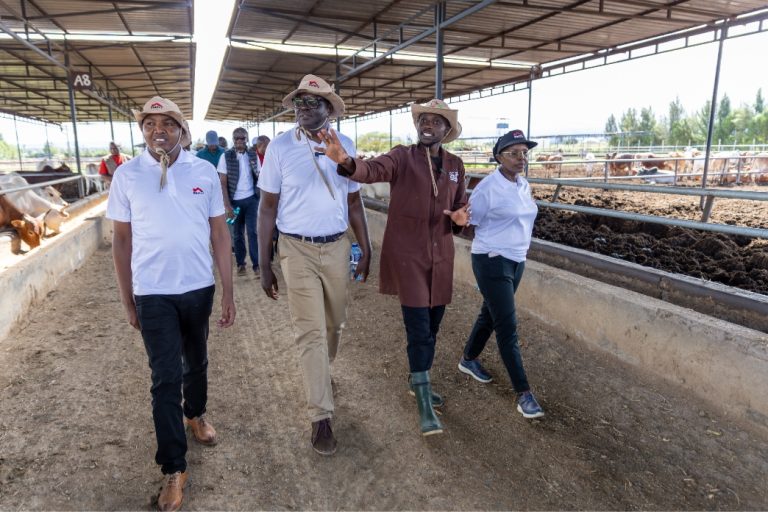
As the farm expands its reach, it has attracted interest from Equity Bank Kenya, whose leadership recently visited the facility as part of its broader push to support agribusiness.

Managing Director Moses Nyabanda said the farm reflects the kind of opportunity the bank sees in agriculture.

“We are committed to supporting customers in the agricultural sector. Through our Africa Recovery and Resilience Plan, we see agriculture as a unique opportunity for Kenya and the continent, and Ongole Beef is a strong testament to that,” Nyabanda said.

He added that the farm’s model aligns with the bank’s ambition to strengthen agricultural value chains.

“Engaging with the team and understanding their ambitions shows strong alignment with our goal of positioning agriculture as a key strength for Kenya and the continent,” he said.

Nyabanda also pointed to the farm’s use of technology as a key differentiator in improving productivity and meeting market standards.

“It is impressive to see how technology is being applied in breeding and finishing to deliver quality beef. This affirms our ambition to grow agriculture to 30% of our balance sheet,” he said.

For Kimeru, however, the focus remains on building a sustainable model that can withstand market pressures while tapping into high-value demand.

“We are focused on achieving optimum revenue multiplication per steer,” he said.

He says the success of the farm is no longer defined by herd size alone, but by how much value each animal can generate across the entire chain.