
Home Blog Page 7

Security must be baked into cloud journeys from day one to enjoy cloud benefits

0

Recently, I was involved in a discussion with an acquaintance about a home-security upgrade. The additional investment was not necessarily on the radar, except that the person told me that he had suspected someone may have breached his perimeter fence without stealing anything. This investment, he said, was his “second wave” of home security, having completed what he considered the basics a year prior.

It reminded me of the current state of cybersecurity in Kenya, where we are clearly seeing a similar “second wave” investment in security in the digital realm. As our data moves from on-prem servers to the cloud, many organisations are realising that while the neighbourhood may have changed, the threat has not. This is in no way alarmist, it is just an acknowledgement of the status quo.

Africa, as we know, is no longer just a participant in the digital revolution. If we look at East Africa, we are its rising star. Recent research from McKinsey suggests that Africa’s cloud growth potential exceeds that of more mature markets such as Europe. With 40% of infrastructure already migrated as of 2024, it is safe to say this continent is bypassing legacy limitations and surging into the digital future.

The continent has clearly seen the advantages of being in the cloud: reduced total cost of ownership and an ability to level the playing field with international competitors of any size, among other benefits. However, as this reality accelerates, we are facing a critical consideration: data sovereignty.

Cybersecurity: common apps hackers are using to exploit Kenyan institutions

The data sovereignty challenge

Kenya released pivotal national policies on data and the cloud. These aren’t just suggestions; they are policy mandates. Under the Data Protection Act in Kenya, there are strict conditional cross-border transfer regimes that act as de facto data localisation for certain types of data.

Certainly, from Kenya’s perspective, the environment is dynamic with local players filling the void and the country waiting for the international giants to turn soil in the country. The data sovereignty imperative exists alongside the need to keep the data safe. This all creates a complex challenge for an organisation’s C-suite. And so, as organisations navigate this evolving landscape, how do they protect their data while leveraging the power and advantages of the cloud?

The cloud security fallacy

The biggest misconception in the market is the belief that security in the cloud is someone else’s problem. Many business leaders fall into a false sense of security, assuming that because they are using a world-class provider, their data security is automatically bulletproof. This is a dangerous misconception.

Cloud security operates on a shared responsibility matrix. Perhaps it is best to think of this in terms of an analogy. The provider secures the building, the cables and the physical “box”, so to speak. The end user, you, is responsible for securing the doors, the windows and the locks. You are in charge of your encryption, configuration and your organisation’s digital hygiene.

Teenage cybersecurity key focus for Kenyan edutainment firm

Modern security does not override old-school discipline

How often have you heard the question: How much security is too much? Or worse, the refrain that cybersecurity is just another cost centre? What began as a casual conversation among colleagues about the “second wave” of home security quickly turned into a discussion about purchasing a new car. One shared that she had just purchased a vehicle and that smashandgrab tint and a tracker were part of the standard checklist. The first, a necessity shaped by daily realities on Kenyan roads; the second, a requirement for insurance. What might once have been considered optional features are now viewed as nonnegotiable fundamentals of car ownership — much like how cybersecurity is evolving in our digital lives.

Now, consider that a few decades ago, gearlocks and steering locks were the standard security layer. Indeed, many people still use gearlocks and steering locks today, in addition to whatever new technologies have been brought to the table. The gearlock physically prevents the vehicle from being operated.

Related to this, we must understand that data sovereignty isn’t just a legal hurdle. It is a security architect’s blueprint. In other words, when the law says data must stay within a country’s borders, a gearlock mindset ensures that even when data is hosted locally or in hybrid environments, it remains as protected as if it were in a physical vault on-prem. That understanding is critical to understanding modern cybersecurity.

Tech Experts to Assess Kenya’s Cybersecurity Readiness

What do we learn from this? The world has evolved, and so we need to evolve too. For the modern organisation, in addition to supporting a gearlock mindset, the second wave of security essentials for our digital world includes:

Endpoint security

Protecting the organisation’s devices that access the cloud.

Identity access management

Ensuring that only the right people have the keys to the organisation.

Vulnerability and patch management

Keeping the software updated to avoid breakdowns and known vulnerabilities.

The bottom line

To return to the vehicle analogy: Whether you are driving a high-end, modern push-to-start, software-driven electric vehicle that requires a fob or NFC mobile phone to be present to start, or an old-school petrol-driven manual car with a mechanical gearlock installed, the goal remains the same: you want to prevent somebody else from driving off with your asset.

Securing your data needs the same pragmatic approach. As we navigate the gray areas of data regulations and the vastness of the African cloud market, security cannot be an afterthought. It must be “baked in” to the organisation’s infrastructure investments, and not “bolted on” after the fact. Organisations are innovating and building incredible infrastructure on a continent. The onus is on all of us to make sure we aren’t leaving the keys in the ignition.


Family Group, KFS partner to restore Ngong Hills

0

The Family Group Foundation has partnered with the Kenya Forest Service (KFS) to accelerate the restoration of the Ngong Hills Forest Ecosystem through the establishment of a nursery with the capacity to produce one million tree seedlings.

The partnership, formalised through a three-year Framework for Collaboration, will focus on increasing seedling production, supporting tree-growing initiatives and strengthening the involvement of communities in forest conservation.

The initiative builds on restoration work launched by the Foundation in 2021. So far, the Foundation has invested more than Sh18 million in efforts to restore the Ngong Hills landscape, resulting in the planting of more than 20,000 indigenous tree seedlings and the active restoration of about 70 acres.

Family Group Foundation Executive Director John Waimiri said the partnership would help shift the focus from individual tree planting to the wider restoration of the ecosystem.

“Our target is to scale restoration efforts across the full 240-acre target landscape by 2030. This partnership provides a stronger platform to move beyond individual tree-planting activities towards long-term ecosystem restoration,” Waimiri said.

He said KFS would provide the technical expertise and institutional support needed to ensure the restoration efforts have a lasting impact.

The Ministry of Environment, Climate Change and Forestry estimates that the Ngong Hills Forest requires about one million trees, in addition to fencing and geo-mapping, to help address degradation and encroachment.

KFS Chief Conservator of Forests Alex Lemarkoko described the partnership as an important step in strengthening forest conservation and landscape restoration.

“Today we mark an important step in advancing forest conservation and landscape restoration. Our focus goes beyond growing trees to also supporting the communities living around these landscapes,” Lemarkoko said.

He added that the partnership demonstrated the potential of government, the private sector and communities to work together in addressing environmental challenges while supporting local livelihoods.

The nursery project will be developed using KFS’s Model Tree Nursery blueprint, which promotes the establishment of high-capacity, standardised nurseries capable of producing large quantities of quality seedlings.

The initiative also supports the Government’s 15 billion Tree Growing Programme and contributes to Kenya’s broader climate action and environmental conservation agenda.

Beyond increasing the number of trees planted, the partners say the project is intended to strengthen long-term ecosystem restoration by improving access to quality indigenous seedlings and involving communities in protecting and restoring the forest landscape.

Also Read: Need to utilise digital technologies to support basic education

Need to utilise digital technologies to support basic education

0

Digital technologies are becoming increasingly prevalent in all areas of our lives, reshaping not only how we live-but also how we learn. However, a persistent digital divide, one of the defining development changes of the 21st century, prevents many learners from accessing technologies that could provide these benefits.

Today, an estimated 2.2 billion people – about 30 percent of the global population-do not have internet access. At the same time billions are ‘under-connected’, and lack reliable broadband, and digital devices, or the skills required to participate in data-driven economies. In the field of education, over two thirds of primary schools lack digital tools. For millions of learners and teachers, access to digital learning platforms is severely limited, and resources are often rudimentary or unreliable.

Digital Technology Can Strengthen Basic Education

No doubt, inequalities worsen unless deliberate measures are taken to close to digital divide. Digital technologies should be used to support basic education. Digital technologies can equip teachers with better tools to advance teaching methods and interaction with learners. This can be accomplished through accessing secure online platforms and class video call schedules using laptops, tablets, and smartphones.

Digital Literacy Is a Foundation for Learning

In today’s world, digital literacy is a foundational requirement for participation and progress. Yet access to access to digital education still remains uneven. UNESCO report regarding digital skills gaps shows that entire communities lack computers, reliable connections, or learning materials and the continuing intergenerational exclusion resulting not from unwillingness but from systemic constraints is ongoing.

Transforming education for Kenya’s digital-first future, one subject at a time

Addressing Structural Barriers to Digital Education

More should be done to address structural barriers that prevent equal digital literacy around the globe. Also required are, robust strategies and actions that could empower a holistic transformation in the education sector.

Africa’s EdTech Transformation Agenda

It is encouraging to learn that the African Union Development Agency (AUDA-NEPAD) has developed a continental framework for transformation education through technology. If well implemented, the Africa EdTech 2030 Vision and Plan could respond to Africa’s demographic realities where over 60 percent of the population is under 25, and there is urgent need to close learning divides, with millions of children still out of school and teacher shortages projected to reach 17 million by 2030.

Ultimately, the Africa EdTech 2030 Vision & Plan is a call to action for governments, educators, innovators, and partners to unite in building inclusive, resilient, and innovation-driven education systems. By leveraging digital public infrastructure and local innovation, it seeks to close learning divides, empower youth, and ensure Africa’s education transformation contributes to both continental prosperity and global knowledge economies.

Technology as a Driver of Better Learning Outcomes

The integration of digital technologies in education is increasingly recognized as a critical driver for improving teaching, learning, and learner assessment, as emphasized in global and regional initiatives such as the African Union Development Agency–NEPAD EdTech Vision and reports by UNESCO and the World Bank.

OUK expands AI and digital skills courses as admissions open

RESPECT Initiative Seeks to Strengthen EdTech Access

It is more encouraging that the Spix Foundation, a charity organisation based in the United States aiming to advance global education, has partnered with the Ministries of Education in African countries including Kenya, and is leading the pre-pilot phase of RESPECT initiative to test the full RESPECT Ecosystem – a digital public infrastructure aimed at integrating multiple educational applications into a unified platform to enhance access, efficiency, and data-driven decision-making in education systems.

An Open-Source Digital Library for EdTech

RESPECT is an open-source digital library for EdTech apps. It makes it easier for educators to discover and use high-quality apps with a single account in all settings, while giving developers the platform they need to grow their impact globally. RESPECT uses strong interoperable technical standards that ensure data sovereignty, and enables open source and proprietary developers alike to monetise their tools through a simple organisational sponsor supported revenue model. RESPECT makes it easier to access, build, scale and sustain resilient edtech innovations.

Supporting Locally Relevant Education Solutions

At its core, RESPECT connects the needs of developers and educators, enabling developers to build and maintain high-quality, locally contextualised tools that reflect real classroom conditions and align with local languages and curriculum goals. It’s about building EdTech that lasts, where it matters most. Such technologies and existing digital learning initiatives, successfully piloted in schools like Wangu Comprehensive Primary School in Nairobi’s Dandora area in Kenya, an underserved area, hold great promise, and they need to be strengthened, replicated and scaled up.

Steering the Digital Transformation in Education

As Ms Audrey Azoulay, the Director-General of UNESCO, remarked on the occasion of the International Day for Digital Learning, last year; to ensure that technology effectively improves learning outcomes and does not widen existing educational inequalities, we must actively steer the digital revolution in education.

Mr Obonyo is a Public Policy Analyst. Email: [email protected]

Comoros President H.E. Azali Assoumani inaugurates UAE-financed solar plants to strengthen energy security and support sustainable development

0

UAE-financed solar plants inaugurated in Comoros: Reflecting the UAE’s longstanding commitment to supporting a more sustainable future and expanding the deployment of renewable energy solutions globally, the inauguration of three solar power plants in the Union of the Comoros demonstrates how the UAE is leveraging its clean energy expertise and capabilities to help strengthen global energy security. The plants were financed by Abu Dhabi Fund for Development (ADFD), implemented by Abu Dhabi Future Energy Company PJSC – Masdar, and managed by Global South Utilities (GSU).

President Azali Assoumani inaugurates three solar plants

The project was inaugurated by H.E. Azali Assoumani, President of the Union of the Comoros, in the presence of H.E. Jumaa Rashid Alromaithi, Ambassador of the UAE to the Union of the Comoros; Ahmed Khamis Alkalbani, Representative of Abu Dhabi Fund for Development; Dr. Mohamed Alzarooni, Head of Projects at Masdar; Ali Abdulla Alshimmari, Managing Director and Chief Executive Officer of Global South Utilities; and a number of senior officials from both countries.

UAE-backed project includes 20 MW of solar capacity

The project, financed by ADFD at approximately AED 84.4 million, comprises three solar photovoltaic (PV) plants with a total installed capacity of approximately 20 MW: 12.86 MW on Grande Comore, 4.05 MW on Anjouan and 3.1 MW on Mohéli.

It also includes battery energy storage systems with a capacity of 16 megawatt-hours (MWh) and a power output of 8 MW across Grande Comore and Anjouan, as well as approximately 30 kilometres of 20-kilovolt (kV) medium-voltage overhead transmission lines.

Technical studies indicate that the three plants will generate approximately 33.75 GWh of clean electricity annually, equivalent to meeting the needs of around 17,500 households and avoiding approximately 20,900 tonnes of carbon dioxide emissions each year.

Discover How a Solar Source Can Enhance Your Property’s Value Today

Comoros President highlights energy security and development

Regarding the inauguration, H.E. Azali Assoumani, President of the Union of the Comoros, said:

“I extend my sincere appreciation to His Highness Sheikh Mohamed bin Zayed Al Nahyan, President of the UAE, for his continued support in advancing our development priorities and strengthening the partnership between our two countries, guided by a shared vision for sustainable development and long-term prosperity. This strategic project translates our partnership into action, strengthening our energy infrastructure, expanding access to clean and reliable electricity, and supporting greater economic resilience, sustainable growth and improved livelihoods for our people.”

UAE says solar investment will strengthen Comoros’ energy resilience

H.E. Jumaa Rashid Alromaithi, Ambassador of the UAE to the Union of the Comoros, said:

“This pioneering project reflects the UAE’s commitment to translating the strong ties between our two countries into sustainable development partnerships that deliver lasting value for communities. By strengthening the Comoros’ energy infrastructure and expanding access to reliable solar power, the project supports greater energy resilience while laying stronger foundations for economic and social development. It also demonstrates how innovative renewable energy and storage solutions can help address the country’s energy needs and support its long-term development priorities.”

ADFD highlights reduced exposure to imported fuel costs

H.E. Mohammed Saif Al Suwaidi, Director General of Abu Dhabi Fund for Development, said:

“This project represents a long-term investment in the future of the Comoros Islands, strengthening energy resilience while advancing sustainable economic growth. Through expanded access to cleaner energy, the project aims to reduce the country’s exposure to the costs and volatility of imported fuel, while improving the reliability of electricity that businesses, public services and communities depend on. Financing this project reflects ADFD’s commitment to enabling development initiatives that extend beyond infrastructure, building local capabilities, creating employment opportunities and contributing to greater economic resilience for future generations.”

Masdar says renewables can support long-term economic resilience

Mohamed Jameel Al Ramahi, Chief Executive Officer of Masdar, said:

“Masdar is proud to have worked alongside our partners to deliver clean energy to the people of the Union of the Comoros. Renewables provide the clearest route to energy security and economic resilience, and this project will not only meet the nation’s needs today but also support its long-term development ambitions. Leveraging the potential of solar power and advanced storage technologies will help accelerate sustainable socioeconomic growth across the country, while providing tangible benefits to businesses and local communities.”

Solar, battery storage and grid infrastructure combined

Ali Abdulla Alshimmari, Managing Director and Chief Executive Officer of Global South Utilities, said:

“This project is a strong example of how international development partnerships can turn renewable energy investment into tangible impact for communities. Bringing together solar generation, battery storage and grid infrastructure across all three islands, it will help strengthen the Comoros’ power system, improve reliability and resilience, and support the country’s long-term sustainable development ambitions.”

Comoros faces electricity shortages and diesel dependence

The project comes at a time when the Union of the Comoros is facing mounting challenges in its electricity sector, including heavy reliance on imported diesel.

In 2024, imported diesel accounted for 91% of the country’s energy mix, while electricity demand reached 254 GWh, compared with actual generation of just 150 GWh. The country also experienced approximately 3,000 power outages during the year.

Solar project expected to meet 13.3% of electricity demand

The project’s expected annual solar generation is equivalent to approximately 13.3% of total electricity demand and 22.5% of actual generation.

It will help improve the efficiency of the energy system and strengthen its capacity to respond to rising demand, while helping to diversify electricity sources and reduce exposure to fluctuations in imported fuel, supporting economic activity and helping build a more stable and efficient power system.

Education Ministry cuts Senior School choices for Grade 9 learners to eight

0

Grade 9 learners have begun choosing the senior schools they hope to join for Grade 10, under a revised placement process that limits each learner to eight school choices.

The five-day selection exercise, which began on Monday, is being conducted through the Kenya Education Management Information System (KEMIS) portal and is expected to involve about 1.2 million learners across the country.

The exercise marks a major step in the transition to senior school under the Competency-Based Education system, with learners required to identify their preferred career pathways, subject combinations and schools based on their interests and future career ambitions.

According to the Directorate of Secondary Education (DSE), the selection window will remain open for five days.

“The system will open at midnight on Monday with selection running from Monday, September 7 to Friday, September 11,” the DSE said in a statement following a meeting with field officers.

Under the revised selection model, learners will identify eight preferred senior schools drawn from four school clusters. Three schools must be selected from Cluster 1, two from Cluster 2, two from Cluster 3 and one from Cluster 4.

The arrangement represents a reduction from the previous system, which allowed learners to list 12 schools, with four choices assigned to each of the three available pathways.

In addition to selecting schools, learners are required to identify at least one and a maximum of two major learning areas.

Their choices must correspond with their preferred career pathway and the subject combinations offered by their selected senior schools.

Senior School pathways

Senior school education under the competency-based system is structured around three broad pathways: Science, Technology, Engineering and Mathematics (STEM), Social Sciences, and Arts and Sports Science.

The Arts and Sports Science pathway offers areas of study including fine arts, music, dance, sports and recreation, giving learners an opportunity to align their education with their talents and interests.

Learners are expected to consider both their individual interests and career goals when selecting pathways and subject combinations, while also taking into account what their preferred schools offer.

The current exercise is targeting public senior schools. Private schools are expected to be incorporated later, during the revision phase of the placement process.

After learners complete their selections, their profiles will be printed and taken to parents for verification.

Parents will be required to sign the documents to confirm that the choices captured reflect their preferences. The signed copies will then be kept by schools for record and accountability purposes.

At senior school, learners will take seven subjects. Mathematics, English, Kiswahili and Community Service Learning will be compulsory for all students, while the other subjects will be determined by the pathway and subject combination selected by each learner.

Also Read: Schools to host ID registration drive for students turning 18

KMTC announces 89 job vacancies: How to apply

0

The Kenya Medical Training College (KMTC) has announced 89 job vacancies across its headquarters and campuses, opening opportunities for professionals and support staff in a range of fields.

In a recruitment notice issued on Tuesday, September 8, the institution said it is seeking to recruit competent, experienced and results-oriented individuals to fill the vacant positions.

The advertised jobs span academic, technical, administrative and support functions, with opportunities available in areas including pharmacy, mortuary science, information and communication technology, finance, human resource management, library services, supply chain management and administration.

Among the vacancies are five positions for Senior Lecturer in Pharmacy and eight positions for Lecturer II in Mortuary Science.

KMTC is also seeking to recruit one Assistant Director, Information Communication Technology, five Accountant II/Finance Officer II, five Human Resource Management Officer II, five Library Assistant III, five Supply Chain Management Assistant III, five Assistant Office Administrator III and five Information Communication Technology Assistant III.

The remaining vacancies include 10 Clerical Officer II, 10 Security Warden III, five Artisan III, 10 Driver III and 10 Office Assistant III positions.

How to apply

Qualified candidates have been invited to submit their applications online through the KMTC recruitment portal.

Applicants have been urged to carefully review the requirements for their preferred positions and provide all the information requested.

“Applicants whose background and competencies match the above specifications are invited to make their applications online through the College website http://recruit.kmtc.ac.ke/jobs,” the statement reads.

The college further cautioned that providing false information or submitting fraudulent documents could lead to legal action, as presenting fake certificates or other forged documents is a criminal offence.

The deadline for submitting applications is Wednesday, September 30, 2026.

Candidates who are shortlisted for interviews will be required to present the original copies of their National Identity Cards, academic and professional certificates, and academic transcripts for verification.

Successful applicants will be required to provide various clearance documents before receiving their appointment letters.

These include clearance certificates from the Kenya Revenue Authority (KRA), Ethics and Anti-Corruption Commission (EACC) and Higher Education Loans Board (HELB), as well as a Credit Reference Bureau (CRB) clearance certificate.

They will also be required to present a valid Certificate of Good Conduct issued by the Directorate of Criminal Investigations (DCI).

Also Read: Bandari Maritime Academy advertises 27 job vacancies

Bandari Maritime Academy advertises 27 job vacancies; how to apply

0

Bandari Maritime Academy has announced a major recruitment drive for 27 positions as the institution seeks to strengthen its workforce across senior management, technical, training, administration and support functions.

The vacancies include key leadership positions such as Deputy Director for Placement and Industry Linkages, Deputy Director for Admissions and Examinations, Deputy Director for Human Resource and Administration, and Senior Principal Trainer I (STCW).

Other senior positions on offer are Assistant Director for Planning and Performance Management, Assistant Director for Accounts, Principal Legal Officer, Principal Administration Officer, Senior Security Officer, Senior Supply Chain Management Officer and Works Officer.

The academy is also seeking to fill specialised technical and training positions, including seven ICT Officer posts, Student Career and Welfare Officer, Business Development and Marketing Officer I, Trainer I in Marine Engineering, Trainer I in Nautical Science, Trainer I in MTOT, Simulator Instructor, Senior Coxswain and Swimming Instructor.

In the administration and support category, the institution has advertised two Office Assistant positions and three Senior Office Administrator positions.

Bandari Maritime Academy was established under Legal Notice No. 233 of November 28, 2018. Its mandate includes developing academic and vocational skills and providing competent maritime human resources to support the growth of a sustainable blue economy.

How to apply

Interested and qualified candidates are advised to visit the Academy’s website, www.bma.ac.ke, for complete details of job requirements and the mode of application.

The academy said applications must be submitted by 5 pm on Tuesday, September 29, 2026.

Only shortlisted candidates will be contacted. The institution has also warned applicants against canvassing, stating that any attempt to influence the recruitment process will result in automatic disqualification.

Successful applicants will be required to present valid compliance certificates before signing their employment contracts.

These include certificates from the Kenya Revenue Authority, the Ethics and Anti-Corruption Commission, a registered Credit Reference Bureau, the Higher Education Loans Board and a Certificate of Good Conduct issued by the Directorate of Criminal Investigations.

Also Read: Java House advertises 102 job vacancies across Kenya

James Mworia takes helm of National Infrastructure Fund after exiting Centum

0

The National Infrastructure Fund (NIF) has appointed Dr James Mworia as its founding Chief Executive Officer.

In a notice issued on Monday, September 7, 2026, the NIF Board said Mworia’s appointment followed a competitive recruitment process and takes effect immediately.

The board said it was confident that Mworia’s extensive experience in institution building, capital mobilisation and investment management would position the fund to deliver on its mandate.

“The Board of the National Infrastructure Fund is pleased to announce the appointment of Dr James Mworia, MBS, as founding Chief Executive Officer, following a competitive recruitment process with effect from 7 September 2026,” the board said.

Established in March 2026, NIF is a corporate institution created to mobilise financing for major public infrastructure projects by combining government seed capital with investments from the private sector.

The fund is expected to play a significant role in expanding infrastructure financing while supporting the development of Kenya’s capital markets and improving the country’s economic competitiveness.

The board said Mworia’s track record would be instrumental in advancing the institution’s objectives.

“The Board is confident that Dr Mworia’s record of building institutions and enterprises, mobilising capital and bringing investments to market will enable NIF to deliver critical infrastructure, deepen Kenya’s capital markets, raise productivity and strengthen Kenya’s competitiveness,” it said.

Extensive experience

Mworia joins NIF with more than 25 years of experience spanning investment management, enterprise development and capital allocation.

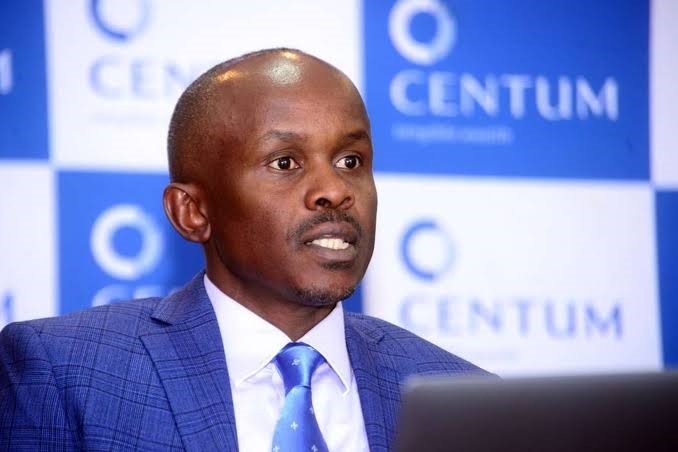
He spent 17 years as Group Chief Executive Officer and Managing Director of Centum Investment Company Plc, where he operated at principal-investment level from 2005.

During his tenure at Centum, the company significantly expanded its asset base, with total assets rising from Sh4 billion in December 2008 to approximately Sh46 billion.

Centum also retired Sh20 billion in total Group debt, including Sh16 billion at the holding-company level, effectively eliminating holding-company leverage.

Mworia further oversaw the development of strategic investment platforms and the restructuring and deleveraging of major investments, including Vipingo Special Economic Zone (SEZ), Pearl Marina and TRIFIC SEZ.

According to Centum, the transactions were completed without requiring additional equity and generated significant value for the investment company.

He holds a Bachelor of Laws degree from the University of Nairobi and is an Advocate of the High Court of Kenya.

He is also a Certified Public Accountant, a Chartered Global Management Accountant and a CFA charterholder.

Also Read: M-KOPA reaches 10,000 E-motorbike financing milestone in Kenya

M-KOPA reaches 10,000 E-motorbike financing milestone in Kenya

0

M-KOPA has financed more than 10,000 electric motorbikes in Kenya, marking a major milestone for its pay-as-you-go electric mobility business as riders increasingly seek lower-cost alternatives to petrol-powered motorcycles.

Expanding Financing to the Tuk-Tuk Sector

The milestone comes as M-KOPA expands its electric mobility financing offering to include electric tuk-tuks, opening access to affordable asset financing for another major segment of Kenya’s public and commercial transport sector.

Through its financing model, M-KOPA enables riders and operators to spread the cost of electric vehicles over time, reducing the upfront barrier to acquiring income-generating assets.

Economic Impact and Daily Rider Savings

According to M-KOPA customer data, riders save an average of KSh530 per day through lower energy and maintenance costs and access to battery-swapping infrastructure. Across more than 10,000 financed motorcycles, this represents an estimated KSh5.3 million in daily savings, or approximately KSh1 billion annually, based on regular daily use.

Government to electrify all matatus and boda bodas

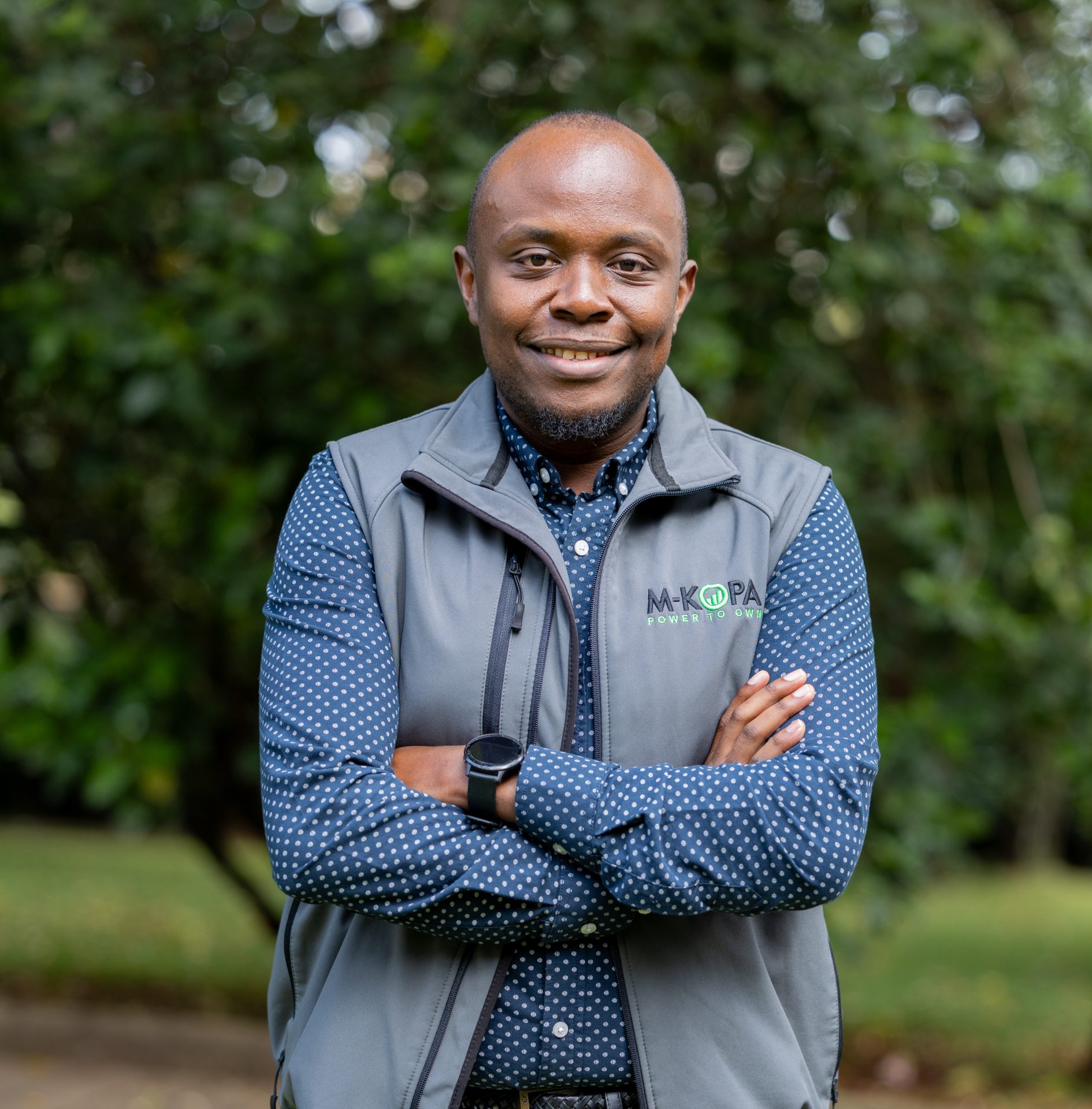
“Reaching 10,000 financed electric motorbikes reflects growing demand from riders looking to lower operating costs and improve their earnings,” said Brian Njao, General Manager, Mobility, M-KOPA. “We are now applying the same financing approach to electric tuk-tuks, helping operators access cleaner, lower-cost vehicles without the burden of a large upfront payment.”

Tapping into Kenya’s 250,000 Tuk-Tuk Market

The expansion comes as Kenya’s tuk-tuk sector continues to play a significant role in the grassroots economy, with the Kenya Tuk Tuk Operators Network estimating more than 250,000 registered tuk-tuks, 750,000 active drivers and 250,000 owners and investors. Access to affordable finance remains a key challenge for operators seeking to acquire or upgrade vehicles.

Electric tuk-tuks are emerging as an alternative that can reduce operating costs while introducing cleaner and digitally enabled mobility solutions suited to Kenyan road conditions.

Username sacco rolls out electric Boda Boda & Tuk-Tuk express loan for Kenyan youth

Alignment with National Policy and Key Partnerships

The expansion also follows the launch of Kenya’s National Electric Mobility Policy, which provides a framework for investment, innovation and private-sector participation in electric mobility. Incentives include zero-rated VAT on electric buses, bicycles, motorcycles and lithium-ion batteries, alongside zero excise duty on electric bicycles, motorcycles and lithium-ion batteries.

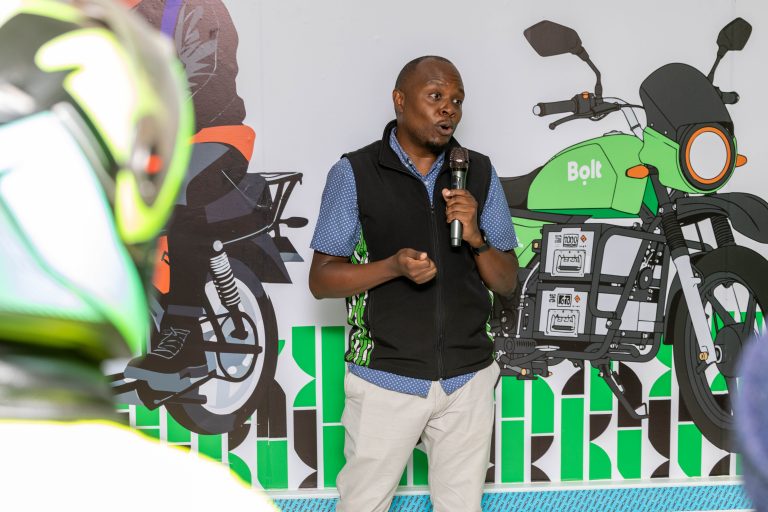
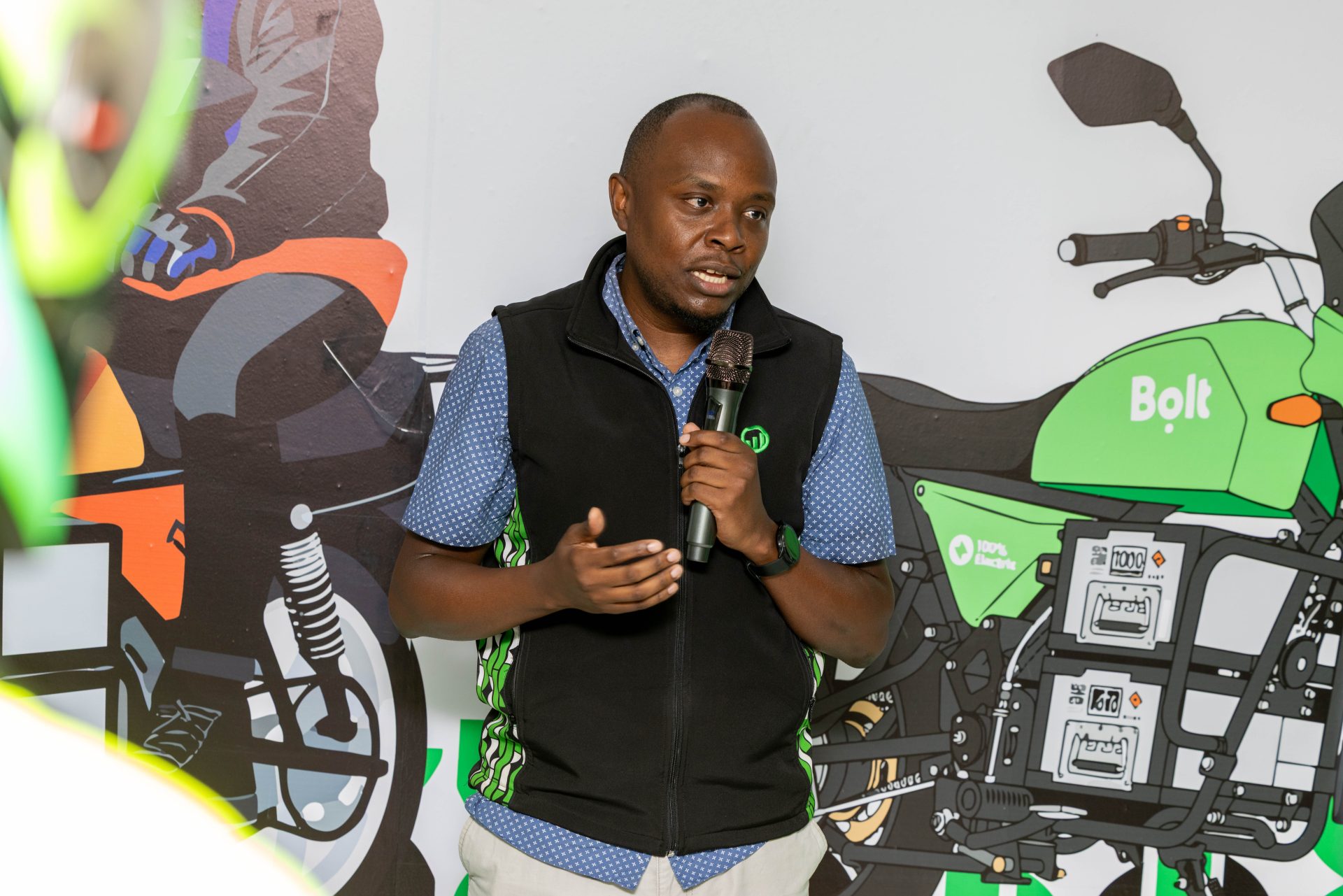
M-KOPA finances electric motorcycles from manufacturers including Ampersand, Roam and Spiro, and has partnered with Bolt to expand access through financing and rider incentives. Customers also receive M-KOPA Cares, including flexible repayments, insurance, GPS tracking, security features and warranty protection.

Next Phase of Growth

The company said the next phase of its mobility strategy will focus on expanding customer access, partnerships and financing across Kenya’s growing electric transport ecosystem.

BNI Nairobi South Business & unnovation expo 2026 to bring together 1,000+ business leaders in Nairobi

0

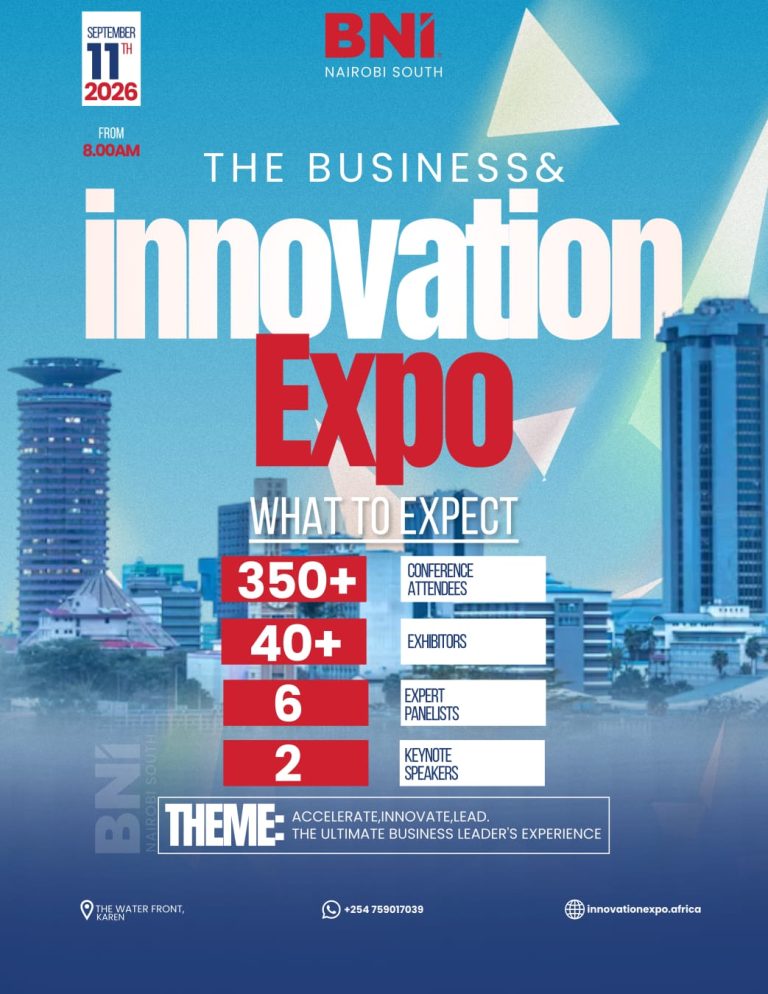
Leading entrepreneurs, innovators and business executives are set to take centre stage at the BNI Nairobi South Business & Innovation Expo 2026, as the event brings together more than 1,000 business leaders and professionals for a day focused on business growth, innovation and strategic connections.

Taking place on 11th September 2026 at The Waterfront Karen, the Expo will go beyond the traditional exhibition format, creating a platform where entrepreneurs can discover new solutions, exchange ideas, build strategic relationships and identify opportunities that can contribute to the growth of their businesses.
Among the key speakers is Tonee Ndungu, Founder of Kytabu, a digital platform transforming how businesses and communities access knowledge and opportunities.

A passionate entrepreneur and innovation advocate, Ndungu has dedicated his work to building solutions that empower people, drive growth and create lasting impact across Africa.
Joining him will be Graeme Reid, CEO of Tilisi Developments, who brings extensive experience in business and property development and will contribute to conversations around enterprise, investment and the opportunities shaping Kenya’s business landscape.

The two leaders will headline a programme designed to give attendees practical insights while creating opportunities for meaningful business connections. The Expo will feature keynote sessions, expert discussions, innovation showcases, exhibitor engagements and networking opportunities bringing together entrepreneurs, SMEs, corporates, investors and professionals from diverse industries.

Why Asset Finance Is the Smartest Growth Strategy for Your Business

For businesses, the Expo will also provide an opportunity to discover new products and services, meet potential suppliers and customers, explore partnerships and expand their professional networks. Exhibitors will have a platform to demonstrate their solutions directly to a targeted audience while attendees will have the opportunity to discover businesses and innovations that can support their own growth.

According to Antony Njenga, Co-Executive Director, BNI Nairobi South, the focus is on creating an experience that delivers value beyond the event itself.

“We want people to leave the Expo with more than a collection of business cards. We want them to leave with new ideas, new relationships, new opportunities and conversations that can translate into real business outcomes. The calibre of speakers, exhibitors and business leaders coming together on the day is a reflection of what we want this Expo to become.”

The day will culminate in an exclusive Business Networking Cocktail, giving participants an opportunity to continue conversations from the Expo in a more relaxed setting. The evening reception will bring together business leaders, exhibitors, sponsors and other invited guests for further networking and relationship building.
Held under the theme “Accelerate, Innovate, Lead,” the BNI Nairobi South Business & Innovation Expo 2026 is expected to attract over 1,000 entrepreneurs, business leaders, investors, innovators, SMEs and professionals.
With the event bringing together business opportunities, knowledge, innovation and high-level connections under one roof, organizers are encouraging businesses and professionals looking to expand their networks and unlock new opportunities to attend the Expo.