
Home Blog Page 8

Hafidh Ameir Hassan, Samia Suluhu’s husband dies

0

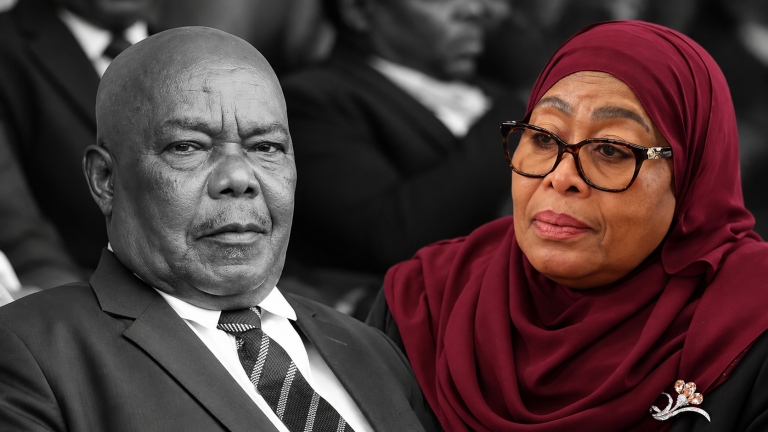
Hafidh Ameir Hassan, husband of President Samia Suluhu Hassan, has died.

The announcement was made on Monday, September 7, 2026, by Vice President Deogratius Ndejembi.

Mr Ndejembi said Mr Ameir died at 8am at Emilio Mzena Memorial Hospital in Zanzibar, where he was receiving treatment for a heart condition.

“It is with great sadness that I inform you of the death of Mr Hafidh Ameir Hassan, husband of the President of the United Republic of Tanzania, Samia Suluhu Hassan,” Mr Ndejembi said.

He conveyed his condolences to President Hassan, her family, relatives and friends, as well as Tanzanians, following Mr Ameir’s death.

Mr Ndejembi said funeral arrangements were underway in Kizimkazi, Zanzibar.

Samia Suluhu appoints daughter, son-in-law to cabinet

Hafidh Ameir Hassan’s Life and Career

Hafidh Ameir Hassan, the husband of Tanzanian President Samia Suluhu Hassan, was a retired agricultural academic who became the country’s first First Gentleman when his wife assumed the presidency.

Ameir died on Monday, September 7, 2026, at about 8am at Emilio Mzena Memorial Hospital in Zanzibar, where he was receiving treatment for a heart condition.

Despite occupying a historic position alongside one of East Africa’s most prominent political leaders, Ameir maintained a largely private life and rarely appeared in the public spotlight.

Before becoming First Gentleman, Ameir was known primarily for his work in agriculture and academia.

He was described as an agriculturalist and retired agricultural officer from Zanzibar. Available biographical accounts identify him as an agricultural academic who kept a low profile even after his wife rose through Tanzania’s political ranks.

His professional life was largely separate from the political career of his wife, allowing him to remain away from the intense public attention that accompanied her rise from government official to Tanzania’s first female president.

John Pombe Magufuli is dead, Tanzania finally confirms

A Marriage Spanning Decades

Ameir married Samia Suluhu Hassan in 1978, years before she entered the highest levels of Tanzania’s political leadership.

The couple had four children: three sons and a daughter. Their daughter, Mwanu Hafidh Ameir, followed her mother’s path into politics and has served in the Zanzibar House of Representatives.

Their nearly five-decade marriage continued through Suluhu’s progression in public service, including her tenure as vice president and her eventual elevation to the presidency.

Operating these 15 businesses in Tanzania could land Kenyans in jail

Tanzania’s First First Gentleman

Ameir made history in March 2021 when Suluhu became president following the death of President John Magufuli.

Her assumption of the presidency created another first in Tanzania’s political history: the country had its first First Gentleman.

The title is an unofficial designation for the husband of a serving president. Until Suluhu became president, the presidential spouse’s role had been occupied by women and referred to as First Lady.

His position was unusual not only because he was the first man to occupy it, but also because he did not seek the public visibility often associated with presidential spouses.

Tanzania targets Kenya in ban on foreigners operating small businesses

A Private Figure Beside a Powerful President

Ameir’s low-key public profile contrasted sharply with his wife’s position.

Reports following Suluhu’s rise to the presidency noted that her husband was rarely seen at public events with her and preferred to remain away from the political limelight.

That privacy meant relatively little was known publicly about his personal life compared with the extensive attention given to President Samia’s political career.

His role nonetheless carried historical significance. By becoming Tanzania’s first First Gentleman, Ameir occupied a position that had traditionally been associated with women married to male presidents.

Hafidh Ameir Hassan’s Final Days

Ameir’s death was announced by Vice President Deogratius Ndejembi on Monday.

Ndejembi said Ameir had died at Emilio Mzena Memorial Hospital in Zanzibar while receiving treatment for a heart condition. He conveyed condolences to President Samia, her family, relatives, friends and Tanzanians.

“We are saddened to announce the death of Hafidh Ameir Hassan, the husband of President Samia Suluhu Hassan. He died today at 8am in Zanzibar where he was receiving treatment for heart problems,” Ndejembi announced.

His death brings to an end the life of a man who largely remained outside the political spotlight but became part of Tanzania’s history as the country’s first First Gentleman.

Java House advertises 102 job vacancies across Kenya; how to apply

1

Java House has announced 102 job vacancies across several locations in Kenya, offering opportunities for candidates with experience in hospitality, sales, and human resource management.

The company is inviting qualified applicants to submit their applications online through its official recruitment portal before the respective deadlines.

Waitstaff

The bulk of the vacancies are for waitstaff, with Java House seeking to recruit 100 employees. The positions are available in Nairobi, Eldoret, Kisumu, Nyali, Kericho, Meru, Nanyuki, Nakuru, Diani and Voi.

Applicants for the waitstaff positions are required to have at least one year of experience.

Successful candidates will be responsible for welcoming and serving customers, taking food and beverage orders, maintaining cleanliness and ensuring guests receive services that meet Java House standards.

The deadline for applications for the waitstaff positions is September 28, 2026.

HORECA sales Representative

Java House is also seeking to fill one HORECA Sales Representative position based in Nairobi. The successful candidate will be tasked with driving revenue growth across the hotel, restaurant and catering sector, as well as the company’s Java on the Go (JOG) business.

The role will involve acquiring and managing HORECA clients, expanding the company’s JOG kiosk and coffee-station network, supporting existing customers and ensuring timely order fulfilment and collections.

The successful applicant will also demonstrate coffee-making operations, calibrate equipment, train site staff and represent the Java House brand at industry events and activations.

Candidates for the sales position should have a degree or diploma in business, sales and marketing, hospitality or a related field, with five years of relevant experience.

Professional barista training or certification is an added advantage, alongside proficiency in sales and customer relationship management tools and Microsoft Office.

Experience with pricing, margins and collections will also be beneficial. Applicants with established networks among cafés, offices, hotels, restaurants, catering businesses and institutions will have an added advantage.

The application deadline for the HORECA Sales Representative position is September 17, 2026.

HR Assistant

The company is further recruiting an HR Assistant for its Java ABC branch. The position requires at least one year of experience, with applicants expected to hold a bachelor’s degree in human resource management or a related discipline.

Candidates should have knowledge of Kenyan labour laws, including the Occupational Safety and Health Act (OSHA), Work Injury Benefits Act (WIBA) and the Employment Act.

Familiarity with statutory deductions and returns, including NSSF, SHA/SHIF, NITA, Housing Levy and PAYE, as well as relevant systems such as NEIMS, is also required.

The deadline for applications for the HR Assistant position is September 16, 2026.

Interested candidates are advised to review the full job descriptions and submit their applications through the Java House recruitment portal before the specified deadlines.

Also Read: Sun King introduces EZ 3 pro with 50MP camera and 6,000mAh battery

Equity Bank’s Ordinary Account simplifies banking experience for customers

0

A bank account is an important tool for managing personal and household finances. It provides a secure place to keep money while making it easier to receive payments, save for future needs and meet day-to-day financial obligations without relying entirely on cash.

Beyond safekeeping, a bank account gives customers greater convenience and control over their finances.

With the rise in digital banking services, a digital account allows account holders to check balances, transfer money, and carry out transactions remotely, reducing the need to visit a branch for routine banking needs.

Having a bank account can also make it easier to access a range of financial services as individual needs change. These include receiving income, depositing cash or cheques, making payments or using a card for purchases.

For customers looking for a straightforward account with minimal costs, Equity Bank’s Ordinary Account offers a practical option.

The account has no minimum operating balance, no monthly charges and no ledger fees, making it suitable for customers who want to manage their money without regular account maintenance costs.

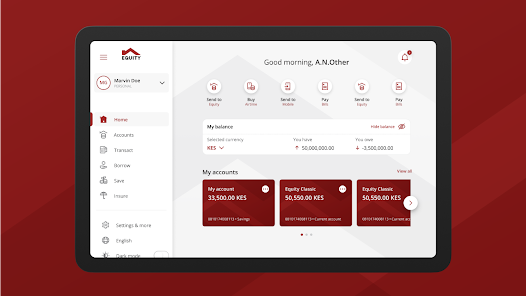
Customers opening the Ordinary Account can also opt into mobile banking and internet banking, giving them convenient access to their finances beyond the branch.

The account supports cash and cheque deposits, while customers can choose a payment card according to their needs, including prepaid, debit and credit cards.

Another benefit is the ability to access the account across the countries where Equity Bank operates. Customers can therefore continue managing their finances while travelling or living in another country within the bank’s network.

Equity Bank also provides round-the-clock customer support through 0763 063 000 or [email protected], helping customers get assistance when they need it.

Upon application, customers can receive an instant Mastercard or Visa card, providing an additional way to access and use their funds.

Who Can Open an Ordinary Account?

The account is available to individuals, registered groups and businesses, subject to the relevant account-opening requirements.

Individuals, whether opening an account singly or jointly, require an original identification document and KRA PIN.

Registered groups are required to provide their registration certificate, constitution, minutes of the resolution to open the account certified by the District Social Development Officer (DSDO), as well as an introduction letter from the DSDO.

On the other hand, registered businesses are required to provide documentation applicable to their particular business entity. Customers can obtain the specific requirements from Equity Bank.

How to Open the Account

Opening an Equity Ordinary Account is a simple process. Customers can download and complete the application form, then present the completed form together with the required documents at their nearest Equity Bank branch.

Once the application has been processed, the customer can begin banking and take advantage of the account’s range of services.

Also Read: How Equity Bank is helping farmers manage farming risks

Co-op Bank targets young Kenyans with 100pc home financing facility

0

The cost of buying or constructing property has over the years hindered many Kenyans from living in their dream homes, with the high upfront cost of land, construction and completed houses putting homeownership beyond the reach of many households.

This is a reality that has seen many individuals turn to mortgages to make their homeownership journey simpler.

According to financial experts, access to mortgage financing allows buyers to spread the cost of a home over a longer period rather than having to raise the full purchase price at once.

A mortgage can also give prospective homeowners greater flexibility in how they acquire property. Depending on the facility, financing can be used to purchase a completed house, buy land and construct a home, or develop a house on land the borrower already owns.

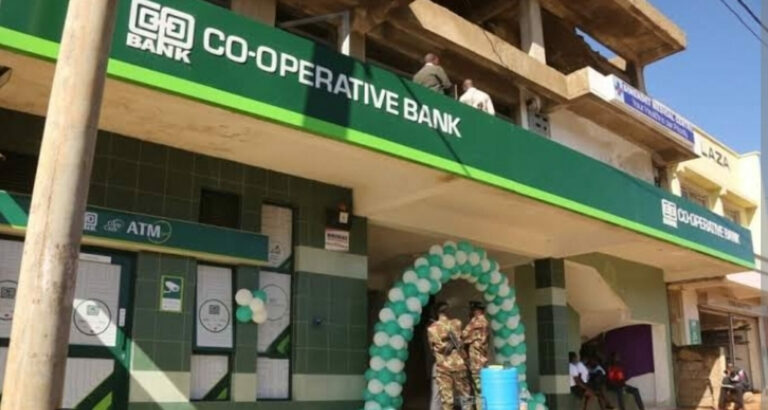
The Co-operative Bank of Kenya (Co-op Bank) is one of the lenders hailed for its mortgage products which have helped many salaried and self employed Kenyans achieve their dreams of owning property.

In one of the products targeting salaried young Kenyans, the bank is offering eligible borrowers up to 100 percent financing of the cost of a residential property through a mortgage facility of up to Sh10.5 million.

The facility is offered under the Kenya Mortgage Refinance Company (KMRC) mortgage solution, at an interest rate of 9.5 per cent, with a repayment period of up to 25 years.

The financing can be used to buy a ready house, purchase land and construct a home, or build on land that is already owned by the borrower.

Evan Mwangi, Acting Head of Retail Mortgage at Co-op Bank, outlined the facility during a Co-op Bank Youth Forum focused on homeownership and mortgages for young people.

“With Co-op Bank, you can get 100 per cent financing to buy a ready house or buy land, and the bank finances the building or just construction under the KMRC mortgage solution,” Mwangi said.

The facility has a maximum property value of Sh15 million, while the maximum mortgage financing available is Sh10.5 million.

For young buyers looking for relatively lower-cost options, Mwangi said Co-op Bank has properties available at about Sh3.5 million. These include one-bedroom houses in Ongata Rongai and three-bedroom houses in Kisaju.

According to Mwangi, to qualify for the 100 percent financing, Co-op Bank assesses the borrower’s repayment ability through income, existing financial commitments, credit history, employment or income stability, and the value of the property.

“It doesn’t matter the salary; what matters is what you are willing to commit to towards repayment,” Mwangi explained.

He, however, advised young people to budget for additional expenses such as property valuation, legal fees, stamp duty, insurance and property transfer charges.

Also Read: Your mortgage was approved. So why don’t you have your home yet?

Africa Blockchain Festival Launches 2026 Fellowship Program to Connect African Tech Founders with Investors

0

Africa Blockchain Festival (ABF) has announced the launch of the ABF Fellowship Program 2026, a new initiative designed to connect promising African blockchain and artificial intelligence founders with investors, venture capital networks and mentorship opportunities.

The Fellowship Program will form part of Africa Blockchain Festival 2026, taking place from October 15–17 at the Sarit Expo Centre in Nairobi, and will strengthen the startup and investment component of this year’s festival.

The global early-stage venture capital firm Antler and pan-African venture capital firm Launch Africa Ventures have partnered with the Africa Blockchain Festival and Hevy Hub on the initiative, bringing experienced early-stage investors closer to founders developing the next generation of African technology companies.

Antler has been named the Official Venture Partner of Africa Blockchain Festival 2026 and its involvement will focus specifically on supporting the identification and evaluation of participating startups, serving on the jury for the Fellowship pitch competition during the festival, and delivering a technical startup workshop on the second day of the event.

Launch Africa Ventures, one of the continent’s active early-stage venture capital firms, will also participate in the Fellowship initiative, supporting startup vetting on the ground and contributing to the pitch competition judging process.

The involvement of the two venture capital firms is intended to bring experienced investor perspectives directly into the Fellowship selection and pitching process, while giving participating founders greater exposure to how investors evaluate early-stage businesses.

Kenya embraces Bitcoin and Blockchain in bold digital shift

Scaling Blockchain business in Africa

The program addresses one of the biggest challenges facing technology entrepreneurs across Africa: turning innovative ideas and early-stage products into investable and scalable businesses.

Across the continent, young entrepreneurs are increasingly building solutions around artificial intelligence, blockchain, fintech, digital payments and other emerging technologies. However, access to early-stage investment, experienced mentors and international networks continues to determine whether many of these ideas progress beyond their home markets.

Selected founders participating in the ABF Fellowship Program will have the opportunity to showcase and pitch their solutions live on stage at Africa Blockchain Festival, presenting their businesses to an audience that includes investors, technology executives, founders, policymakers, financial institutions and potential commercial partners.

Qualified startups will also gain access to the ABF Deal Room, a dedicated environment at the festival designed to facilitate more focused investment conversations, introductions and potential dealmaking between founders and investors.

Importantly, the program will continue beyond the festival, with qualified startups receiving post-event mentorship to help founders strengthen their businesses and prepare for future growth and investment opportunities.

Olubunmi Fabanwo, Co-Founder and Chief Executive Officer of Africa Blockchain Festival, said the Fellowship Program reflects ABF’s ambition to create tangible opportunities for the young people building Africa’s technology future.

“Africa has one of the youngest populations in the world, and that generation is growing up at a time when technology is completely changing what is possible. A young person in Nairobi, Kampala, Lagos, Kigali, Accra or Dar es Salaam can build a solution today that potentially reaches millions of people. The challenge is making sure that talent has access to the capital, mentorship and networks required to turn those ideas into sustainable companies,” said Fabanwo.

“We don’t want Africa Blockchain Festival to simply be a place where people spend three days talking about the future of technology. We want founders to walk into the festival with an idea, or growing company and leave with new relationships, investor conversations, mentorship and a clearer pathway towards scaling their business.”

Kenya Blockchain Conference 2026

Connecting African Innovation with Capital

The program will focus on identifying promising startups and founders developing technologies capable of addressing African challenges while potentially scaling into regional and international markets.

Participating individuals and companies could include startups working across blockchain infrastructure, artificial intelligence, fintech, payments, stablecoins, tokenization, digital identity, cybersecurity and other emerging technology sectors. Applications are being sought from across East Africa, namely Kenya, Uganda, Tanzania, Rwanda and Burundi, but also across West and Southern Africa.

Fabanwo said improving access to capital is particularly important as Africa’s young technology entrepreneurs increasingly develop solutions to challenges they understand first-hand.

“We have incredibly talented young people across Africa building solutions around payments, agriculture, healthcare, trade, education and financial inclusion. Increasingly, they are using blockchain and artificial intelligence to approach these challenges differently,” said Fabanwo.

“Our responsibility as an ecosystem is to make sure those young builders are not disconnected from capital. Africa cannot build a serious technology economy if some of our best ideas struggle to get beyond the prototype stage simply because the founder could not get into the right room.”

Learn what companies are moving to Blockchain?

Building Technology From Africa

The launch of the Fellowship Program comes as artificial intelligence, blockchain and digital financial technologies create new opportunities for African entrepreneurs to participate in the global technology economy.

For ABF, this means looking beyond technology adoption and creating an environment where Africans can increasingly become the builders, founders and owners of technology companies.

“The next major African technology company could already be sitting on someone’s laptop in Kampala, Nairobi, Lagos or another African city,” said Fabanwo. “What matters is whether we create an ecosystem that recognises that talent early enough and gives it the opportunity to grow.”

“We want young Africans to see technology as more than a career where they work for somebody else’s company. They can build the companies themselves, create intellectual property here, employ people here and develop solutions in Africa that eventually compete globally. That is the bigger technology story we want the Fellowship Program to help accelerate.”

Over time, ABF hopes the Fellowship can build a growing community of entrepreneurs who return not only as founders seeking investment, but eventually as successful business leaders, investors and mentors supporting Africa’s next generation of technology builders.

Applications and further information regarding eligibility, selection criteria and participation in the ABF Fellowship Program 2026 will be communicated by Africa Blockchain Festival.

African Women turn to AI to tackle health and farming challenges

0

African women innovators are deploying artificial intelligence (AI) and smart technologies to tackle some of the continent’s most persistent health and agricultural challenges, demonstrating the transformative potential of technology to improve lives and strengthen food systems.

Women Innovators Drive Technology Solutions

Two innovators from Uganda and Rwanda showcased technologies developed to address pressing local challenges during a webinar hosted through the Africa Science Dialogue, highlighting the growing role of women in developing digital solutions for the continent’s health and food systems.

AI Speeds Up Disease Diagnosis in Uganda

In Uganda, where diseases such as malaria, tuberculosis and cervical cancer continue to place pressure on the health system, getting an accurate diagnosis can take hours or longer, particularly in health facilities with limited laboratory expertise. That is why Dr. Rose Nakasi, a researcher at the Makerere AI Health Lab and Lecturer at Makerere University, is leading a team of innovators in developing AI-powered tools to make disease diagnosis faster and more consistent.

“One of the key contributors to some of increased severity of this burden is that we lack simple, rapid, accessible and accurate diagnostics,” said Dr. Nakasi.

Alice Muhuhu: Kenyan doctor brings life-saving heart care closer to people

Smartphones and Microscopes Power AI Diagnostics

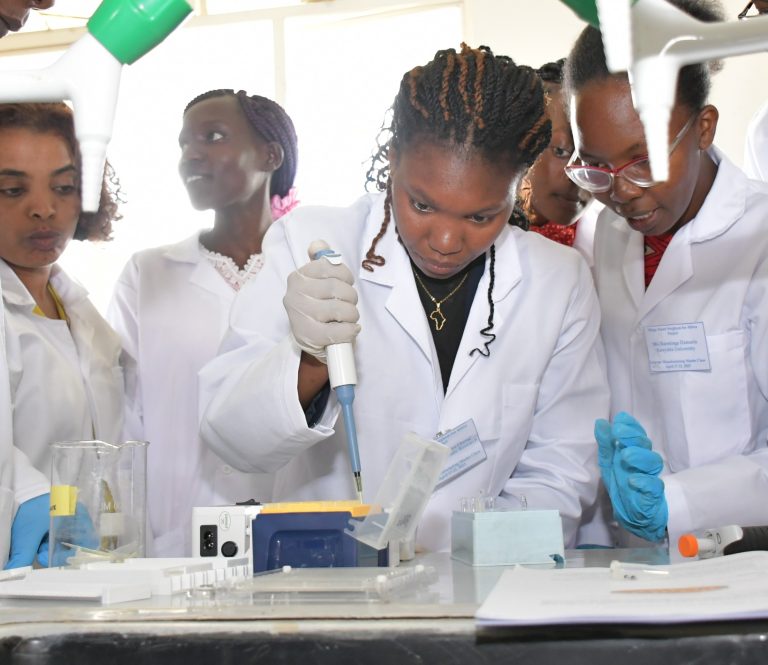
Using an ocular system, the researchers are combining microscopes, smartphones and AI to automate diagnosis of diseases including malaria, tuberculosis and cervical cancer. The system uses a 3D-printable adapter to connect a smartphone to a microscope, allowing images of patient samples to be captured and analyzed by AI models trained to detect disease-causing pathogens.

“If a disease is not accurately diagnosed, you are not going to get the right treatment, you are not going to get the right care,” Nakasi said.

Early Results Show High Diagnostic Accuracy

Early results from the technology have been promising. According to the researchers, the malaria model has achieved 92% specificity, while the cervical cancer model has surpassed 94% accuracy.

Beyond the laboratory, this technology is already being introduced into Uganda’s health system. More than 150 laboratory technicians and 10 pathologists have been trained to use this ocular system, with the project working across more than 35 health facilities in Uganda.

Naom Monari: Kenyan nurse bringing dialysis machines closer to patients

Smart Technology Transforms Potato Farming

In Rwanda, Clémence Uwamutarambirwa, an agroforester and innovator, is applying smart technology to a different challenge – helping farmers manage potato production more efficiently.

Her Smart Potato Greenhouse Technology combines sensors, cloud-based analytics and a mobile application to allow farmers and greenhouse managers to monitor growing conditions remotely.

Sensors Enable Remote Farm Management

Sensors installed in greenhouse beds continuously track temperature, humidity and soil moisture. “The information is transmitted to a cloud platform for analysis, while farmers receive updates and alerts on their mobile phones and can remotely manage irrigation,” said Uwamutarambirwa.

The technology also supports hydroponic production, where plants are grown using water-based nutrient solutions rather than conventional soil. “This soil-less technique yields higher potato seed output, conserves water resources and insulates crops against soil-borne pathogens,” she explained.

Uwamutarambirwa said feedback from greenhouse managers showed that the technology was making it easier to monitor production remotely, manage temperature and humidity and improve security of produce.

Local Innovation Addresses African Challenges

The two innovations illustrate how African researchers are adapting emerging technologies to local challenges rather than simply importing solutions developed elsewhere.

Warning signs of postpartum complications you shouldn’t ignore

Women Need Broader Support in Science and Technology

Dr. Margaret Karembu, Director of ISAAA AfriCenter and Chair of Africa Women for Biosciences (AWfB), said expanding women’s participation in emerging technologies would require support beyond women themselves.

“Increasing women’s participation in science and technology cannot be viewed as a responsibility for women alone. The support of men – as colleagues, supervisors, mentors, partners, institutional leaders and policymakers – is critical,” Karembu said.

She called for stronger networks and opportunities for women interested in science and innovation, including those who may not have formal training in biosciences.

“I want to emphasize something very important: you do not have to be a bio-scientist to belong in AWfB,” she said.

Science Dialogue Brings Diverse Stakeholders Together

More than 50 participants – including early-career scientists, agricultural researchers, policymakers, farmers, journalists, academics and industry representatives – attended the webinar.

Gertrude’s Children’s Hospital urges peers to make sustainability an operational priority, citing benefits from solar energy and circularity

0

Gertrude’s Go Green Week

Gertrude’s Children’s Hospital has called on health facilities in Kenya to treat sustainability as an operational priority, rather than a standalone environmental initiative, pointing to its investments in renewable energy, waste management and resource efficiency as examples of how greener healthcare can also deliver operational benefits.

The call came at the close of the Gertrude’s Children’s hospital’s ‘Go Green Week’, a five-day hospital-wide campaign held from 24 to 28 August that brought together staff and stakeholders around energy conservation, waste management, water conservation and tree planting.

Sustainability as an Operational Priority

Dr Robert Nyarango, Gertrude’s Children’s Hospital Chief Executive Officer, noted that the cost savings and operational efficiencies realised from adopting sustainability initiatives have translated into more resilient healthcare systems.

“Healthcare facilities are significant consumers of power, water and other resources, so sustainability must be part of how hospitals are managed and how we think about efficiency. We initially looked at these initiatives through an environmental lens, but we have seen that they are also operational decisions. We encourage other health facilities to look at sustainability in the same way and identify opportunities within their own operations to use resources more efficiently and build more resilient healthcare systems,” said Dr Nyarango.

Breast cancer is no longer a disease of older women

Applying Healthcare Quality Standards to Sustainability

Gertrude’s Children’s hospital’s approach to sustainability sits within the same standards-led culture that governs its clinical care. The hospital is accredited by Joint Commission International (JCI) — the global benchmark for healthcare quality and patient safety — and is the only children’s hospital in sub-Saharan Africa to hold the accreditation across its facilities.

The hospital says it is now bringing that same discipline of clear standards, measurement and continuous improvement to how it manages energy, water and waste.

Solar Energy Cuts Reliance on the Grid

One of the hospital’s sustainability initiatives is its rooftop solar system commissioned in 2025, which now meets over 17% of the hospital’s electricity needs.

Designed and installed by Davis & Shirtliff, the system has a capacity of 362.7 kilowatts across 585 panels.

Kitui teen relieved after KNH surgeons remove 20kg breast tissue

Biomass Replaces Fossil-Fuel Boiler

On the thermal side, the hospital has moved away from a fossil-fuel boiler to a biomass system operated by Lean Energy, a green-certified company.

The boiler runs on sustainably sourced organic fuel in place of diesel, reducing up to 30 tonnes of CO₂ emissions per month to meet the hospital’s heating requirements. The initiative complements the solar investment on the electricity side and reduces the hospital’s exposure to fuel price movements.

Gertrude’s Children’s Hospital urges peers to make sustainability an operational  priority, citing benefits from solar energy and circularity
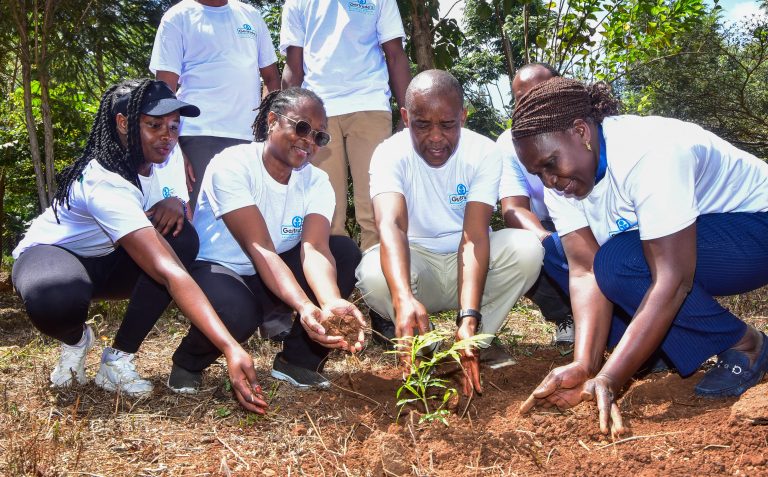
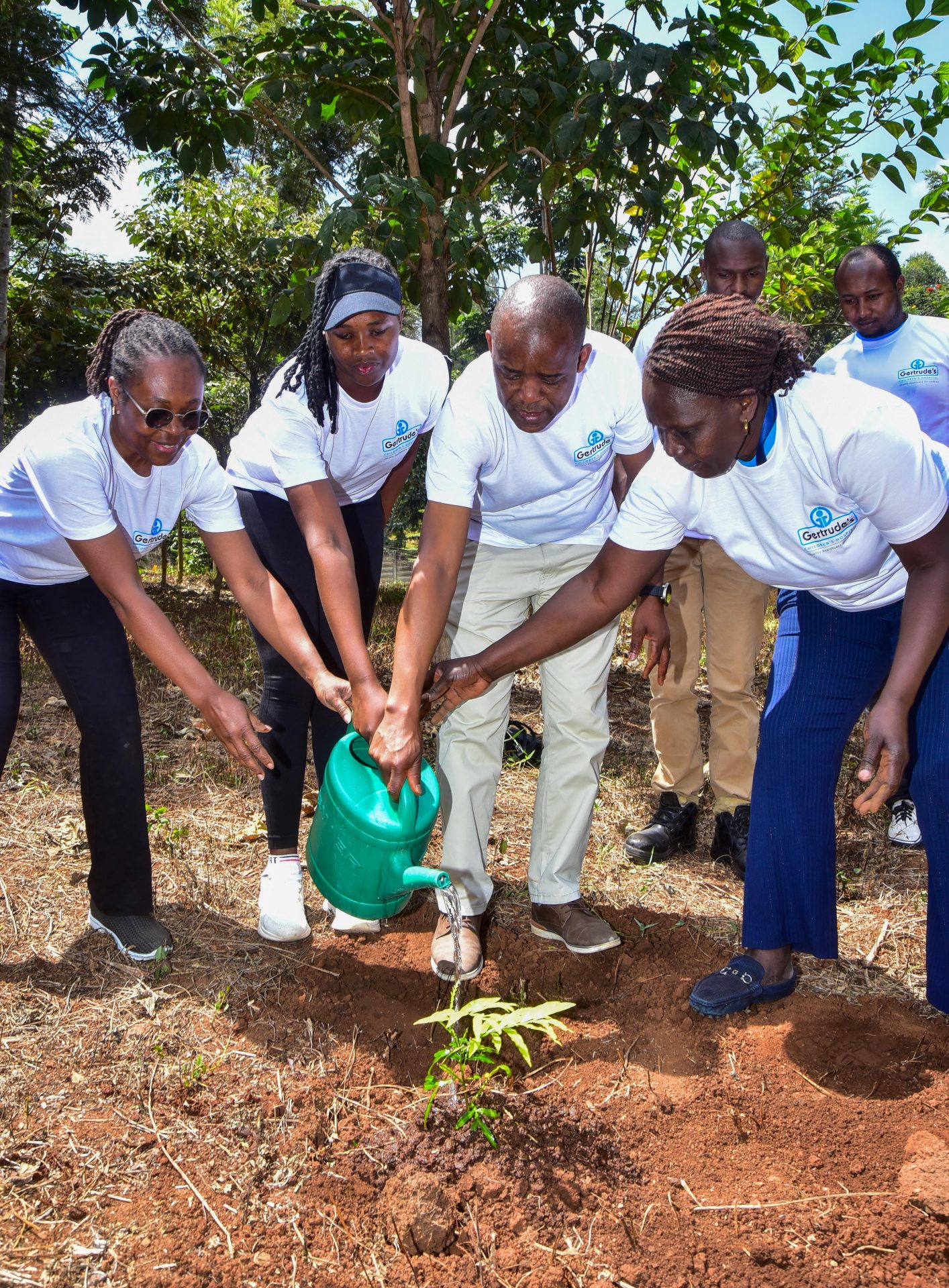
Gertrude’s Children’s Hospital Dental Clinic Operations Manager, Shamim Njaramba; Theatre Nurse, Zipporah Wangari; Chief Executive Officer, Dr Robert Nyarango; and Front Office Administrator, Emily Chepkaka; planting a tree at Gertrude’s Hospital in Muthaiga at the end of Go Green Week, a 5-day campaign by the hospital to highlight and mainstream environmental sustainability among staff and other stakeholders.

Circular Economy and Waste Management

Gertrude’s Hospital is also applying circular economy principles to its linen and staff uniforms.

Through a partnership with Africa Collect Textiles, two tonnes of used textiles have been diverted from landfill for recovery and recycling. A composting programme for food and gardening waste is one of the hospital’s priority areas as part of its wider efforts to reduce the volume of material sent for disposal.

“Healthcare generates waste every day, but we have an opportunity to be more deliberate about what we use, what can be reused, and what needs to be disposed of safely. Getting our waste under control is key to managing the hospital’s overall environmental footprint,” said Caroline Ayilo, Chief Nursing Officer, Gertrude’s Children’s Hospital.

Nurses salary in Kenya: Basic salaries, allowances nurses earn monthly

Staff Engagement and Tree Planting

Go Green Week brought sustainability into different parts of the hospital through practical activities such as a tree planting on the last day, increasing the tree cover at the hospital’s main Muthaiga branch.

Baraka Kerich, Chief Financial Officer at Gertrude’s Children’s Hospital, said, “The ultimate objective of Go Green Week is to strengthen a culture in which sustainability becomes part of everyday healthcare operations. Our staff have responded well to our sustainability initiatives. We see potential for growth of some of these areas, but we can’t do it alone. As a hospital, we are identifying where we can make a difference and work with the right partners to ensure sustainability remains connected to the way we deliver care.”

Practical Measures Across Hospital Operations

The campaign also included a switch-off exercise turning lights off for ten minutes to highlight the impact of everyday energy consumption, a clean-up exercise in Pangani medical centre environs, and waste management sessions focusing on segregation, recycling, and appropriate reuse.

Staff also got a chance to showcase their proposals for reducing carbon emissions, resource consumption and waste.

Style, Sip & Shop: Nairobi’s fashion experience comes to Galleria Mall

0

Nairobi, Kenya |25th August 2026: Galleria Mall is set to host Style, Sip & Shop, an immersive fashion and lifestyle experience featuring award-winning fashion stylist Connie Aluoch on 29 August 2026.

The experience will bring together women across different ages and lifestyles for a conversation on personal style, fashion and how wardrobes can evolve alongside changing priorities. The event will feature a live styling session led by Connie, alongside a curated shopping experience bringing together fashion retailers within Galleria Shopping Mall.

Rather than focusing on fashion trends alone, the experience will explore how women can develop a personal style that works for their individual lives from navigating corporate dressing and motherhood to transitioning between work and social occasions and adapting their style as their needs change.

Connie Aluoch will lead a session themed “Fashion Through the Seasons,” exploring how women can approach personal style through different stages and lifestyles.

“Fashion is not just about following trends. It is about understanding who you are, where you are in your life and how you want to express yourself. A woman in her twenties may have very different needs from a woman in her forties or a mother balancing family and career, but that does not mean that style has to become complicated. Style, Sip & Shop is an opportunity to have an honest conversation about how we can dress for the lives we are actually living while still feeling confident and like ourselves,” said Connie Aluoch, Award-Winning Fashion Stylist.

Little-known billionaire behind Sh2 billion Galleria Shopping Mall

The event will also bring participating fashion tenants together in one shopping experience, allowing guests to explore different brands, try on pieces and receive styling insights to help them make more intentional fashion choices.

According to Faith Adhiambo, Marketing Manager, Galleria Mall, the experience reflects the mall’s broader evolution towards creating experiences that bring together retail, lifestyle, entertainment and community.

“Today’s consumer is looking for more than a place to shop. They are looking for experiences, discovery, connection and reasons to spend meaningful time in a destination. Style, Sip & Shop allows us to bring these elements together through fashion while creating a platform for women to learn, interact and discover something different. It is also an opportunity for our fashion retailers to engage with customers in a more experiential way,” said Adhiambo.

Style, Sip & Shop forms part of Galleria Mall’s ongoing efforts to bring its Experience Different brand promise to life by creating experiences that extend beyond traditional retail. Through fashion, conversation and discovery, the event will offer guests an opportunity to connect, engage with industry expertise and discover what Galleria has to offer.

The event will take place on Saturday, 29 August 2026 at 10:00am to 1:00pm Galleria Mall.

Sun King introduces EZ 3 pro with 50MP camera and 6,000mAh battery

0

Nairobi, Kenya… September 3, 2026: Sun King today announced the launch of the EZ 3 series, the latest generation of its Sun King-branded smartphones, giving Kenyans access to a smoother, faster smartphone experience from just Shs55 per day and a Shs2,299 deposit.

The EZ 3 improves on Sun King’s first smartphone, EZ 1, across the board: a bigger, faster screen, a sharper camera, more power under the hood and a longer-lasting battery, all at a daily price that is easier on the pocket. The series comes in two models the EZ 3 and the EZ 3 Pro so customers can pick the phone that fits their life and their budget.

Designed for everyday life, the EZ 3 series is built for customers who want to stay connected, run a business and get more done, without breaking the bank.

Using Sun King’s trusted lipa pole pole model, customers can own a modern smartphone while paying in small, manageable daily installments.

Real customers, real value

Early EZ 3 owners point to the same things: the price, the camera and staying connected. For Joseph Oketch Owino, a 26-year-old carpenter, it is about growing his business. He uses the phone “to take photos to advertise my business,” alongside the storage to “download my movies.” Mercy Kisoi, 38, a water vendor, says the “payment plan is affordable… compared to my previous phone,” adding that “the camera is also really good.” And for Hellen Mugo, a 54-year-old dairy farmer, it is about family: “I can finally access WhatsApp and video call my children.”

A smartphone that works as hard as you do

The EZ 3 is engineered to deliver smooth, reliable performance, helping users do more every day, from chatting on WhatsApp and watching videos to running a small business online and using mobile money. Core specifications include:

6.75″ HD+ 120Hz display for smooth scrolling and crisp, vibrant visuals – bigger and faster than before, so reading, browsing and viewing feel effortless.

4 GB RAM (plus 4 GB virtual) and a UNISOC T7250 octa-core processor for faster app switching and lag-free use, even when multitasking

64 GB storage, expandable to 1 TB so users can keep apps, photos, videos and documents without constantly deleting 13 MP rear camera with Al scene recognition and a 5 MP front camera for clear photos and video calls – ideal for social content and biashara listings.

Power that lasts, security you can trust

Battery life is one of the biggest frustrations for smartphone users in Kenya. The EZ 3 is built to last through long days at work or on the move.

5,000 mAh battery for all-day power, reducing the need for frequent charging

Fingerprint app lock and secure sign-in help keep the device and personal information safe.

Battery life is one of the biggest frustrations for smartphone users in Kenya. The EZ 3 is built to last through long days at work or on the move.

5,000 mAh battery for all-day power, reducing the need for frequent charging.

Forum on making money on NSE to be held this Sunday

Fingerprint app lock and secure sign-in help keep the device and personal information safe IP54 splash and dust resistance stands up to rain, market spills and everyday knocks

Every EZ 3 also comes with a 12-month warranty, plus a charging cable, adapter, screen protector, phone case and earphones giving customers extra value and peace of mind.

Two phones, one easy choice

For customers who want more, the EZ 3 Pro steps up to a 50 MP main camera, a 6,000 mAh battery with 18W fast charging, 6 GB RAM, 128 GB of storage and IP64 protection a premium feel without the flagship price, from Shs65 a day and a Shs3,099 deposit.

“The EZ 3 reflects everything we’ve learned serving Kenyan customers,” said [Catherine Mudachi, VP Marketing, Sun King). “People want a phone that works, payments they can manage and a company they can trust. With the EZ 3 series, we’ve made the everyday choice even easier and even more affordable.”

Affordable, transparent and backed by protection

The EZ 3 is available from Shs55 per day, a lower daily payment than the EZ 1, making smartphone ownership accessible to first-time buyers and budget-conscious customers who cannot afford to pay upfront.

First-time buyers, students, traders and boda-boda riders can step up to a modern smartphone; those ready to upgrade can move to the Pro. Either way, customers pay a small deposit and manageable daily instalments, with clear pricing and no hidden costs.

But the EZ 3 is more than a phone – it is a tool to earn and grow. For the influencer shooting content, the online seller running a shop from their pocket or the trader taking mobile-money payments, a sharp camera, all-day battery and ample storage turn everyday tasks into income. Sun King is inviting Kenyan creators and small businesses to share how they do more with the EZ 3, #TheEasyChoice.

At the heart of the campaign is Rahisi a character whose name means “easy,” even though life keeps proving otherwise. A boda-boda rider, hustler and content creator with big dreams and a run of bad luck, Rahisi is the everyday Kenyan whose weak battery fails him mid-meeting and whose blurry camera ruins the moment until the EZ 3 changes everything. Through humour and relatable moments, Rahisi shows that “easy” is something you feel, not just a claim you hear.

From powering homes to powering connection

Sun King first became known in Kenya for making solar power affordable through small daily payments. Today, one in five Kenyans have access to Sun King solar. The EZ 3 builds on that same approach, combining power and connectivity to help customers take part in today’s digital economy.

the moment until the EZ 3 changes everything. Through humour and relatable moments, Rahisi shows that “easy” is something you feel, not just a claim you hear.

From powering homes to powering connection

Sun King first became known in Kenya for making solar power affordable through small daily payments. Today, one in five Kenyans have access to Sun King solar. The EZ 3 builds on that same approach, combining power and connectivity to help customers take part in today’s digital economy.

With a smartphone in hand, customers can communicate with family, grow their income, reach education and services, and take pride in owning a best-in-class device.

Where to get the EZ 3

The EZ 3 series is available now across Kenya through Sun King’s nationwide agent network. Customers can also attend in-person demos at local activations to try the phones, ask questions and buy directly from trained Sun King agents.


Schools to host ID registration drive for students turning 18

0

Secondary schools across the country will host a national identity card registration exercise targeting students who have attained the age of 18, following approval by the Ministry of Education.

The National Registration Bureau (NRB) has been granted access to secondary schools to register and issue national identity cards to eligible students, Basic Education Principal Secretary John Ololtuaa said.

In a notice dated August 31, 2026, Ololtuaa said the exercise would run from August 31 to October 16, with registration officers expected to visit schools during the period.

“This is to confirm that this office has considered and granted approval to the request by the National Registration Bureau for access to Secondary Schools for issuance of National Identity Cards to students across the country,” Ololtuaa said.

The exercise will be conducted during the third term, with the ministry scheduling it within a specific window to avoid interfering with preparations for national examinations.

“However, in view of the 3rd term examinations, the exercise should be undertaken between 31st August, 2026 and 16th October, 2026,” the PS said.

The initiative will enable students who have reached the legal age for registration to obtain their identity cards within their school environment, reducing the need to seek registration services elsewhere.

School administrators have been directed to facilitate access to their institutions for NRB officials and support the registration process.

They are also expected to ensure that the exercise does not interfere with normal learning activities or preparations for the forthcoming examinations.

The ministry’s approval comes as schools enter a critical phase of the academic calendar, with final-year learners preparing to sit their national examinations.

In an official notice dated August 28, Education Principal Secretary Julius Bitok said the ministry was putting measures in place to ensure learners remain focused on their academic work ahead of the examinations.

The Ministry has banned all extracurricular activities, including Prayer Day, for third term, in all schools.

“To enhance focus on effective preparation for national examinations and assessments, and to minimise disruptions, the Ministry shall implement strict controls on extracurricular and social activities during the Third Term.”

“There shall be no prayer sessions for candidates involving parents, outsiders, or external visitors. However, regular prayer and worship activities conducted by school chaplains and teachers within the school community shall remain unaffected,” the PS stated.

The PS directed all schools to adhere to the circular as preparations for the national exams continue.

Also Read: TSC re-advertises 1,631 promotional posts for serving teachers