

Home Blog Page 70

Emirates A380 gets ‘better-than-home’ Wi-Fi with starlink upgrade

0

Emirates’ flagship A380, long celebrated as one of aviation’s most iconic aircraft, is set to reach new heights as the first installation of next-generation Starlink Wi-Fi onboard has just been completed.

The Emirates A380 was one of the first commercial aircraft in the world to offer internet to its customers, with first generation systems offering a total aircraft bandwidth of less than 1 Mbps.  Emirates’ installation of three Starlink antennas on each A380 will improve the Wi-Fi available onboard a thousand-fold – offering a ‘better than at home’ connectivity experience for customers, while flying at 40,000 feet.

The first Emirates A380 aircraft equipped with Starlink made its return to Dubai this week, after its installation and certification was accomplished in Newquay, UK. With more A380s scheduled for accelerated installation throughout 2026, Emirates customers will soon enjoy a transformative leap in onboard connectivity with the ability to stream, game, browse, and work throughout their journey on personal devices. The service will be complimentary for all customers, across all cabins, with easy sign up and access. Future enhancements will include Live TV streaming over Starlink, initially on personal devices and later integrated into seatback screens.

From its celebrated Onboard Lounge to its signature First Class Shower Spa, the Emirates A380 has consistently redefined long-haul travel, beloved by customers from all corners of the globe. With the addition of Starlink’s seamless connectivity across all cabin classes, the Emirates A380 experience evolves once more, delivering a fully connected journey in the sky.

A technical first for the world’s largest passenger aircraft

As the world’s largest passenger aircraft, the A380 presents unique engineering challenges and opportunities. This industry-first Starlink configuration is designed to meet the demands of the A380’s ‘double-decker’ layout and high passenger capacity and is capable of delivering more than 2 Gbps of total aircraft bandwidth across the cabin.

Compared with the Emirates Boeing 777, the Emirates A380 features additional wireless access points and a third antenna to deliver an enhanced connectivity experience for its higher passenger capacity. Optimised inter-deck integration supports a seamless Wi-Fi experience, with customers able to enjoy high speeds depending on usage and device capability.

Emirates marks 30 years of connecting Kenya to the world

Accelerated rollout across an industry-leading fleet

Starlink installations will soon begin at Emirates Engineering facilities in Dubai to accelerate deployment across the fleet. Emirates is committed to bringing the best possible connectivity to its entire fleet at the earliest opportunity, with 25 Boeing 777-300ER aircraft already equipped with Starlink and the first A380 now joining service.

So far, more than 650,000 Emirates customers have already flown on Starlink-equipped flights, experiencing the benefits of next-generation onboard connectivity firsthand.

Emirates continuous investment into elevating customer experience

The introduction of Starlink on the A380 builds on Emirates’ ongoing investment into redefining the customer journey, including one of the most ambitious retrofit programmes in aviation history. To date, 93 Emirates aircraft have been fully refurbished, featuring the installation of the widely acclaimed Premium Economy cabins, an enhanced Business Class, refreshed First Class suites, upgraded interiors and finishes in Economy Class and throughout all aspects of the cabin, and expanded and upgraded inflight systems that can offer more than 6,500 channels of entertainment.

To complement the significant upgrades across all hardware, Emirates also continues to invest in its training programmes and facilities that are instrumental to customer experience. In mid-2025, Emirates opened an US$ 8 million facility – ‘Centre of Hospitality Excellence’ to train its 25,000 cabin crew in the art of hospitality onboard – bringing together both the tangible and intangible elements of an outstanding travel experience.


 

Nairobi water announces over 300 technical jobs: How to apply

0

The Nairobi Water and Sewerage Company (NWSC) has announced a mass recruitment drive targeting professionals across various fields, including technical jobs.

In a notice on April 27, Nairobi City Water invited applications from professionals in various fields, including engineering, legal services, technical operations, and support functions.

“As part of continued growth and team strengthening, NCWSC is looking for qualified, competent, seasoned, and talented professionals capable of operating in the fast-paced and demanding environment to fill the following positions,” the notice reads.

The open positions include Civil Engineering Officer (4 posts), Mechanical Engineer Officer (3 posts), Electrical Engineering Officer (3 posts), Survey Officer (1 post), Legal Officer – Corporate Services, Legal Officer – Dispute Resolution (2 posts), and Meter Testing Technician (On-site).

Others are Leak Scouting Technician, Meter Testing Operators (3 posts), Flow Measurement Operators, Bulk Metering Operators, Leak Scouting Operators (54 posts), Leak Detection Operators (3 posts), Data Verification Assistants (18 posts), and Drivers (70 posts).

NWSC is also seeking to recruit Survey Assistants (2 posts), Water and Wastewater Operators (80 posts), Artisans – Water and Wastewater Operators (8 posts), Artisan Plumber (19 posts), Mechanical Assistants (2 posts), Artisans Mechanical (General) (3 posts), and Artisans Mechanical – Welders (4 posts).

Other open positions are Electrical Assistant (3 posts), Artisans Electrical (4 posts), Flushing Unit & Exhauster Operators (5 posts), Excavator Operators (5 posts),Building Works Assistant, Artisan Building – Masons/Tilers (3 posts), Artisan Building – Carpentry & Joinery (2 posts), Artisan Building – Painting & Signwriters (3 posts), and Labourers – Water & Sewer (Regions) (25 posts).

How to apply

Interested and qualified candidates are required to submit applications to the Managing Director’s office by May 11, 2026.

Applications must be accompanied by supporting documents, including a curriculum vitae, copies of academic certificates, other relevant testimonials, and the contacts of three (3) referees, one of whom must be a current or former Employer.

Additionally, applications must be clearly marked with the respective job position and reference number and sent by hand delivery, registered mail, or courier services to the Managing Director, Nairobi City Water and Sewerage Co. Ltd, Kampala Road, Industrial Area, P.O. Box 30656-00100, Nairobi, Kenya.

Only shortlisted candidates will be contacted.

Also Read: IPOA announces multiple job vacancies: How to apply

IPOA announces multiple job vacancies: How to apply

1

The Independent Policing Oversight Authority (IPOA) has announced multiple job vacancies across various departments.

In a notice on Tuesday, April 28, 2026, the authority said it is seeking to recruit 32 individuals to fill various senior and mid-level positions.

“The Independent Policing Oversight Authority is established pursuant to Cap. 86 Laws of Kenya. Its primary mandate is to provide civilian oversight over the work of the National Police Service. The Authority seeks to recruit results-oriented Kenyan citizens with drive, vision, and creativity to fill the following vacant positions,” read part of the notice.

The advertised roles include Senior Accountant (1), Call Centre Officer II (3), Complaints Management Officer II (6), Inspections Officer II (1), Monitoring Officer II (2), and Investigations Officer II (9).

Others are Legal Officer II (1), Research Officer II (1), Clerical Officer II (1), Driver II (4), and Office Assistant II (3).

How to Apply

Interested candidates are required to submit their applications online through the IPOA careers portal at www.ipoa.go.ke/ipoa/careers.

The authority noted that no physical applications will be accepted. The application deadline is May 18, 2026, at 5:00 p.m.

IPOA noted that successful applicants must meet the requirements of Chapter Six of the Constitution of Kenya 2010 and provide a clearance certificate from the Higher Education Loans Board (HELB), Ethics and Anti-Corruption Commission (EACC), Credit Reference Bureau (CRB), Kenya Revenue Authority (KRA), and the Directorate of Criminal Investigations (DCI).

Additionally, background checks and verification of academic and professional certificates will be conducted before employment.

“IPOA is an equal opportunity employer and shall not in its recruitment discriminate based on race, religion, color, ethnic origin, political affiliation, sex or sexual orientation, pregnancy, marital status, disability, health, or social status. Kindly note that canvassing will lead to automatic disqualification,” the statement adds.

Also Read: BlockCoop SACCO launches Kenya’s first blockchain-powered SACCO

BlockCoop SACCO launches Kenya’s first blockchain-powered SACCO

0

BlockCoop SACCO, has today launched Kenya’s first blockchain-powered SACCO, marking a historic milestone in the evolution of cooperative finance and reinforcing the country’s position as a leader in financial innovation across Africa.

The initiative  introduces a new model for SACCOs, leveraging blockchain technology to address long-standing challenges in the sector, including illiquid shares, restrictive loan requirements, limited member participation, and lack of transparency.

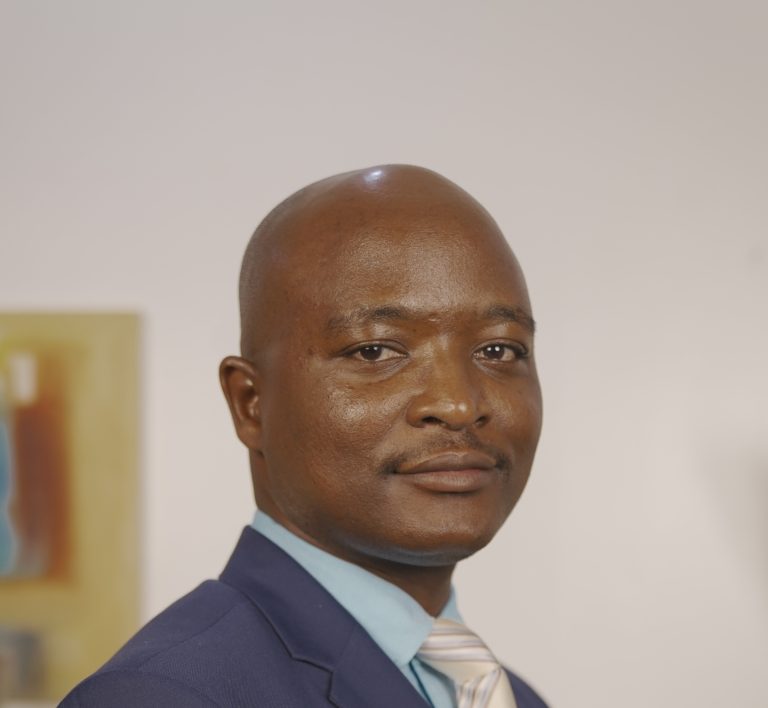
Speaking during the launch, the Director , Mr. Gideon  emphasized the significance of the innovation in strengthening the cooperative sector.

“As we advance cooperative finance, our focus is on leveraging innovation to address structural challenges while expanding access and trust. Blockchain technology enables us to build a more transparent, inclusive, and efficient SACCO model;, he said.

Through its digital share token, BLOCKS, BlockCoop SACCO has transformed traditional SACCO shares into tradable assets, enabling liquidity and opening up participation to a global market. The model also replaces conventional guarantor requirements with guarantor pools and trust-based scoring, providing a more inclusive approach to credit access.

New SACCO Amendment Bill 2025 could change how Kenyans save and borrow

Since launching its share trading on 1st October 2025, the sacco has experienced significant growth, reaching an estimated market capitalization of KES 1.3 billion and attracting a rapidly expanding base of members and investors.

This growth reflects increasing confidence in the blockchain-powered SACCO model and signals a broader shift toward more modern, technology-driven cooperative finance systems.

Building on this momentum, BlockCoop SACCO has launched the “Lipa na BLOCKS” loyalty campaign, an innovative initiative designed to reward its growing community while turning everyday spending into an opportunity for saving and investing.

Through this program, participants  can acquire BLOCKS from the secondary market and enjoy discounts when making payments via Till numbers, Paybill, or mobile transactions. The program is open to the public and accessible through lipanablocks.com, giving opportunity for everyone to participate

In a major boost to its ecosystem, BlockCoop SACCO also announced strategic partnerships with Nomachain and HF, aimed at accelerating the digitization and scalability of SACCOs across the region.

HF will provide compliant SACCO infrastructure, ensuring that cooperative systems meet regulatory standards. Nomachain on the other hand, will power the tokenization of SACCO assets and shares, enabling cooperatives to unlock the value of traditionally illiquid assets such as land and buildings .

These partnerships are expected to address limited liquidity challenges and  open up new pathways for investment, growth, and financial inclusion.

As the cooperative sector continues to evolve, BlockCoop SACCO remains committed to driving innovation that empowers members, and builds a more inclusive financial future.


Cost of Presidency under Ruto to hit Sh100 billion in June

0

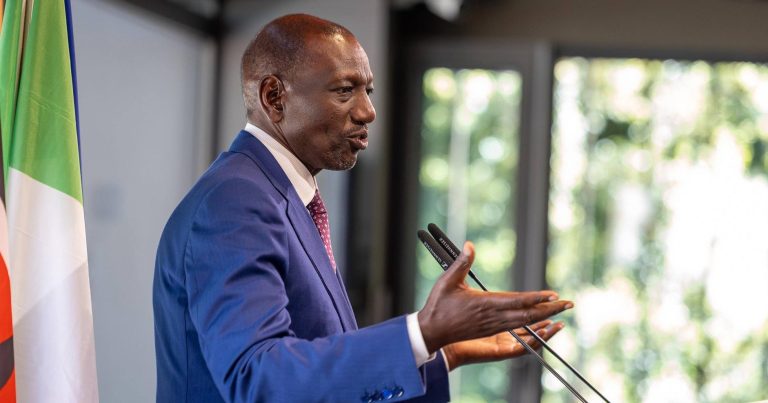
When the current fiscal year ends, the cost of presidency under President William Ruto will hit Sh100 billion in under four years. This means that currently, President Ruto is running the most expensive presidency in Kenya’s history.

A contrast with the previous administration of former president Uhuru Kenyatta under which president Ruto served as deputy president shows that in under four years, the current presidency has spent more than what Uhuru’s presidency spent in ten years.

The previous administration’s cost of presidency was Sh89.9 billion in ten years starting from 2013 to 2022, while the current presidency has already gobbled up more than Sh89 billion.

Currently, the presidency is made up of the State House, Office of the President, Office of the Deputy President, Office of the Prime Cabinet Secretary, and State Department for Parliamentary and Cabinet Affairs.

State House alone has led the pack in ballooning the cost of presidency with huge expenses. In the current fiscal year, President Ruto’s State House blew an astonishing Sh10.4 billion in the first seven months. The whole State House budget for the current year has now been ballooned to a staggering Sh17 billion. This allocation is more than what is allocated by developed countries such as the United States and Germany for equivalent offices.

According to the disclosures by the National Treasury, the house on the hill had initially received a full year allocation of Sh7.7 billion. This allocation was meant to cover the period that will end in June 2026.

However, by the end of January 2026, Sh10.4 billion had been blown away. Shockingly, it has been revealed that in the month of January, Ruto’s residence had spent Sh1.3 billion. This amounted to spending Sh42.6 million every day for the 31 days of January. This reckless spending of public resources was the continuation of a trend that was seen in the first three months of the current fiscal year.

During that period, State House blew Sh4.32 billion against the target allocation of Sh1.92 billion that State House had been given to spend in the first quarter of the current 2025/26 financial year. This meant that the budget had been overshot by 125 percent in three months. If State House goes on to blow the full amount of Sh17 billion, it will have spent approximately Sh1.4 billion per month or Sh47 million per day for 365 days.

READ MORE: As Kenyans cough up housing tax, Ruto allies get multi-billion construction deals

Between the fiscal years 2022/23 and 2025/26 of spending under the presidency, Sh88.8 billion has been exhausted, with the largest share being consumed by State House, and the offices of the President and Deputy President.

State House has taken Sh36.4 billion, Office of the President Sh35.1 billion, Office of the Deputy President Sh12.5 billion, and the Office of the Prime Cabinet Secretary Sh3.3 billion. The State Department for Parliamentary Affairs has taken Sh900 million while the State Department for cabinet Affairs has taken Sh700 billion.

As at the end of March 2026, the largest share of the total amount amounting to Sh83 billion was allocated to recurrent expenses. This was equivalent to 93.7 percent. These expenses included paying salaries, hosting delegations, fuel, and per diems for travels.

BlockCoop SACCO launches the first Blockchain-Powered cooperative, redefining the future of SACCOs in Africa

BlockCoop SACCO has today launched Kenya’s first blockchain-powered SACCO, marking a historic milestone in the evolution of cooperative finance and reinforcing the country’s position as a leader in financial innovation across Africa.

The initiative introduces a new model for SACCOs, leveraging blockchain technology to address long-standing challenges in the sector, including illiquid shares, restrictive loan requirements, limited member participation, and lack of transparency.

Speaking during the launch, the Director, Mr Gideon emphasized the significance of the innovation in strengthening the cooperative sector.

“As we advance cooperative finance, our focus is on leveraging innovation to address structural challenges while expanding access and trust. Blockchain technology enables us to build a more transparent, inclusive, and efficient SACCO model, he said.

Kenya embraces Bitcoin and Blockchain in bold digital shift

Through its digital share token, BLOCKS, BlockCoop SACCO has transformed traditional SACCO shares into tradable assets, enabling liquidity and opening up participation to a global market. The model also replaces conventional guarantor requirements with guarantor pools and trust-based scoring, providing a more inclusive approach to credit access.

Since launching its share trading on 1st October 2025, the sacco has experienced significant growth, reaching an estimated market capitalization of KES 1.3 billion and attracting a rapidly expanding base of members and investors.

This growth reflects increasing confidence in the blockchain-powered SACCO model and signals a broader shift toward more modern, technology-driven cooperative finance systems.

Building on this momentum, BlockCoop SACCO has launched the “Lipa na BLOCKS” loyalty campaign, an innovative initiative designed to reward its growing community while turning everyday spending into an opportunity for saving and investing.

Blockchain becoming more and more integrated into life in Kenya

Through this program, participants can acquire BLOCKS from the secondary market and enjoy discounts when making payments via Till numbers, Paybill, or mobile transactions. The program is open to the public and accessible through lipanablocks.com, giving opportunity for everyone to participate

In a major boost to its ecosystem, BlockCoop SACCO also announced strategic partnerships with Nomachain and HF, aimed at accelerating the digitization and scalability of SACCOs across the region.

HF will provide compliant SACCO infrastructure, ensuring that cooperative systems meet regulatory standards. Nomachain on the other hand, will power the tokenization of SACCO assets and shares, enabling cooperatives to unlock the value of traditionally illiquid assets such as land and buildings.

These partnerships are expected to address limited liquidity challenges and open up new pathways for investment, growth, and financial inclusion.

As the cooperative sector continues to evolve, BlockCoop SACCO remains committed to driving innovation that empowers members, and builds a more inclusive financial future.

Kenyan truck driver captured by ICE on US highway with expired B2 visa

0

A Kenyan truck driver is being detained by the United States’ Immigration and Customs Enforcement (ICE). The truck driver who has been identified as Cyrus Thairu was captured and detained by ICE on March 26, 2026.

He was on a journey heading towards New York which is located on the east when he was stopped by ICE at a checkpoint near the Mexico border west of the country.

Upon interrogation, Thairu was found with an expired B2 visitor’s visa. He was arrested and put under detention by ICE. He then filed an asylum claim from the ICE facility in the State of Illinois. He is however facing deportation proceedings with a hearing for his case set for May 4, 2026.

Thairu’s sister Joyce Mumbi Thairu who lives in the US says that they have hired an immigration lawyer known as Irene Mugambi to defend Thairu and are seeking to raise about Sh2 million to secure his release pending the hearing and determination of his case.

“Thairu has been in removal proceedings for over one month now. If we can’t raise the bond, he will have to remain in ICE detention. The Kenyan community is in fear for his welfare as he has a wife and kids in Kenya and is in hazardous detention facilities,” Mumbi told a local daily.

Over the recent weeks, ICE has increased crackdowns on major highways targeting undocumented immigrants and holders of commercial driver’s licenses which were improperly issued. One of these crackdowns has been the Operation Highway Sentinel which was launched in December 2005 by ICE. The operation targeted trucking companies and truck drivers in Central and Northern California and resulted in the arrest of over 100 truck drivers who were in the US illegally.

READ MORE: I got ‘Blue Paper’ when my US visa was approved, then hours later got ‘Yellow Paper’

On February 5, 2026, ICE arrested a semi-truck driver who was accused of causing an accident that claimed the lives of four people on February 3. The driver had been issued a commercial driver’s license by the State of Pennyslyvania.

“In recent months, we’ve seen a disturbing pattern of criminal illegal aliens driving commercial vehicles on American roads, directly threatening public safety and resulting in senseless loss of life,” the department of Homeland Security said in a statement.

Some Kenyans who are out of status in the US have taken gone as far as self-deporting themselves to avoid being captured and detained by ICE. Take Sam Kang’ethe. He self-deported from the United States in the summer of 2025. He took this bold decision when it dawned on him that he was facing two choices: to either return to Kenya on his own volition or face ICE which was itching to arrest and deport him.

Moving from the United States to Kenya was no easy choice at all. He left behind a wife and three children aged 13, 11, and five years at his home in Lansing, Michigan.

“I resigned to go back to Kenya in May 2025,” he told the media, adding that his wife had prepared their kids about their father’s imminent departure from the United States.

Mr. Kang’ethe told the media that although he chose self-deportation from US, he has no criminal record in the country. However, he was facing removal from the country after an immigration official ruled that a previous marriage that he had entered into in 2014 was fraudulent.

He had a court case in court whose hearing was scheduled to take place in January 2026. He was planning to present evidence that the ruling by the immigration official was wrong. However, having a pending court case could not prevent ICE from going after him. Apparently, with the ruling by the immigration official, Kang’ethe was legally deportable.

“You see people being picked up when they drop their kids off at school. And these were the kind of things I used to do. I cannot imagine myself taking my kids to school and then being picked up by the ICE,” said Kang’ethe during an interview with local media.

Nairobi to host FINAS 2026 summit on sustainable financing for Africa’s food systems

0
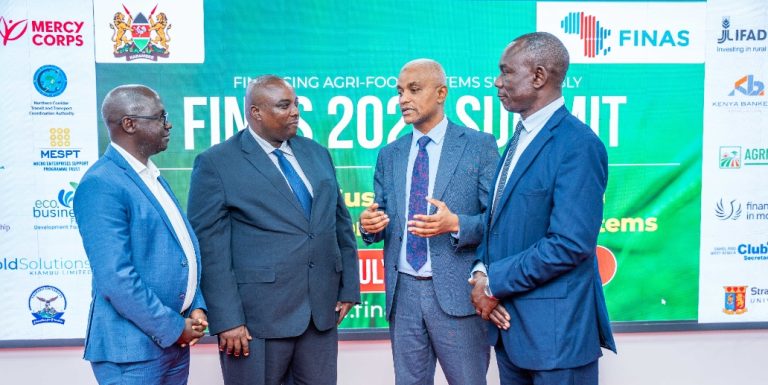
Over one thousand stakeholders from across government, finance, development, and the private sector are set to convene in Nairobi for the Financing Agri-Food Systems Sustainably (FINAS) 2026 Summit, seeking to drive a dialogue to unlock sustainable financing for Africa’s agri-food systems.
Scheduled to take place from 30 June to 2 July 2026, the summit will be held under the theme: “Towards Sustainable Financial Architecture for Africa’s Food Systems.” Building on the outcomes of previous editions, FINAS 2026 will place a strong emphasis on implementation, investment mobilisation, and measurable outcomes across the Africa’s agri-food systems financing landscape.
Africa’s agri-food systems remain central to economic growth and livelihoods, contributing up to 20–30 percent of GDP in many countries and employing more than 60 percent of the workforce. Yet the sector continues to face a financing gap estimated at over USD 100 billion annually, with agriculture receiving less than five percent of formal bank lending in most markets. These gaps disproportionately affect smallholder farmers, women, youth, and agri-SMEs, even as they produce up to 70–80 percent of the continent’s food supply.
At the same time, climate change, market volatility, and rising food import bills are increasing the urgency for resilient, inclusive, and scalable financing solutions.
Speaking during the official media launch of FINAS 2026 Summit, Dr. Paul Ronoh, Principal Secretary, State Department of Agriculture, noted that the summit comes at a critical moment for the continent in strengthening the industry.
“The FINAS summit provides an opportunity to take stock of the funding in the sector and check if our goals have been realised. Building on the strong track record of previous editions, this summit will unlock key opportunities for Africa. Financing must be results-oriented, delivering measurable outcomes to enhance agri-food sustainability. Let’s move forward to improve efficiency, ensuring that every shilling invested delivers value.” said Dr Ronoh in a keynote speech read on his behalf by Rashid Khator, Secretary of Administration in the State Department of Agriculture.
Africa has spent years articulating the challenges facing its food systems. FINAS 2026 is about accelerating action, aligning policy, finance, and partnerships to unlock investment and deliver tangible results for farmers, agribusinesses, and economies.”
Dr. Sophia Baumert, Project Manager, Sustainable Agricultural Systems and Policies (AgSys) at GIZ Kenya termed the summit as crucial platform for advancing collaboration and partnerships towards reliable, secure and timely agri-food systems in Africa.
She said: “FINAS began as a national platform in 2024 and has advanced into a continental forum advancing agri-systems dialogue from a pan African perspective. The platform holds all actors accountable and as GIZ, we are coming to drive the dialogue as process facilitator and foster stronger collaborations towards our common goal. We look forward to a strong FINAS 2026 summit and rally more partners to join us in this cause.”
FINAS 2026 will be preceded by a series of high-level pre-summit dialogues, targeted engagements focused on structuring an Agricultural Development Fund, unpacking the Kampala Declaration, advancing green finance as a lever for meaningful change and laying ground for the unveiling a private-sector-led agri-food systems finance working group.
The three-day summit programme will feature a ministerial and CEO roundtable, keynote addresses, side events, and deal-making sessions centred on four core pillars: policy alignment, innovative and inclusive finance, green and climate-resilient economies, and trade, investment, and multilateral cooperation. The summit will end with some site tours whereby participants will have the opportunity to see and experience some of Kenya’s most dynamic innovation investments hubs at the Northern Corridor Transit and Transport Coordination Authority (NTCCTA) in Mombasa, Konza Technopolis and Tatu City.
According to Prof. Hamadi Boga, Vice President in charge of Programme Delivery at AGRA and the Chair FINAS Secretariat, the summit represents a turning point for the food systems finance agenda:
“FINAS 2026 is about moving beyond commitments to coordinated delivery. By bringing together policymakers, financiers, and practitioners, the summit provides a platform to unlock capital at scale and translate policy ambitions into bankable investments that reach farmers and agri-enterprises.”
The summit will also place strong emphasis on climate-smart finance, recognising the need to align agricultural financing with climate adaptation and mitigation goals. Jared Ochieng’, Agriculture Finance Lead at FSD Kenya underscored the importance collaboration for innovative financial models.
He said: “Food systems in Africa have been hit with challenges such as funding & market challenges, wars and climate change. As key stakeholders, we need to join hands, reshape economies and find a greater path toward financing Africa’s agri-food systems effectively.”
The summit comes at a time when there is growing momentum around agri-food systems transformation across Africa. Governments are increasingly prioritizing agriculture through budget allocations and policy reforms, while private sector players and development finance institutions are expanding investments into sustainable agriculture and food systems.
Stakeholders are encouraged to participate in the summit as delegates, partners, or exhibitors, and to contribute to shaping a more inclusive, resilient, and investment-ready future for Africa’s food systems.

SportPesa reaffirms 10-year partnership while demanding accountability in FKF governance

0

SportPesa takes note of the ongoing developments within the Football Kenya Federation (FKF).

As title sponsors of the SportPesa League, and partners in a 10-year deal, our primary interest remains the continued growth, stability, and integrity of the game alongside the wider sports ecosystem in which we have invested.

We wish to acknowledge the meaningful progress achieved by Kenyan football in recent years under the leadership of President Hussein Mohammed. This includes Kenya’s successful co-hosting of CHAN 2025, the Junior Starlets’ historic first-ever FIFA Women’s World Cup qualification, the Harambee Starlets’ qualification for WAFCON 2026, and Kenya’s hosting of the FIFA Women’s Series, among other milestones.

Our domestic league has also seen renewed momentum, with improved organization of the top flight, increased visibility for clubs and players, and stronger engagement with commercial partners.

We have also observed encouraging efforts toward rebuilding trust in football governance, fostering collaboration with key stakeholders, and strengthening national team structures.

SportPesa unveils exciting Easter spin campaign with daily free bets

These gains are contributing to a more vibrant football ecosystem that benefits players, fans, and the broader sports economy.

With respect to the allegations currently under review, SportPesa’s position is that all such matters must be subjected to a thorough, independent investigation in line with due process. Including any change of leadership at FKF.

We call for a swift, transparent, and fair resolution that upholds accountability while safeguarding the integrity and progress of Kenyan football, for the sake of the players, clubs, and fans who remain at the heart of the game.

SportPesa remains a committed, long-term partner to Kenyan football and the broader sports ecosystem. We will continue to support initiatives that strengthen the game, deepen its commercial viability, and unlock opportunities for Kenyan talent, while standing for integrity, accountability, and sustainable growth across the sport.

Building Wealth: Smart investing for young professionals

Geopolitical events and macroeconomic shifts continue to shape the global investment landscape, influencing interest rates, inflation, currency stability, and market performance. Yet every crisis carries opportunity for those prepared. As we mark Financial Literacy Month, it is a timely reminder that understanding these dynamics is key to making confident financial decisions, especially for young professionals seeking to build wealth.

For those with a moderate risk appetite, wealth-building begins with a safety net. An emergency fund protects against unexpected events such as job loss or medical expenses, preventing the forced sale of long-term investments. Alongside this is the power of compounding: a long investment horizon allows young investors to ride out short-term volatility and achieve sustained growth.

Equities, despite their ups and downs, are essential for capital appreciation, while fixed-income instruments alone may only beat inflation by a small margin. A balanced mix of stocks and bonds smooths returns, and as careers progress, gradually shifting toward fixed income and insurance products helps preserve accumulated wealth.

Global diversification is the next step once local holdings are optimized. International investments reduce country-specific risk and open access to high-growth sectors, such as artificial intelligence and global tech stocks, that are unavailable on the Nairobi Securities Exchange. However, cross-border investing comes with regulatory scrutiny, particularly around Anti-Money Laundering (AML) compliance, reflecting the transparency of global finance.

Muthoni Njakwe: How to spot an undervalued company to invest in

Technology is also reshaping access. Absa’s mobile banking platforms already support account management, with plans to integrate full investment functionality, including MMF tracking and top-ups. Investors can even maintain multiple MMF accounts to organise goal-based savings, school fees, travel, or family events, ensuring short-term needs do not compromise long-term objectives. Absa’s MMFs remain competitively priced, with consistent performance often outweighing the temptation to chase short-term gains.

Effective investing requires a clear understanding of risk and return. Equities deliver growth but carry volatility. MMFs provide stability and predictable returns. Investments can also serve as collateral, unlocking loans without liquidation, up to 90% of MMF value or 80% of government bond holdings. For higher-risk appetites, local equity funds and structured global notes offer aggressive growth, while government bonds provide sovereign-backed security. Eurobonds, though attractive, add currency and sentiment risks.

Debt and tax management are integral to a robust financial strategy. Clearing expensive debt first while using “good debt” strategically allows wealth accumulation without unnecessary strain. Withholding tax applies to most investment income, but long-term government and infrastructure bonds offer tax advantages that enhance efficiency. Windfalls, such as bonuses, should be allocated across short-, medium-, and long-term goals, balancing liquidity with stability.

Above all, avoid emotional investing. Market noise and media hype can derail sound strategies. Diversification, discipline, and professional fund management are the antidotes.

What are the benefits that come with being a young investor? There are many, but we highlight the most outstanding: your age is your anchor to wealth building, as it allows you to invest for longer as long as you are consistent and you take a moderate to aggressive investment style with compounding benefits.

Second, you can invest more because your living expenses are minimal to moderate; furthermore, you can tame lifestyle inflation by being disciplined in budgeting. Another thing that works for a young professional is the ability to grow your income generating ability by enhancing your skills and monetizing the same.

Building wealth as a young professional requires discipline, strategic planning, and a balanced approach to risk and diversification. By combining local and global opportunities, leveraging digital tools, and applying sound financial principles, investors can steadily grow and protect their wealth while navigating uncertainty. This approach fosters consistency, resilience, and informed decision-making across all market conditions.