

Home Blog Page 71

SMEs set for boost as Airtel Money and Absa roll out seamless transfers

0

Small and medium-sized enterprises (SMEs) across Kenya are set to benefit from enhanced digital payment solutions following a new partnership between Airtel Money and Absa Bank Kenya aimed at streamlining money transfers and merchant payments.

The collaboration introduces a service that enables direct transfers from Airtel Money wallets into Absa Bank Kenya accounts, as well as payments to Absa merchant paybill accounts, offering businesses faster, more convenient and reliable transaction options through mobile phones.

The move is expected to significantly improve everyday business operations such as payments to suppliers, settlement of bills, and general fund transfers, particularly for SMEs that rely heavily on mobile money transactions.

Speaking during the launch, Airtel Money Managing Director Anne Kinuthia-Otieno said the partnership underscores the company’s commitment to driving inclusive digital financial solutions across the country.

“At Airtel Money, we believe in fostering collaborative digital partnerships that help power the economy, meeting the needs of customers in rural and underserved areas where mobile money remains the most accessible financial tool,” she said.

“As customers increasingly demand payment solutions that are simple, fast, and reliable, this partnership addresses long-standing friction points in digital payments, supporting the growth of small businesses and making digital payments work better for everyday life,” the MD added.

In addition to improved transaction efficiency, the integration will also see Airtel Money customers receive up to 100 percent guaranteed cashback in the form of airtime on all paybill payments.

Absa Bank Kenya Business Banking Director Renato D’Souza said the initiative is designed to simplify financial processes for entrepreneurs and enhance their operational efficiency.

“As a growth partner for our customers, we get to champion the kind of innovation that fundamentally shifts how businesses operate,” he said.

“Today’s SMEs are not just looking for banking services; they’re looking for ecosystems that help them move faster, stay agile, and compete in an increasingly digital marketplace. Our partnership with Airtel is a powerful step in that direction.”

He added that the integration will give business owners greater control over their cash flows by enabling seamless transfers from Airtel Money wallets into Absa accounts, as well as simplifying payments to Absa merchant paybill numbers.

“By enabling seamless transfers and simplifying payments, we are giving entrepreneurs more control, more choice, and more efficiency in how they manage their cashflows. This is about unlocking the full potential of digital payments for SMEs across Kenya and ensuring they have the tools to grow with confidence in a rapidly evolving economy,” he said.

Customers can make merchant transactions through the Airtel Money USSD menu by dialing *334# or via the My Airtel App by selecting Airtel paybill on the Airtel Money menu and entering Absa paybill number 303030, followed by the Absa Bank account number or merchant short code.

Also Read: KRA goes after mobile money paybills and till numbers

Avoid the back-to-school rush: How parents can ease school fees burden

As schools reopen for the new term, many parents are once again feeling the familiar pressure that comes with back-to-school season.

The rush to clear fees, buy uniforms, and settle transport arrangements, all within a tight deadline.

This term, however, the strain has been heavier for many households after school reopening dates landed at the edge of the month, catching parents off guard at a time when most are yet to receive their monthly salaries.

For families living on fixed incomes, this timing creates a recurring financial trap. The result is often last-minute borrowing, delayed reporting for learners, or parents being forced to liquidate small investments and savings meant for other needs. Education, while essential, becomes a seasonal financial emergency.

Financial experts note that one of the most effective ways to reduce this pressure is planning school fees payments as a long-term savings goal rather than a short-term crisis.

This is where a dedicated school fees savings account can make a significant difference, helping parents spread the cost across several months instead of struggling to raise a lump sum within days.

A structured school fees account not only supports budgeting discipline but also ensures that money set aside for education is protected from competing household expenses.

Lenders across the country have been rolling out products to ensure parents have the required cash for their kids’ education at the right time.

A good example is the Equity Bank’s School Fees Account, designed specifically to help parents and guardians save gradually and pay fees conveniently.

The account is affordable to open, requiring only Sh100 as an opening and operating balance, making it accessible even for low and middle-income earners.

It also comes with practical benefits that ease the cost of transactions, including four free withdrawals per year and three free banker’s cheques annually for school fees payments.

The account further supports automated saving through free internal standing orders, allowing parents to set aside money consistently, either weekly or monthly, depending on their income flow.

Unlike many conventional savings accounts, Equity’s School Fees Account has no monthly charges or maintenance balance requirements, reducing the burden on parents already facing high education costs.

Account holders can access their funds conveniently through Equity branches countrywide, agents, ATMs, and mobile banking (Eazzy 247), giving them flexibility regardless of location.

Beyond convenience, the greatest value of such an account lies in the discipline it promotes. By saving in advance, parents avoid the cycle of borrowing and emergency fundraising that often comes with sudden school reopening announcements.

It also ensures learners report to school on time, avoiding disruptions that can affect academic performance and emotional well-being.

How to open a school fees account with Equity Bank

Opening the account is straightforward. Parents or guardians only need an original national ID and a copy, as the account is opened in the adult’s name.

The account can be used to save for one or multiple children, allowing families with several learners to plan under one structured platform.

To sign up, parents are required to simply visit their nearest Equity Bank branch, present the required documents, and fill out an application form.

Once processed, the account becomes active and parents can begin saving immediately.

Also Read: Why Equity Bank’s Teen Member Account is a smart start for your child

How to get an instant school fees loan of up to Sh1 million without going to bank

As learners across the country begin going back to school for the second term, many Kenyan families are once again feeling the familiar financial strain that comes with preparing children for the new term.

For most parents and guardians, the pressure goes beyond tuition fees, stretching into uniform purchases, stationery shopping, transport arrangements, pocket money, rent payments, utility bills, and even food supplies for the weeks ahead.

It is a period that often demands heavy spending within a short time, leaving households juggling multiple obligations at once.

This year’s second term is one of a kind as it begins at the edge of the month, a time when most parents have not received their monthly salaries.

This means that parents who had not allocated back-to-school funds will have to seek alternative ways of raising funds quickly.

To ease this seasonal burden, the Co-operative Bank of Kenya is offering customers an instant school fees loan, providing a convenient solution for those in urgent need of cash.

Accessible through the lender’s mobile banking platform, the loan product targets Co-op Bank customers with a salary or business account.

Customers can access a quick school fees loan of up to Sh1 million directly through the Co-op Bank App or via the *667# USSD code.

The loan is designed for speed and convenience, requiring no paperwork, no phone calls, and no security.

“If you have a salary or business account at Co-op Bank, you can apply for an instant mobile loan of up to Kes 1million through Co-op Bank app. No forms, no calls, no security required,” Co-op Bank states.

How to register for the Co-op Bank School Fees Loan Service

To begin, customers must first register on their mobile phone at no cost. This can be done by dialing *667# or downloading the Co-op Bank App and selecting the REGISTER option.

Once registered, customers can proceed to check how much they qualify for and apply immediately.

How to check your loan limit

To check your loan limit using the Co-op Bank App or USSD:

  • Dial *667# or open the Co-op Bank App and log in using your Co-op Bank App PIN
  • Select E-loans
  • Select Check Limit

This step helps customers confirm the maximum amount they are eligible to borrow before making an application.

How to apply for the Co-op Bank school fees loan

The application process is equally straightforward:

  • Dial *667# or open the Co-op Bank App and log in using your Co-op Bank App PIN
  • Select E-loans
  • Select Check Limit
  • Click on Apply Loan and follow the steps

Once approved, the funds are deposited instantly into the customer’s Co-op Bank App wallet. The wallet account number is the customer’s mobile number with the digit ‘1’ added at the end.

Customers can transact directly from the wallet or transfer the funds to their salary or business account, depending on their preferred method of payment.

“The money will be deposited in your Co-op Bank app wallet (This is a virtual account. The account number is your mobile number with ‘1’ at the end). You can transact directly from the wallet or transfer the money to your Salary or Business account,” the lender explains.

Also Read: Co-op Bank’s Hekima Savings Account: A smart savings tool for SMEs seeking growth

NCBA Logbook Loan offers timely relief for cash-strapped car owners

In an economy where access to credit can at times prove elusive, many individuals and small business owners find themselves grappling with urgent financial needs and limited options.

Whether it is an unexpected medical bill, school fees deadline, business restocking requirement, or a pressing household expense, the ability to secure quick and reliable financing can make a critical difference.

Yet for some, traditional loan processes may feel lengthy, demanding, or restrictive especially when time is of the essence.

It is within this reality that lenders are increasingly offering asset-backed financing options designed to bridge urgent cash gaps without disrupting daily life.

NCBA Bank’s Logbook Loan is one such product, tailored for individuals and business owners who need immediate financing but already own a vehicle that can be used as security.

The loan allows customers to borrow against the value of a privately or commercially owned vehicle, provided it is fully owned and not under any existing finance arrangement.

“Our logbook loan product aims to give individuals and businesses access to quick financing to enable them to meet their emergency needs for immediate cash. You are able to borrow cash against an owned vehicle, provided it’s not under any finance,” NCBA states.

According to the lender, the minimum loan amount under the product is Sh100,000, making it suitable for both personal financial pressures and small business cash flow demands.

The facility is available for vehicles such as trucks, saloon cars and pickups, but excludes public service vehicles including buses, matatus and taxis.

One of the defining conditions is that the vehicle must not be more than 15 years old from the year of manufacture (YOM) by the time the loan is repaid, an eligibility requirement that ensures the asset maintains reasonable value throughout the loan period.

NCBA says the product is structured to support flexibility, with repayment cycles aligned to a borrower’s income flow.

This allows salaried workers, traders, and entrepreneurs to plan payments in a way that matches their earning patterns, rather than being locked into rigid repayment terms.

Speed is another key selling point. Customers receive feedback on their loan application within 12 hours, positioning the facility as a fast alternative for those facing urgent financial needs.

Applications can also be completed online, reducing paperwork and improving convenience for customers who may not have time to visit a banking hall.

Borrowers also have the opportunity to secure comprehensive motor insurance at favourable rates through NCBA’s insurance agency, enhancing the overall value proposition.

For entrepreneurs whose vehicles serve as the backbone of their operations, the ability to leverage that asset without surrendering its use can be transformative.

Rather than disposing of property or resorting to informal and often costly borrowing channels, vehicle owners can continue driving their cars while accessing the capital they need.

How to Apply for NCBA Logbook Loan

To get started, customers are advised to visit the nearest NCBA Bank branch countrywide. Borrowers can also access the loan application form via the NCBA website.

Also Read: NCBA targets self-build market with EASYBUILD solution

Inside Africa on CNN showcases Kenya’s new wave of standup talent

0

Inside Africa on CNN showcases Kenya’s new wave of standup talent: The Punchline Comedy Club, is one among a handful of collectives helping to provide a pathway into the industry. Eric Lu Savali, the founder of Punchline Comedy Club, explains why Kenya is the perfect physical and cultural environment for comedy, “It’s the longest running, consecutive open mic in Africa, because even during the pandemic, we never stopped.

We take advantage of Nairobi’s dope weather. We take advantage of Kenya’s crazy sense of humour, but also of the immense talent that’s around. So that makes it very unique. It’s a cocktail of three things that are very important.”

One of the big turning points for Kenyan standup over the past twenty years was the creation of The Churchill Show in 2007. The comedian behind the show, Daniel “Churchill” Ndambuki, tells CNN about its allure, “It was very unique because it was a mix of so many things.

It was standup, it was interviews from both comedians and musicians, celebrities, politicians. And then we even had a segment for kids. So, it was a big family show and that’s what brought Kenyans together, East Africans together and Africans together for that one big show.”

Njugush: How a Sh. 6 million loan almost killed my comedy acting career

For five years, Punchline Comedy Club has been running an all-female comedy show. This year, comedian Trussilah Lorrainemade her festival debut. She reveals what made her choose comedy, “When I’m on stage, I feel like I can just say anything and I can be anyone as opposed to how proper you’re supposed to be in real life. I have a six-year-old daughter, and I do a lot of mothering and a lot of adulting. I think I chose comedy because then I get to practice art and be free and just speak my mind.”

Seasoned performer, Ciru Mwangi closed the comedy night, bringing experience from performing alongside one of the most famous comedians in the world, “Opening for Dave Chappelle.

That was single-handedly the most stressful day of my life because I felt like I held the fate of not just comedy, but female comedians. There’s such a high bar as a comedian. And I felt if I mess this up, everyone will always say female comedians are this and they’re this. And so, it was very stressful, but I was also super grateful.”

For most comedians, quitting their day job is still some way off. Mwangi explains what success looks like for this growing scene, “Success for me in comedy, if I’m very honest, will look like the day I will be completely myself on stage because the money will come. The money comes every now and then.

For me, it’s that internal feeling of knowing today I was extremely 100% myself on stage because it’s a struggle for most people. We try and put on a persona and we are trying to be liked. The day I shed the need for validation from the audience and just completely be myself, that for me is success.”

These interviews were featured on the latest episode of Inside Africa on CNN International.

Top bank rankings highlight sector resilience at 2026 Think Business Awards

0

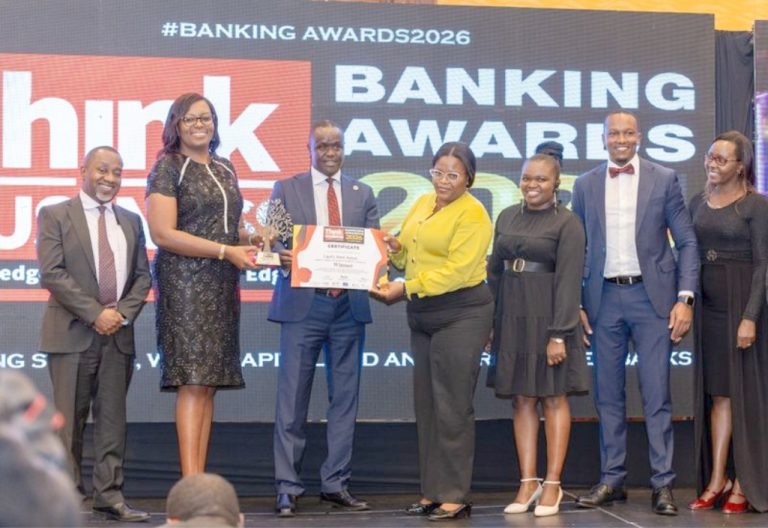
Equity Bank has been named the Overall Best Bank in pKenya at the 2026 Think Business Banking Awards, reaffirming its leadership and resilience in the country’s financial sector.

The recognition was announced during the awards ceremony held in Nairobi on Friday under the theme “Building a strong, well-capitalised and fairly priced banks,” bringing together key stakeholders across the banking industry.

The Bank’s dominance was reflected in its performance across categories, where it emerged top in 10 categories and ranked second in two others.

Equity Group Managing Director and CEO James Mwangi was named Overall CEO of the Year, underscoring his leadership in driving the Group’s strategic growth and impact.

Commenting on the Bank’s recognition, Dr. James Mwangi said the awards reflect the institution’s long-standing commitment to inclusive growth, innovation, and customer-centricity.

“This recognition as the Overall Best Bank in Kenya reflects years of deliberate investment in building a resilient, inclusive and future-ready financial institution. It speaks to the strength of our business model, which integrates financial innovation with deep customer understanding, allowing us to serve millions across all segments of the economy while maintaining sustainability and scale.”

He added: “As we navigate a rapidly evolving banking landscape, we remain focused on strengthening capital efficiency, expanding access to credit for productive sectors, and leveraging technology to deliver differentiated value to our customers and communities.”

The Bank also recorded outstanding performance across multiple categories. It was named Best Bank in Retail Banking and Product Innovation categories, alongside receiving a Special Judges Award for Product Innovation.

Equity Bank retains top spot as Kenya’s most valuable brand in 2026

Equity Bank further ranked first in Agriculture and Livestock Financing as well as Asset Financing, reinforcing its commitment to supporting key economic sectors including farming, agribusiness and enterprise development. It was also recognised as the Best Commercial Bank in Microfinance, reflecting its role in advancing financial inclusion among micro, small and medium enterprises (MSMEs) and underserved communities.

On sustainability, Equity Bank was ranked first in Best Bank in Sustainable Corporate Social Responsibility, driven by impactful community programs implemented through Equity Group Foundation.

In trade financing and Best Bank in Tier One categories, the Bank ranked second.

Speaking during the ceremony, Chief Judge Priscillah Mogaka emphasised the rigor and independence of the evaluation process, noting that the results reflected a transparent and evidence-based assessment of the banking sector.

“We assessed 160 entries against a rigorous 100-point framework, looking at both quantitative data such as financial ratios and qualitative factors including governance and innovation. This ensured that only the most deserving institutions emerged as winners,” she said.

She added that the 2026 awards reflect a banking sector that is increasingly resilient, digitally progressive and responsive to evolving customer needs.

The Think Business Banking Awards evaluate lenders across a wide range of indicators, including financial performance, innovation, risk management and customer focus, at a time when the sector faces mounting pressure to balance growth with stability and affordability.

The modern parent’s guide to navigating Back-to-School season bila presha

0

For many parents and guardians, the back-to-school season begins in the small, quiet moments. It could be in the kitchen before sunrise, in thoughts on the way to work, or in the numbers tallied repeatedly in their heads.

From school fees to uniforms, books, transport, and pocket money, it is never just a single bill to be paid. Instead, it is a series of priorities, each with a deadline, all arriving at once to draw from the same well of income.

The thought of paying school fees might bring to mind time-consuming trips to the bank. It
doesn’t have to be that way. Equity Bank offers a simple and faster way to handle payments and ease the pressure.

Instead of losing a morning, parents and guardians can pay fees directly from their phones
using the Equity Mobile App, by dialing *247#, or through Equitel. These digital options allow you to complete payments from anywhere, without interrupting your workday. One Equity Till Number makes everyday purchases quick and seamless, allowing money to move directly from your account to the merchant.

Back-to-School Rush: What every merchant needs to stay ahead of demand

For those who prefer a face-to-face transaction without the long wait, Equity Agents in your
neighborhood offer a convenient alternative. You can pay fees, withdraw cash, or make deposits right near where you live and work, saving valuable time.

Beyond fees, the endless shopping list can also be simplified. Instead of carrying cash, you can pay for books, uniforms, and other school essentials directly via the Equity Mobile app, dialing 247#, or through Equitel. Parents can also use an Equity Prepaid Card to pay for goods or even school-related expenses, offering a secure and controlled way to manage spending without handling cash.

And when it comes to pocket money, the prepaid card becomes even more practical. You can load money onto a card for your child, giving them a safe way to learn financial responsibility within clear limits. It reduces the need to repeatedly send cash and gives them independence in managing small daily expenses.

Sometimes, the biggest pressure is timing. School expenses may fall due before your salary arrives, or several needs may come at once. To bridge these gaps, Equity offers simple and accessible financial solutions.

The modern parent’s guide to navigating Back-to-School season bila presha

For small, urgent shortfalls, Boostika allows you to complete a payment immediately and repay once your funds come in. If payday is just around the corner, Salary Advance gives you access to meet immediate needs.

All these options are available through the Equity Mobile App, *247# USSD code, Equity Online, and Equitel, ensuring you can access support wherever you are, without disrupting your day.

As a parent, what you need during this season is flexibility because the pressure does not come from just one expense, but from how many things must be handled at once. Let Equity help you manage the pressure so you can get back to doing what matters most.

CBK invites investors to participate in Sh80 billion bond auction

The Central Bank of Kenya (CBK) has invited investors to participate in the May 2026 Treasury bond auction aimed at raising Sh80 billion to support the government’s budgetary needs.

The offer period opened on April 23 and will run until May 6, 2026. In the latest issue, CBK has reopened three fixed-coupon Treasury bonds with varying tenors and coupon rates to cater to both medium- and long-term investors.

The first bond, FXD1/2012/020, has a remaining tenor of 6.6 years and carries a coupon rate of 12.000 percent. It is set to mature on November 1, 2032.

The second bond, FXD1/2019/020, offers a remaining tenor of 13 years at a coupon rate of 12.873 percent and will mature on March 21, 2039.

The longest-dated paper on offer, FXD1/2021/025, has 20.1 years to maturity and carries a coupon rate of 13.924 percent. It will mature on April 9, 2046.

All three bonds attract a withholding tax of 10 percent on interest income.

CBK has outlined clear participation guidelines for investors. The minimum non-competitive bid amount is Sh50,000, while the maximum is capped at Sh50 million per Central Securities Depository (CSD) account per tenor.

Competitive bids, which are typically submitted by institutional investors and high-net-worth individuals, require a minimum investment of Sh2 million per CSD account per tenor.

The deadline for submission of bids is Wednesday, May 6, 2026, at 10:00 am. The auction will be conducted later that day.

Successful bidders are required to obtain their payment key and amount payable from the CBK DhowCSD Investor Portal or mobile application under the transactions tab on Friday, May 8, 2026.

Secondary trading in multiples of Sh50,000 will commence on Monday, May 11, 2026, for all three bonds, enhancing liquidity in the domestic debt market.

The May 2026 bond issue comes as the government continues to rely on domestic borrowing to finance its fiscal operations while offering investors an opportunity to secure stable, long-term returns in the fixed income market.

Also Read: How Collective Investment Schemes are transforming community wealth

Jaza Supermarket sets record with six new outlets opened in one day

0

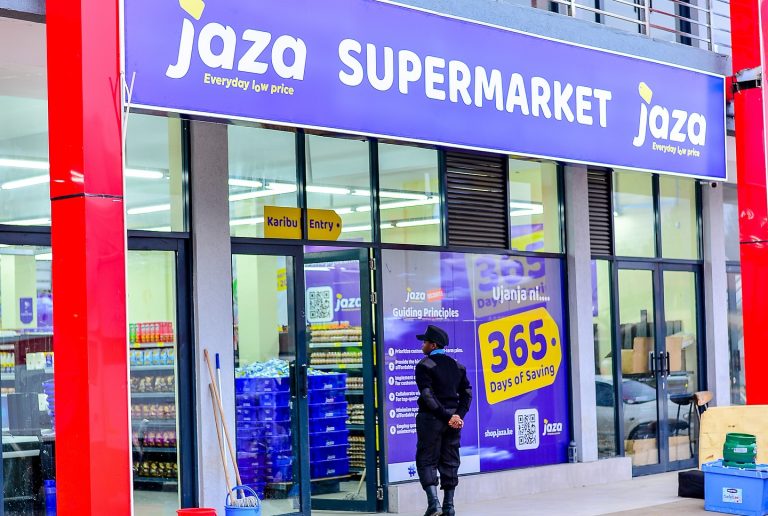
Jaza Supermarket has made history after becoming the first retail chain in Kenya to open six outlets within a single day, setting a new benchmark in the country’s fast-evolving supermarket industry.

The discount-focused retailer executed the rapid expansion on Thursday, April 23, 2026. The rollout pushes Jaza’s total number of branches to over 25, further strengthening its growing footprint in key residential and commercial areas.

The newly opened outlets are located at Evergreen Square along Kiambu Road, Thindigua Center, Madaraka Shopping Centre, Utawala Shooters, Bahati Heshima Avenue, and Manyanja Road.

Speaking during the launch, Jaza Supermarket Founder and Director Willy Kimani said the aggressive expansion is a strategic response to the rising demand for affordable household goods across urban and peri-urban markets.

Jaza, Kenya’s youngest and fastest-growing retail chain, is known for its low-price model and focus on locally-made products.

Under this approach, the retailer offers products from various brands, one of which is from its own line.

To keep prices competitive, Jaza packages essentials such as sugar, soaps, detergents and tissue paper under its own brand, enabling it to pass on cost savings to shoppers.

Additionally, unlike the normal retail space where suppliers get paid after sales are made, Jaza suppliers are reportedly paid in advance with 100 percent local sourcing.

Since its launch in November 2023, the supermarket chain has experienced rapid growth in various parts of Nairobi and Kiambu counties.

Among the areas the retailer has opened outlets are Buruburu, Kayole Mihango, Githurai 44, Kayole Soweto, Pipeline estate, Utawala, Lang’ata, and Mirema, among others

The record-breaking expansion reflects the chain’s ambition to position itself as a leading player in the value retail segment, as consumers increasingly seek supermarkets that offer convenience and cost-effective shopping options.

Jaza’s latest growth milestone comes amid heightened competition in the retail sector, where supermarket chains are racing to expand their presence while meeting shifting consumer needs.

With the new branches now operational, the supermarket expects to boost accessibility for shoppers while increasing employment opportunities within the communities hosting the outlets.

The retailer has so far employed over 100 people, including at its headquarters and warehouse on Mombasa Road.

Also Read: KRA goes after mobile money paybills and till numbers

How Collective Investment Schemes are transforming community wealth

Every month, individuals and groups faithfully set aside money in accounts or physical wallets as savings, unaware that funds that sit idle are not interest-earning, but a missed opportunity.

Across the country, however, a quiet shift is happening as households begin exploring smarter, collective ways to grow their money.

Take BEMSTAR, for example. More than 25 years ago, five college friends in Githunguri came together to start the group as a simple merry-go-round where each member took turns receiving pooled contributions. It was practical. It was disciplined. And it worked. As their careers progressed and their monthly contributions grew, so did their ambition. They began to see themselves not just as a savings circle, but as a structured chama with long-term goals.

After a decade of steady savings, BEMSTAR had built substantial capital, and they opened a group investment account. This allowed them to earn better interest from the cash they were not immediately using. The members quickly noticed the difference: The structured returns gave them confidence, clarity, and the ability to plan for bigger ventures.

That is the difference between saving and building wealth.

How Money Market Funds work in Kenya: A beginner’s guide

Today, the members are proud landowners, having turned modest monthly savings into a growing capital base and tangible assets. BEMSTAR’s journey illustrates how any chama, SME, or individual can upgrade their savings model through Collective Investment Schemes (CISs).

These are professionally managed pools of funds from many investors who share common goals. In Kenya, these schemes are regulated by the Capital Markets Authority (CMA) and supervised by independent trustees and custodians.

In simple terms, a trustee is an independent institution that safeguards investors’ interests and ensures the scheme is run according to the law and its objectives. A custodian, typically a bank, holds the scheme’s assets (such as shares and bonds) for safekeeping and processes transactions on its behalf.

CIS come in different types, such as money market funds, balanced funds, and equity funds, so there’s something for every investor. By pooling your money with other investors, you get the benefits of diversification, professional management, and lower costs, which can be hard to achieve on your own.

With inflation in the picture, it is important to choose saving and investment options that protect your money’s value. Money Market Funds, for example, offer a low‑risk way to preserve your capital while still earning a return. And because your money remains easily accessible, you can tap into it quickly whenever you need it, whether for an opportunity or an emergency.

Safeguarding purchasing power is important in a country working to deepen its savings culture and expand financial inclusion. Our market is evolving. Investors now have access to funds that blend local fixed-income securities with global assets such as exchange-traded funds and global equities. Products like the CIC Global Balanced Special Fund show how diversification can protect you against market instabilities while pursuing long-term growth by spreading your investments across different asset types and regions.

Remember, in today’s economy, every shilling has the power to drive meaningful progress. The focus is no longer on whether we are saving but whether our savings are designed to grow. After all, money kept safe is comfort, but money invested with intention is progress.