

Home Blog Page 73

Back-to-School Rush: What every merchant needs to stay ahead of demand

0

Back-to-school Rush

The back-to-school season always arrives with a familiar pressure. In the shops lining our neighborhoods and the busy market stalls, a sudden calm gives way to a flurry of activity. Parents arrive asking for specific uniform sizes, books that must match school lists, and stationery that their children need tomorrow.

It is a season where demand is certain. What is less certain is whether a business can keep up. For businesses, this presents two core challenges: first, managing the rapid flow of money, and second, keeping their shelves stocked.

In the peak of the season, cash changes hands quickly, leaving business owners with bundles of notes that need to be secured or banked. This process often means losing time and closing the business temporarily.

Equity Bank

Equity Bank transforms this dynamic by making it easier for merchants to do business without handling so much cash. With Pay with Equity (One Equity Till Number), customers can pay directly from their phones. The money moves seamlessly from buyer to seller, landing directly in the business owner’s account. Better yet, payments made by Equity customers using this service attract no charges, a benefit that can encourage more customers to choose your shop. Card payments are also becoming more common, and having a way to accept them means you never have to turn a customer away.

For the cash that does circulate, the bank has brought its services right to your doorstep through its extensive network of Equity Agents. These local access points allow you to deposit your earnings safely without leaving your shop for long. A merchant or business owner needing to pay school fees or get money for their child’s transport can also visit the same nearby agent, keeping the entire community’s economy moving smoothly and locally.

Once you have a smooth way to manage your money, the next challenge is to make sure you never run out of things to sell. Goods move quickly during this season, and a missed restock doesn’t just mean an empty shelf; it means a lost customer. Keeping up requires having money ready when a supplier arrives.

Equity Mobile App

This is where a suite of digital credit solutions becomes a game-changer. Through Equity Mobile App, Equitel line and *247#, financial support is just a few taps away.

These tools ensure business owners can get help wherever they are, without ever disrupting their busy day.

Ultimately, what determines success in a season is how smoothly money moves and how uninterrupted a business can remain during its busiest days. The real transformation is in the continuous rhythm of business, powered by banking that is local, immediate, and a simple part of everyday trade.

Back-to-School Rush: What every merchant needs to stay ahead of demand

How to withdraw Affordable Housing savings through Boma Yangu portal

The affordable housing program is gaining momentum in Kenya, with high occupancy rates in completed projects, especially in Nairobi.

These housing units are designed around affordability, transparency, and long-term ownership, significantly expanding access to decent housing for low- and middle-income earners.

Individuals can own a unit for as low as Sh600,000 for a studio unit to Sh4 million for a 3-bedroom unit.

Applicants interested in buying the units are encouraged to activate their accounts by saving a minimum of Sh200. After activation, applicants can save any amount at any time, as many times as they wish, using the available payment options.

Savings can be made via mobile money across all networks, Credit and debit cards, or cash deposit at any of the authorised custodial banks (KCB, NCBA and Cooperative bank).

The saving terms are flexible, and members wishing to withdraw their savings can request for refund through a structured online withdrawal process available on the Boma Yangu platform.

How to Withdraw Affordable Housing Savings

The withdrawal procedure has been designed to be straightforward, allowing contributors to submit refund requests digitally and receive payments through their registered bank or mobile money accounts.

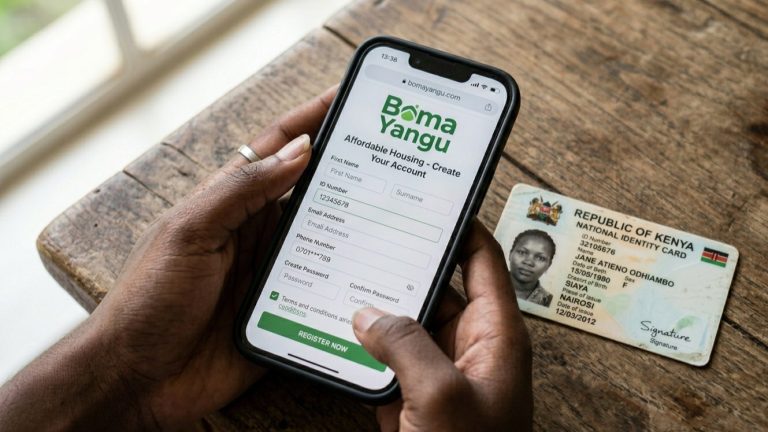
To initiate the process, applicants are required to log in to the Boma Yangu Portal using their registered national ID number and password.

Once logged in, users should navigate to the savings or account section on their dashboard, where contribution records and account details are displayed.

From there, the applicant is expected to select the refund or withdrawal option, which opens the request form. The request must then be submitted online, with the applicant confirming that all personal and payment details are accurate.

After submission, the request enters a processing stage. Payment is typically made to the contributor’s registered bank account or mobile money account, depending on the details provided.

Applicants are advised to exercise caution when entering their payment information, as errors may delay processing.

Contributors must provide the correct mobile phone number and bank account details and complete the required declaration form before the withdrawal request can be finalized.

Also Read: Affordable Housing Demand Booms As Boma Yangu Signups Hit 1 million Highlights

Pinup Africa Login on Mobile: Fast Access Guide

0

Getting into your favorite gaming platform shouldn’t feel like solving a puzzle, right? For players in Kenya who prefer gaming on the go, understanding the Pinup Africa login process on mobile devices makes all the difference. The mobile casino Kenyan landscape has evolved dramatically—according to data from the Communications Authority of Kenya, mobile internet penetration reached 42.2% in 2024, with over 23 million active subscriptions.

The Pinup platform stands out as one of the top destinations where Kenyan players can enjoy casino games seamlessly from their smartphones. When you master the quick login techniques, you’ll spend less time fumbling with credentials and more time enjoying what matters—whether that’s spinning slots, trying your luck with Aviator fast game, or exploring other entertainment options.

Essential Steps for Pinup Access on Your Smartphone

The Pinup access process on mobile browsers is actually simpler than you might think. Most Kenyan players start with the browser option since it requires zero downloads. Here’s the straightforward approach:

  1. Open your preferred mobile browser (Chrome, Safari, or Firefox works best)
  2. Navigate to the official Pinup website
  3. Tap the login button, typically located in the top-right corner
  4. Enter your registered username and password
  5. Complete any secure access verification if prompted

After logging in, you’ll find the full range of casino games Kenyan players enjoy, from classic slot games Kenya options to live dealer tables. The browser version automatically adjusts to your screen size.

The Pinup casino app Kenya option provides arguably the smoothest experience. Pinup offers an Android casino app that eliminates browser-related hiccups entirely. According to industry reports from Gaming in Africa 2025, casino app downloads in Kenya increased by 67% year-over-year. Visit the official Pinup mobile site, download casino app from the dedicated section, allow installation from unknown sources, and launch using your existing credentials. The Android casino application stores your login details securely, enabling one-tap access.

Troubleshooting Common Mobile Login Issues

Pinup Africa Login on Mobile: Fast Access Guide

Even with perfect Pinup Africa login procedures, technical glitches happen. Here are solutions:

Problem Likely Cause Solution
Page won’t load Poor connection Switch to mobile data or stronger WiFi
Password rejected Caps Lock or typo Use the “Show Password” feature to verify
App crashes Outdated version Update from the official site
Verification code missing Network delays Wait 60 seconds, request a new code

For the Aviator mobile game specifically—which has gained massive popularity in Kenya—ensure you’re running the latest app version, as older builds sometimes conflict with servers.

Top Saving Bet Template Tips on Mobile Beyond Basics

Secure access isn’t just marketing speak—it’s essential when dealing with real money casino activities. The Pinup platform implements SSL encryption, but takes personal precautions too. Enable two-factor authentication if available, avoid public WiFi when logging in, and never save passwords on shared devices.

Once you’ve mastered mobile login procedures, you’ll discover advantages beyond convenience. Mobile players at Pinup can access exclusive casino bonus opportunities, location-based promotions, and fast payouts through mobile payment integrations like M-Pesa. The casino experience on smartphones has matured significantly—touch controls for online slots feel more intuitive than mouse clicks. Try the Aviator demo mode to experience this yourself.

For those serious about real money casino Kenya gaming, the mobile platform offers identical win potentials as the desktop. Pinup’s online casino Kenya selection includes over 2,000 titles, with approximately 85% optimized for mobile screens. The trusted casino Kenya platforms maintain dedicated support channels, with Pinup’s customer service responding within 5-10 minutes during peak hours according to player reviews collected in early 2026. The play online casino Kenya experience has never been more accessible or secure than it is today.

Why Mobile Gaming Works Better in 2026

Getting smooth Pinup access on your mobile device boils down to choosing the right method and following basic security practices. Whether you prefer browser flexibility or app convenience, the secure casino infrastructure ensures your gaming remains protected. The mobile casino revolution is already here in Kenya, and platforms like Pinup are leading the charge.


Co-op Bank announces sale of used vehicles from Sh100,000

0

The Co-operative Bank of Kenya (Co-op Bank) has announced the sale of used motor vehicles through a public auction.

In a notice on Wednesday, April 22, the lender invited Kenyans to submit bids for the 23 vehicles featuring various brands and models.

According to the list, the cheapest vehicle a Toyota Lite will go for Sh100,000, while the most expensive is Isuzu FVZ at Sh6.48 million.

Also in the list is Daihatsu Mira (Sh580,000), Toyota Probox (Sh600,000), Nissan Dayz (Sh650,000), Mazda Demio (Sh890,000), Mazda Demio (Sh940,000), Nissan Note (Sh940,000), Peugeot (Sh1 million), Mazda Demio (Sh1.08 million), and Toyota Vitz (Sh1.14 million).

Others are Nissan Juke (Sh1.16 million), Nissan Sylphy (Sh1.22 million), Isuzu NPR (Sh1.7 million), Nissan X-Trail (Sh1.89 million), Toyota Harrier (Sh2.18 million), Isuzu FRR (Sh2.5 million), Proton X70 (Sh2.9 million) and Isuzu FTR33 (Sh3.02 million).

The lender is also seeking to dispose Isuzu NMR85HK (Sh3.18 million), Isuzu NQR (Sh3.53 million), Isuzu FTR (Sh3.76 million), and Porsche Cayenne (Sh4.76 million).

The vehicles are stationed in various yards in Nairobi, Mombasa, Eldoret, Embu and Thika. They includeTop of Form Lmaya Storage Yard, Startruck Investments Yard, Eldoret Supermax, Kefa Auto Bazaar Motors, Embu, Ekemwanya Auction Yard, and Purple Royal.

Others are SK Dhahabu Motors Limited, Mount Kenya Storage Yard, Grey Post Ltd, Kiambu Road, Open Road Enterprises, Nairobi, Capitol Diamond Storage, Thika, Razor Sharp Storage Yard, Blackbird Storage Yard, and Tumbo Auction Centre, Mombasa.

How to participate in Co-op Bank’s vehicle auction

Interested buyers are required to submit bids online through Co-op Bank’s vehicle platform by May 6, 2026. Bidders are required to pay a non-refundable bidding fee of Sh3,000.

“An offer letter shall be issued to successful bidders subject to payment of a non-refundable fee of Sh3,000 (bidding fee). A successful bidder will be required to pay the bid amount in a lump sum within 24 hours after receipt of the letter of offer on a first-come, first-served basis,” the bank stated in a notice in the Daily Nation.

Also Read: NCBA taps Kenya’s self-build trend with structured financing solution

NCBA targets self-build market with EASYBUILD solution

0

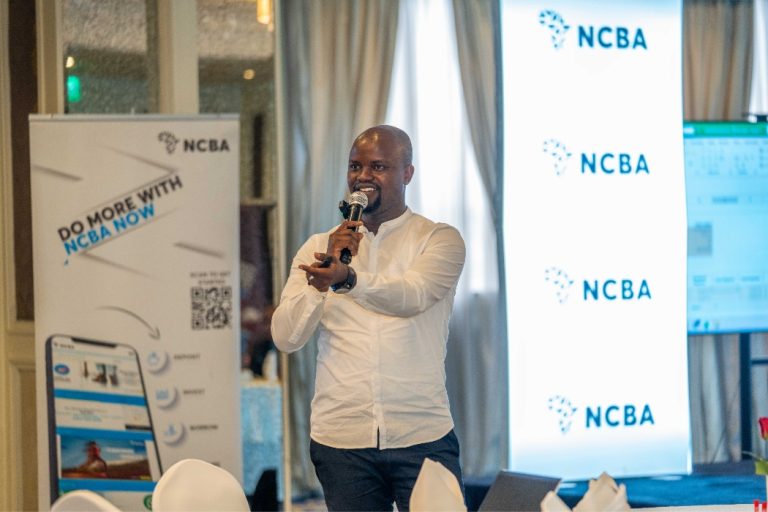
The NCBA Easy-Build solution provides a practical response to the country’s growing self-build market, following industry data showing that a majority of Kenyan homeowners prefer to construct their own homes.

According to the Kenya Bankers Association (KBA) Housing Survey 2025, 68% of Kenyan homes are self-constructed, reflecting a strong preference among homeowners for greater control over design, pace, and cost. The findings come against the backdrop of a housing deficit estimated at 2 million units, with annual demand for 250,000 homes far exceeding supply of approximately 50,000 units.

While self-build remains the preferred route to homeownership, the process is often slowed by major challenges, including limited access to structured financing, cost overruns, hidden construction expenses, weak project oversight, and fraud across parts of the building value chain.

“The housing conversation in Kenya often centres on mortgages and completed homes, yet the reality is that most Kenyans are building for themselves, often step by step,” says Dennis Njau, Group Director, Retail Banking, NCBA. Easy-Build was designed around this owner-builder reality giving customers a more structured way to build, with the financing and expert support needed to reduce stress, improve visibility, and bring more confidence into the process.”

Owning land made easier: How NCBA is changing lives with plot financing

Easy-Build combines financing with end-to-end project support, giving customers access to architectural, engineering, structural, and financial advisory services throughout the construction journey. The model is designed to help customers plan better, manage costs more effectively, and monitor progress with greater confidence from groundbreaking to completion.

The solution has proved particularly attractive to Kenyans in the diaspora, many of whom want to invest in building back home but face practical challenges in supervising projects remotely.

“Trust is a major issue in the construction sector, especially for customers who are not physically present to oversee their projects,” adds Njau. “For many Kenyans, particularly those in the diaspora, the fear of fraud, stalled works, or mismanaged funds can delay the dream of homeownership. By bringing financing, professional support, and structure into one solution, Easy-Build helps address that trust gap and gives customers more control over the process.”

By aligning financing with project support, NCBA continues to live out its Ubuntu strategy by empowering customers with practical solutions that respond to everyday realities, while helping more Kenyans navigate the path to homeownership with greater confidence. The Easy-Build value proposition is a key anchor to this year’s 2026 NCBA Meet, Mingle and Money Talks engagements, a financial literacy knowledge sharing platform for the Bank’s Young Professionals and Emerging Affluent target clientele.

Inside President Ruto’s multimillion modern farming business

1

When many Kenyans hear the name President William Ruto, what often comes to mind is politics, his rise from humble beginnings, and his combative campaign style.

Others think of him as a seasoned political strategist who has spent decades navigating the country’s shifting political terrain.

But beyond the rallies, policy pronouncements, and the pressures of running the country, President Ruto has repeatedly presented himself as a farmer.

Over the years, the Head of State has occasionally spoken publicly about his farming ventures, particularly his chicken enterprise, which he has used as an example of how agribusiness can create jobs and generate income.

In several forums, he has cited poultry farming as a practical business model that ordinary Kenyans can adopt, insisting that agriculture remains one of the strongest pillars of the economy.

Behind those remarks lies what is widely described as a vast, multimillion-shilling farming empire stretching across different parts of Kenya.

Ruto has been associated with expansive land holdings, particularly in Uasin Gishu County, and other regions, including Narok.

Farming is reportedly one of the President’s major sources of income, and his agricultural portfolio is said to be diversified, covering poultry farming, fruit farming, beekeeping, livestock keeping, and mechanised crop production.

His farms are said to embrace modern, high-tech agricultural machinery and mechanised systems, positioning them as large-scale commercial operations.

Ruto’s Sugoi chicken enterprise

Perhaps the most talked-about component of President Ruto’s farming business is his poultry venture based in Sugoi, Uasin Gishu County.

The chicken farm, is reportedly operated under the name Yegen Farm. The enterprise is said to rear more than 200,000 chickens, with reports indicating that the business earns over Sh547 million annually from egg sales alone.

The poultry venture is also said to involve partnerships with IndBro, an India-based poultry breeding and research farm.

The farm has frequently been referenced whenever the President speaks about agribusiness opportunities, with poultry farming often emerging as his preferred example of how agriculture can be turned into a thriving private enterprise.

Kisima Farm in Taita Taveta

Away from the Rift Valley, President Ruto is also linked to Kisima Farm, a 2,500-acre property located in Taita Taveta County.

The farm was reportedly acquired from former Member of Parliament Basil Criticos. It is said to be equipped with modern irrigation infrastructure, allowing year-round agricultural activity, a major advantage in a region where rainfall patterns can be unpredictable.

Kisima Farm is reported to focus heavily on beef farming and breeding, alongside rearing sheep, goats and chickens.

Koelel Farm in Uasin Gishu

Another major property associated with the President is Koelel Farm, located in Uasin Gishu County, about 14 kilometres from the Eldoret–Nakuru Highway.

The farm is reportedly used for large-scale production of maize and vegetables for commercial purposes.

Part of the harvest is also said to be channelled into making chicken feed, an approach that reflects an integrated farming model where one segment supports another.

In addition to crop production, Koelel Farm hosts a large number of dairy and beef cattle, including high-value breeds such as Friesians and Angus.

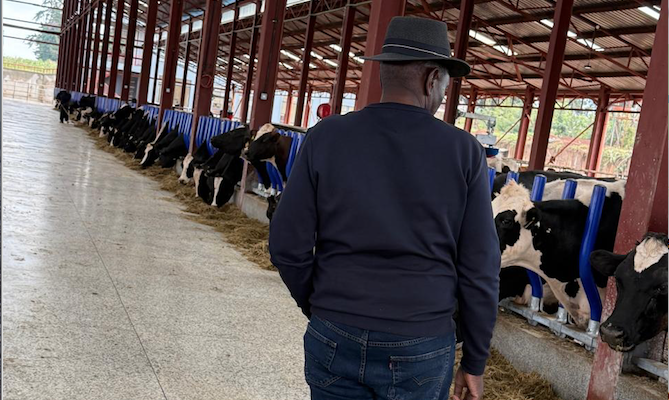
During this year’s Easter Holidays, the Head of State was pictured on the farm engaging directly in farm work, including feeding cattle inside a large industrial-style shed that houses over 50 animals.

Modern machinery and commercial-scale ambition

What sets the President’s farming operations apart is the embrace of modern technology and mechanisation. The farms are said to utilise high-tech agricultural machinery, with some estimated to cost close to Sh10 million.

One of the machines spotted on the farm is a Total Mixed Ration (TMR) feed mixer wagon. The equipment is used in mixing different feed components such as hay, silage, and grains into a uniform ration before distributing it to the animals.

Also Read: What is wrong with being in the Middle Class in Kenya?

Esther Waititu: Meet the woman leading M-Pesa’s latest innovations

0

M-Pesa remains Kenya’s most widely used mobile money service, firmly entrenched at the heart of everyday transactions for individuals, businesses, and institutions.

With millions of customers relying on the platform to send money, pay bills, access credit, and manage savings, M-Pesa has grown beyond its original purpose to become one of the country’s most influential digital financial tools, serving a broad customer base across all income levels.

Available in more than 170 countries globally, M-Pesa is currently serving over 70 million customers, processing close to 100 million transactions daily.

This evolution has played a major role in boosting financial inclusion in Kenya, which jumped from 26 percent in 2006 to an outstanding 84.8 percent by 2024.

The success of this mobile money platform has been attributed to its accessibility, security, and convenience, making it a reliable tool for digital transactions.

At the centre of M-Pesa’s latest transformation is Esther Masese Waititu, Safaricom PLC’s Chief Financial Services Officer, who has emerged as a key driver of innovation within the company’s financial services business.

Esther joined Safaricom in February 2023, taking charge of a division that is not only the backbone of Safaricom’s revenues but also a pillar of Kenya’s financial inclusion story.

In her role, she leads the Financial Services Business, with responsibility for pushing forward innovation while championing financial inclusion and financial wellness for individuals and enterprises.

With more than 15 years of experience in the financial services industry, Esther boasts a wealth of expertise in corporate banking, product innovation and strategic leadership.

Her career journey has spanned some of the region’s leading financial institutions, including Commercial Bank of Africa, Standard Chartered Bank, Stanbic Bank and KCB Group.

Before joining Safaricom, she served as Director of Corporate Banking at KCB Group, a role that sharpened her understanding of enterprise finance and large-scale customer needs.

Since stepping into her position at Safaricom, Esther has played a pivotal role in evolving M-Pesa from what was initially a mobile payments platform into a comprehensive digital financial services ecosystem.

Under her leadership, the platform has expanded into a broad offering that now includes savings, insurance, credit and investment propositions, positioning M-Pesa as more than just a transactional tool, but a digital financial partner.

Launch of M-Pesa SuperApp

One of the most notable milestones during her tenure has been the launch of the M-Pesa SuperApp, which has turned the platform into a lifestyle enabler.

The SuperApp hosts more than 80 mini-apps, allowing users to access multiple services in one place, from shopping and transport to digital utilities.

Her leadership has also seen the growth of the Ziidi Investment Platform, which includes Ziidi Shariah and Ziidi Money Market Fund (MMF).

The platform has recorded over one million active investors, reflecting a growing appetite among Kenyans for accessible and simplified investment products.

In another landmark move, Esther oversaw the rollout of M-Pesa Ratiba, described as the first-of-its-kind mobile money standing order proposition.

The service allows customers to automate payments and savings plans, introducing a structured approach to personal finance management through mobile money.

Beyond consumer services, she has also steered the expansion of credit solutions tailored for individuals, enterprises and even the public sector, reinforcing M-Pesa’s role in driving both household financial resilience and business growth.

Esther’s academic background reflects her strong grounding in business and leadership. She holds a Bachelor of Business Administration from the University of Eastern Africa, Baraton, and an MBA from the University of Liverpool.

She is also an AoEC Accredited Executive Coach, demonstrating her commitment to nurturing leadership and driving transformation within and beyond Safaricom.

Also Read: Man sues Platinum Credit for deducting payslip for loan he never took

Man sues Platinum Credit for deducting payslip for loan he never took

0

Platinum Credit has been sued for making loan deductions on a payslip whose owner never applied for a loan with them.

In the case that has been filed at the High Court in Mombasa, prison warden Peter Bokole has said that he neither approached Platinum nor took any loan with them, yet, every month, his salary has been getting hit with loan deductions by the lender.

Ironically, the lender has admitted in court that they have no record of Mr. Bokole taking any loan with them. They then claim that his details were sent to them by the Kenya Prisons Service.

It has however not been cleared why they proceeded to make deductions despite not having any record of Mr. Bokole taking a loan with them.

Bokole has told the court that the deductions started in September 2023 when his payslip showed a deduction of Sh2,031. This deduction was alleged to be an installment for a loan of Sh202,031 that he had allegedly taken at Platinum Credit.

When he presented the complaint to Platinum, the firm claimed that the deduction was an error and that the money would be refunded.

The money was not refunded. On the contrary, another deduction of Sh2,031 was done by the firm from his salary in the following month of October 2023.

READ MORE: Pius Muiru’s Sh960 million property faces auction over defaulted loan

On December 23, 2023, Mr. Bokole sought help from the courts. He applied to have the High Court declare the deductions illegal and unconstitutional. He also requested the court to order the lender to refund all the money they had deducted from his salary.

Mr. Bokole also asked the court to issue a permanent injunction stopping Platinum from using his personal data.

The warden who works at Hola Prison told the court that Platinum Credit Ltd had illegally obtained his personal data including his passport photo, identity card details, salary records, M-Pesa statements, employee number, payslip, and next of kin details without his consent.

On its part, Platinum lodged a preliminary objection claiming that the High Court lacked jurisdiction over the matter. The High Court dismissed this objection.

The firm further claimed that the deductions were erroneous and said that Mr. Bokole should have sued both Platinum and his employer Kenya Prisons. The firm alleged that it had deleted the warden’s data from its systems and refunded the money it had deducted from his salary.

In its ruling, the High Court ordered that the matter proceed to a full hearing.

Namsia: What is wrong with being in the Middle Class in Kenya?

0

Generally, the Middle Class is defined as the socio-economic group that falls between the working class and the wealthy. The people in this group often have college education, white collar jobs, and financial stability. These allows them some form of discretionary spending and savings, more comfortable lifestyles, and even homeownership.

But lately, it the term Middle Class has ceased to be a reference for socio-economic improvement, and is now often used as a term of ridicule, and or a phrase that is used to castigate. But this should not be the case, argues Rhina Namsia. She writes;

What is wrong with being at the Middle Class in Kenya?

If you work hard and buy a good car, you’re called a middle class; you take your kid to a good better school, you’re called a middle class; you start taking care of yourself and enroll into a classy gym, you’re recalled a middle class; you move to better neighborhoods you’re a middle class.

If you also make money and don’t live better you’ll be called names and given a tag still. Is living better a bad thing especially when you work hard for your money and want a better life?

Most of the rich people today were once in the middle class, if not all of them.

The things being pointed out as bad habits for the middle class are also done by the rich and wealthy. For example, something like eating KFC. Even the rich do it. It is only that maybe for them, they prefer to send over a driver to deliver it or opt to even go eat them in Dubai. And what’s wrong with eating KFC once in a while?

Namsia: Inside Kenyan banks 2025 profits and what investors need to know

You introduce your kids to gadgets you’ve become a middle class but on the other hand you’re told how the rich kids are studying IT at a young age

We need to stop castigating anything and everything that is trending especially with words and terms. Just like ‘toxicity and narcissist’, the phrase Middle Class has also become something that is being misused just to for content.

Rhina Namsia is the founder and chief executive officer of The Acemt Consulting, a training and consultation company that provides financial planning and investment advisory.

MECS invests KES 97 Million to support Kenyan clean cooking innovators 

0

The Modern Energy Cooking Services (MECS) has announced a $750,000 (KES 97 million) investment that will benefit three innovative Kenyan clean cooking ventures – Ecobora, PowerUp, and Sun-Power Box. The investment is part of MECS’ ongoing efforts to advance sustainable clean cooking solutions and accelerate clean energy transitions in Africa. 

The innovators will utilize the funds to scale affordable electric cooking technologies and expand access to clean energy for institutions, schools, and households and will play a crucial role in driving the transition to clean cooking through local expertise, innovation, entrepreneurship, and a demonstration of African solutions to African challenges.

Nyamolo Abagi, Director of Clean Energy Access at CLASP and member of the MECS Investment Committee, said: “Investing in the innovators at the forefront of electric cooking is one of the most impactful ways to drive the adoption of clean cooking. MECS’ R&D investment provides an innovative finance model for others in the sector. Clean cooking is at a tipping point; let’s seize this moment to build a future where Africans can have cleaner, healthier, economically empowered lives.”

Over the years, Ecobora, PowerUp, and Sun-Power Box have been at the forefront of developing affordable, locally manufactured electric cooking solutions that have driven effective clean energy transitions for institutions and schools in Kenya. Through institutional support under the MECS programme and CLASP’s capacity-building efforts, their innovative approaches have delivered cost-effective clean cooking solutions.

30,000 cylinders and other new requirements to start cooking gas business

About 37 million Kenyans and more than 600 million people in sub-Saharan Africa still rely on wood, charcoal, or other biomass fuels for cooking, driving deforestation, harming health, and placing a heavy economic burden on households and institutions.

While electric cooking (e-cooking) offers a clear pathway to cleaner, more efficient energy use, early-stage ventures face a critical financing gap. Many struggle to access the capital needed to move from market entry to scale.

This investment directly addresses that gap. By funding research, testing, and validation, MECS is helping these companies strengthen their technologies, generate evidence, attract new investments, and reach scale. 

The investment signals a shift in how clean cooking is financed, de-risking innovation at an early stage to unlock larger-scale capitalIt builds on growing momentum in the sector, including a recent partnership between the Government of Makueni County in Kenya and CLASP, which committed to accelerating Kenyan institutions’ transition to clean cooking. 

The clean cooking sector is entering a decisive period. Governments are under growing pressure to deliver on climate, energy access, and health goals, and investors are looking for scalable solutions with real-world impact. 

MECS’ investment is a clear signal that clean cooking is a viable and investable opportunity. However, increased capital, innovative finance models, and partnerships are needed to fully unlock it and support the innovators at the forefront of the transition. 

MECS invites impact investors, development finance institutions, and technology partners to engage with these ventures and explore how their capital can help accelerate the clean cooking transition across Africa.