Home Blog Page 78

Pius Muiru’s Sh960 million property faces auction over defaulted loan

0

The founder of Maximum Miracle Centre Bishop Pius Muiru (popularly known as Pastor Pius Muiru) is in court fighting to stop the possible auctioning of his properties.

The properties are valued at an estimated Sh960 million and were used to provide guarantee for a Sh260 million that the Pius Muiru applied for at Equity Bank, Tom Mboya Street Branch in 2010 and got. This loan was given at an interest rate of 14.5 percent per annum on reducing balance with a default penalty of 6 percent.

According to court documents, the properties include land and rental buildings that are located in Nairobi and Kiambu counties. The properties are co-owned by Muiru and his wife Lucy.

In his affidavit, Muiru says that the loan has been overcharged and that the outstanding balance should be Sh27.9 million. He claims to have paid Sh350.6 million.

“After the plaintiff paying a total of Sh350,640,968.07, there was a recalculation difference in the outstanding balance as at September 15, 2020, between the defendant’s debit balance of Sh150,829,061.80, and the Interest rates Centre Ltd (IRAC) debit balance of Sh27,963,260.50,” he has told the court.

“Accordingly, there was a total overcharge of Sh122,865,801.43 in favour of the 1st plaintiff, which ought to be offset against the plaintiff’s loan account to leave an outstanding balance of Sh27,965,260.50.”

The affidavit has been filed at the Milimani Commercial Court. Muiru has further revealed that the Sh216 million that he took was secured with properties L.R. No. 209/525/38, L.R. No. 209/525/40 and L.R. No. 13330/604.

At the same time, the loan was backed up by personal guarantees by his wife Lucy through a deed of assignment of rental income over properties L.R. No. 209/525/38, L.R. No. 209/525/39, and L.R. No. 209/529/40, and charge over all shares in the capital of Nairobi Theatres Limited and Corporate Guarantee from Nairobi Theatres Limited which is an enterprise owned by his family in Nairobi.

READ MORE: Munga turns to wife to avoid auctioneers over multi-million ABC Bank loan

On its part, Equity Bank has said that the loan taken by Pius Muiru was to be repaid in 84 monthly instalments. This places the amount of instalments at around Sh4,107,738 per month. However, Muiru defaulted on the loan from September 1, 2011 to September 20, 2016 leading to the accrued interest rates.

“…Coupled with the plaintiff’s [Muiru] default in servicing the loan, the penalty for default on interest at six percent above the applicable interest rate was applied on the plantiff’s loan account between the period of September 1, 2011 to September 20, 2016,” said Equity Bank in its replying affidavit.

However, the court has granted Muiru an injunction preventing Equity Bank from advertising the properties for auction. This injunction was issued by Justice M. Muigai, with the matter now set for hearing on July 8, 2026 before Lady Justice Njoki Mwangi.

Bullish Kenya Airways shares inch closer to Sh8 per share on NSE

Over the past twelve months, the Kenya Airways counter at the Nairobi Securities Exchange has risen from a low of Sh1.56 per share to Sh7.58 per share. The stock touched its fresh high on Monday, April 13, 2026, in what was a continuation of a bull run by the stock.

The bullish KQ shares had closed the previous trading session on April 10 at an average of Sh6.90 per share. They closed Monday’s session 7.25 percent higher at an average of Sh7.40 per share, with a day’s low of Sh. 7.06 per share and a day’s high of Sh7.58 per share. Traded volume stood at 2.84 million shares.

The KQ counter has attracted increased interest from speculative investors following revelations that the government is exploring a potential sale of the national carrier to foreign investors.

In February 2026, the Cabinet Secretary for the National Treasury John Mbadi announced that President William Ruto and his government had decided to sell off Kenya Airways.

According to the Cabinet Secretary, the government will hand over the national carrier to foreigners who will pump in between Sh154.8 billion and Sh258 billion.

Mbadi claimed that the government will float an international expression of interest (EOI) in a bid to get an investor.

“The new investor is expected to inject a minimum of Sh154.8 billion and up to Sh258 billion into the business. We shall be rolling out an international expression of interest to search for a strategic partner,” said CS Mbadi. The CS, however, did not announce when this bid will be opened.

Muthoni Njakwe: How to spot an undervalued company to invest in

“The government took up Sh63.1 billion which it is now servicing. The government then signed an on-lent agreement with KQ. This amount can be converted to equity once we firm up the onboarding of a strategic investor.”

At the same time, the entry into the list of shareholders by stockbroker and Kiharu Member of Parliament Ndindi Nyoro has also piqued the interest of some local investors who consider him a voice on stocks.

According to regulatory filings for the month of February 2026, Nyoro had acquired 10,396,251 shares. Nyoro is now the second-largest individual shareholder at Kenya Airways. He is also the seventh largest shareholder at Kenya Airways.

Muthoni Njakwe: How to spot an undervalued company to invest in

If you are a value investor looking for undervalued companies, there are three key valuation metrics you can use as a starting point.

The first is what we call P/E ratio. Price-to-Earnings ratio is a great metric as it shows you how much investors are willing to pay for every Sh1 of a company’s earnings.

For example, Equity Group has a P/E ratio of 3.84x. This means investors are paying Sh3.8 for every Sh1 it earns annually. Honestly, this is low compared to many industry averages, and it can only mean two things: either it is undervalued or the market has low expectations for its future growth. You know which is true.

To compute P/E, you take:

Market price per share ÷ Earnings per share (EPS).

How to interpret the P/E ratio

a) Low P/E (e.g. 5–10)

The stock may be undervalued

b) Moderate P/E (e.g. 10–20)

The stock is likely fairly valued

c) High P/E (e.g. 25+)

The stock may be overvalued

Or investors expect high future growth

Nonetheless, don’t focus on P/E alone.

A low P/E + weak company -> you may fall into a value trap. A low P/E + strong growth -> that’s a great opportunity

The second is what we call P/B ratio. Price-to-Book ratio shows you how the market values a company compared to its net assets.

Muthoni Njakwe: Social media marketing tips your business can use to get more customers

A P/B of 1 means the company is valued exactly at its book value. A P/B below 1, for example Equity has a P/B of 0.8, which means the market is valuing the company below its net assets, which indicates a potential undervaluation.

A P/B above 1 means either it’s overvalued or the market expects future higher performance.

To compute P/B, you take: Share price ÷ Book value per share.

Book value per share is calculated as: (Total assets − total liabilities) ÷ number of outstanding shares.

The third is what we call P/S ratio. Price-to-Sales ratio shows you how much investors are willing to pay for every Sh1 of revenue a company generates.

It is calculated as: Market capitalization ÷ total revenue.

A lower P/S ratio may signal a possible undervaluation, while a higher P/S ratio may indicate a potential overvaluation or market expects strong growth. However, P/S comparisons should always be made within the same sector.

Key lesson in value investing

Many investors focus only on high share prices or hype, without checking whether the company is actually earning money or creating value underneath.

But a strong investing decision should always consider both price and fundamentals.

At the end of the day, value investing is not just about finding cheap stocks, but finding good businesses that are trading at reasonable prices, with strong fundamentals and sustainable earnings.

Casino Games in Kenya: Every Category Available to Kenyan Players in 2026

0

From crash games to live dealer tables, Kenyan players have more legal casino game options than ever before—but knowing what’s available and where to play matters safely.

The online casino landscape in Kenya has matured significantly. With GRA licensing providing regulatory oversight and M-Pesa enabling instant deposits, Kenyan players now have access to crash games, slots, live dealer tables, and more. This guide maps every casino game category available in Kenya and where to play them safely.

What Casino Games Are Legal in Kenya?

The Gaming Regulatory Authority (which replaced the BCLB in February 2026) licenses both sports betting and casino platforms operating in Kenya. Online casino games are legal when played on licensed platforms.

Understanding GRA Licensing

  • BK license:Bookmaking — covers sports betting operations
  • PG license:Prize gaming — covers casino games, slots, and crash games
  • Verification: Licensenumbers can be verified on the GRA official website

Kenya’s GRA has licensed over 70 betting and gaming operators, but fewer than 20 offer a comprehensive online casino product with crash games, slots, and live dealer options on a single platform.

For a detailed breakdown of every game type, see our complete guide to casino games in Kenya on Bangbet.

➤ Explore casino games on Bangbet Kenya

Crash Games: Kenya’s Fastest-Growing Casino Category

Crash games have become the dominant casino category in Kenya, overtaking slots among mobile-first players. The appeal is simple: rounds last 8-12 seconds, data usage is minimal, and the gameplay requires active decision-making.

How Crash Games Work

  • Rising multiplier: A multiplier starts at 1x and rises continuously
  • Cash out decision: You decide when to cash out before the round crashes
  • Provably fair: Results are cryptographically verifiable—nomanipulation
  • Low data: Under 3MB per session — viable on any network
Game Provider RTP Feature
Aviator Spribe 97% Dual bet system
JetX SmartSoft 96% Turbo mode
Spaceman Pragmatic Play 96.5% 50% partial cashout

The leading crash game in the country is Aviator — Kenya’s most popular crash game—available in demo mode with M-Pesa deposits on Bangbet.

When I tested Aviator’s auto-cashout at 1.5x over 20 rounds, it executed successfully 18 times. The server-side reliability is solid even on mobile networks.

Aviator leads the category, but it’s not the only option—see all crash games available in Kenya on Bangbet.

➤ Try Aviator in free demo mode

Casino Games in Kenya: Every Category Available to Kenyan Players in 2026
Casino games in Kenya feature and categories on Bangbet

Online Slots: From Classic to Megaways

Slots remain the most diverse casino game category, with hundreds of titles available from providers like Pragmatic Play, Play’n GO, and NetEnt.

Popular Slot Categories in Kenya

  • Tumble slots: Gates of Olympus, Sweet Bonanza — cascading wins with multipliers
  • Jackpot slots: Wolf Gold, Chilli Heat — multi-tier progressive jackpots
  • Classic slots: 40 Burning Hot, Shining Crown — simple 5-reel gameplay
  • Megaways: Big Bass Bonanza Megaways — up to 117,649 ways to win

Gates of Olympus currently leads slot popularity in Kenya, with its tumble mechanic and multiplier orbs creating the potential for big wins from small bets. The 96.50% RTP is competitive with any game in the category.

Live Casino: Real Dealers, Real Tables, M-Pesa Deposits

A live casino represents the most immersive form of online gaming—real dealers operating physical tables, streamed in HD to your device.

Live Casino Games Available

  • Live Roulette: European variants, minimum bets from KES 100
  • Live Blackjack: Lowest house edge (0.5% with optimal strategy)
  • Live Baccarat: Speed and squeeze variants available
  • Game Shows: Crazy Time, Dream Catcher—entertainment-focusedlive games

Live casino requires more data than other games (500MB-1GB per hour), so WiFi is recommended. For detailed coverage of live dealer tables, including table limits and streaming quality, see the live casino guide published on Techweez.

Casino Games in Kenya: Every Category Available to Kenyan Players in 2026
M-Pesa deposit for casino games on Bangbet Kenya

How to Deposit for Casino Games With M-Pesa

M-Pesa Paybill 569699 and Airtel Money 4100425 support instant deposits starting from KES 50, making Kenya one of the lowest minimum-deposit markets in regulated African gaming.

M-Pesa Deposit Steps

  1. Open M-Pesa: SIM toolkit or M-Pesa app
  2. Lipa na M-Pesa > Pay Bill: Enter business number 569699
  3. Account number: Your Bangbet account ID
  4. Enter amount: Minimum KES 50
  5. Confirm with PIN: Funds arecredited instantly to your Bangbet wallet

After depositing KES 500 via M-Pesa Paybill 569699, my funds appeared in my Bangbet account in 28 seconds. The same wallet funds all games: crash, slots, live casino, and table games.

➤ Deposit via M-Pesa and start playing

“What I tell new players is to try 5 different game types in demo mode before you deposit a single shilling. Crash games, slots, and live casino all feel completely different.” — Kenyan gaming enthusiast

Choosing the Right Casino Game for You

Not sure where to start? Match your preferences to the right category:

If You Want… Play This Why
Fast-paced action Crash Games (Aviator) 10-second rounds, active decisions
Variety and features Slots Hundreds of themes, bonus rounds
Immersive experience Live Casino Real dealers, chat interaction
Best odds/strategy Live Blackjack 0.5% house edge with basic strategy
Not sure yet Demo Mode Try all categories free first

Demo mode — available for most casino games on Bangbet — allows players to experience game mechanics with virtual credits. This is particularly valuable for exploring different game types without risking real money.

Responsible Gaming

18+ only. For gambling support resources, contact the National Council on Problem Gambling Kenya or call 0800 723 253.

All casino games mentioned in this guide are available on GRA-licensed platforms. Set deposit limits before you start, use demo mode to learn games, and never gamble more than you can afford to lose.

If you have a gambling problem, seek help. Contact GamCare.org.ukfor confidential international support.

Frequently Asked Questions

What casino games can I play in Kenya?

Kenyan players on GRA-licensed platforms like Bangbet can access crash games (Aviator, JetX), slots (Gates of Olympus, Sweet Bonanza), live casinos (roulette, blackjack), and more.

Can I deposit for casino games with M-Pesa?

Yes. Use M-Pesa Paybill 569699 on Bangbet for instant deposits. Airtel Money is also accepted via business number 4100425.

Are online casino games legal in Kenya?

Yes, when played on platforms licensed by the Gaming Regulatory Authority of Kenya (GRA). Bangbet holds a GRA license BK-0001279.

What is the most popular casino game in Kenya?

The Aviator crash game is currently the most-played casino game in Kenya, followed by slots like Gates of Olympus and live dealer roulette.

Can I try casino games for free in Kenya?

Yes. Most games on Bangbet offer demo mode, where you can play with virtual credits before depositing real KES.

What is the minimum deposit for casino games on Bangbet Kenya?

The minimum deposit via M-Pesa starts from KES 50. Individual game minimum bets vary by title.

Conclusion

Kenya’s online casino market offers every major game category: crash games led by Aviator, slots from Pragmatic Play, and live dealer tables with real-time streaming. All are available with M-Pesa deposits on GRA-licensed platforms like Bangbet Kenya. Start with demo mode and play responsibly.

Key Takeaways:

  • Every casino game category available in Kenya with M-Pesa
  • GRA licensed (BK-0001279 / PG-0001281)
  • Demo mode for all game types
  • Aviator leads crash games; Gates of Olympus leads slots
  • M-Pesa Paybill 569699 | NCPG: 0800 723 253

Gikomba trader reveals how she grew sales from Sh3,000 to Sh5,000 a day

0

Gikomba Market, one of Nairobi’s busiest open-air trading hubs, begins to stir long before sunrise.

While the city is still quiet, traders are already arriving, dragging handcarts loaded with bales of second-hand clothes, sacks of shoes, or piles of household items.

Despite its energy and economic importance, some of the traders grapple with serious challenges that have limited the growth of their enterprises.

For Mary Wanjiru, a 34-year-old clothing retailer who has operated in the market for close to seven years, the main challenge is never a lack of customers but accessible and reliable financing.

“There are days you see demand rising, but your money is tied up in unpaid orders or slow-moving stock,” she says. “That’s where many business people get stuck.”

It is a situation many micro and small entrepreneurs across Kenya understand all too well. And increasingly, Wanjiru says, her turning point came through NCBA Bank’s Stawi facility, a digital financial solution built for business owners who need structured banking and accessible credit without the traditional hurdles.

The business lady recalls hearing about Stawi from fellow traders who were using it not just to borrow but also to separate business money from personal spending.

“I realised most of my problems came from mixing business money with home expenses,” she admits. “With Stawi, I opened an account using my phone. No branch, no paperwork. It was straightforward.”

Stawi provides entrepreneurs with a digital business account that allows them to manage payments and collections while building a financial profile that can unlock access to credit.

For many small traders who operate outside formal banking systems, the ability to establish an account and transact digitally is proving critical.

The account can also be linked seamlessly with M-PESA, enabling users to move money in and out easily, a feature Wanjiru says has improved how she manages daily operations.

“Instead of holding cash, I deposit into the Stawi account and transfer when I need to restock. It feels safer and more organised,” she says.

For years, the single mother of two had unsuccessfully tried to access business loans from different lenders due to challenges such as limited records and a lack of collateral.

“Some places wanted bank statements, audited records, and assets. I’m a small trader. I don’t have assets to use as security,” she explains.

That reality is one of the reasons Stawi has gained traction among Kenya’s entrepreneurs. The facility is designed to offer easier access to credit, especially for business owners who may not have proper financial records or assets to support borrowing.

Through Stawi, eligible users can access long-term instant loans ranging from Sh50,000 to Sh250,000, depending on their loan limit.

Repayment can be structured from one month up to 12 months, allowing borrowers to match repayment with business cycles.

Wanjiru says her first Stawi loan was Sh80,000.

“I used it to add more stock during the December rush. That season is everything in business. If you miss it, you wait another year,” she says.

The interest rate, she adds, was manageable compared to what she had seen in the market.

“At 9 percent per annum, it felt fair. You can plan. It is not like those loans that grow every day until you panic.”

Stawi members access loans at 9 percent per annum, with a one-time facility fee of 4 percent of the loan amount, an insurance fee of 0.7 percent, and excise duty of 20 percent on the facility fee.

For many business owners, loans are often used to plug short-term gaps. But Wanjiru says her experience with Stawi has been about growing sustainably.

“The first loan helped me increase stock. The second time, I borrowed Sh150,000 and used it to diversify,” she says.

She introduced children’s clothing and imported denim lines, products that tend to sell fast and generate steady cash flow. Within months, her daily revenue increased.

“Before, I was doing around Sh3,000 to Sh5,000 a day. On good days now, I can hit Sh8,000,” she says.

She attributes the improvement not only to access to credit but also to the discipline that comes with using a structured business account.

“When you have a digital account showing your transactions, you start taking business seriously. You track payments. You see where money goes,” she notes.

Who Stawi is Designed For

Stawi targets a broad segment of Kenyan entrepreneurs, including both formal and informal businesses. It is available to:

  • Registered Kenyan citizens
  • Unregistered business owners with business permits or sole proprietorship registration
  • Formally registered companies
  • Both banked and unbanked businesses
  • Businesses with a turnover of Sh50,000 to Sh250,000

For loan qualification, a borrower must have a Kenyan ID, a valid business permit, be a fully registered Stawi customer, maintain the required monthly turnover, and have no negative CRB listing.

Registration is done digitally through the Stawi app available on the Google Play Store. Customers are required to provide various identification details, including a mobile number, a valid Kenyan ID or passport, a personal photo, a valid business permit, and a valid email address.

Many entrepreneurs operate in cash-heavy environments, where business growth is often limited by lack of financing rather than lack of opportunity.

Stawi’s appeal, according to Wanjiru, lies in its simplicity and its alignment with how Kenyan businesses operate today; digitally, quickly, and often without formal financial paperwork.

While she is careful to note that borrowing requires discipline, she believes Stawi has offered a more structured and predictable alternative to informal lending.

“You must repay, and you must plan. But if you use it well, it can change your business,” she says.

Also Read: NCBA unveils digital banking and protection solutions for diaspora in 2026 programme

How your Chama can access Sh50 million investment loan repayable in 72 months

As Kenya’s chamas and investment clubs continue to play an increasingly important role in wealth creation, access to structured financing has become a key factor in enabling groups to scale their ambitions.

From buying land to developing rental properties and funding other income-generating projects that can secure long-term wealth for members, many groups often reach a point where their savings alone may not be sufficient to deliver large-scale projects within the desired timelines.

It is in response to this growing demand that Co-operative Bank has positioned its Co-op Club Special Loan, a facility designed specifically to support registered investment groups seeking financing for development-oriented projects.

The Co-op Club Special Loan offers investment groups an opportunity to access substantial funding under flexible terms.

The facility provides a maximum loan amount of up to Sh50 million, or up to five times the group’s savings, allowing chamas to leverage their financial discipline into greater investment capacity.

With a repayment period of up to 72 months, the loan is structured to give groups ample time to complete projects and manage repayments without undue strain.

This makes it suitable for chamas seeking to undertake capital-intensive ventures such as land acquisition, residential or commercial property development, and other income-generating investments.

Key Features of the Co-op Club Special Loan

One of the major attractions of the loan is the high financing capacity it offers. Co-operative Bank provides up to 100 percent financing of the project cost, meaning groups can potentially implement their plans without having to source additional funds externally.

Other key features include:

  • Maximum loan amount of up to Sh50 million, or five times the group’s savings
  • Repayment period of up to 72 months
  • 100 percent financing of the project cost
  • Affordable interest rate
  • Loan accessible to groups as a corporate body

The structure is particularly beneficial for organized groups that have demonstrated consistent saving habits and are ready to move from planning to execution.

Eligibility and Requirements

To qualify for the loan, groups are expected to meet several requirements:

The chama or investment group must be registered with the relevant government body, such as the Ministry of Social Services, Ministry of Gender, or any other concerned registering authority.

Additionally, the group should have maintained an operational bank account for at least six months, either with Co-operative Bank or another banking institution.

To proceed, groups are also required to:

  • Open a Mshiriki current account with Co-operative Bank
  • Open an investment company account with the bank
  • Demonstrate consistent monthly contributions made through the Mshiriki account

Also Read: Co-op Bank’s Hekima Savings Account: A smart savings tool for SMEs seeking growth

Equity Bank fixed deposit account offers SMEs a stable path to smarter growth

0

In an economic climate where liquidity pressures and shifting market conditions continue to challenge business planning, small and medium enterprises (SMEs) are increasingly seeking financial tools that balance security, flexibility, and attractive returns.

Equity Bank’s Fixed & Call Deposit Account is among the options that have gained traction among individual savers, businesses, and organisations looking to structure their funds for investment opportunities.

The account allows a wide range of customers, including SMEs, to set aside funds for a defined period while earning interest.

Equity Bank has set a minimum fixing amount of Sh50,000, a threshold that remains within reach for many growing enterprises and organised groups.

Customers can also choose a minimum investment period of one month, offering flexibility for those who may not want to lock away funds for extended durations.

A key attraction of the account is the ability for customers to negotiate interest rates, a feature that appeals to businesses seeking better returns depending on deposit size and duration.

While fixed deposit products are traditionally associated with strict lock-in periods, Equity Bank’s account provides an option for premature withdrawal of deposits.

This flexibility may be particularly relevant for SMEs whose cash flow requirements can change unexpectedly due to supply chain disruptions, delayed payments, or emerging business opportunities.

One of the most strategic advantages of the Fixed & Call Deposit Account is its integration with credit facilities. Customers can access instant loans of up to 80 percent of their savings at discounted rates.

This structure allows depositors to maintain their investment while still obtaining short-term financing when necessary.

Additionally, investors can access loan facilities using the fixed deposit account as collateral, providing an alternative route to credit that can be attractive for businesses aiming to avoid disruptions to their investment plans.

Equity Bank further notes that customers may enjoy access to instant loans of up to 90 per cent of their savings, supported through a 24-hour contact line via 0763063000 and email support at [email protected].

Requirements and Application Process

To open the account, individuals applying singly or jointly are required to present an original identification document and a KRA PIN.

The sign-up process is straightforward. Customers wishing to open this account are required to visit the nearest Equity Bank branch and present the required documents and complete the application form.

The bank processes the application, after which the customer places the deposit.

Also Read: Equity Bank’s Shaba loan targets women startups with instant financing of up to Sh3 million

Ramaphosa signs new South African tax laws: Key changes businesses and taxpayers need to know in 2026

0

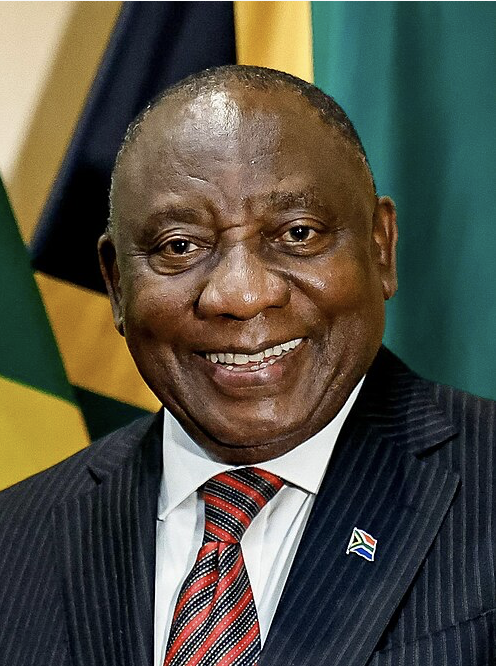
South African President Cyril Ramaphosa has signed into law sweeping new tax amendments that will significantly affect businesses, employers, and individual taxpayers across the country.

The newly assented tax laws, gazetted at the start of April 2026, introduce major changes to tax administration, VAT thresholds, compliance requirements, retirement fund rules, and cross-border taxation, marking one of the most consequential fiscal reforms in recent years.

The reforms come as South Africa seeks to strengthen revenue collection, improve compliance, and support fiscal stability amid ongoing economic pressures.

Ramaphosa signs Tax Amendment Acts into law

President Ramaphosa officially signed the Tax Administration Laws Amendment Act, 2026 and the Taxation Laws Amendment Act, 2026 into law on March 31, with the laws gazetted on April 1.

According to tax experts and South African authorities, the new legislation introduces tighter tax administration rules while updating several provisions under the Income Tax Act and VAT framework.

The South African Revenue Service (SARS) says the changes are aimed at modernizing the tax system and improving revenue performance.

How to file your returns via WhatsApp as KRA introduces new tax filing service

Higher VAT registration threshold for businesses

One of the most notable changes affects businesses and SMEs.

From April 1, 2026, the compulsory VAT registration threshold has been increased from R1 million to R2.3 million in annual taxable supplies.

The voluntary VAT registration threshold has also been raised from R50,000 to R120,000.

This is expected to ease the compliance burden on smaller businesses and startups, allowing many emerging enterprises to operate below the mandatory VAT threshold for longer.

For entrepreneurs and SMEs, this could improve short-term cash flow and reduce administrative costs.

Tougher tax compliance rules introduced

The new tax laws also strengthen SARS’ powers around tax return filing, information requests, penalties, and debt collection.

Tax experts have warned that taxpayers who fail to file returns on time or do not provide requested information could face stricter enforcement measures under the amended law.

This is particularly important ahead of the 2026 filing season, as SARS intensifies efforts to recover outstanding tax debt and close compliance gaps.

Changes to retirement funds and cross-border taxation

The amendments also introduce technical but significant changes affecting:

  • Retirement fund taxation
  • Cross-border tax arrangements
  • Anti-avoidance provisions
  • Interest deduction limitations
  • Corporate tax structuring rules
  • These measures are designed to curb aggressive tax planning and improve transparency in international tax transactions.

Large businesses, multinational companies, and high-net-worth taxpayers are likely to feel the greatest impact.

What This Means for African Businesses

The South African reforms offer an important signal for the broader African tax environment.

As one of Africa’s most sophisticated tax jurisdictions, South Africa often sets precedents that other markets monitor closely.

For businesses operating across East and Southern Africa, especially firms with expansion plans into South Africa, the new laws underscore the need for stronger tax governance, compliance systems, and professional advisory support.

For Kenyan entrepreneurs and investors, these changes also provide insight into how governments across the continent are responding to revenue pressures and formalization needs.

The direction is clear: tax authorities are moving toward stricter enforcement, digital compliance, and broader tax bases.

In leadership and business, regulatory shifts are rarely isolated events. They are signals of deeper macroeconomic priorities. Founders and executives who respond early with disciplined compliance and long-term planning often preserve both capital and credibility.

Safaricom, Sprite bring digital income masterclass to Pwani University

More than 500 students at Pwani University spent Friday learning how to turn social media into a source of income, as Safaricom and Sprite brought their “Hook’d on Fresh” creator masterclass to the coast.

The session focused on practical ways young people can earn from platforms such as TikTok, Instagram and YouTube, moving beyond content for fun to content that pays.

Digital creators including Tileh Pacbro, Rono, Juma Shibe and Vallery Odundo led the conversations, breaking down what works online today. From spotting trends and growing an audience, to landing brand deals and building a sustainable income stream.

“I’ve always had a smartphone and posted videos, but I didn’t know how to convert them to an income stream,” said Alfred Fondo, a Computer Science student. “Now I’m thinking differently.  This can actually help me support myself.”

Why more business owners are choosing Safaricom’s Easy Talk Bundle

The masterclass also introduced students to the basics of managing money earned online, from saving consistently to investing early. Safaricom’s wealth team used the session to encourage a shift from quick earnings to long-term financial stability.

The initiative comes at a time when more young Kenyans are exploring digital platforms as an alternative source of income, driven by rising internet access and smartphone use.

Safaricom says the goal is to position itself as an enabler, not just of connectivity, but of opportunity.

“Content creation is already a big part of how young people express themselves. The next step is helping them turn that into something sustainable,” said Fawzia Ali-Kimanthi, Safaricom’s Chief Consumer Business Officer.

Pwani University is the latest stop in the “Hook’d on Fresh” series, which has already been rolled out at Africa Nazarene University, the University of Eldoret and Jomo Kenyatta University of Agriculture and Technology.

By combining digital skills with financial literacy, the programme is tapping into a growing shift where creativity, connectivity and commerce are increasingly intersecting for Kenya’s youth.

M-Pesa Foundation opens applications for 2026 scholarship programme; How to apply

0

The M-Pesa Foundation has officially opened applications for its 2026 Citizens of the Future Scholarship Programme, offering an opportunity for bright but financially disadvantaged students across Kenya to access fully funded senior school education.

The scholarship targets learners who demonstrate strong academic performance, leadership potential, and outstanding personal character, but who may lack the financial means to pursue quality secondary education.

Successful candidates will join the M-PESA Foundation Academy in Thika or other partner schools in Kenya in January 2027, with all senior school education costs covered by the Foundation.

In line with its commitment to inclusivity, the programme encourages applications from students with Special Educational Needs and Disabilities (SEND).

The Foundation has emphasized that applicants must carefully follow the application guidelines, as incomplete submissions will lead to automatic disqualification.

According to the listed guidelines, only the 2026 application form will be accepted and applicants must fill the form clearly and completely using their own handwriting.

Additionally, no extra pages should be inserted, and all responses must fit in the spaces provided.

Applicants must write their first and last name in capital letters on every page as it appears on the birth certificate.

The Foundation added that applications must be enclosed in a sealed envelope when submitted physically, emphasizing that only complete applications will be considered, and all information provided will be verified.

Requirements

Applicants are required to complete the official 2026 application form and attach copies of supporting documents including Birth Certificate, Parent/Guardian ID, Parent death certificate (where applicable), and Academic reports for Grade 6 (KPSEA certificate), Grade 7, and Grade 8 (internal assessments only, stamped with an official school stamp).

Other requirements include evidence of leadership and co-curricular activities (certificates), Parent/Guardian payslip (if employed), bank statement, or M-PESA statement, and any other relevant supporting documents.

The Foundation has warned that failure to attach the required documents will result in disqualification.

How to Apply

Interested applicants can access the application form online through www.mpesafoundationacademy.ac.ke / www.citizenofthefuture.org, or physically at any Safaricom shop countrywide.

Application forms can also be collected at the M-PESA Foundation Academy, Thika, Safaricom Headquarters, Westlands, or the National Council for Persons Living with Disabilities.

Completed forms must be dropped off at any Safaricom Retail Shop or emailed to [email protected]

Applicants are encouraged to submit online by scanning the completed form and attaching it as one PDF document.

The Foundation reiterated that the selection process will remain independent, free, and fair. Applications will be evaluated based on various parameters, including academic excellence, financial need, leadership potential, creativity, and personal values, among others.

The application deadline is 15th May 2026. Forms submitted after this date will not be considered under any circumstances.

Also Read: Equity Bank’s Shaba loan targets women startups with instant financing of up to Sh3 million