

Home Blog Page 15

Jambojet returns to Nairobi–Entebbe route, amid growing regional demand

0

Jambojet, East Africa’s leading low-cost carrier, has announced its return to the Nairobi–Entebbe route, with flights scheduled to resume on 1 October 2026.

The return to Uganda marks a significant milestone in Jambojet’s regional growth strategy and reinforces the airline’s commitment to providing affordable, reliable and convenient air travel across East Africa. The route is expected to strengthen connectivity between Kenya and Uganda while supporting increased business travel, tourism and cross-border trade.

Speaking on the airline’s return to the Ugandan market, Jambojet Chief Executive Officer and Managing Director, Mr Karanja Ndegwa said the resumption of flights reflects the airline’s broader ambition to make air travel more accessible while strengthening regional integration.

Our return to Uganda is a strategic step forward in our mission to strengthen regional connectivity. We see significant opportunities to support business, tourism and trade between Kenya and Uganda while providing travellers with affordable, reliable and convenient flying experience that Jambojet is known for,” said Ndegwa.

Making flying accessible across East Africa and beyond remains central to our mission. Uganda is an important market for Jambojet, and we are excited to reconnect the two destinations, while creating greater opportunities for travellers to connect to other destinations across our network,” he added.

How airlines heat in-flight meals at 35,000 feet, and it’s not a microwave

One-way fares will start from approximately KES 22,950.

Jambojet returns to Nairobi–Entebbe route, amid growing regional demand

In addition to passenger services, Jambojet will introduce cargo and parcel services on the route, providing additional capacity to support the movement of goods between Uganda and Kenya and contribute to growing regional trade.

The route is therefore positioned as more than a passenger connection; it will serve as an important link between two of East Africa’s major economies, supporting the movement of people, goods and tourism traffic across the region.

Kenyan pilots who passed flying batons to their daughters

Strengthening Travel and Tourism Connections

The Nairobi–Entebbe air corridor continues to experience strong recovery and demand, with an estimated 300,000 passengers projected to travel between Kenya and Uganda in 2026.

Jambojet’s daily service will provide greater choice and flexibility for travellers between the two countries while also creating convenient onward connections for Ugandan passengers seeking to explore Kenya’s popular coastal destinations, including Mombasa, Diani, Malindi and Lamu.  
Jambojet returns to Nairobi–Entebbe route, amid growing regional demand
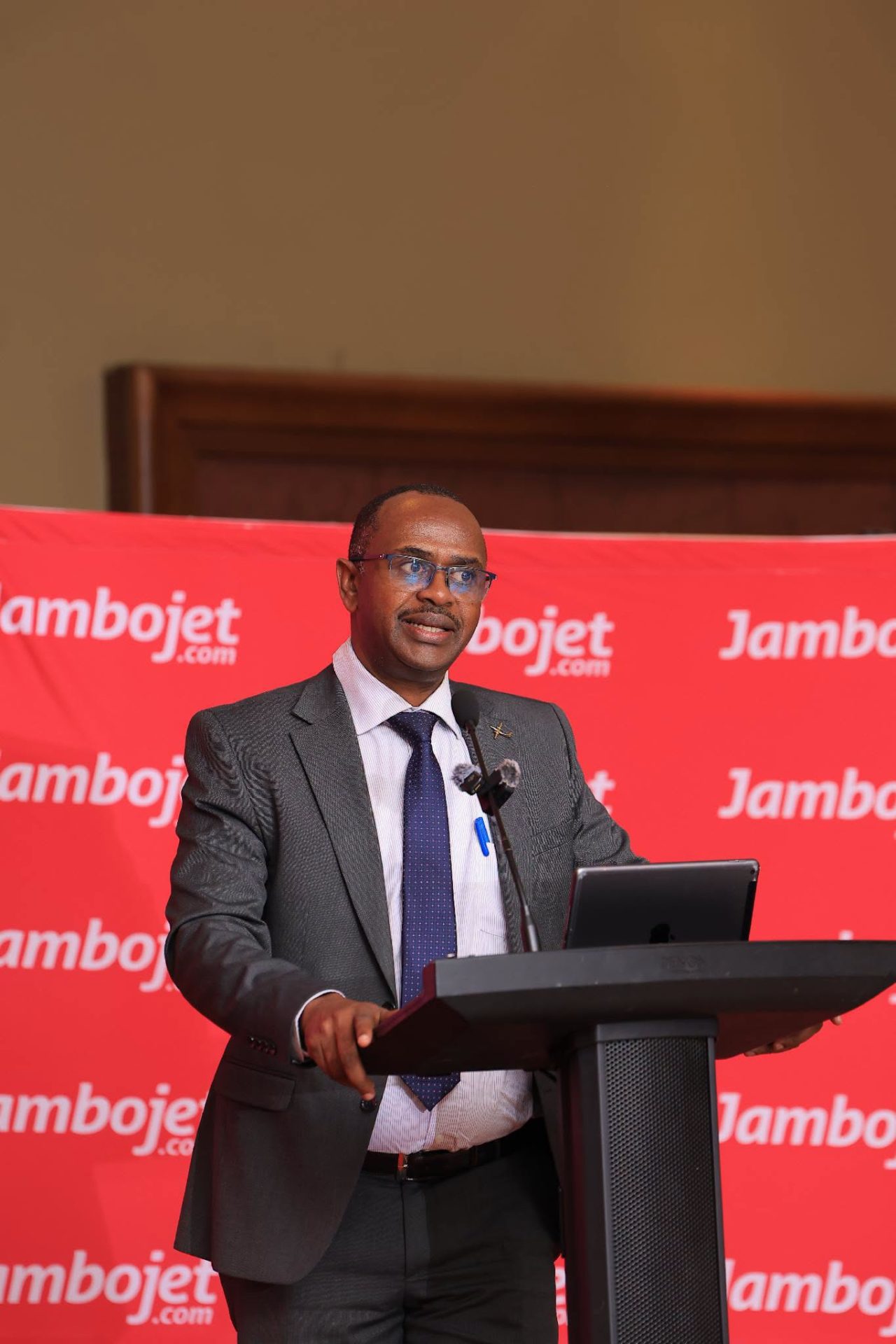
Karanja Ndegwa, CEO & MD addresses guests during the stakeholder breakfast at The Sheraton Kampala Hotel.

Jambojet Engages Ugandan Stakeholders Ahead of Route Launch

Ahead of the October launch, Jambojet, in partnership with The Uganda Association of Travel Agents (TUGATA), hosted a stakeholder engagement breakfast at the Sheraton Kampala Hotel, bringing together representatives from government, travel, trade, tourism, corporate organisations and the media. The engagement provided an opportunity for Jambojet to formally share its plans for the Ugandan market while engaging key stakeholders on opportunities for collaboration around the restored Nairobi–Entebbe connection.

We are delighted to welcome Jambojet back to Uganda. The resumption of this service comes at an opportune time, as we continue to strengthen travel, trade and tourism opportunities across the region. We look forward to working closely with Jambojet to promote the route and create more opportunities for travellers to discover and connect with both destinations,”said Ms Pearl Hoareau Kakooza, Vice Chairperson, TUGATA and Chairperson Uganda Tourism Board.

What to expect when flying internationally for first time

Building on a Strong Year of Growth

Jambojet’s return to Uganda comes during a significant period of growth for the airline. In April 2026, the airline expanded its active fleet to 11 aircraft, strengthening its capacity to serve its growing network and also celebrated its 10 millionth passenger.

The airline also recorded an On-Time Performance (OTP) of 86.45% in July 2026, ranking it among the leading airlines for operational punctuality in Africa and globally.

Jambojet first entered the Ugandan market in 2018 as part of its regional expansion strategy. Its regional operations were subsequently affected by the COVID-19 pandemic, prompting the airline to focus on strengthening its domestic network in Kenya.

The return to Entebbe therefore marks a new chapter in the airline’s growth journey and reinforces its ambition to make affordable air travel more accessible across East Africa.


Jambojet returns to Nairobi–Entebbe route, amid growing regional demand

UAE announces new residence rules for foreign remote workers

0

The United Arab Emirates (UAE) has established a minimum monthly income requirement for foreigners seeking to live in the country while continuing to work remotely for employers or organisations based outside the UAE.

The requirement provides a formal residency route for remote professionals, including workers from Kenya and other African countries, who want to relocate to the Gulf state without ending their existing overseas employment.

Under Cabinet Resolution No. 65 of 2022, which contains the executive regulations implementing Federal Law by Decree No. 29 of 2021 on the Entry and Residence of Foreigners, the UAE’s Immigration and Citizenship Authority (ICA) may issue a virtual working residence permit valid for one year, with the option of renewal.

Applicants must demonstrate a monthly income of at least US$3,500, equivalent to approximately Sh452,500, depending on prevailing exchange rates. The income threshold may also be met through an equivalent amount earned in another foreign currency.

However, applicants are required to provide documentary evidence to verify their earnings. Simply declaring an income that meets the threshold is not sufficient for approval.

In addition to the financial requirement, applicants must prove that they are employed by, or have a contractual relationship with, a company or organisation based outside the UAE. Their work must also be performed remotely.

Both requirements must be met before the application can be considered by the immigration authorities.

The conditions for the virtual working residence permit are contained in Articles 49 and 50 of Cabinet Resolution No. 65 of 2022, which are available through the UAE’s official legislation portal.

The residency programme is designed for professionals who want to base themselves in the UAE while retaining employment or contractual engagements with businesses abroad.

It therefore allows eligible remote workers to relocate without having to secure a new employer within the UAE.

Also Read: Malawians to apply for US visas only at the US Embassy in Nairobi

Graduate wins Sh3m after UoN drops her name from graduation list

0

The University of Nairobi (UoN) has been ordered to pay a former student Sh3 million after the High Court found that it violated her constitutional rights by removing her name from the graduation list on the graduation day.

Justice Lawrence Mugambi ruled that Marceline Murono was subjected to humiliation, psychological distress and indignity after the university excluded her from the final graduation booklet without informing her or giving her an opportunity to explain herself.

The court found that the university had, in fact, cleared Murono for graduation. She had been issued with a graduation gown and attended the official rehearsal on December 14, 2023, a day before the ceremony.

Murono only learnt that she would not graduate when a soft copy of the final graduation booklet was circulated in her class WhatsApp group on the morning of the ceremony.

Justice Mugambi said the university’s conduct amounted to a serious breach of her legitimate expectation, given that all indications before the ceremony were that she had been cleared to graduate.

“It is crystal clear from the record that for purposes of complying with the process of graduation, the respondent (UON) and for all purposes cleared the way for the petitioner to graduate on the 15th of December 2023,” the judge said.

The university argued that Murono had used an incorrect form during the clearance process and had also deposited money into the wrong university account.

The judge, however, rejected the explanation after examining evidence presented by Murono and another student.

The court found that Murono had contacted a university finance officer on November 22, 2023, providing her registration details in an attempt to resolve the payment issue.

Justice Mugambi held that the university should have communicated with her before taking the drastic step of removing her name from the graduation list.

The judge ruled that the university had violated Article 47 of the Constitution, which guarantees the right to administrative action that is lawful, reasonable, efficient and procedurally fair.

He also found that Murono’s rights to human dignity and protection from cruel, inhuman or degrading treatment under Articles 28 and 29 had been breached.

The impact of the decision was particularly severe because Murono had already invited family members, friends, relatives and colleagues to celebrate her graduation.

Instead of celebrating her academic achievement, she was left to explain why she would not graduate after those close to her had gathered for the occasion.

Justice Mugambi described the experience as a major blow to her dignity, noting that the humiliation she suffered in front of her family and friends had turned what was supposed to be a milestone into a painful disappointment.

“The totality of what the petitioner came to endure is enough to break even the strongest of spirits,” the judge said.

The court also dismissed UoN’s argument that Murono should have exhausted the university’s internal dispute-resolution mechanisms before filing the case.

Justice Mugambi found that although such mechanisms existed formally, they had not offered Murono a meaningful avenue for resolving her grievance.

“In my view, the respondents’ (UON) claim to the existence of alternative remedies in the circumstances of this case only exists on paper,” he said.

The judge consequently issued declarations that Murono’s constitutional rights had been violated and awarded her Sh3 million as compensation.

The university was also ordered to issue Murono with an unqualified written apology within 30 days.

Justice Mugambi warned that failure to apologise within the stipulated period would attract an additional Sh1 million, raising the compensation to Sh4 million.

Murono was further awarded Sh24,000 in special damages.

The university was granted a 30-day stay of execution after its lawyer told the court he needed to obtain instructions on whether the institution would appeal the judgment.

Also Read: 4,949 Wings to Fly and Elimu Scholars equipped with leadership, life skills and career readiness

KNH under pressure as health workers’ strike drives patient influx

0

Kenyatta National Hospital (KNH) has appealed to patients seeking non-emergency medical services to consider alternative health facilities as the national referral hospital grapples with rising patient numbers and congestion.

In a statement issued on August 20, the hospital attributed the increase in patient volumes partly to an ongoing industrial action affecting health services in several counties.

The strike, led by nurses and clinical officers, has disrupted healthcare services in more than 20 counties, including Kisumu, Nakuru, Meru, Tharaka-Nithi and Nairobi.

The disruptions have pushed more patients to seek treatment at KNH, many of whom would ordinarily receive care at county hospitals and other health facilities.

The resulting influx has increased pressure on the hospital and contributed to longer waiting times, particularly for patients seeking non-emergency services.

“As a national referral hospital, KNH is receiving more patients who would ordinarily access services at county and other health facilities. This has resulted in longer waiting times and delays, particularly for non-emergency services,” the hospital said.

KNH urged patients whose conditions do not require urgent attention to seek care at hospitals closer to their homes where possible. The move is intended to reduce congestion and enable the facility to prioritise patients requiring specialised and urgent medical attention.

“Clients seeking non-emergency care are encouraged to consider other hospitals closer to them, where appropriate, to ease pressure on KNH and facilitate timely access to care,” the statement added.

Despite the increased demand, the hospital said it remains fully operational and continues to attend to patients requiring emergency and critical care.

“KNH remains open and continues to provide emergency and critical care services,” the hospital said.

The hospital apologised for the inconvenience caused by the congestion and thanked patients for their patience and understanding as it manages the surge in demand.

KNH is Kenya’s largest referral and teaching hospital and serves patients from across the country, particularly those requiring specialised treatment that may not be available at lower-level facilities.

The facility’s large capacity enables it to handle an average of 4,800 patients every day, but the current influx has placed additional strain on its services.

Also Read: Aga Khan University Hospital performs the region’s first robotic gallbladder removal surgery Nairobi, Kenya

KCB Group inches closer to historic Sh100 per share on NSE

0
KCB Group shares have inched closer to a historic high of Sh100 apiece at the Nairobi Securities Exchange (NSE). This follows the release of the banking group’s half year financial results and the declaration of a bumper interim dividend.

A spot check by Bizna Kenya on Thursday showed that at the end of trading at the NSE, KCB shares settled at an average trading price of Sh93 per share with a traded volume of 2.71 million. This was a gain of Sh3.33 percent which was equivalent to Sh3 per share from the previous day’s trading price of Sh90 per share. The shares had touched a high of Sh94 per share and a low of Sh90.25 per share.

With these gains, KCB Group saw its 52 week run on the NSE settle at a high of Sh94 from a low of Sh50 per share. This means that investors who took position on the counter at a low of Sh50 per share one year ago and are still holding onto their shares have gained by as much as Sh43 per share. For instance, before deducting statutory and service charges, an investor who invested Sh250,000 for around 5,000 shares was looking at a gross gain of Sh215,000 in under one year.

This bullish run by KCB shares is being largely influenced by the banking group’s financials. For instance, the bank declared that during the first six months of the current financial year, net profit increased by 15 percent to Sh36.1 billion from the Sh31.5 billion net profit that was recorded in the same period the previous year.

This net profit was derived from a profit before tax of Sh49.3 billion which represented an increase of 20.8 percent driven by strong income growth and cost management. This performance saw the lender recommend an interim dividend of Sh3 per share. This dividend will be paid out on or about November 10 this year.  This will be the second year that the bank is rewarding its shareholders with high dividends.

In the full year results released in March of this year, the bank proposed to pay a final dividend of Sh3 per share. This dividend meant that for the full year 2025, KCB Group had paid out a total of Sh7 per share to shareholders.

“The business across markets remains resilient despite the tough operating environment in key markets like Kenya. Despite this, we have placed our customers at the fore, to ensure we meet their needs in a timely manner,” said KCB Group Finance Director Lawrence Kimathi.

During the first six months of this year, customer loans increased by 13.3 percent to Sh1.24 trillion while customer deposits went up by 15.1 percent to Sh1.7 trillion. In the same period the previous year, customer loans and advances stood at Sh1.1 trillion while customer deposits were Sh1.5 trillion.

According to Mr. Kimathi, the bulk of deposits in the first half of 2026 came from current accounts which accounted for 15 percent growth. The banking group’s total assets went up by 16.8 percent to settle at Sh2.3 trillion in the first six months of the financial year.

Total income went up by 9.5 percent to Sh108.1 billion. In the same period, the lender’s stock of gross non-performing loans (NPLs) reduced by Sh17.3 billion to close at Sh203.8 billion from Sh221.1 billion that was recorded in the same period the previous financial year.

“Our strong half-year performance reflects the resilience of KCB Group’s diversified business model, the strength of our regional footprint, and the confidence our customers continue to place in us,” said KCB Group chief executive officer Paul Russo.

See More: How educated is KCB CEO Paul Russo? See his education and career profile

“Despite a tough operating environment, we remain committed to supporting businesses and households, accelerating digital transformation and creating long-term sustainable value for our shareholders and the communities which we serve.”

Aga Khan University Hospital performs the region’s first robotic gallbladder removal surgery Nairobi, Kenya

0

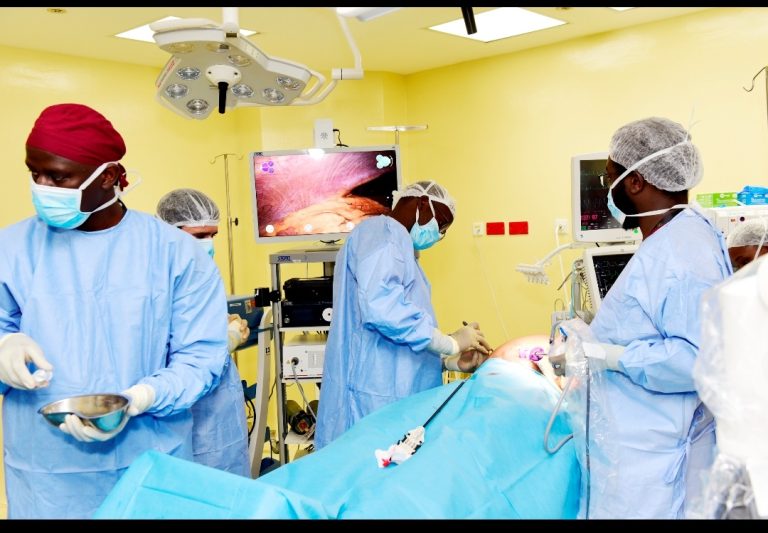
Nairobi, Kenya, August 19, 2026 – The Aga Khan University Hospital, Nairobi (AKUH,N), has successfully performed the region’s first robotic gallbladder removal surgery, marking a major milestone in the advancement of surgical care.

The procedure, known medically as a robotic-assisted laparoscopic cholecystectomy, combines the expertise of highly trained surgeons with advanced robotic technology that enhances precision, visualization and control during surgery.

The achievement expands access to next-generation minimally invasive care and reinforces AKUH,N’s position as a regional leader in medical innovation.

“Robotic-assisted surgery builds on the benefits of conventional keyhole surgery by providing surgeons with a three-dimensional view of the surgical field, greater flexibility of movement, and improved access to areas that can be difficult to visualize using traditional techniques,” said Dr Abdulkarim Abdalla, Chair of the Department of Surgery at the Hospital
The technology enables surgeons to perform delicate procedures with greater accuracy while maintaining the well-established benefits of minimally invasive surgery.

Donald Kipkorir: Flamboyant lawyer whose employees work for 6 hours a day

Despite its name, the robot does not perform the operation independently. The surgeon remains in the operating theatre and controls every movement of the camera and surgical instruments from a specialised console.

“The robotic instruments have a greater range of movement and closely mimic the motions of the human hand, enabling greater precision and control during surgery. This allows us to perform procedures more safely,” added Dr Abdalla

The technology also allows surgeons to operate while seated comfortably at a console, reducing fatigue during lengthy procedures. Combined with enhanced vision and greater instrument flexibility, it supports better precision during complex surgical tasks such as stitching in confined spaces.

For patients, robotic-assisted procedures offer the robotic gallbladder same core benefits associated with minimally invasive surgery, including smaller incisions, less post-operative pain, shorter hospital stays and faster recovery compared to traditional open surgery.

Commenting on the milestone, CEO Rashid , said: “Since our inception, Aga Khan University Hospital has built a tradition of introducing many healthcare firsts for Kenya and the region. This latest milestone continues that legacy. We invest in innovation because it enables safer, precise and evidence-based care for our patients.”

He added that this is the beginning of a broader journey to make robotic-assisted surgery available to more patients while advancing surgical excellence, research and training across the region.

As funding tightens, Africa’s Business Heroes judges demand profit, not just purpose

0

Twenty entrepreneurs from twelve African countries will be giving pitches in Nairobi from August 21 to 22 in order to qualify for the grand finale of Africa’s Business Heroes (ABH) — although this year’s judges are indicating a change in what will actually win.

Since it has become more difficult to obtain venture funding across the continent, the judges have stated that the standard has shifted from “does this solve a real problem” to “can this go on without a grant”. Kome Oruade-Etim of Acumen Angels said this directly: nowadays businesses have to combine social impact with solid fundamentals, not just one or the other. She also opposed top-down innovation, maintaining that the real criterion is whether entrepreneurs develop technology based on the way Africans currently live, rather than requiring communities to adjust to foreign models.

That pressure is reflected in the figures. The 20 semi-finalists, who had applied from over 24,000 applications, earned a total of $85 million in revenue in 2025, with their revenues covering the agritech, healthcare, renewable energy, fintech, and eight other sectors. Ten of them will move on to the grand finale in Kigali in December, where they will be competing for their share of the $1.5 million in annual grant funding offered by ABH.

US-East Africa business summit set for November in Nairobi

The views of previous competitors show the same change. Abraham Mutian of Kuza Point, who came second in 2025, advised this year’s group to focus on figures rather than on storytelling—something that involves knowing the business so well that they can make the financial argument without being asked. Wandia Gichuru from Vivo Fashion Group, who is also one of this year’s judges, stated that scale has now become a clear criterion: the judges want to see a plan that goes beyond the entrepreneur’s home market, not just a viable idea confined to it.

The Kenyan team, which consists of Zuri Health, Bena Care, AceleAfrica, and Bottle Logistics East Africa, takes part in the event in a city with a history of hosting the programme since Nairobi was the site of ABH’s very first semi-final in 2019.

Juliet Gikonyo: The Karen Hospital CEO continuing family’s healthcare legacy

0

The Karen Hospital is one of the most popular medical facilities in Kenya, better known as a major regional hub for cardiac care, cardiovascular treatment, and specialized medical training.

The 120-bed facility located in the leafy Karen suburb of Nairobi is linked to the Gikonyo family, whose members have played prominent roles in building and running the institution since its establishment.

At the centre of the hospital’s day-to-day leadership is Dr. Juliet Gikonyo Nyaga, who has served as its Chief Executive Officer since 2020.

Juliet is the daughter of Dr. Dan Gikonyo and Dr. Betty Gikonyo, two prominent figures in Kenya’s medical sector and the co-founders of The Karen Hospital.

Her father, Dr. Dan Gikonyo, is a cardiologist who has been associated with the hospital since its inception, while her mother, Dr. Betty Gikonyo, is a paediatric cardiologist who also played a central role in establishing and developing the institution.

Dr. Betty later served as the hospital’s Chief Executive Officer before moving to the position of Chairperson of the Board.

The medical profession has also remained a strong family tradition. Juliet’s brother, Dr. Anthony Gikonyo, is an interventional adult cardiologist and serves as Medical Director at The Karen Hospital.

He studied medicine at Howard Medical School and followed his parents into the field of cardiology.

Growing up in a family deeply involved in medicine and healthcare management gave Juliet a close view of both the clinical and institutional sides of running a hospital.

Her eventual rise to the chief executive position, however, was preceded by academic training and years of experience in healthcare administration.

Juliet Gikonyo’s education background

Juliet pursued her undergraduate studies in the United States at the University of Massachusetts Amherst, where she earned two Bachelor of Science degrees.

Her first degree was in Biology, while her second was in Psychology. The combination gave her an academic foundation spanning the biological sciences and human behaviour.

She subsequently advanced her studies at Tulane University School of Public Health and Tropical Medicine in New Orleans, Louisiana, where she earned a Master’s degree in Public Health, specialising in Epidemiology.

Building a career within The Karen Hospital

Unlike some executives who join institutions after establishing careers elsewhere, Juliet developed much of her leadership experience within the organisation founded by her parents.

She served as Chief Operations Officer at The Karen Hospital from 2012 to July 2015. In that position, she was exposed to the operational and administrative demands involved in running a private healthcare institution.

The experience provided a foundation for her eventual transition into the hospital’s top executive position.

After leaving the operations role, Juliet returned to the hospital in July 2019 as CEO-designate. She spent a year in that position, preparing to assume overall responsibility for the institution.

In August 2020, she took over as Chief Executive Officer, succeeding her mother, Dr Betty Gikonyo, who moved from the executive office to chair the hospital’s Board.

As CEO, Juliet is responsible for overseeing the hospital’s operations and providing strategic direction for the private healthcare institution.

Her responsibilities extend beyond the provision of medical care to include the management of hospital operations, administration and the broader institutional priorities required to run a modern healthcare facility.

Also Read: Kenyan doctor brings life-saving heart care closer to people

Third term school calendar: Education Ministry confirms opening, closing & exam dates

0

Education Cabinet Secretary Julius Migos Ogamba has reaffirmed that the 2026 school calendar remains unchanged, with all basic education institutions set to reopen for the third term on August 24.

Ogamba issued the clarification following the circulation of claims on social media that the Ministry of Education had revised the school calendar for basic education institutions and Teacher Training Colleges.

The CS urged parents, teachers and learners to disregard the unverified information, saying the government had not announced any changes to the approved dates.

He confirmed that pre-primary, primary, junior school, senior school and secondary school learners will all report back on August 24.

“Our attention has been drawn to misleading information circulating on various social media platforms, purporting that the academic calendar for basic education institutions and Teacher Training Colleges has been changed. We wish to clarify that the academic calendar for basic education institutions and Teacher Training Colleges remains unchanged,” CS Ogamba stated.

The third term will run for nine weeks, ending on October 23, ahead of the national assessment and examination period.

The first assessments will begin on October 26, with the Kenya Primary School Education Assessment (KPSEA) scheduled to run until October 29. The Kenya Intermediate Level Education Assessment (KILEA) will be administered from October 26 to October 30.

Candidates undertaking the Kenya Junior School Education Assessment (KJSEA) and the Kenya Pre-Vocational Level Education Assessment (KPLEA) will sit their assessments between October 26 and November 5.

Meanwhile, candidates for the Kenya Certificate of Secondary Education (KCSE) examination will begin their papers on November 2, with the national examination scheduled to conclude on November 20.

The Ministry has also maintained restrictions on activities and visits to secondary schools during the third term.

According to the ministry, the ban, which was communicated through earlier circulars, will remain in effect throughout the term and examination period.

“Activities and visits to secondary schools in the third term of 2026 remain banned as per the earlier circulars,” the ministry stated.

The directive means learners in secondary schools will remain in school throughout the examination period and will only return home once the term officially ends.

Also Read: 4,949 Wings to Fly and Elimu Scholars equipped with leadership, life skills and career readiness

Endometriosis: Understanding the silent pain affecting millions of women

0

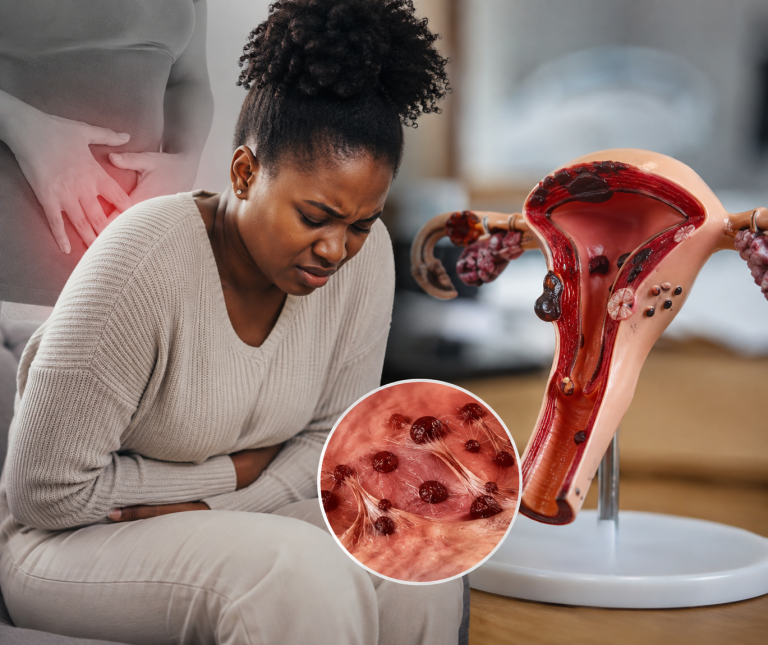
Endometriosis has increasingly made headlines in recent years as women speak more openly about a condition that has for decades been misunderstood, underdiagnosed and, in many cases, dismissed as ordinary menstrual pain.

In Kenya, the fight to raise awareness has been championed by patients, health advocates and public figures, including women who have shared their own experiences to challenge the stigma surrounding the disease and encourage others to seek medical attention.

The growing attention has helped bring into focus a condition that affects millions of women worldwide but remains difficult to diagnose and manage.

What is endometriosis?

The World Health Organization (WHO) defines endometriosis as a disease in which tissue similar to the lining of the uterus grows outside the uterus.

This tissue can cause inflammation and the formation of scar tissue, particularly in the pelvic region.

Endometriosis primarily affects women of reproductive age and is estimated to affect about 10 per cent (roughly 190 million) of women and girls globally.

Although the condition most commonly develops in the pelvis, it can also occur in other parts of the body, including the abdomen and, in rare cases, the chest.

The disease can have far-reaching effects on a woman’s physical and emotional wellbeing. Beyond pelvic pain, it may affect sexual intercourse, bowel movements and urination.

It can also have consequences for mental health, with some patients experiencing anxiety, depression and the psychological strain of living with persistent pain.

A disease with no known cause

Despite years of research, the exact cause of endometriosis remains unknown.

Emerging research, however, points to a possible link between the condition and abnormalities in the immune system.

People living with endometriosis have been found to have higher rates of certain immune-mediated conditions, while having a family history of the disease may also increase the likelihood of developing it.

One of the major challenges is that endometriosis does not affect everyone in the same way. Symptoms can vary significantly, making the disease difficult for health workers to identify.

Some women experience severe symptoms, while others may have few or none at all. In some cases, the condition is only discovered when a woman undergoes investigations for infertility or has surgery for an unrelated medical problem.

Common signs and symptoms

WHO estimates that the average time to diagnosis ranges from 4 to 12 years, with access to early diagnosis and effective treatment remaining limited in many countries, particularly in low- and middle-income nations.

The symptoms are often mistaken for normal menstrual discomfort, allowing the disease to progress without appropriate treatment.

Among the most common symptoms are severe or painful periods accompanied by pelvic cramps, lower back pain or abdominal pain. The discomfort may begin before menstruation and continue for several days after it starts.

Pain during or after sexual intercourse is another common warning sign. Some women also experience pain when passing stool or urinating, particularly immediately before or during their periods.

Heavy menstrual bleeding or bleeding between periods can also occur.

For some women, infertility is the first indication that something may be wrong. Endometriosis can interfere with fertility, and the disease is sometimes discovered during investigations or treatment for difficulty conceiving.

Other symptoms may include fatigue, bloating, nausea, constipation and diarrhoea, particularly around the menstrual period.

Managing the disease

There is currently no treatment that definitively cures endometriosis. Instead, management focuses on controlling symptoms, slowing the progression of the disease and addressing complications.

The choice of treatment depends on several factors, including the severity of the disease, a patient’s symptoms and preferences, possible side effects, long-term safety, cost, availability and whether she wishes to become pregnant.

Painkillers, including non-steroidal anti-inflammatory drugs such as ibuprofen and naproxen, are commonly used to manage pain.

Hormonal treatments may also be used to reduce the severity or frequency of symptoms in some women. These include combined hormonal contraceptives, progestins such as hormonal intrauterine devices and depot medroxyprogesterone acetate, as well as gonadotropin-releasing hormone (GnRH) analogues.

Other hormonal treatments, including aromatase inhibitors, may be considered in some cases. However, certain hormonal treatments are not suitable for women who are actively trying to conceive.

For patients whose symptoms are severe or do not respond adequately to medication, surgery may be considered.

Surgical procedures can remove endometriosis lesions, adhesions and scar tissue. In some cases, a hysterectomy — removal of the uterus, often together with the ovaries — may be considered for patients who have not responded to other treatments and do not intend to have children.

However, hysterectomy is not guaranteed to eliminate endometriosis or its symptoms. Some patients continue to experience pain after the procedure, while endometriosis lesions can also return after surgical removal.

The effectiveness of surgery in reducing pain and improving the chances of pregnancy often depends on how extensively the disease has affected the body.

Pelvic floor muscle problems can also contribute to persistent pelvic pain and may require additional treatment.

Endometriosis and fertility

For women hoping to have children, endometriosis can present another difficult challenge.

The condition may affect fertility, but a diagnosis does not necessarily mean pregnancy is impossible.

Depending on an individual’s circumstances, doctors may recommend fertility treatments such as ovulation induction, intrauterine insemination (IUI) or in vitro fertilisation (IVF).

Early recognition and appropriate medical care can therefore be important, particularly for women experiencing persistent menstrual pain or difficulties conceiving.

Also Read: Naom Monari: Kenyan nurse bringing dialysis machines closer to patients