

Home Blog Page 16

Endometriosis: Understanding the silent pain affecting millions of women

0

Endometriosis has increasingly made headlines in recent years as women speak more openly about a condition that has for decades been misunderstood, underdiagnosed and, in many cases, dismissed as ordinary menstrual pain.

In Kenya, the fight to raise awareness has been championed by patients, health advocates and public figures, including women who have shared their own experiences to challenge the stigma surrounding the disease and encourage others to seek medical attention.

The growing attention has helped bring into focus a condition that affects millions of women worldwide but remains difficult to diagnose and manage.

What is endometriosis?

The World Health Organization (WHO) defines endometriosis as a disease in which tissue similar to the lining of the uterus grows outside the uterus.

This tissue can cause inflammation and the formation of scar tissue, particularly in the pelvic region.

Endometriosis primarily affects women of reproductive age and is estimated to affect about 10 per cent (roughly 190 million) of women and girls globally.

Although the condition most commonly develops in the pelvis, it can also occur in other parts of the body, including the abdomen and, in rare cases, the chest.

The disease can have far-reaching effects on a woman’s physical and emotional wellbeing. Beyond pelvic pain, it may affect sexual intercourse, bowel movements and urination.

It can also have consequences for mental health, with some patients experiencing anxiety, depression and the psychological strain of living with persistent pain.

A disease with no known cause

Despite years of research, the exact cause of endometriosis remains unknown.

Emerging research, however, points to a possible link between the condition and abnormalities in the immune system.

People living with endometriosis have been found to have higher rates of certain immune-mediated conditions, while having a family history of the disease may also increase the likelihood of developing it.

One of the major challenges is that endometriosis does not affect everyone in the same way. Symptoms can vary significantly, making the disease difficult for health workers to identify.

Some women experience severe symptoms, while others may have few or none at all. In some cases, the condition is only discovered when a woman undergoes investigations for infertility or has surgery for an unrelated medical problem.

Common signs and symptoms

WHO estimates that the average time to diagnosis ranges from 4 to 12 years, with access to early diagnosis and effective treatment remaining limited in many countries, particularly in low- and middle-income nations.

The symptoms are often mistaken for normal menstrual discomfort, allowing the disease to progress without appropriate treatment.

Among the most common symptoms are severe or painful periods accompanied by pelvic cramps, lower back pain or abdominal pain. The discomfort may begin before menstruation and continue for several days after it starts.

Pain during or after sexual intercourse is another common warning sign. Some women also experience pain when passing stool or urinating, particularly immediately before or during their periods.

Heavy menstrual bleeding or bleeding between periods can also occur.

For some women, infertility is the first indication that something may be wrong. Endometriosis can interfere with fertility, and the disease is sometimes discovered during investigations or treatment for difficulty conceiving.

Other symptoms may include fatigue, bloating, nausea, constipation and diarrhoea, particularly around the menstrual period.

Managing the disease

There is currently no treatment that definitively cures endometriosis. Instead, management focuses on controlling symptoms, slowing the progression of the disease and addressing complications.

The choice of treatment depends on several factors, including the severity of the disease, a patient’s symptoms and preferences, possible side effects, long-term safety, cost, availability and whether she wishes to become pregnant.

Painkillers, including non-steroidal anti-inflammatory drugs such as ibuprofen and naproxen, are commonly used to manage pain.

Hormonal treatments may also be used to reduce the severity or frequency of symptoms in some women. These include combined hormonal contraceptives, progestins such as hormonal intrauterine devices and depot medroxyprogesterone acetate, as well as gonadotropin-releasing hormone (GnRH) analogues.

Other hormonal treatments, including aromatase inhibitors, may be considered in some cases. However, certain hormonal treatments are not suitable for women who are actively trying to conceive.

For patients whose symptoms are severe or do not respond adequately to medication, surgery may be considered.

Surgical procedures can remove endometriosis lesions, adhesions and scar tissue. In some cases, a hysterectomy — removal of the uterus, often together with the ovaries — may be considered for patients who have not responded to other treatments and do not intend to have children.

However, hysterectomy is not guaranteed to eliminate endometriosis or its symptoms. Some patients continue to experience pain after the procedure, while endometriosis lesions can also return after surgical removal.

The effectiveness of surgery in reducing pain and improving the chances of pregnancy often depends on how extensively the disease has affected the body.

Pelvic floor muscle problems can also contribute to persistent pelvic pain and may require additional treatment.

Endometriosis and fertility

For women hoping to have children, endometriosis can present another difficult challenge.

The condition may affect fertility, but a diagnosis does not necessarily mean pregnancy is impossible.

Depending on an individual’s circumstances, doctors may recommend fertility treatments such as ovulation induction, intrauterine insemination (IUI) or in vitro fertilisation (IVF).

Early recognition and appropriate medical care can therefore be important, particularly for women experiencing persistent menstrual pain or difficulties conceiving.

Also Read: Naom Monari: Kenyan nurse bringing dialysis machines closer to patients
Equity Group net profit rises 32pc to Sh45.5 billion in six months

0
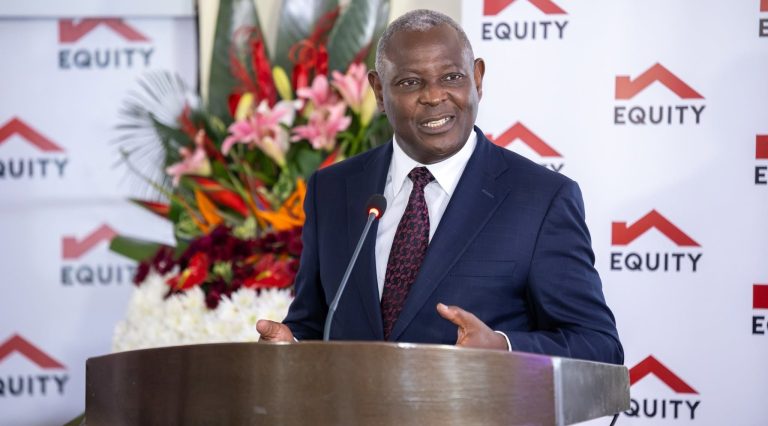
Equity Group Holdings Plc has announced a  32 percent increase in net profit to Sh45.5 billion from Sh34.6 billion in the first half of the current financial year. This Equity Group net profit came in as a reflection of improved  balance sheet quality and growth, rising contributions from its regional  subsidiaries and increased non-funded income contribution.

Net interest income continued to strengthen, rising 17 percent to Sh69.3 billion from Sh59.3  billion, reflecting the depth of the Group’s lending franchise and disciplined balance sheet  management. Total income grew 25 percent to Sh124.9 billion, up from Sh100.2 billion, driven by  a sharp rise in non-funded income, which expanded 36 percent to Sh55.6 billion from Sh40.9  billion. Non-funded income now contributes 44.5 percent of the Group’s total income, up from 40.8 percent  in the first half of 2025, underscoring Equity’s multi-line business, geographic diversification and revenue  quality mix

The balance sheet also continued its upward trajectory, expanding 20 percent to Sh2.16 trillion.  This growth was anchored by a 21 percent rise in customer deposits to Sh1.59 trillion and a 19 percent increase in net loans to Sh981 billion, demonstrating sustained customer confidence and  strong credit demand across the markets where Equity operates. Shareholders’ funds grew  27 percent to Sh350 billion, reinforcing the Group’s capital strength.

Equity now serves 23.3 million  customers through various digital platforms, including Equity Online for Business and  Individuals, Eazzy FX, the Equity Mobile App, *247#, and Equitel, complemented by 410  branches, 886 ATMs, 92,572 agency outlets, and 1.4 million merchants. Together, these  channels reflect one of the region’s most extensive and diversified financial services  ecosystems.

“The Group’s performance is unfolding against a backdrop of resilient regional economic  growth. Kenya is projected to expand by 4.5 percent to 5 percent, the Democratic Republic of Congo by  5.6 percent, Tanzania by 5.9 percent, Uganda by 6.4 percent, Rwanda by 6.8 percent, and South Sudan by 20 percent. These  growth rates are supported by firm commodity prices and policy reforms and are expected to  sustain, making the region where we operate one of the fastest growing regions in the world,” said Dr James Mwangi, the Group Managing Director and chief executive officer.

Equity’s half-year 2026 performance is the outcome of  a multiyear transformation agenda focused on resilience, diversification, and  technology enablement. The Group has repositioned its operating model, strengthened its  regional presence, and invested heavily in digital and AI-enabled capabilities to build an  institution equipped for the future.”

Operational efficiency continued to improve, with the cost-to-income ratio improving to 48.6 percent  from 51.7 percent, driven by productivity gains, shared services, and a decisive customer shift  toward digital channels. Return on Assets stood at 4.5 percent, while Return on Equity reached  26.5 percent, demonstrating strong asset productivity and disciplined capital allocation.

“Our H1 2026 performance reflects the success of our deliberate transformation into a  diversified, regional, technology-enabled financial services Group. We are building a future  ready institution; scalable, secure, and impact led, anchored in digital capabilities, staff  upskilling, and a culture of disciplined execution,” said Dr Mwangi.

‘As we progress towards our Africa Recovery  and Resilience Plan (ARRP) 2030 ambitions, we are evolving beyond traditional banking into an integrated tech enabled financial institution that mobilizes capital, connects ecosystems,  and accelerates inclusive, sustainable prosperity across Africa.”

Equity’s technology-enabled  transformation is now firmly embedded across the Group. Customer behavior continues to  shift decisively toward digital channels, with 98.3 percent of all transactions occurring outside  branches and 89.7 percent processed through digital platforms, demonstrating that customers are  actively choosing the convenience and reliability of Equity’s digital ecosystem.

Digital adoption continues to accelerate across the Group, with 98.3 percent of all transactions now  occurring outside branches and 89.7 percent processed through digital platforms. These trends highlight customers’ growing preference for Equity’s digital ecosystem and the reliability of its  technology infrastructure.

During the period under review, non performing loans coverage improved to 70 percent, up from 68 percent, while loan loss provisions fell 6 percent year-on-year. The  loan book recorded a notable improvement in non-performing loans, declining from 13.7 percent to  9.5 percent, driven by disciplined underwriting, improved analytics, and a diversified portfolio. Cost  of risk improved to 1.4 percent down from 1.7 percent.

See More: Equity Group emerges as most profitable Kenyan bank in Q1 2026

Equity Bank Kenya’s recovery momentum continued, posting a 32 percent increase in net profit to Sh25.7 billion with a 13 percent growth in assets underpinned by a 24 percent deposits growth and 8 percent  loans growth. The bank recorded a return on average assets and a return on average equity  of 4.8 percent and 34.7 percent respectively, all while maintaining its MSME leadership by disbursing 36 percent  of the Sh101 billion MSME loans issued in Kenya between January and March 2026.

Regional subsidiaries delivered strong and accelerating performance, now contributing  42 percent and 47 percent of the Group’s banking profitability and revenue respectively, 51 percent of Group  deposits, 54 percent of Group loans and 52 percent of Group banking assets, a testament to the success  of the Group’s pan-African expansion strategy. Equity BCDC in the Democratic Republic of  Congo achieved a 30 percent rise in net profit to Sh11.8 billion. Equity Rwanda grew net profit by 12 percent to Sh2.9 billion, and Equity Tanzania delivered exceptional performance  with 82 percent growth to Sh2.0 billion.

Why Large Investors Prefer Private Liquidity Hubs

0

Try dropping a $20 million order into a public order book and watch what happens to the price before you’re even halfway filled. That’s the problem institutional desks live with every single day — thin visible depth, predatory algorithms sniffing out size, and slippage eating into returns before the trade even settles. This piece looks at why serious capital increasingly moves through private channels instead.

The Order Book Problem

Public exchanges are built for transparency, not for size. Every resting order sits there, visible to anyone running a scanner, and once a large buy or sell starts working, the market front-runs it within seconds. Traders call this “walking the book” — you eat through one price level, then the next, then the next, and your average fill price drifts further from where you wanted it. For a retail trader moving a few thousand dollars, this barely registers. For a fund moving eight figures, it’s the difference between a profitable quarter and an embarrassing one.

This is exactly the gap that private execution venues were built to close. Platforms offering an OTC desk let large players negotiate a price directly with a counterparty, off the public tape, before the trade ever touches an exchange. No footprint, no chase, no algorithm reacting to your own order in real time.

Slippage: The Silent Tax

Slippage doesn’t announce itself. It’s not a fee line item, it’s not disclosed on a statement — it just quietly erodes your entry and exit prices, trade after trade. On a liquid instrument during calm hours, it might cost a basis point or two. During a news release, or when you’re moving size in a thin market, it can run into the hundreds of basis points. Multiply that across a portfolio rebalanced weekly and you’re looking at real money vanishing into the spread.

Here’s a number worth sitting with: some studies on institutional equity execution put implementation shortfall (the gap between the price you wanted and the price you got) at anywhere from 0.5% to over 2% on large block trades in stressed conditions. On a $50 million position, that’s a swing of hundreds of thousands of dollars, gone before the fund manager even reviews the fill report.

Depth of Market Isn’t What It Looks Like

Anyone who’s stared at a Level 2 screen knows the trap. The book looks deep until you actually try to trade against it. A lot of that depth is what traders call “phantom liquidity”: orders that get pulled the moment a large market order starts working, because market makers don’t want to be the one left holding size against an informed trader. It’s not deception exactly. It’s just how a game with public information and skittish participants tends to behave.

Sound familiar to anyone who’s ever tried to exit a large forex position around a central bank announcement? The screen shows tight spreads and plenty of size right up until the moment you actually need it, and then everything evaporates for thirty seconds. That’s not a glitch. That’s the market protecting itself from you.

Why OTC Desks Exist

Over-the-counter desks aren’t a crypto invention, whatever the headlines might suggest. Bond markets have run this way for decades — most corporate and government debt trades bilaterally between dealers, never touching a centralized exchange at all. Forex works the same way at the institutional level: the interbank market is essentially a network of OTC relationships between major banks, prime brokers, and liquidity providers, with retail platforms sitting several layers removed from where the real price discovery happens.

What an OTC arrangement gives a large trader is control. You negotiate a fixed price for the full size of your order with a single counterparty, and that’s the price you get — no averaging down through five levels of a thinning book, no algo catching wind of your intentions halfway through the fill. The trade-off is that you’re relying on the counterparty’s balance sheet and reputation rather than a centralized order matching engine, which is exactly why counterparty due diligence matters more here than almost anywhere else in trading.

9 Forex Trading App Mistakes That Cost Mobile Traders Real Money

Forex Parallels: The Interbank Model

Ask any veteran currency trader and they’ll tell you the retail forex screen is a simplified, downstream version of a much bigger and much less visible market. Tier-one banks trade currency pairs against each other in size that would break a retail broker’s platform instantly. That liquidity doesn’t show up on any public chart. It moves through relationship-based channels, prime-of-prime arrangements, and yes, OTC desks, precisely because moving nine figures through a lit market would move the market itself before the order finished.

Is that unfair to smaller participants? Maybe. Is it also just how markets with genuinely large size have always worked, going back to voice-brokered bond trades in the 1980s? Also yes. Both things can be true at once.

Risk Management, Not Magic

None of this makes OTC execution risk-free — worth saying plainly, because some pitches out there make it sound like a free lunch. You’re trading transparency for privacy, and centralized clearing guarantees for counterparty trust. A well-run desk will offer clear settlement terms, verifiable liquidity, and a track record you can actually check. A poorly run one will offer promises. Knowing the difference is the entire job.

Institutional risk teams typically build in redundancy anyway — splitting large orders across multiple counterparties, using time-weighted execution strategies, running due diligence on every desk before size ever moves through it. It’s unglamorous work. Nobody writes headlines about a fund that quietly avoided 40 basis points of slippage through careful counterparty selection. But that’s the work that actually protects capital.

The Trade-Off Nobody Advertises

Every execution method has a cost somewhere. Public exchanges give you transparency and instant settlement, at the price of visibility and slippage on size. OTC arrangements give you price certainty and discretion, at the price of relying on a counterparty rather than a matching engine. Neither is universally better — it depends entirely on the size of the order, the liquidity of the instrument, and how much the trader values speed versus discretion in that specific moment.

What’s changed over the past several years isn’t the logic behind OTC trading — that’s been around since long before electronic markets existed. What’s changed is access. Tools that used to require a Bloomberg terminal and a relationship desk at a bulge-bracket bank are now available to a much wider range of funds and serious individual traders, across both traditional and digital asset markets.

Bottom Line

Large capital moves differently than retail capital, and it always has. The public order book works well for the vast majority of trades executed every day but for size, it’s often the wrong tool for the job, and slippage is the tax you pay for using it anyway. Private liquidity channels exist to solve a specific, well-understood problem in market microstructure, not to dodge scrutiny.

This article is for general informational purposes only and does not constitute financial, investment, or legal advice.

Reasons you need to change your real estate agent

0

Choosing a real estate agent is not simply about finding someone who can advertise a property, arrange viewings or introduce buyers and tenants. In Kenya, estate agency is a regulated profession, and an agent handling your property has legal and professional obligations.

The law defines the practice of estate agency broadly to include activities involving the sale, purchase, letting or management of immovable property, including bringing prospective parties together and negotiating transactions as an intermediary. The law also requires practising estate agents to be registered.

For property owners, landlords and investors, this means that poor performance or questionable conduct should not simply be tolerated because an agent has been handling the property for some time.

Here are some important signs that it may be time to change your real estate agent.

1. The Agent Is Not Properly Registered

One of the first things a property owner should establish is whether the person or company handling the property is legally authorised to practise as an estate agent.

Section 18 of the Estate Agents Act prohibits individuals from practising as estate agents unless registered. The same restriction applies to partnerships and companies where the relevant partners or directors are involved in estate agency activities.

Mortgage gap slows Kenya’s homeownership despite real estate boom

If your agent cannot demonstrate the appropriate registration and practising credentials, that is a significant warning sign.

A property owner should not put valuable land, buildings, rental income or transaction negotiations in the hands of an unqualified or unregistered intermediary.

2. Your Property Has Been on the Market for Too Long Without Results

A property does not necessarily sell or rent quickly simply because it has a good agent. Market conditions, pricing, location, financing and demand all matter.

However, an agent should be able to provide evidence of what is being done to market the property.

If months have passed without serious enquiries, viewings, offers or meaningful feedback, the problem may be the agent’s strategy.

Ask for evidence of advertising, enquiries received, viewings conducted, prospective-client feedback and recommendations on pricing.

If the agent cannot demonstrate activity or explain the lack of results, it may be time to consider another professional.

How construction loans are helping Kenyans build their dream homes

3. The Agent Does Not Give You Regular Updates

Property owners should not have to repeatedly chase their agent to find out what is happening.

A professional agent should provide reasonable updates on enquiries, viewings, offers, negotiations, tenant issues and other material developments.

This becomes particularly important where the agent is managing a rental property.

Silence is not a property-management strategy.

4. The Agent Is Not Transparent About Money

Money is one of the most serious areas in which an estate agent relationship can break down.

Kenya’s Estate Agents (Accounts) Rules address client money and require estate agents to maintain appropriate client accounts for money received in the course of estate agency work.

If an agent cannot clearly account for rent, deposits, commissions, expenses or other money connected to your property, you should treat that as a serious concern.

Demand proper records and supporting documentation. If financial accountability remains inadequate, changing the agent may be necessary.

Explainer: How you can build a 2-bedroom house with less than Sh1.5 million

5. The Agent Keeps Delaying Remittance of Rent

For landlords, the purpose of appointing a property manager is often to ensure that rent is collected and remitted efficiently.

Repeated unexplained delays in remitting rent should not be normalised.

The owner should be able to establish:

  • How much rent was collected.
  • When it was collected.
  • What deductions were made.
  • What commission was charged.
  • What amount was remitted.
  • When the remittance was made.

Persistent unexplained discrepancies or delays may justify terminating the relationship and reviewing the agent’s handling of the property.

6. The Agent Charges Unclear or Unexpected Fees

Estate-agent remuneration in Kenya is regulated through the Estate Agents (Remuneration) Rules, which prescribe scales of fees for different services, including sales, lettings and property management.

Before appointing an agent, the owner should have a clear written understanding of the commission, management fees, marketing costs and other expenses.

If additional charges continually appear without prior agreement or adequate explanation, the relationship may no longer be commercially sustainable.

Affordable Housing Demand Booms As Boma Yangu Signups Hit 1 million Highlights

7. The Agent Is Hiding Offers From You

An estate agent is an intermediary between parties to a property transaction. That role requires a high degree of professional integrity.

If you discover that potential buyers or tenants have made offers that were not communicated to you, the issue goes beyond poor customer service.

It raises questions about whether the agent is acting in your interests and complying with the professional standards applicable to estate agency.

The Estate Agents Act provides for professional-conduct regulation and allows complaints concerning professional misconduct to be brought before the Estate Agents Registration Board.

8. There Are Conflicts of Interest

Be cautious when an agent’s personal or financial interests appear to conflict with yours.

For example, an agent who is simultaneously representing parties on opposite sides of a transaction should be transparent about the relationship and the basis on which the agent is acting.

If you suspect that your agent is prioritising another party, another property or a personal financial interest over your instructions, seek clarification immediately.

Where the conflict cannot be satisfactorily resolved, changing the agent may be appropriate.

The hidden mistakes that make homeownership more expensive

9. The Agent Misrepresents the Property

An agent should not misrepresent material facts about a property simply to secure a sale or tenancy.

This includes misleading statements about the property’s size, condition, location, amenities, title, rental income, development potential or other material characteristics.

Short-term misrepresentation can create long-term problems for the property owner, including disputes with purchasers or tenants and potential legal exposure.

Your agent’s advertising is therefore not merely a marketing issue. It can affect your legal and commercial interests as the property owner.

10. The Agent Does Not Protect Your Property

For landlords who have appointed an agent to manage property, the agent’s responsibilities extend beyond collecting rent.

Depending on the management agreement, the agent may be expected to coordinate maintenance, respond to tenant complaints, monitor the condition of the property and communicate significant problems to the owner.

If maintenance requests are repeatedly ignored, damage is not reported or tenants are allowed to breach agreed terms without appropriate action, the owner should reconsider whether the agent is providing value.

Otieno: Why I abandoned my Sh4 million house and went back to renting

11. The Agent Has Poor Records

Good property management requires documentation.

A professional agent should be able to produce relevant records relating to tenants, rent collections, deposits, inspections, maintenance, correspondence and transactions.

Poor record-keeping creates unnecessary risks when disputes arise.

It also makes it difficult for an owner to establish what happened to the property and the money associated with it.

12. The Agent Has Lost Your Trust

Sometimes the most important reason to change an agent is not one dramatic incident but a continuing deterioration in trust.

Real estate transactions involve substantial sums of money and, in many cases, sensitive documents and long-term contractual relationships.

Once an owner can no longer confidently rely on an agent’s representations, communication or financial reporting, continuing the relationship simply because it has existed for a long time may be a mistake.

I sold my land to invest in matatu business; I’m now a caretaker

Before You Change Your Agent

Changing an agent should be done carefully.

First, review the agency or property-management agreement. Check the termination clause, notice period, commission arrangements, exclusivity provisions and any obligations that survive termination.

Second, obtain a complete statement of account and reconcile all rent, deposits, commissions, expenses and other amounts held or received on your behalf.

Third, recover important property documents, keys, tenant records, inspection reports and other information belonging to you.

Fourth, document outstanding disputes or suspected misconduct before terminating the relationship.

Finally, appoint the replacement agent through a clear written agreement defining the agent’s authority, responsibilities, remuneration, reporting obligations and termination terms.

Azziad moves to court to stop auction of Sh21 million Kileleshwa apartment

You Can Complain About Professional Misconduct

Changing an agent does not necessarily end the matter where there has been suspected professional misconduct.

Under section 23 of the Estate Agents Act, the Estate Agents Registration Board may institute an inquiry into conduct alleged to be contrary to the public interest or amounting to professional misconduct. The inquiry can arise from a written complaint by another person.

The Board has also established a mechanism through which members of the public can submit and track disciplinary complaints against estate agents.

The law therefore gives property owners mechanisms beyond simply finding another agent.

The Bottom Line

A real estate agent should reduce the complexity and risk of owning or transacting in property, not create additional problems.

Poor communication, unexplained financial discrepancies, lack of results, inadequate marketing, conflicts of interest, questionable representations and failure to account for client money are all reasons to reassess the relationship.

Most importantly, property owners should verify that the person handling their property is properly registered and operating within Kenya’s legal and professional framework.

A property is often one of the largest assets an individual or business owns. Choosing the right agent is therefore not merely a matter of convenience. It is a matter of protecting the asset, the income it generates and the owner’s legal and financial interests.

Co-operative Bank and Car & General Partner to Accelerate Agricultural Mechanisation Through Flexible Kubota Tractor Financing

0

The Co-operative Bank of Kenya Limited and Car & General (Trading) Limited, the authorised distributor of Kubota tractors in Kenya, have entered into a strategic partnership to expand access to agricultural machinery through tailored asset finance solutions. The collaboration will enable farmers, cooperatives, agribusinesses and agricultural enterprises across the country to acquire new Kubota tractors and implements under flexible, affordable financing arrangements.

Up to 100 Per Cent Financing and Flexible Repayment

Under the partnership, eligible customers will be able to access financing of up to 100 per cent for select financing structures, with repayment periods extending up to 72 months and seasonal repayment options designed around agricultural cash flow cycles.

The facility will be accessible nationwide through Co-operative Bank’s branch network and Car & General’s dealer network, bringing mechanisation financing within reach of farmers and cooperatives across the country.

Financing Designed Around Agricultural Cash Flows

Samuel Birech, Director, Retail and Business Banking, Co-operative Bank of Kenya, said the facility has been informed directly by feedback from the Bank’s agricultural customers.

“Farmers and cooperatives have long told us that the barrier to mechanisation isn’t willingness, it’s structure. This facility was built around that feedback, giving customers a financing path that matches the reality of their income cycles rather than forcing them into terms designed for other sectors.”

Inside Co-op Bank’s Sh9 million loan repayable in 120 months

Kubota Machinery Meets Agricultural Financing

George Rubiri, General Manager, Car & General, added that the partnership brings together Kubota’s agricultural machinery expertise with Co-operative Bank’s financing capability.

“This collaboration allows us to put reliable, modern equipment into the hands of more farmers and cooperatives, backed by financing that understands the realities of agricultural business. Together with Co-operative Bank, we are helping to accelerate the mechanisation of Kenyan agriculture.”

Agriculture Remains a Key Driver of Kenya’s Economy

Agriculture remains the backbone of Kenya’s economy, generating KES 4.07 trillion in 2025 and accounting for 23.2 per cent of GDP, making it the country’s largest economic sector.

Yet many farmers and agricultural enterprises continue to face difficulty acquiring modern machinery due to high upfront costs. The partnership between Co-operative Bank and Car & General addresses this gap directly, positioning both institutions to support the mechanisation and modernisation of Kenyan agriculture at scale.

Co-op Bank profit after tax rises 28 percent to Sh18 billion in six months

It is expected to strengthen productivity and profitability across the agricultural value chain, while deepening financial inclusion among farmers, cooperatives and agricultural SMEs that have historically faced limited access to structured financing.

Co-operative Bank Expands Agricultural Asset Finance

Co-operative Bank has built a long-standing reputation as a leading financier of Kenya’s agricultural and cooperative sectors, and the Bank continues to expand its Asset Finance offering to meet the evolving needs of farmers, agribusinesses and cooperative societies nationwide.

This partnership represents a further step in that strategy, reinforcing the Bank’s commitment to Kenya’s agricultural transformation agenda.

Proto Energy and Equity Bank partner to expand LPG financing in Kenya

0

NAIROBI, KENYA, 19 August 2026: Proto Energy and Equity Bank have partnered to expand access to financing for customers seeking to adopt LPG solutions, with the partnership introducing two targeted financing products: an Autogas Conversion Loan and an Institutional LPG Conversion Loan.

The partnership is designed to address one of the key barriers to LPG adoption: the upfront cost of investing in the required infrastructure, equipment and conversion services.

The Autogas Conversion Loan will enable motorists, taxi and ride-hailing operators, public service vehicles, SMEs and corporate fleets to access financing to convert eligible vehicles to dual-fuel Autogas systems.

Through OTOGAS, Proto Energy will provide the technical expertise and conversion solutions, while Equity Bank will provide the financing to make the transition more affordable and accessible to vehicle owners.

With approximately 20,000 vehicles already converted to Autogas in Kenya by the end of 2024, the partnership seeks to accelerate the adoption of Autogas as a reliable and more efficient transport energy solution.

The Institutional LPG Conversion Loan will support schools, colleges, universities and other eligible institutions seeking to transition to or expand their use of LPG.

Boostika targets everyday cash flow gaps for Equity customers

The financing will support investment in LPG infrastructure, equipment, installation and related solutions, helping institutions overcome the significant upfront costs associated with transitioning to LPG.

Commenting on the partnership, Proto Energy Managing Director, Joel Kamau, said the partnership strengthens the company’s ability to provide customers with an end-to-end pathway to LPG adoption.

“Our partnership with Equity Bank addresses a critical barrier to LPG adoption by making financing more accessible. Whether it is a motorist converting to Autogas or an institution transitioning to LPG, customers can now access financing alongside the technical expertise, infrastructure and reliable supply required to make that transition successfully. Our ambition is clear: to double the number of Autogas-converted vehicles to 40,000.”

Moses Nyabanda, Managing Director, Equity Bank, said the collaboration will help customers access financing solutions that make the transition to LPG more manageable.

“Financing can play an important role in helping customers overcome the upfront costs associated with adopting LPG. Through our partnership with Proto Energy, we are enabling motorists and institutions to access financing for LPG solutions while supporting the transition to cleaner and more efficient energy.”

Under the partnership, Equity Bank will provide the financing solutions while Proto Energy will provide the technical expertise, LPG infrastructure and supply solutions required to support customers. The two organisations will also explore opportunities to expand innovative financing and LPG solutions in the market.

The partnership reinforces both organisations’ commitment to accelerating LPG adoption in Kenya by combining access to finance with access to reliable LPG infrastructure, technical expertise and supply.

Government moves to stop Sony Sugar land auction over Sh862.3 million debt

0

The National Treasury has moved to stop the planned auction of land owned by South Nyanza Sugar Company Limited (Sony Sugar) over an outstanding Sh862.3 million debt owed to Co-operative Bank of Kenya.

The intervention follows a 40-day auction notice issued by the bank after the state-owned miller failed to settle the debt, raising concerns over the potential loss of public assets and its impact on farmers and workers in the region.

Awendo MP Walter Owino said on Tuesday that the government had taken steps to resolve the dispute after engaging National Treasury and Economic Planning Cabinet Secretary John Mbadi.

Owino said the debt had already been recognised as a public pending bill during the government’s restructuring of state-owned sugar companies in preparation for their leasing.

“Following direct engagement with the Cabinet Secretary for the National Treasury and Economic Planning, Hon. John Mbadi, the Ministry has undertaken to expedite an agreement to settle the Co-operative Bank facility in full,” Owino said.

He said the move would prevent the forced sale of the miller’s property and safeguard assets considered critical to the company’s operations and the livelihoods of people who depend on the factory.

The intervention will also cover long-standing arrears owed to sugarcane farmers and factory employees, according to the MP.

“Beyond resolving the institutional debt, the National Treasury’s intervention incorporates the clearance of long-outstanding arrears owed to sugarcane farmers and factory staff, ensuring equitable relief across the local sugar value chain,” he said.

Owino added that the timelines for disbursement of payments to farmers and workers would be communicated by the company’s management through official channels.

The government’s intervention comes after Co-operative Bank formally notified Sony Sugar of its intention to exercise its statutory power of sale over a parcel of land registered in the company’s name.

In the notice addressed to the company’s chief executive officer, the bank said Sony Sugar had failed to remedy the default despite an earlier statutory demand.

The bank placed the outstanding amount at Sh862,328,980.41 as of July 14, 2026, arising from a credit facility advanced to the sugar company.

According to the notice, the facility was secured, among other securities, by a legal charge over Land Reference Number 16339/1 and a first-ranking All Asset Debenture in favour of the bank.

The lender said it had issued a 90-day statutory demand notice on August 13, 2025, but the company had not rectified the default.

Co-operative Bank subsequently gave Sony Sugar 40 days from the date of service of the latest notice to clear the outstanding amount, warning that failure to do so would trigger the exercise of its statutory power of sale over L.R. No. 16339/1.

“Take notice that the Bank intends to exercise its statutory power of sale over Property L.R NO. 16339/1 registered in the name of South Nyanza Sugar Company Limited after expiry of forty (40) days from the date of service of this Notice upon yourself unless you rectify the default and all the outstanding balances owed to the Bank are fully settled within the aforesaid period,” the letter reads in part.

The planned auction threatens to complicate further the financial challenges facing the miller, whose operations support thousands of farmers and workers in the South Nyanza sugar-growing region.

Also Read: Kenya’s private sector positions trust as an economic asset ahead of inaugural trust summit

Absa Bank Kenya posts Sh10.5 billion half-year profit

0

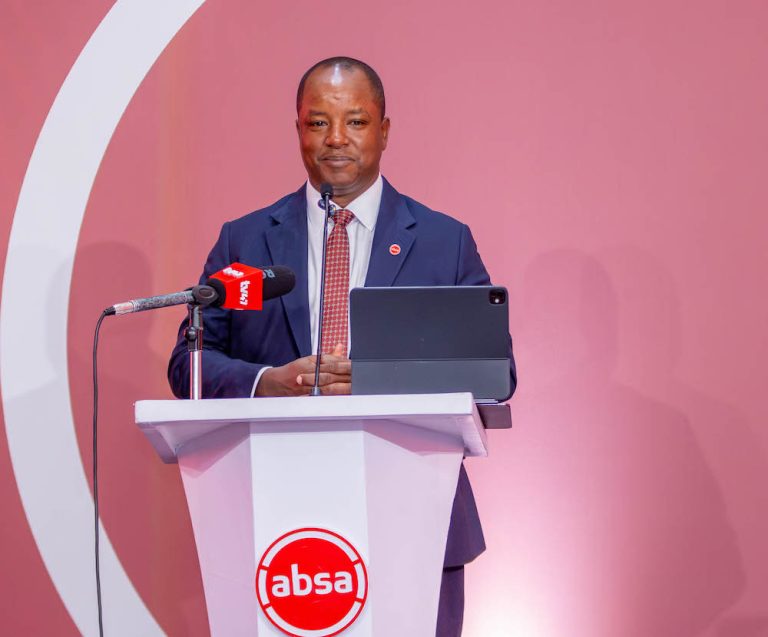
Absa Bank Kenya Plc has reported a profit after tax of Sh10.5 billion for the six months ended June 30, 2026, as the lender continued to grow its customer assets and deposits despite a challenging operating environment.

Customer assets increased by eight per cent to Sh329.9 billion, while customer deposits rose five per cent to Sh380.7 billion during the period. The growth contributed to an increase in total assets, which reached Sh558.1 billion.

The bank posted a return on equity of 21.7 per cent, while its capital adequacy ratio stood at 19.4 per cent. Liquidity reserves remained strong at 42.7 per cent.

Total revenue hit Sh29.3 billion, comprising Sh21.1 billion in net interest income and Sh8.2 billion in non-interest income.

Income from the bank’s subsidiaries, including asset management, custody services and bancassurance, increased by 20 per cent year-on-year, providing an additional boost to overall performance.

Following the performance, the board of directors approved an interim dividend of Sh0.5 per share.

Interim Managing Director and Chief Executive Officer Yusuf Omari attributed the results to disciplined execution and continued investment in the bank’s long-term growth despite pressures in the operating environment.

“While the dynamic operating environment exerted pressure on performance, the Bank recorded strong momentum in the second quarter,” Omari said.

He said the performance reflected the bank’s continued support for customers through financial and non-financial solutions, as well as investments aimed at strengthening the resilience and sustainability of the business.

During the period, Absa also expanded its financial inclusion initiatives, with a focus on helping customers access financing for homeownership, vehicle and business asset purchases, as well as entrepreneurship.

“Our strategy remains anchored on delivering sustainable, long-term growth while enhancing customer experience across all touchpoints,” Omari said.

The lender said it would continue to focus on sustainable growth while strengthening customer experience and expanding access to financial solutions.

Also Read: Family Bank half-year profit surges 62pc as assets hit Sh238.9bn

Family Bank half-year profit surges 62pc as assets hit Sh238.9bn

0

Family Bank Group’s profit after tax rose by 62 per cent to Sh3.7 billion in the six months ended June 30, 2026, from Sh2.2 billion recorded during a similar period last year.

The strong performance was driven by balance sheet expansion, higher interest income and disciplined cost management as the lender continued to implement its 2025–2029 strategic plan.

The results come two months after Family Bank’s listing on the Nairobi Securities Exchange in June, marking a new phase in its growth and capital markets strategy.

The bank’s total assets increased by 24 per cent to Sh238.9 billion, largely supported by increased lending to the private sector.

During the period, the lender disbursed Sh35.6 billion to retail and micro, small and medium-sized enterprise (MSME) customers, while commercial customers received Sh15.2 billion.

Net interest income grew by 41 per cent to Sh9.7 billion, supported by increased interest earnings from loans and advances to customers.

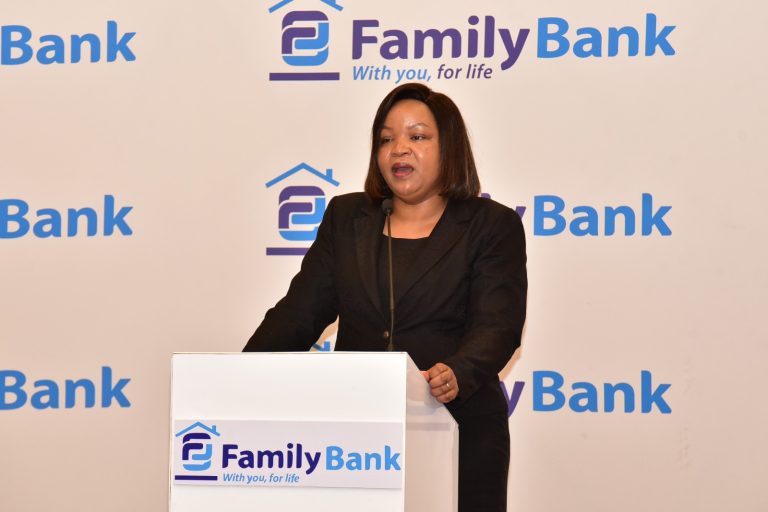
“Our strong first-half of the year results reflect the resilience of our business, disciplined execution and continued focus on our customers. We have strengthened the balance sheet, grown the income streams and maintained strong capital and liquidity positions, while continuing to invest in our people, technology and distribution network,” said Family Bank CEO Nancy Njau.

Customer deposits also recorded significant growth, rising by 20 per cent to Sh180.2 billion. The increase was attributed to the bank’s network optimisation strategy and continued engagement with customers.

Operating expenses rose by 11 per cent to Sh7.4 billion, reflecting continued investment in technology and human capital, alongside efforts to optimise the bank’s branch network.

Despite the increased expenditure, the lender said the investments were aimed at strengthening its operating platform and improving service delivery as it pursues its long-term growth strategy.

“Our focus remains on executing the objectives of the 2025–2029 strategic plan, deepening support for retail, MSME and commercial customers, and delivering world-class service anchored on sustainable long-term growth,” Njau said.

Family Bank said its capital and liquidity ratios remained strong and comfortably above regulatory requirements, providing a firm foundation for continued expansion.

Also Read: NCBA slashes interbank transfer cost with revised Pesalink pricing

Inside Ndindi Nyoro’s multi-million business empire

0

Kiharu Member of Parliament Ndindi Nyoro, is a wealthy politician and businessman who has built his businesses from scratch, having risen from a hawker.

The vocal legislator owns several companies, which he claims he owned before his election into the National Assembly.

According to a report in the Daily Nation Newspaper, Nyoro’s entrepreneurship began in 1997 while in Primary School, when he established a kiosk outside his home.

Even though his father supported the move at first, he later demolished the structure and advised Nyoro to focus on his studies.

“My dad bought the whole stock and ordered me to demolish it and instead concentrate on my studies,” he said.

He continued with the spirit while at Kiambugi High School where he would purchase sweets and sell them to fellow students, earning a 50 percent profit. He further pursued Business Studies, laying the foundation for who he is today.

After High School, Nyoro joined Kenyatta University, taking a bachelor’s degree course in economics. The businessman said he chose the course because he felt it would help him expand his business-oriented mind.

In his first year at the institution of higher learning, Nyoro opened a restaurant to help his mother after his father, who was a carpenter, died. The business, however, collapsed, forcing Nyoro to explore opportunities in other sectors.

Stockbridge Securities

After failing to run his restaurant, Nyoro ventured into stockbroking after being hired by Ngenye Kariuki Stock Brokers.

Later that year, he opened his own agency, Stock Bridge Brokers under Dyer & Blair Investment Bank, and ran the business until he graduated from Kenyatta University.

Nyoro’s Stockbridge Securities found itself facing numerous challenges as it failed to complete trades on time, partly due to internet connectivity challenges.

Afrisec Telecoms

The Stockbridge Securities challenges gave birth to Afrisec – an internet provider. The firm was launched in 2010 to provide enterprise technology solutions including internet services, software solutions, networking and surveillance solutions.

He raised Sh500,000 to secure a dealership license from Liquid Telecom, formerly Kenya Data Networks (KDN). By 2014, the ISP was worth over Sh50 million. The company employs over 10 people and its current net worth is estimated at over Sh100 million.

Investax Capital

In 2016, Nyoro reportedly co-founded Investax Capital – a new stock agency alongside a friend. He reportedly invested Sh5 million into the firm and became an equal partner.

The company is a stockbroker and was worth Sh25 million in 2021. To avert possible conflict of interest, Nyoro quit managing Stockbridge Securities and offered it to a friend.

Kenya Power Shares

Nyoro is one of the largest individual shareholders at the Kenya Power and Lighting Company (KPLC).

According to regulatory filings, held 26.9 million shares in Kenya Power, remaining the company’s top individual investor with a 1.3 percent stake valued at approximately Sh322.8 million.

In 2023, Nyoro had became the largest individual shareholder at Kenya Power with 32.5 million shares.

Also Read: A look at multi-billion properties, businesses owned by ICT CS William Kabogo