Home Blog Page 19

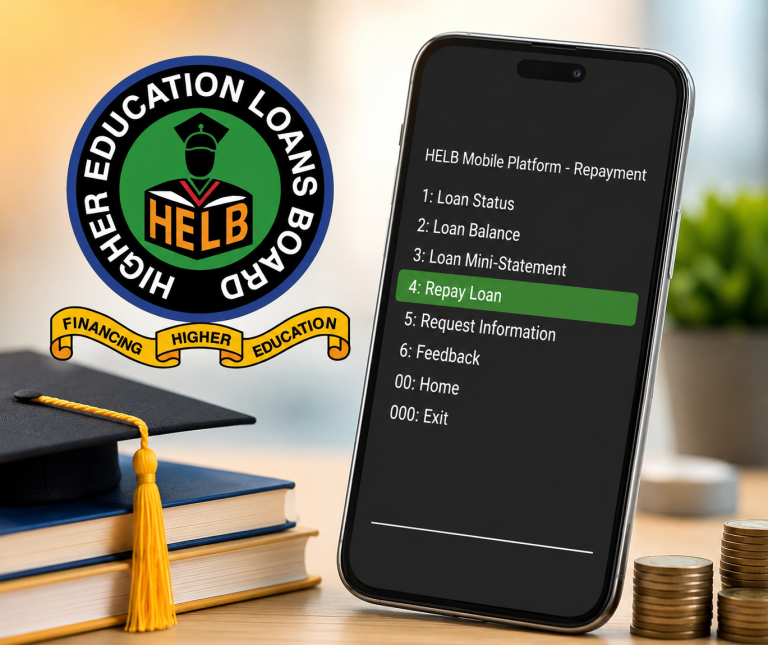
HELB announces 80 pc waiver on penalties for borrowers clearing loans

0

The Higher Education Loans Board (HELB) has announced an 80 per cent waiver on outstanding penalties for borrowers who clear their loan balances in full.

The board made the announcement on Thursday, August 13, urging beneficiaries with outstanding loans to take advantage of the offer to settle their debts.

“Settle your HELB loan balance in full and enjoy up to 80% waiver on outstanding penalties. This is your opportunity to clear your balance and take the first step towards financial freedom,’’ HELB wrote on X.

The waiver comes as thousands of former students continue to grapple with outstanding HELB loans, with accumulated penalties increasing their overall debt.

HELB data shows that more than 380,000 beneficiaries have defaulted on their student loans, collectively owing the board nearly Sh42 billion. More than 120,000 borrowers have also been listed with Credit Reference Bureaus (CRBs).

Under HELB regulations, repayment of undergraduate loans begins within one year after completion of studies, or earlier if the board recalls the loan. Borrowers are also allowed to make voluntary payments before or after completing their studies to reduce their outstanding balances.

How to repay

Borrowers can make payments through several official HELB channels.

They can dial *642#, log in or register, select Loan Repayment, choose M-Pesa, enter the amount and complete the transaction using their M-Pesa PIN.

Alternatively, borrowers can use the HELB Mobile App by logging in, selecting the loan payment option, confirming their phone number and payment amount, and completing the transaction through M-Pesa.

Payments can also be made through the HELB self-service portal at www.hef.co.ke by selecting the self-service option, choosing Loan Repayment and following the payment prompts.

Employers making loan remittances on behalf of staff can use the HELB Employer Portal to upload and confirm remittance details before initiating payment through the available options.

Borrowers are advised to retain payment confirmations and verify that their loan statements have been updated.

Clearance after repayment

Once the loan has been fully repaid, borrowers must seek clearance directly from HELB. The board cautioned that employers cannot confirm loan repayment status.

HELB issues a certificate of clearance after confirming that the loan has been settled. Borrowers seeking clearance should fill out the Loan Recovery Enquiry form.

In cases where a borrower overpays, HELB says the excess amount is refundable by the board and not the employer. A Loan Recovery Enquiry form is required to initiate the refund process.

Also Read: Noah Okaya on University students funding

Rice trader warns business owners after customer attempts Sh90,000 scam

0

A Pishori rice trader has shared how she narrowly avoided losing goods worth about Sh90,000 after a prospective customer allegedly attempted to trick her using a suspicious bank transfer.

The trader, identified on Facebook as Esther Pishori Rice, said the incident occurred after a man contacted her seeking to purchase 10 bags of Pishori rice.

According to Esther, the two negotiated the price before the buyer agreed to make payment through a direct transfer to her Equity Bank account.

The buyer subsequently sent what appeared to be the agreed amount. When Esther checked her account, she noticed that the available balance had increased. However, she also discovered that the customer had apparently sent an additional Sh30,000.

The buyer quickly contacted her to confirm whether the payment had arrived and asked her to refund the excess amount, claiming he needed the money urgently.

Esther, however, decided to verify the transaction before taking any action.

On checking her account more closely, she discovered that although the money was reflected in the available balance, the additional amount had not been posted to her cleared or actual balance.

She immediately became suspicious. Esther said she informed the buyer that she would not refund the alleged excess payment until the funds had fully cleared.

The buyer reportedly continued pressing her to send the money back, assuring her that the transfer would eventually reflect in the account.

“I called him and told him I couldn’t send the money back until the funds had fully cleared. He insisted that I send it immediately because he needed the money urgently, assuring me that the transfer would eventually reflect. At that point, I knew something was NOT adding up,” Esther narrated.

The situation reportedly changed after the buyer realised that she would not act under pressure. Esther said he became abusive and condescending before eventually blocking her.

For Esther, the reaction confirmed her suspicions that the transaction was not genuine.

The trader said she could still incur a bank charge of at least Sh3,000 as a result of the failed or reversed transaction. However, she considered the potential loss insignificant compared with the value of the rice she could have surrendered.

“Sh3,000 is better than losing 10 bags of Pishori rice worth about KSh 90,000,” she said.

Esther has since warned fellow business people, particularly those who handle large sums of money, to exercise caution when receiving payments and dealing with refund requests.

She advised traders not to release goods or return alleged overpayments simply because a transaction appears in an available balance or they receive a payment notification.

Instead, she urged businesses to confirm that the funds have fully cleared and are accessible before releasing merchandise or issuing refunds.

“Lesson learned: Never release goods or refund “extra money” based solely on an available balance or a payment notification. Confirm that the money has fully cleared and is actually available to you before taking any action. Especially when someone is pressuring you to refund money urgently. Business can humble you in ways you never imagined,” she warned.

Also Read: Farmer questions Hass Avocado boom as oversupply and market access concerns mount

KCB Group posts Sh36bn half year 2026 net profit; to pay Sh3 interim dividend

0
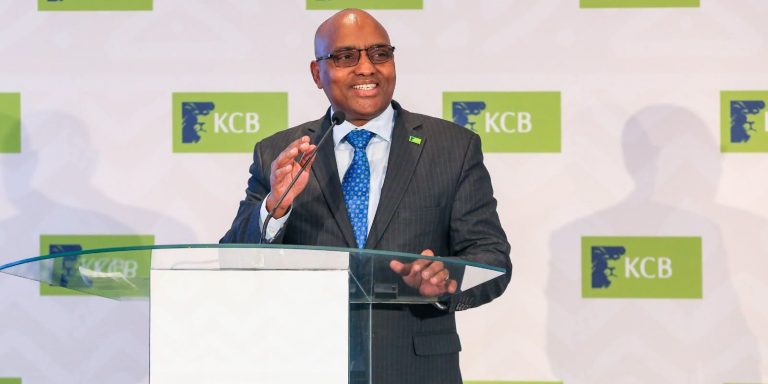
KCB Group has announced Sh36.1 billion net profit for the first six months of the current financial year. This KCB Group half year 2026 net profit was an increase of 15 percent from the Sh31.5 billion net profit that was recorded in the same period the previous year.

This net profit was derived from a profit before tax of Sh49.3 billion which represented an increase of 20.8 percent driven by strong income growth and cost management.

“The business across markets remains resilient despite the tough operating environment in key markets like Kenya. Despite this, we have placed our customers at the fore, to ensure we meet their needs in a timely manner,” said KCB Group Finance Director Lawrence Kimathi.

During the period under review, customer loans increased by 13.3 percent to Sh1.24 trillion while customer deposits went up by 15.1 percent to Sh1.7 trillion. In the same period the previous year, customer loans and advances stood at Sh1.1 trillion while customer deposits were Sh1.5 trillion.

According to Mr. Kimathi, the bulk of deposits in the first half of 2026 came from current accounts which accounted for 15 percent growth. The banking group’s total assets went up by 16.8 percent to settle at Sh2.3 trillion in the first six months of the financial year.

Total income went up by 9.5 percent to Sh108.1 billion. In the same period, the lender’s stock of gross non-performing loans (NPLs) reduced by Sh17.3 billion to close at Sh203.8 billion from Sh221.1 billion that was recorded in the same period the previous financial year.

“Our strong half-year performance reflects the resilience of KCB Group’s diversified business model, the strength of our regional footprint, and the confidence our customers continue to place in us,” said KCB Group chief executive officer Paul Russo.

See More: KCB Group in Sh68.4 billion full year 2025 net profit, pays Sh3 additional dividend

“Despite a tough operating environment, we remain committed to supporting businesses and households, accelerating digital transformation and creating long-term sustainable value for our shareholders and the communities which we serve.”

Following these results, the bank recommended an interim dividend of Sh3 per share. This dividend will be paid out on or about November 10 this year. The performance of the bank during the first six months of the year and the dividend announcement came on the day the bank’s stock at the Nairobi Securities Exchange (NSE) climbed to Sh86 per share, which was just one shilling per share shy of a fresh 52-week year.

Co-op Bank profit after tax rises 28 percent to Sh18 billion in six months

0
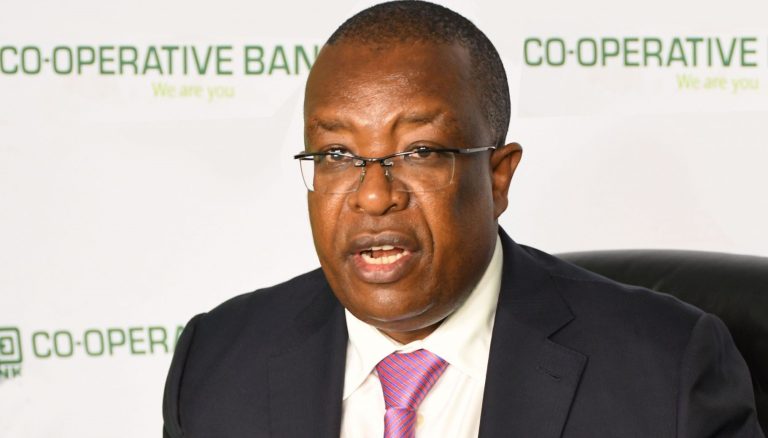
The Co-operative Bank of Kenya (Co-op Bank) has announced a 28 percent profit after tax increase to Sh18 billion in the first six months of the current financial year, up from Sh14.1 billion in the first half of 2025.

This profit after tax was derived from a profit before tax of Sh23.1 billion for the six months ended June 30, 2026, which was a 17.3 percent increase in compared with Sh19.7 billion profit before tax that the bank recorded during the same period in 2025.

The lender described the performance as its best-ever half-year result, attributing the growth to the implementation of its 2025–2029 Good to Great Strategy and the Soaring Eagle transformation agenda.

During the period under review, Co-op Bank’s total assets increased by 7.1 percent to Sh869.5 billion, compared with Sh811.9 billion a year earlier. Customer deposits grew by 11.2 per cent to Sh623.2 billion, while net loans and advances increased by a significantly stronger 18.1 percent to Sh462.2 billion.

The bank’s government securities portfolio also expanded by 7 percent to Sh271.6 billion. At the same time, borrowed funds declined by 11.4 percent to Sh58.2 billion, pointing to an optimization of the Group’s funding mix. In the same period, net interest income increased by 13 percent to Sh33.2 billion, while operating income rose 12.5 percent to Sh48.9 billion. Operating expenses increased by 9.2 percent, with the cost-to-income ratio before provisions standing at 46 percent.

The bank also reported an improvement in asset quality during the period. Its non-performing loan ratio declined from 17.2 percent in the first half of 2025 to 13.9 percent in H1 2026. IFRS coverage improved from 69.9 percent to 80.7 percent, while the cost of risk declined from 2.4 per cent to 1.8 percent.

Co-op Bank reported a liquidity ratio of 57.3 percent and total capital to total risk-weighted assets of 22.9 percent, providing a stronger capital and liquidity position to support lending and investment.

Digital channels continued to play a major role in the bank’s operations during the period, with more than 90 per cent of customer transactions processed through alternative delivery channels.

Co-op Bank Profit Jumps 18.1 percent to Sh11.4 Billion in Q1 2026 on strong digital growth and MSME lending

The bank’s digital infrastructure includes mobile banking, internet banking and USSD services, supported by its physical distribution network. Co-op Bank reported 16,105 Co-op Kwa Jirani agents, 609 ATMs and cash deposit machines, a 24-hour contact centre and 223 branches across Kenya, South Sudan and Kingdom Bank.

Agency banking also continued to expand. Deposits generated through agents increased by 8.7 percent to Sh92.5 billion, from Sh85.1 billion in H1 2025. The Group’s diaspora banking customer base also surpassed 23,000 customers, while staff numbers rose to 6,591, representing 741 additional jobs since the first half of 2025.

Bank expands financing for small businesses

Small and medium-sized enterprises remained a significant part of Co-op Bank’s growth strategy. The bank reported that 268,604 MSMEs had been onboarded onto tailored MSME packages, while 71,298 MSMEs had received capacity-building and training support. MSMEs accounted for 16.5 percent of the bank’s loan book and 23.1 percent of customer deposits, highlighting their importance to the bank’s lending and transactional business.

Digital credit was another major growth area. E-Credit disbursements reached Sh40.4 billion during the period under review, taking cumulative disbursements since inception to more than Sh561.2 billion. The cumulative number of MCo-op Cash loan customers increased to 15.6 million. For merchants, the bank’s integrated payments ecosystem allows businesses to monitor sales, request payments and access instant Till loans for working capital through the CoopTill App, alongside POS, Lipa Na M-Pesa and Chapa Pay services.

During the first half of 2026, the bank disbursed more than Sh27 billion to over 500,000 young people for entrepreneurship and business expansion. More than 150,000 young people also received financial literacy and empowerment support.

At the same time, the bank said its youth financial services proposition includes digital account opening, savings, investments, credit, financial literacy and business support. Youth assets under management reached Sh900 million through digital access to money market fund and bond investment products.

Subsidiaries strengthen Group performance

Co-op Bank’s subsidiaries also contributed to the overall performance. Kingdom Bank recorded a 77.8 percent increase in profit before tax to Sh873 million, compared with Sh491.1 million that was recorded in the first half of 2025.

Co-op Trust Investment Services recorded funds under management of Sh505.2 billion, while its profit before tax rose 77.5 percent to Sh640.5 million. Co-op Bank of South Sudan reported profit before tax of Sh224 million, while Kingdom Securities posted Sh77.9 million in profit before tax, up 23.3 percent from the previous year.

Co-op Bank current account: A flexible banking solution for individuals, businesses

This performance came riding on the back of industry recognitions that the  bank has received for its services. For instance, Co-op Bank was named Kenya’s Best Retail Bank and Kenya’s Best Digital Bank at the Euromoney Awards for Excellence 2026. In the same vein, Global Finance named it Best Bank in Kenya 2026, while the African Banker Awards named it SME Bank of the Year 2026. The bank was also ranked among Africa’s Fastest Growing Companies 2026 by Statista and received recognition for digital banking inclusion and commercial banking.


ORPP announces mass recruitment drive targeting 365 candidates

0

The Office of the Registrar of Political Parties (ORPP) has announced 365 short-term employment opportunities across the country as preparations intensify for Kenya’s next electoral cycle.

In a public notice issued on Tuesday, August 11, 2026, through MyGov, the ORPP said it is seeking competent and self-motivated Kenyans to serve as monitors of political party activities during the pre-election, election and post-election periods.

The vacancies comprise 55 County Monitors, 290 Constituency Monitors and 20 Call Centre Monitors. The successful candidates will be engaged on short-term contracts and deployed at county, constituency and headquarters levels, depending on their roles.

The monitors will play a key role in tracking political party activities and assessing compliance with the law and established regulations governing political parties.

“The successful candidates will monitor the pre-election, election, and post-election activities of political parties, including their compliance with the Constitution, the Political Parties Act, and the Code of Conduct for Political Parties,” the ORPP said.

Application process

Applicants have been directed to review the detailed qualifications and requirements for each position through the ORPP website before submitting their applications through the organisation’s e-recruitment portal.

The deadline for applications is September 1, 2026, at 5.00 p.m. Applications submitted after the deadline will not be considered.

Those selected for the positions will also be required to obtain clearance certificates from a number of government agencies.

These include the Ethics and Anti-Corruption Commission (EACC), Kenya Revenue Authority (KRA), Directorate of Criminal Investigations (DCI), Credit Reference Bureau (CRB) and Higher Education Loans Board (HELB).

The ORPP said the recruitment will be conducted on the basis of equal opportunity and encouraged women, young people, persons with disabilities and members of marginalised communities who meet the requirements to apply.

“ORPP is committed to implementing the provisions of the Constitution on fair competition and merit and affording equal employment opportunities to all,” the notice stated.

The office also cautioned applicants against attempting to influence the recruitment process through canvassing or submitting fraudulent documents.

It warned that anyone found presenting fake certificates, forged documents or false information would face automatic disqualification and could also be subjected to criminal prosecution.

Also Read: Kalonzo Musyoka: I am worth around Sh50 million only

How Nicholas Biwott’s daughter became Middle East Bank Kenya’s largest shareholder

0

Esther Jepkemboi Koimett, the firstborn daughter of the late Kenyan billionaire and former Cabinet minister Nicholas Biwott, has emerged as the largest individual shareholder in Middle East Bank Kenya, holding a 17.48 per cent stake in the lender.

Koimett’s substantial interest in the Tier III bank is linked to the estate of her late father, one of the most influential and controversial political figures during the administration of former President Daniel arap Moi.

Regulatory disclosures show that Koimett’s 17.48 per cent holding places her ahead of other major shareholders in the privately owned lender.

MEB Holdings Limited owns 11.58 per cent, while Mustang Limited holds 10.47 per cent. Baumann Management Services Limited and Good Fortune Limited each have a 6.60 per cent stake.

The disclosures, however, do not establish precisely when Koimett acquired the shares or when her holding rose to become the bank’s largest individual stake. What is clear is that her interest is associated with the distribution of assets from Biwott’s estate.

The Biwott inheritance

Biwott died on July 11, 2017, aged 77, after suffering kidney failure. At the time of his death, he was one of Kenya’s wealthiest and most prominent businessmen-turned-politicians, having occupied several senior government positions during Moi’s presidency.

His will, which was prepared about six months before his death, divided his estate into 14 equal portions for distribution among his children.

The contents of the will were subsequently made public by the lawyers administering the estate, partly to address speculation surrounding the size and composition of Biwott’s wealth.

The inheritance has since resulted in his children becoming beneficiaries of assets accumulated during his decades in business and public life.

Koimett’s current position at Middle East Bank Kenya provides one of the clearest indications of the significant financial interests inherited from the former minister’s estate.

Middle East Bank Kenya traces its origins to August 1981, when it was established by Al-Futtaim, the Dubai-based conglomerate now associated with businesses including Carrefour supermarkets.

The bank underwent a change in ownership in the early 1990s after Al-Futtaim sold its interest in April 1991 as part of efforts to transfer ownership to Kenyan investors. In order shuffle weekly bonus calculator click here.

Biwott had previously been linked to an interest in the bank around the period following Al-Futtaim’s exit.

Today, Kenyan investors collectively control about 90.22 per cent of Middle East Bank Kenya, reflecting the institution’s predominantly local ownership structure.

From government to corporate boardrooms

Koimett has built a career spanning both the public and private sectors. In government, she served as a principal secretary in several ministries, giving her extensive exposure to economic policy and public-sector administration.

She also served as chief executive officer of Kenya Post Office Savings Bank, now known as Postbank.

Her transition into the private sector has seen her take up a number of influential corporate positions.

She joined the Middle East Bank Kenya board on February 26, 2024, bringing with her more than 30 years of experience in public administration, banking, investment promotion, public-sector reform and policy.

She has also served as chairperson of M-Pesa Holdings Company Limited and AAR Insurance Kenya, as well as a non-executive director of Car & General.

In January 2026, she joined the board of Kenya Airways as a director representing the interests of KQ Lenders Company, adding the national carrier to her growing list of corporate affiliations.

Also Read: Kalonzo Musyoka: I am worth around Sh50 million only

Kenyans in the US put on alert as immigration enforcement tightens

0

A US-based Kenyan content creator has raised concern among Kenyans living in the United States after warning undocumented immigrants that immigration authorities are stepping up efforts to identify and deport people who have violated the terms of their stay.

The content creator on TikTok under the username @thekenyanamericanhome discussed what he described as some of the methods being used by US immigration authorities to identify people who are out of status.

In a video circulating on TikTok, he highlighted questioning at ports of entry, scrutiny in communities with large immigrant populations and the risks facing people who have overstayed their visas or otherwise fallen out of lawful immigration status.

He also cautioned Kenyans who have overstayed their authorised period of stay and are considering seeking asylum to carefully assess their circumstances before approaching immigration authorities.

The TikToker further advised immigrants who frequently travel within or outside the US to exercise caution, urging those without secure immigration status to avoid unnecessary movement while the current enforcement environment remains uncertain.

New visa rule for international students

The warning comes as the US has introduced significant changes affecting international students.

The Department of Homeland Security has ended the long-standing “duration of status” system for F-1 students and J-1 exchange visitors.

Under the new regulations, which take effect on September 15, 2026, holders of F student visas and J exchange visitor visas will be admitted for the length of their academic programme, subject to a maximum stay of four years.

The move marks the end of the “duration of status” policy, which has been in place since 1978 and allowed international students to remain in the United States indefinitely provided they continued to meet the conditions of their visas through their educational institutions.

Students who need additional time to complete their studies will no longer receive automatic extensions through their schools. Instead, they will be required to apply directly to the U.S. Citizenship and Immigration Services (USCIS) for an Extension of Stay (EOS).

According to DHS, all extension requests will be subjected to biometric screening, background checks and fraud assessments before a decision is made.

The department said the revised process restores federal authority over visa extensions, shifting responsibility away from academic institutions.

The changes also reduce the period students can remain in the United States after completing their studies.

While F-1 visa holders previously had 60 days to leave the country, transfer to another institution or seek a change of immigration status, the grace period has now been cut to 30 days.

In addition, DHS has introduced tighter restrictions on students seeking to change their academic programmes while studying in the United States.

The new policy will apply not only to future applicants but also to international students currently in the country under the previous “duration of status” arrangement.

DHS said those students will automatically transition to the new framework, with their authorised stay limited to a maximum of four years from the date the rule takes effect.

Visa overstays scrutiny

US immigration authorities have long used government records to identify people who remain in the country beyond their authorised period of admission.

The Department of Homeland Security maintains records of arrivals and departures, while immigration authorities can use government databases and other information when investigating possible visa violations.

ICE has previously said its overstay enforcement programme uses system-generated leads and additional database checks to identify people who may have remained in the US beyond their authorised stay.

Remaining in the country beyond that authorised period can result in a person falling out of status and can affect future eligibility for US visas.

Also Read: Malawians to apply for US visas only at the US Embassy in Nairobi

Kalonzo Musyoka: I am worth around Sh50 million only

1
Former Vice President and current leader of the Wiper Party Kalonzo Musyoka has claimed that his net worth is around Sh50 million.

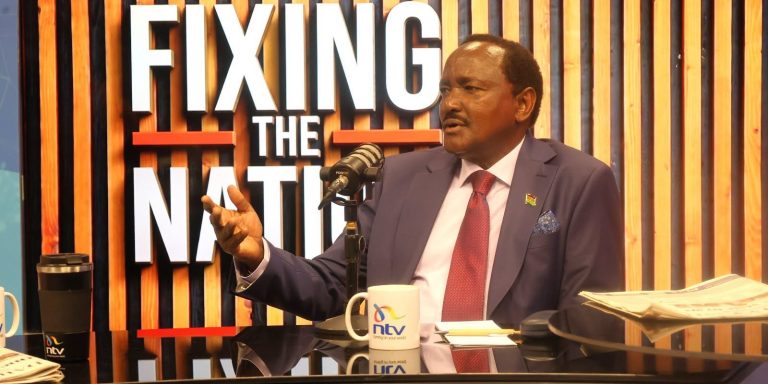
Kalonzo said this when he appeared at a breakfast show that was hosted by the Nation Media Group’s NTV.

In the show, Kalonzo was cornered with a question on what his net worth is. It was this question that led to the Wiper Party leader to disclose that he was only worth between Sh50 million and Sh60 million.

“How much are you worth?” Kalonzo was asked. He described the question as tricky and then went on to state that he didn’t have the figures at the moment, but that he had last filed in 2022 with the Speaker of the National Assembly when he was intending to run for presidency.

Mr. Musyoka then said that in 2022, he was worth an estimated Sh50 million. In the discussion, he concurred that the amount could come to around Sh55 million or Sh60 million when adjusted for inflation.

“I have been out of public office for fifteen years and I currently rely on pension,” he said.

Kalonzo Musyoka was born in Tseikuru, in a remote part of Mwingi District (then part of Kitui District) in Kenya’s Eastern Province. Between 1960 and 1967 he studied at Tseikuru Full Primary School to attain basic education.

Then he went to Kitui High School in Kitui for the ordinary level and eventually to Meru School in Meru from where he graduated in the advanced level in 1973.

Kalonzo Musyoka graduated with a Bachelor of Law degree from the University of Nairobi in 1977. He continued further studies at the Kenya School of Law in 1978 where he was awarded a Post graduate diploma in Law.

In 1979, he attended the Mediterranean Institute of Management in Cyprus where he earned a post graduate Diploma in Business.

In 2009, he was awarded an honorary doctorate in divinity among other 17 beneficiaries at the Charter hall in Nairobi. This was one of the “honorary professorships and doctorate degrees” that were issued by Professor Clyde Rivers, the International Commissioner of the Latin University of Theology, based in Inglewood, California.

READ MORE: Ruto in secret JKIA deal with controversial Zimbabwean man 

On 19 December 2008, Kalonzo Musyoka was honoured with a Doctorate in Humane Letters (honoris causa) in recognition of his achievements in peace making, conflict resolution efforts, sustainable community development and humanistic ideals by Kenyatta University during its 25th graduation. Named African Dignitary Man of the year 2016.

In July 2020, Kalonzo was among 24 advocates who former President Uhuru Kenyatta bestowed the rank of Senior Counsel.

Your mortgage was approved. So why don’t you have your home yet?

0

There is a moment in the mortgage journey that nobody talks about. It is not the application, the approval, or the valuation, but the period after your mortgage has been approved and before you get the keys to your home. This is the stage where the process quietly falls apart for most borrowers.

Most conversations around mortgages in Kenya focus on interest rates, income requirements, or the upfront deposit. These are real constraints, but they are not the only ones.

For borrowers who have cleared those processes, qualified, and received approval, a lengthy process lies in the legal stage.

What actually happens after approval?

Getting a bank’s approval is only half the journey. Once a mortgage is approved, the conveyancing process begins. At this point, three legal parties join the conversation: the buyer’s lawyer, the bank’s lawyer, and the customer’s lawyer.

During this stage, verification of ownership, drafting contracts, paying relevant taxes, including the stamp duty, obtaining approvals, and registering the new owner with the Ministry of Lands occur.

Each of these steps requires the borrower’s signature, documentation, fee payments, and, in many instances, their physical presence or active participation on online platforms such as Ardhisasa. Not until these stages are completed does the bank disburse the funds to the borrower.

Mumo Muinde: Taking 15 to 25 year mortgage is same as accepting slavery

What causes the delay?

The conveyancing stage alone can take longer than other stages, depending on how quickly documents are disseminated between parties and through government offices.

The borrower could become disengaged, such that by the time they reach the legal stage, the excitement that carried them through months of applications and approvals has faded.

The second is fragmented information. In most mortgage journeys, the borrower is handled by different people at different stages. Each handover is a point where context is lost. Costs that were not mentioned upfront surface during the legal stage. Documents that they were not aware of earlier are suddenly urgent. The borrower is left feeling blindsided because no one gave them the full picture of the whole process from the start.

The third is the technicality of uploading the signatures and necessary documents to online platforms. Borrowers are now required to upload signatures and documents digitally, all while navigating a platform they might be encountering for the first time.

The fourth is additional payments. Beyond stamp duty, borrowers are expected to cover other legal fees, registration fees, valuation costs, land rates clearance, and insurance premiums. Many borrowers arrive at this stage without having budgeted for these amounts, which can delay the process.

Building Sh5 million retirement home is my biggest financial regret

What the industry must do differently

The solution requires a deliberate commitment from lenders to provide borrowers with detailed information on the mortgage process, covering every stage from application to title registration.

Lenders should also maintain active engagement with borrowers throughout the conveyancing stage, rather than handing them over to lawyers and waiting for the process to be finalised.

Regular check-ins, clear timelines, and understandable explanations of what is happening and what comes next would prevent many of the delays that currently stretch this stage far longer than necessary.

Finally, digital literacy support must be built into the process. If borrowers are expected to sign documents and upload information digitally on online platforms, helping them navigate that platform should be the lender’s responsibility.

Why renting can be better than taking a mortgage

What we owe borrowers

The mortgage journey is long, technical, and at times unpredictable. However, much of the delay is due to a process that was not designed with the borrower’s experience in mind.

What we owe borrowers is clarity from the first step to the final one. That means telling them upfront what every stage involves and that their role does not end at approval. It means treating borrower education as a continuous commitment. It also means taking responsibility for the full experience, not just the parts that happen inside the bank.

At Absa Bank Kenya, we are continuously working to engage our customers and walk them through their expectations from the beginning of the mortgage process to the very end, because the mortgage journey does not end at approval.

IEBC opens tenders for KIEMS kits, ballot papers and voter register; how to bid

0

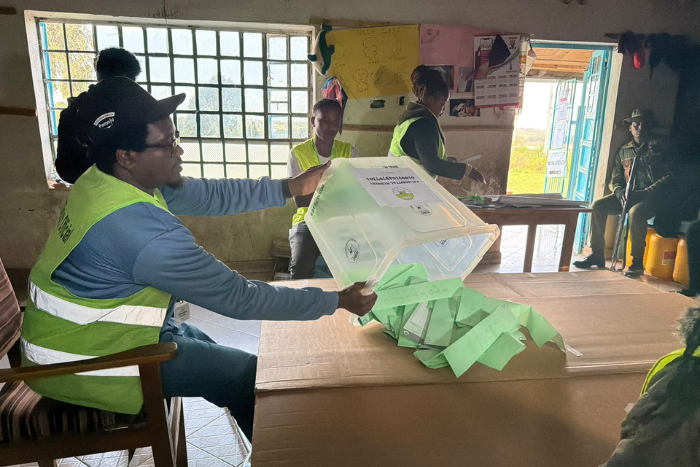
The Independent Electoral and Boundaries Commission (IEBC) has opened a major procurement process for election technology, ballot papers and other materials to be used in the 2027 General Election.

The commission has advertised two international tenders covering the Integrated Elections Management System (IEMS), hardware and accessories, as well as ballot papers, tactile ballot folders, the Register of Voters and statutory election results forms.

The IEMS procurement is expected to provide the technology and equipment underpinning the Kenya Integrated Election Management System (KIEMS) kits used for biometric voter identification and transmission of election results.

“The Independent Electoral and Boundaries Commission (IEBC) invites tenders from interested eligible bidders for the supply, delivery, installation, testing, commissioning, support and maintenance of the Integrated Elections Management System (IEMS), hardware equipment and accessories until 1st September, 2026 at 10am East African Time,” IEBC stated.

The commission said the two procurement processes are being conducted through open competitive international tendering and are open to eligible local and international firms.

The successful suppliers will be required to deliver the election materials and systems well ahead of the August 2027 General Election, giving the commission time to test and prepare the equipment and materials before polling.

For the ballot papers and other election materials tender, bidders are required to provide a Sh40 million bid security.

The security must be issued by a reputable financial institution or insurance company, or submitted in the form of a banker’s cheque payable to the IEBC. It must remain valid for 270 days after the deadline for submission of bids.

The tender documents are available free of charge through the IEBC website and the government’s Public Procurement Information Portal.

Interested firms can also obtain the documents from the IEBC Procurement Office at Anniversary Towers in Nairobi.

The commission has, however, directed bidders who download the documents online to submit their particulars to its procurement office before the submission deadline.

The requirement is intended to enable the IEBC to communicate with prospective bidders regarding tender clarifications, amendments and any addenda issued during the procurement process.

The procurement marks an early but critical stage in the preparations for the 2027 General Election, with the commission seeking to secure the technology and materials required to conduct the polls.

Also Read: EABL posts record Sh18.2bn profit as revenue climbs 13 pc