Wheat farmers across the country are set to earn more from their produce this season after the Government raised the producer price of locally grown wheat by Sh350 per 90-kilogramme bag.
The new price has been set at Sh5,100 per bag, up from Sh4,750 last year, in a move aimed at improving farmers’ earnings and encouraging greater domestic production of the strategic food crop.
The revised price was agreed following consultations coordinated by the Agriculture and Food Authority (AFA), bringing together the Cereal Growers Association (CGA), wheat farmers and cereal millers.
Agriculture Cabinet Secretary Mutahi Kagwe said the new price was arrived at after discussions seeking to balance the interests of farmers, processors and consumers.
“The agreed price will apply at designated aggregation centres where the Government has commenced the ongoing wheat mop-up exercise ahead of any wheat importation,” Kagwe said.
The Government says the approach is intended to give priority to locally produced wheat before turning to imports, providing farmers with a ready market while supporting a stable supply of grain to millers and consumers.
For a farmer delivering 100 bags, the new price would translate into an additional Sh35,000 in gross earnings, before accounting for production and marketing costs.
The move comes at a time when the cost of farm inputs, labour, machinery and other production expenses remains a major concern for cereal farmers.
More than 2,000 wheat farmers in Narok, Nakuru, Meru, Laikipia, Nyandarua and Uasin Gishu are expected to benefit from the revised price.
The Government’s decision to mop up locally produced wheat before allowing imports could also provide farmers with greater confidence to plant the crop, particularly if they are assured of a reliable market at remunerative prices.
For millers, however, the challenge will be to maintain affordable wheat products for consumers while paying farmers a higher price for locally produced grain.
Wheat is a key raw material for products consumed by millions of Kenyan households. The crop is a staple in many homes, finding its way into bread, chapati, mandazi, cakes, biscuits, pasta and other flour-based foods.
Kenya’s wheat production is concentrated mainly in the high-potential areas of the Rift Valley and central regions, with Narok, Uasin Gishu, Nakuru, Laikipia and Nyandarua among the major growing areas, alongside production in parts of Meru.
Trading volume in crypto is one of the most powerful yet frequently overlooked indicators available to traders. While beginners focus heavily on price action, charts, and indicators like RSI or MACD, volume tells a different and often more truthful story about what is actually happening in the market. It measures the number of coins or tokens traded during a specific period and reveals the strength or weakness behind price movements.
In current market conditions, where fakeouts and manipulation are common, volume helps distinguish real conviction from noise. A price move supported by high volume carries more weight than one occurring on low volume. Ignoring volume is one of the most common reasons new traders get caught in false breakouts or fail to recognize genuine trend reversals.
I have relied on volume analysis throughout my trading career. It has saved me from many bad trades and confirmed some of the best ones. Before going further note that what is volume in crypto is far more than just a number at the bottom of a chart — it is a window into market participation and conviction.
Let’s explore what trading volume really means, why it matters so much, how to interpret it correctly, and how beginners can start using it to improve their decision-making.
What Trading Volume Actually Represents
Volume is the total amount of cryptocurrency traded during a given time frame, usually measured in the base currency (e.g., BTC volume) or in USD value. Each completed trade between a buyer and a seller contributes to the volume count.
High volume indicates strong participation and genuine interest from the market. Low volume suggests limited conviction or possible manipulation by smaller players. Volume does not tell you the direction of the move, but it tells you how much weight to assign to that move.
For example, if Bitcoin breaks above a key resistance level on significantly higher than average volume, it suggests strong buyer conviction. The same breakout on very low volume may be a fakeout that quickly reverses.
Volume also provides context for price patterns. A bullish candlestick pattern on rising volume is more reliable than the same pattern on declining volume.
Why Most Beginners Ignore Volume
Beginners often focus exclusively on price because it is the most visible and emotionally engaging element. Price moves create excitement and fear, while volume appears as a secondary number that is harder to interpret quickly.
Many new traders also lack understanding of how volume interacts with price. They see a big green candle and assume strength, without checking whether that move was supported by meaningful participation. This leads to chasing pumps that quickly fade when volume dries up.
Another reason is the overwhelming amount of information available. Beginners are bombarded with indicators and often default to the most visually prominent ones, leaving volume as an afterthought.
The most effective way to use volume is in conjunction with price action. Here are the main patterns to watch:
Rising price on rising volume — Strong bullish signal. Buyers are aggressively entering the market.
Rising price on falling volume — Weak move. The uptrend may be losing momentum and could reverse.
Falling price on rising volume — Strong bearish signal. Sellers are in control.
Falling price on falling volume — Weak selling pressure. The downtrend may be exhausting.
Volume spikes at key technical levels often mark important turning points. Climax volume (extremely high volume after a long trend) frequently signals exhaustion and potential reversals.
Here is a practical guide to volume-price relationships:
Price Movement
Volume Behavior
Interpretation
Trading Action Consideration
Rising
Rising
Strong demand
Look for continuation or add to longs
Rising
Falling
Weak demand
Caution — potential reversal
Falling
Rising
Strong supply
Look for continuation or add to shorts
Falling
Falling
Weak supply
Potential exhaustion and reversal
Sideways
Rising
Accumulation or distribution
Watch for breakout direction
Sideways
Falling
Low interest
Range trading or wait for volume increase
This table serves as a quick reference for combining volume with price action.
Common Volume Mistakes Beginners Make
Many beginners misinterpret volume spikes as automatically bullish. A sudden volume increase can also indicate heavy selling or distribution by large holders.
Another mistake is ignoring volume entirely during strong trends. Even in powerful uptrends, declining volume can signal weakening momentum before price actually reverses.
Focusing only on absolute volume numbers without context is also problematic. A volume of 10,000 BTC on Bitcoin may be normal, while the same volume on a small altcoin would be extremely significant.
Practical Ways to Start Using Volume
Begin by adding volume bars to your main charts. Compare volume during breakouts and pullbacks to gauge conviction.
Look for volume confirmation on higher timeframes. A daily chart breakout with strong volume carries more weight than one on a 15-minute chart.
Use volume profile tools when available. They show volume distribution across price levels and help identify high-interest zones.
Combine volume analysis with basic price patterns. A bullish flag pattern with expanding volume on the breakout is significantly more reliable.
Start simple. Focus on whether volume is expanding or contracting relative to recent averages rather than trying to analyze complex volume indicators immediately.
Conclusion
Trading volume in crypto is the one indicator most beginners ignore, yet it provides critical context that price action alone cannot reveal. Volume shows the conviction behind price moves and helps distinguish genuine trends from traps.
Traders who learn to read volume effectively gain a significant edge. They can better time entries and exits, avoid false breakouts, and identify when trends are strengthening or weakening.
Start incorporating volume into your analysis today. Add it to your charts, compare it with price movements, and gradually build intuition for how it behaves across different market environments. The combination of price and volume creates one of the most powerful analytical frameworks available to crypto traders.
Mastering volume will not only improve your results but also deepen your understanding of how markets really work. In a space filled with noise, volume helps you focus on what actually matters — real market participation.
Safaricom has introduced nine new mobile number prefixes as the telecommunications company expands its pool of numbers available to customers amid growing demand for its services.
In an X post on Monday, August 10, Safaricom said the new prefixes are 0118, 0119, 0140, 0141, 0142, 0143, 0180, 0181 and 0182
“Fresh number, fresh start! Safaricom’s new number ranges are here, giving you more ways to stay connected to the people and moments that matter,” the post reads in part.
The telco said the lines would be available through its retail shops and authorised dealer outlets across the country.
Customers seeking to acquire a number beginning with any of the new prefixes can visit their nearest Safaricom Shop or authorised dealer outlet. The new ranges allow customers to choose from a wider pool of numbers when registering new lines.
The move comes as Kenya’s telecommunications market continues to experience rising demand for mobile connectivity, driven by increased use of smartphones, mobile money, digital services and internet-based communication.
Safaricom remains the country’s dominant mobile operator, with its network supporting a wide range of services, including voice calls, messaging, mobile internet and mobile money through M-Pesa.
The expansion of its numbering ranges is also part of the company’s broader efforts to increase capacity and provide customers with greater access to its services.
The telco has in recent months continued to invest in connectivity and digital services, including expanding its data offerings as more Kenyans rely on mobile internet for work, business, entertainment and access to online services.
Safaricom expands data options
Safaricom’s current prepaid and postpaid monthly data bundles include 500MB for Sh100, 1GB for Sh250, 2.5GB for Sh500, 10GB for Sh1,000, 22GB for Sh2,000, 40GB for Sh3,000 and 60GB for Sh5,000.
The 2.5GB, 10GB, 22GB, 40GB and 60GB packages come with free WhatsApp access, according to the company’s published bundle terms.
The monthly packages are valid for 30 days, while customers who purchase another qualifying bundle before their existing bundle expires can roll over unused data, subject to the telco’s applicable conditions.
Equity Bank and Car & GeneralTrading Kenya have partnered to expand access to agricultural mechanisation, targeting farmers who struggle to acquire equipment needed to increase productivity and cultivate more land.
The partnership will see Equity Bank finance up to 90 per cent of the cost of Kubota tractors, with farmers required to raise a 10 per cent deposit. Repayment will be structured around farming cycles, including monthly and seasonal payments, as the two companies seek to make mechanisation more accessible to farmers.
Kagiso Moloi, commercial director at Equity Bank Kenya, said the partnership was part of a broader effort to strengthen the agricultural ecosystem rather than simply increase the number of tractors sold.
“Our intention is not to measure the units, but necessarily to measure how we transform the lives of the people around us. We don’t only look at the tractors alone. We look at how we can unlock that whole ecosystem and ensure that it’s not painful for the farmer,” Moloi said.
Kagiso Moloi, Commercial Director at Equity Bank Kenya, and George Rubiri, General Manager of Car & General Trading Kenya, during the signing of a memorandum of understanding in Nakuru aimed at enhancing farmers’ access to Kubota tractors through affordable and flexible financing. Under the partnership, Equity Bank will finance up to 90 per cent of the cost of Kubota tractors, with farmers required to provide a 10 per cent deposit.
George Rubiri, general manager of Car & General Trading Kenya, said the partnership sought to address Kenya’s low level of agricultural mechanization, which he put at about 30 per cent.
“Agri-mechanization in Kenya is only 30 per cent and we come in to bridge this gap. Equity Bank provides flexible financing of up to 90 per cent, which makes it exciting and easy for the farmers. To our farmers out there, we’re inviting them to any equity branch, any Car & General branch to come and ask for Kubota tractors so that we can boost farming,” Rubiri said.
For Narok farmer and agricultural teacher Cecilia Moshiri, the value of mechanization can be seen on her own farm.
Moshiri bought a Kubota tractor two years ago and has used it to cultivate previously untouched land, transport farm inputs and produce, and provide ploughing services to neighboring farmers.
“I had virgin land which was not broken before. Because of its robust energy, it has worked through a very rough, rugged land and nowadays the land is very fine. I’m able to do a lot of ploughing for people and I’m able to get some income and therefore it is improving my life,” she said.
Moshiri added:
“There was not much harvest in Narok this year, but I think I was almost one of the farmers who produced most. With the good experience that I’ve gotten from Kubota, I’m looking forward to continuing to partner with Equity so that I can have another machine in future.”
Beatrice Nyambura, head of asset finance at Equity Bank Kenya, said the financing terms had been designed around the seasonal nature of farming.
“The farmer will only need to raise a deposit of 10 per cent. We acknowledge the seasonality of farming, meaning that the farmer can pay depending on their crop; either monthly or we can also do it in a season,” Nyambura said.
She added that the package includes first-year insurance and a two-year extended warranty, while subsequent insurance premiums have been negotiated at up to 1.5 per cent.
Moses ole Koila, a farmer and seed merchant from Olokurto, Narok County, said mechanization could improve efficiency in labor-intensive farming, particularly potato production.
“There’s nothing that beats a farmer with all farm implements. It gives efficiency in terms of work and for us who are doing seed production and especially potatoes. Potatoes is more of a manual work and with these implements it really gives a lot of efficiency from planting, harvesting, taking the seeds to the warehouse for grading.,” Koila said. “
He said mechanization could support farmers across the production cycle, from planting and harvesting to transporting produce for grading.
George Macharia, head of food and agriculture business at Equity Bank Kenya, said the partnership fitted into the bank’s wider ambition to increase financing for agriculture.
The bank is targeting agriculture to account for 30 per cent of its loan book by 2030, he said, with mechanization among the interventions expected to improve farm efficiency.
“The goal is that by 2030, agriculture will be contributing 30 per cent of the entire Equity Bank’s loan book. The technology that we are bringing for Kubota Tractor is coming with the implements that are supporting the farmers and the agricultural community to implement what we are calling climate-smart agriculture,” Macharia said.
He added that mechanization could create opportunities for young people trained in agriculture to earn a living by offering services to farmers.
A Kenyan small-business owner has turned to social media seeking advice on how to escape a debt burden of more than Sh2 million,
In a post shared on the Tujengane Business Ideas PlugFacebook group, the unidentified business owner said he accumulated loans of about Sh3.5 million from around 2020, with the outstanding balance now standing at approximately Sh2.2 million.
“I have a loan balance of 2.2M. I took loans carelessly around 2020 totaling about 3.5M. It’s draining me. How did you guys do to get out of this?” he wrote.
The business owner said the debt has become increasingly difficult to manage despite his business generating between Sh100,000 and Sh150,000 in profit in a good month.
The individual listed several outstanding facilities, including a KCB loan of Sh720,000, a Loop loan of Sh365,000, a KCB credit card balance of Sh147,000, Timiza at Sh100,000, a Safaricom Till loan of Sh100,000, M-Shwari at Sh27,000, KCB Mobi at Sh80,000, Equity at Sh380,000, a salary advance of Sh80,000 and Sh350,000 owed to a friend.
The business owner also disclosed significant monthly household and business expenses he claimed to be eating up his monthly profit.
He revealed school fees for his two children cost about Sh60,000, while home rent takes another Sh15,000 and shop rent Sh30,000.
This means that in a month when the business makes Sh100,000 in profit, the three listed expenses alone consume the entire amount and leave little or nothing to service the outstanding debts.
“I don’t have stock to make payments with as I take products, sell and pay my supplier,” the individual said, while asking other group members how they had managed to get out of similar debt situations.
The post attracted advice from several Facebook users, with many encouraging him to reduce expenses and create a structured debt repayment plan.
Cut expenses before looking for more money
One of the contributors, Mc Yente, advised the business owner to make drastic reductions in household expenses, particularly school fees and housing costs.
The contributor suggested moving the children to a more affordable school and relocating to a cheaper neighbourhood, arguing that the immediate priority should be restoring financial stability rather than maintaining a lifestyle that the current income cannot sustainably support.
Yente also warned against the belief that earning more money alone would solve the problem, further advising him to stop the cycle of borrowing and focus on living within available means while rebuilding the business.
“Don’t care what people will say,” the contributor advised, stressing that financial recovery may require difficult lifestyle changes.
Avoid taking a loan to pay another loan
Another contributor, Jmo Kihoro, questioned where the borrowed money had gone, given that the business owner reportedly obtained goods from suppliers, sold them and then used the proceeds to pay suppliers.
The contributor suggested that the business owner examine personal spending and reduce fixed expenses, particularly school fees.
The savings, he argued, could then be redirected towards debt repayment and rebuilding business stock.
Kihoro also advised the entrepreneur to grow working capital so that the business would no longer operate under constant pressure to make immediate loan payments.
He warned him against taking additional loans to service existing ones.
“Don’t take a loan to pay another loan. Unless it’s an entity that wants to consolidate all these debts, buy them off, and you are given one facility with manageable repayment,” he advised.
The debt snowball approach
Another contributor, identified as Assegai2026, recommended the so-called debt snowball method.
Under the approach, a debtor lists all outstanding debts from the smallest to the largest and concentrates extra repayment money on the smallest balance while continuing to meet minimum obligations on the others.
Once the smallest debt is cleared, the money that had been going towards it is redirected to the next debt.
The process is repeated until the largest loan is eventually tackled.
Assegai2026 also recommended reducing school fees and using the resulting savings to accelerate debt repayment.
He further advised the business owner to first examine the behaviour that contributed to the accumulation of debt in the first place.
“Debt accumulation is a character deficiency. Try to search the problem in your behaviour that pushes you to accumulate debt. Are you a people pleaser, trying to please everyone but neglecting yourself? Address that first so as to achieve long-term freedom,” he advised.
Restructuring could provide breathing space
Kency Kamotho, another contributor, shared a personal experience of borrowing that eventually became difficult to manage.
The contributor recalled reaching a point where a loan that initially appeared affordable began consuming a significant portion of available cash flow, eventually forcing her to approach a bank manager to request restructuring.
“That experience taught me something important: debt is not dangerous when you take it. It becomes dangerous when it starts controlling your cash flow. The moment your income arrives and most of it is already committed to loan repayments, you begin working for the lender instead of yourself,” she wrote.
She recommended identifying high-cost debts, including credit cards, salary advances and short-term digital loans, and considering discussions with banks and other lenders about restructuring.
“The first step is to stop taking new loans completely. No more borrowing from one lender to pay another. That cycle is what traps many people for years. The second step is to identify the most expensive debts such as credit cards, salary advances, Timiza, M-Shwari and similar facilities. These are usually the ones draining cash the fastest and should be cleared as quickly as possible,” she advised.
“I would also encourage this person to speak with the banks. There is no shame in asking for restructuring. In fact, recognizing a problem early is a sign of financial maturity. A lower monthly repayment can create breathing room and allow the business to stabilize,” she added.
Kamotho further advised other borrowers to avoid taking loans without a solid plan.
“Debt is a tool. Used wisely, it can help you grow. Used carelessly, it can become a trap. If you find yourself in a hole, the first rule is simple: stop digging. Then create a plan, cut unnecessary expenses, increase income where possible, and tackle the debt patiently. The journey out may not take a month or a year. It may take several years. But financial freedom is built one disciplined decision at a time,’’ she added.
At some point, individuals and businesses need access to cash to meet personal obligations, bridge short-term financial gaps or fund business activities.
Traditionally, securing credit often meant visiting a bank branch, completing lengthy forms, providing collateral or finding guarantors before a loan could be approved.
The growth of digital banking, however, has significantly changed how customers access financing.
Banks and other financial institutions have increasingly introduced products that allow customers to borrow money remotely, reducing paperwork and eliminating the need for physical visits to branches.
For Equity Bank customers, one such product is the Eazzy Loan, a digital credit facility designed to provide quick access to funds for personal and business needs.
The facility allows eligible customers to borrow amounts ranging from Sh100 to Sh3 million, without the need for guarantors or physical loan application forms. Customers can apply from wherever they are using their mobile phones or computers.
Applications can be made by dialling *247#, through the Equity Mobile App for Android and iOS devices, the Equitel menu, or Equity Online.
How to access Eazzy Loan
Equitel customers can apply through the following steps:
Go to the Equitel menu.
Select My Money.
Select Loans.
Select Get Loan.
Choose the loan type.
Select the account.
Enter the amount required.
Confirm the details.
Enter your PIN.
Customers using the Equity Mobile App can access the facility by linking their Equity account, where necessary, then selecting Borrow, followed by Get a loan. Select the loan type and enter the amount you wish to borrow.
To qualify, customers must have maintained an active Equity Bank account for at least six months and have an active Equitel line or Eazzy App.
The bank also considers the flow of income through the customer’s account, including salary, farming proceeds and business income, when determining the customer’s credit limit.
Multiple options for loan repayment
Equity has also provided several channels through which customers can repay their loans, allowing borrowers to make either partial or full payments without having to visit a branch.
Through the Equitel SIM Toolkit, access the My Money menu, select Eazzy Loan and choose whether to make a partial or full repayment. Select the relevant account and loan, then confirm the transaction using their PIN.
Repayments can also be completed through *247# by selecting Borrow, followed by Pay Loan. Choose the loan, specify whether the payment is partial or full, enter the amount where applicable and select the account from which the payment will be made.
The Equity Mobile App and Equity Online provide another repayment option. Customers can navigate to Borrow, select Pay loan, choose the account and loan, enter the repayment amount and confirm the transaction.
The bank also offers repayment support through EVA, the Equity Virtual Assistant, which is available on platforms including WhatsApp, Facebook Messenger and Telegram.
Customers can initiate the conversation with EVA and proceed to the borrowing section to access the relevant loan services.
Why timely repayment matters
Equity Bank highly encourages borrowers to make timely loan repayments. According to the lender, timely repayment demonstrates financial discipline and can contribute to a stronger credit history.
With a positive credit profile, a customer may improve their ability to access credit in the future and potentially qualify for higher limits or more favourable terms, subject to the lender’s assessment.
Prompt repayment can also help borrowers avoid additional interest and fees associated with overdue facilities, making it easier to manage their finances and stay on track with their financial plans.
To get started, download the Equity Mobile App via
Starting or expanding a business has never been as easy as it is today due to the increasing number of financiers who have introduced friendly funding solutions to help everyone achieve their goals.
A good example of these financiers is the Cooperative Bank of Kenya, which has rolled out various products tailor-made for borrowers in various sectors.
One of the bank’s products that is a game-changer is the pay slip loan of up to Sh9 million targeting employees in both the private and public sectors.
The product is allowing customers with a Co-op salary account to enjoy personal loans from Sh50,000 to Sh9 million with a flexible repayment period of up to 120 months.
The loan can be used for the following purposes:
Education
Medical
Furniture
Consumer durables
Motor vehicles
Plot purchase
Holidays
Shares
The Co-op salary account is designed as a comprehensive financial solution, combining a salary account, personal loans, and mobile loans.
It not only offers customers access to unsecured personal loans but also asset finance, mortgages, cash advances, debit cards, and access to credit cards.
Interestingly, no specific minimum net salary is required, meaning anyone can access the loan as long as they have a regular income. Additionally, there is no monthly maintenance fee charged.
The loan requirements are that a customer must be employed or individuals with a regular income, including a monthly pension, have an original National Identity Card and a copy, and no specific minimum net salary is required.
Others are salary pay slips for the last three months, a completed loan application form, and a copy of the KRA PIN.
Civil servants, prison wardens, medical officers, and borrowers employed by the Teachers Service Commission (TSC), National Police Service, and Kenya Defence Forces have an added advantage while seeking the loan.
I got a calling letter to join Moi University in 1996. Back then, joining a public university was a privilege and definitely a source of pride not only to the family but also to the entire village. Those who made it to the University were known and could be counted.
During my time, I knew of friends who were way ahead of me. My father, a civil servant then, had workplace difficulties and couldn’t support all seven of us in school and college. My mum had just established a local clinic at Esamwenyi, and it had yet to pick up. Even so, most of the locals would check in to be treated but were unable to pay.
The Journey to Campus
I remember my father escorting me to campus a day before and seeking overnight accommodation at Omwoha’s at Chepkoilel campus to make it in time the following day.
Armed with my metallic box and hope, we sauntered into Moi University and found such a sea of humanity. We managed to go through the rigours of registration and nearly missed out, were it not for the HELB promise.
The then Dean, a Mr Mureithi, sympathised with my situation and made a note to the finance team to allow us through.
I was allocated a room in the infamous ‘D-Hostel’ where we were sharing four of us shared. I didn’t even know there were double- and single-occupation rooms on campus.
And even if I did, it wouldn’t matter much, as my biggest desire had been realised — joining campus!
After settling me in, my dad left me with 600 shillings to start off life with a promise of further funding.
Of course, your guess is as good as mine.
HELB Made the Difference
Were it not for the KSh 8,000 bursary that I received from HELB, my life would have been a rollercoaster.
Aware that life was not going to be easy, I set up a milk-vending business in my room, G-11, which gradually upgraded to homemade yoghurt. My source of milk was a certain farmer by the name Talai, who neighboured the institution.
To access his farm, I had to negotiate a rickety bridge every morning. I am sure some of my former college mates had a taste of this yoghurt.
Without HELB, I would not have enrolled, let alone completed my studies.
Fast forward, I got a job in one of the leading oil companies in Kenya and began earning.
For about three years, I never repaid HELB despite their numerous newspaper adverts requiring us to notify our employers. Who, in his right mind, will notify his employer so as to be deducted?
I dared them to catch me.
And for sure, one day after pay, I went to Barclays Bank Jeevanjee Branch to withdraw some cash through the ATM, only to realise a negative balance.
I was infuriated and quickly called the HR, Mr Evans Kinyua, to explain the negative account balance.
His reply literally “killed me.”
HELB had commenced their deductions.
I was humbled and quietly walked back to the office to strategise how the remainder of the month would be handled.
Folks, I dutifully paid the loan plus interest and was later given the clearance certificate.
There are so many students out there who perfectly fit my profile, and some are even worse off, who need a HELB in their life, or the so-called “universal funding”, be it a loan, a scholarship, or any other name.
What they care about is that they have access to university education.
For some of us, this was a make-or-break moment.
As one who interacts on a daily basis with the community on matters of education, I support any initiative that will ensure all qualifying students pursue university education.
Education Is an Equaliser
In my small way, I have endeavoured to support many needy cases amongst us to pursue studies, not out of abundance but out of the persuasion that education is an equaliser.
I have seen many drop out of colleges and universities as a result of exorbitant fees. I empathise with them, but individually, you can only do so much.
I cherish friends who have tirelessly supported this journey. May you guys never lack.
To Every Bright and Needy Student
And to all bright and needy students out there — your dreams are valid.
There is a God in heaven!
About the author
Noah Asanga Okaya is a Kenyan politician and corporate consultant who previously served as the Chief of Staff for the Vihiga County Government. He is heavily recognized for his philanthropic work and political engagements in Western Kenya, primarily within Luanda Constituency.
Political Career
He officially resigned from his county position to run for the Luanda Constituency Member of Parliament (MP) seat during the 2022 General Election underthe Amani National Congress (ANC) party ticket, which was part of the Kenya Kwanza coalition.
County Governance
Prior to entering active politics,he worked closely under VihigaG overnor Wilber Ottichilo before resigning to focus on Luanda constituency politics.He ran into trouble with the County Assembly largely due to his firm stand on transparency and accountability.
Corporate Consulting
Beyond public service,he played a key role in the Oil Gas sectorin Kenya having worked for Kenol Kobil (present day Rubis) as the Exports Manager witha vast experience in East and Central Africa markets. He is also the Lead Consultant at The Marketing Niche Ltd in Kenya. He equally has interests in the hospitality andeducation sector in Kenya.
Development Agenda
During his campaigns, he focused on promoting access toeducation for the undeserved population, expanding infrastructure, scaling up donor funding for water and sanitation, and modernization of Luanda town.
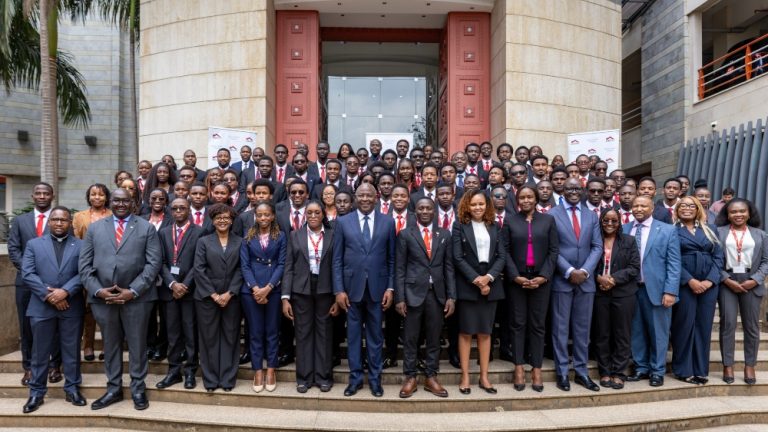
2026: A total of 121 Equity Leaders Program (ELP) scholars from Kenya (86), Uganda (4), Rwanda (29), and the Democratic Republic of the Congo (DRC) (2) have secured admission to pursue undergraduate studies in prestigious global universities in the 2025/2026 application cycle. The scholars have each been awarded comprehensive scholarships and financial packages by the admitting
universities.
The scholars have been admitted to 63 universities located in 16 countries across four (4) continents: North America, Europe, Asia, and Africa, affirming Equity Group Foundation’s continued investment in education, leadership development, and the nurturing of globally competitive African talent.
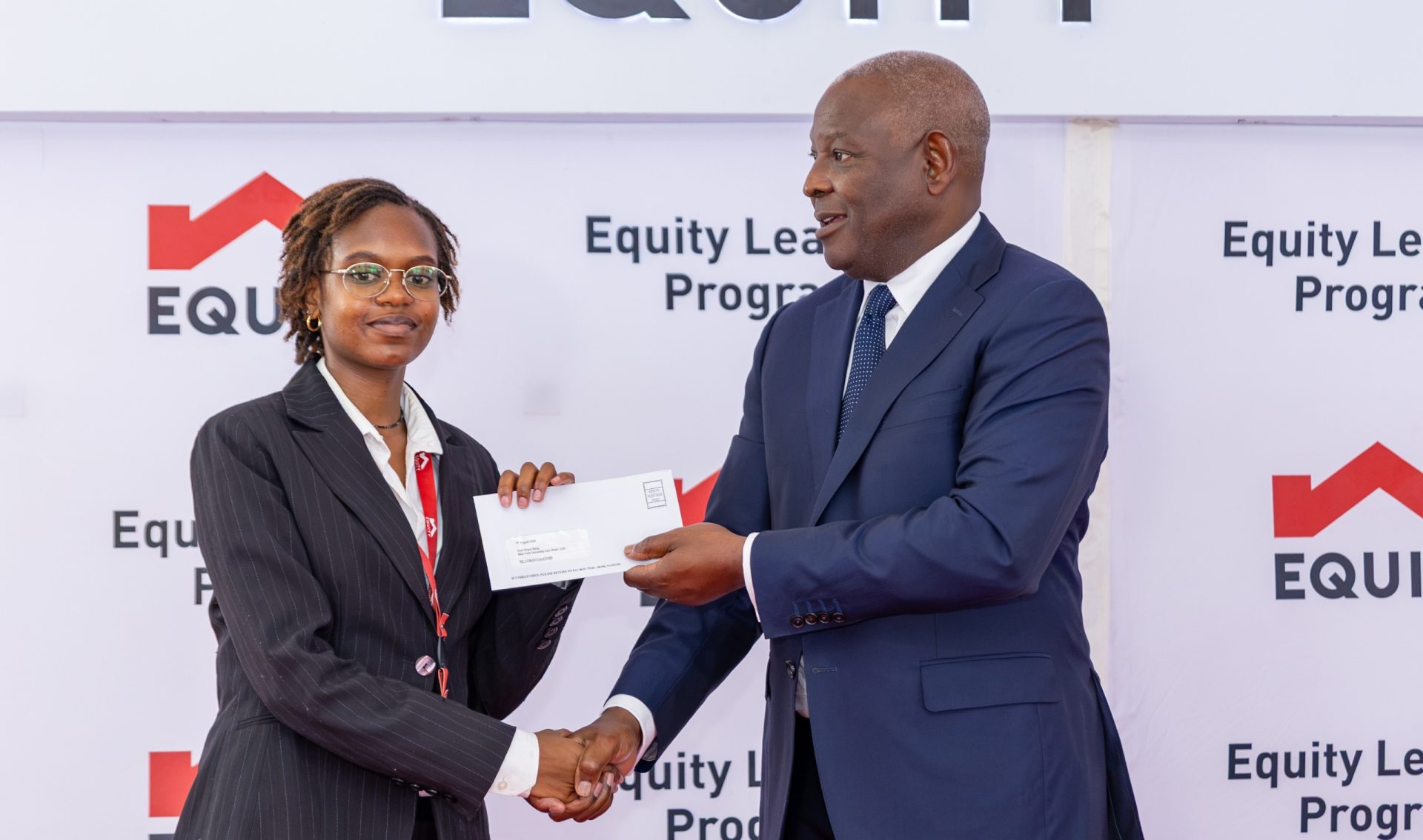
Grace Sang’, Equity Leaders Program Scholar from Kenya, who is set to join New York University Abu Dhabi, UAE to study Computer Science, receives a congratulatory letter from Equity Group Foundation Executive Chairman, Dr. James Mwangi, during the commissioning of scholars who will be joining top global universities. 121 Equity Leaders Program (ELP) scholars from four countries, Kenya (86), Rwanda (29), Uganda (4), and the Democratic Republic of Congo (DRC) (2), have secured admission to pursue undergraduate studies at 63 global universities across 16 countries in four continents during the 2025/2026 application cycle. The scholars have secured comprehensive financial scholarships valued at USD 23,422,515 (Kshs. 3,021,504,435) for the duration of their undergraduate studies, enabling them to access world-class education and prepare for leadership roles that will shape Africa’s future.
In addition, 44 ELP scholars have been shortlisted, completed interviews, and are awaiting final admission and scholarship award confirmations for the Kenyan Government-sponsored undergraduate scholarship overseas opportunities. These include 23 scholars interviewed for the Türkiye Government Scholarship and 21 scholars interviewed for the Romania Government Scholarship.
Commissioning the scholars at Equity Centre, Upper Hill, Nairobi, Dr. James Mwangi, Executive Chairman of Equity Group Foundation and Equity Group Managing Director & CEO, who was joined by Ondrej Simek, Deputy Head of Delegation, Delegation of the European Union to Kenya, said the Equity Leaders Program remains a strategic platform for building Africa’s next generation of ethical, innovative, and solution-orientedleaders.
“The Equity Leaders Program represents our long-term commitment to Africa’s potential and a belief that the continent’s next chapter of growth will be shaped by well-prepared, values-led talent. As you leave for global universities, remember you are carrying the dreams of your families and the expectations of our nations.
Learn boldly, lead with integrity, and return equipped with world-class knowledge, networks, and confidence to build solutions that expand opportunity, competitiveness, and shared prosperity across Africa,” said Dr. Mwangi.
“You have earned your place through an incredibly competitive process. Now step boldly into what comes next; work hard, stay curious, push beyond your comfort zone, and build friendships across cultures as you learn from the world around you as much as from the classroom. The opportunities ahead are extraordinary;
use every moment to grow, and when you return home, you will shine as the leaders who drive transformation,” said Ondrej Simek, Deputy Head of Delegation, Delegation of the European Union to Kenya.
Sharing their experiences and reflections on their journeys, the scholars highlighted the impact of the Equity Leaders Program in unlocking opportunities and enabling them to pursue their aspirations at leading global universities.
“I applied to about 14 universities before receiving my admission to Harvard. To be honest, I believed my chances of getting in were very slim, so when the acceptance letter came, I was in complete disbelief. I am deeply grateful to the leadership of Equity Bank Uganda and Equity Group for believing in me and giving me this life-changing opportunity.
Their support has made it possible for me to pursue my dream at one of the world’s leading universities,” said Aime Iradukunda, Equity Leaders Program Scholar from Uganda, former student of Royal Giant High School, Mityana, who was the top-performing male student in Mityana District and scored 20 points in the Uganda Advanced Certificate of Education (UACE). He will pursue Electrical Engineering/Economics at Harvard College, USA.
“Sometimes, all it takes is seeing someone else’s journey to believe your own is possible. When I heard Equity Leaders Program alumni share their stories while I was in Form Two, I set a goal to one day earn my place among them. The Equity College Counseling Program helped me realise that my achievements, interests, and personal story all had value, giving me the confidence and support to pursue opportunities I once thought were beyond my reach.
Through persistence, countless essays, revisions, and determination,that dream became a reality with my admission to New York University Abu Dhabi. As I begin this new chapter, I carry with me deep gratitude, a sense of purpose, and the hope that my journey will inspire other young people to believe in their own potential,” said Grace Sang’, Equity Leaders Program Scholar from Kenya, former student of Alliance Girls High School, who scored an A grade in the 2025 KCSE and will pursue Computer Science at New York University Abu Dhabi, UAE.
Beyond admissions and scholarships, the Equity Leaders Program continues to build a community of scholars, alumni, and mentors who share a commitment to lifelong learning, leadership, and impact.
Reflecting on the journey and the responsibility that comes with joining this global network of changemakers, Equity Global Scholars Board Member David Kiiru Kimani and Equity College Counselling Program Study Group Leader Brian Oweka Otieno shared messages of purpose, perseverance, and the importance of mentorship in unlocking global opportunities.
“As you head to universities across the world, remember you are not travelling abroad as students; you are stepping into a lifelong family of scholars, leaders, innovators and changemakers. The Equity Leaders Program has never been just about scholarships; it is about building values-led leaders who will return home to transform communities, tackle shared global challenges and expand opportunity for others.
Today, you take your place in that legacy, and you carry it forward,” said David Kiiru Kimani, an Equity Global Scholars Board Member currently a first-year student at Williams College, USA, studying Biology with a concentration in Neuroscience.
Aime Iradukunda, Equity Leaders Program Scholar from Uganda, who is set to join Harvard College, USA to study Electrical Engineering/Economics (Left), receives a congratulatory letter from Equity Group Foundation Executive Chairman, Dr. James Mwangi, during the commissioning of scholars who will be joining top global universities. 121 Equity Leaders Program (ELP) scholars from four countries, Kenya (86), Rwanda (29), Uganda (4), and the Democratic Republic of Congo (DRC) (2), have secured admission to pursue undergraduate studies at 63 global universities across 16 countries in four continents during the 2025/2026 application cycle. The scholars have secured comprehensive financial scholarships valued at USD 23,422,515 (Kshs. 3,021,504,435) for the duration of their undergraduate studies, enabling them to access world-class education and prepare for leadership roles that will shape Africa’s future.
“My journey is proof that with the right mentorship, structured guidance, and determination, global scholarships are achievable. Dream boldly, prepare intentionally, and trust the process. One of the greatest lessons I have learned is that success is never a solo journey. Study groups matter, review essays together, tackle challenging questions toge1ther, stay accountable, and celebrate every milestone together.
To every mentee: own your talent, maximize every opportunity, and do not be afraid to aim for the global stage. The world needs your ideas, your leadership, and your impact,” said Brian Oweka Otieno, Equity College Counselling Program 2026 Study Group Leader and a fourth-year student at Selçuk University – Türkiye, studying Medicine.
Out of the 121 scholars admitted this year, 20 have secured admission to Ivy League institutions, bringing the total number of ELP scholars admitted to Ivy League universities to 240 to date.
The scholarship packages secured in this cycle are valued at USD 23,422,515 (Kshs. 3,021,504,435) for the duration of the scholars’ undergraduate studies. During the commissioning ceremony, scholars received an airlift token to support their transition and onboarding into their respective universities.
To date, the Equity Leaders Program has supported 1,236 scholars to gain admissions and scholarships to 247 global universities in 40 countries across six (6) continents, reflecting the scale and consistency ofEquity’s education and leadership development agenda.
The Equity Leaders Program (ELP) is a leadership development initiative of Equity Group Foundation, designed to identify, mentor and nurture high-performing youth, equipping them with the competencies, exposure and networks required to drive inclusive socio-economic transformation. Through a structured model that integrates paid internships, mentorship, coaching, and the Equity College Counselling Program, ELP supports scholars to access world-class education opportunities locally and globally, while remaining
anchored to values-driven leadership and community impact.
A Kenyan worker in the United Arab Emirates has challenged the popular belief that travelling to the Gulf in search of greener pastures automatically translates into a better life.
The worker, who shared his views on Facebook, argued that many young Kenyans are attracted to the UAE by the promise of better salaries, only to discover that some entry-level jobs offer modest pay while demanding long hours and difficult living conditions.
He particularly took issue with unskilled jobs such as general helper positions, saying workers earn an average of Sh40,000 a month.
“These unskilled jobs, like being a helper, are a waste of time. Let’s be honest, there’s no good salary. The highest amount paid to helpers is around Sh40,000, and you’ll struggle mentally so much that you’ll be left wondering,” he wrote.
He argues that the financial equation does not always work for a Kenyan who has spent hundreds of thousands of shillings to secure a job abroad.
According to his account, the process of obtaining a passport, police clearance certificate, paying transport costs, preparing for travel and meeting recruitment or commission charges can push the initial cost above Sh250,000.
Once additional expenses after arrival are included, he estimates that a worker could spend close to Sh300,000 before settling into employment.
The worker questioned whether such an investment makes sense when the eventual salary could be only Sh40,000 a month.
He described the situation as particularly difficult for workers who arrive with loans to repay and families depending on them for financial support.
“Come here, struggle before receiving your first salary, spend another Sh50,000 and you have spent almost Sh300,000, only to receive a Sh40,000 salary,” he wrote.
He further warned that the financial burden can be compounded by poor accommodation, inadequate food, long working hours and the psychological strain that comes with living and working far from home.
He advised job seekers to consider investing in a sustainable source of income back home rather than leaving the country to only come back empty-handed.
“If we calculate 40 × 24, that comes to 1 million. Over two years, how much will you have spent? You may have sent money home and paid off loans, but in the end, you could be left with nothing.”
“But let’s say you have your own Sh300,000. Invest in young bulls. Buy 20 bulls at Sh15,000 each and rear them for a period of two years. Each bull could reach a value of Sh80,000. At that point, you would have Sh1.6 million of your own and you would also be mentally healthy,” he wrote.
The Gulf job market
The Gulf remains a major destination for Kenyan job seekers, with most workers destined for Saudi Arabia, Qatar, Oman, and the UAE.
Common jobs in these countries include hospitality, security, cleaning and housekeeping, domestic work, driving, construction, retail, customer service, and logistics.
Most Kenyans working in the Gulf have raised concerns about exploitation by unscrupulous recruitment agencies, contract breaches, human trafficking, and poor working and living conditions.
The Kenyan Government has intensified efforts to protect its citizens working in Gulf countries amid persistent reports of abuse, exploitation and poor working conditions, particularly among domestic workers.
Among the key measures is the regulation of recruitment agencies and strengthening pre-departure preparation for workers aimed at safeguarding Kenyans from false promises about salaries and jobs.